Your browser is out-of-date!
For a richer surfing experience on our website, please update your browser. Update my browser now!
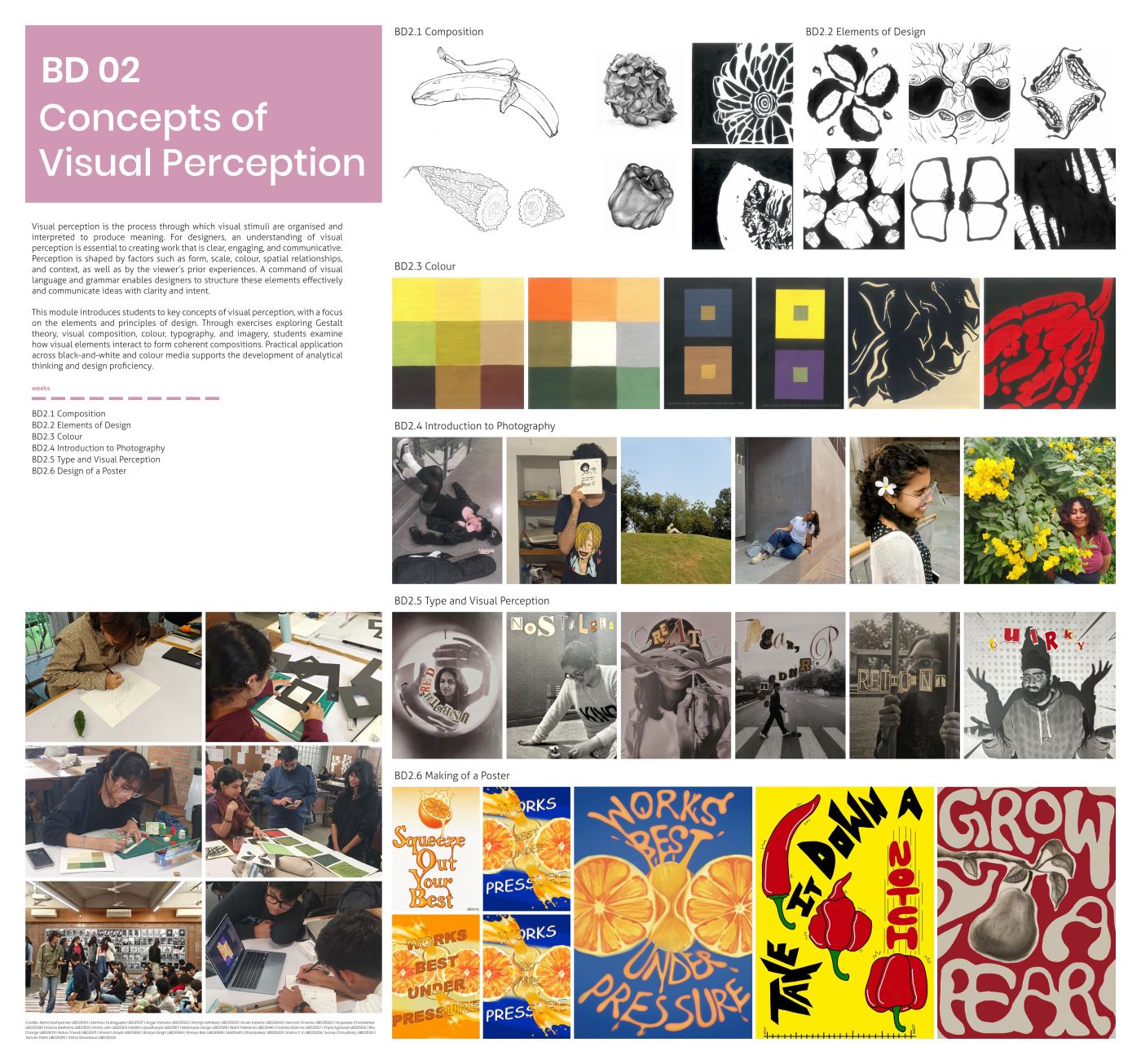
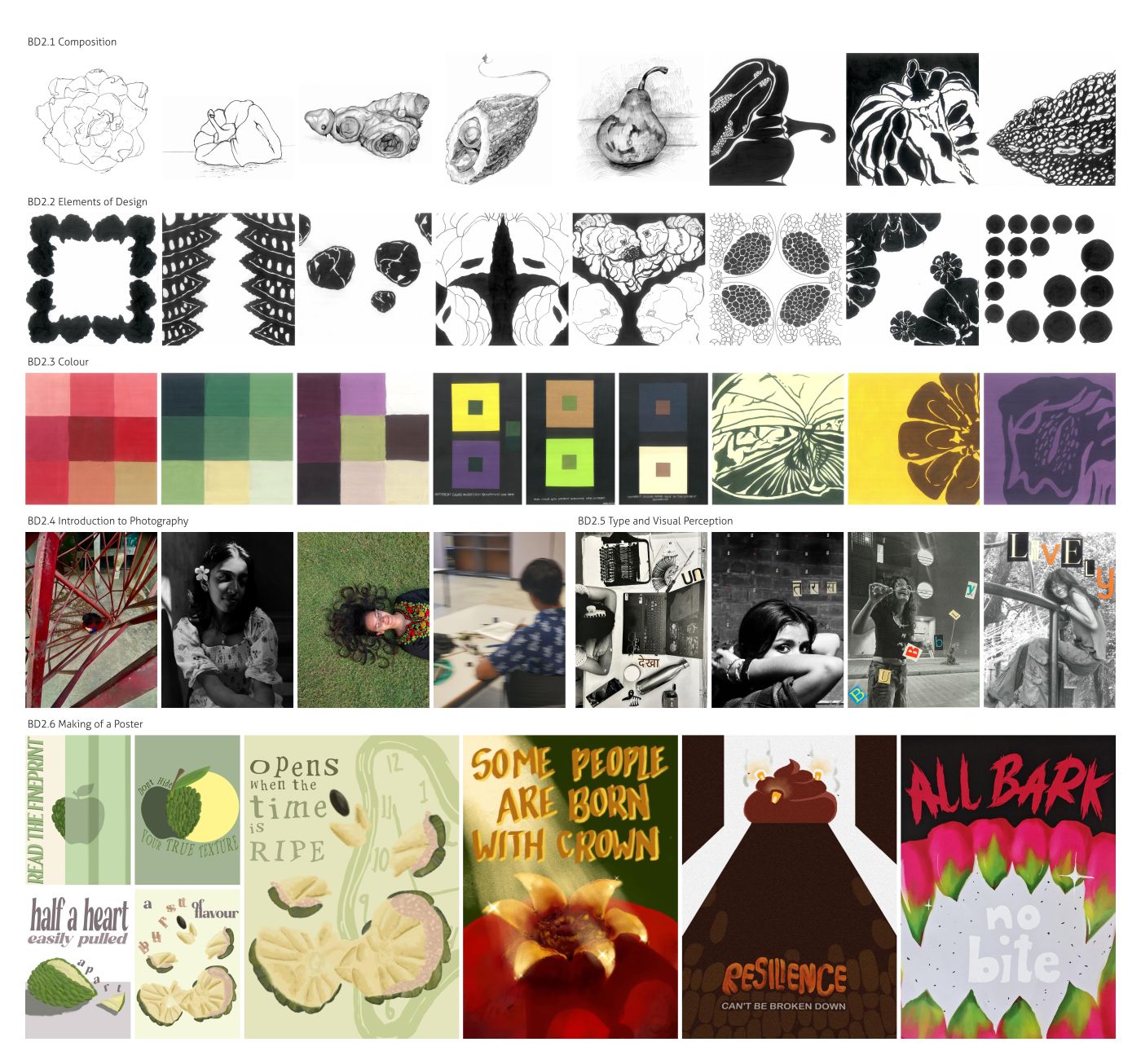
Visual perception is the process by which individuals interpret and make sense of visual stimuli, allowing us to perceive, recognize, and understand visual information. For designers, understanding visual perception is crucial to ensuring that their designs are clear, engaging, and easily comprehensible to their target audience. This process is influenced by various factors, such as the size, shape, and colour of objects, the arrangement and context in which objects are seen, and the viewer’s personal preferences and experiences. To effectively navigate these factors, designers must have a deep understanding of visual language and grammar—the tools through which they convey messages and evoke emotions in their visual compositions. This module introduces students to the core concepts of visual perception, with a particular focus on the elements and principles of design. Through a variety of exercises, students will explore Gestalt theory, principles of visual composition, colour, typography, and imagery, gaining a comprehensive understanding of how these visual elements interact to create cohesive designs. As they progress through the module, students will apply their knowledge practically by working in both black-and-white and colour media, allowing them to experiment with and refine their design skills.