Your browser is out-of-date!
For a richer surfing experience on our website, please update your browser. Update my browser now!
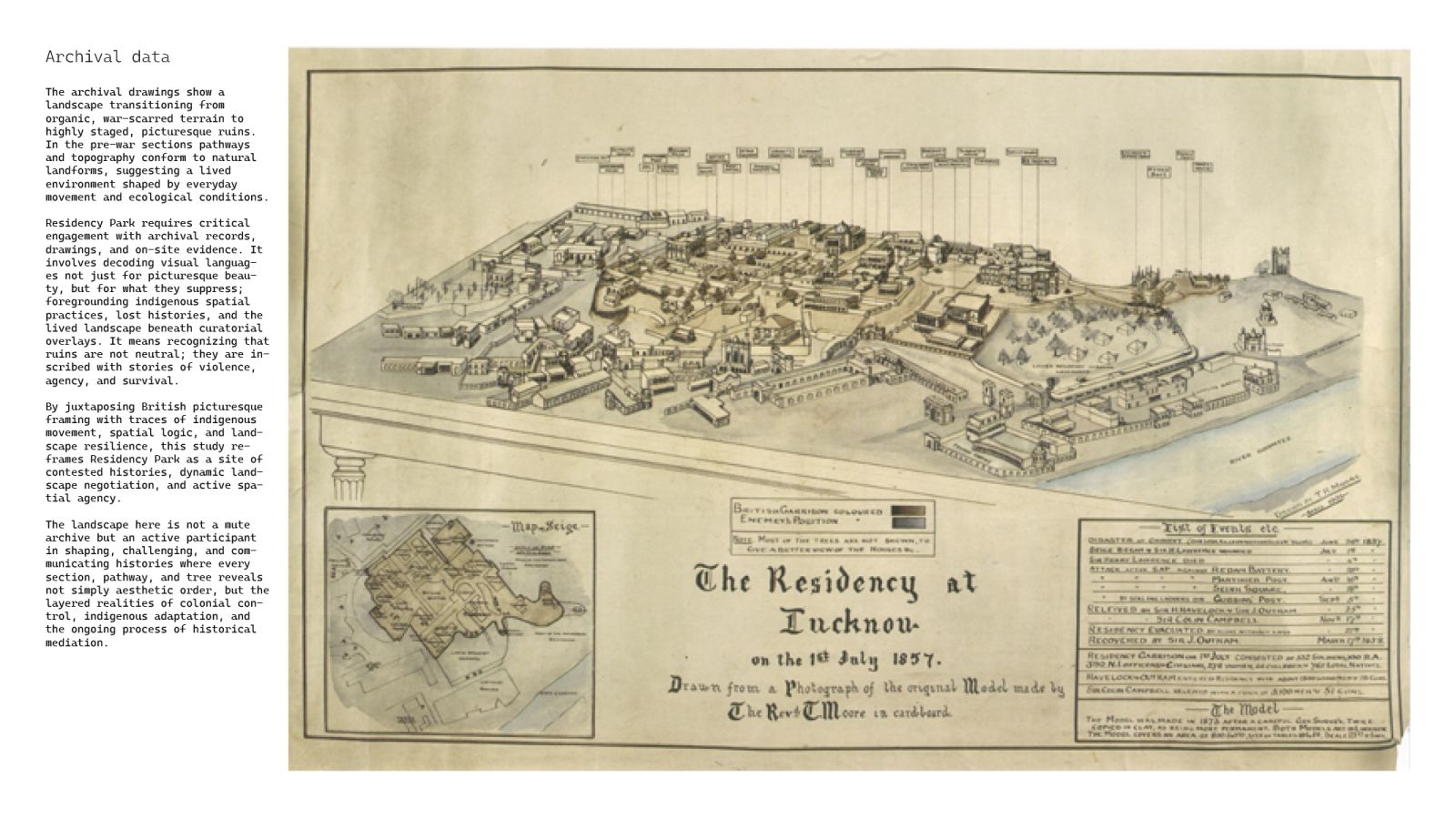
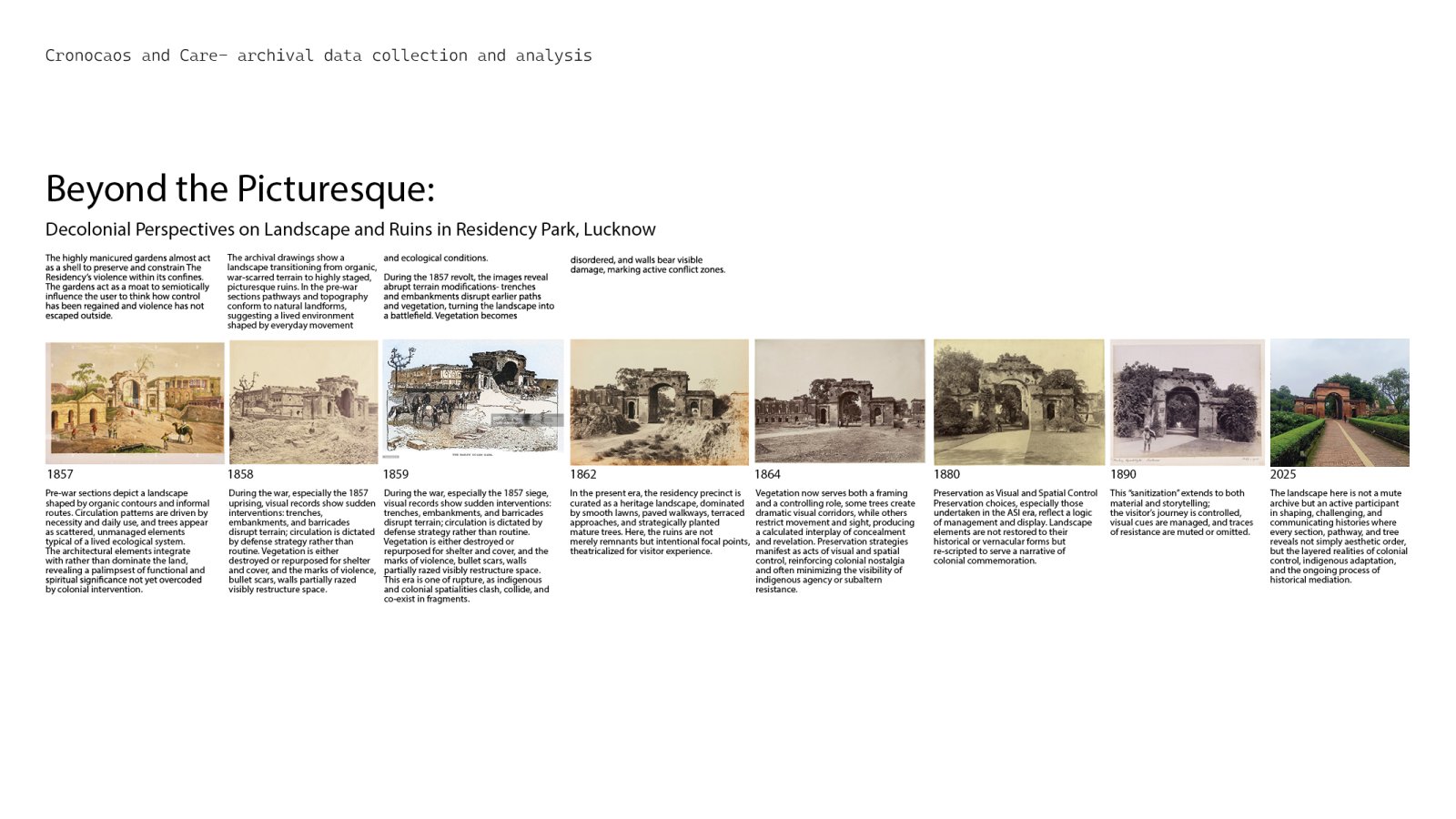
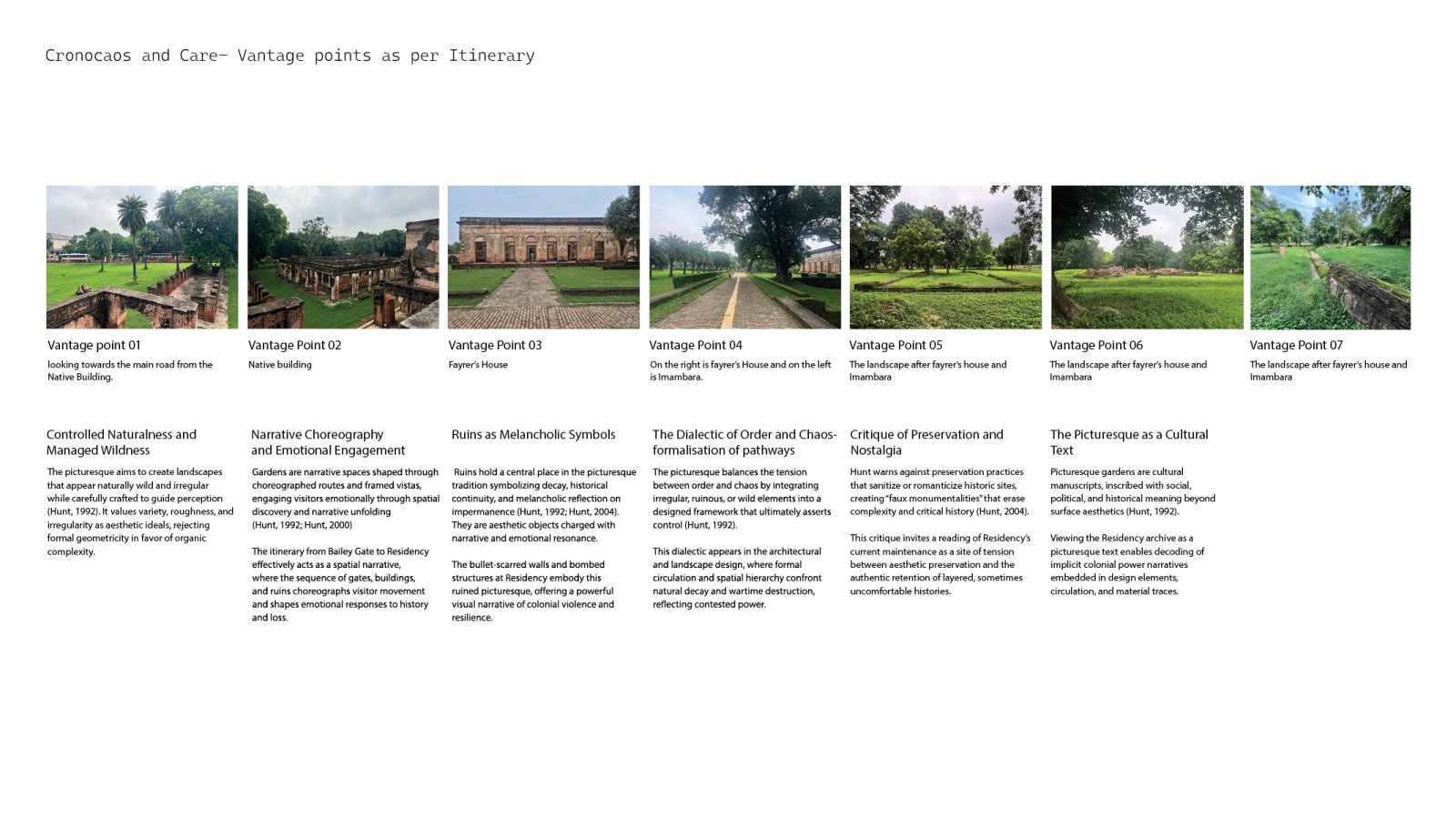
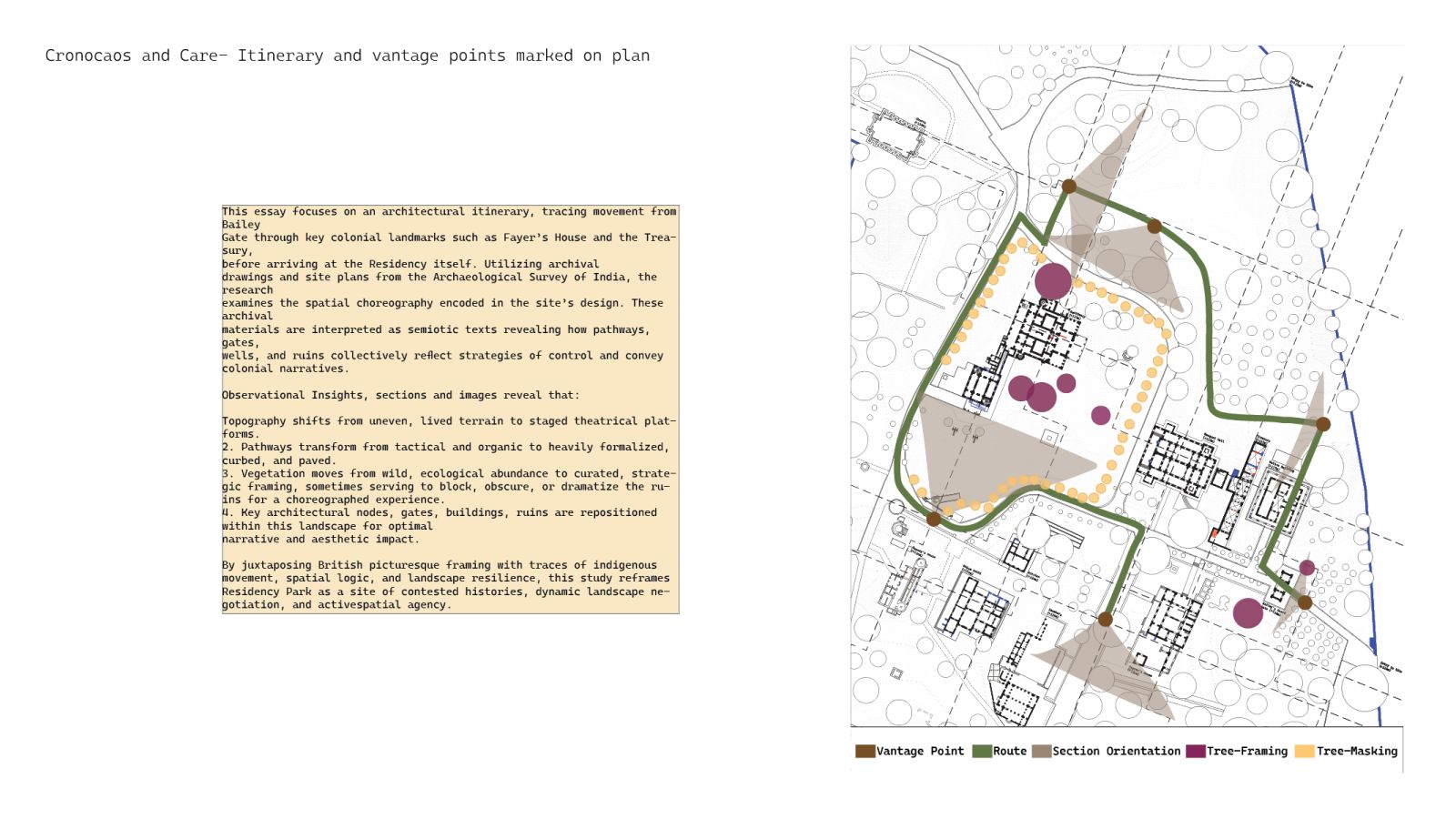
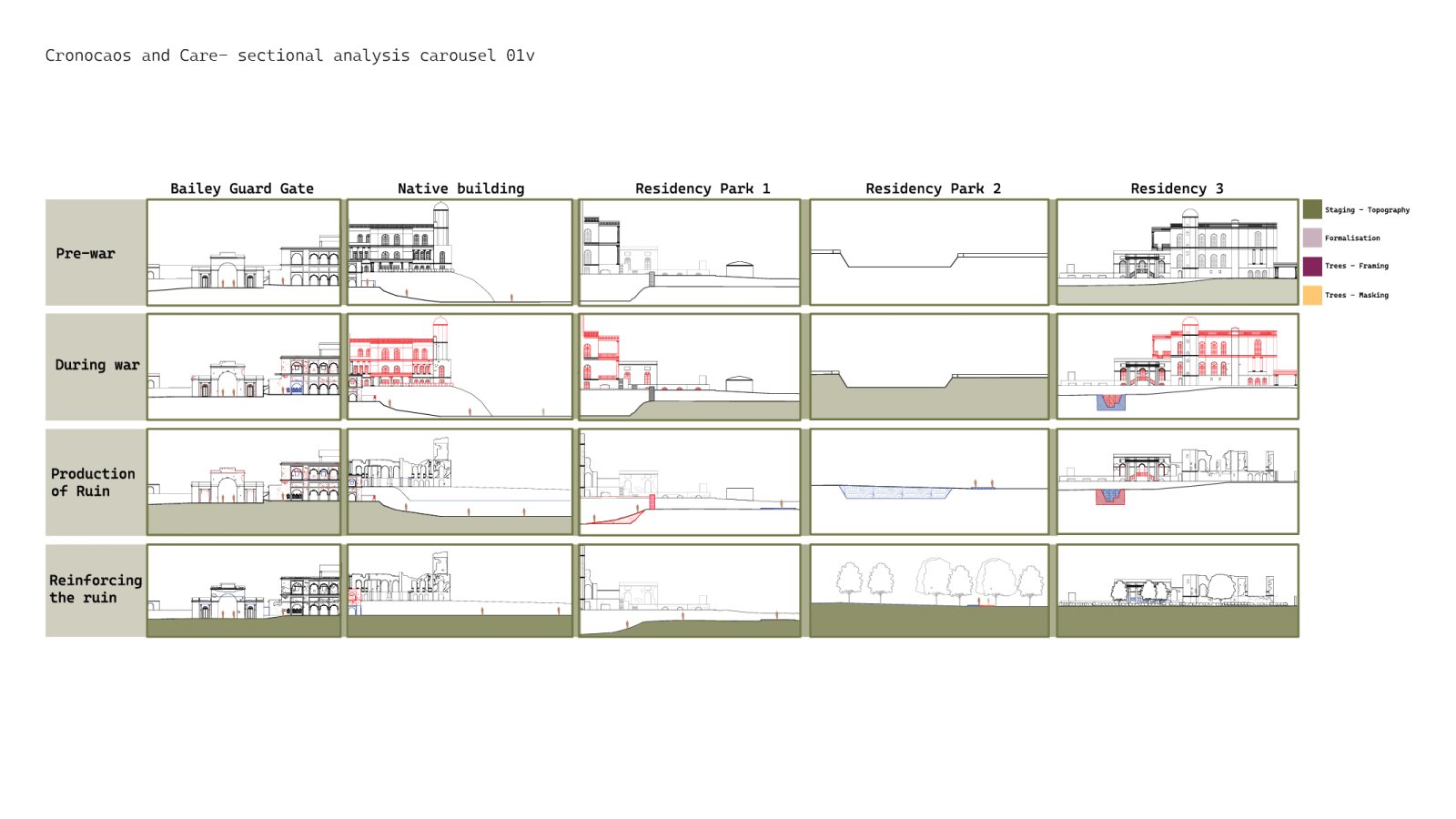
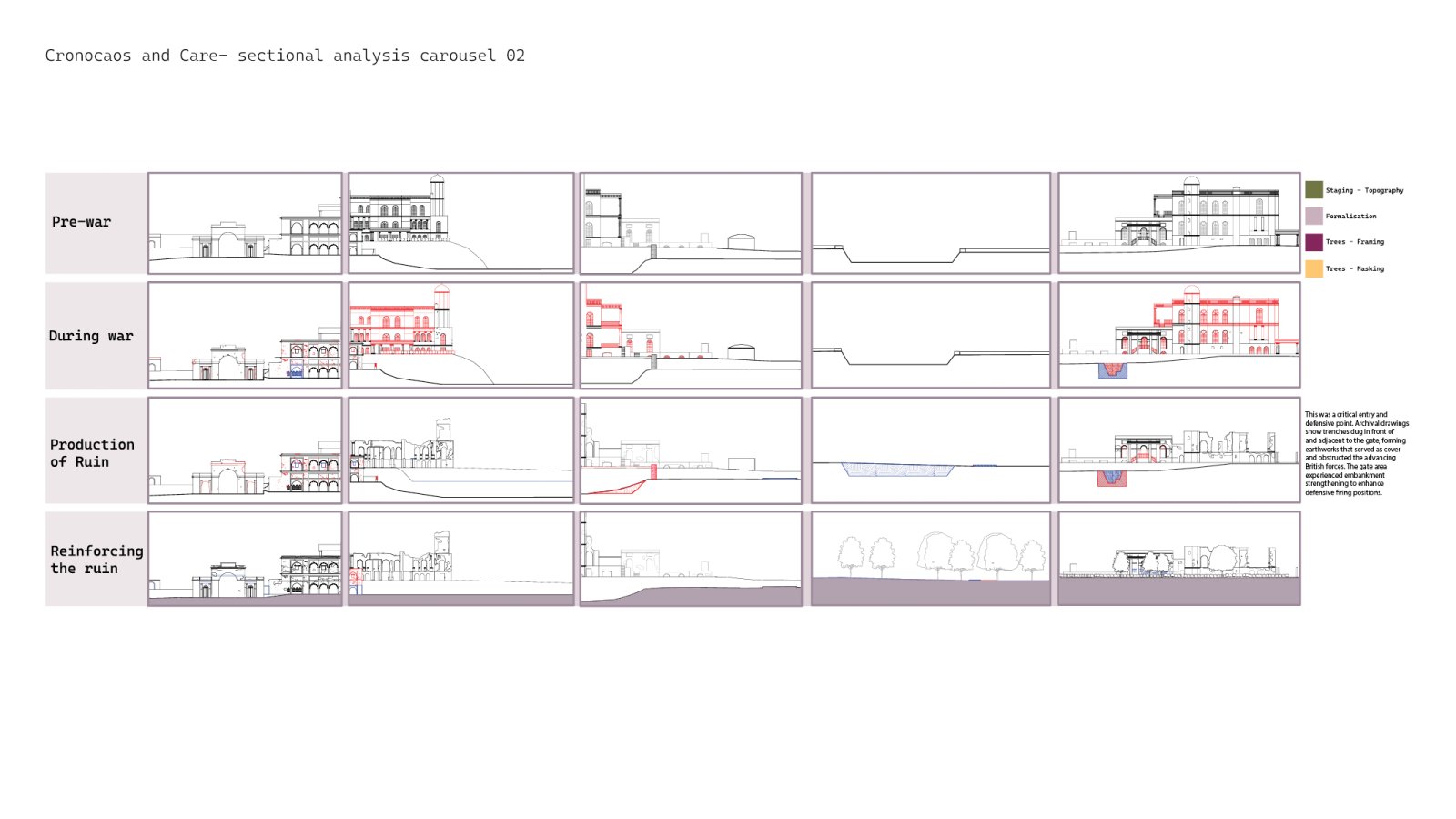
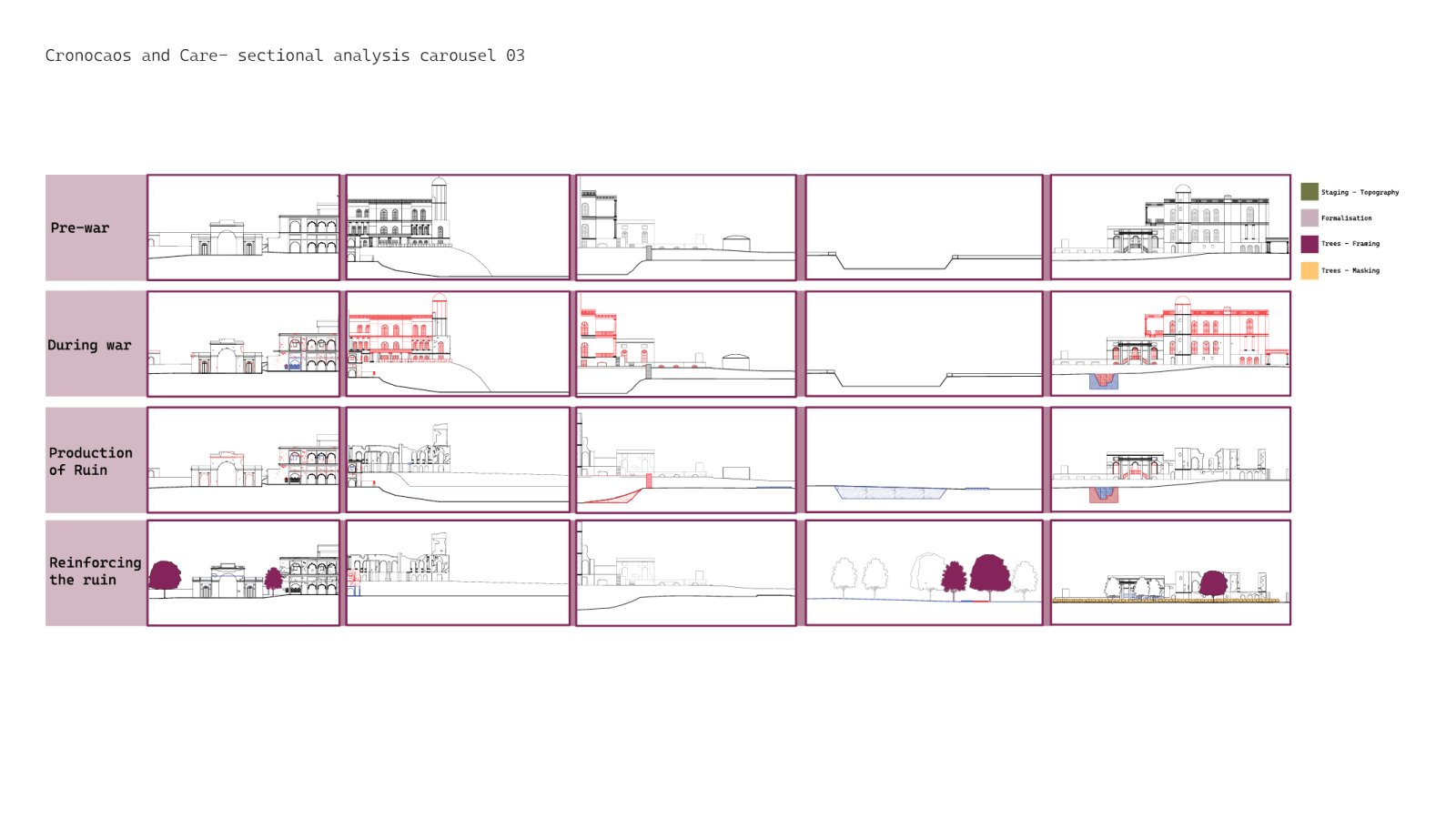
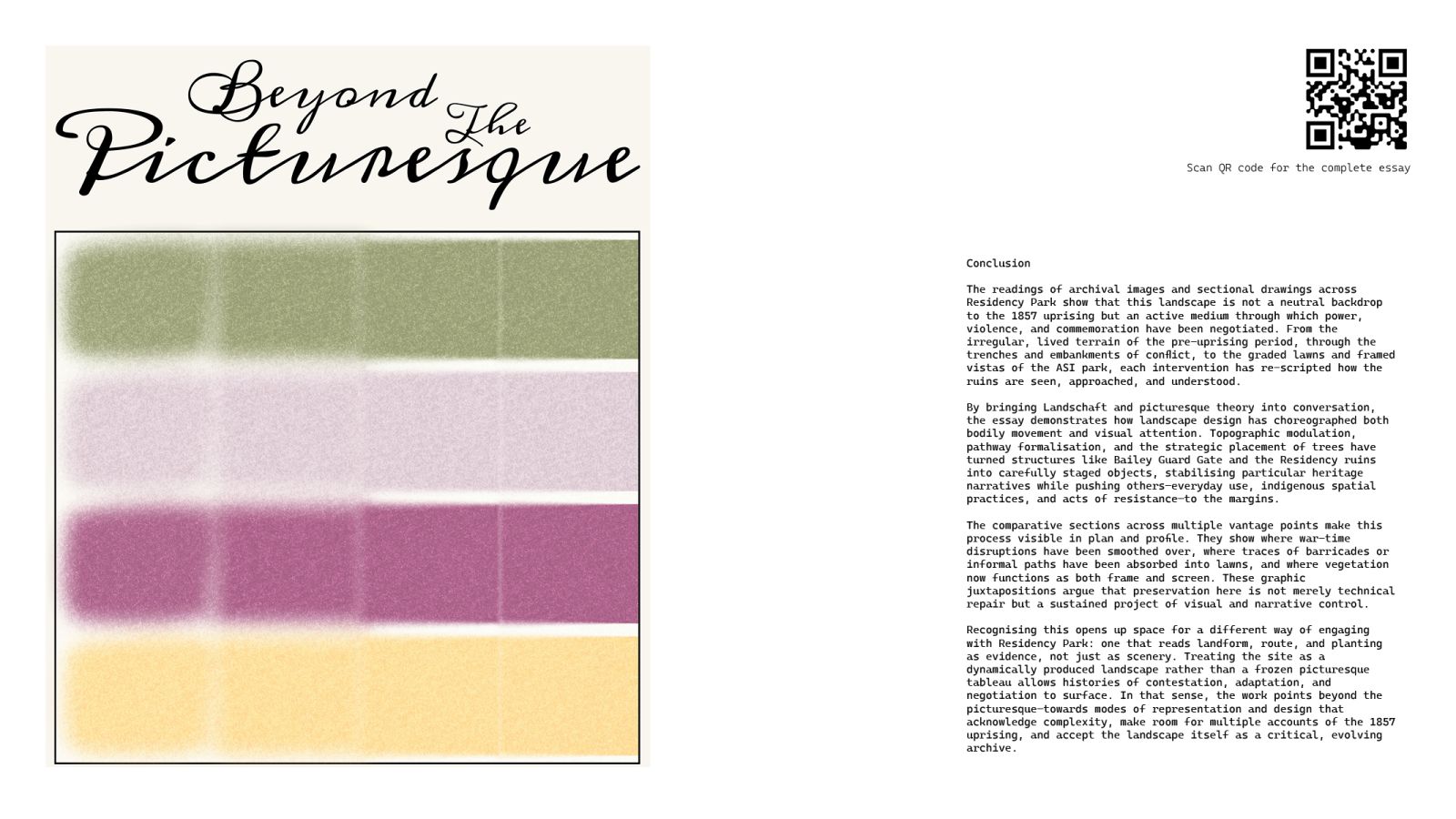
This essay presents a longitudinal and spatial investigation of Residency Park, Lucknow, exploring how landscape, architecture, and historical narratives are staged and transformed across time. Grounded in archival drawings, sectional analyses, and historical photographs, centered on vantage points from Bailey Guard Gate and key nodes around the Residency, the research examines the modulation of topography, the formalization of pathways, and the generative role of vegetation. Drawing from the theories of Landschaft and the picturesque, the study highlights how terrain, circulation, and tree placement have choreographed visitor experience, mediated heritage narratives, and visually produced the ruin as a site of Framing and control. The project critically traces the shift from chaotic wartime landscapes to curated present-day precincts, revealing how preservation strategies, landscape management, and visual framing both reveal and obscure layered histories of resistance, recovery, and spatial contestation. Through diagrammatic sections and comparative captions, this work foregrounds the landscape as a living archive, reframing Residency Park beyond static monumentality to a living, negotiated terrain of meaning and interpretation.