Chauhan Nidhi Mahesh

HR4007

Power of Material/Material of Power

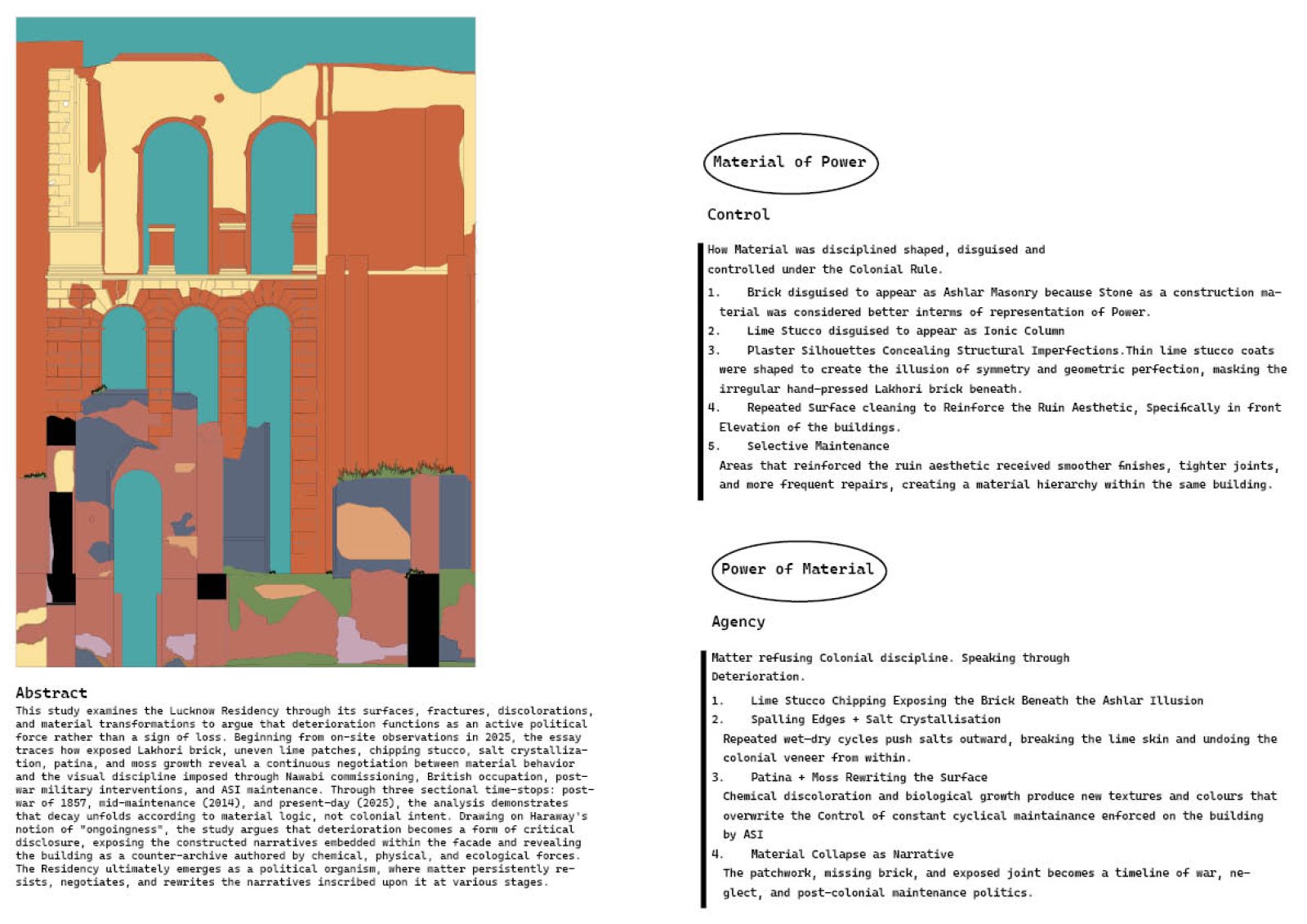
This study examines the Lucknow Residency through its surfaces, fractures, discolorations, and material transformations to argue that deterioration functions as an active political force rather than a sign of loss. Beginning from on-site observations in 2025, the essay traces how exposed Lakhori brick, uneven lime patches, chipping stucco, salt crystallization, patina, and moss growth reveal a continuous negotiation between material behavior and the visual discipline imposed through Nawabi commissioning, British occupation, post-war military interventions, and ASI maintenance. Through three sectional time-stops: post-war of 1857, mid-maintenance (2014), and present-day (2025), the analysis demonstrates that decay unfolds according to material logic, not colonial intent. Drawing on Haraway's notion of "ongoingness", the study argues that deterioration becomes a form of critical disclosure, exposing the constructed narratives embedded within the facade and revealing the building as a counter-archive authored by chemical, physical, and ecological forces. The Residency ultimately emerges as a political organism, where matter persistently resists, negotiates, and rewrites the narratives inscribed upon it at various stages.  

View Additional Work
Report Content

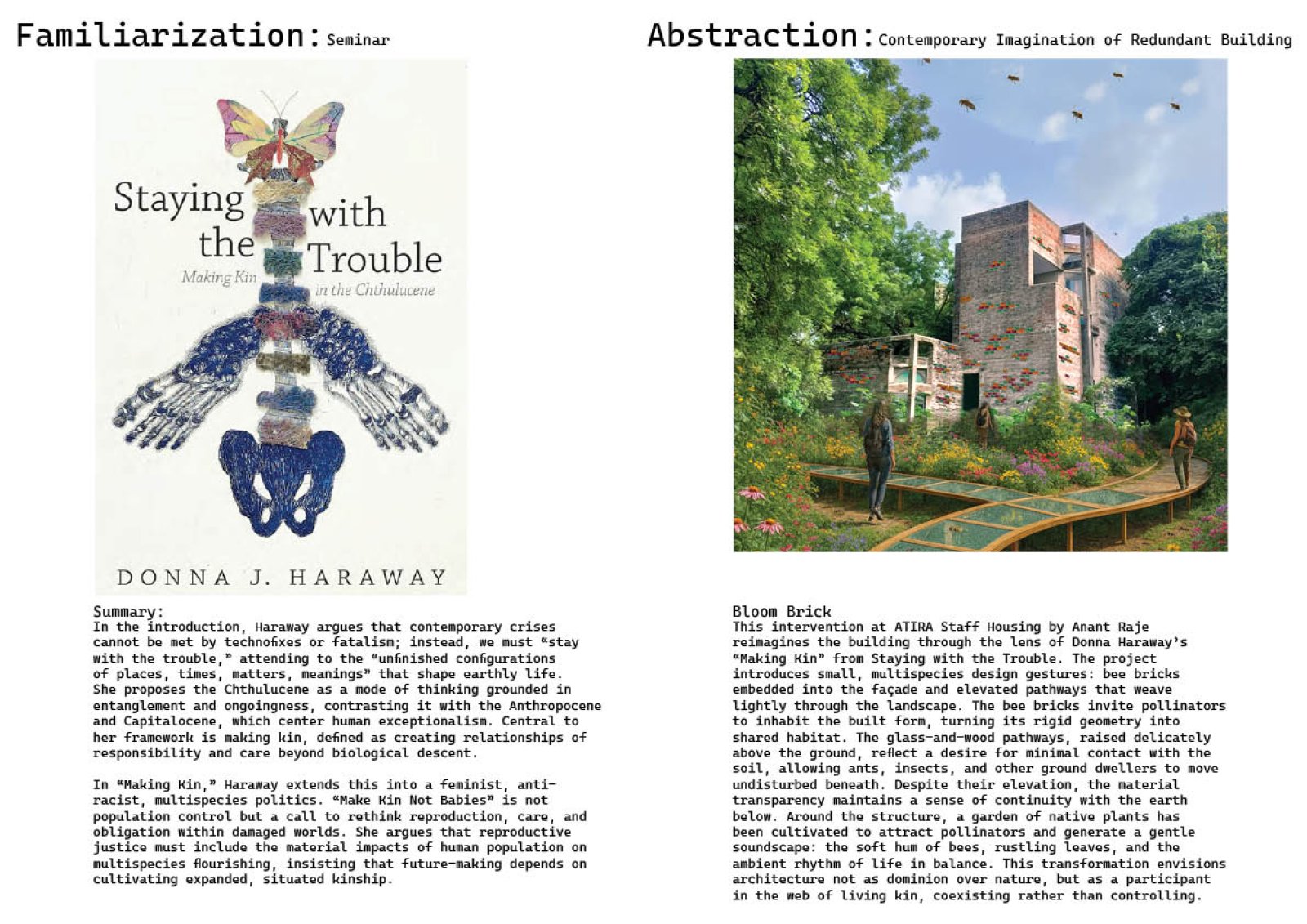
A theoretical and design pairing: Haraway’s Staying with the Trouble introduces the idea of multispecies kin-making, while Bloom Brick interprets this thinking as an architectural intervention; embedding bee bricks, pollinator habitats, and porous pathways to imagine redundant structures as shared ecological environments rather than controlled ruins.

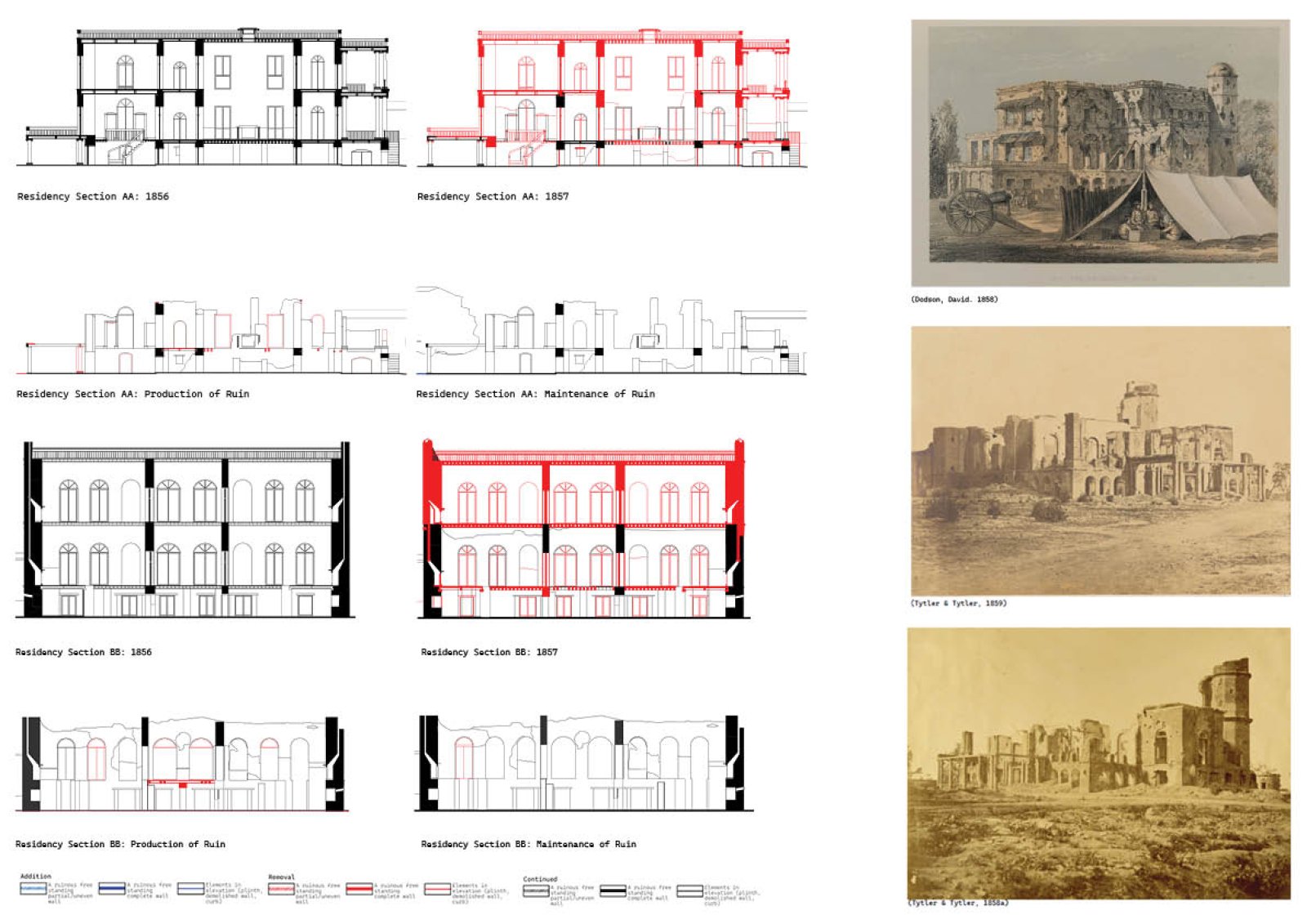
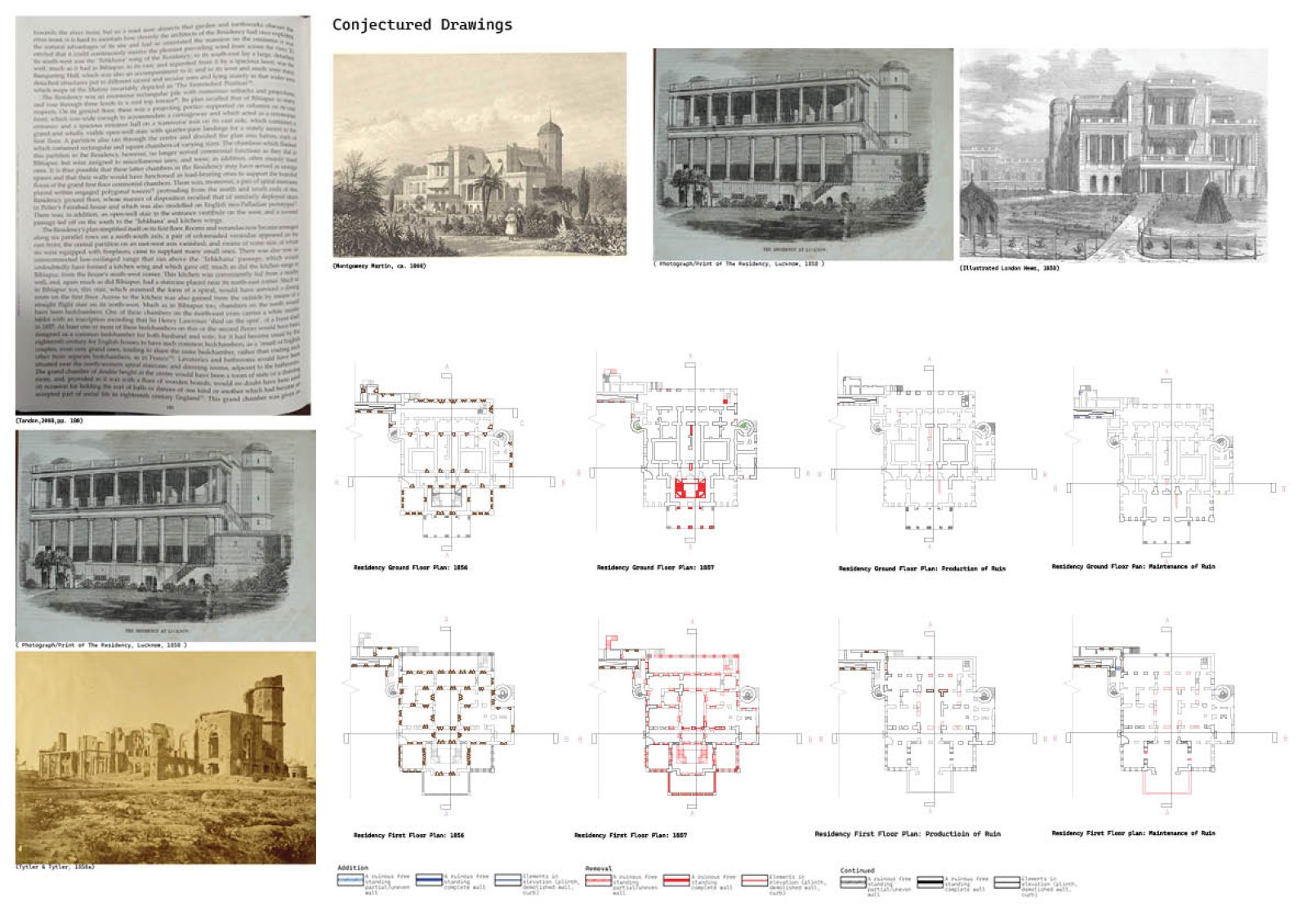
Archival engravings, historical photographs, and field measurements reconstruct the Residency’s ground and first-floor plans for 1856, 1857, the production of the ruin, and ASI’s maintenance period.

Archival engravings, historical photographs, and field measurements reconstruct the Residency’s ground and first-floor plans for 1856, 1857, the production of the ruin, and ASI’s maintenance period.

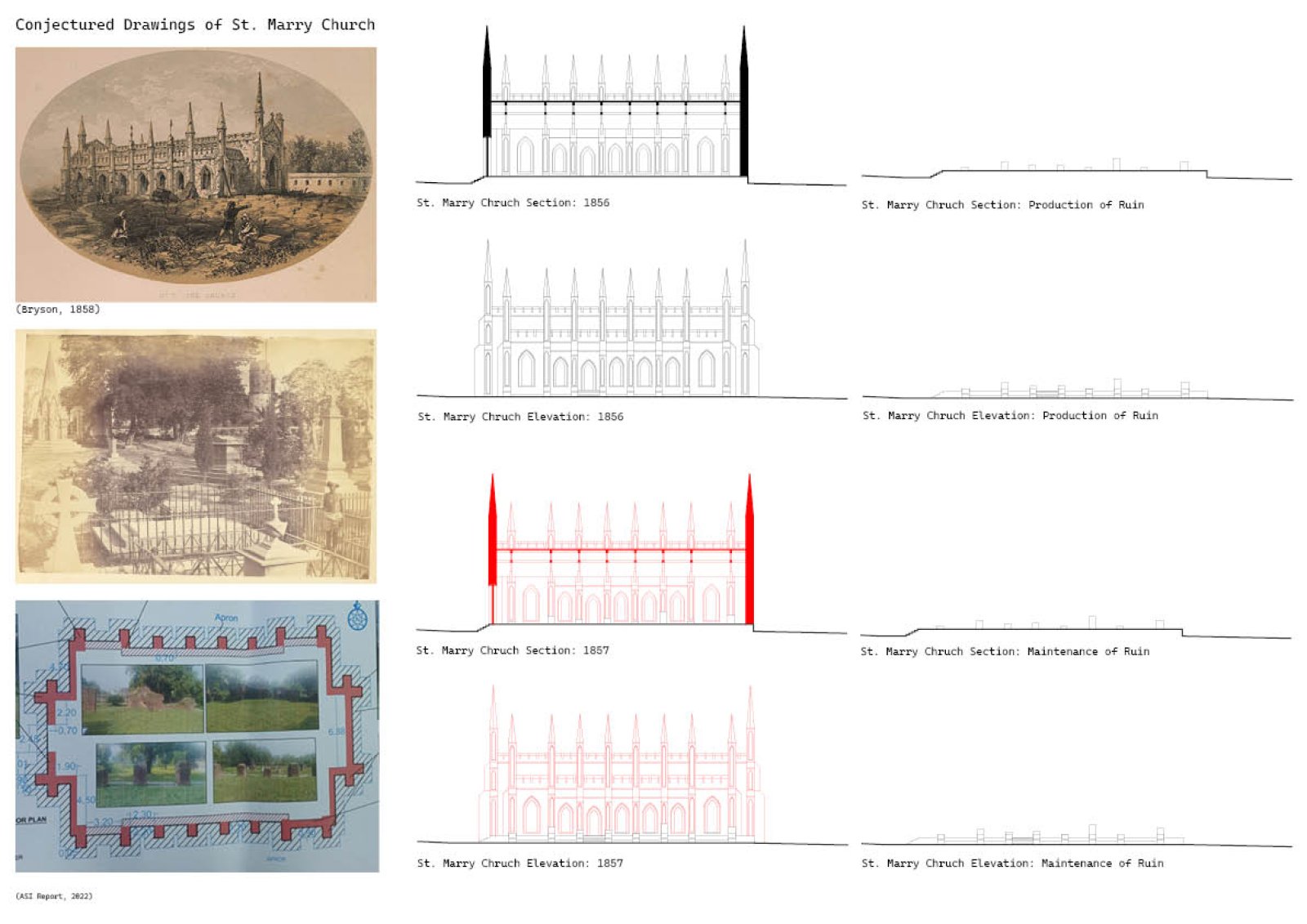
Archival illustrations, photographs, and measured remains inform conjectured sections and elevations of St. Mary’s Church across Four stages

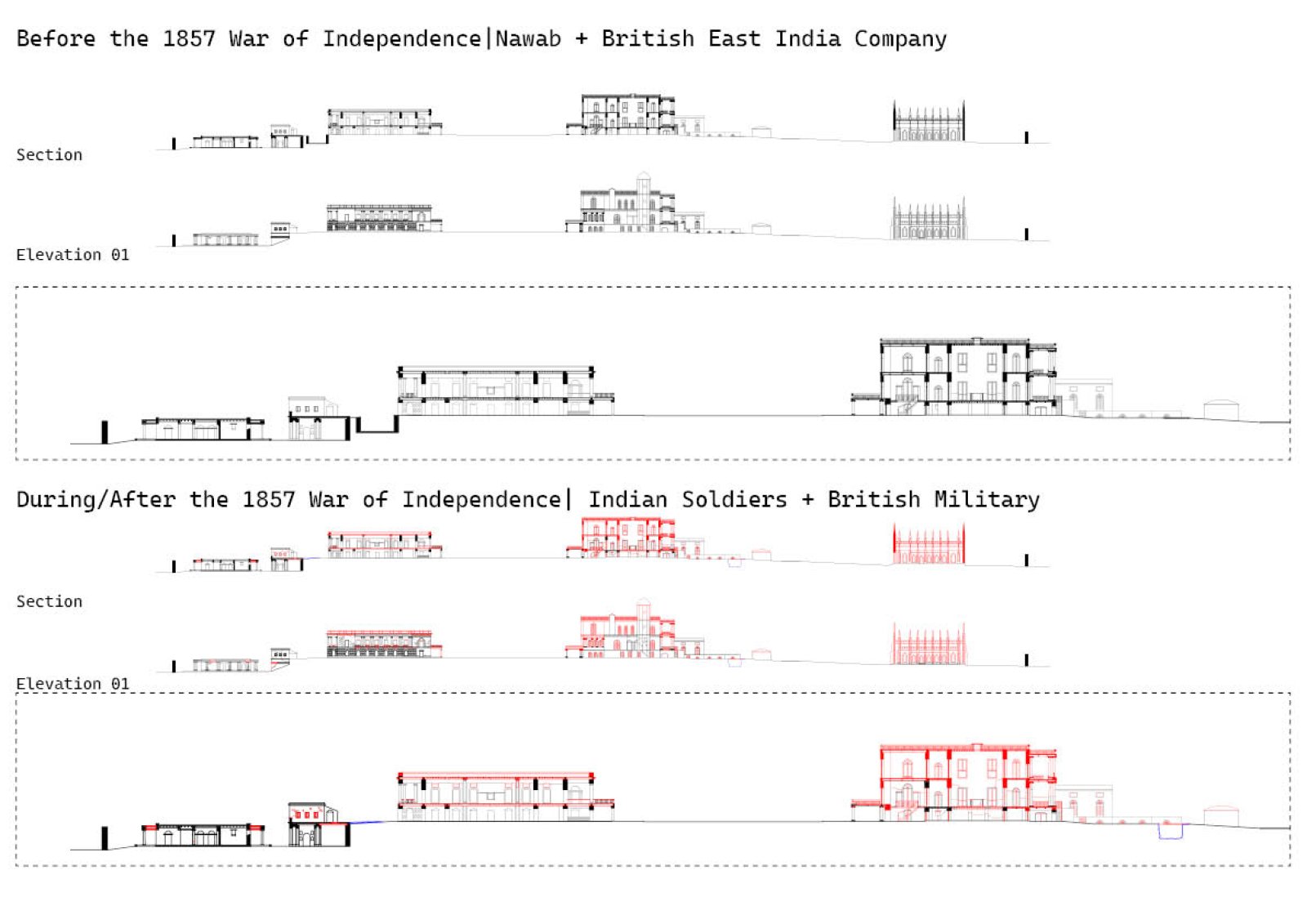
Comparative sectional and elevational reconstructions of the Residency complex before the 1857 uprising (Nawabi patronage + East India Company occupation) and during/after the uprising (Indian soldiers + British military). Red overlays mark destruction and structural loss, visualizing the architectural transformation caused by conflict.

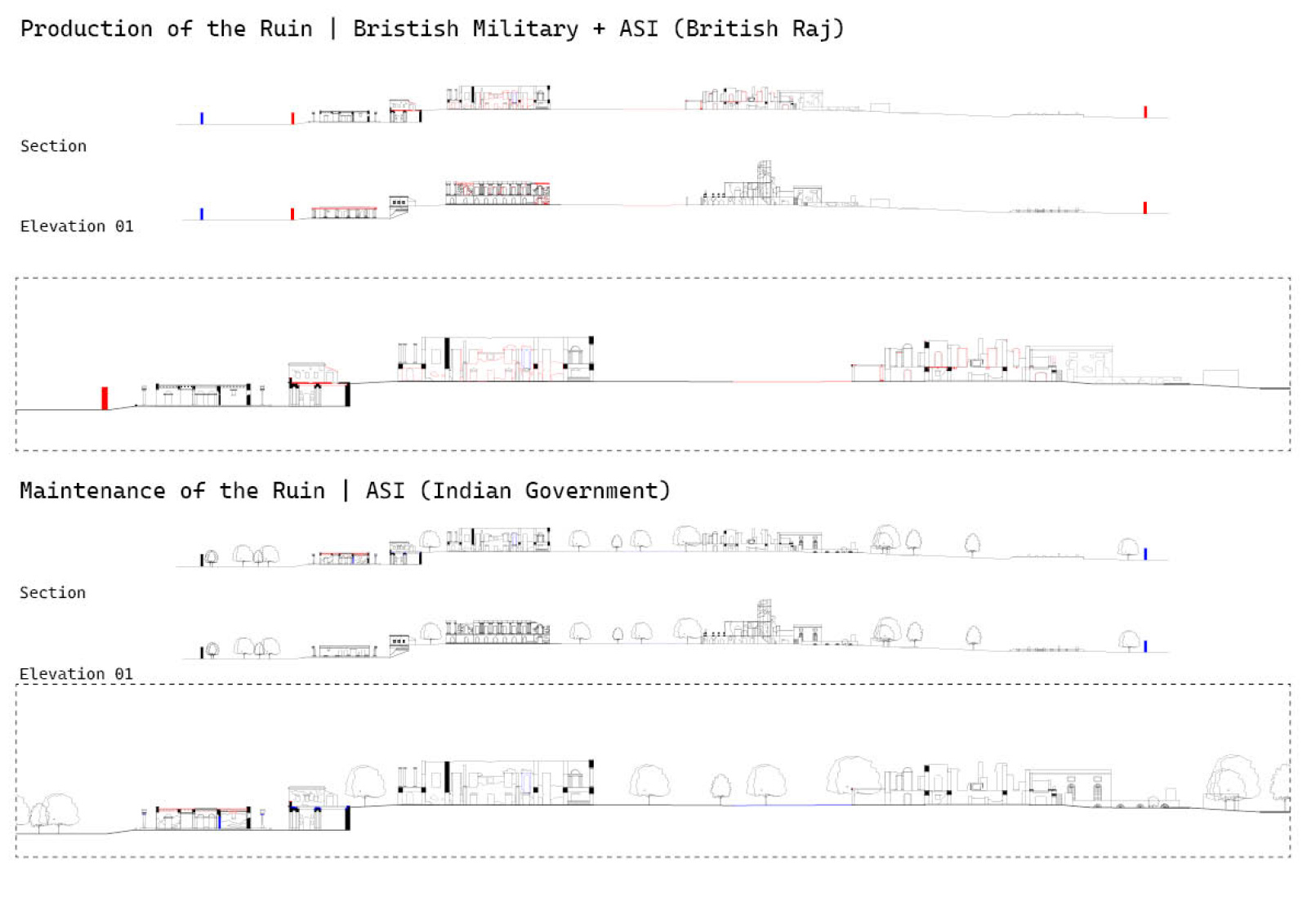
Sections and elevations tracing how the ruin was first produced through British military demolition and later maintained by the ASI. Red marks removed elements; black marks additions over time. The drawing shows how ruin is not a natural endpoint but a curated state sustained by institutional choices.

Diagram mapping two intertwined forces: Material of Power—colonial strategies that controlled, masked, or disciplined material behaviour through stucco, silhouettes, and selective maintenance; and Power of Material—the building’s counter-actions through chipping, cracking, erosion, patina, and moss formation. The diagram frames decay as an active, political agent.

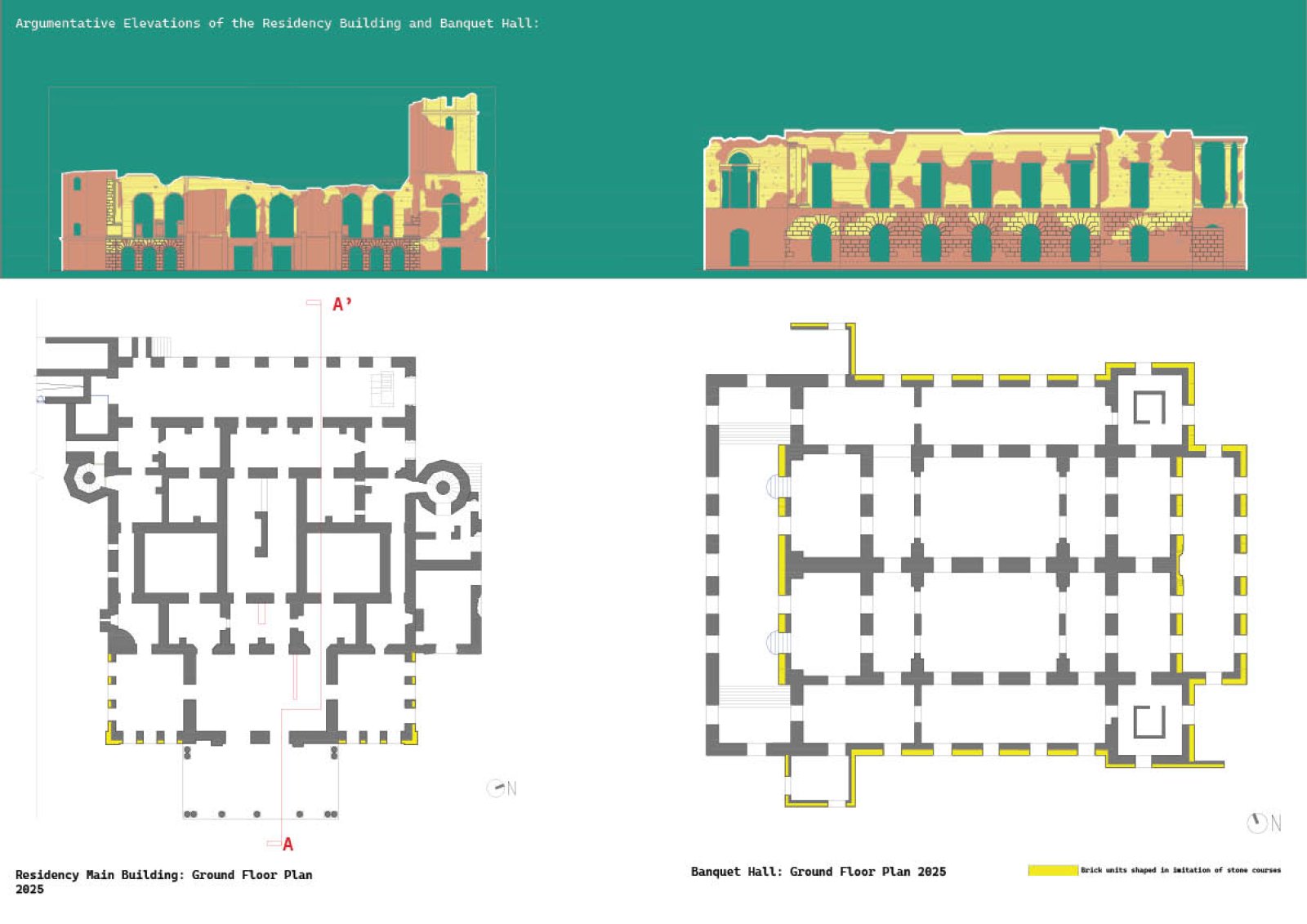
Argumentative elevations and ground-floor plans of the Residency and Banquet Hall, highlighting surviving structural bays, plaster remnants, and areas where Lakhori brick was shaped to imitate stone coursing.

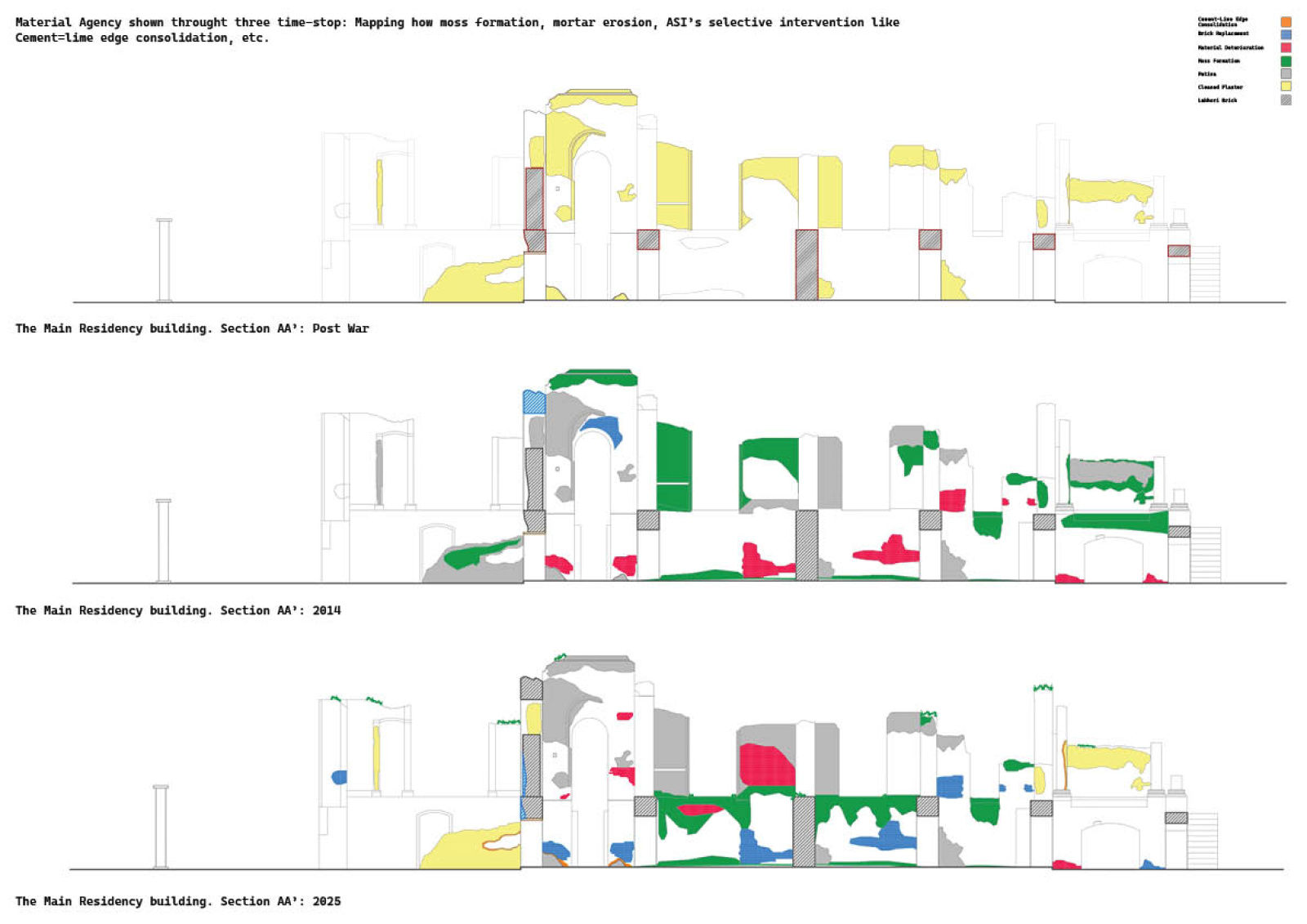
Mapped sections of the Main Residency Building showing how material agencies. Each colour traces a different intervention or deterioration process, revealing the layered negotiation between decay and maintenance. 1) Cement-Lime Edge consolidation 2) Brick Replacement 3) Mortar Erosion 4) Patina 5) Cleaned Lime Plaster 6) Lakhori Brick