Your browser is out-of-date!
For a richer surfing experience on our website, please update your browser. Update my browser now!
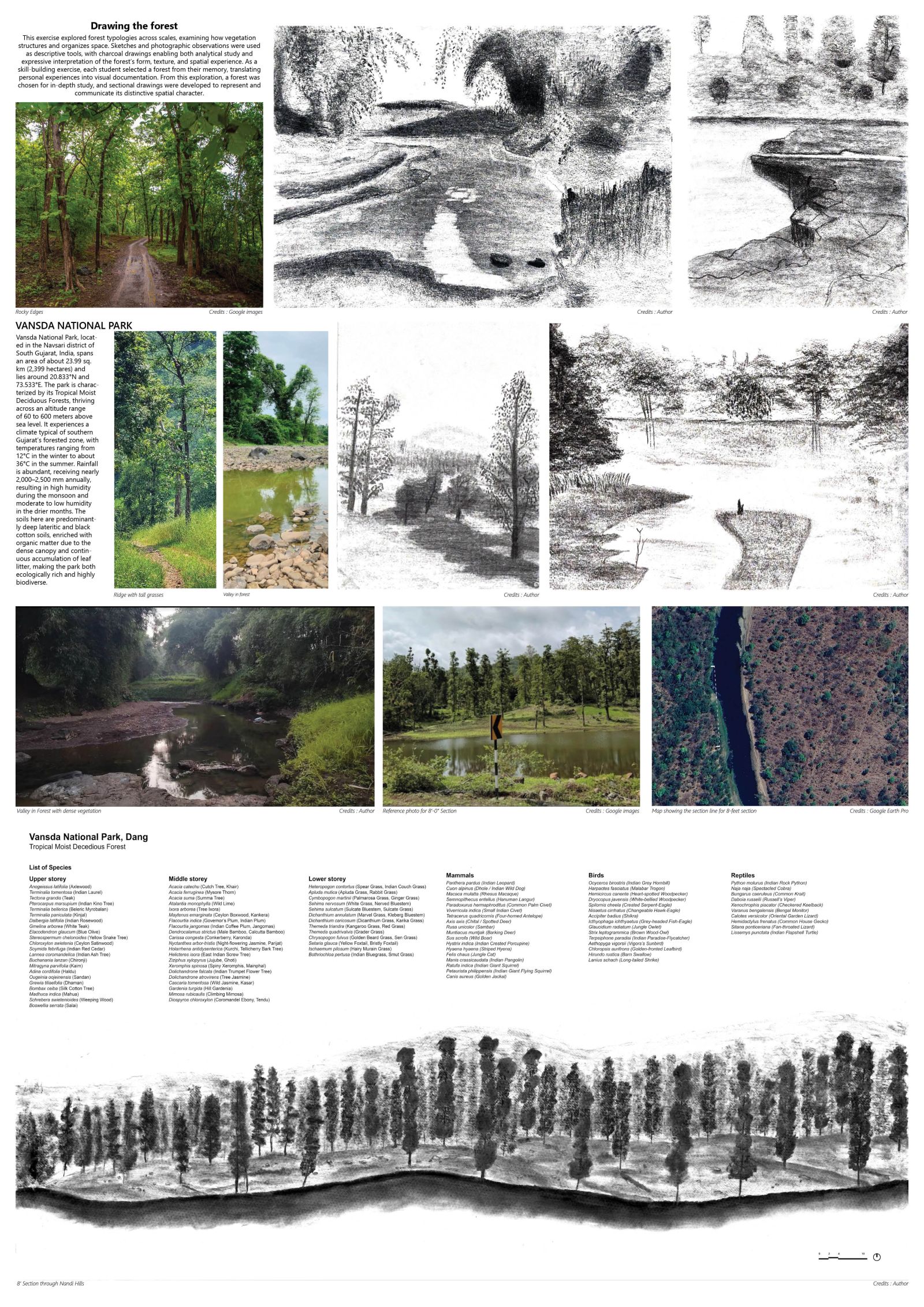
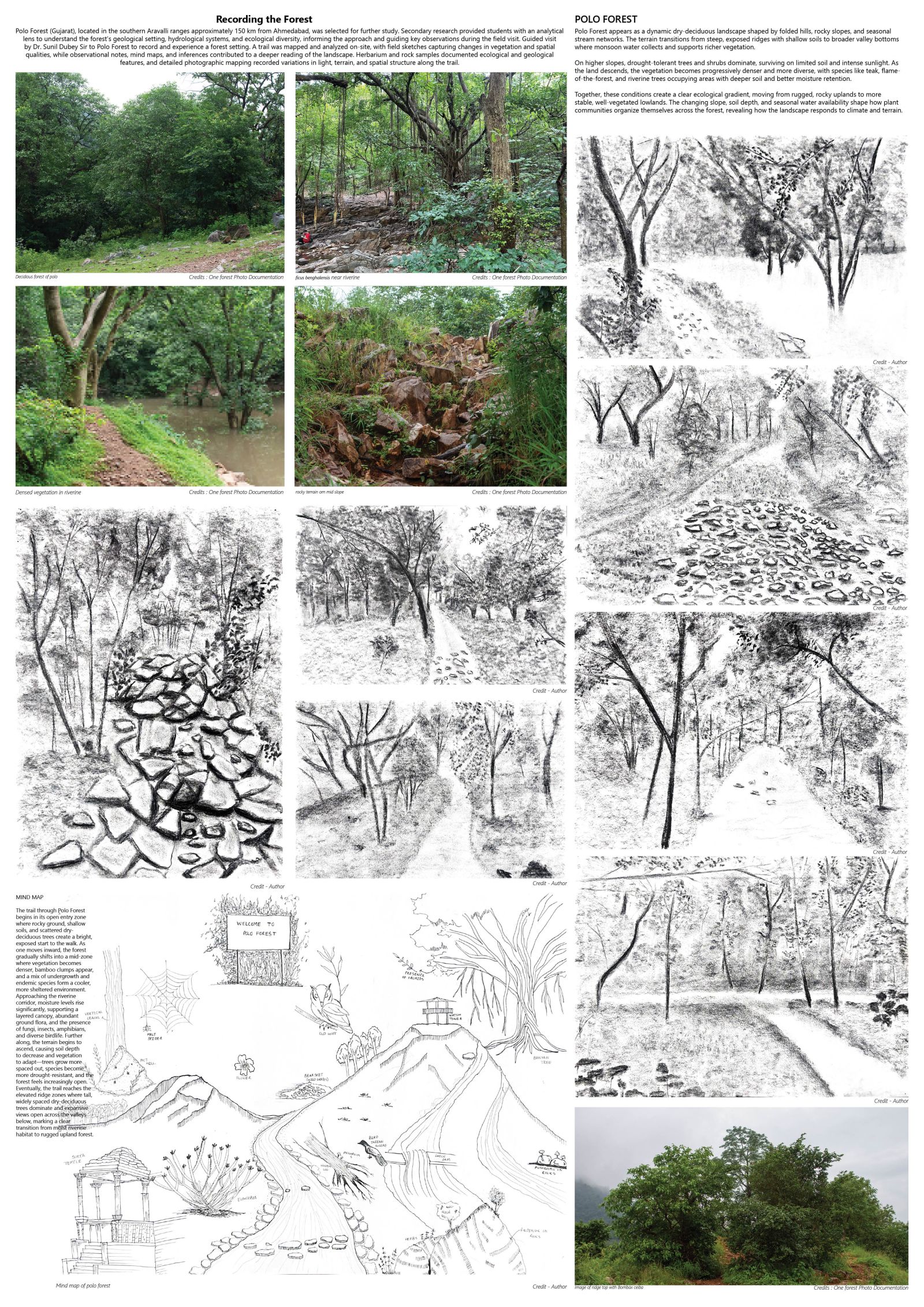
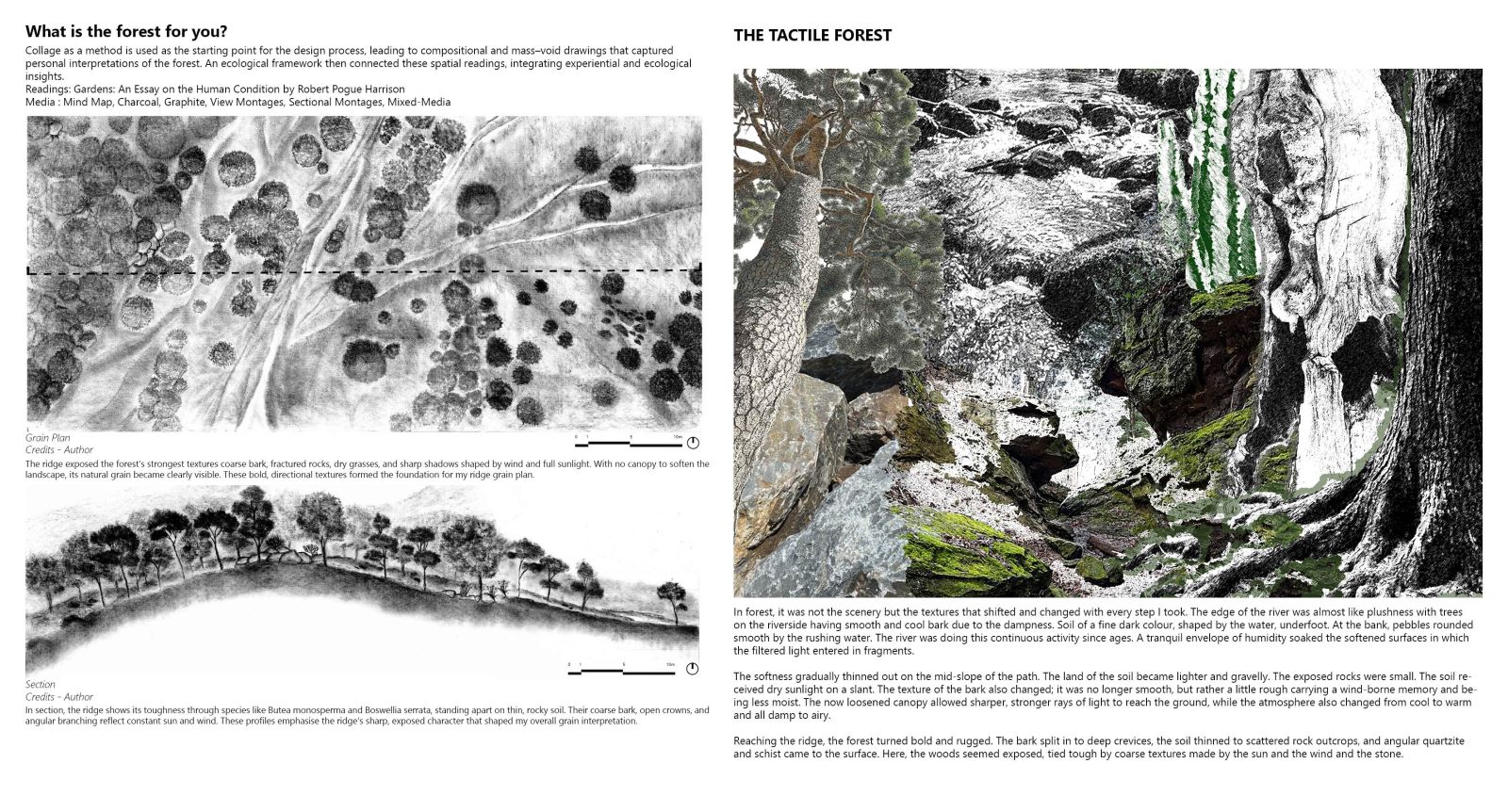
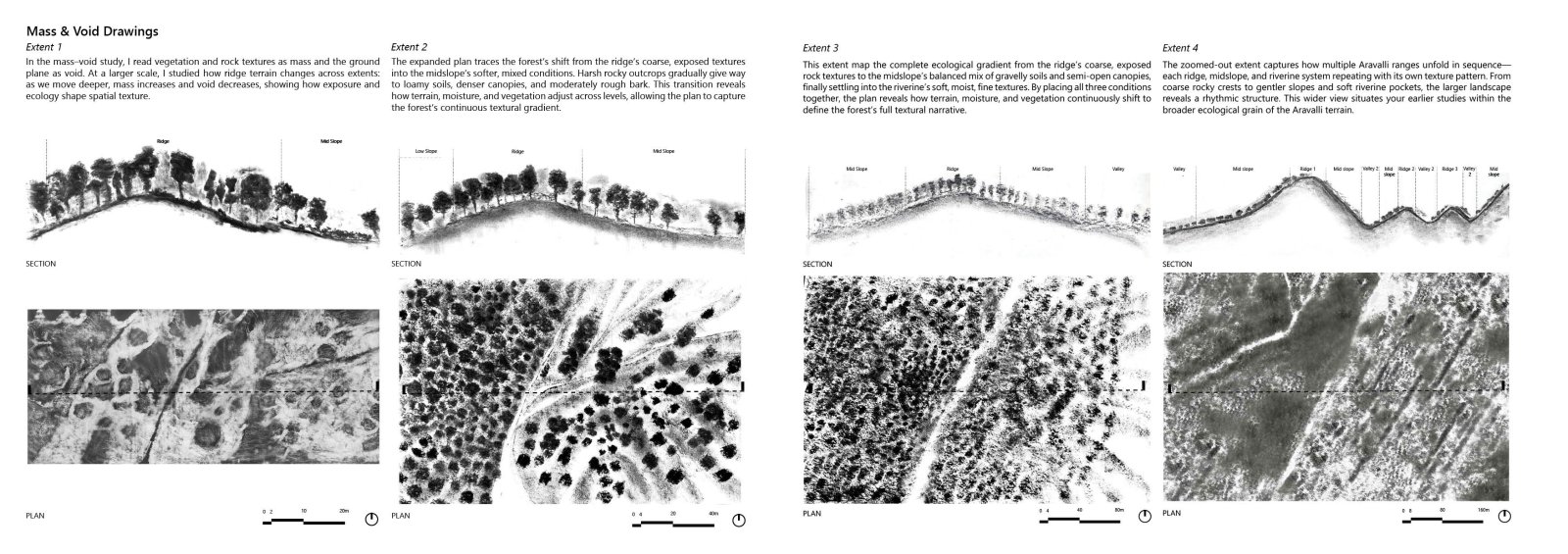
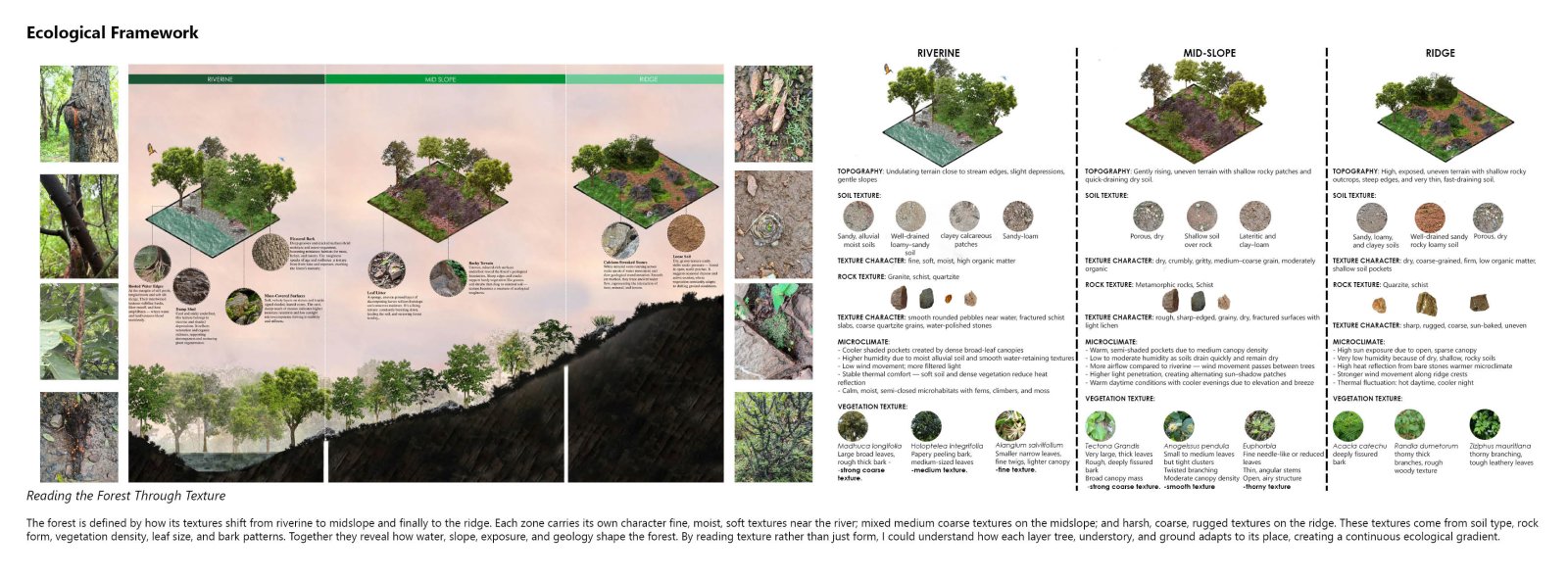
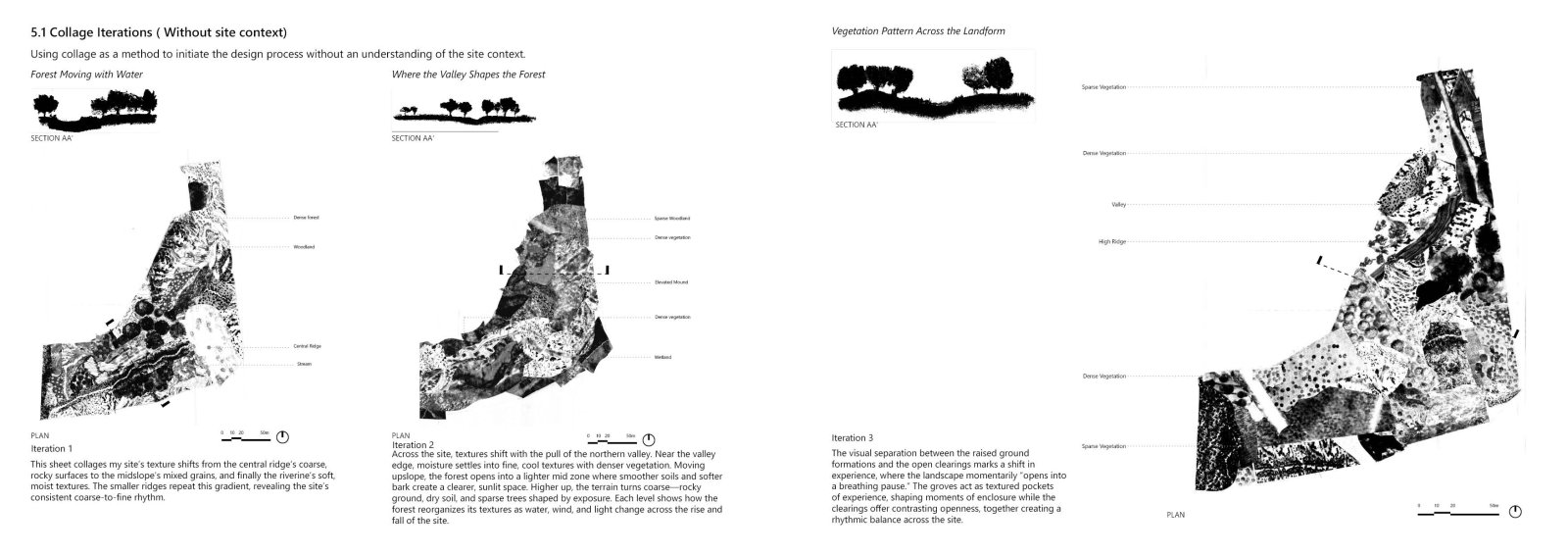
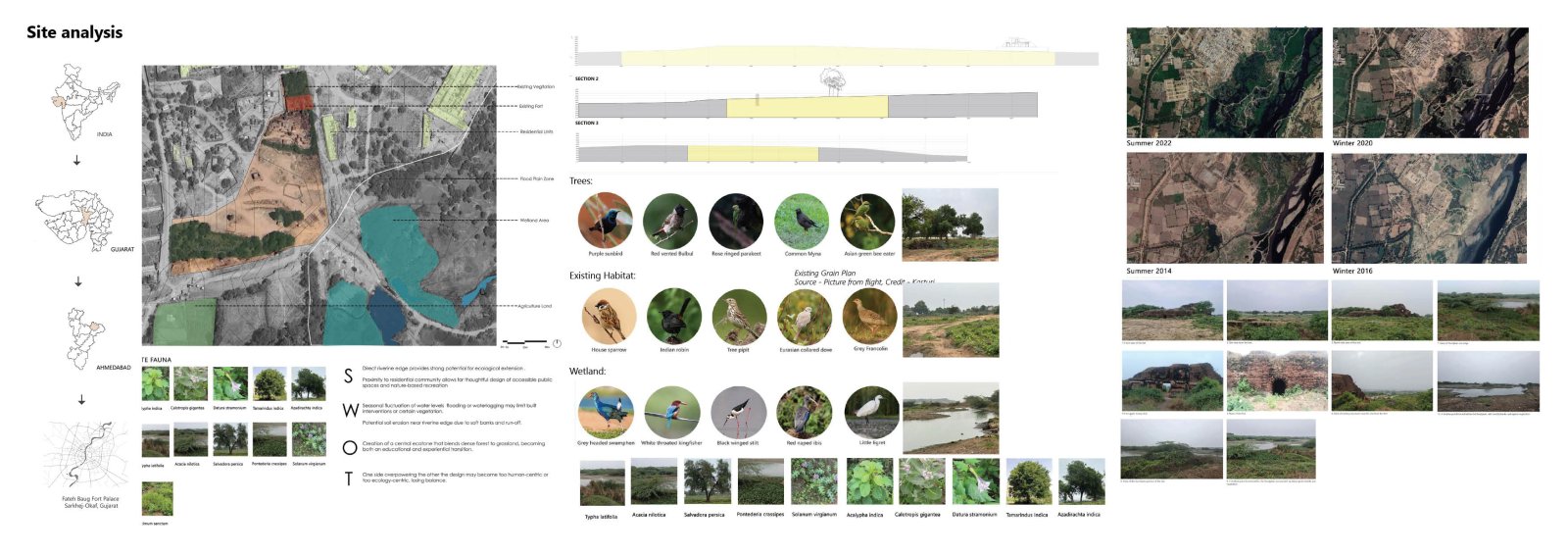
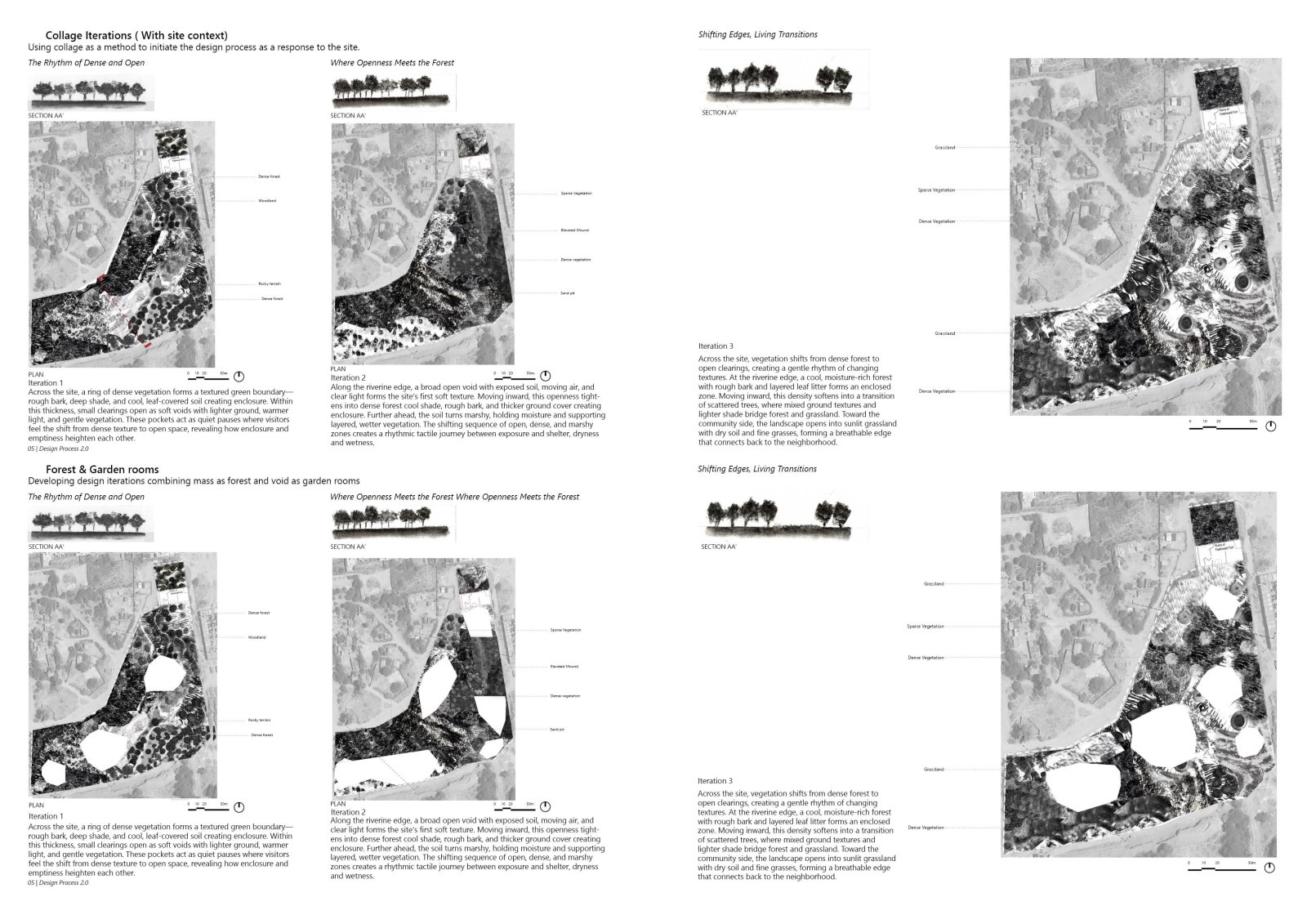
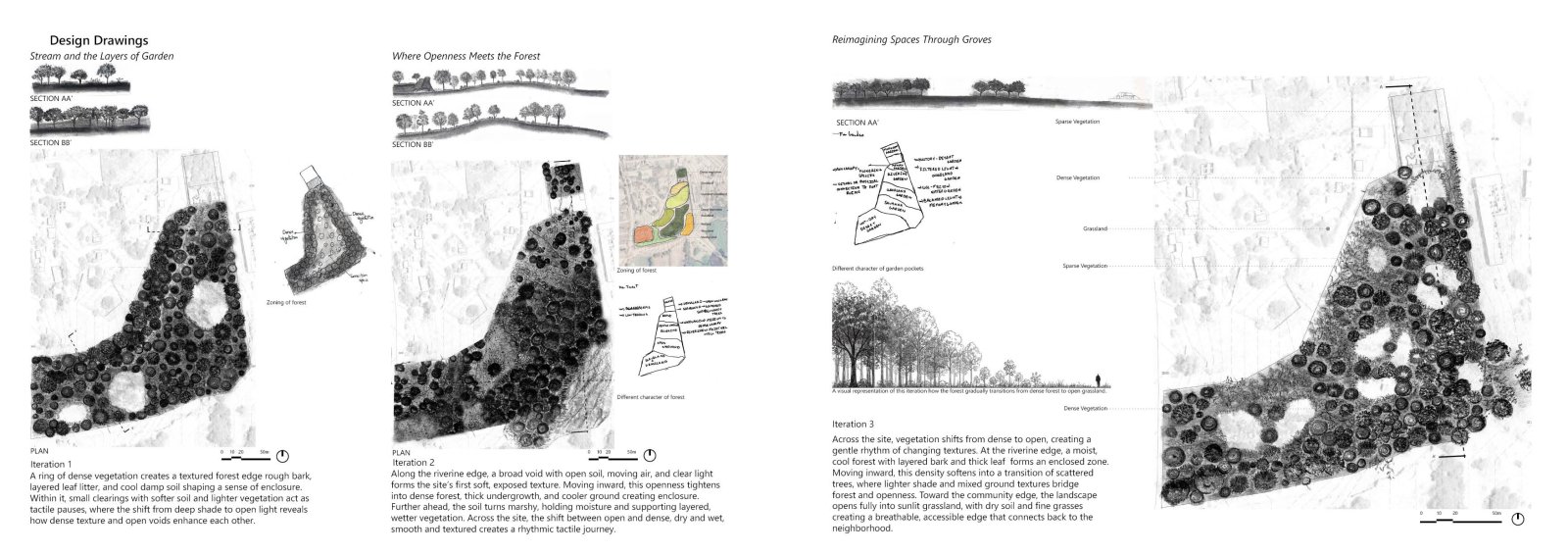
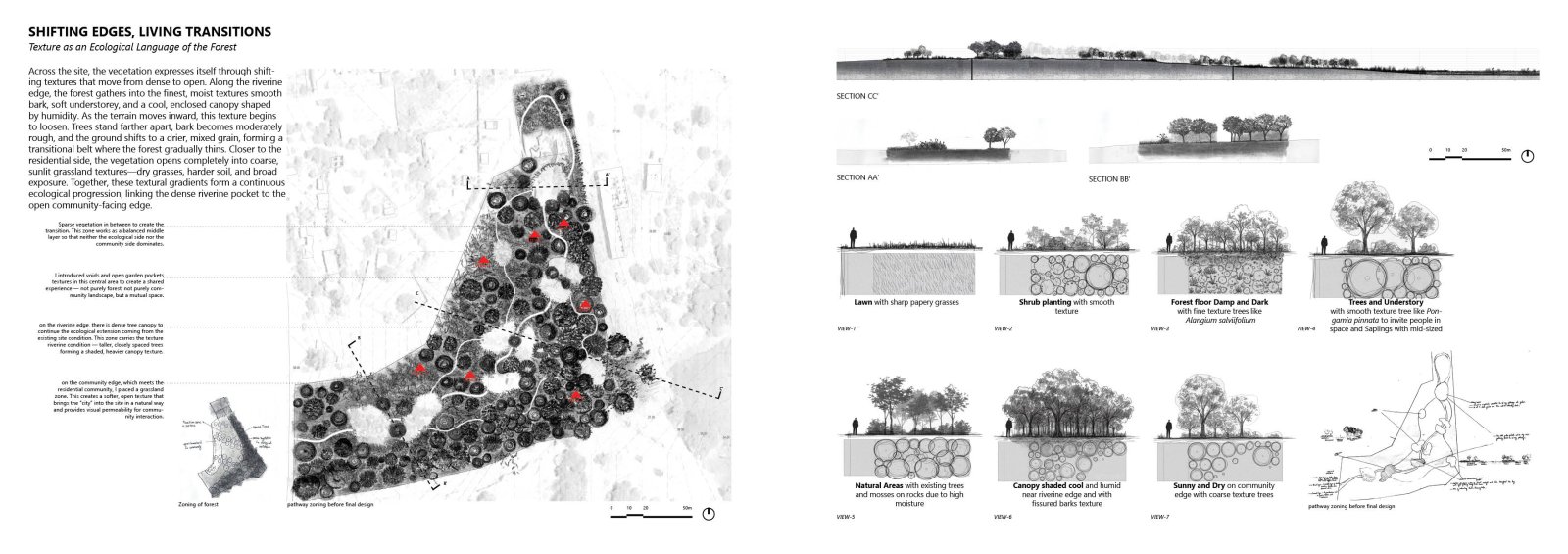
Our design journey started with understanding what a "forest" truly is. Before we visited the site, we sketched the forests we had seen before, aiming to capture their character, depth, and sensory qualities. This helped us grasp what a forest means through experience rather than just analysis. Using these impressions, we created a point-based system to observe its components: location, vegetation type, density, terrain, and atmosphere. With this foundation, we headed to Polo Forest. Before our visit, we conducted secondary research and created various maps to understand the site’s geology, hydrology, ecology, and terrain. At the forest, we sketched its layers, observed the canopy and ground patterns, and later created memory drawings that translated our personal experiences into visual form. We mapped and sectioned the selected grain to study its spatial organization. Then, we explored how density, openness, and thresholds work in the forest. At the same time, we examined the relationship between the forest and the city, focusing on how they connect, contrast, and influence each other. After our site visit, we wrote a narrative about what a forest means to each of us, capturing our emotional responses to the site. From this narrative, we developed abstract drawings that expressed the essence of our experience. Using the forest grain, we moved on to making collages. First, we did this without site context to freely explore spatial ideas. Then, we added site context to ground those ideas. In these collages, we included white spaces, which served as moments of pause, openness, or uncertainty. These became the foundation for our design iterations, where mass-void logic, white spaces, and collage layers started to form a clear spatial strategy. Through refinement, we reached one final iteration, where we created pathways and designed garden pockets that reflect the site’s ecological and experiential story.
View Additional Work