Your browser is out-of-date!
For a richer surfing experience on our website, please update your browser. Update my browser now!
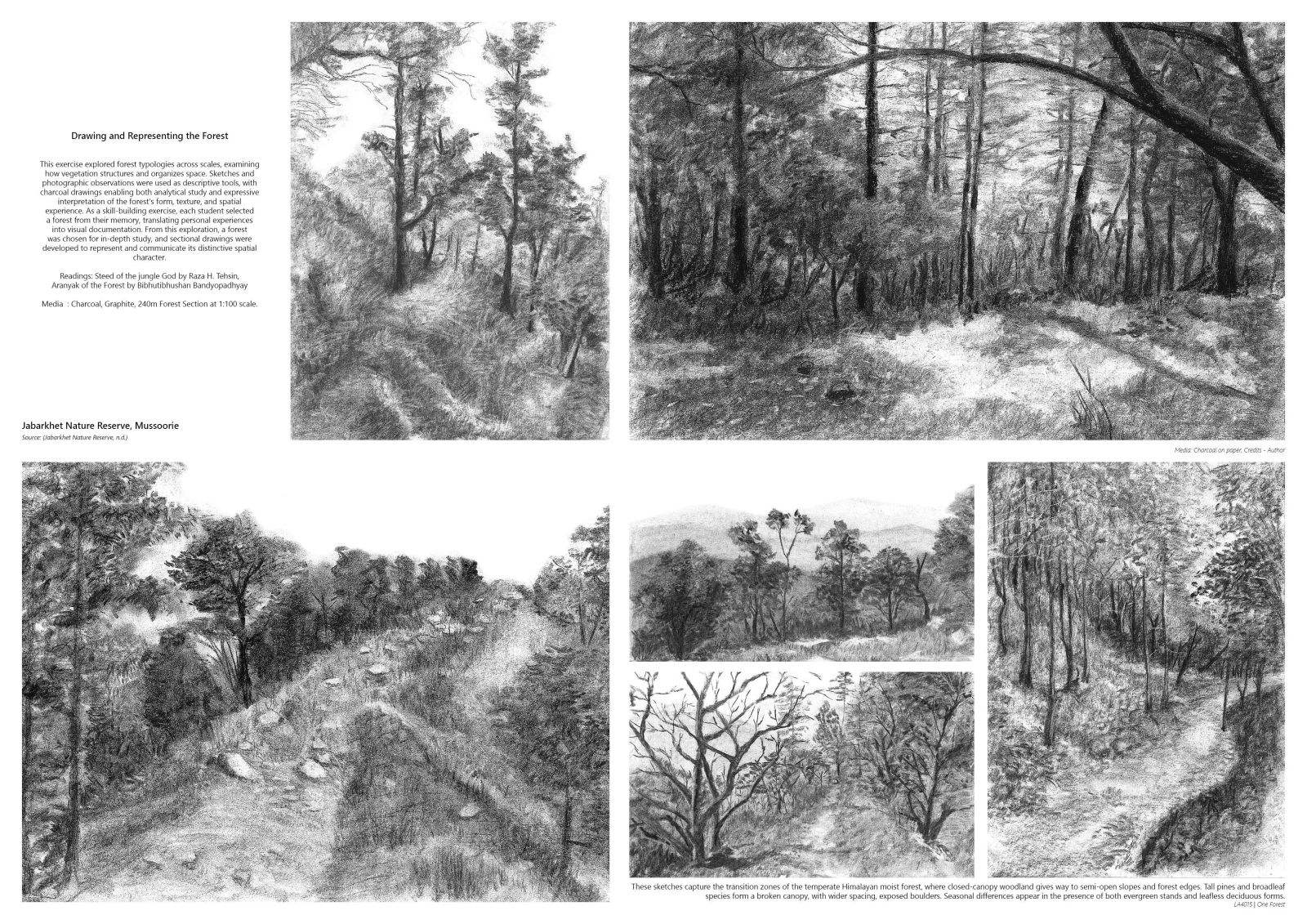
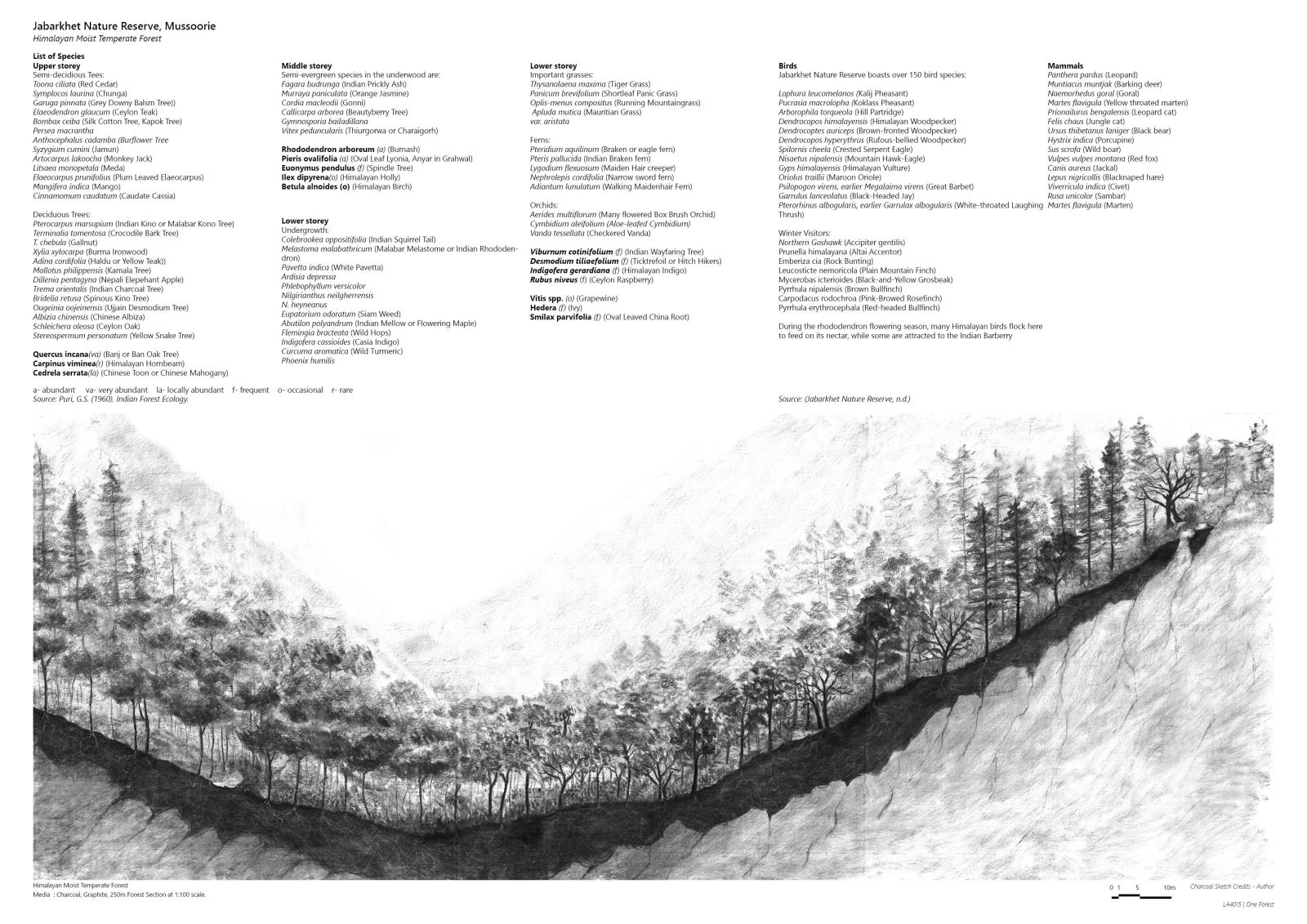
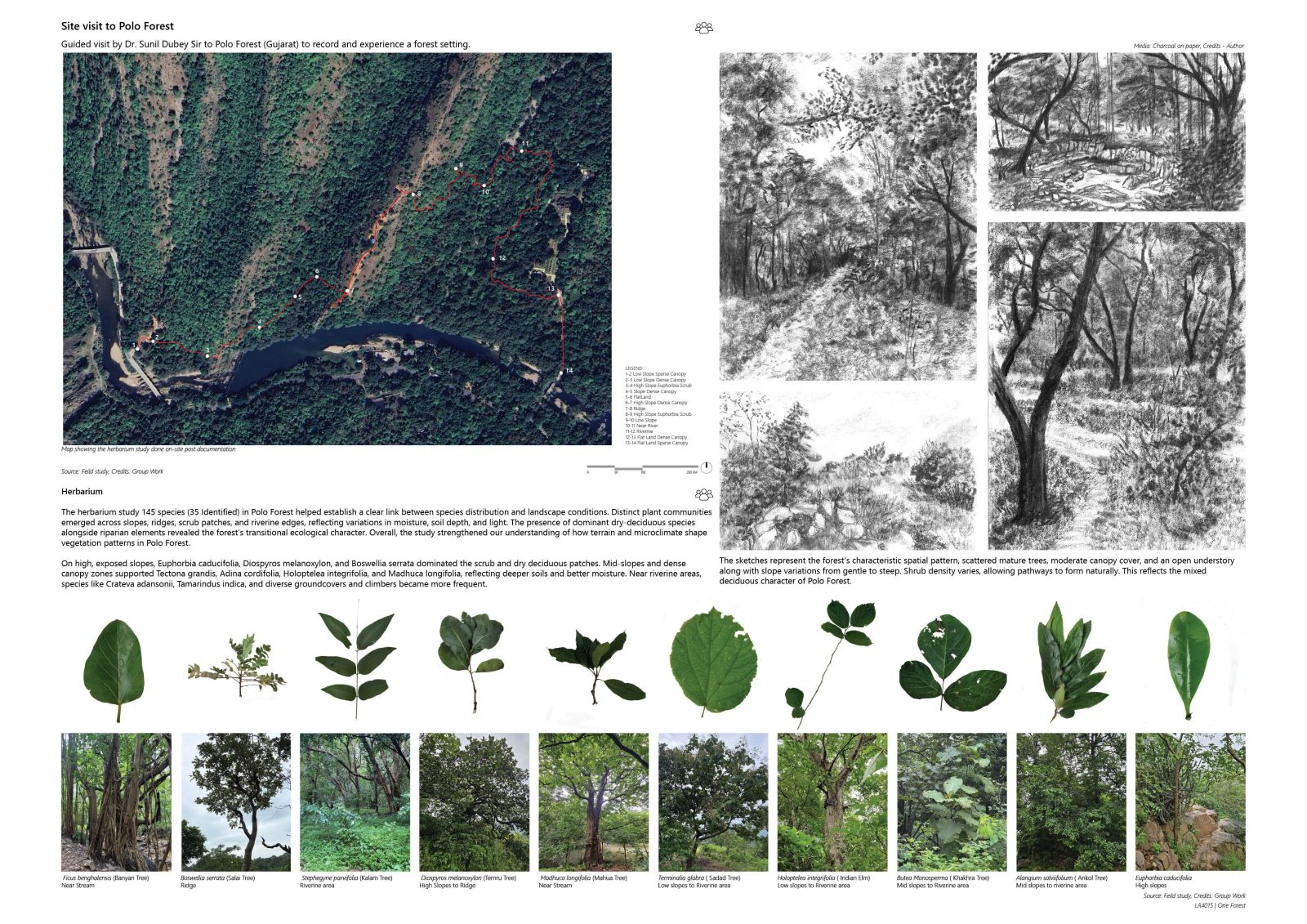
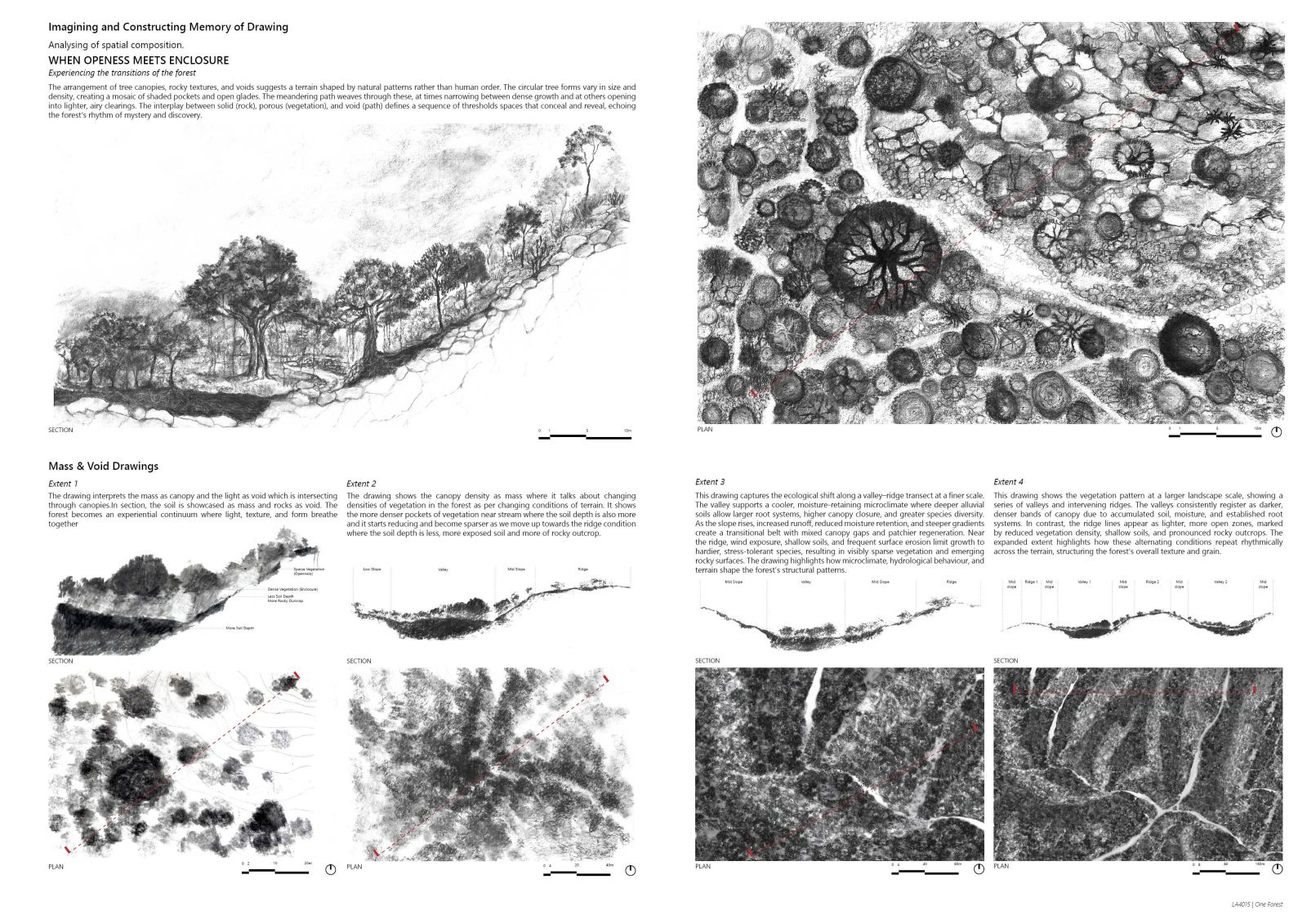
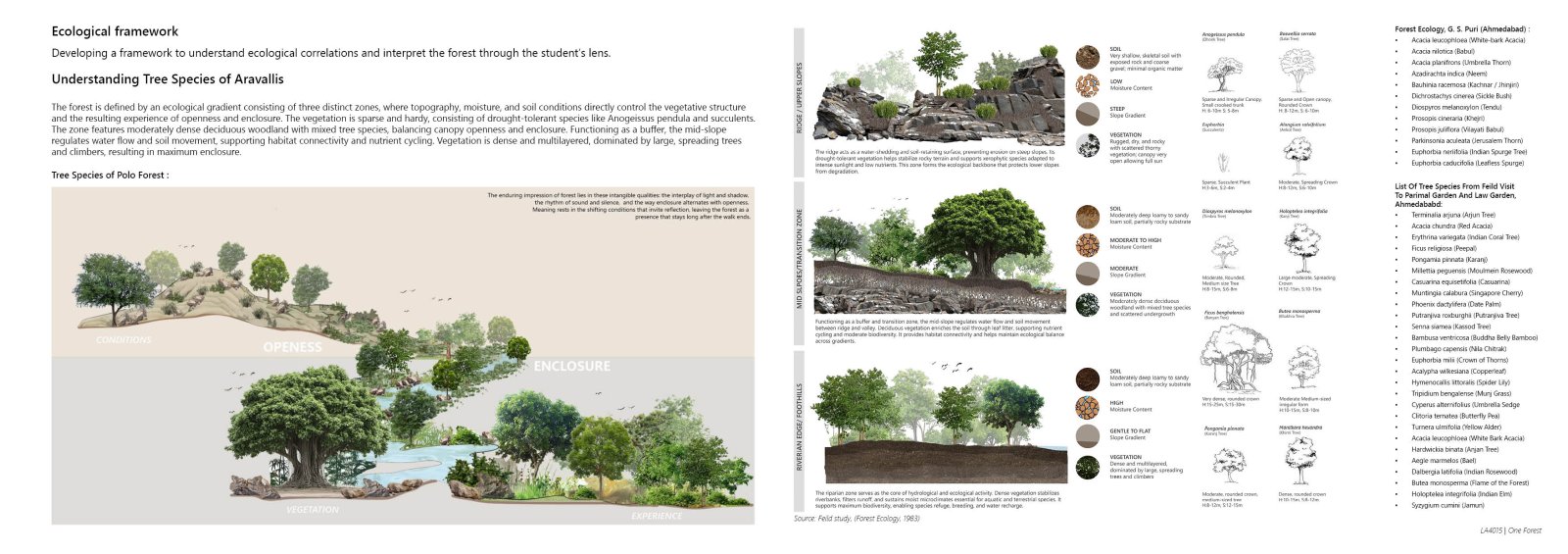
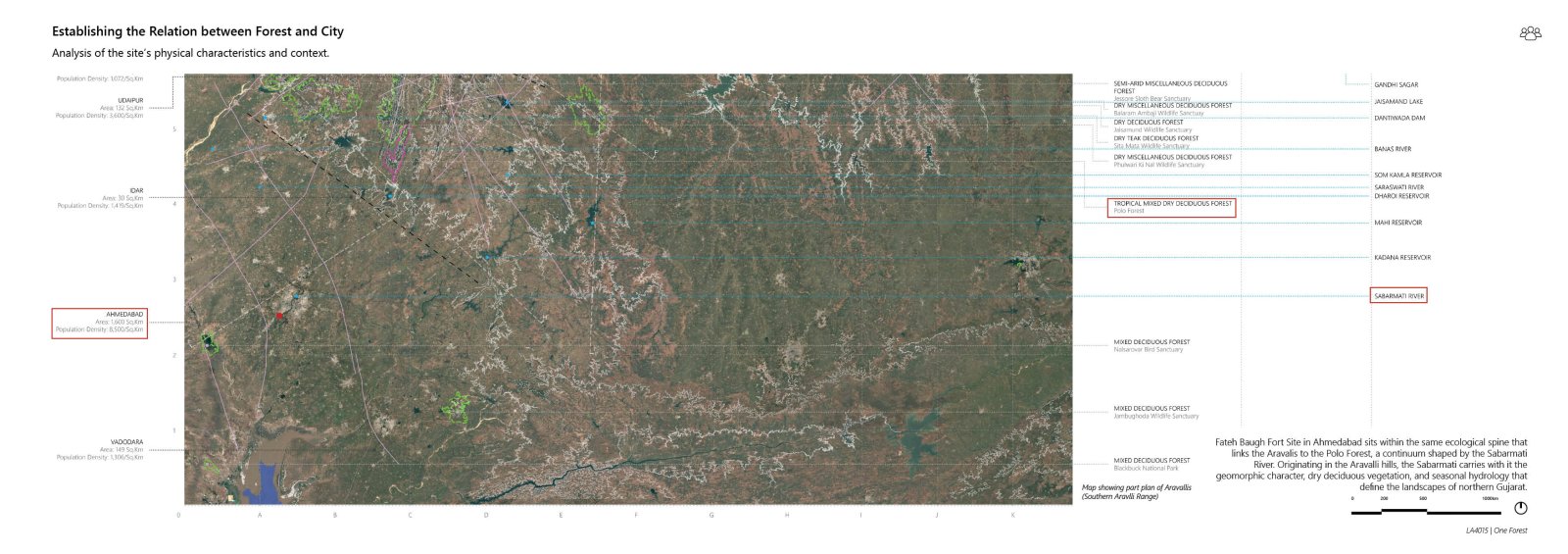
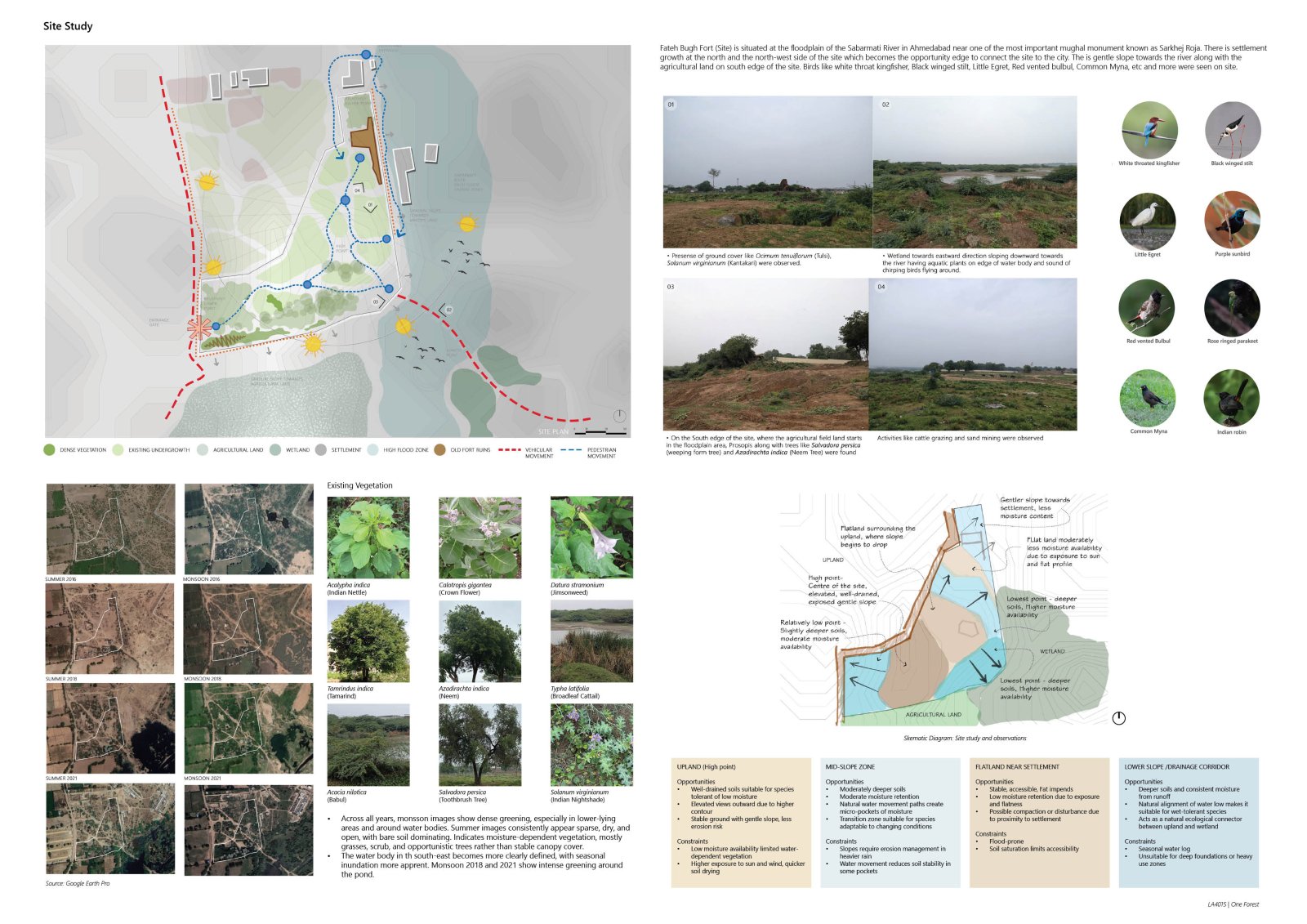
This project emerges from an extended study of forest landscapes, beginning with understanding the ecological character of Jabarkhet Nature Reserve and later grounding the research through field documentation in Polo Forest, Aravalli. The approach focused on reading the forest through its geology, hydrology, vegetation patterns, and species behaviour across ridge, mid-slope, and valley zones. The ecological framework developed from this analysis established clear correlations between slope gradient, soil conditions, and vegetation density, framing the forest not only as an ecological system but also as an experiential sequence shaped by natural thresholds.
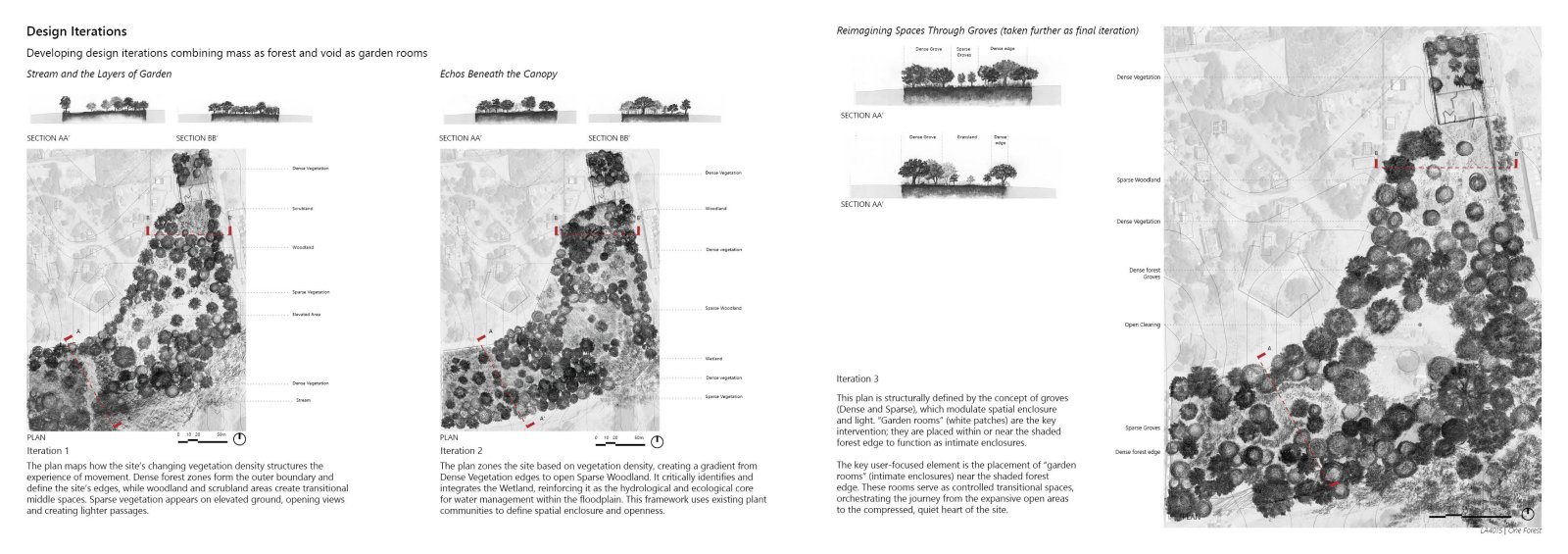
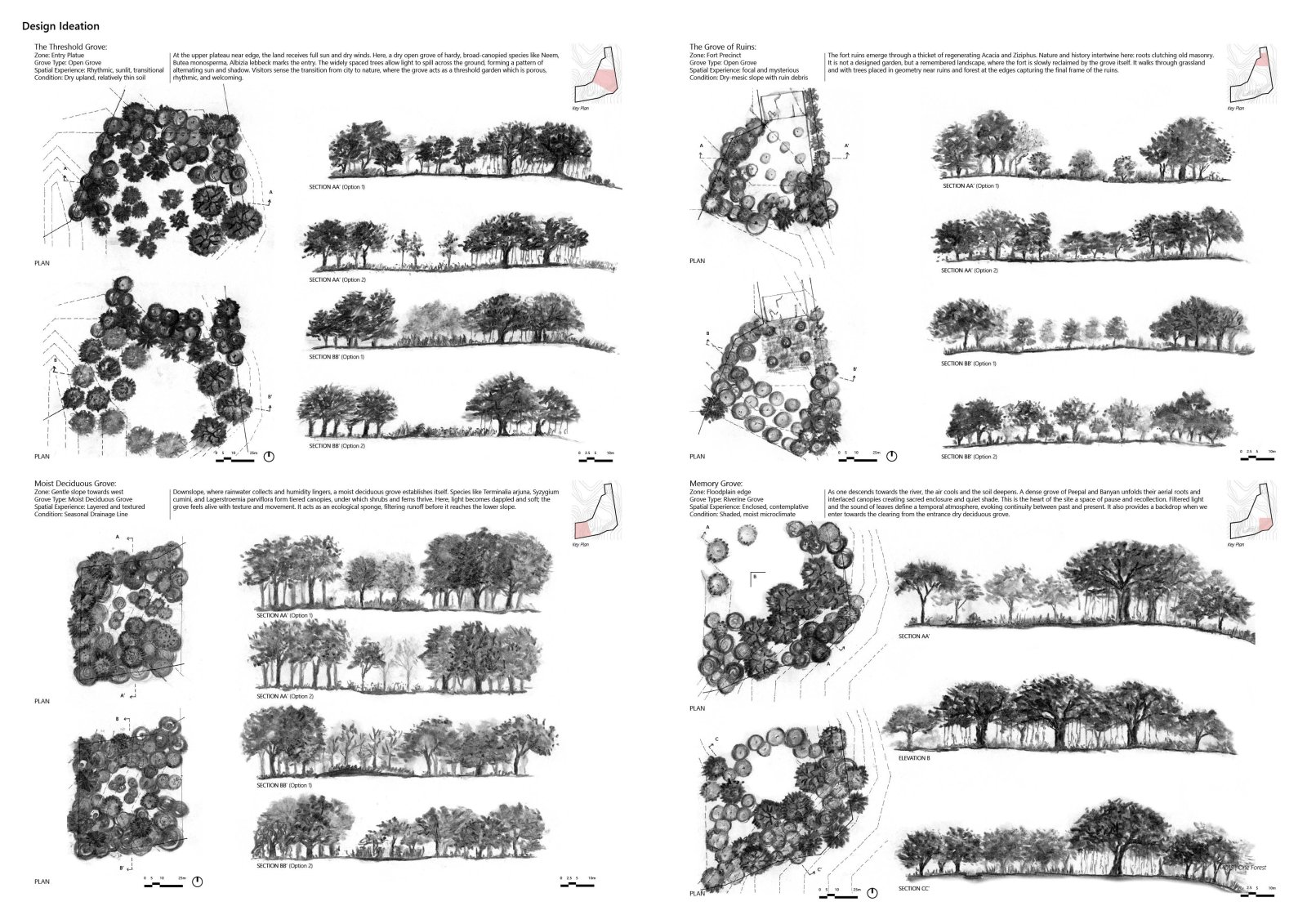
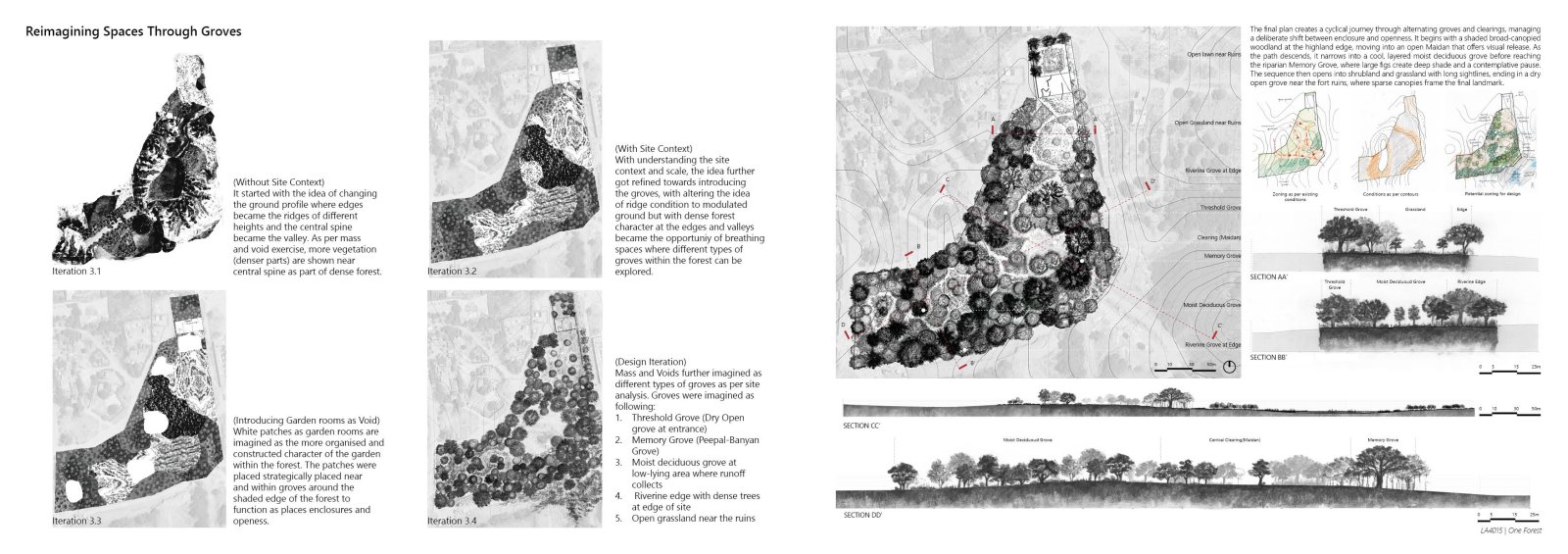
Taking these learnings forward, the project explores groves as the primary architectural and spatial tool. Groves are interpreted as grounded, vegetative rooms that respond to varying site conditions while maintaining the essence of forest character. Through iterations, mass–void relationships, ridge–valley readings, and species-based cues were translated into designed grove typologies such as threshold groves, memory groves, deciduous low-lying groves, riverine edges, and open grassland patches. The final proposal reimagines the site as a network of differentiated groves, each rooted in ecological logic while offering varied degrees of shade, openness, enclosure, and spatial clarity.