Your browser is out-of-date!
For a richer surfing experience on our website, please update your browser. Update my browser now!
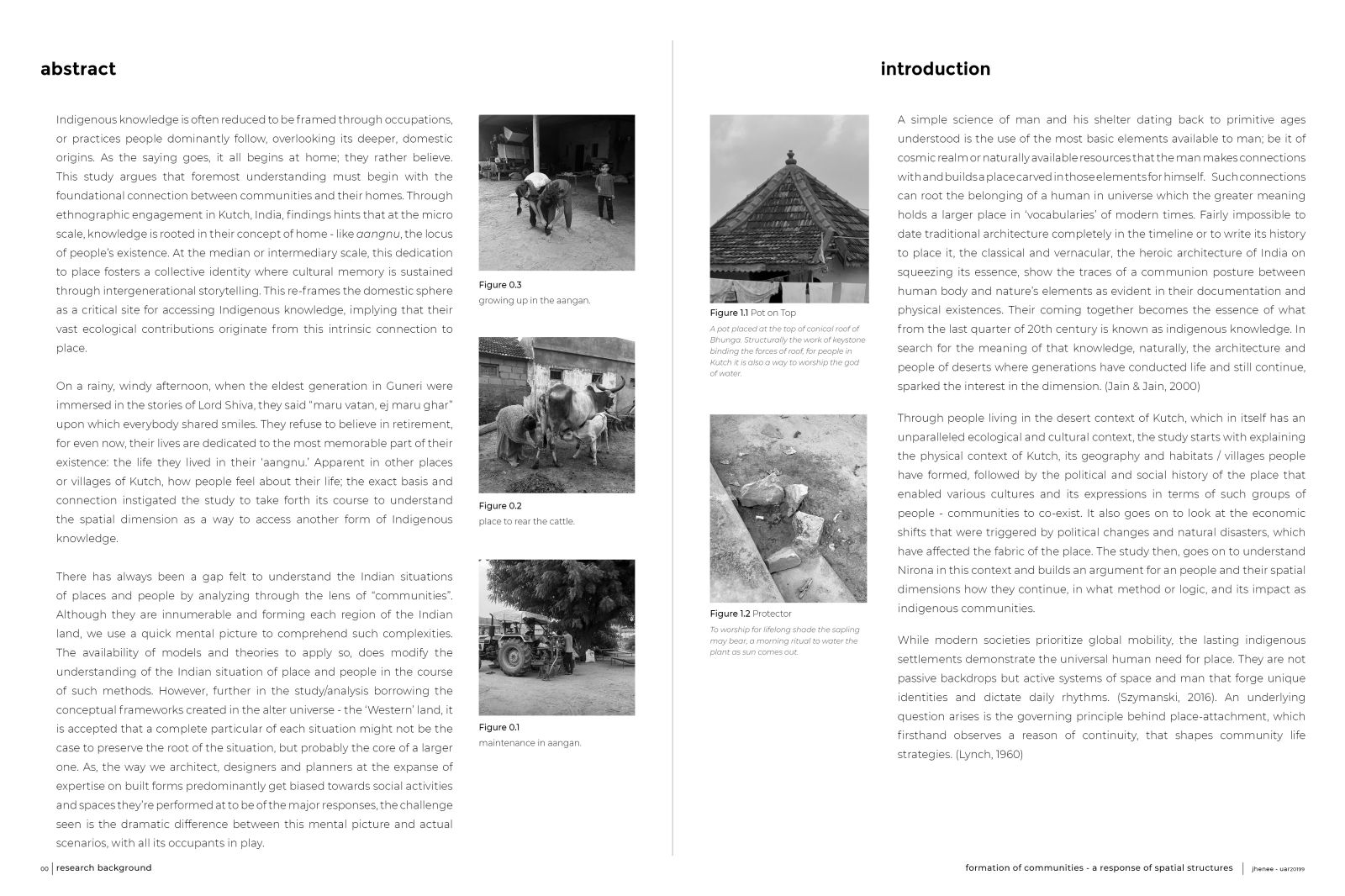
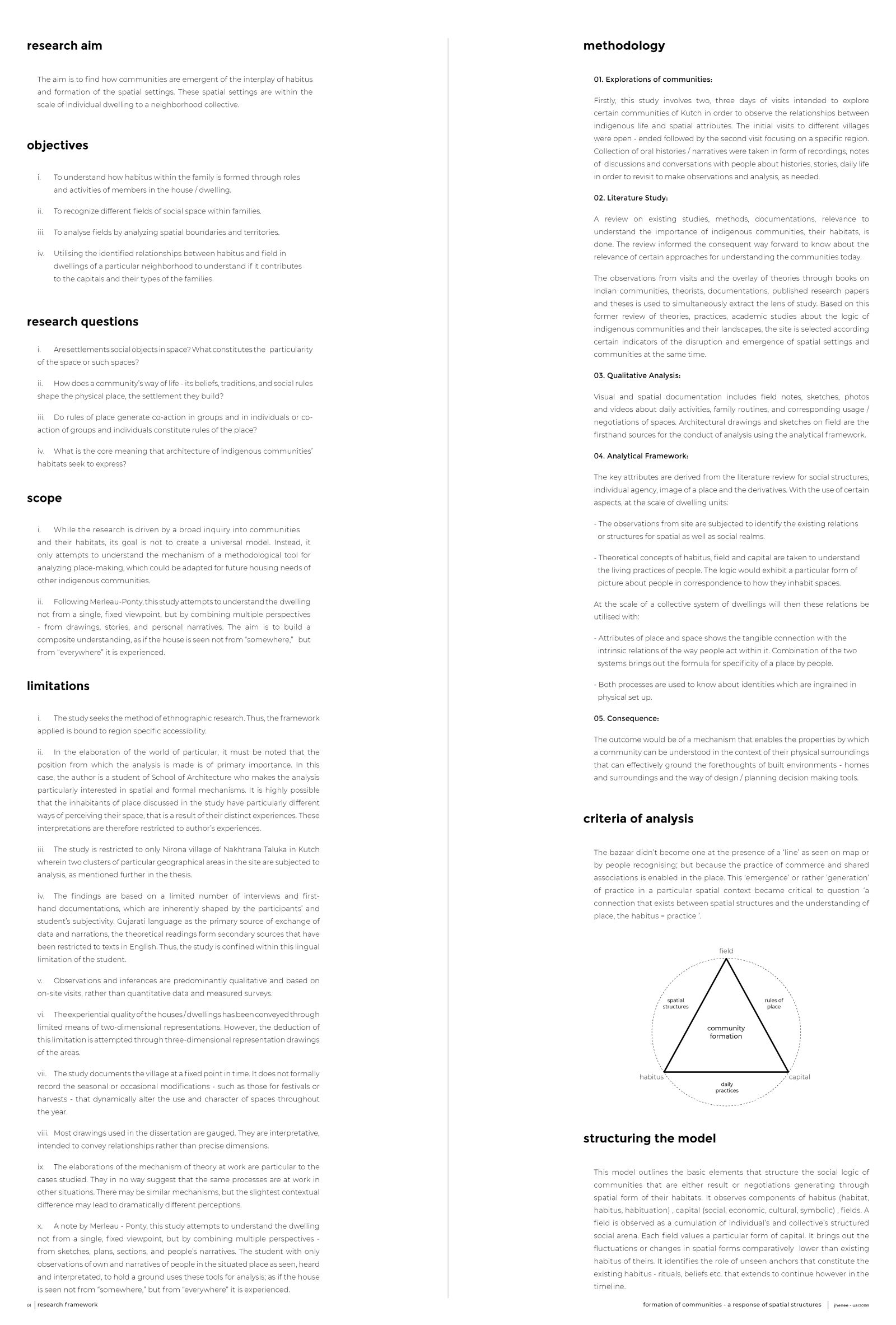
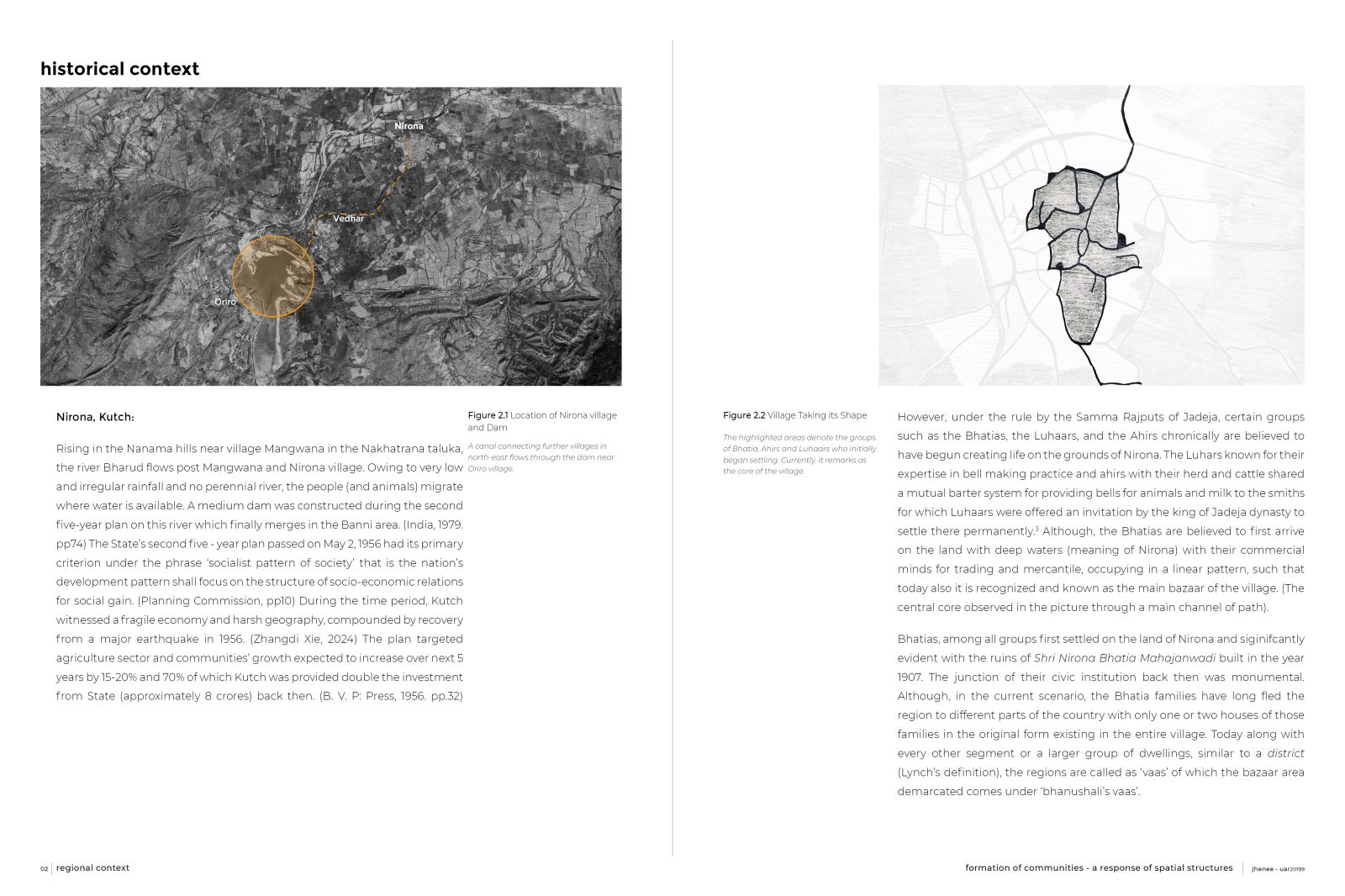
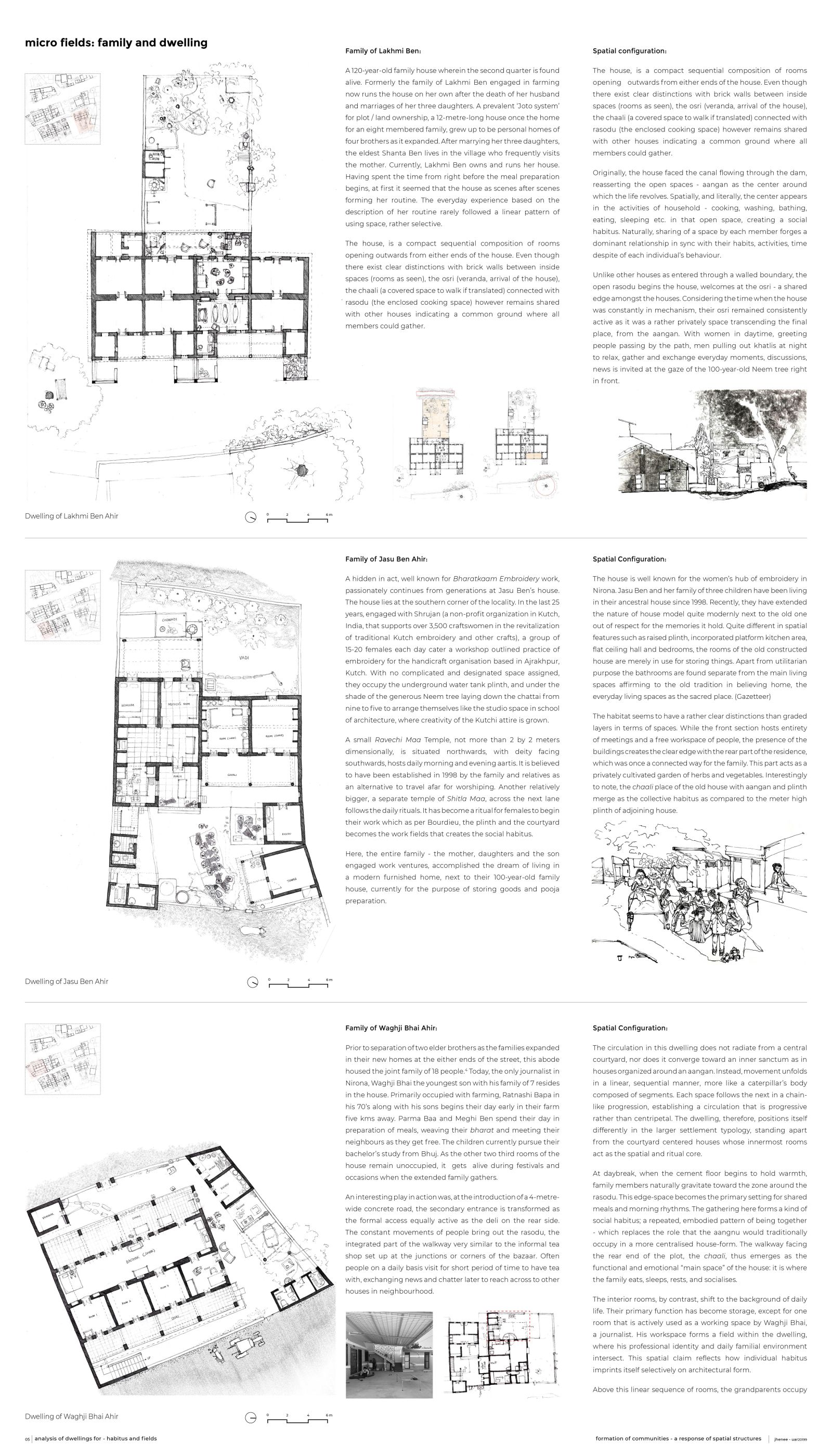
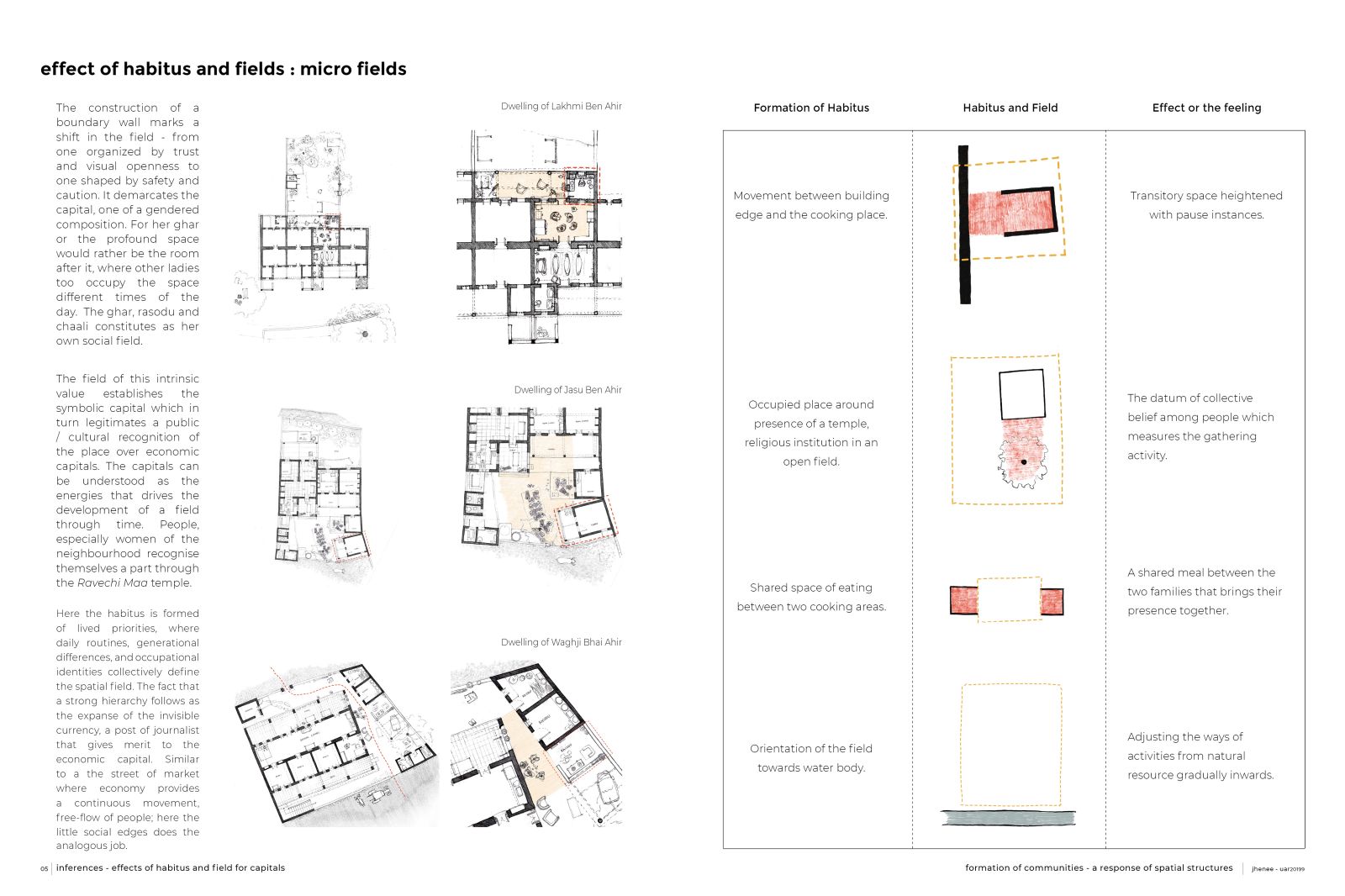
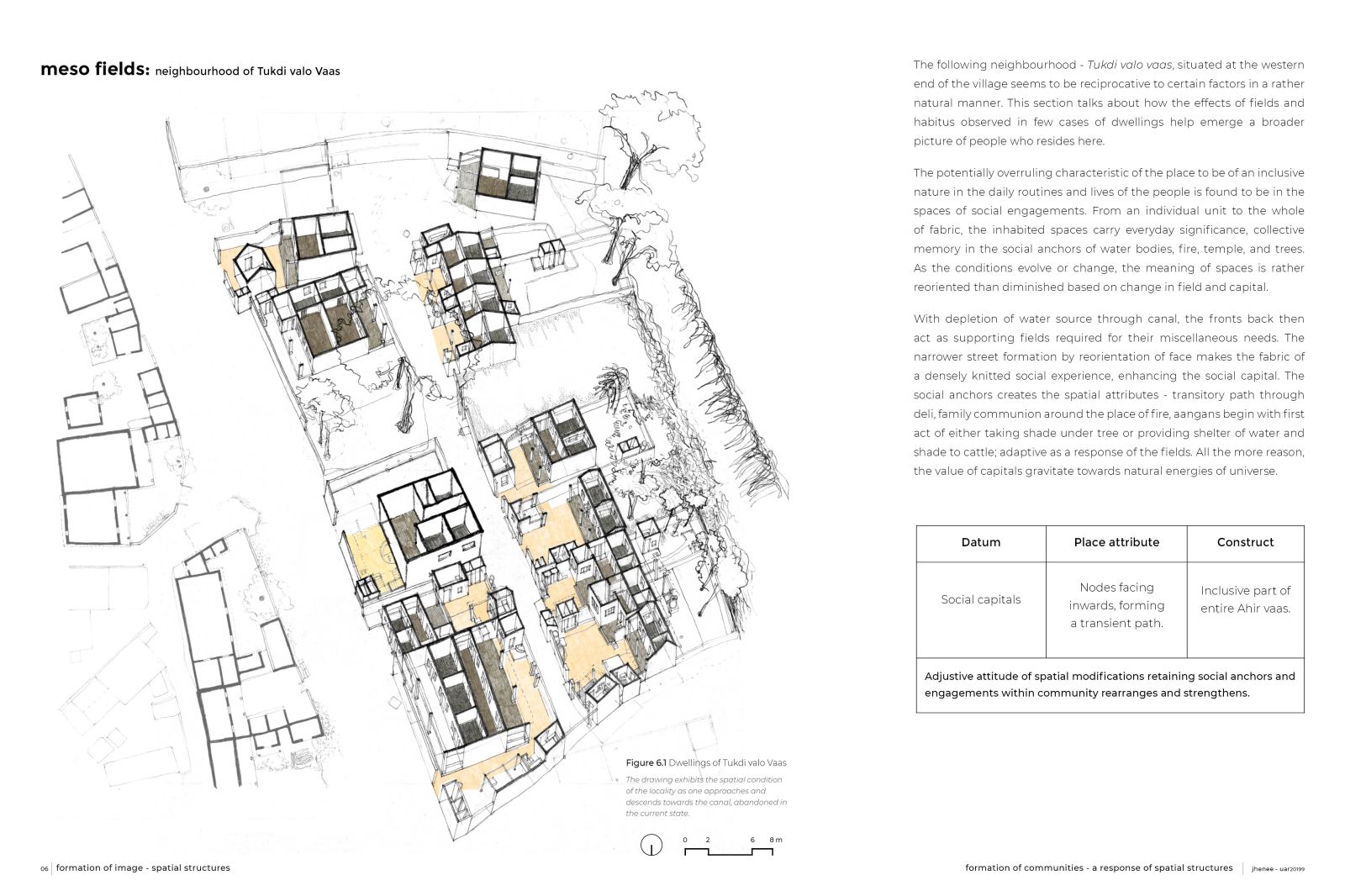
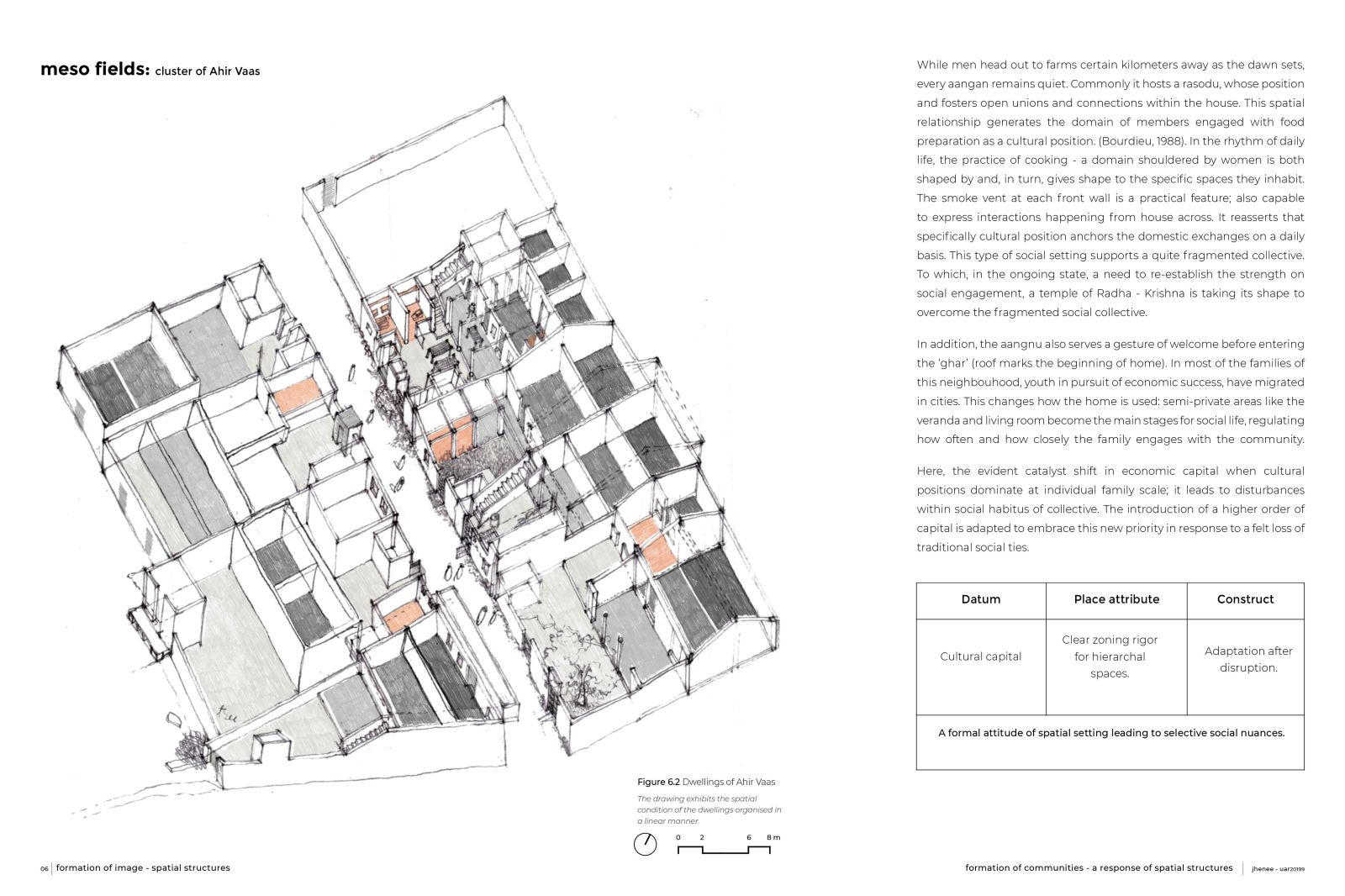
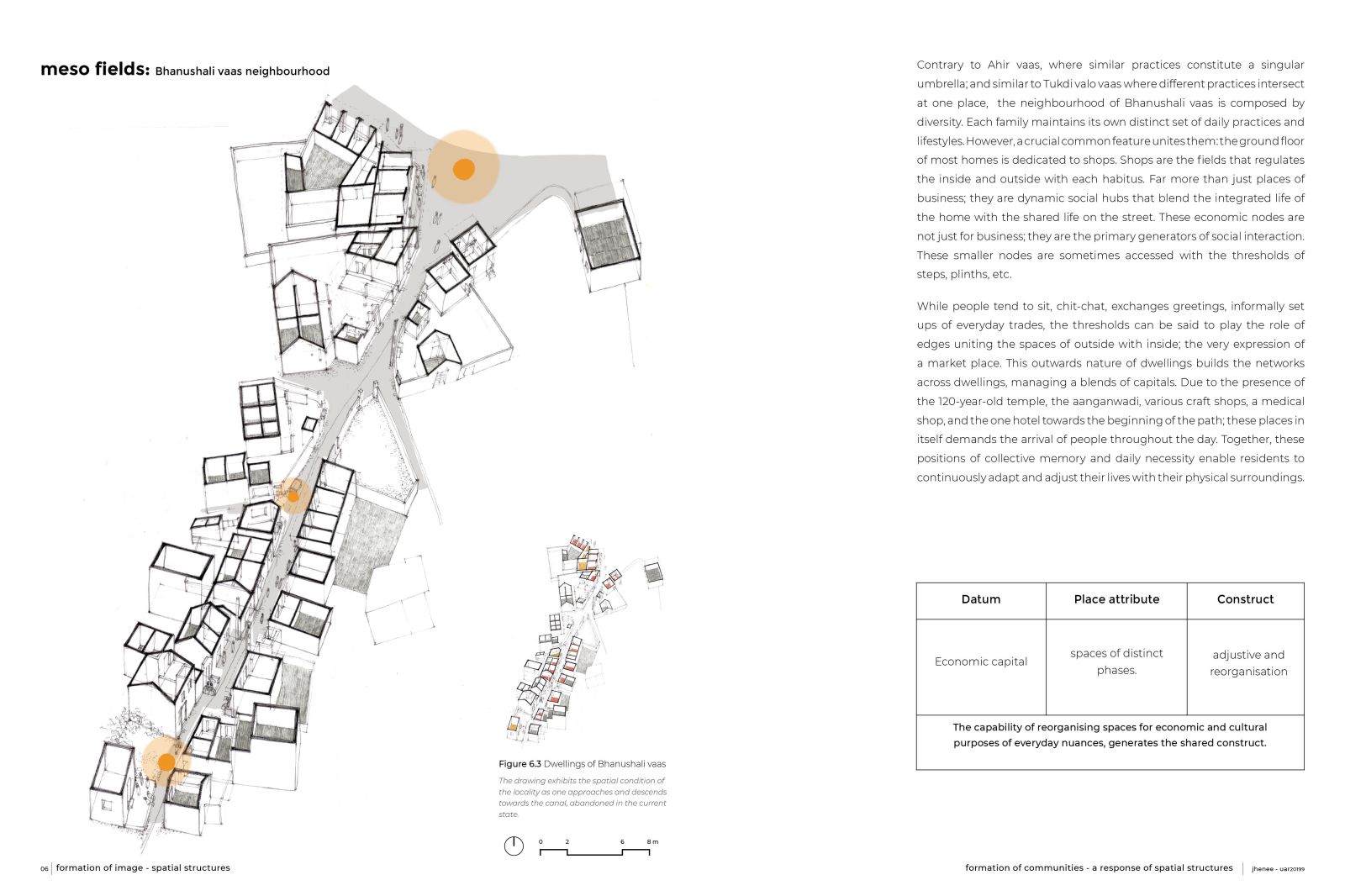
The study is about how indigenous practices are supported by their spatial structures, which are also one of the reasons for the continuity of such practices. Spatial structures here mean the physical settings formulating a social structure of the community. In the case of Nirona, Kutch, known for being the hub of various practices and arts-driven groups, it follows somewhat a persistent combination of old and new, dense and porous, fixed and shifting, and old and emerging fabric at once. The research aim is to find how communities are emergent from the interplay of habitus and formation of the spatial settings. These spatial settings are within the scale of an individual dwelling to a neighborhood collective.
View Additional Work