Your browser is out-of-date!
For a richer surfing experience on our website, please update your browser. Update my browser now!
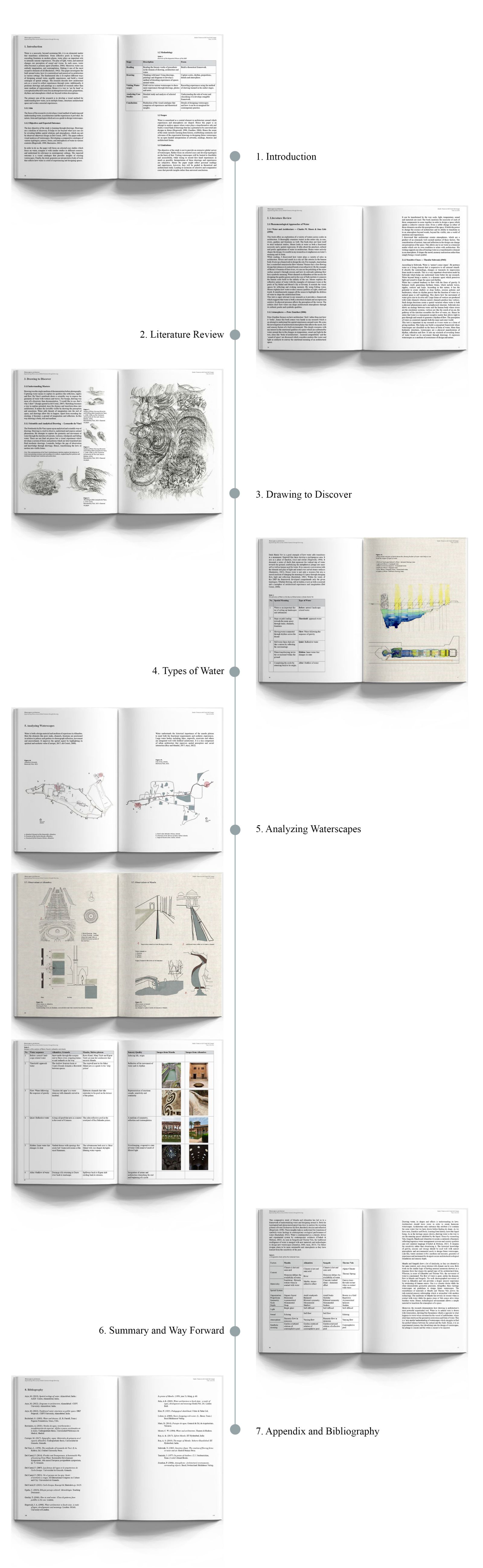
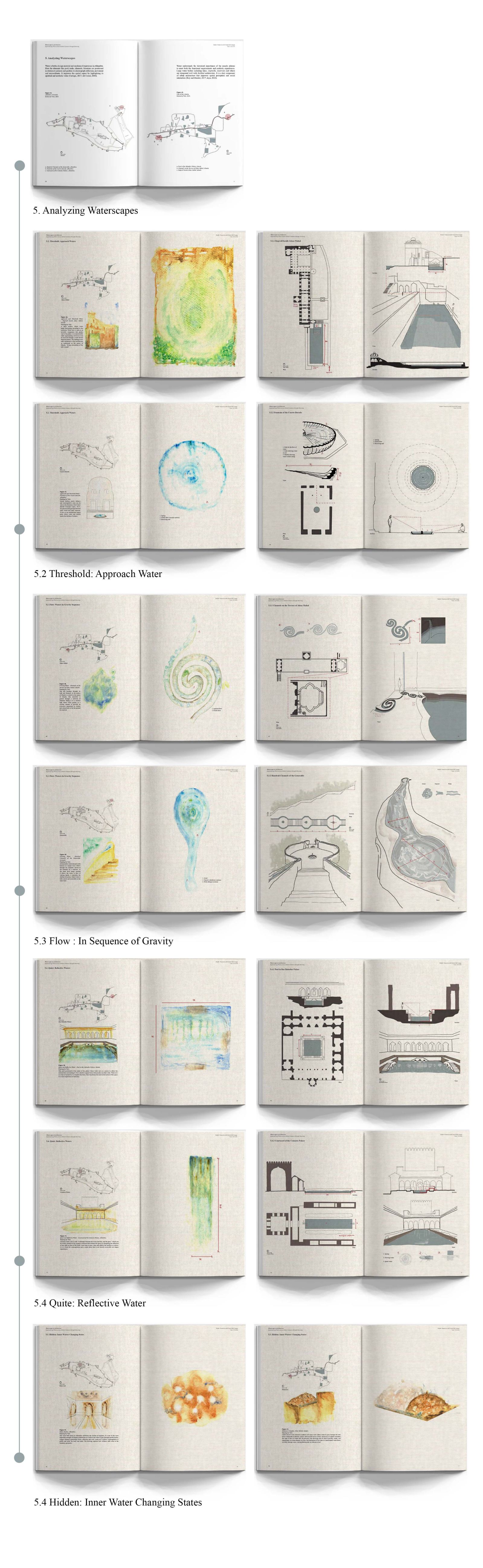
Abstract Water, as seen in drawings, has a dual nature. Leonardo da Vinci’s scientific method to analyse vortices and currents helps one understand its behavior. Its sensuality can be experienced in the atmospheric strokes of Turner, and Paul Klee comprehends water in an abstract way through rhythm, lines and colors. This research analyzes Mandu and Alhambra as two cases where experiences are shaped by water. Mandu’s dynamic flow based on seasonal showers is reflected in its tanks, reservoirs and stepwells. While on the other hand, Alhambra illustrates a controlled and contemplative nature of water through its pools, channels and fountains. Studying these contrasting contexts, discloses two logics of dealings with water. From these insights, a visual guide of designing waterscapes is set to understand the role of water in architecture. On the same intelligence, contemporary waterscapes like B.V. Doshi’s Sangath and Peter Zumthor’s Therme Vals are designed. Throughout, drawings become a method to design and a medium to experience waterscapes. Duality of water can be seen in the way softness of watercolors reflects the natural form of water and the strict lines showing its geometry when in contact with water. A mixed media catalogue is developed that represents water’s shifting attitude over time and place.
View Additional Work