Your browser is out-of-date!
For a richer surfing experience on our website, please update your browser. Update my browser now!
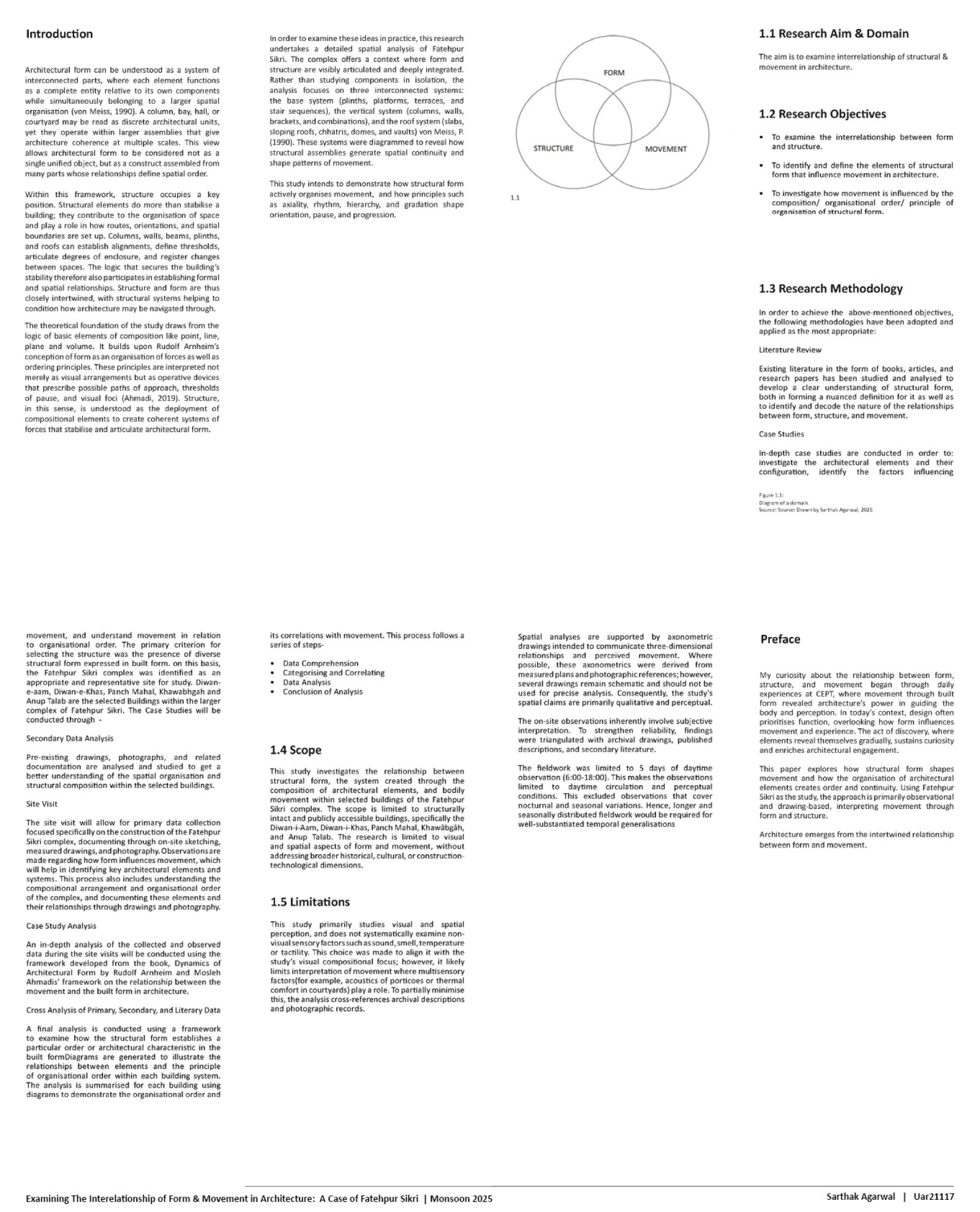
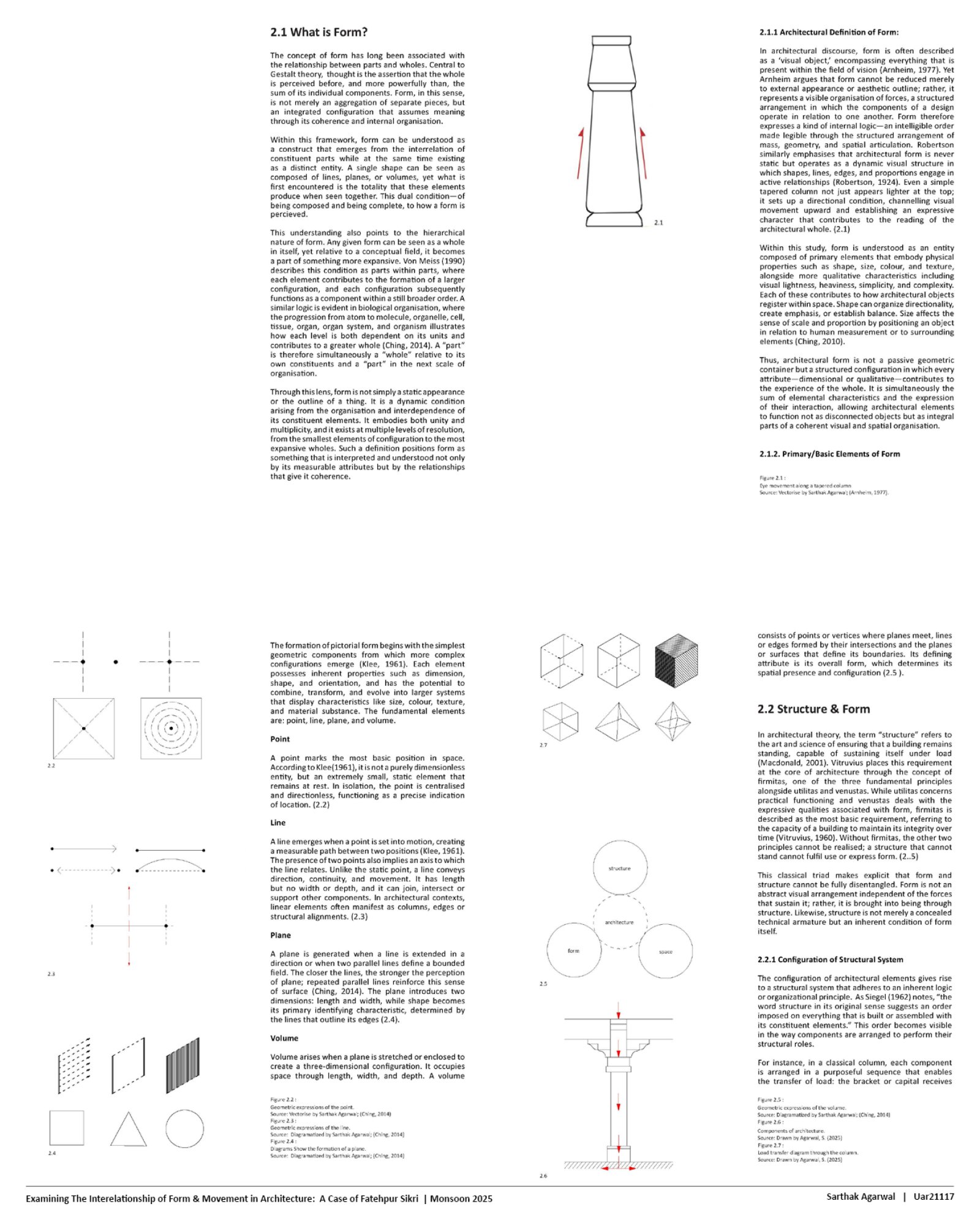
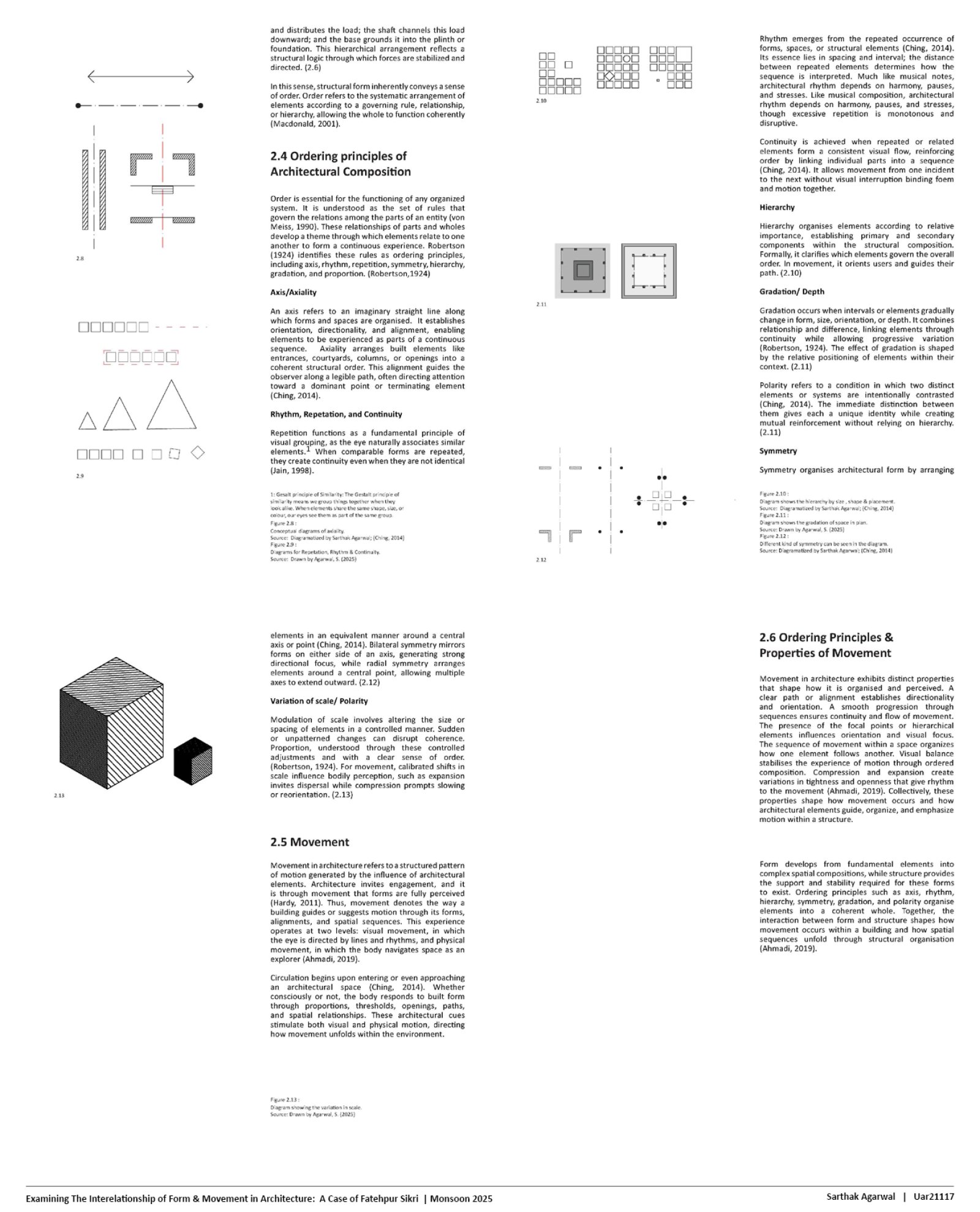
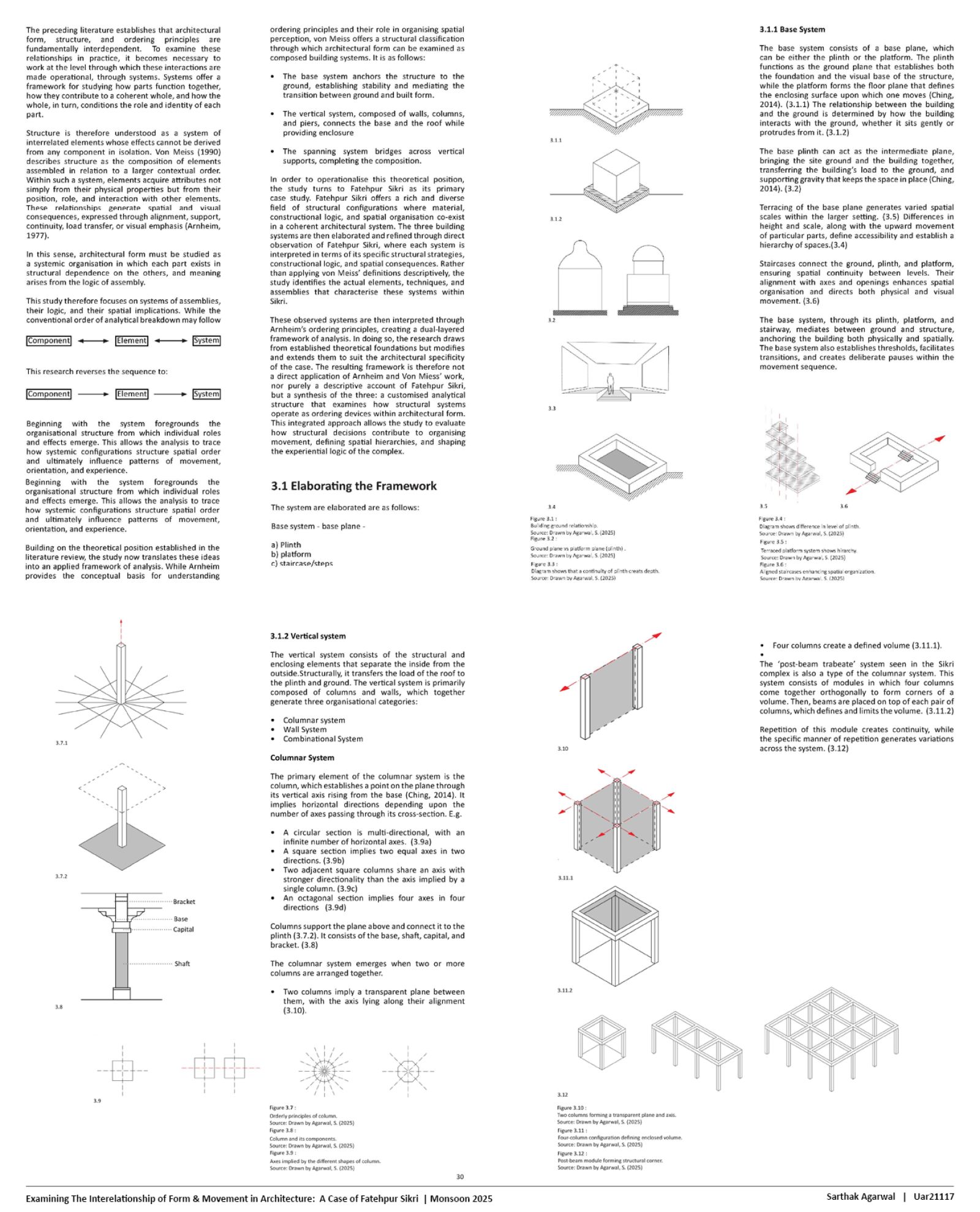
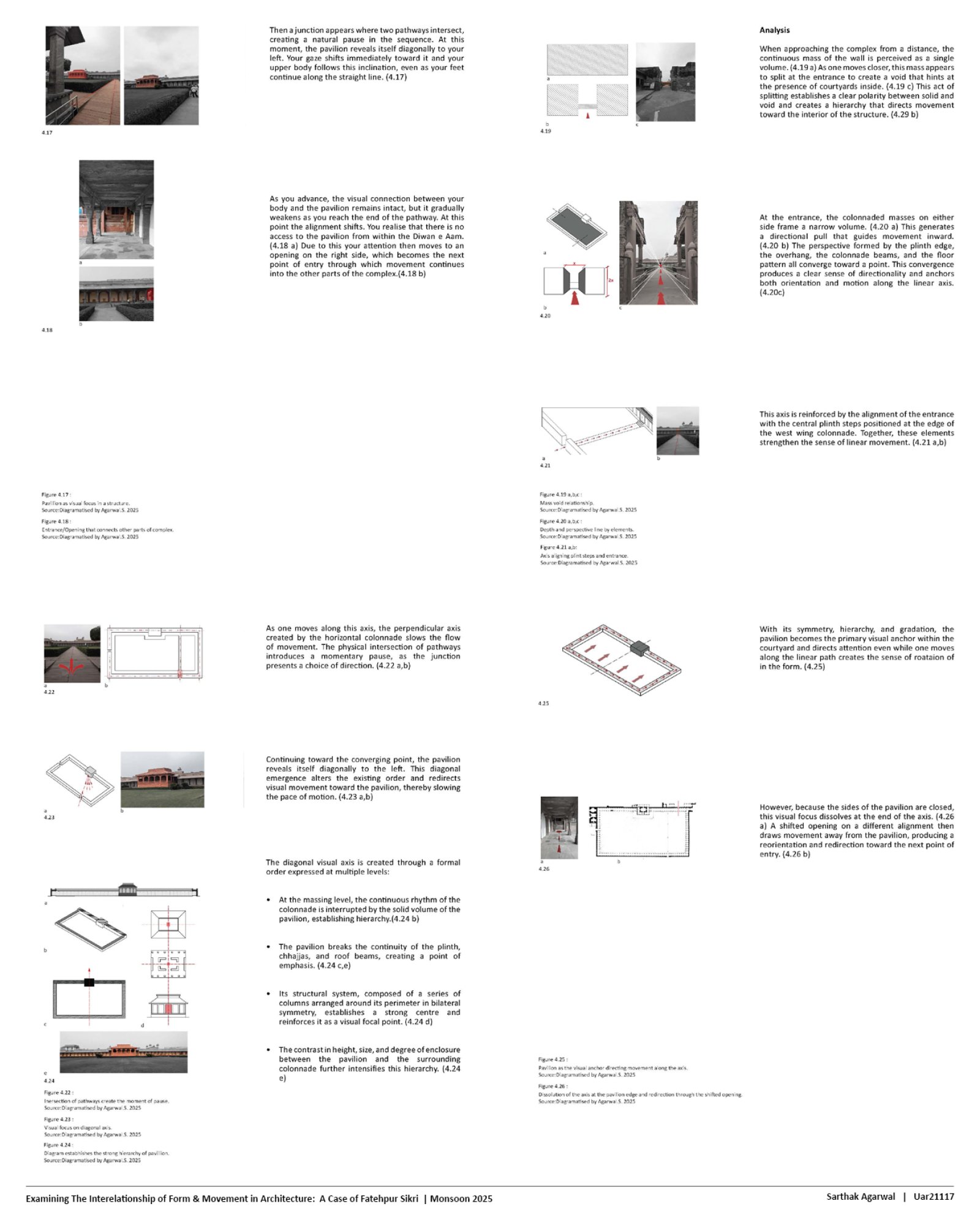
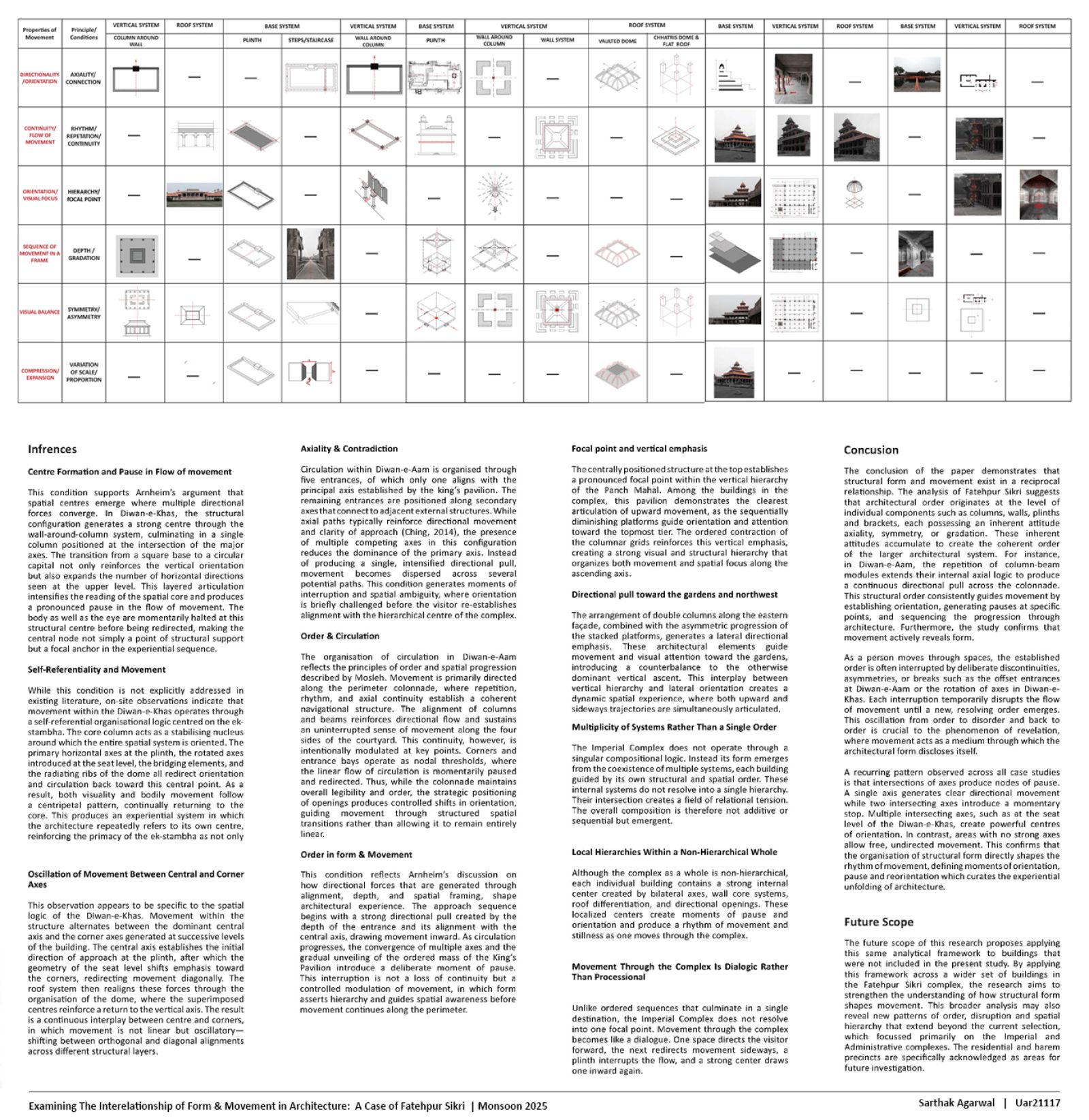
Form is commonly seen as a static, visual construct, yet it is also a dynamic system that shapes how bodies in perception move through space. Likewise, movement, whether through the eyes’ gaze, the body’s path, or patterns of pause and orientation, continuously interprets and animates form. This study positions form and movement as mutually generated: form organises movement, and movement reveals the latter order of form. Drawing from Arnheim’s (1977) notion of form as an organisation of forces rather than a fixed shape, the research explores how structural systems participate in this reciprocal relationship. By analysing the structural-formal logic of selected buildings, the study investigates how spatial order, material articulation, and structural configuration collectively shape visual and bodily movement. Through this lens, this research seeks to explore how form and movement emerge not as separate entities but as intertwined dimensions that co-construct one’s architectural encounter.
View Additional Work