Your browser is out-of-date!
For a richer surfing experience on our website, please update your browser. Update my browser now!
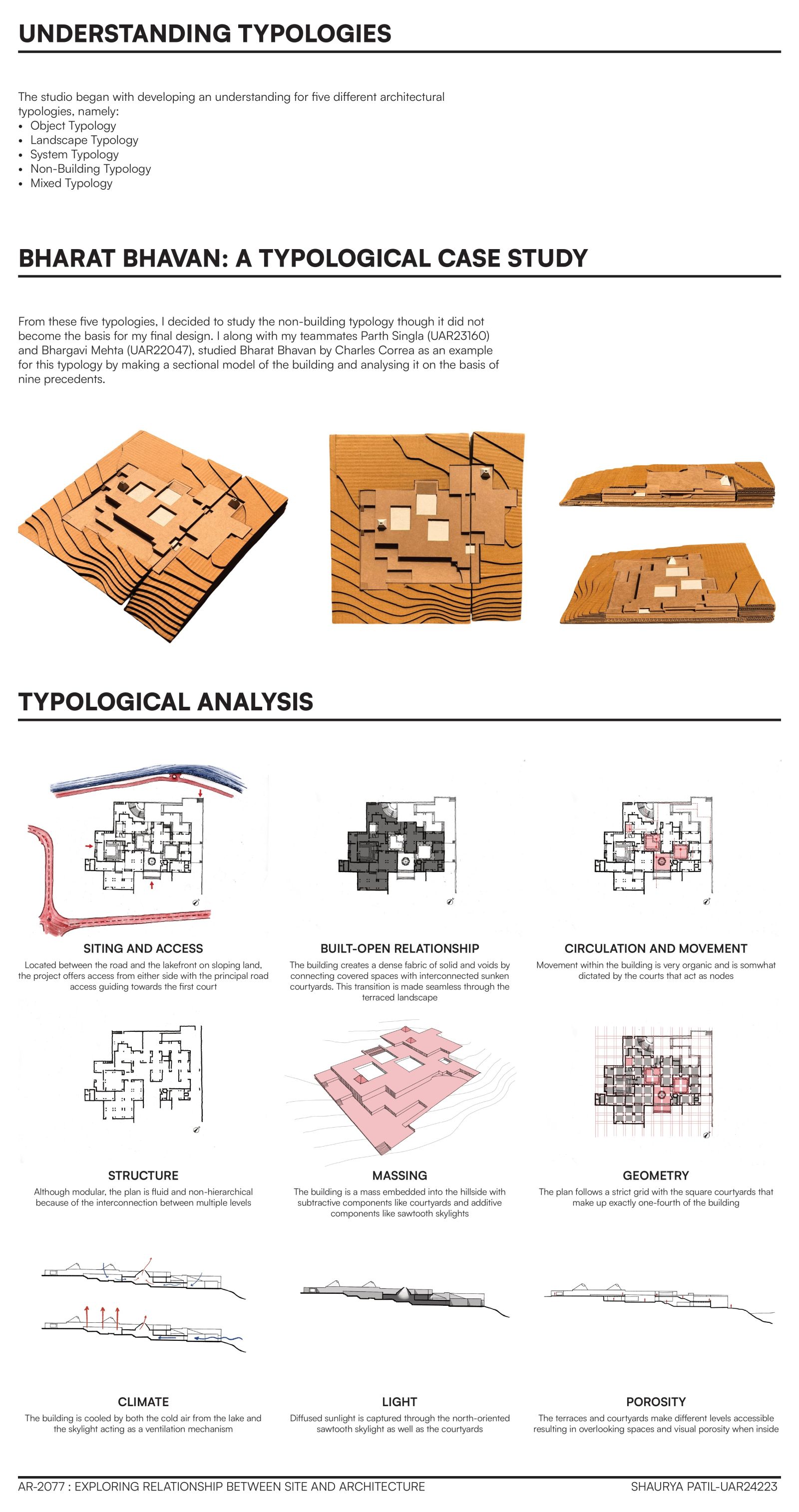
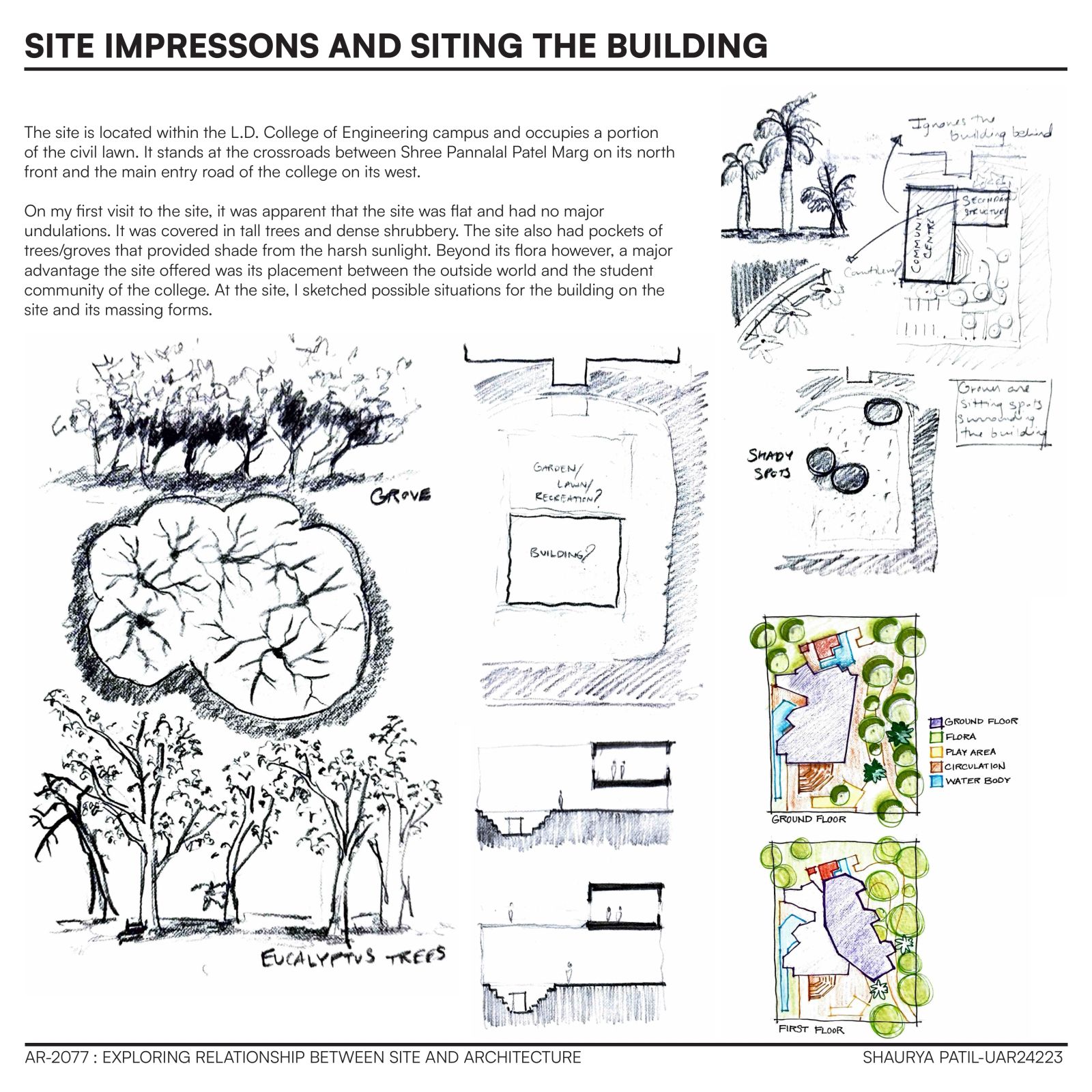
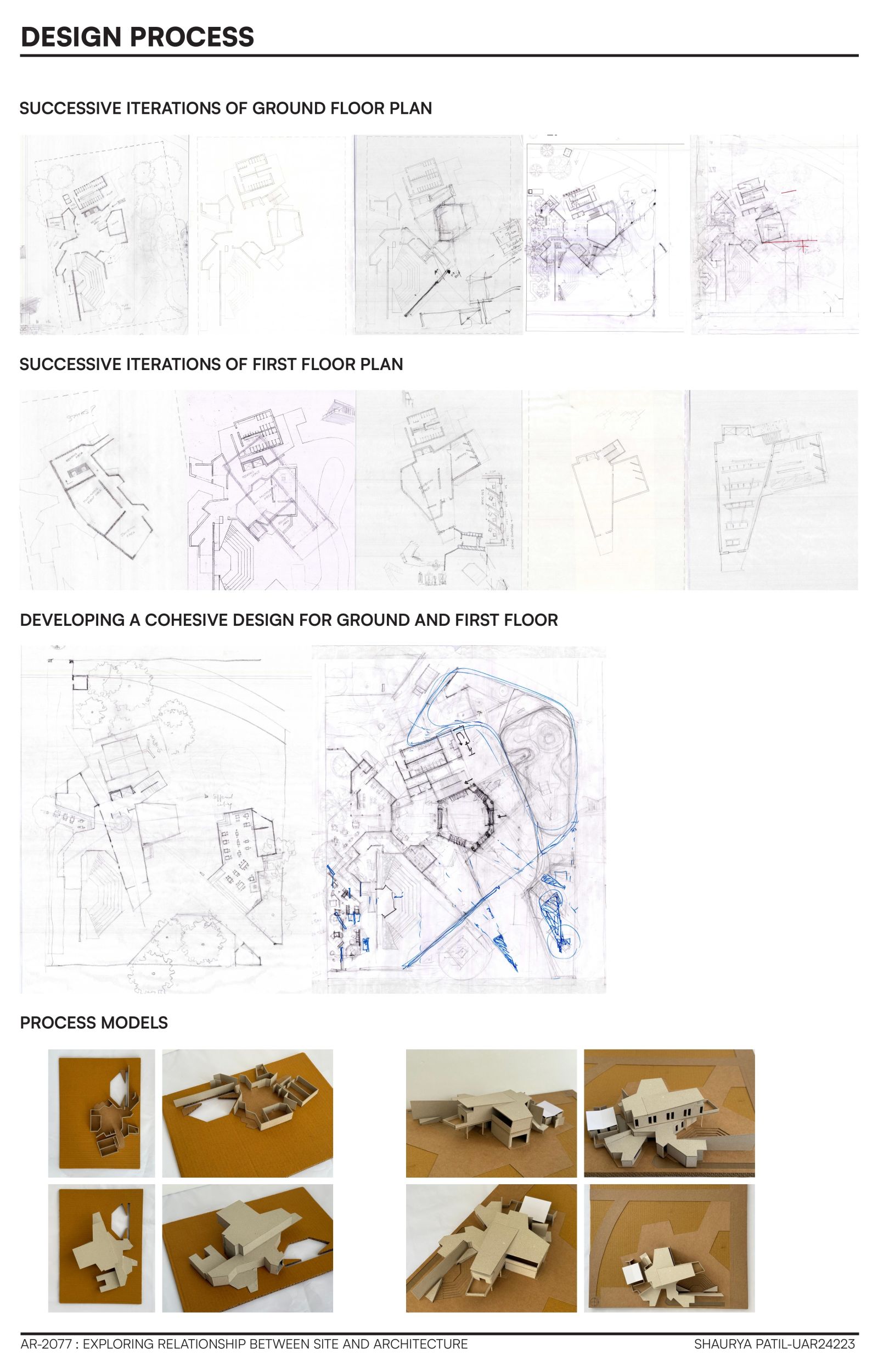
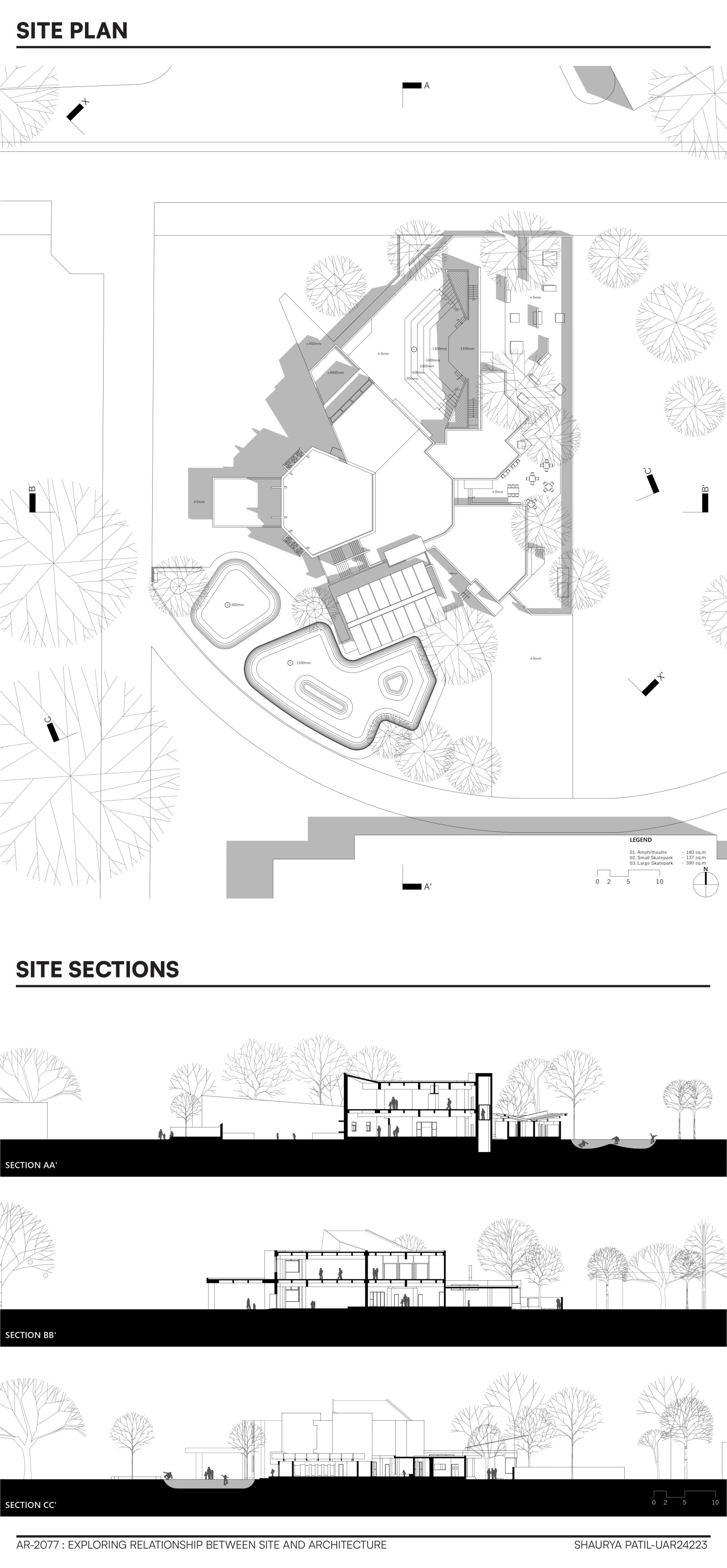
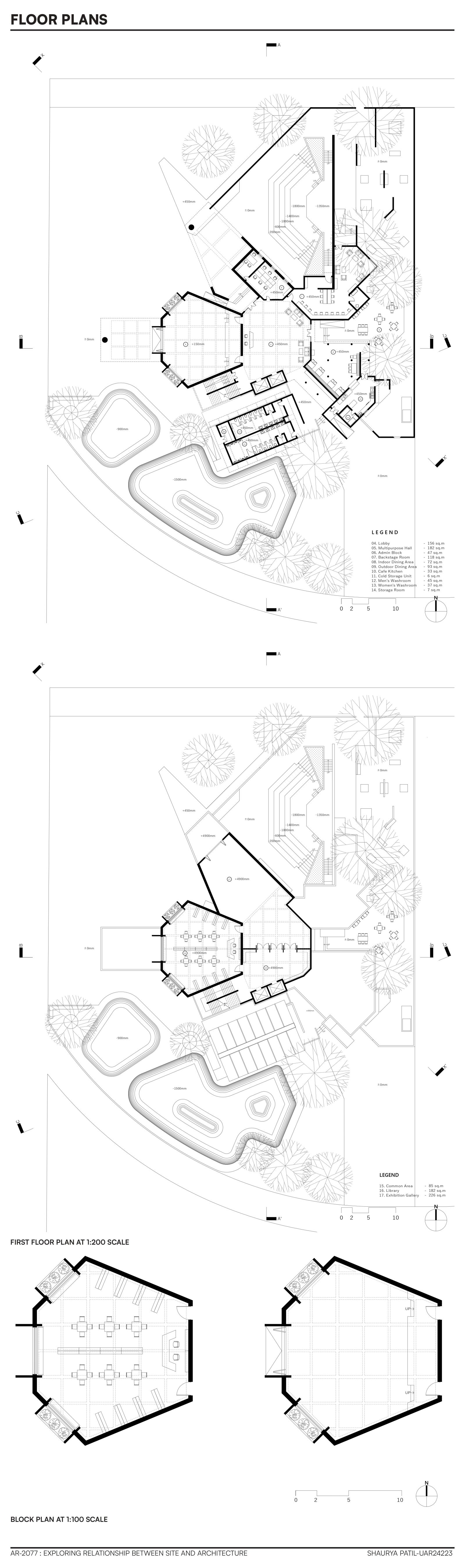
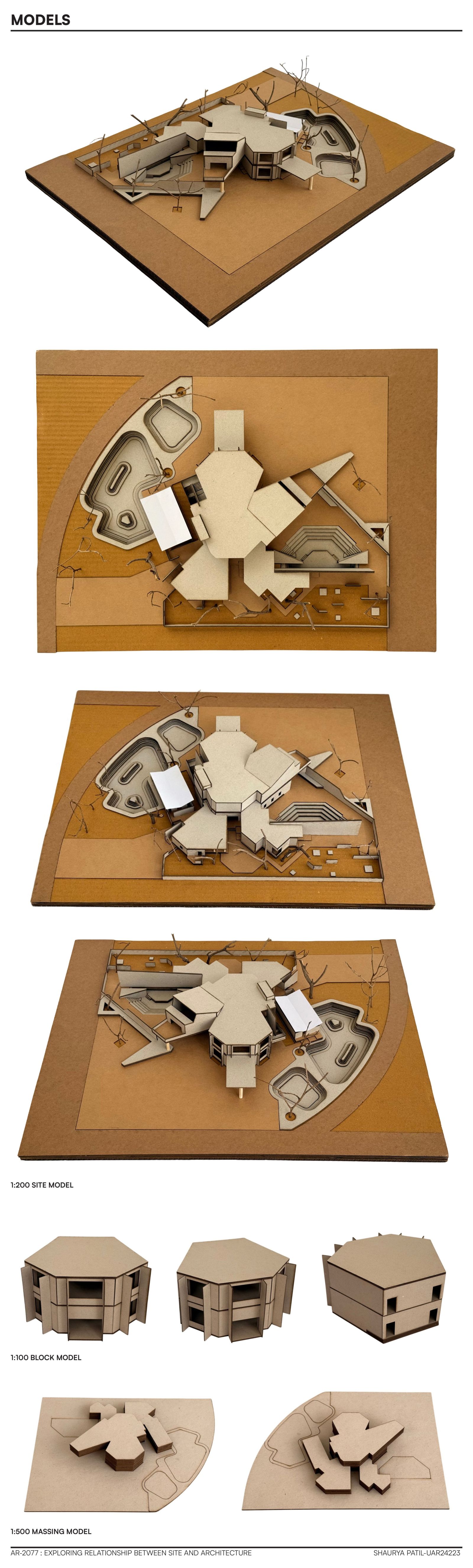
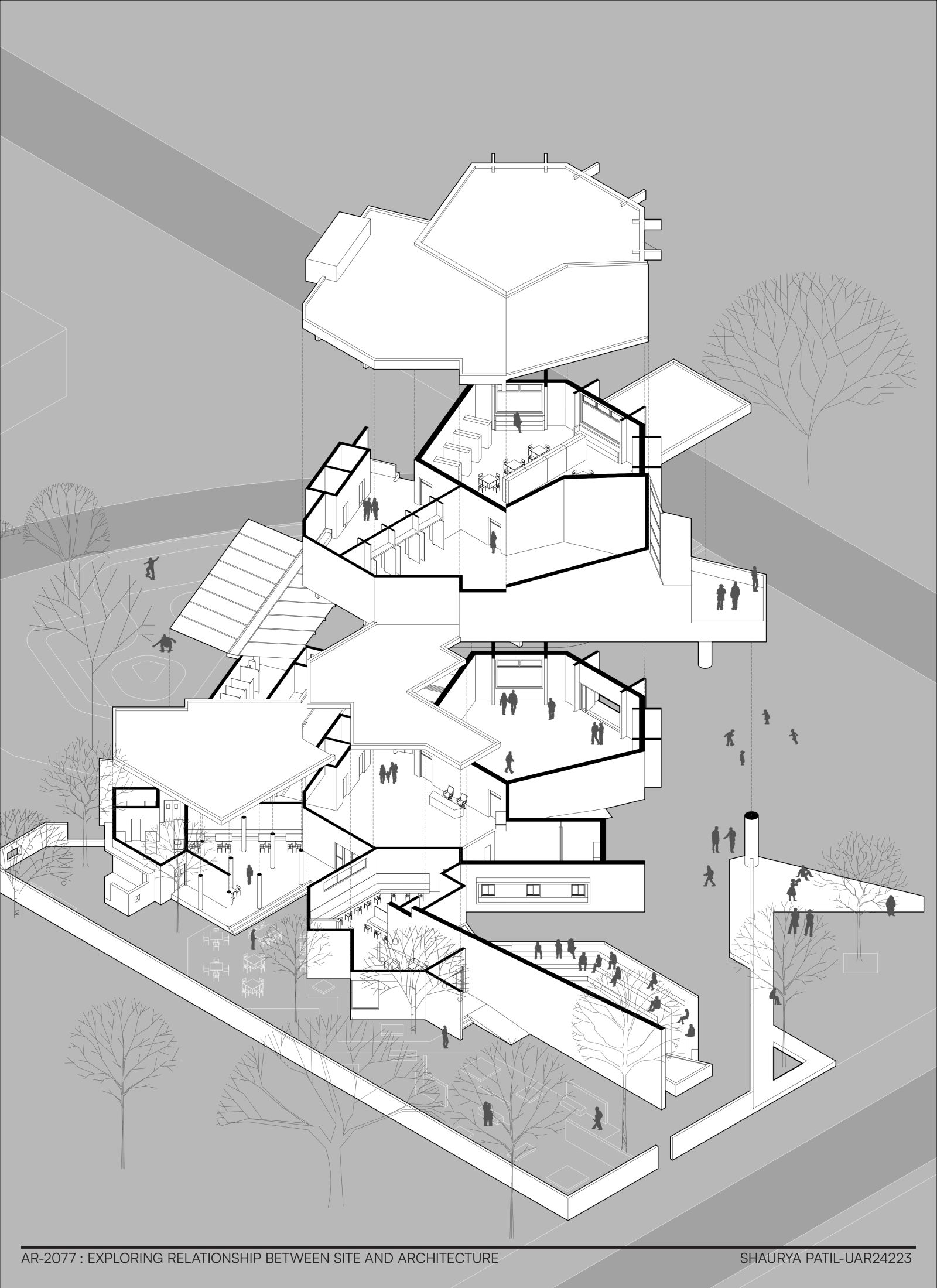
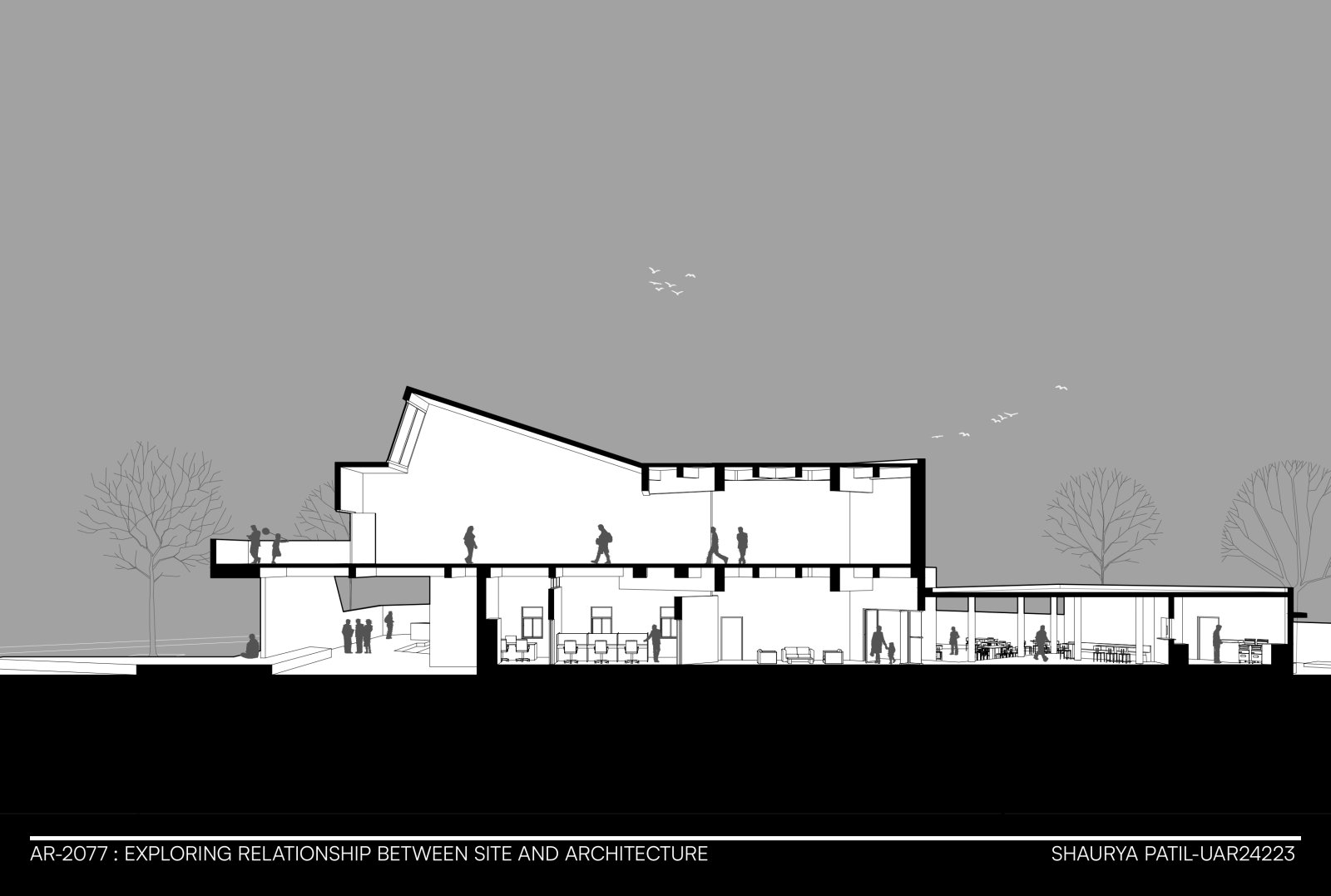
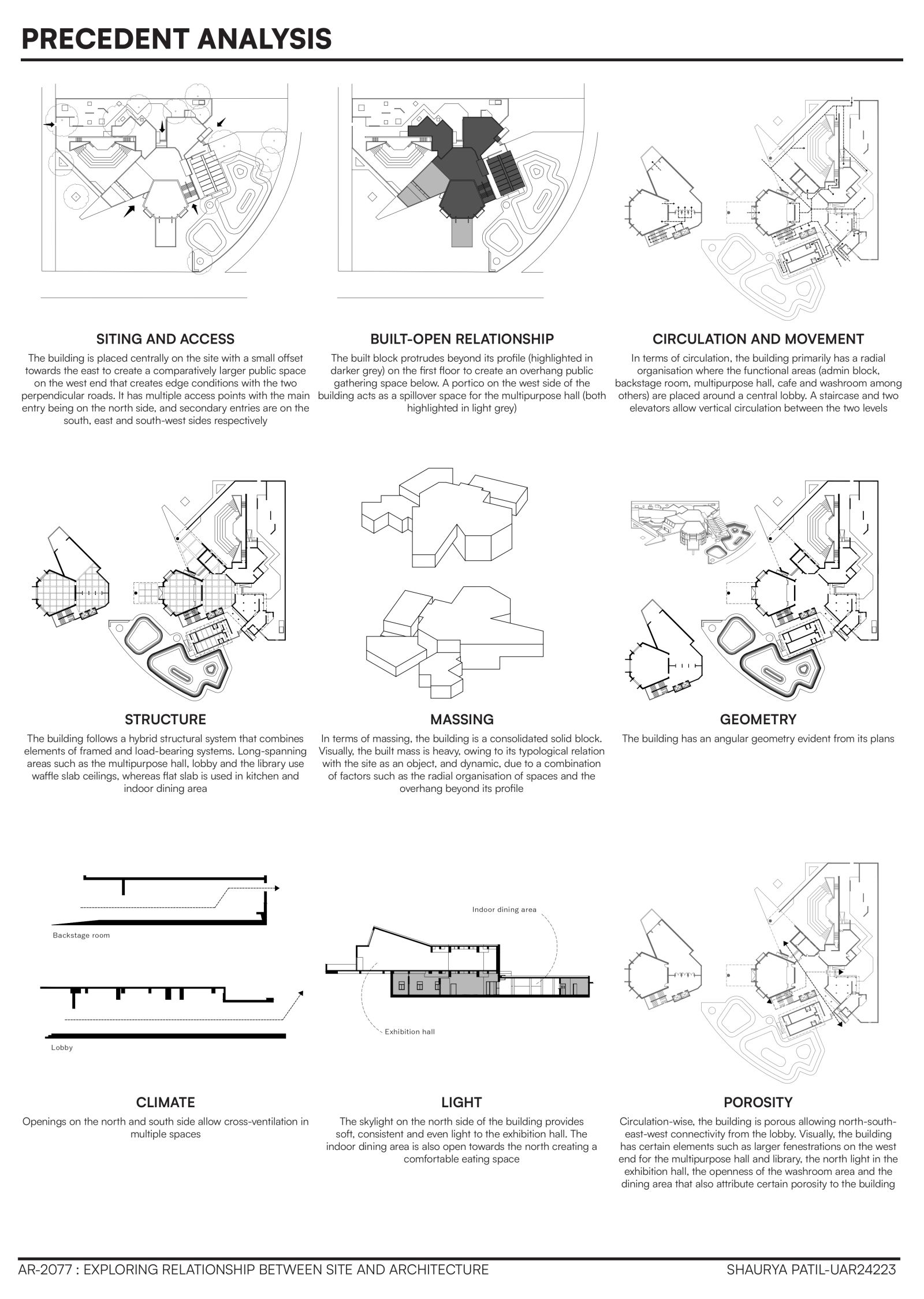
Kala Mandir is a community centre that celebrates human expression, interaction and shared experiences. As a consequence of its location within the L.D. College Of Engineering campus, it aims to engage with both students as well as the wider public and derives inspiration from this exchange in its angular and energetic form that fits well within Object typology in relation to the site. The program on the ground level consists of an open-air amphitheatre and a sufficiently large backstage room dedicated to performing arts on one end and two skate parks for avid skateboarders on the other. It also has an intimate cafe with indoor and outdoor seating along with a large and adaptable multi-purpose hall. All these spaces are radially organised around the central lobby, symbolizing the convergence of diverse groups of people. On the first level, the program consists of a long exhibition gallery aimed at promoting student work, local art and installations by artists and a library that offers quiet retreat from the hustle and bustle of the activities in the community centre. Togther, these programmatic spaces create a dynamic ecosystem that connects people, nurtures creativity and thus, strengthens the relationship between the college and the wider community.
View Additional Work