Your browser is out-of-date!
For a richer surfing experience on our website, please update your browser. Update my browser now!
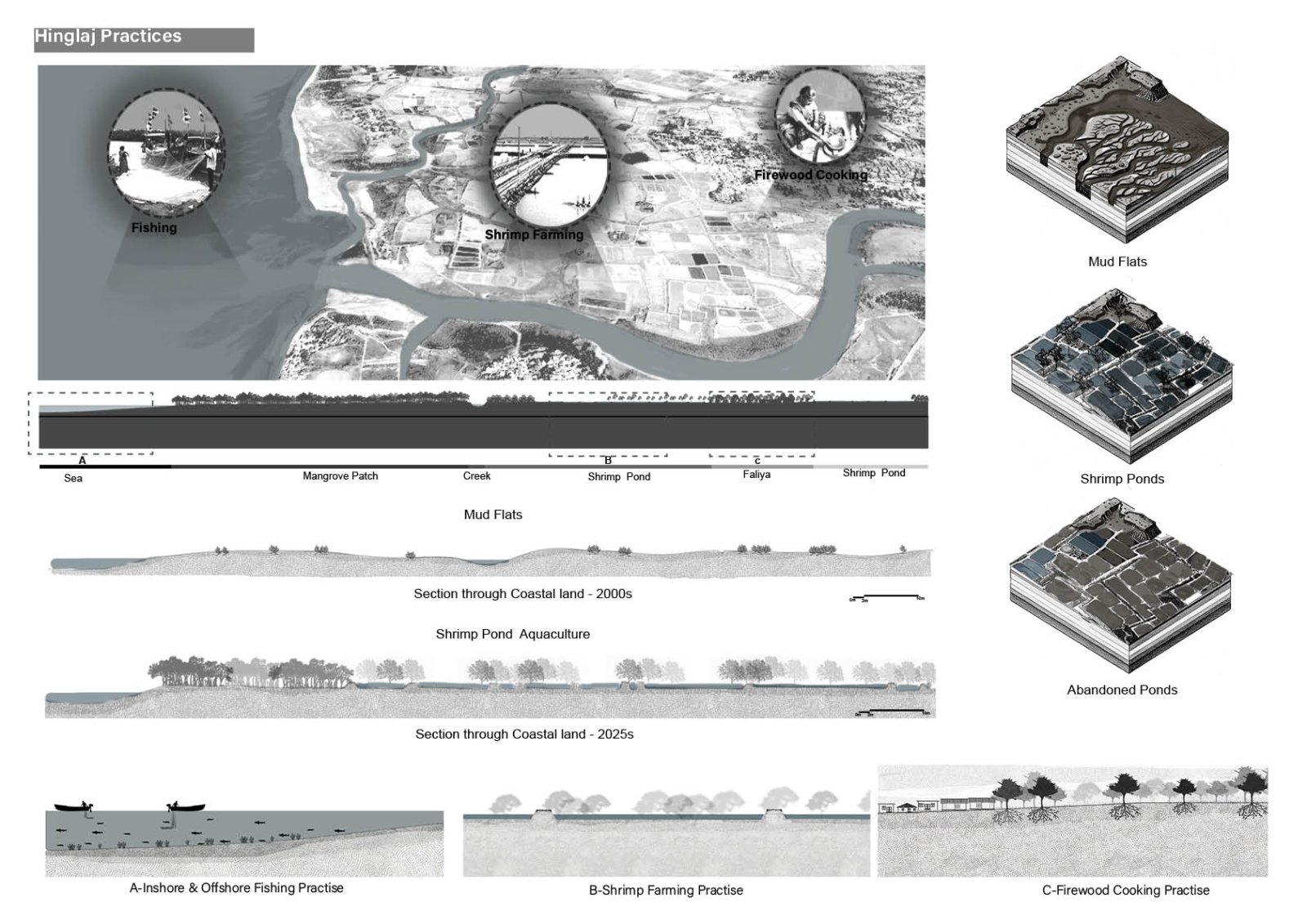
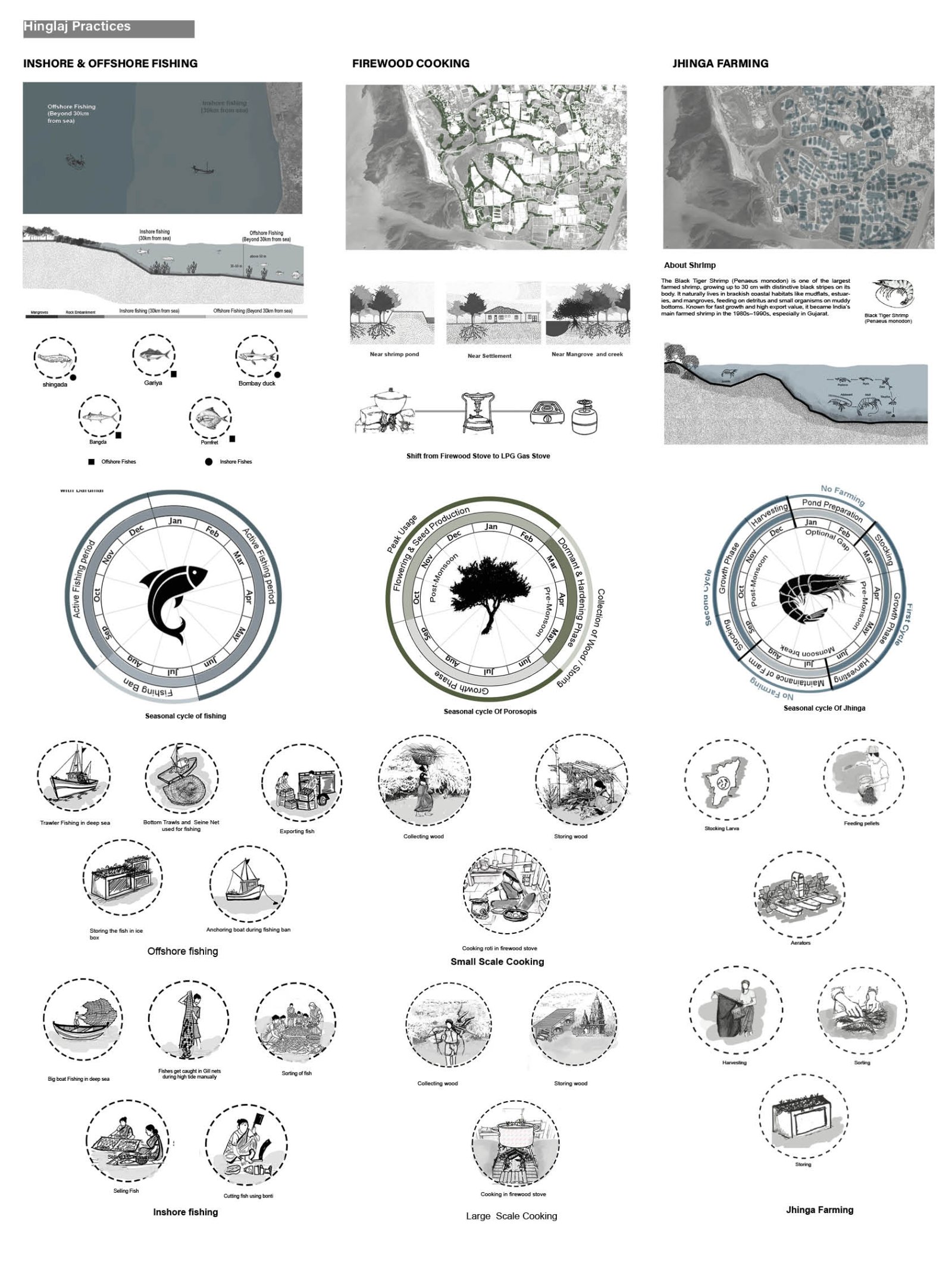
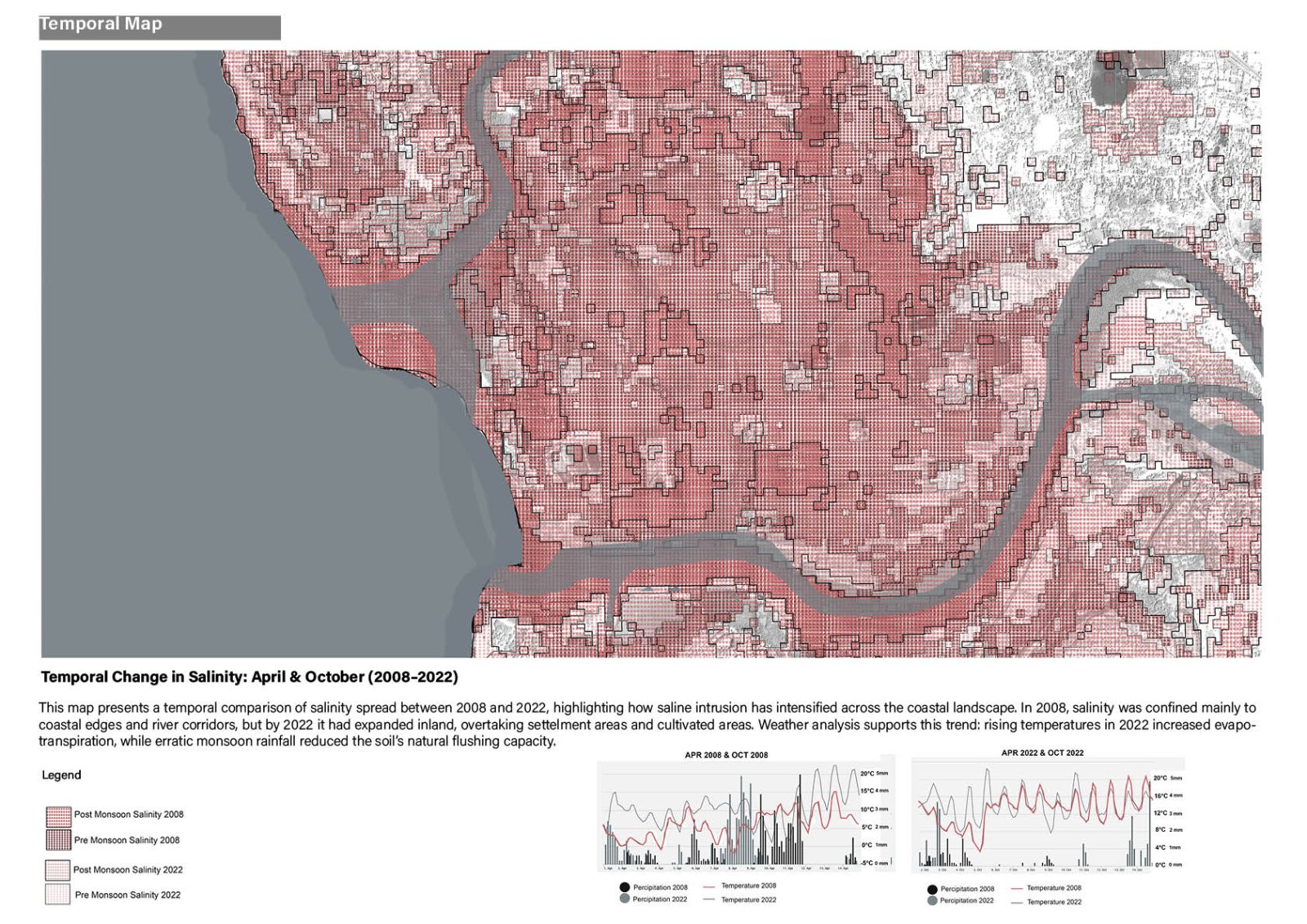
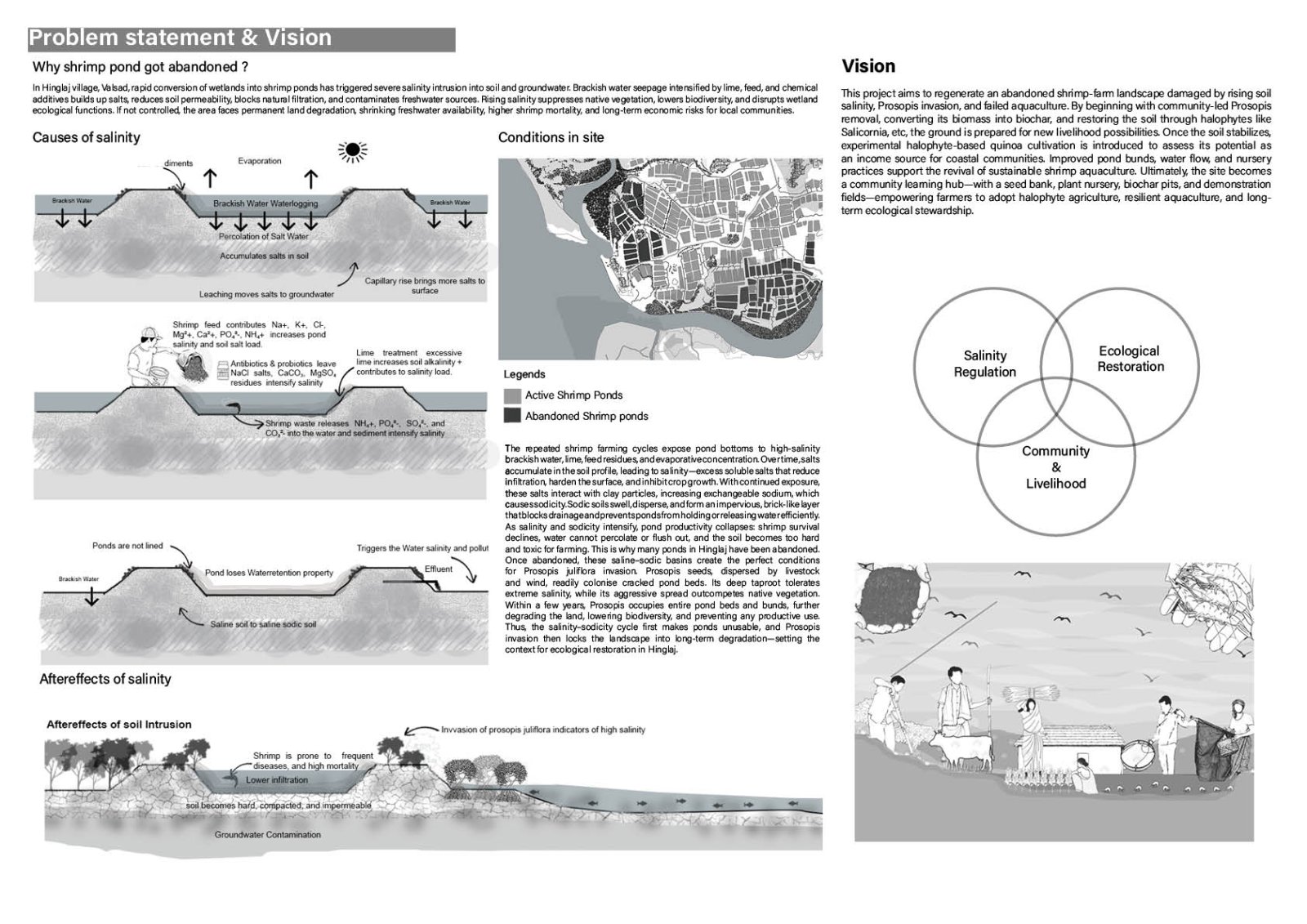
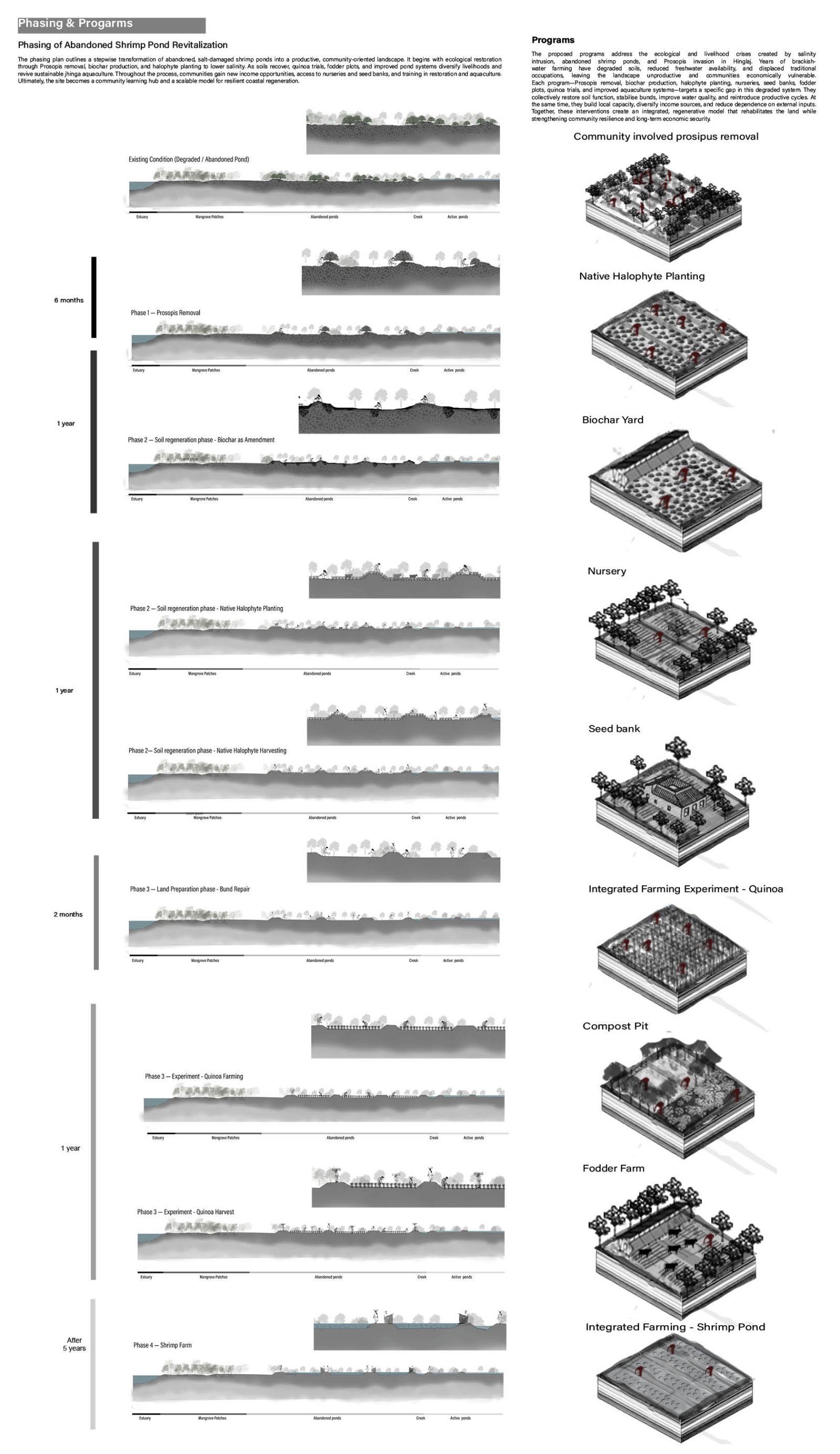
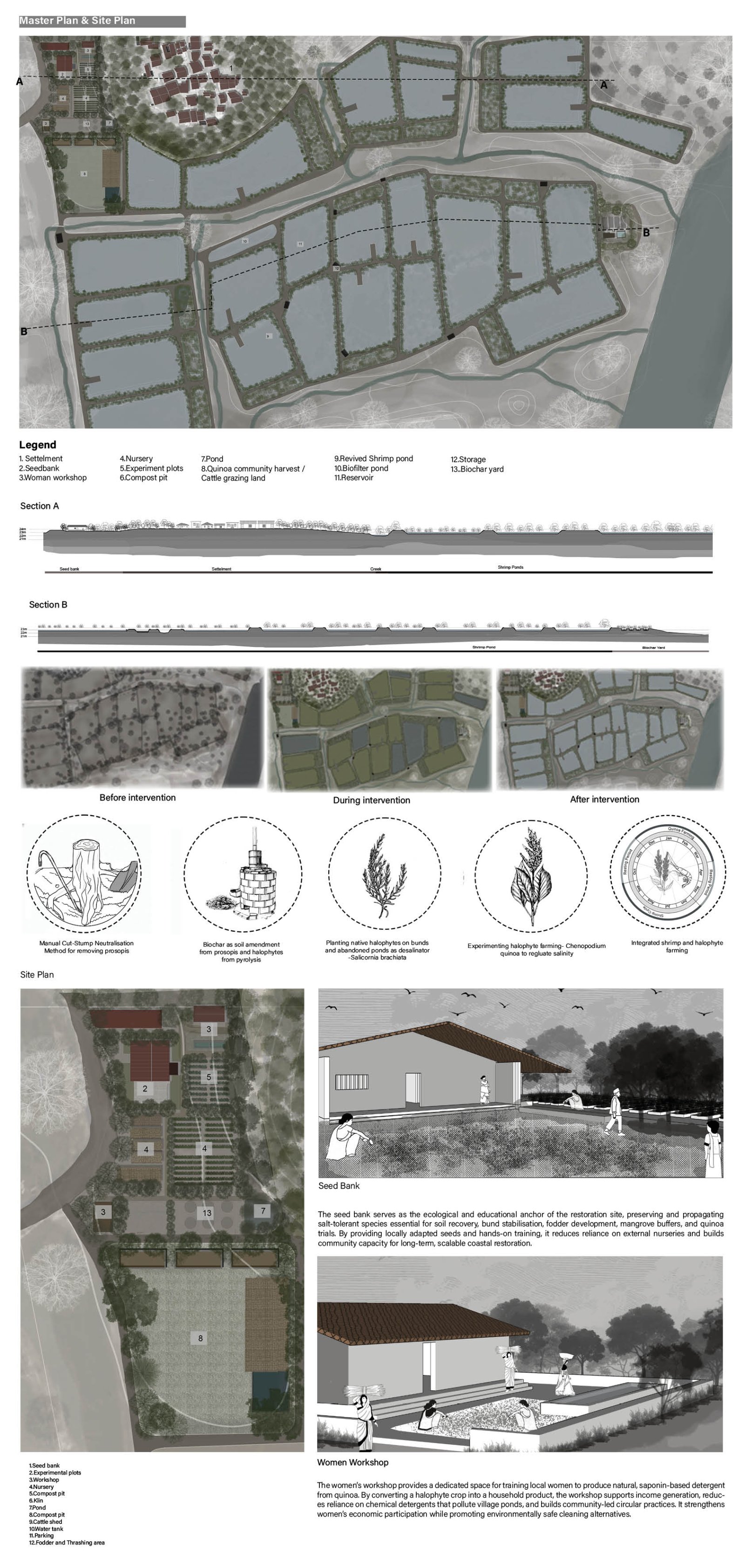
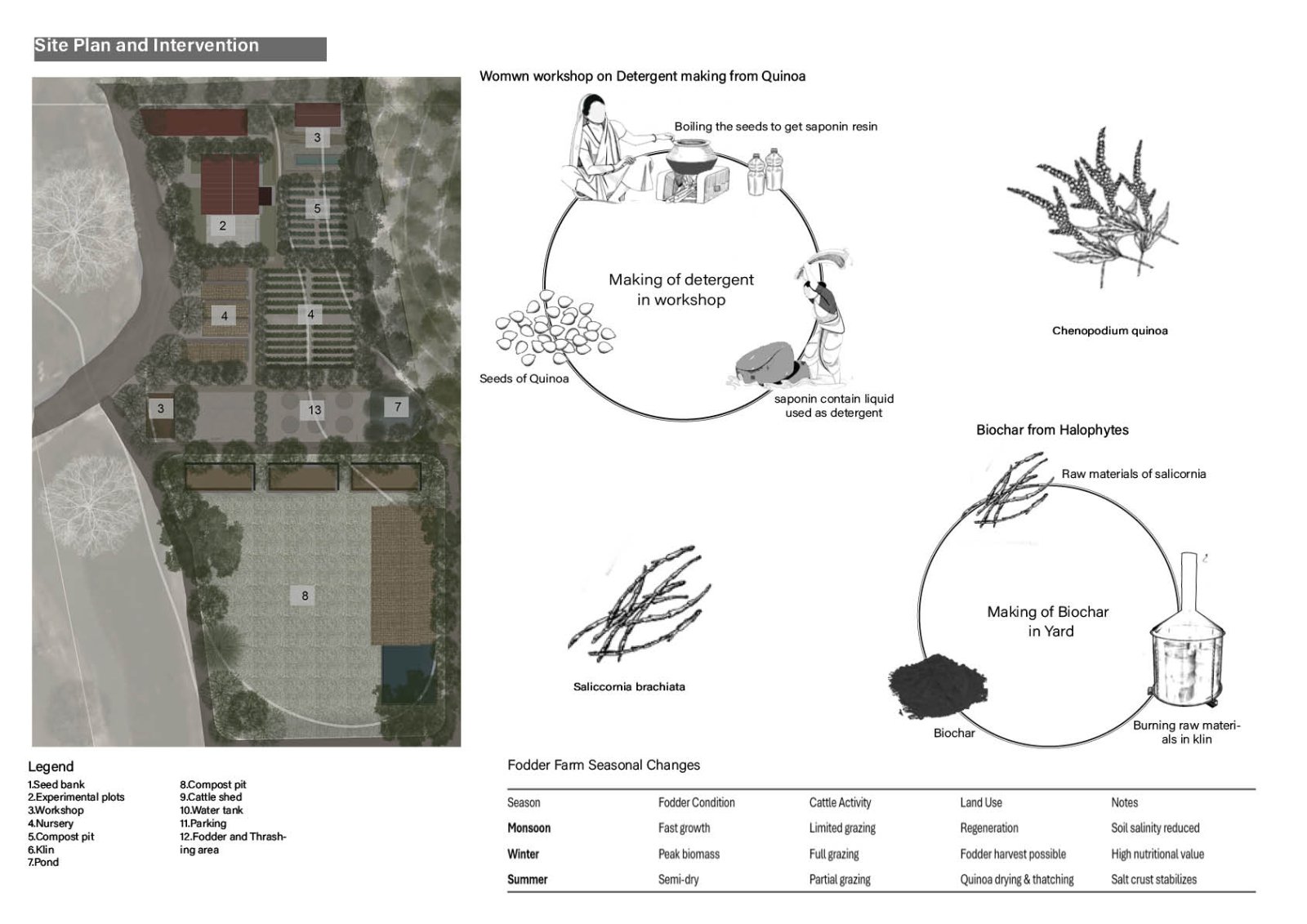
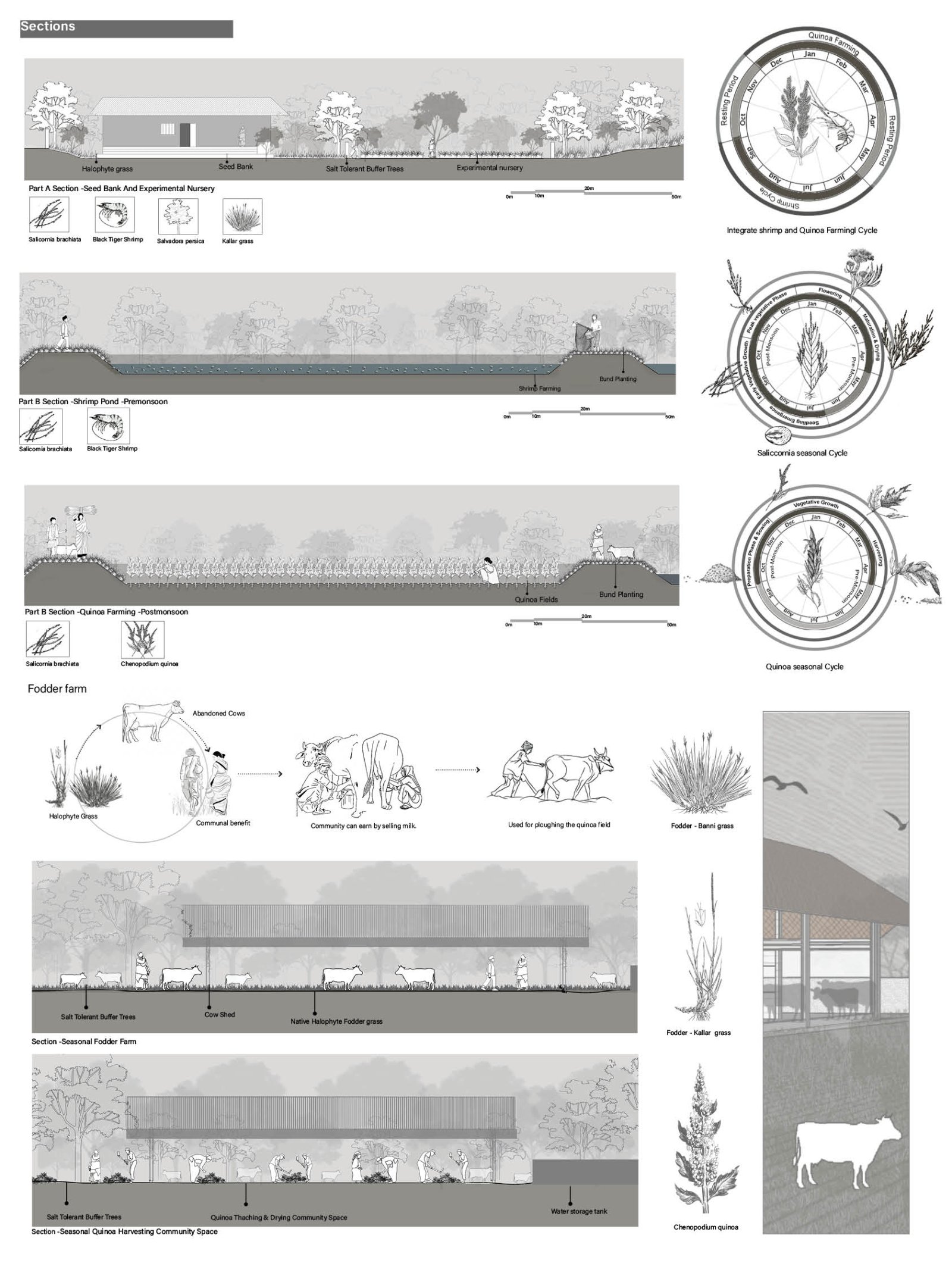
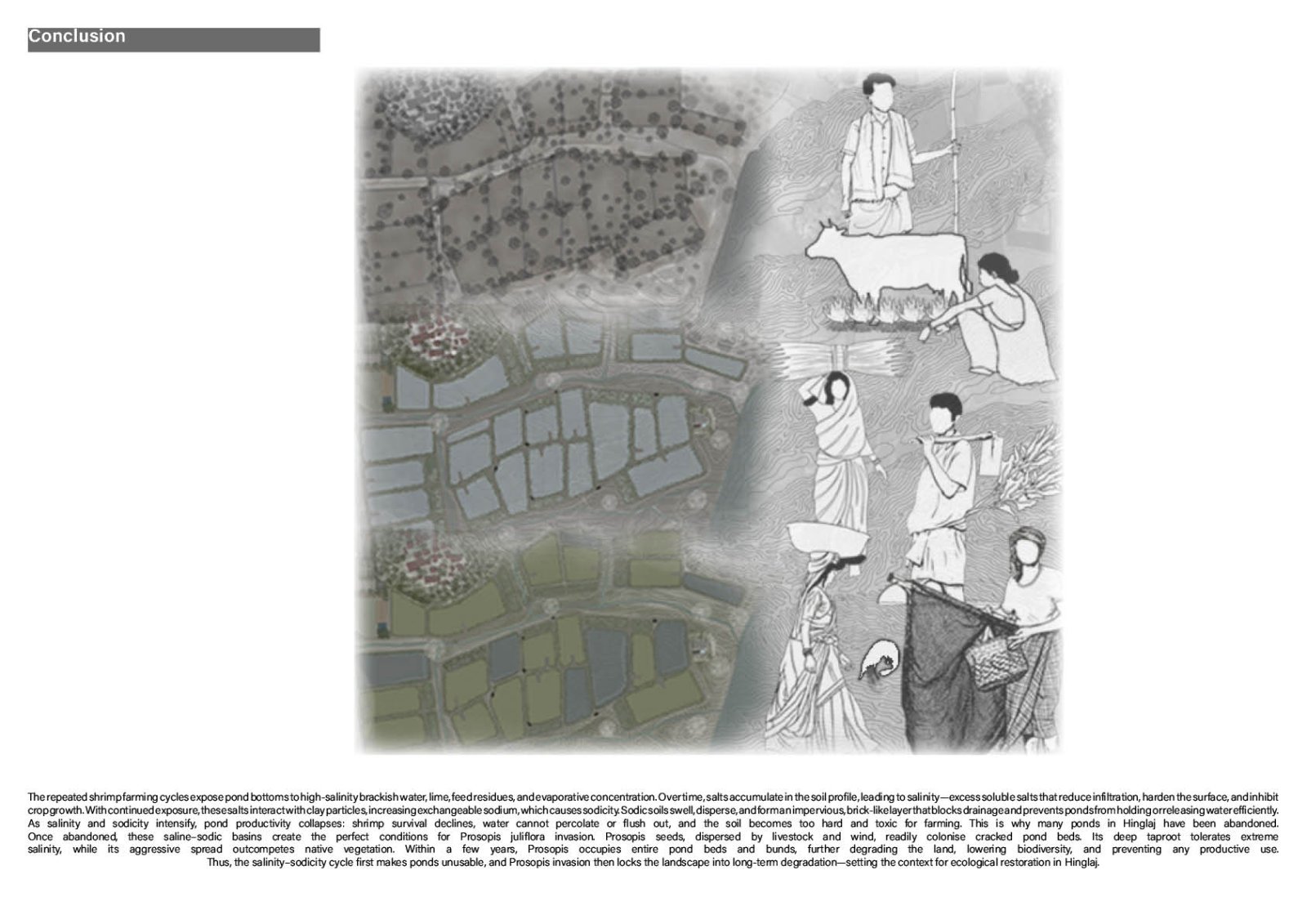
The project responds to a coastal landscape where progressive salinity intrusion led to the widespread abandonment of shrimp ponds an outcome with both ecological and economic consequences in a country where brackish-water aquaculture contributes substantially to rural livelihoods and national GDP. As ponds fell out of use, the exposed, salt-encrusted soils created ideal conditions for the rapid spread of Prosopis juliflora, further accelerating land degradation and limiting any possibility of agricultural recovery. The regeneration strategy begins with community-led Prosopis removal, coupled with the conversion of its biomass into biochar to rehabilitate saline–sodic soils. This intervention lays the foundation for the reintroduction of halophytic species such as Salicornia, which serve to stabilise the substrate, rebuild soil structure, and re-establish ecological function. The restored soil conditions then support experimental trials of halophyte-based quinoa, positioning it as a potential climate-resilient livelihood for coastal households. Parallel improvements in pond bunds, hydrology, and nursery practices create conditions necessary for the revival of sustainable shrimp aquaculture, transforming previously dysfunctional ponds back into productive economic assets. Over time, the site is envisioned to evolve into a community learning landscape housing a seed bank, plant nursery, biochar production area, and demonstration plots designed to foster knowledge exchange and empower farmers to adopt halophyte agriculture, adaptive aquaculture, and long-term ecological stewardship.
View Additional Work