Your browser is out-of-date!
For a richer surfing experience on our website, please update your browser. Update my browser now!
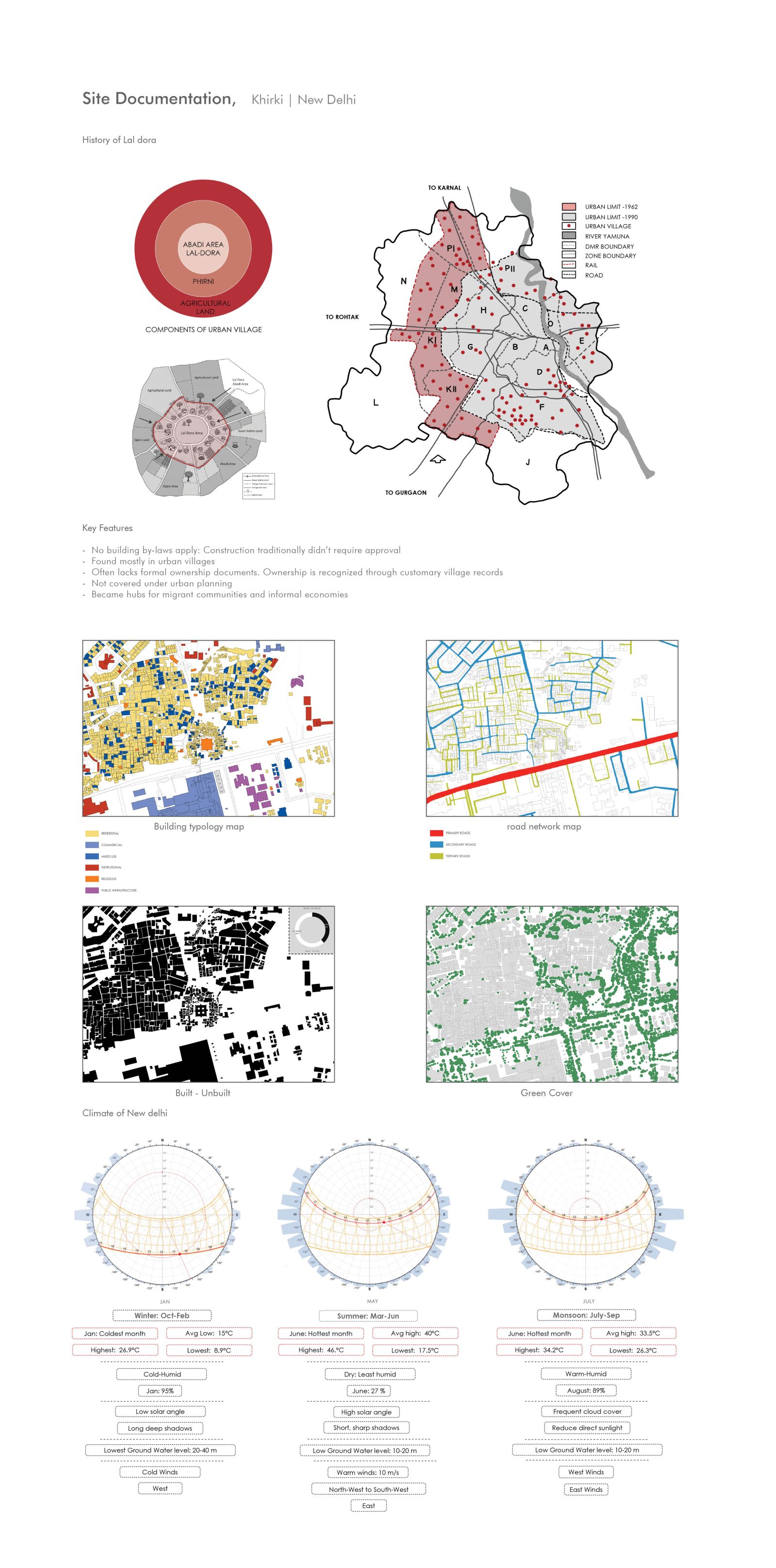
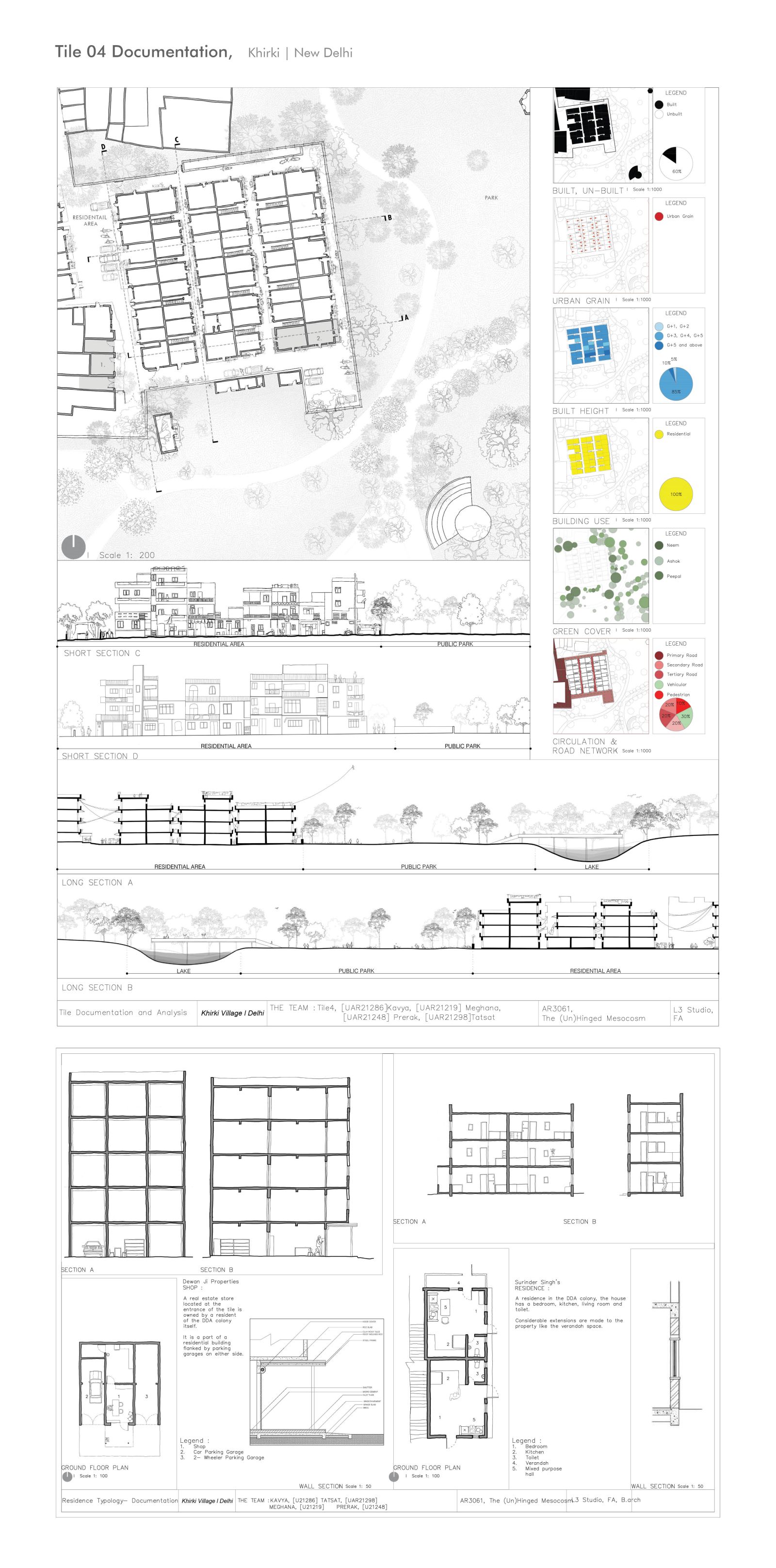
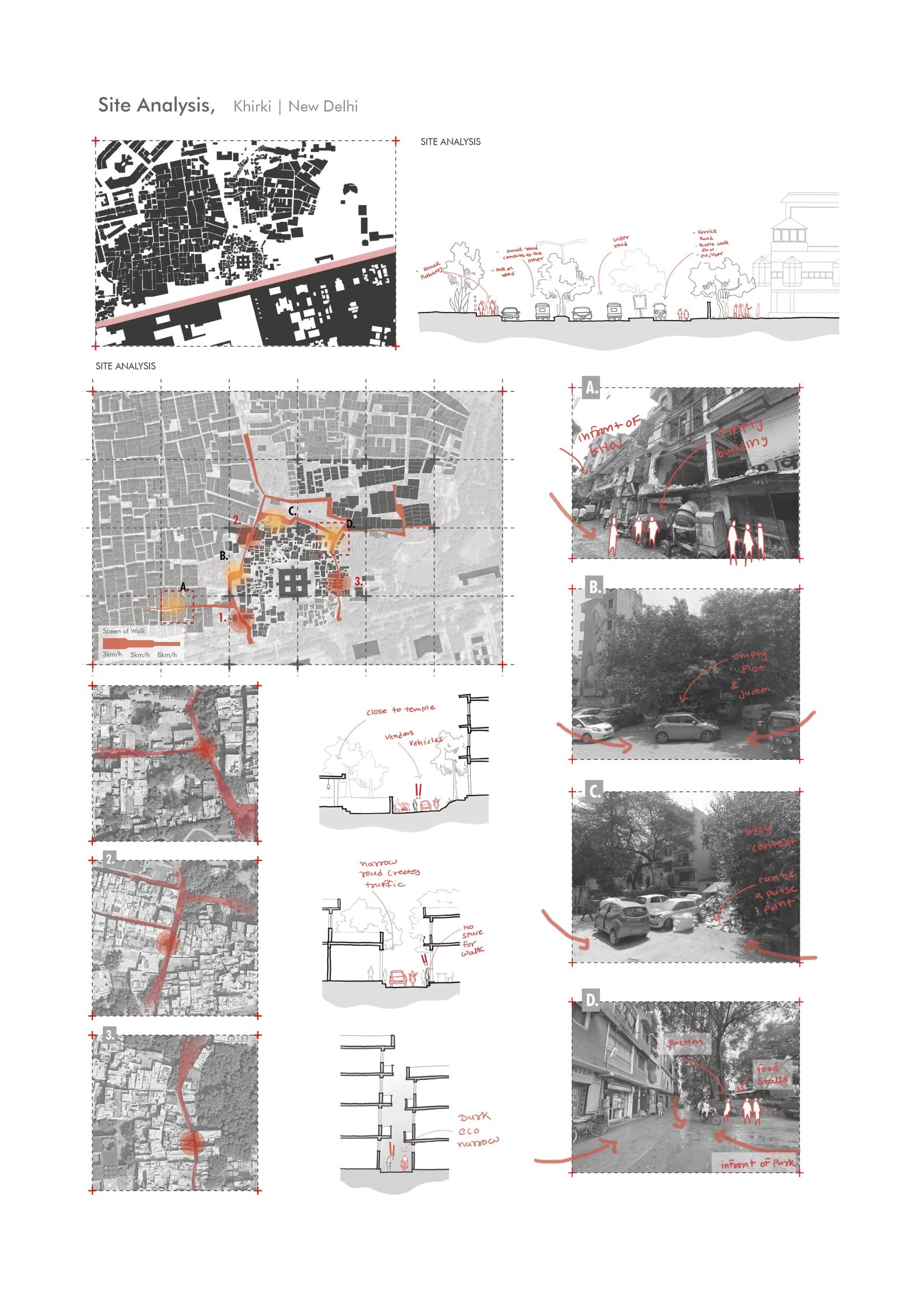
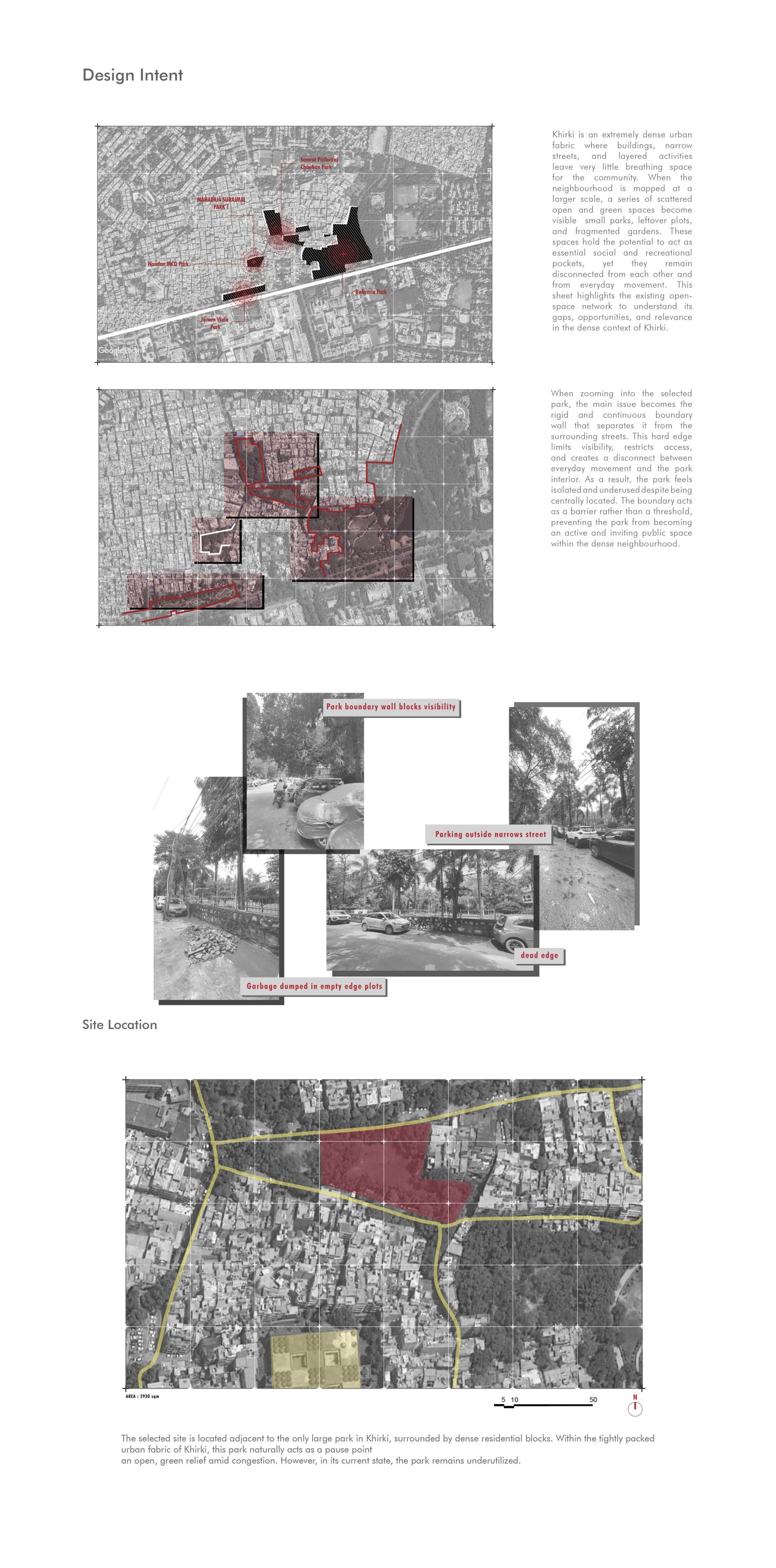
Khirki is a dense and compact neighbourhood where people live very close together, yet lack accessible public spaces for everyday pause and interaction. Through mapping and site study, the main issue became clear: although small parks and green pockets exist, they are disconnected and enclosed by rigid boundary walls. This separation prevents the park from engaging with the active street life, resulting in underuse, dead edges, parking conflicts, and garbage accumulation along the periphery.
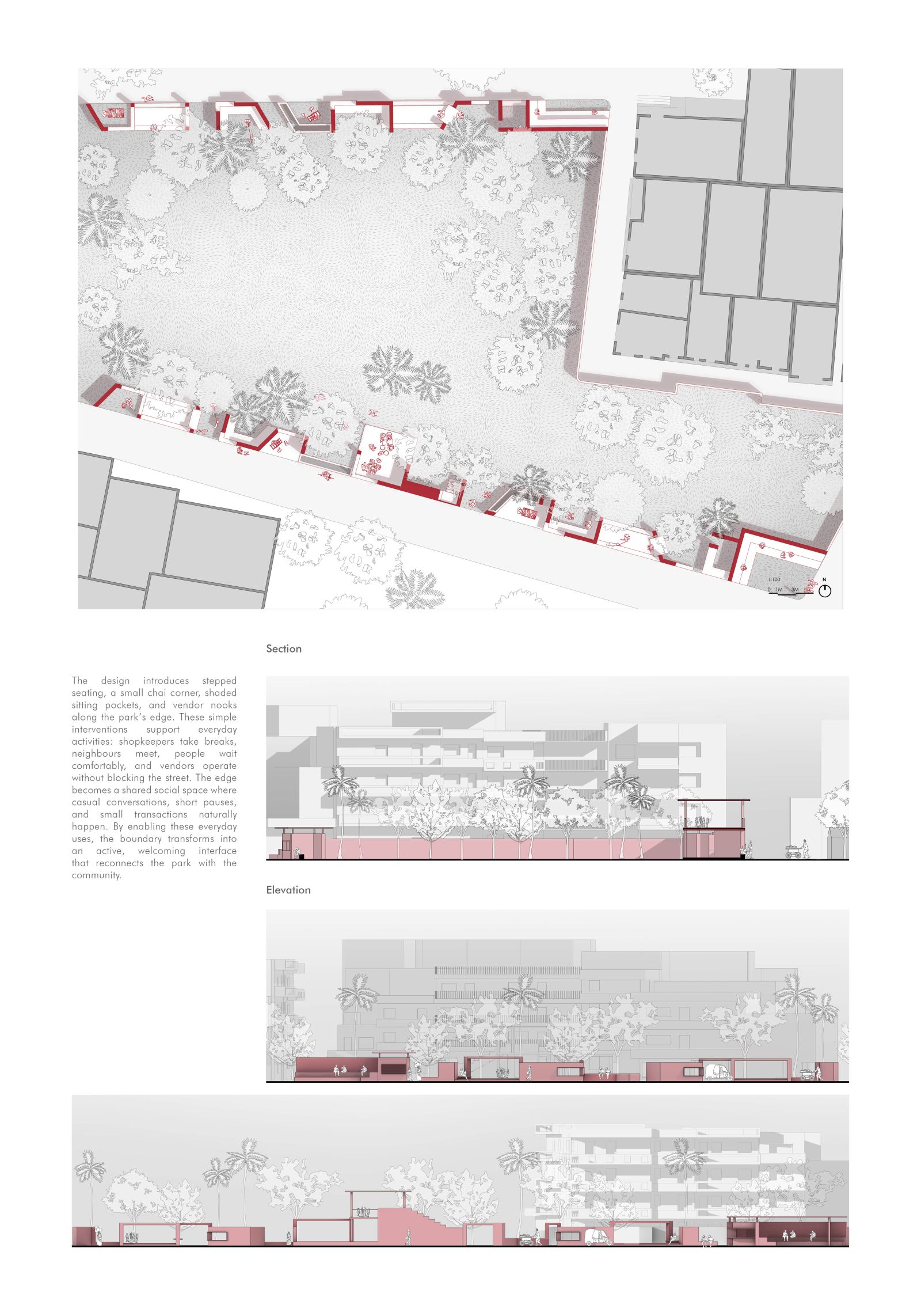
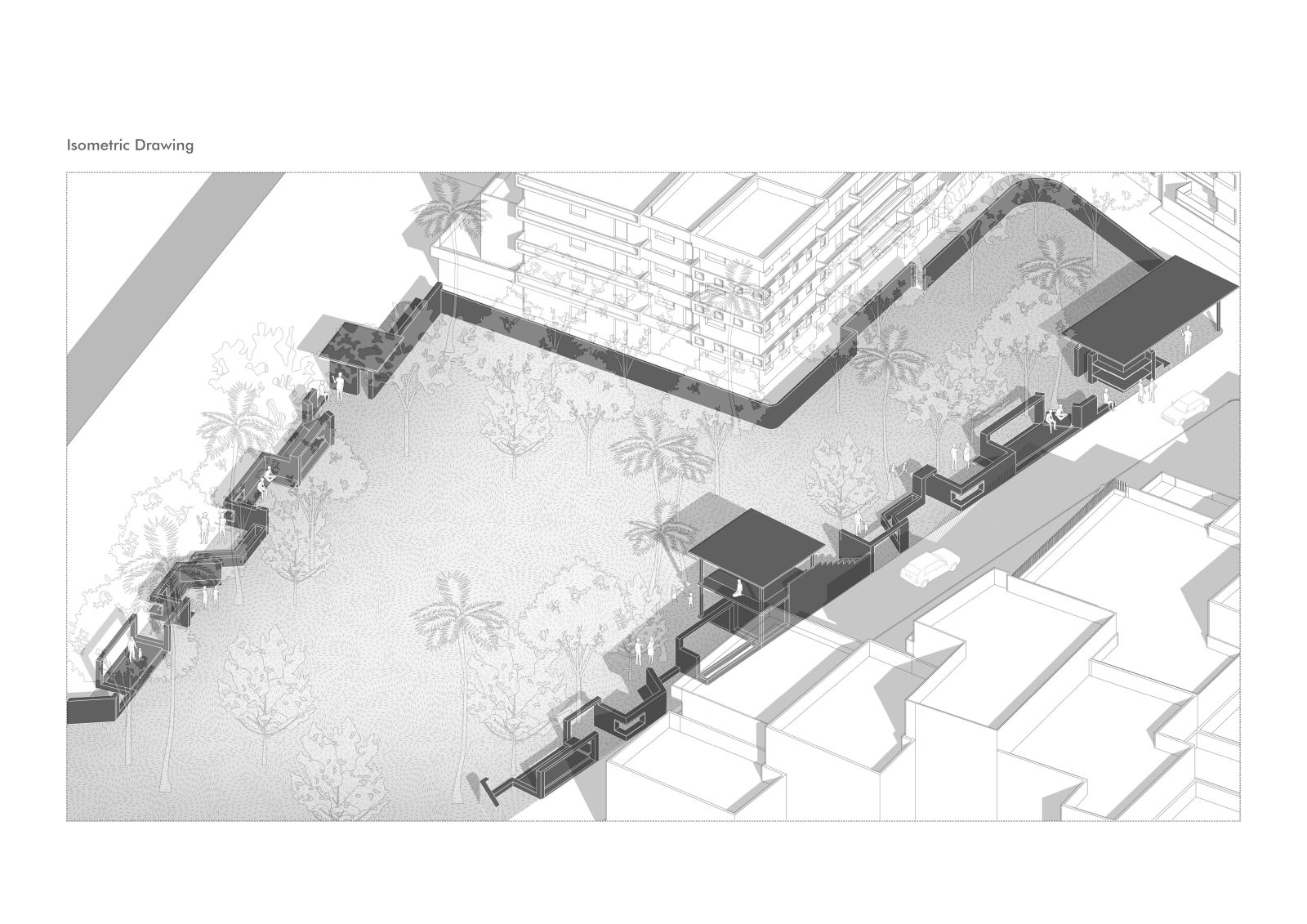
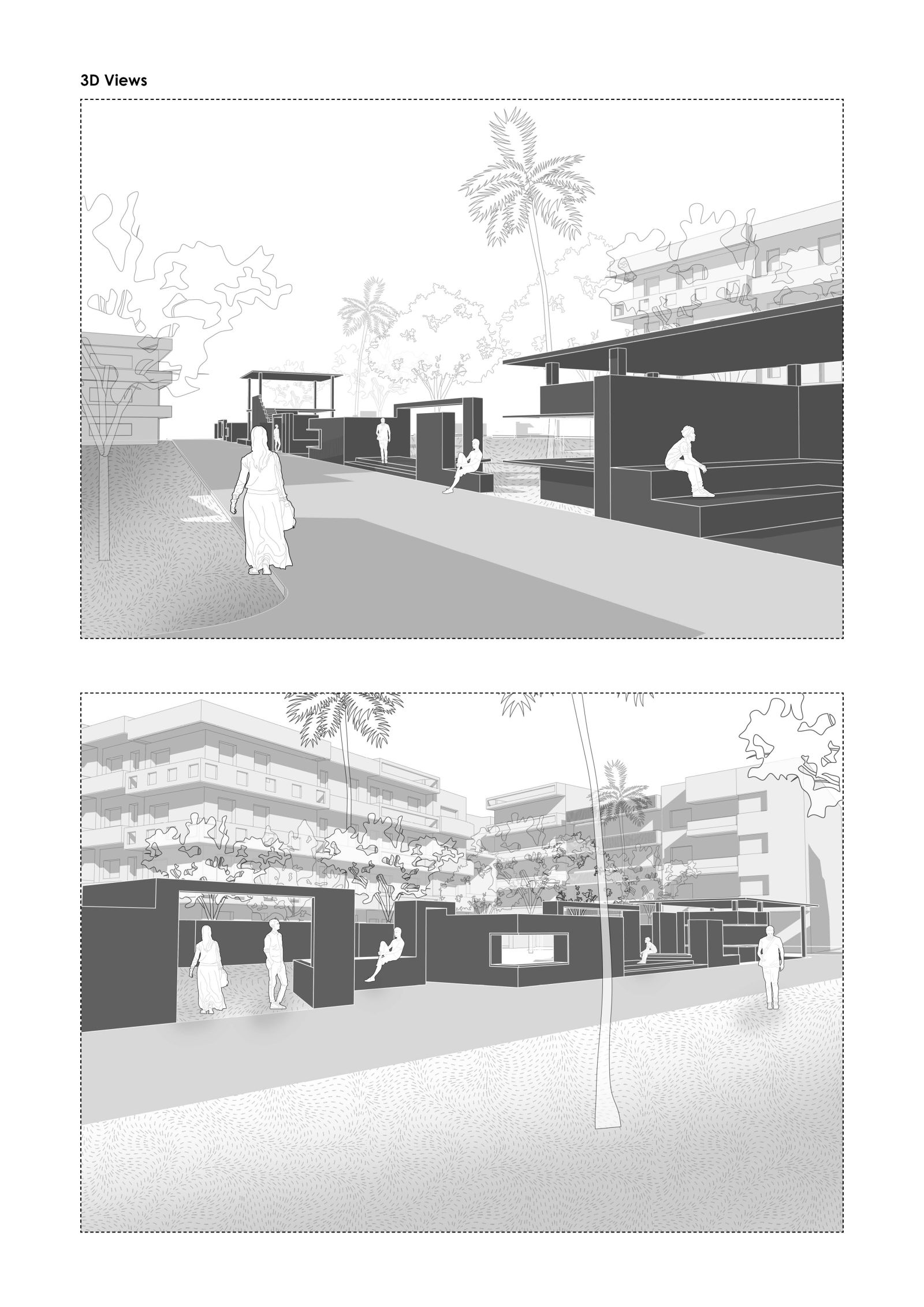
The project, therefore, shifts focus from building inside the park to reactivating its boundary. By transforming the hard edge into a permeable interface, the design introduces stepped seating, a small chai corner, shaded pockets, and vendor nooks along the periphery. These interventions support everyday activities, such as resting, meeting, eating, waiting, and selling, without reducing the park’s open space.
The outcome is a lively, shared threshold where the street and park overlap, encouraging casual interaction and helping the park become an active part of Khirki’s community life.