Advika Pandita

AR2073

Where Spaces Meet

Where Spaces Meet explores the role of semi-open spaces as transitional zones that mediate between open and enclosed environments. The project investigates how these in-between spaces can act as connectors linking circulation, functions, and experiences while also becoming vibrant public realms in their own right. By embracing partial enclosure, lightness, and permeability, the semi-open space becomes an active pause point. It draws people in, encourages interaction, and hosts a variety of informal activities. Rather than simply acting as a passage, it transforms into a social catalyst: a place where movement slows, encounters occur, and the boundaries between public and private dissolve.

View Additional Work
Report Content

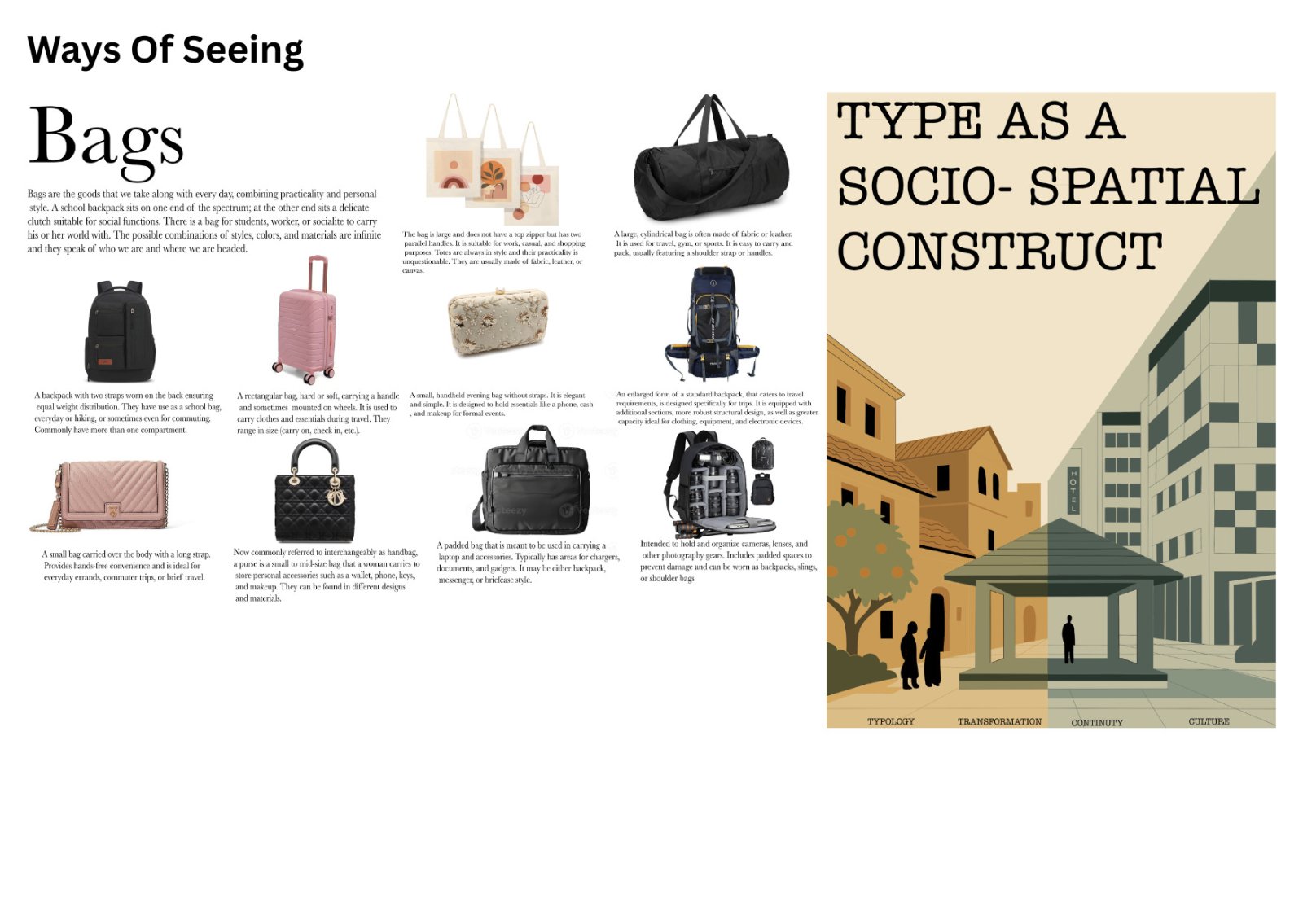
A simple bag became the starting point for this study. Looking at different kinds of bags from everyday carry-ons to purpose-specific ones helped us slow down and notice how small shifts in form, material, and use create completely different experiences. What usually feels ordinary began to show a network of quiet patterns and relationships that we often ignore when we rush past objects.

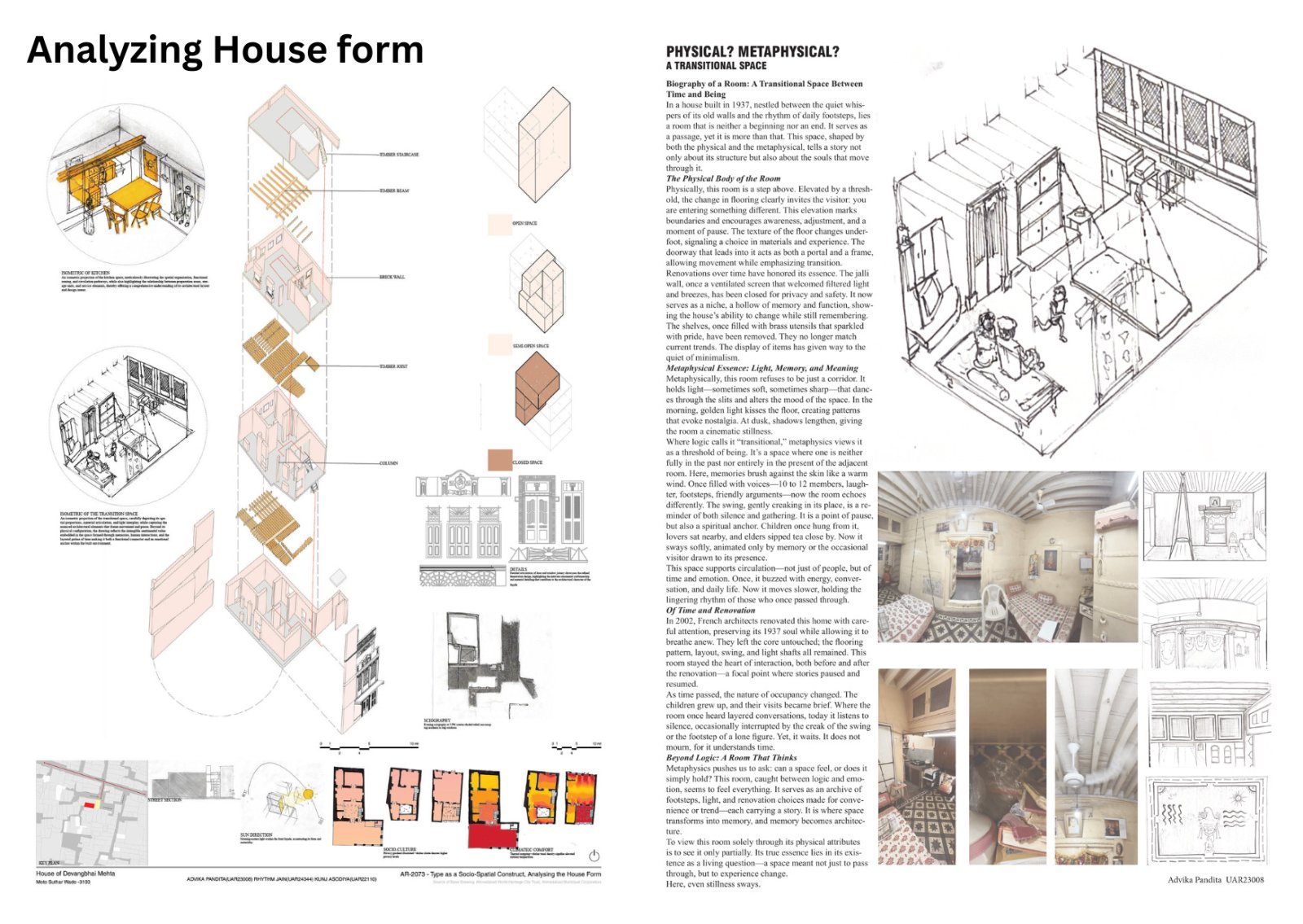
Case Study of Devang Bhai's pol house in Old city of Ahmedabad supported by Analytical diagrams and exploded axonometric. Also a biography "Physical? Metaphysical? of the house to understand the relationship between the what ones sees and emotions

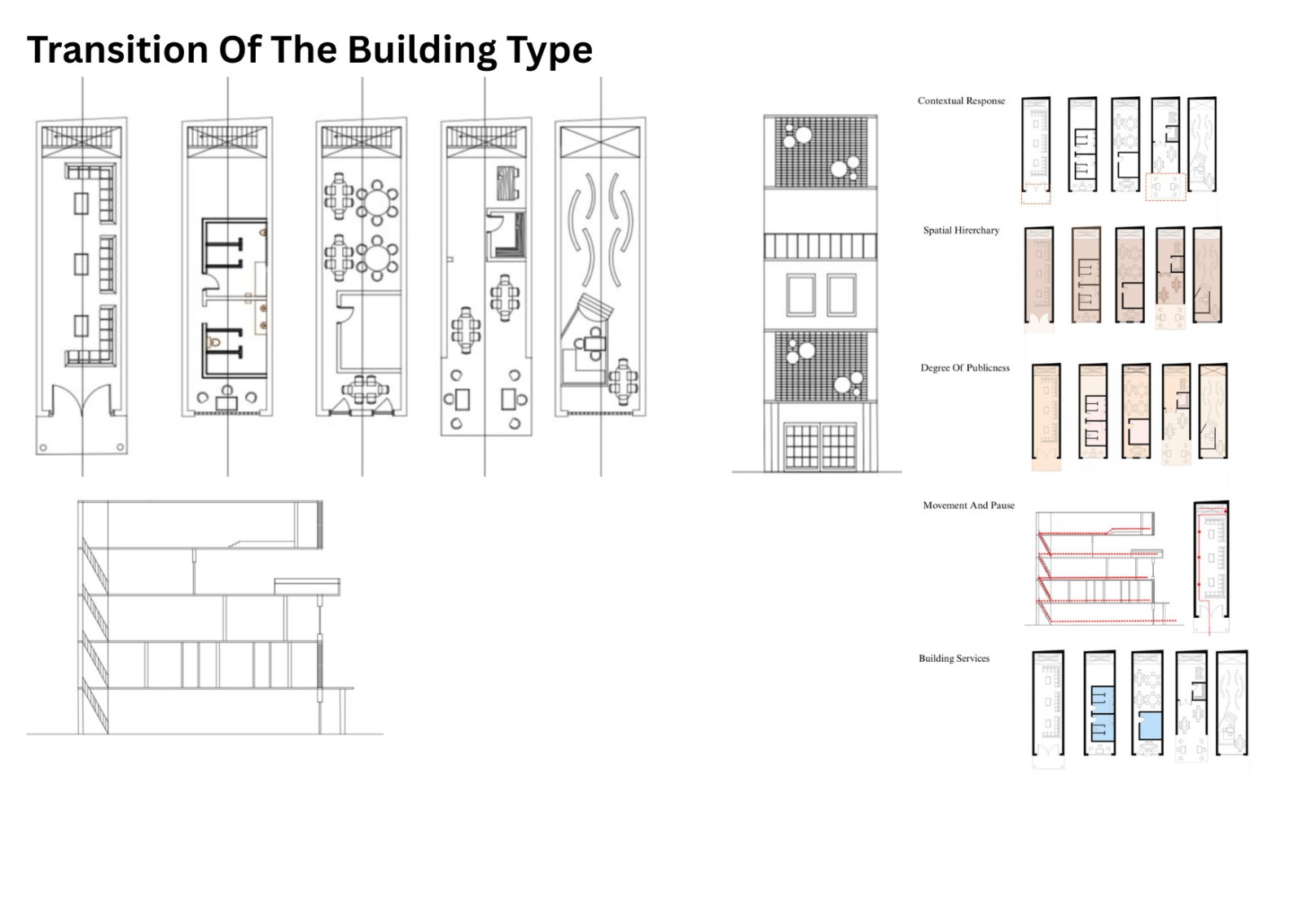
Reimagining the pol house as a library revealed how its socio-spatial character transforms with new public needs.

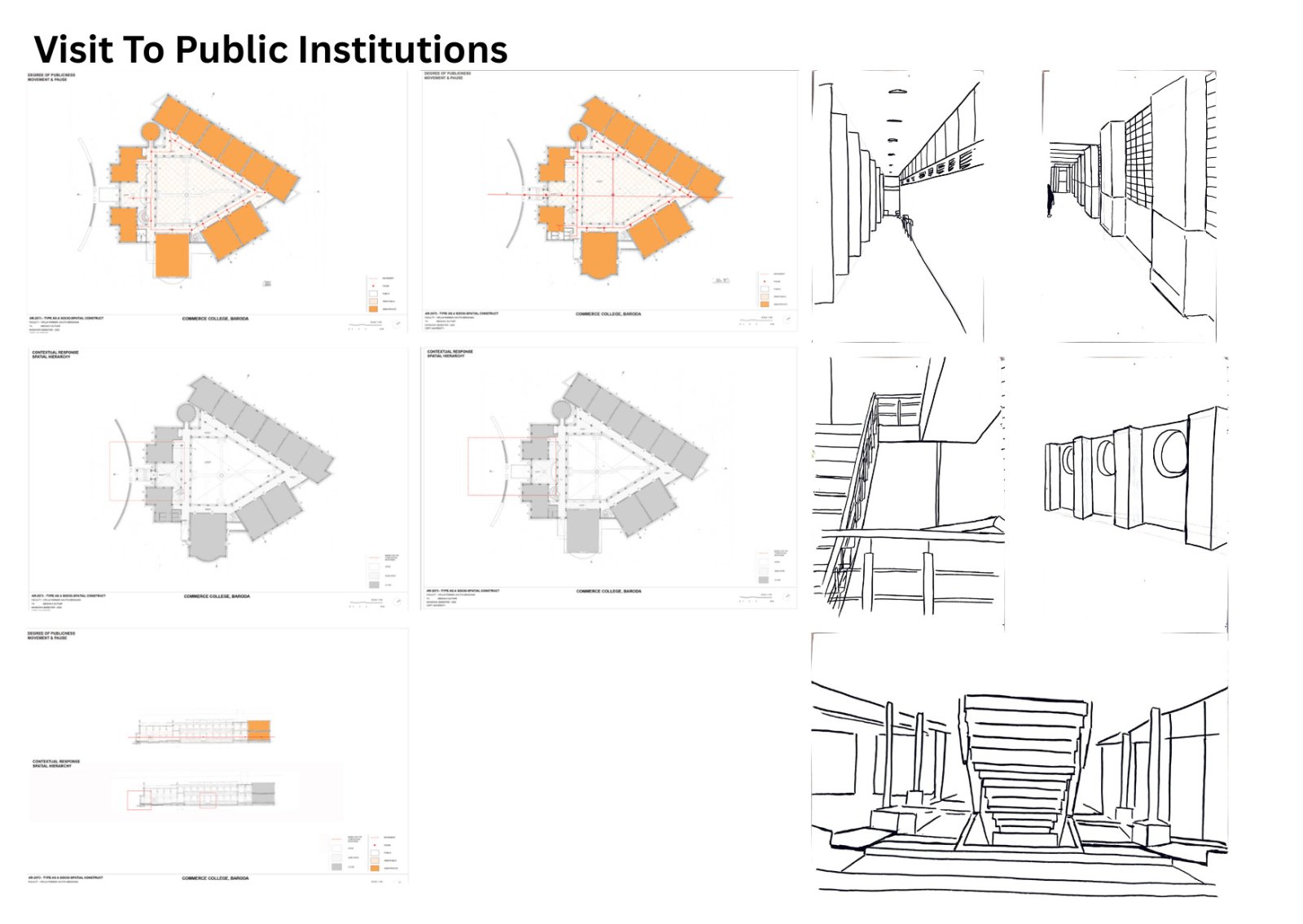
Analysis of a Institution visited and in site sketches

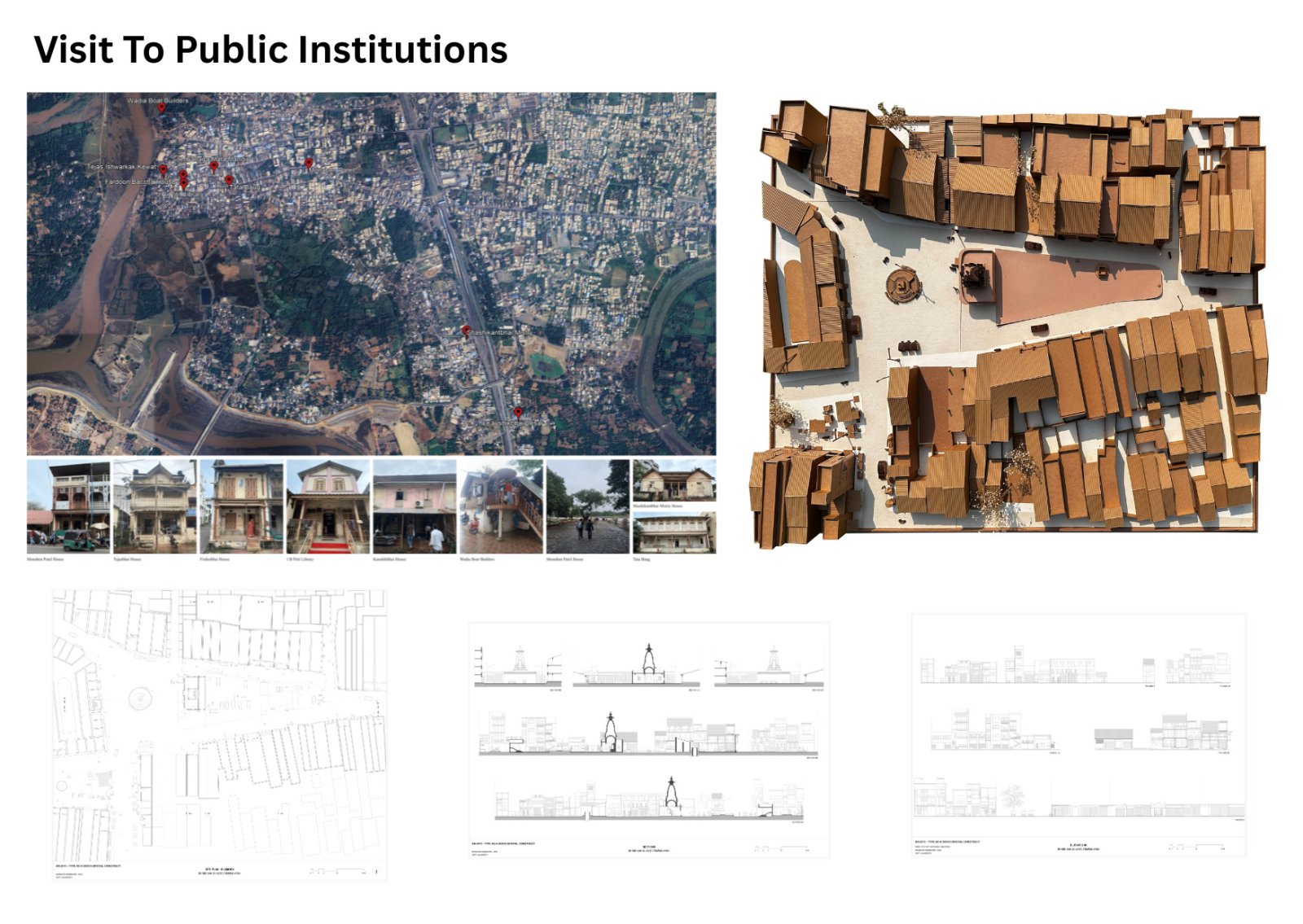
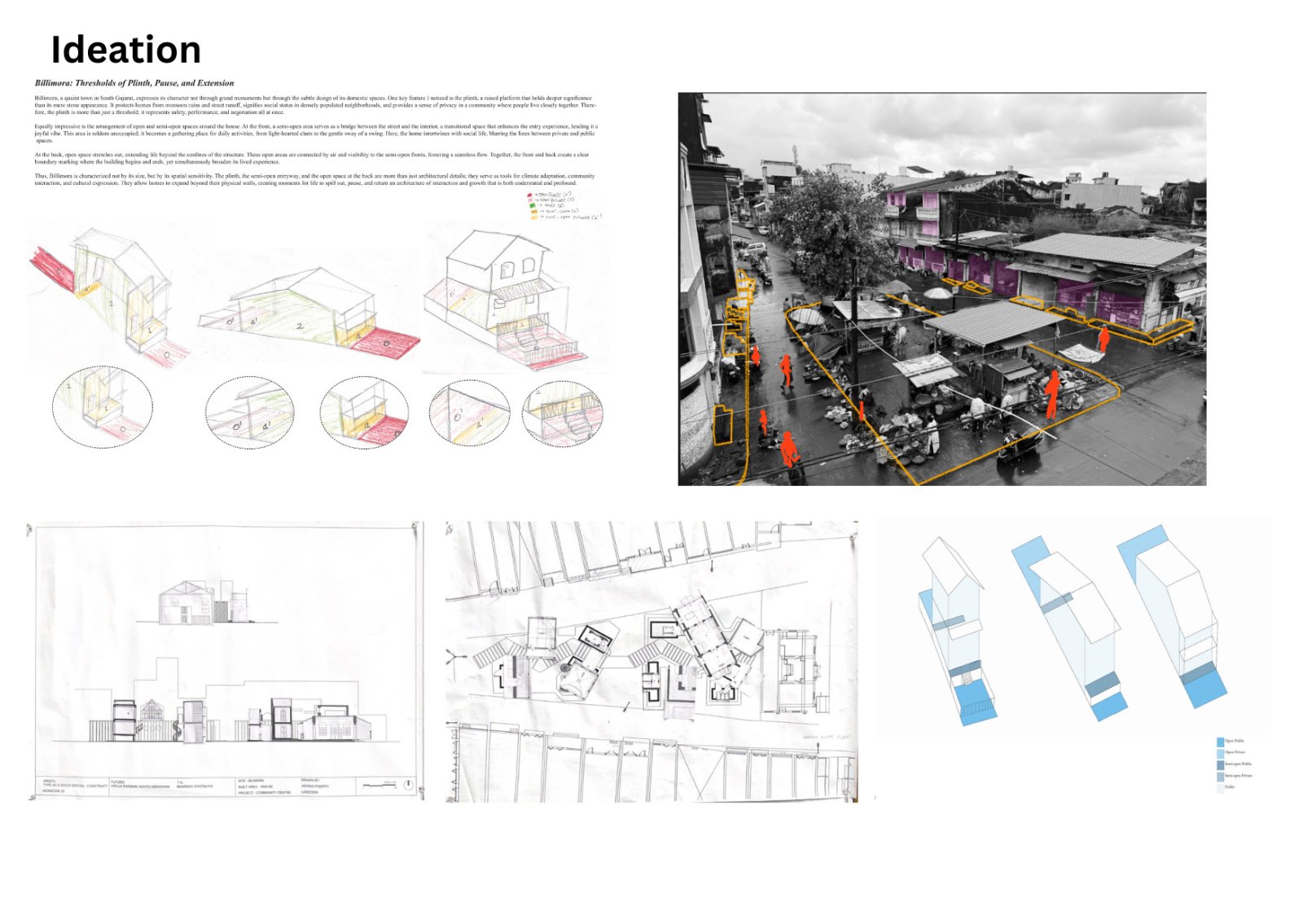
Site documentation of bilimora - plan, sections and 1:100 site model

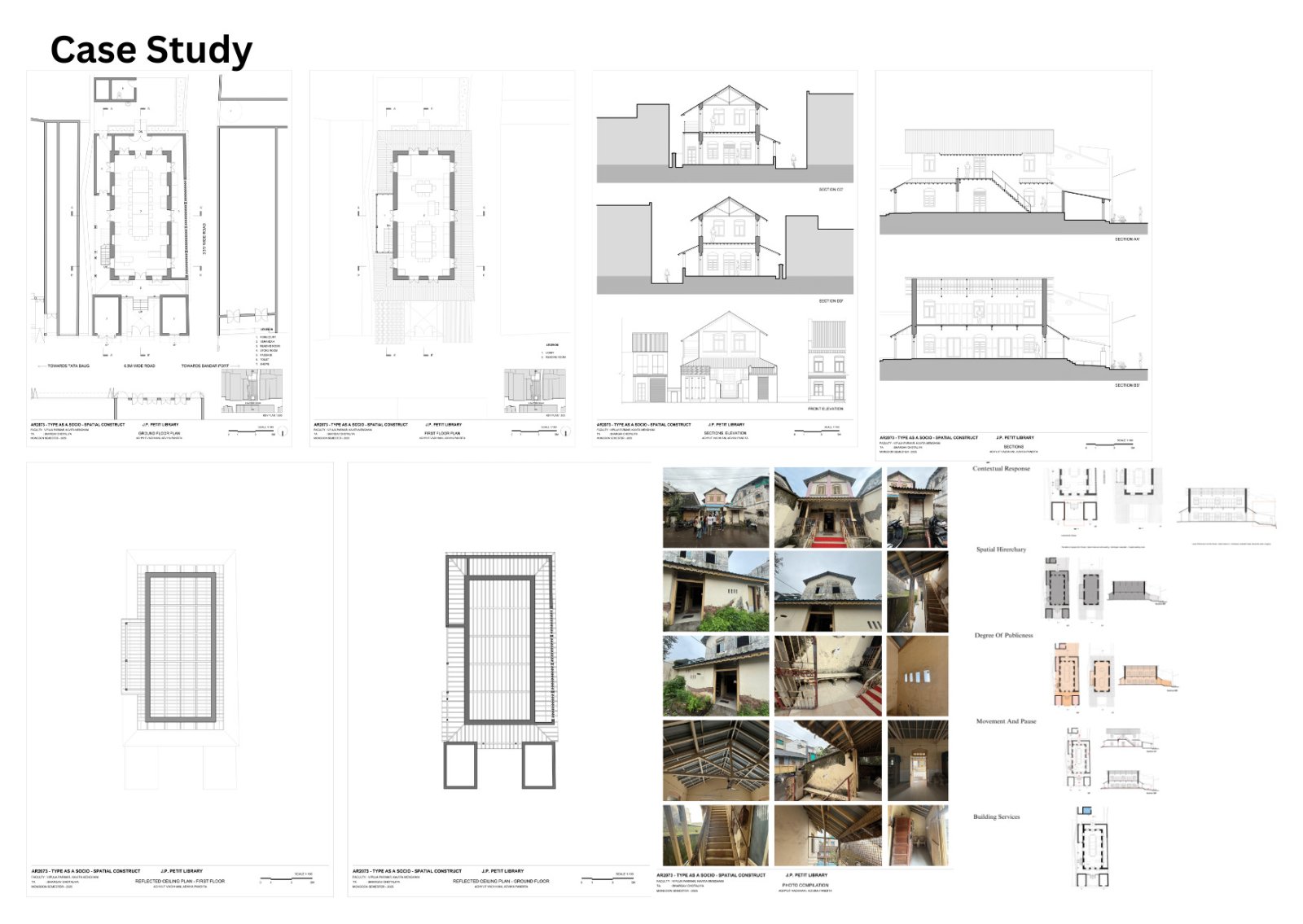
A public library(JP Petit) was chosen to study and document through its socio-spatial qualities.

Diagrams and models used to study the many ways movement shapes discovery.

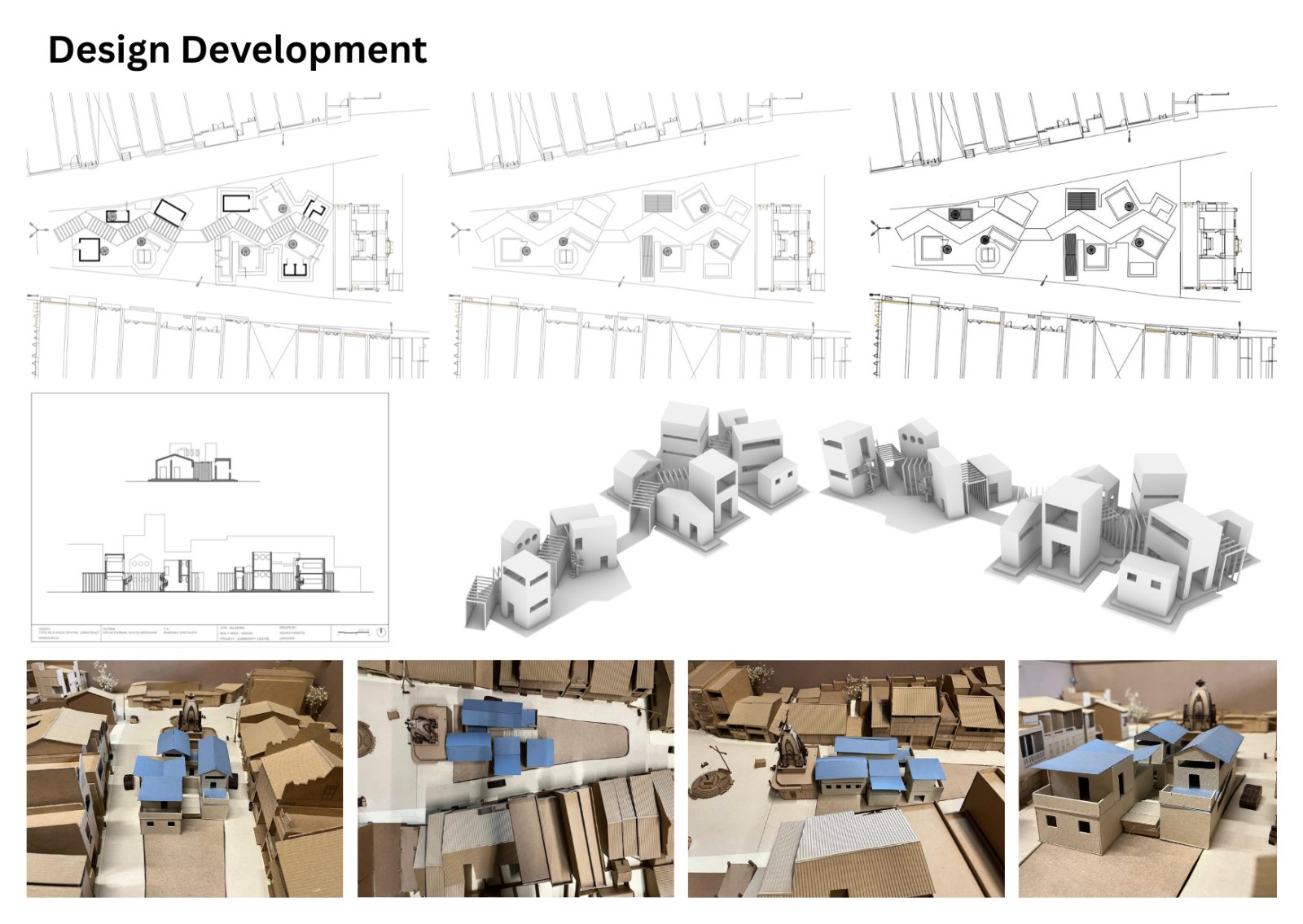
Design development through collages of section, 1:200 massing models, resolving the roofing system and iterating in 1.100 models

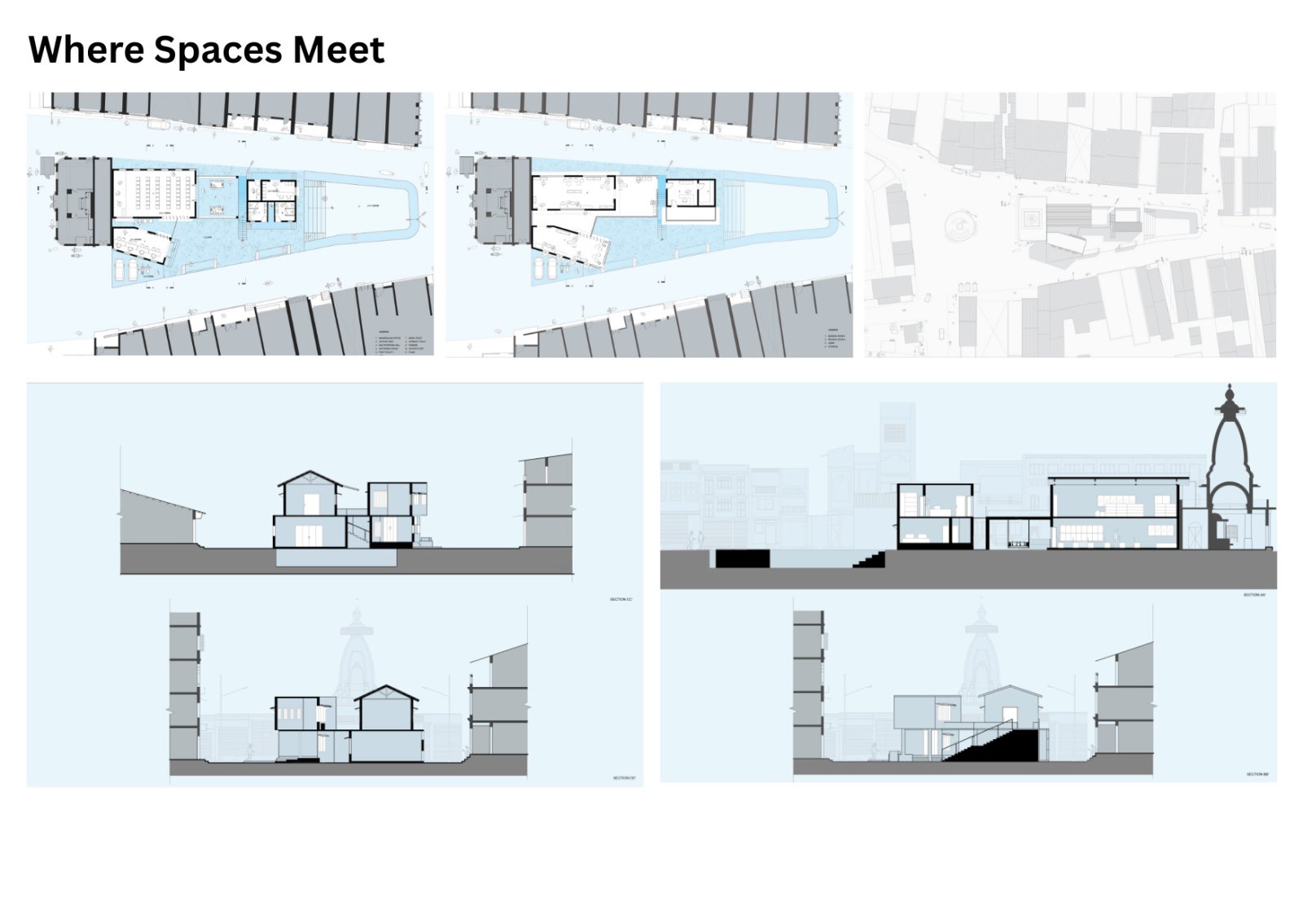
1:100 Plans and Sections

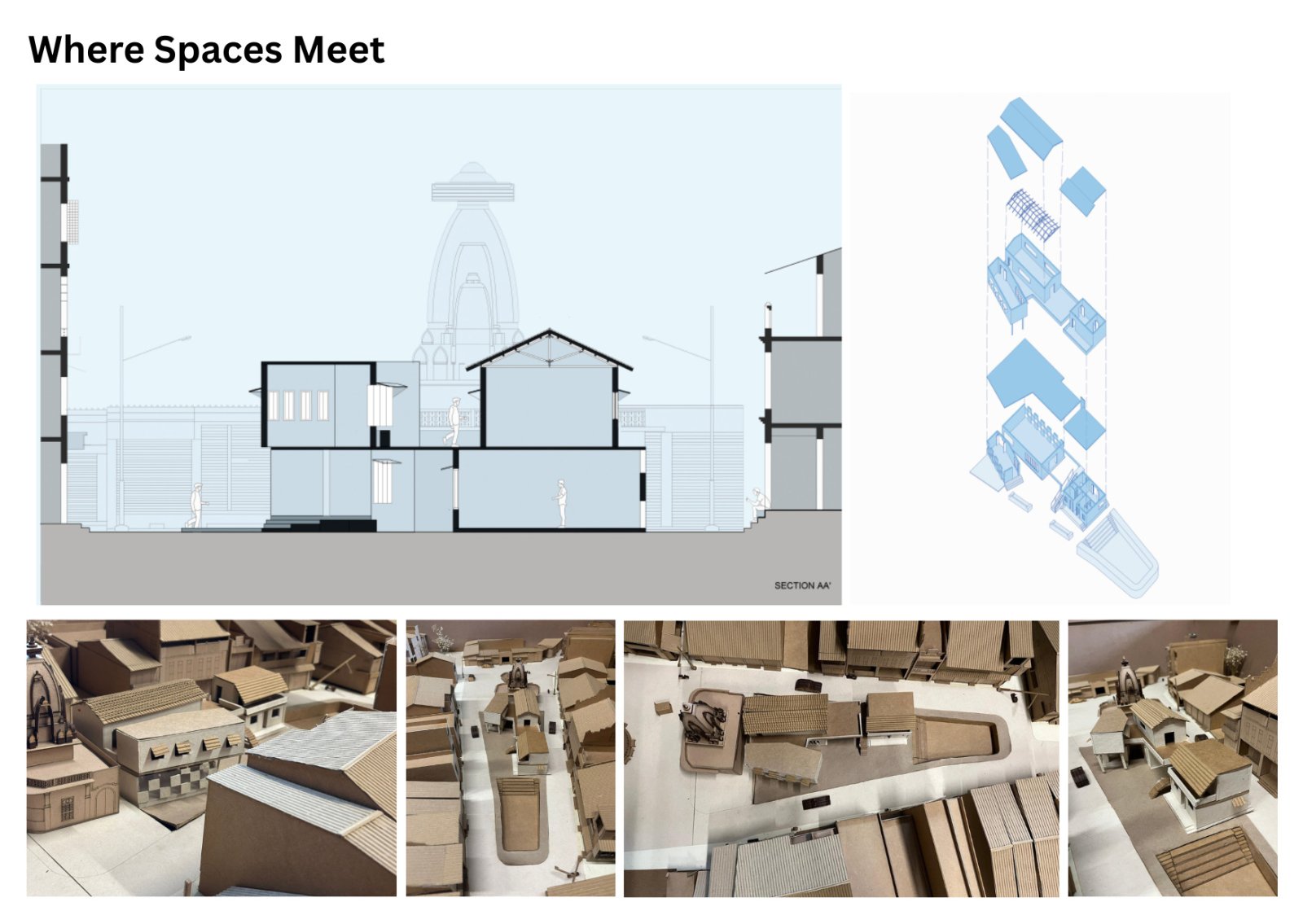
1:50 section, 1:200 exploded axonometric and 1:100 model