• Home
  • FA
  • LA4010
  • KALYANI | Ecocultural Revival of memory, ritual & Water

Yugma Bharatbhai Barad

LA4010

KALYANI | Ecocultural Revival of memory, ritual & Water

“An Ecocultural Restoration” project engages with the revival of the Kalyani, a Temple tank that once sustained aquifer recharge and collective life, now rendered defunct by urbanisation, encroachment, and disrupted water networks. Its restoration addresses Bengaluru’s dual crises of flooding and water scarcity, while enabling groundwater recharge and reactivating the Kalyani as a landscape of resilience and cultural memory. The project is anchored in nature-based processes of restoration and recharge. Rainwater harvesting, percolation and filtration zones, greywater treatment, wetland restoration, and the activation of natural streams are orchestrated to re-establish the stepwell as part of a larger hydrological system. These ecological strategies are interwoven with cultural, ecological and social interventions, repositioning the Kalyani as a public space of gathering, ritual, and reflection that bridges its historic role with contemporary urban needs. The project serves surrounding villages and the wider citizens of Bengaluru, offering both a working water infrastructure and an inclusive green common. Its long-term stewardship is envisioned through collaborations with municipal agencies, CSR-led initiatives such as ITC Infotech, and local communities, ensuring Kalyani’s return as a living reservoir of water and memory. 

View Additional Work
Report Content

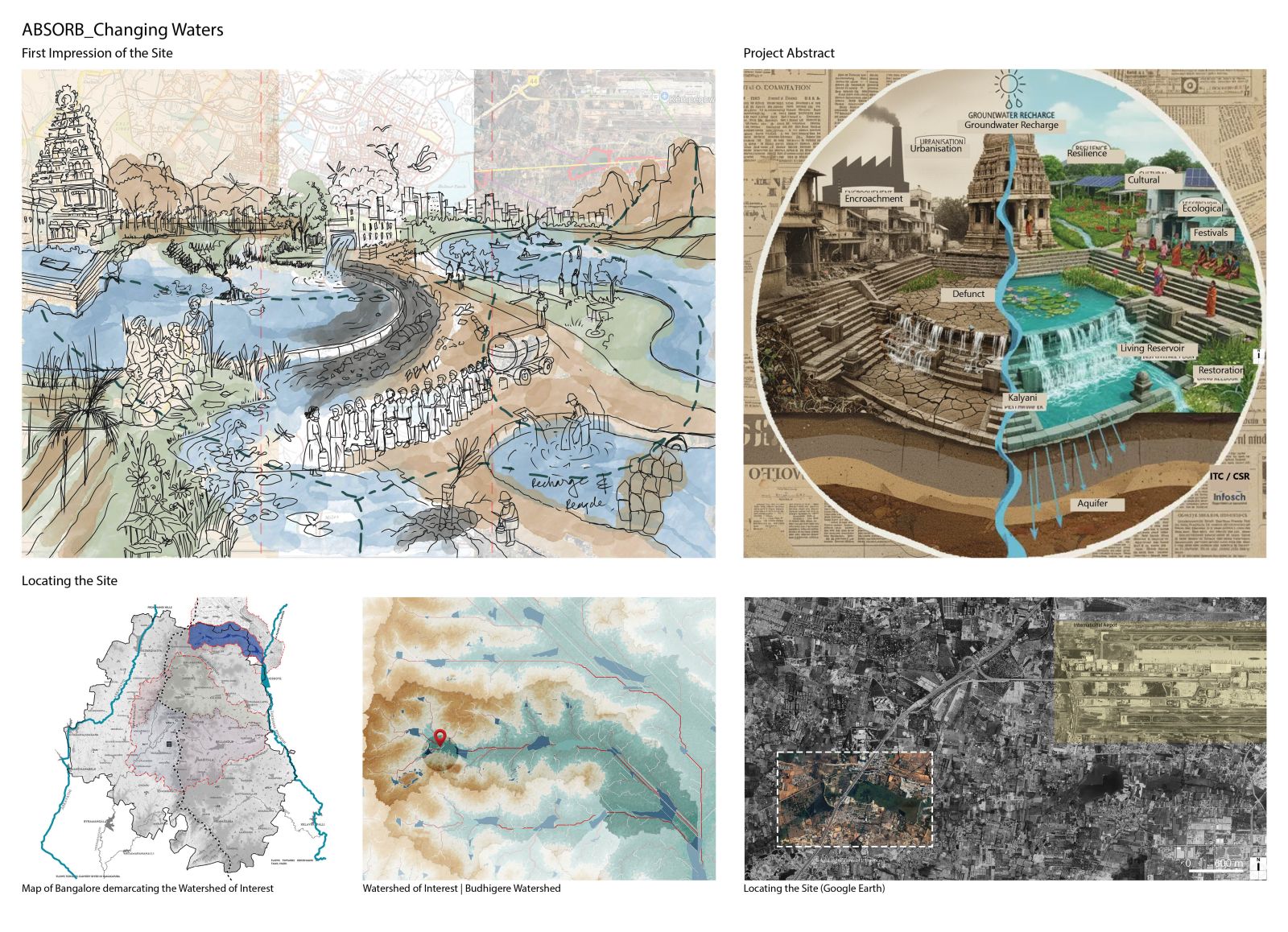
This sheet captures the journey of water and uses the defunct Chikkajala Temple Complex as a lens to understand its associated issues, while presenting the project’s central intent—restoring the ecological and cultural functions of the Kalyani (temple tank).

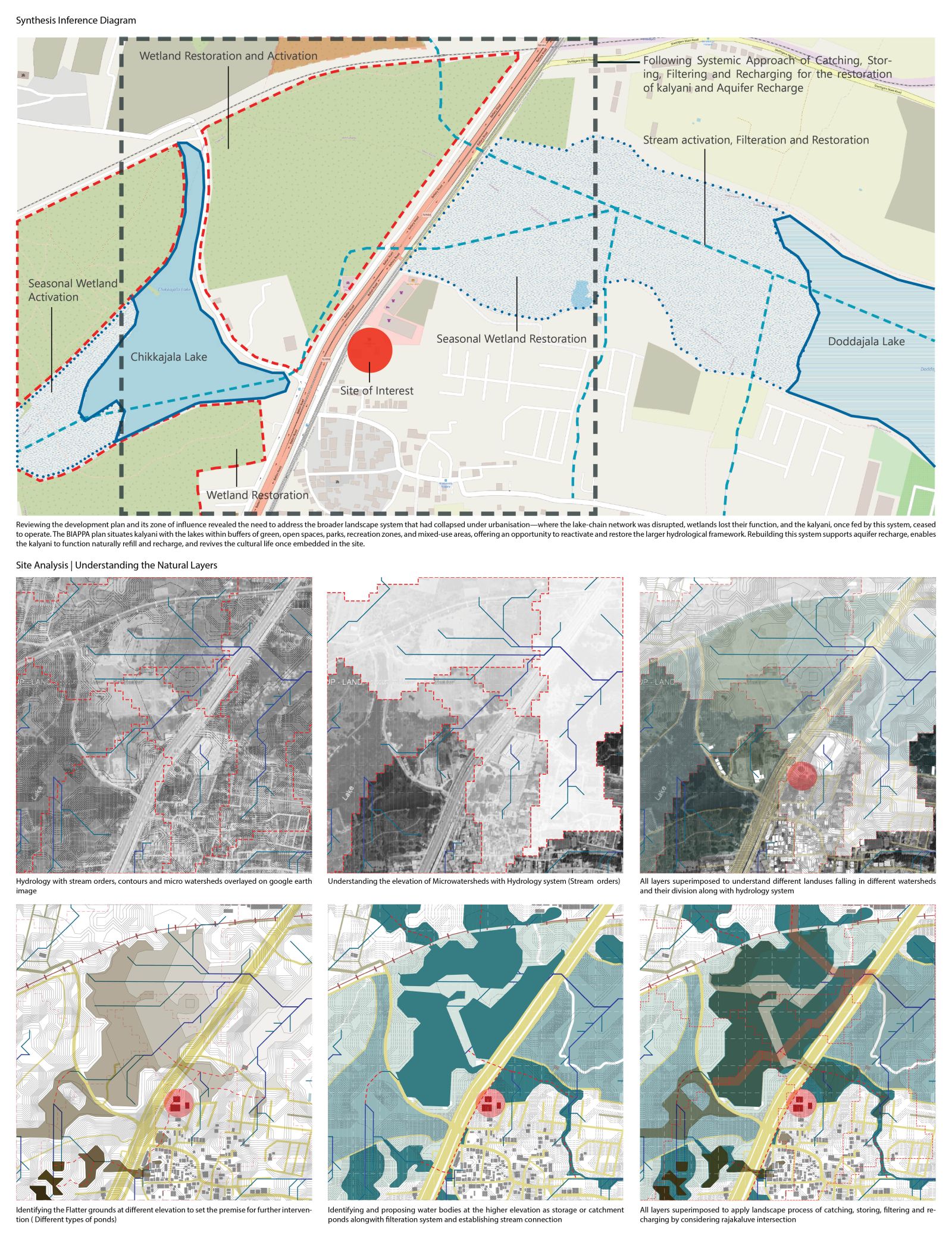
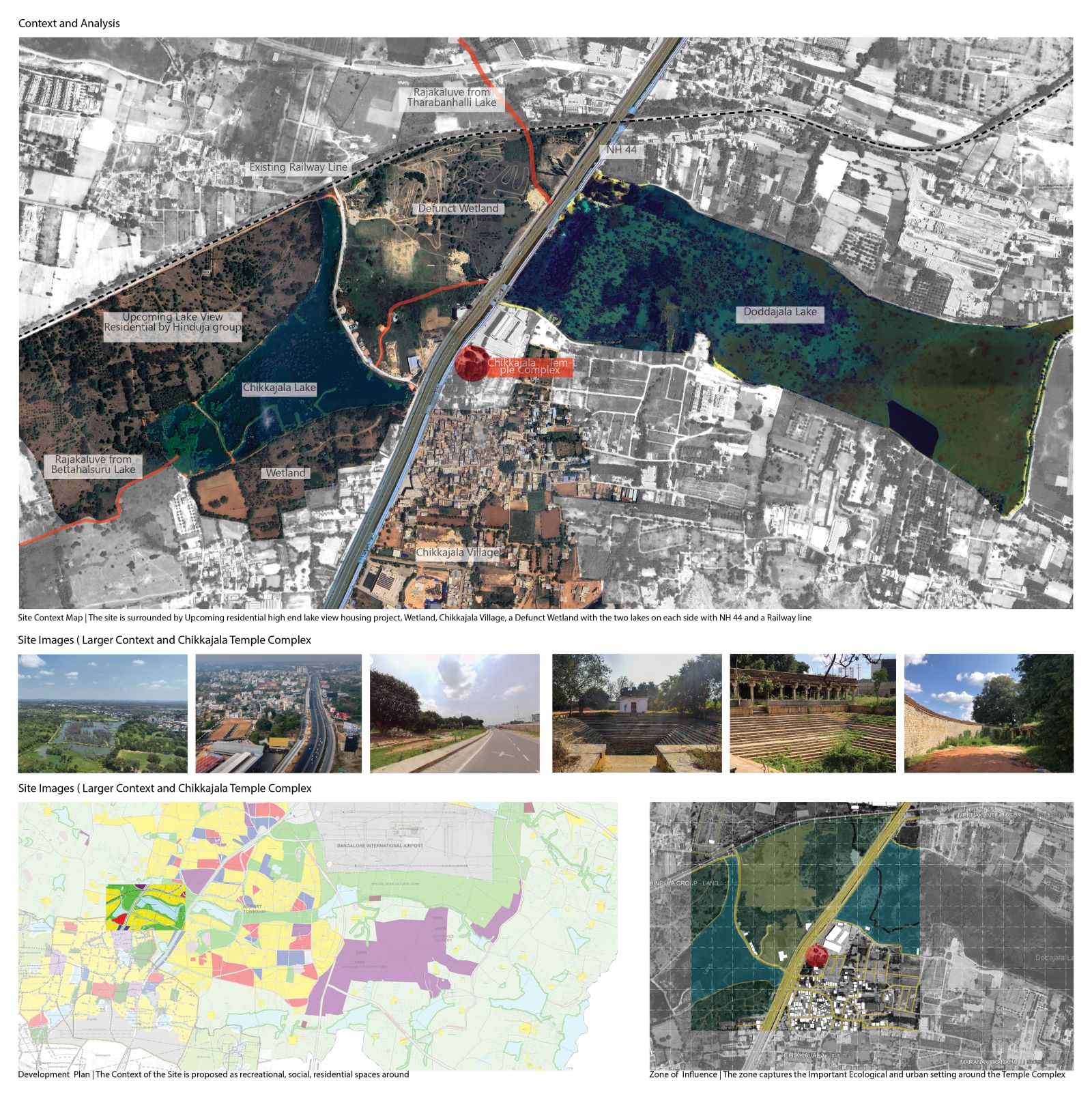
This sheet examines the site context and photographic documentation, and studies the development plan to understand the broader zone of influence surrounding the temple site.

Site synthesis and analysis

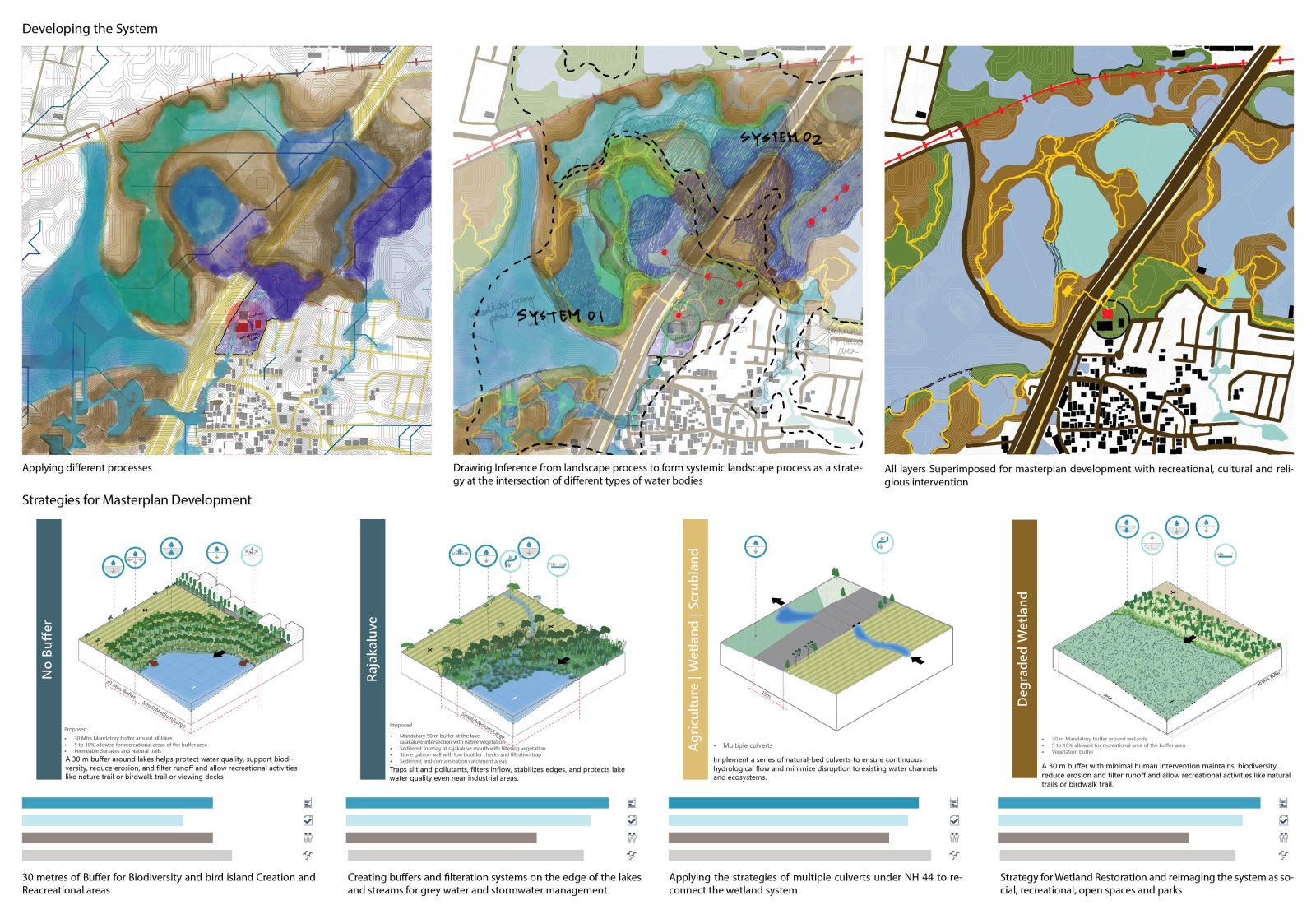
This sheet illustrates the idea of two interconnected hydrological systems, layered with an understanding of landscape water processes, and applies strategic design cards to formulate a comprehensive, site-wide masterplan.

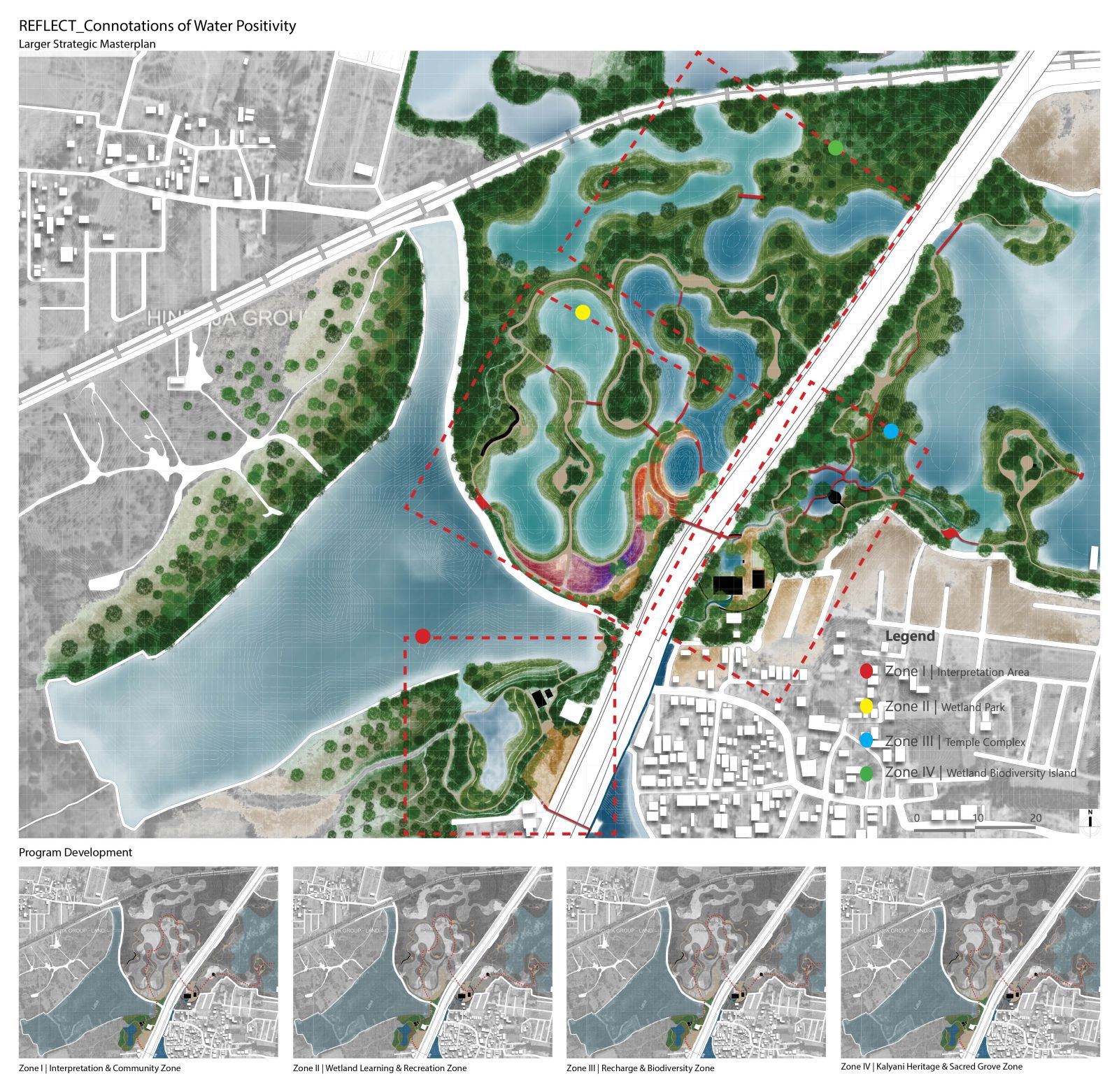
Larger Extent Masterplan and program development

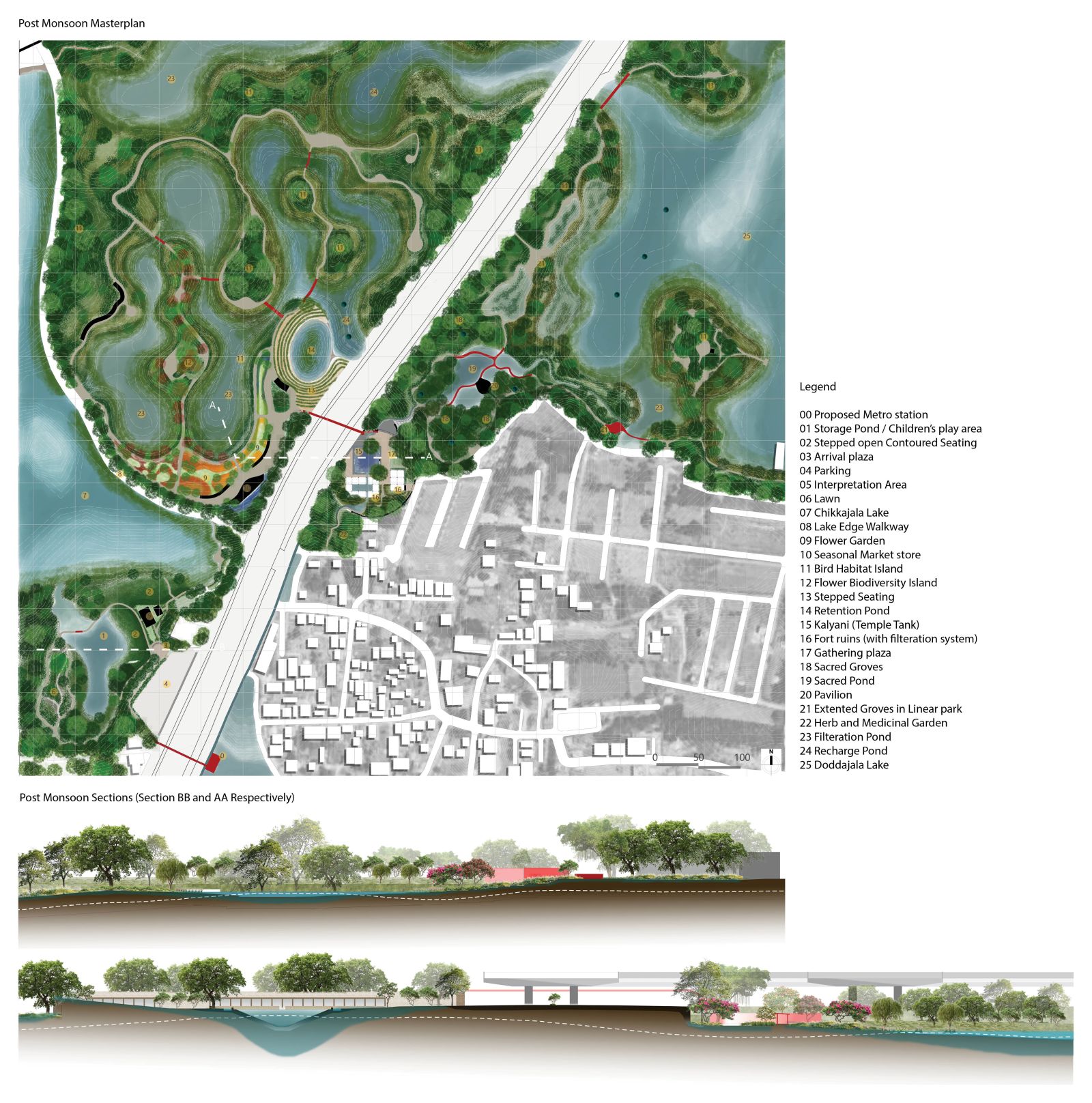
Post monsoon Masterplan and Sections

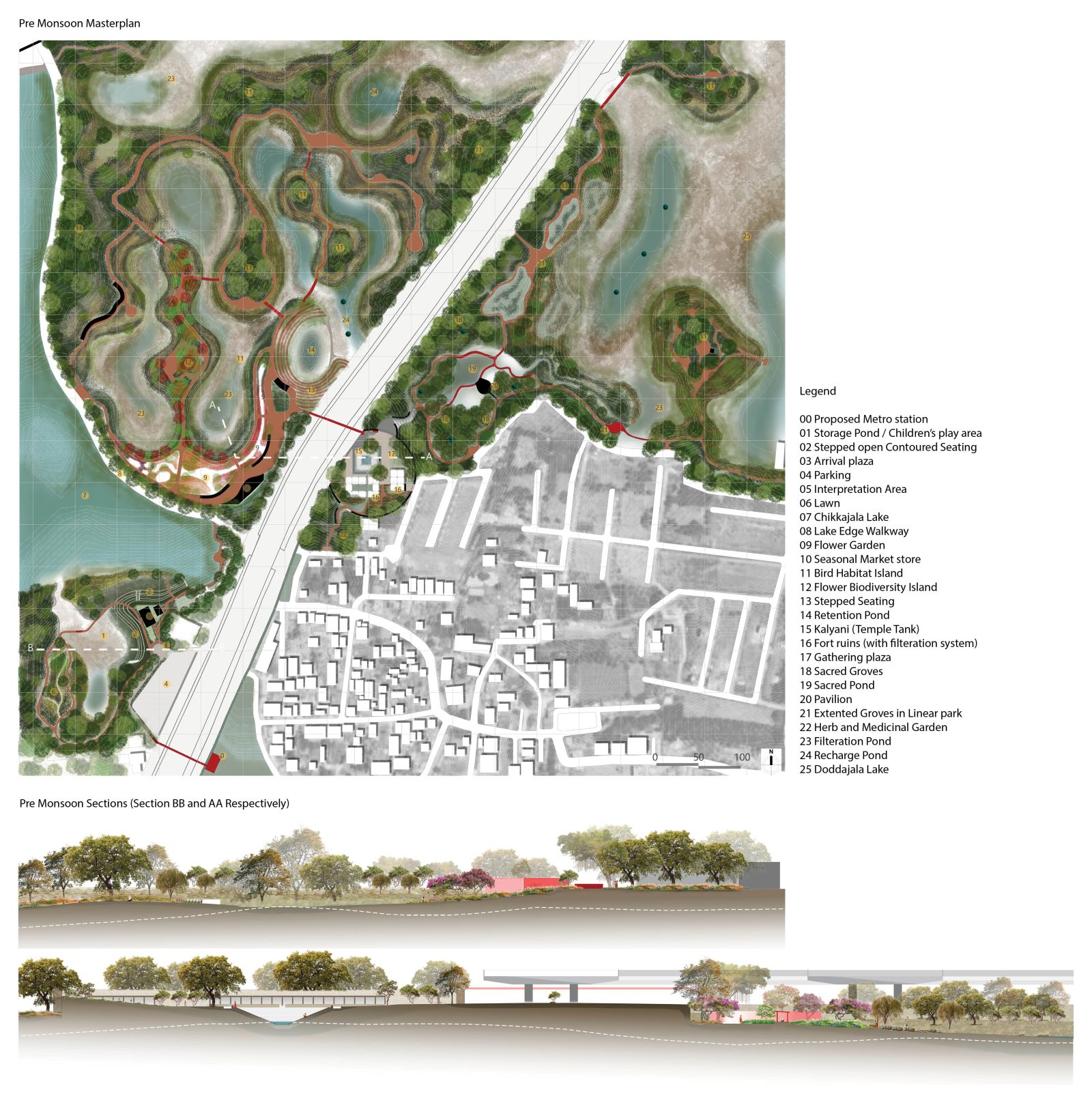
Pre monsoon Masterplan and Sections

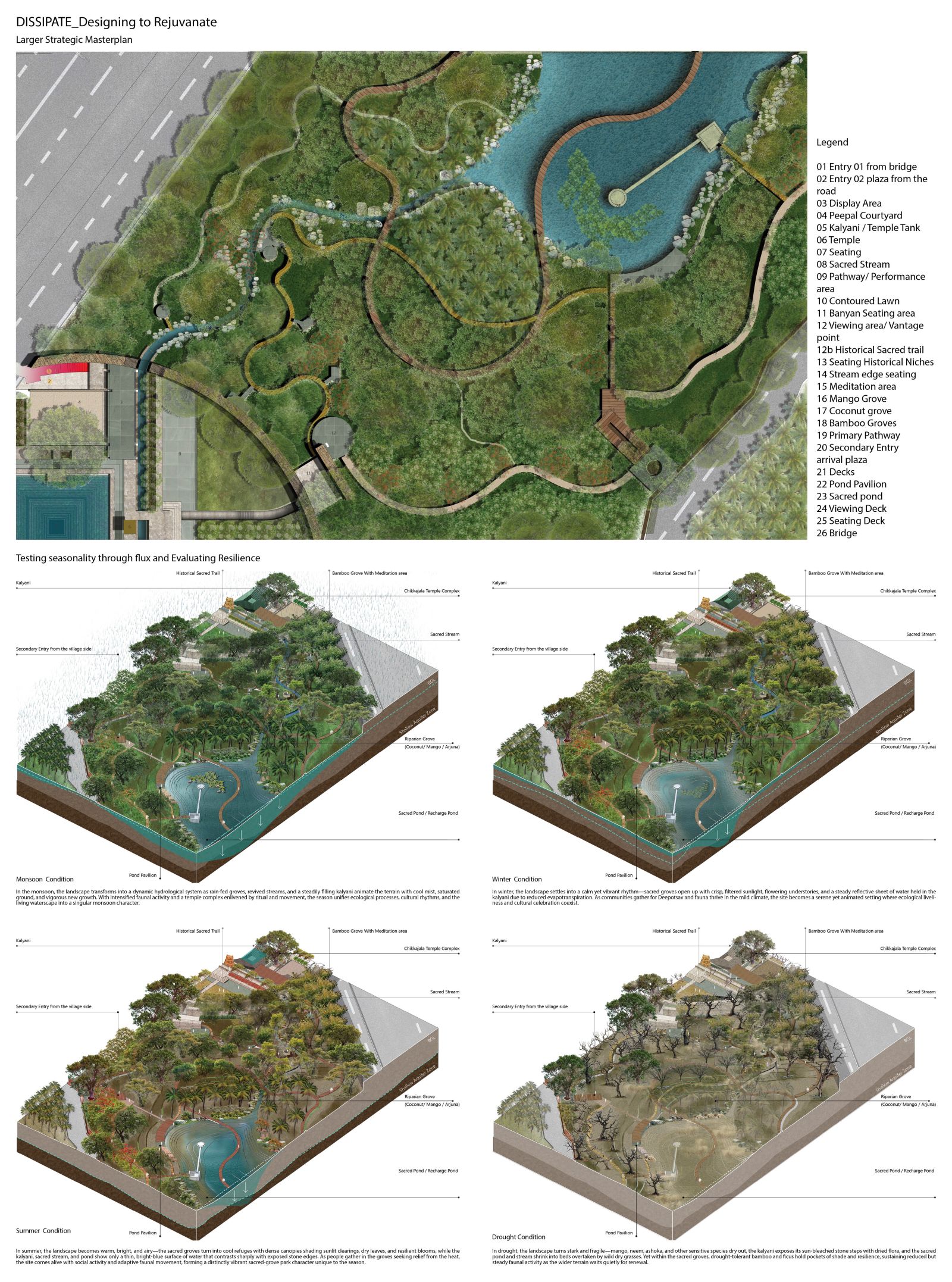
This sheet presents the detailed design intervention for the Kalyani temple complex and its sacred groves, illustrating how the site transforms ecologically across changing seasons while also being tested against extreme conditions such as drought. It captures the seasonal rhythms, environmental responses, and shifting landscape character that inform the overall resilience of the design.

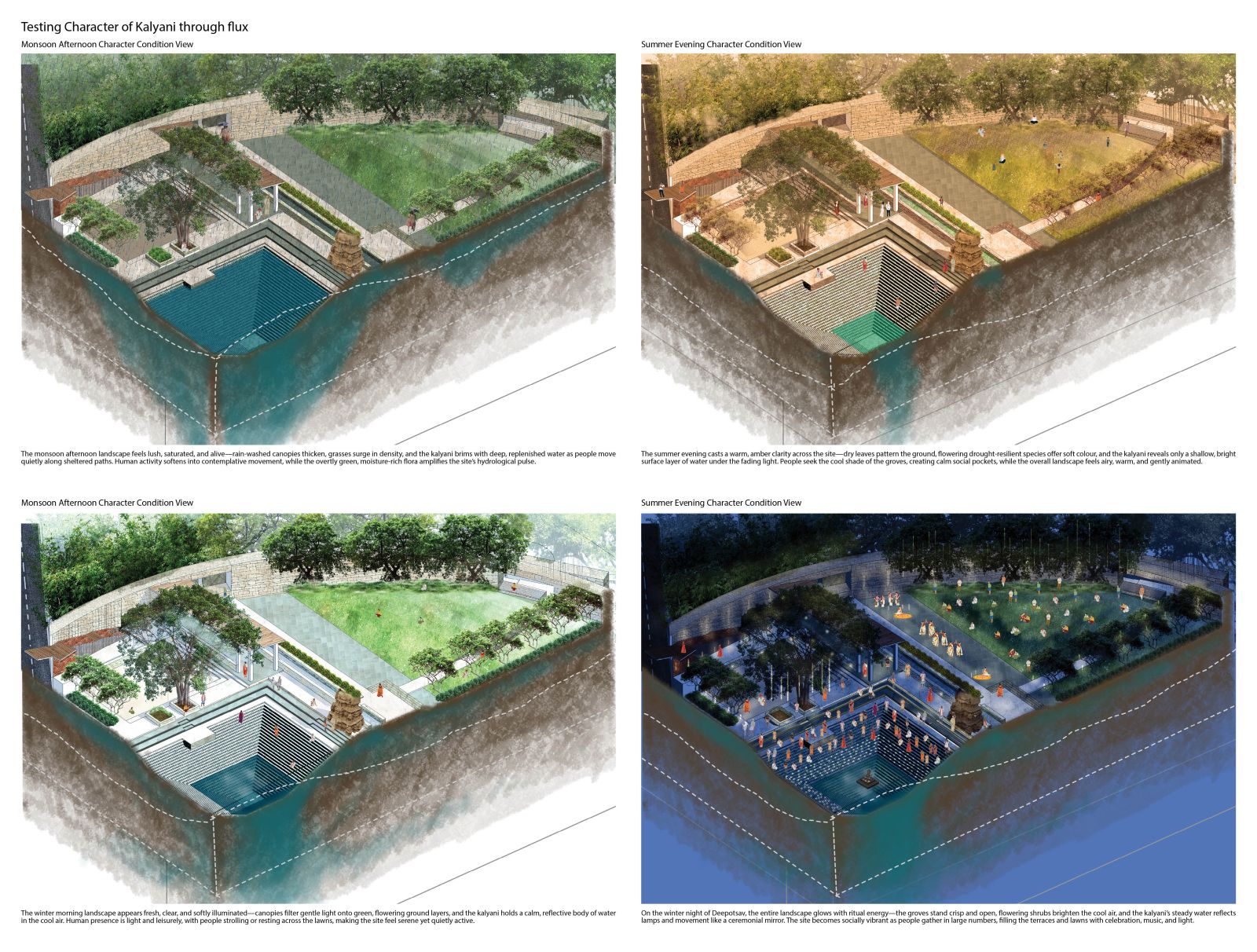
These visuals illustrate a holistic reading of the Kalyani landscape, revealing how its character transforms seasonally, ecologically, and culturally. Across monsoon, winter, summer, and drought, the images capture shifts in water presence, canopy behaviour, ground conditions, faunal activity, and human rituals—showing the Kalyani not as a static artifact, but as a living system where climate, ecology, and cultural life continuously shape and reshape the experience of the site.

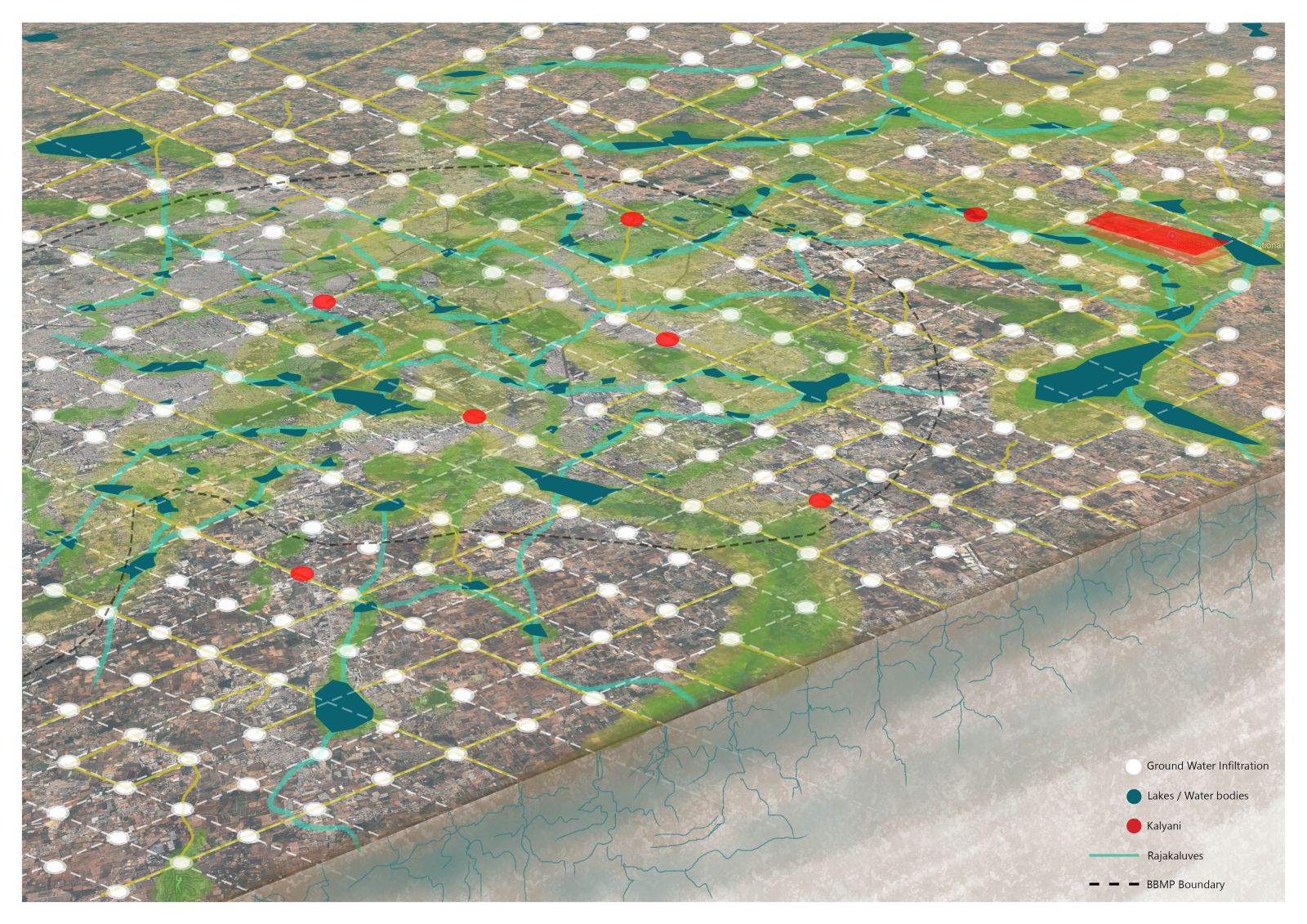
The project presents a holistic response to Bangalore’s interconnected lake chain system and the challenges of flooding, water scarcity, and pollution by proposing a citywide Water Balance Model that harvests rainwater, treats wastewater and polluted runoff through decentralised Nature-Based Solutions, and recharges both into the aquifer to buffer against climate-driven drought and reduce flood and sewage risks. The mapped diagram of Bengaluru extends this thinking to an urban scale, where each white point represents a potential site for groundwater infiltration through rain gardens, new tanks, constructed wetlands, blue–green canals, inclusive public spaces, and other NBS-driven interventions. Within this larger network, the Kalyani Ecocultural Restoration serves as one such model—demonstrating how site-specific ecological and cultural revitalisation can contribute meaningfully to groundwater recharge and resilience across the city.

Project Video