Desai Shambhavi Nitin Sapana

LA4010

WATERS IN WAITING

Bangalore’s shifting relationship with its lakes is not a story of disappearance alone, but of disconnection, where changing land use, altered hydrology, and rapid urban growth have weakened the cultural and ecological bonds that once tied people to water. This project responds by reframing a neglected lake as a sensory, ritual, and ecological zone, positioning water not only as an environmental asset but as an experiential and emotional anchor in the landscape. The proposal restores the lake’s seasonal logic through wetland regeneration, buffer redefinition, and edge re-naturalization, while creating spaces that invite quiet observation, collective rituals, everyday pauses, and renewed belonging. By integrating hydrological flows with public life through shaded walks, water-touch points, monsoon-responsive platforms and contemplative thresholds. The design builds a dialogue between changing water levels and human presence. Grounded in climate-adapted planting, soil-based filtration, and low-impact materials, the project strengthens recharge, improves water quality, and rebuilds ecological continuity despite the lake’s absence in the Development Plan. Ultimately, the proposal positions the lake as a living commons: a place where water becomes felt rather than overlooked, remembered rather than erased, and where a fragmented landscape regains coherence through sensory, cultural, and ecological repair.

View Additional Work
Report Content

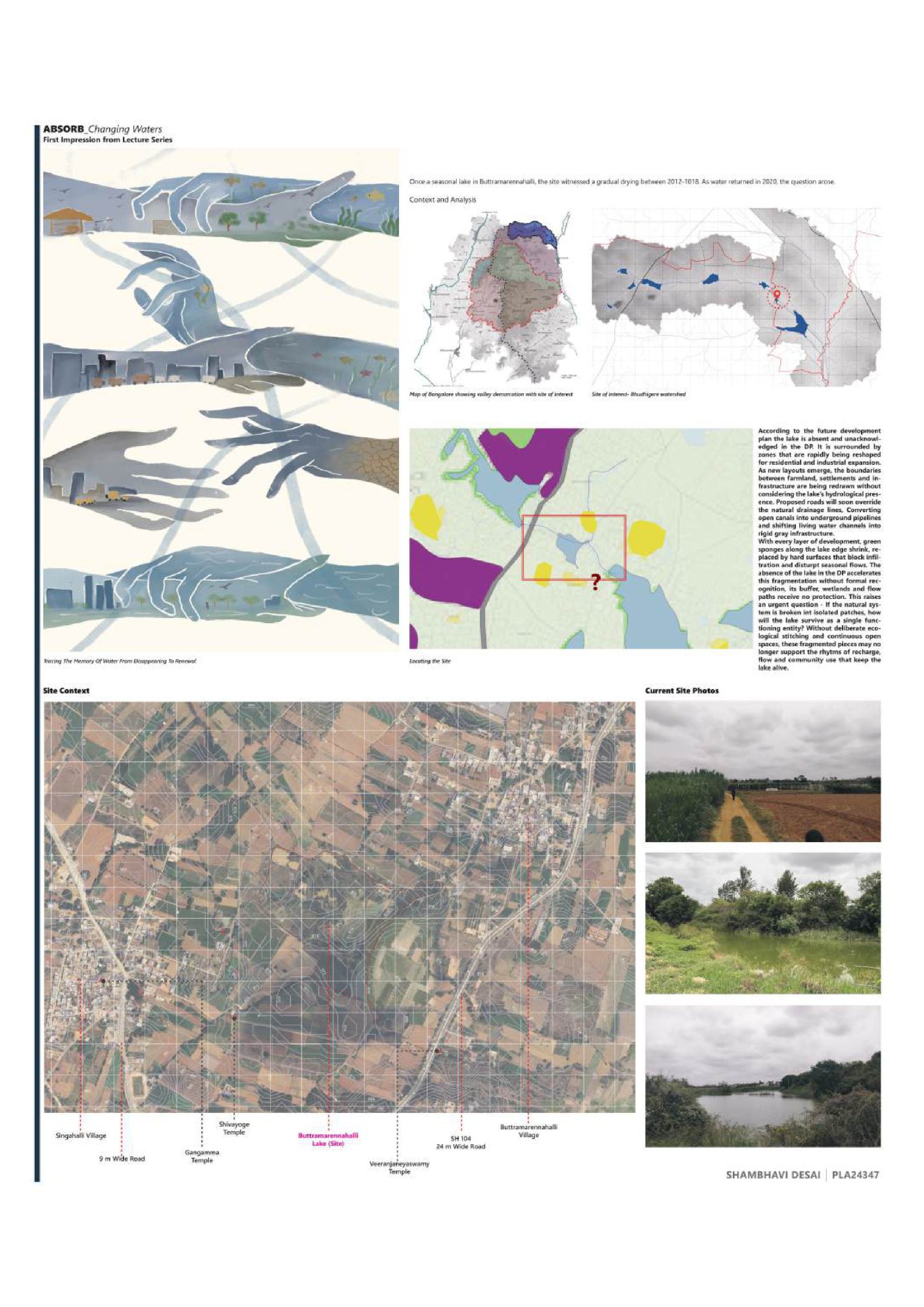
A stressed urban lake is read within its broader watershed, revealing the ecological, cultural, and hydrological forces that shape it. Context mapping, field observations, and sensory documentation together frame the challenges and possibilities for reimagining the lakefront as a renewed sensory and ritual landscape.

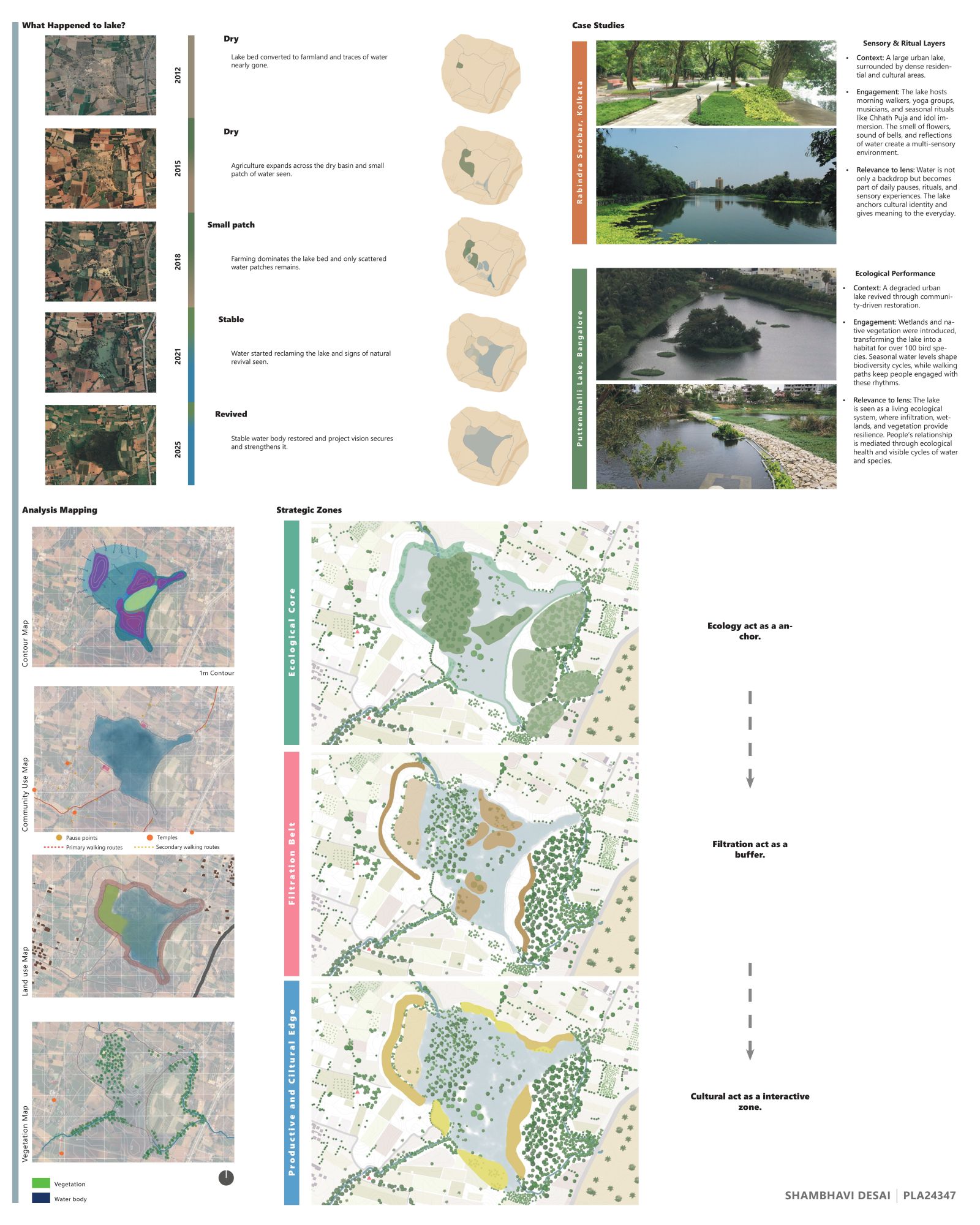
A synthesis of historical shifts, sensory readings, and analytical mappings reveals how hydrology, ecology, and social rhythms shape the lake’s evolving condition. These insights guide a regenerative framework that reimagines the lakefront as an integrated sensory and ritual landscape rooted in ecological continuity and community belonging.

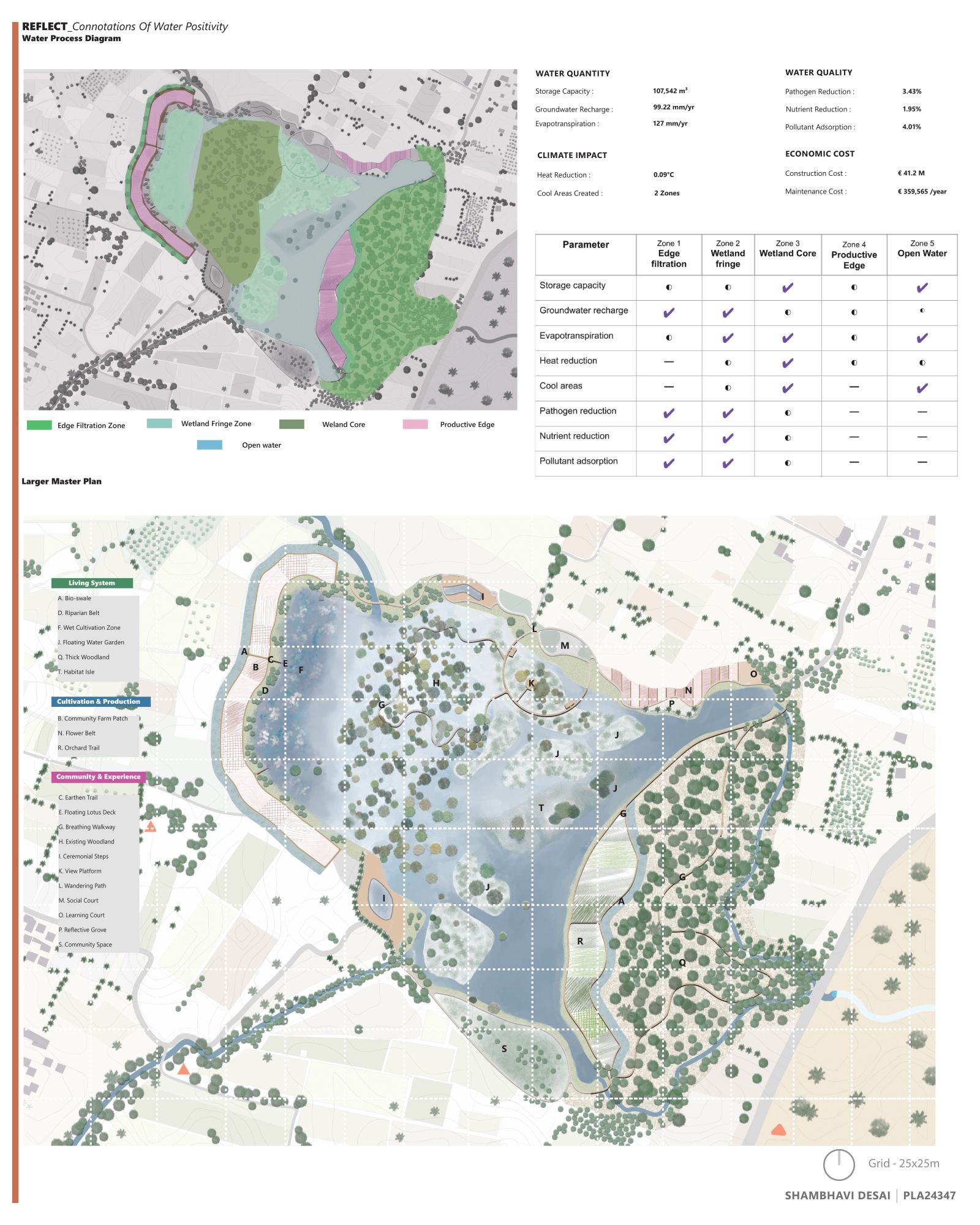
A unified water-positive framework emerges through process diagrams and the master plan, showing how wetlands, inlets, and seasonal edges slow, filter, and hold urban runoff. Together, these systems build a resilient hydrological landscape that restores ecological function while shaping future sensory and ritual experiences along the lakefront.

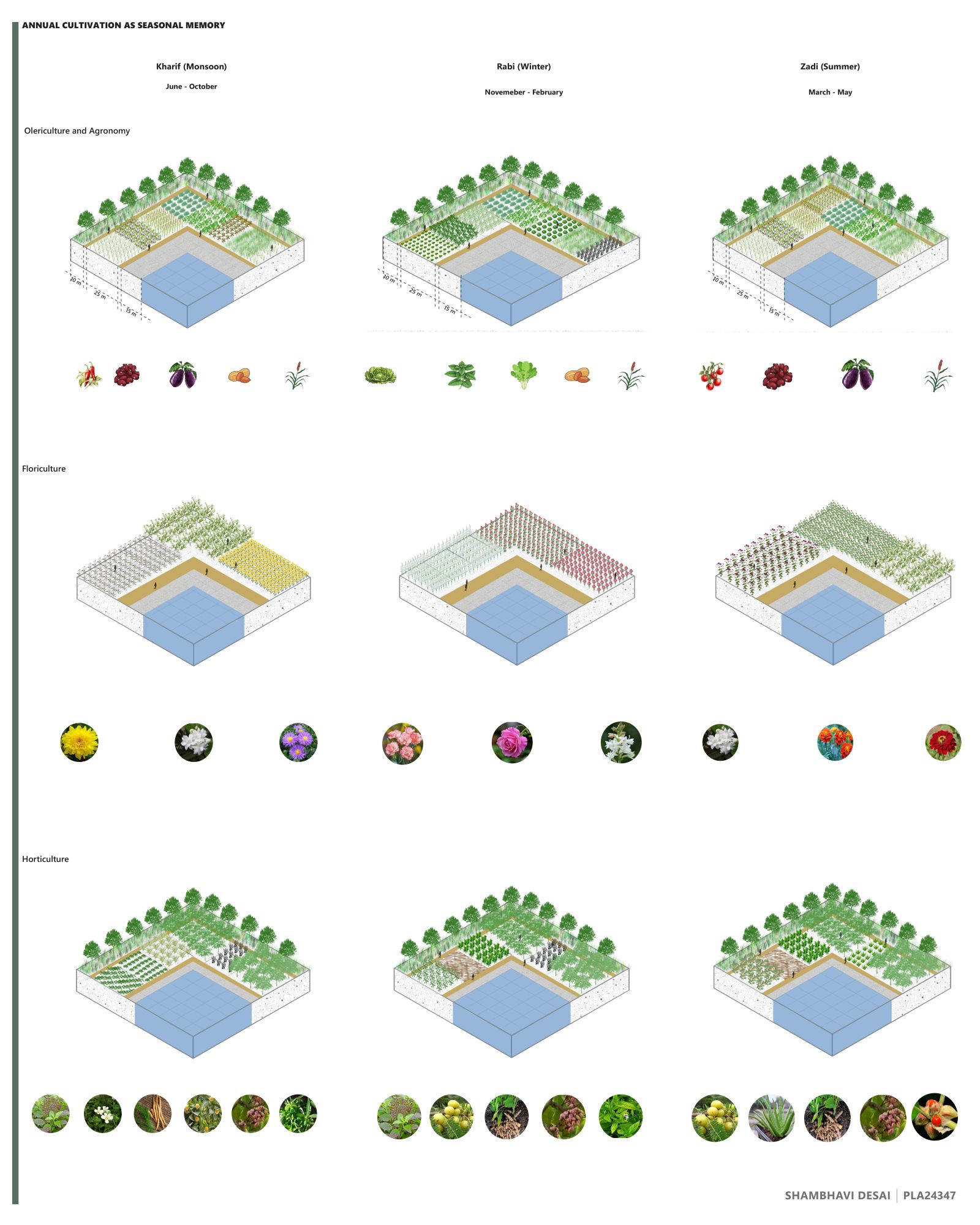
Understanding seasonal cultivation through matrix

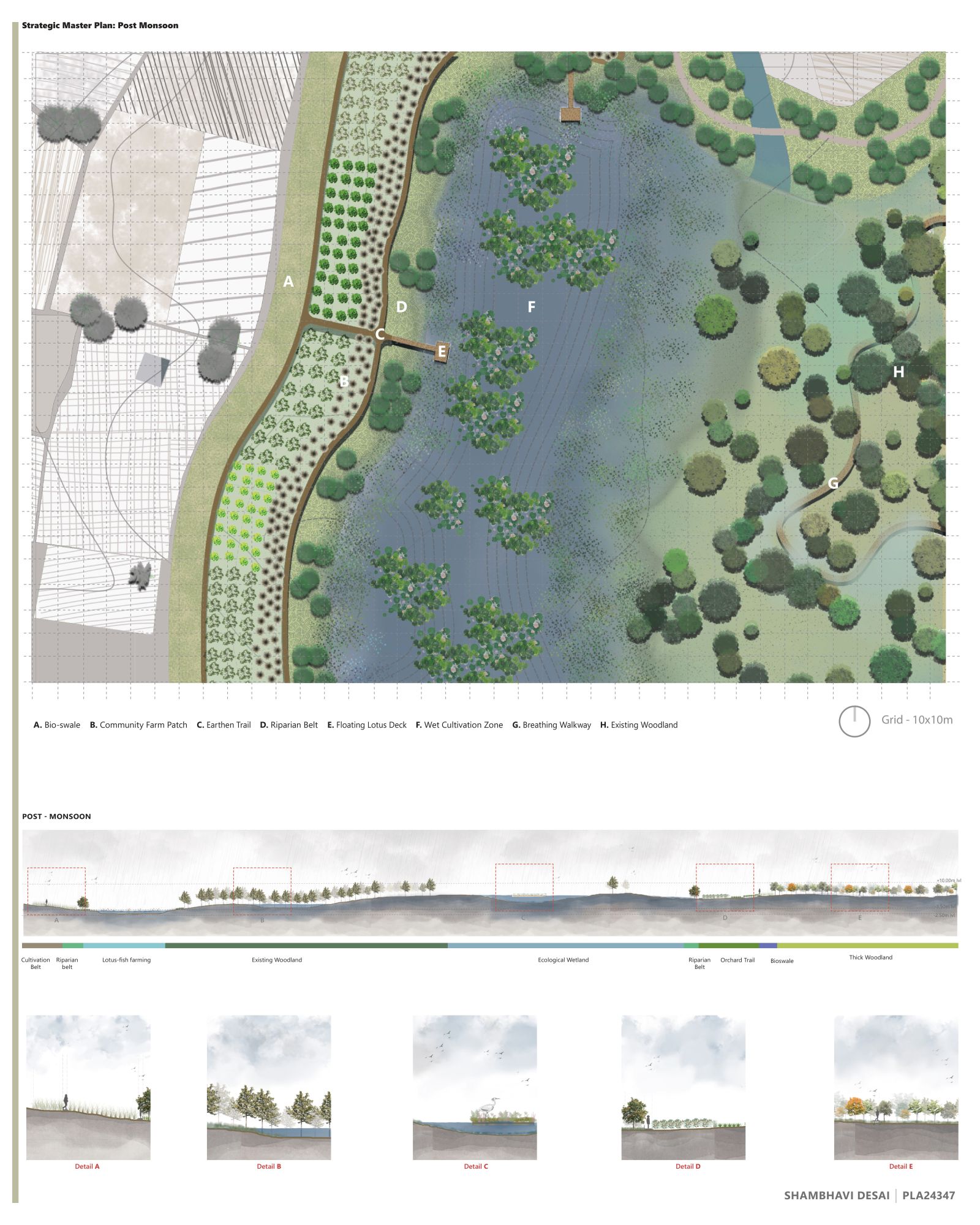
Strategic planting zones, programmed edges, Cultivation belts and hydrological systems converge in a unified post-monsoon lakefront plan, with sections revealing how landform, water, and vegetation work together to shape a coherent, regenerative, and sensory landscape.

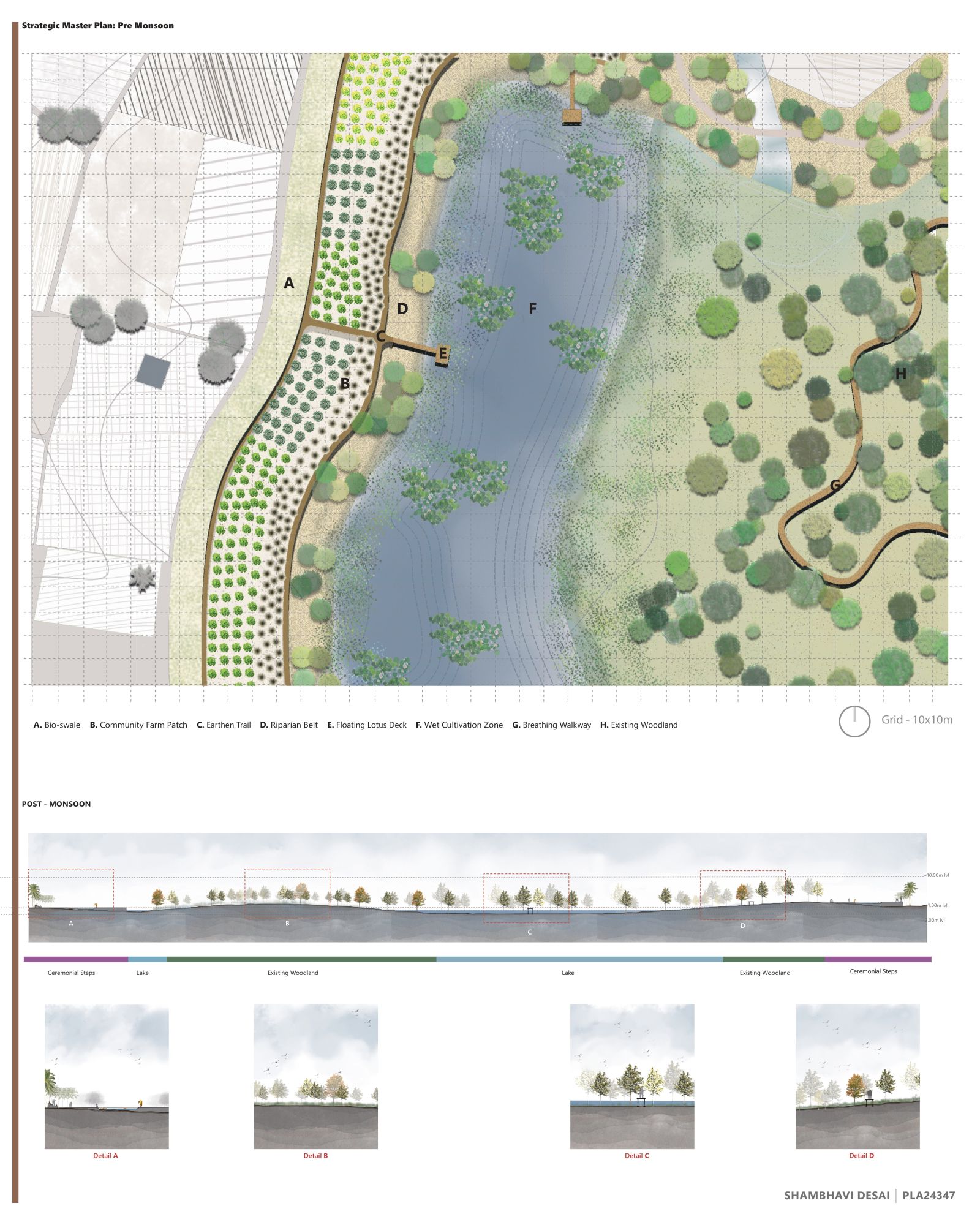
The pre-monsoon lakefront plan weaves programs, planting, and water processes across receding edges, while the sections illustrate how shifting water levels, landform, and public spaces interact to form a resilient, seasonally adaptive sensory landscape.

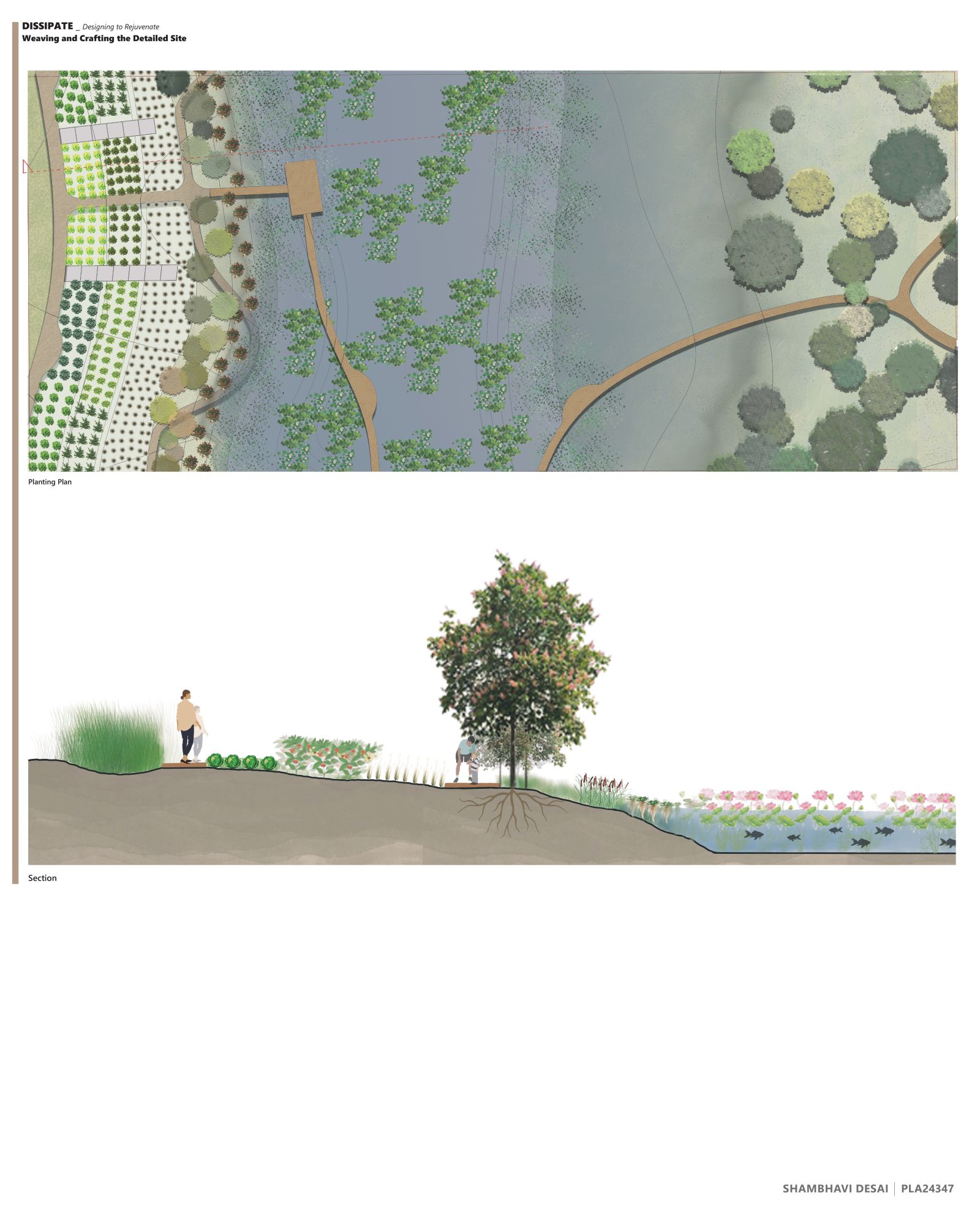
The detailed plan interlaces wetlands, planted edges, shallow basins, and open water into a continuous ecological gradient, crafting a cohesive lakefront landscape that softens hard boundaries while enhancing habitat and visitor experience.

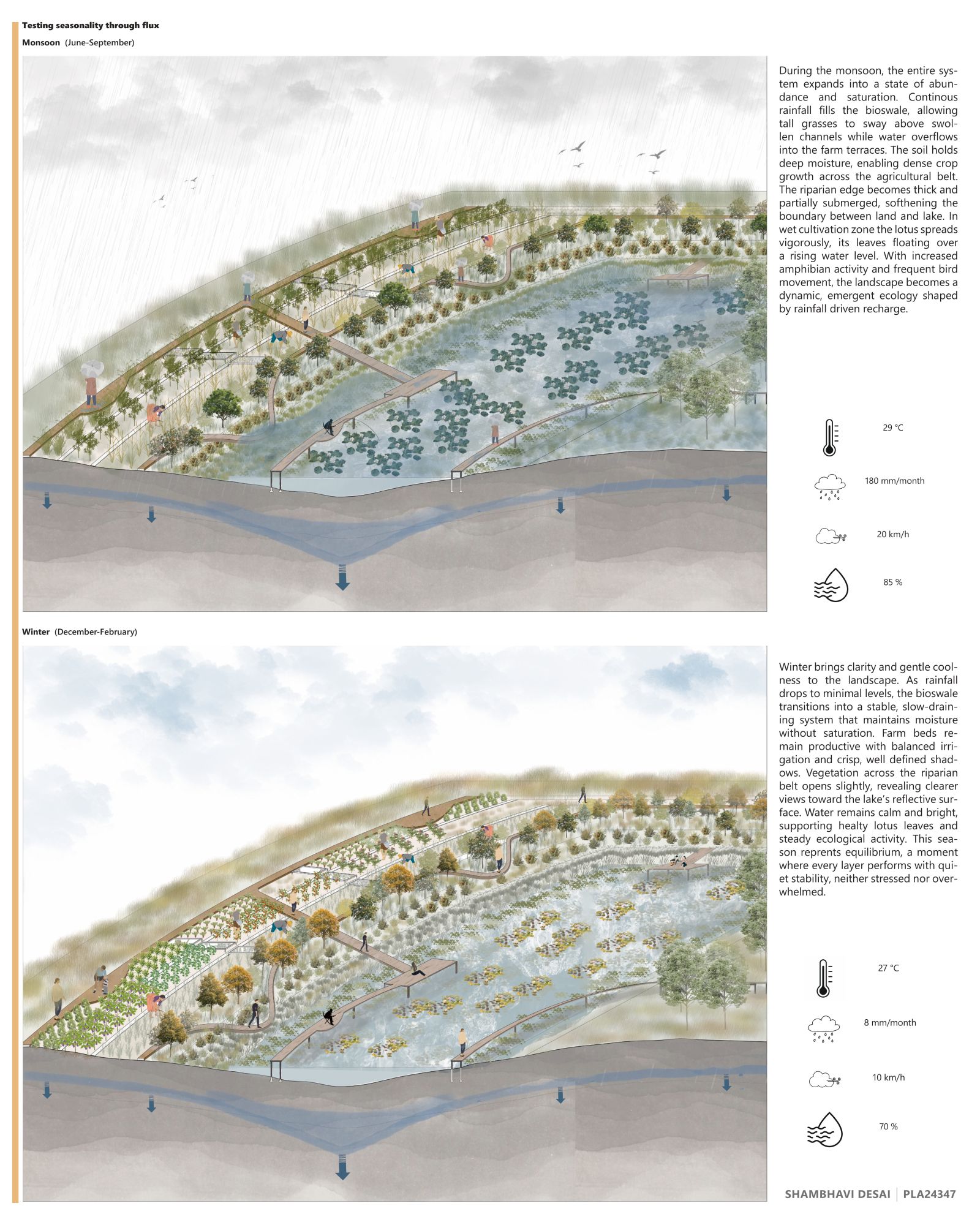
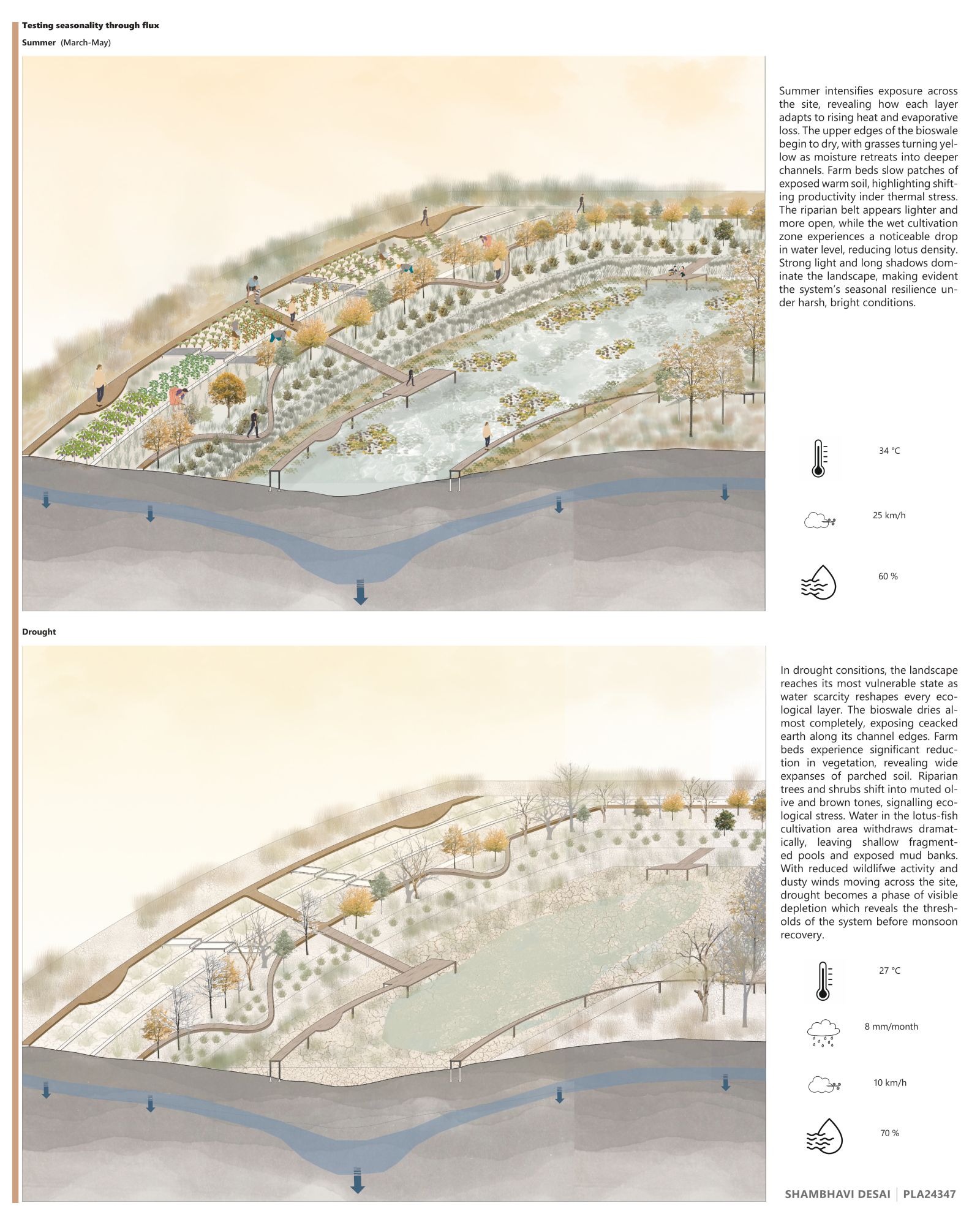
Scenario testing across monsoon, winter, and summer droughts shows how the lakefront’s planting zones, hydrological flows, and activity patterns reconfigure with seasonal change. This responsiveness underscores a design rooted in flexible water management and robust, climate-ready planting.

Scenario testing across monsoon, winter, and summer droughts shows how the lakefront’s planting zones, hydrological flows, and activity patterns reconfigure with seasonal change. This responsiveness underscores a design rooted in flexible water management and robust, climate-ready planting.

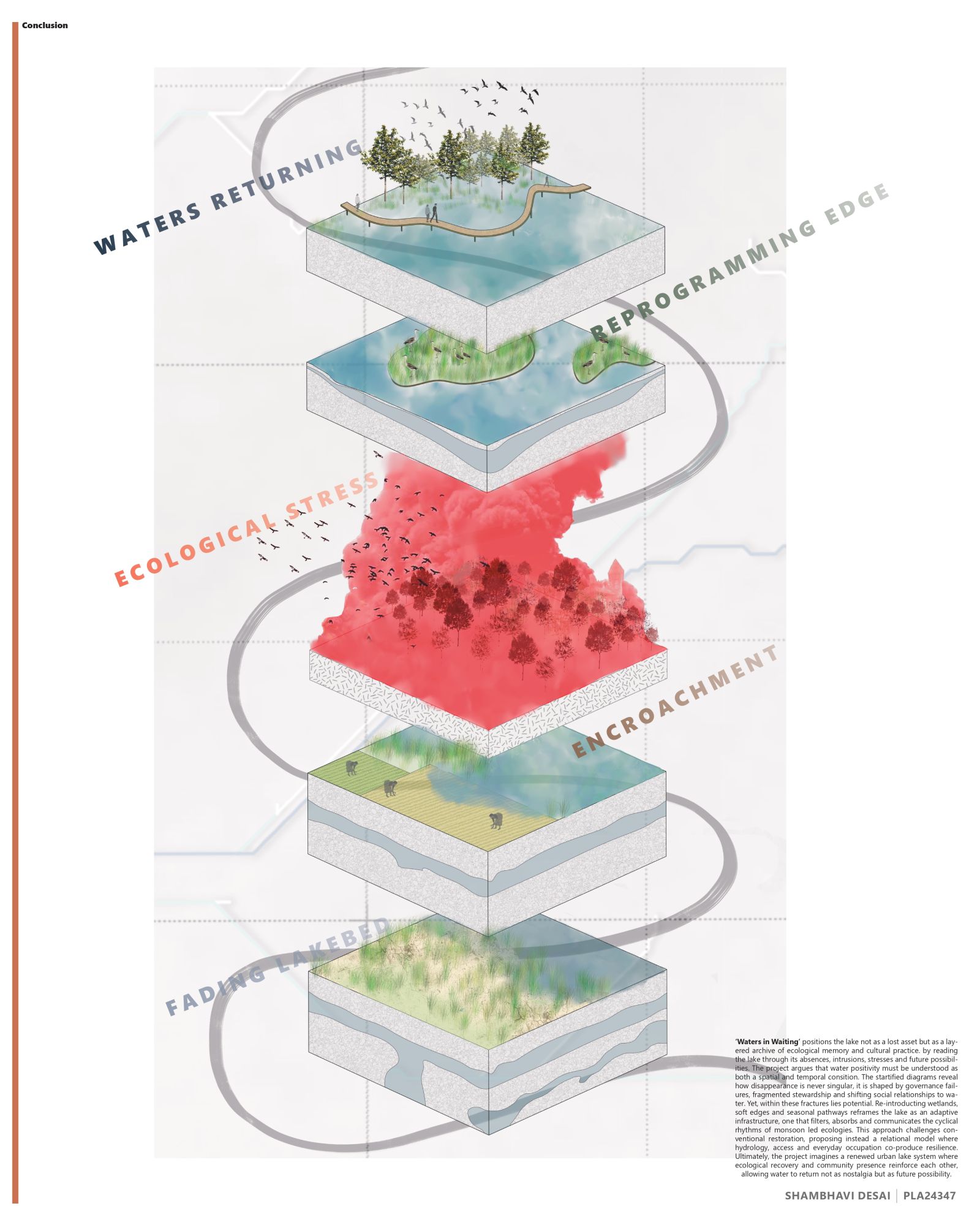
The conclusion frames the restored lake as a strategic component of the city’s water and green-infrastructure systems, demonstrating how local intervention can strengthen regional ecological linkages and inspire future climate-ready public spaces.