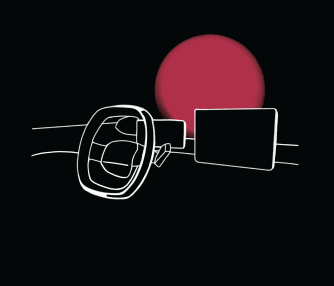
The Impact of Secondary Screen on Primary User in Passenger Cars
In today's world, we are surrounded by machines—ranging from simple tools to highly complex systems. These machines are designed to solve problems and make human life easier. One such machine is the car. Originally, the car was invented to transport people from point A to point B. Over time, however, it has evolved into more than just a mode of transport—it has become an extension of human life, affecting us physically, emotionally, and mentally.
As user expectations and technology continue to evolve, the in-car experience has also changed. One major shift has been the increasing presence and importance of screens inside cars. Modern cars typically have two types of screens:
• Primary Screen: Displays essential driving information such as speed, RPM, fuel or battery level, gear position, and warning indicators (e.g., engine, ABS).
• Secondary Screen: Handles infotainment and convenience functions such as music, navigation, phone connectivity, climate control, and vehicle settings. It also supports systems like Apple CarPlay, Android Auto, and camera views.
This research focuses on understanding the impact of secondary screens on the primary user (the driver)—specifically, how these screens affect usability, driving experience, mental load (the cognitive effort required to use the interface), and overall complexity (the perceived difficulty in operating the system) during both static (parked) and dynamic (driving) conditions. Safety is a key concern, as increased visual and cognitive workload from secondary screens can impair driving performance.