Your browser is out-of-date!
For a richer surfing experience on our website, please update your browser. Update my browser now!
“No one truly knows a nation until one has been inside its jails. A nation should not be judged by how it treats its highest citizens, but its lowest ones.” - Nelson Mandela
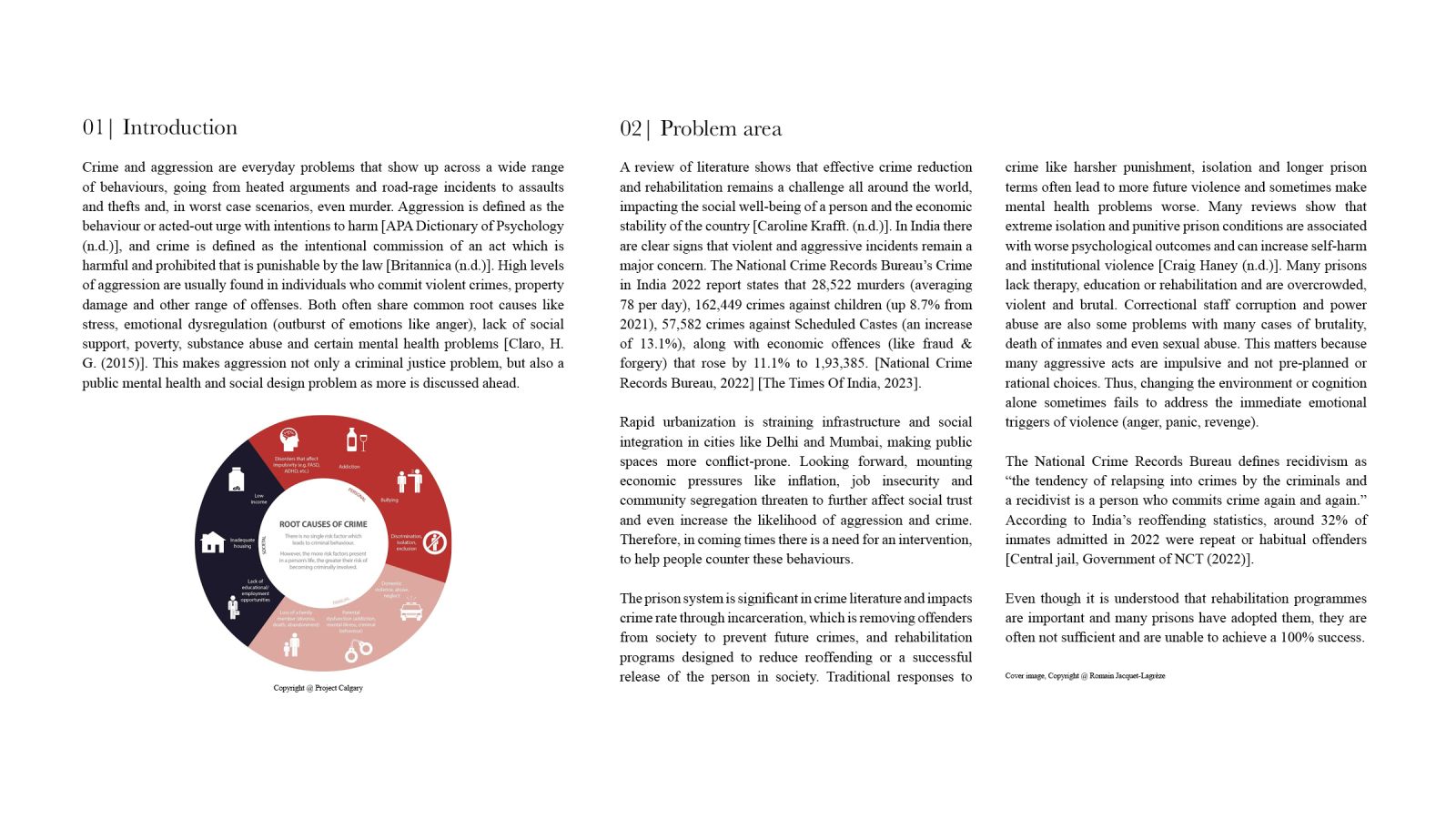
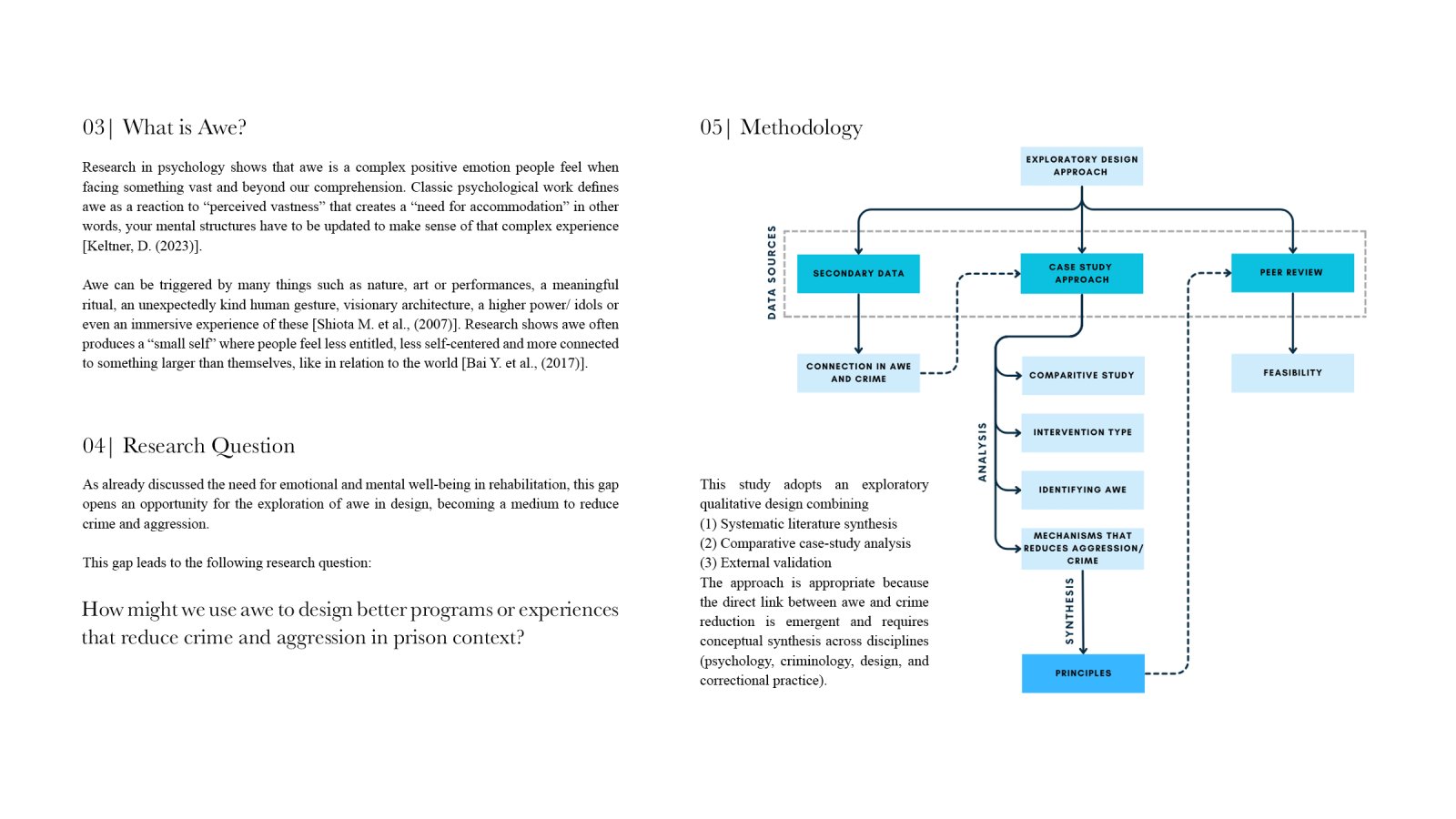
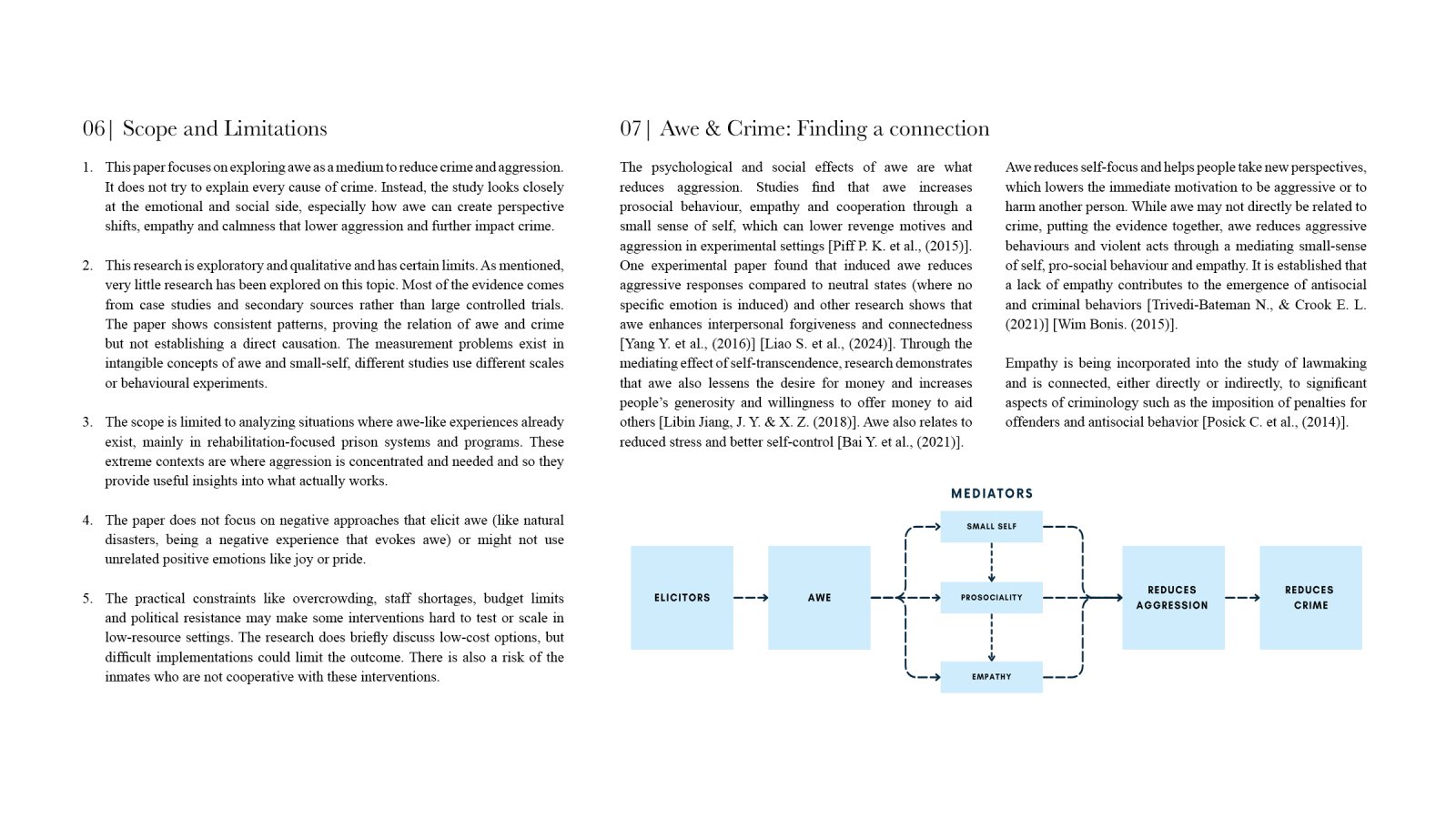
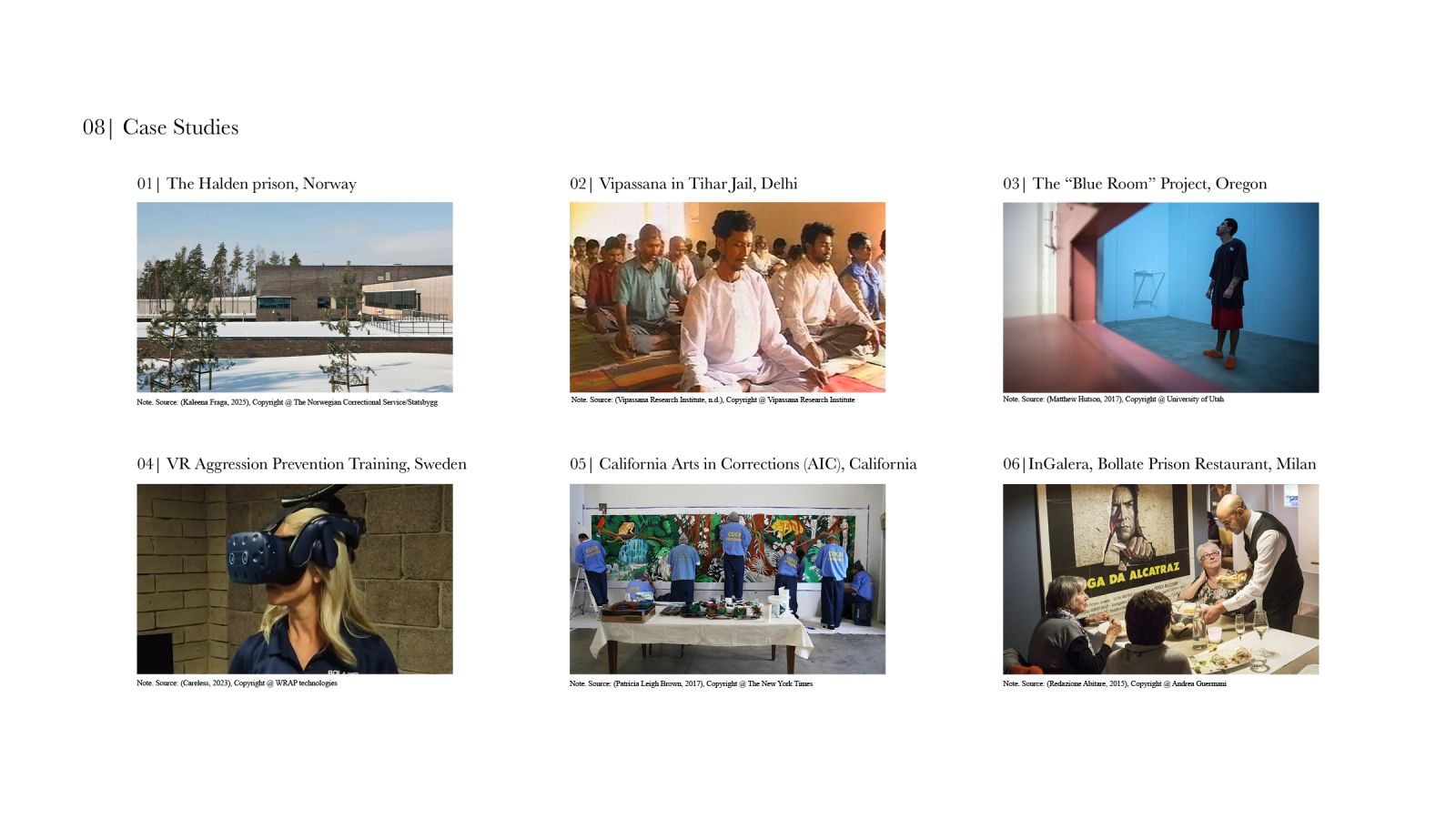
Crime and aggression are urgent social problems that arise from impact on mental well-being. Awe is a complex positive emotion people feel when facing something vast and beyond our comprehension. Psychologists have been researching the positive effects of awe and the applications of this emotion on humans. These include an increase in small sense of self and prosocial behavior. This paper proposes a new angle on exploring how awe can help with reducing aggressive behaviour and crime. Crime reduction depends on the aspects of prevention and rehabilitation. Case studies related to rehabilitation in the prison context will be studied and compared with the normal prisons in order to make a comparison in results. Using an exploratory approach, the research traces how different interventions produce the same psychological shift by producing an awe or awe-like experience. The paper synthesises evidence, highlights mechanisms and extracts practical principles to propose a more awe-based approach. Further it discusses the application of these principles in everyday society and a section on the prevention of crime as well. It argues that awe-based design is not a luxury but a practical one.
Please refer to the additional work for the full paper and more visuals.