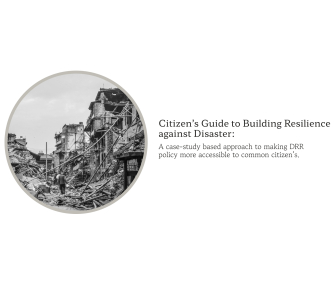
Services Under Stress: Building Climate Resilience Through Design
Climate change is increasing the frequency and intensity of natural disasters—floods, heatwaves, cyclones, and earthquakes—putting immense strain on essential services like water, energy, healthcare, and communication. Traditional service design often lacks the capacity to withstand or adapt to such shocks, leading to catastrophic service failures during crises. This research investigates how principles of resilience can be embedded into the design of essential services to ensure continuity, adaptability, and recovery in the face of disruption. Drawing from global case studies—such as Japan’s earthquake-resilient infrastructure and Kerala’s health systems during the 2018 floods—the study aims to understand patterns of failure and recovery. By synthesizing insights from disaster management, systems resilience theory, and design thinking, the project will develop a framework to help policymakers, designers, and service providers build systems that can absorb stress, reorganize, and evolve in response to changing conditions.