Your browser is out-of-date!
For a richer surfing experience on our website, please update your browser. Update my browser now!
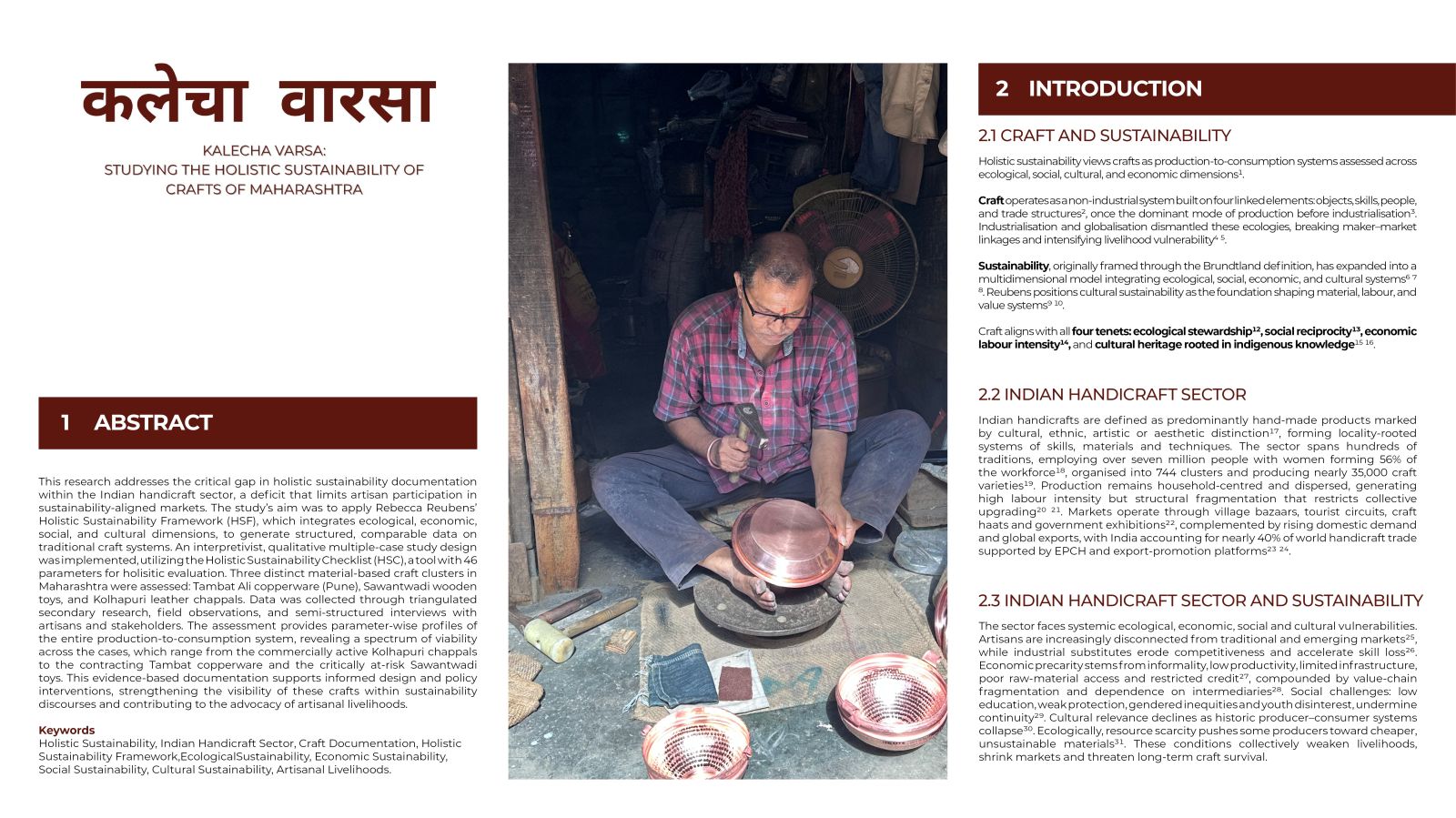
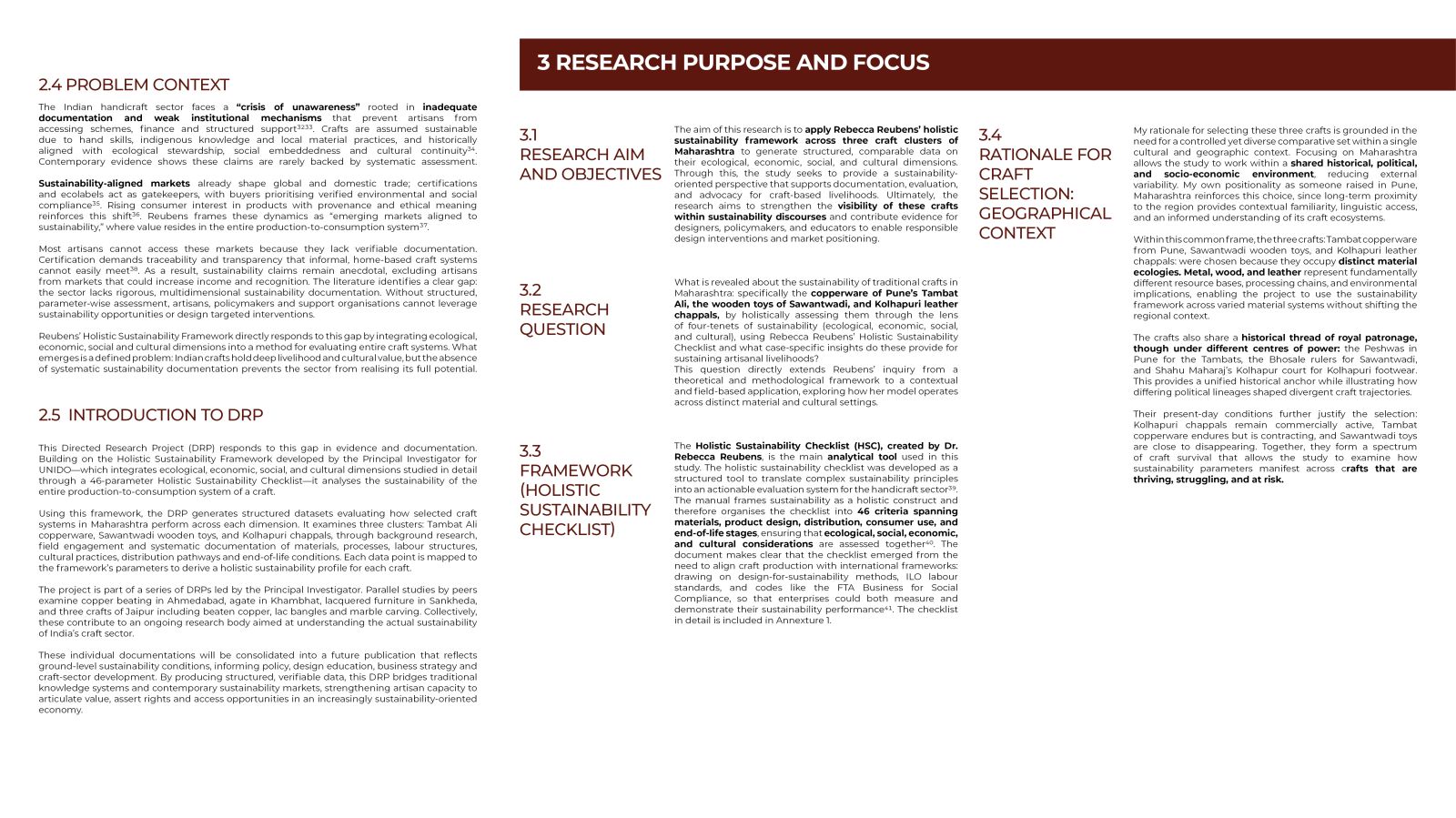
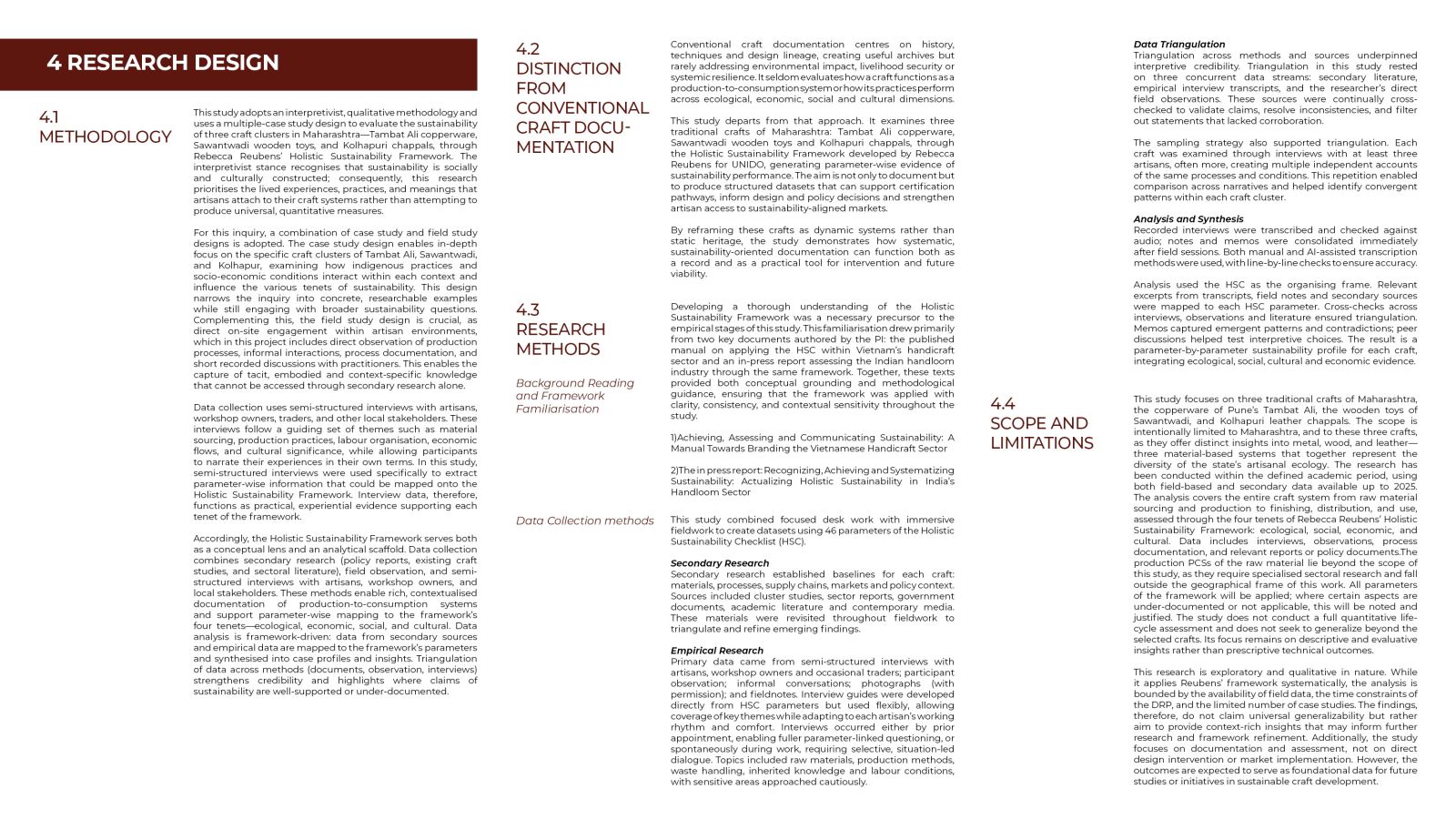
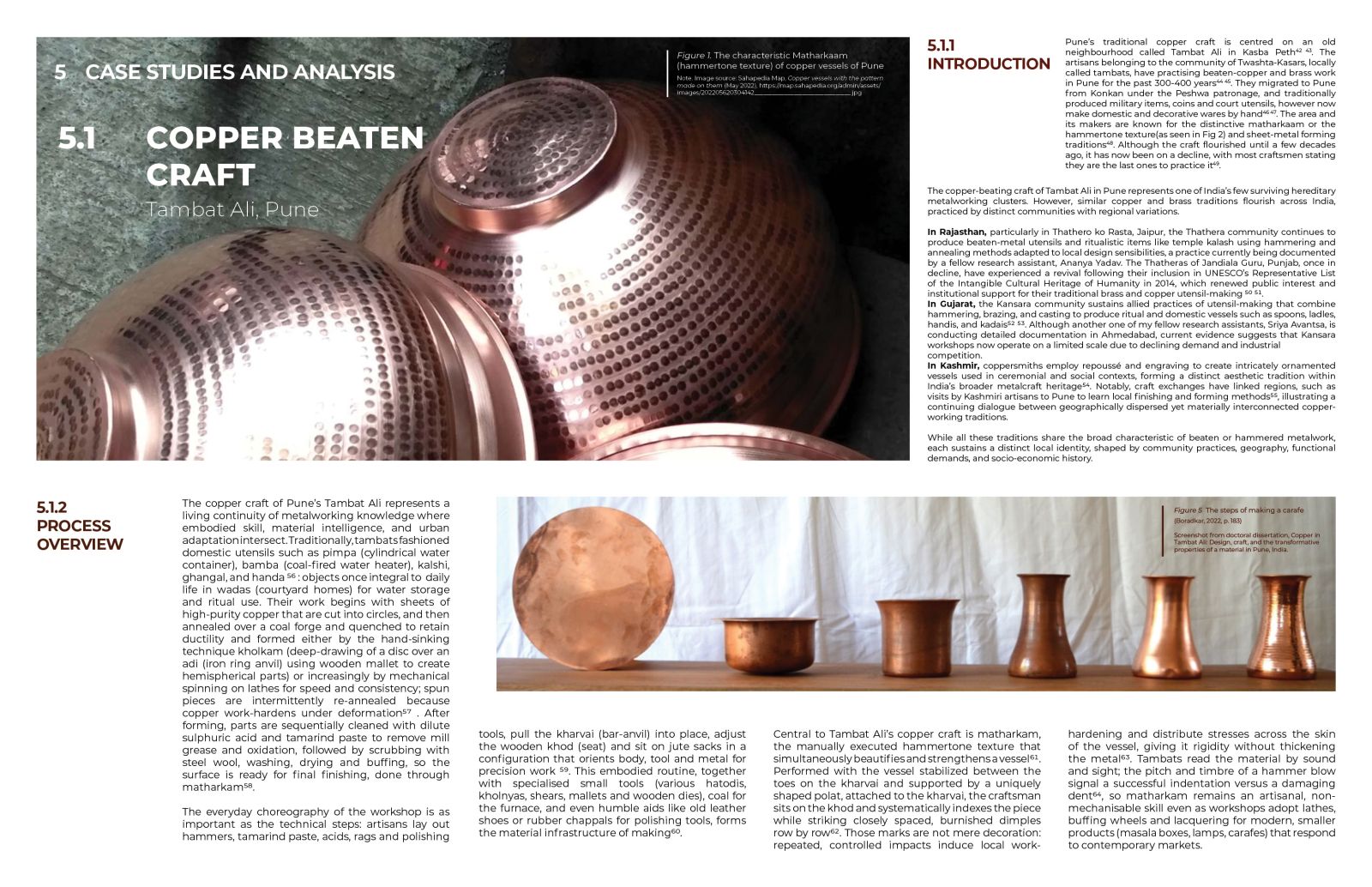
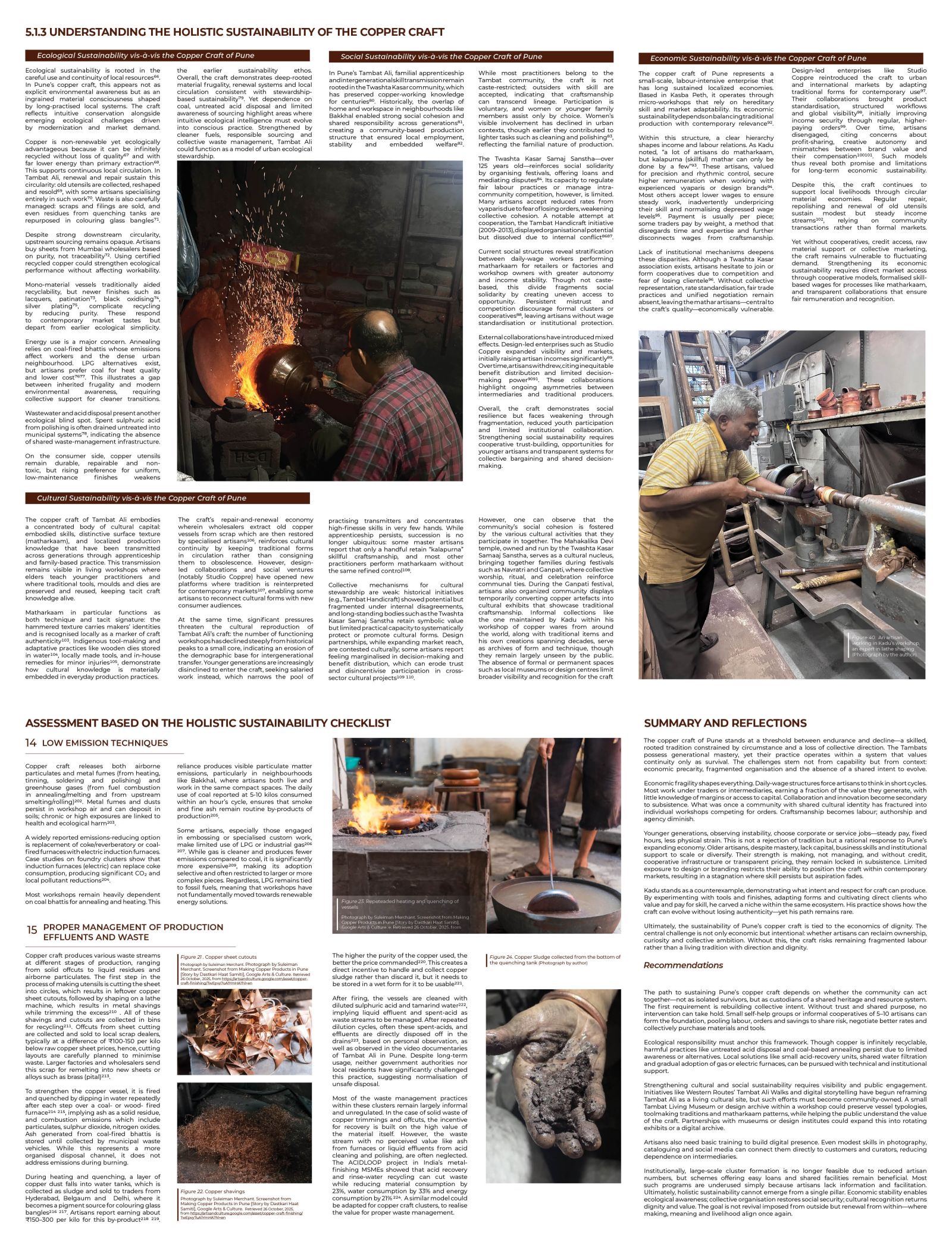
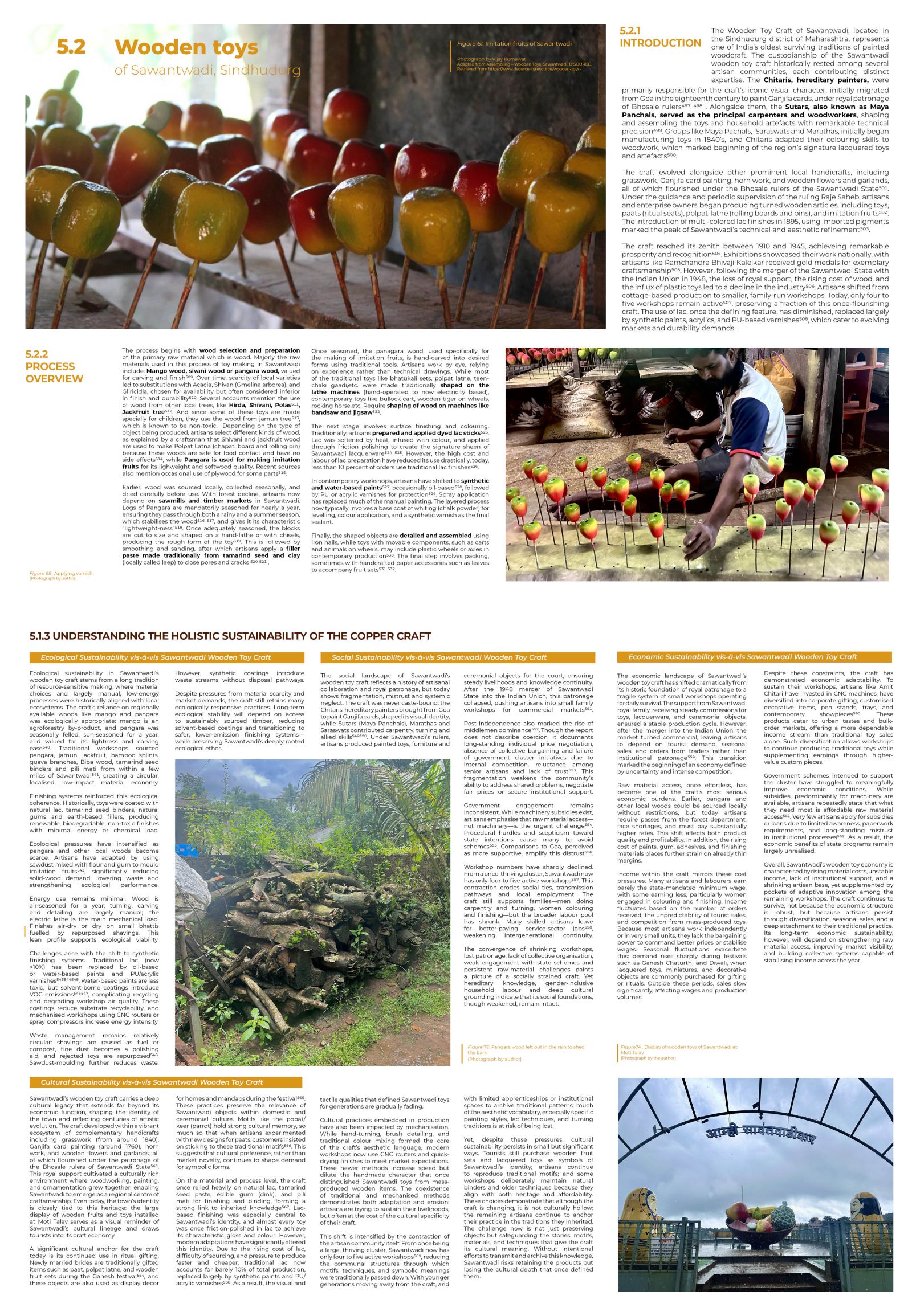
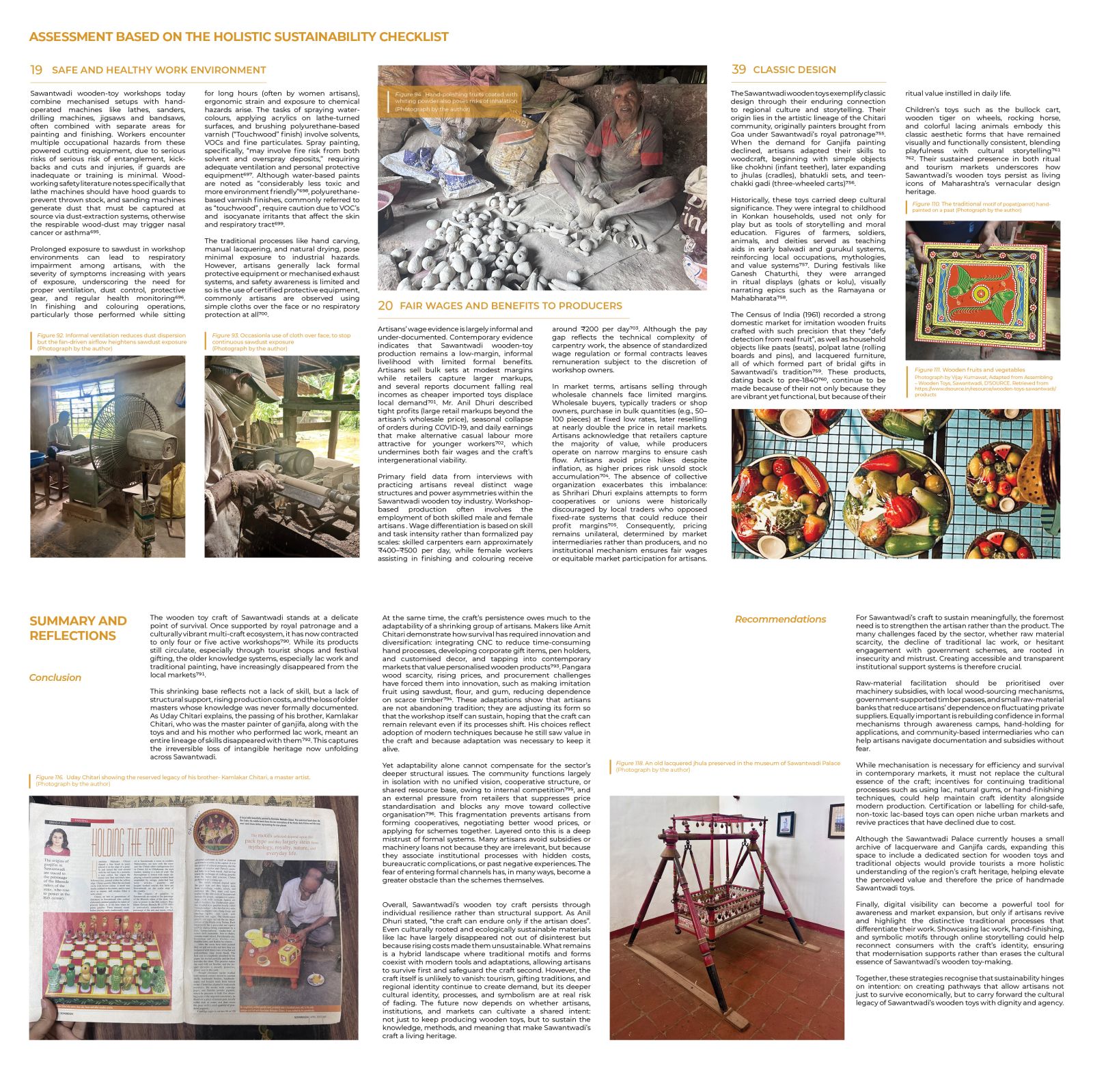
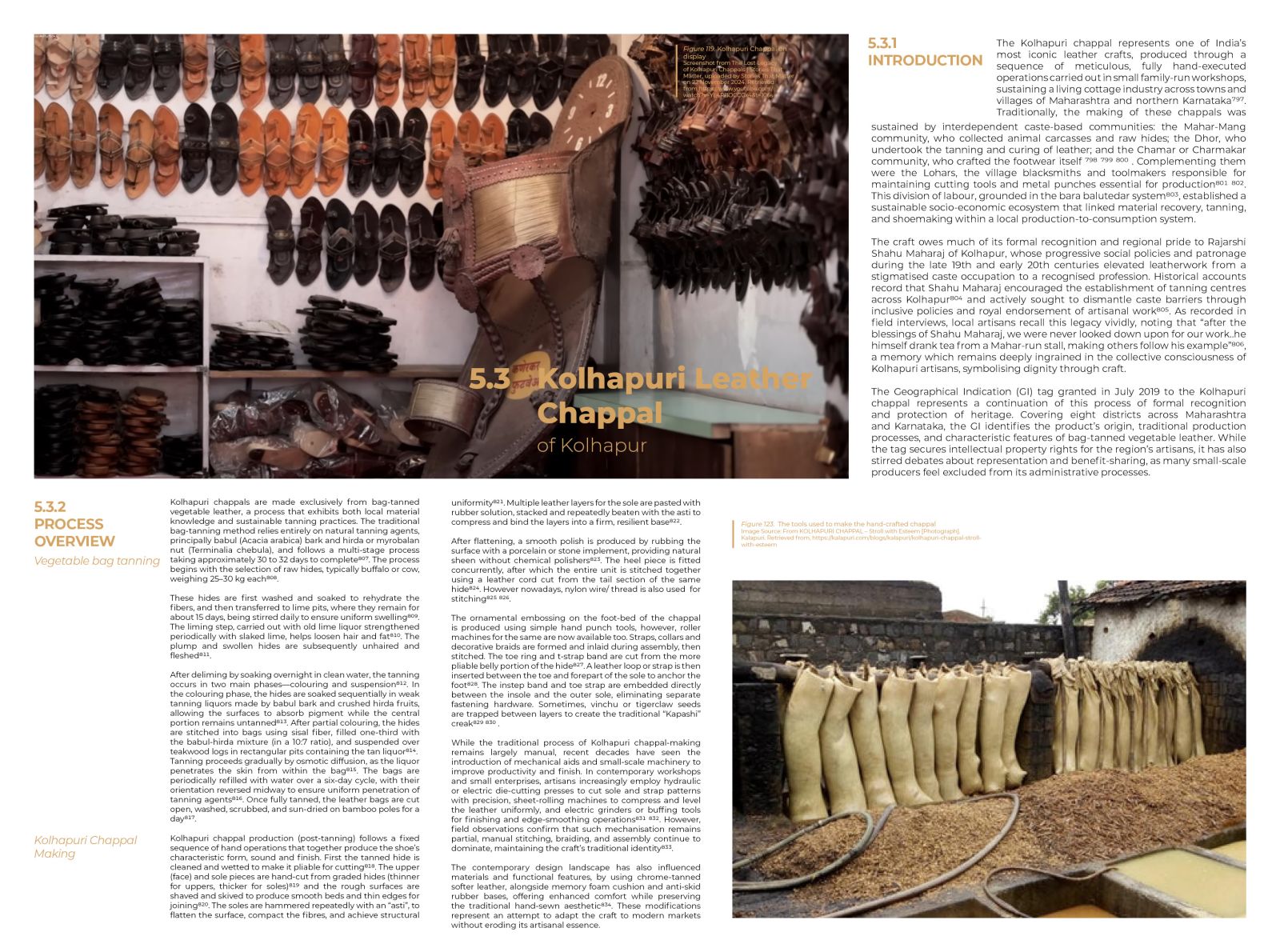
Kalecha Varsa is a study of the holistic sustainability of three traditional craft ecosystems of Maharashtra: Tambat copperware from Pune, Sawantwadi wooden toys, and Kolhapuri chappals. Using the Holistic Sustainability Framework developed by Dr. Rebecca Reubens for UNIDO, the project evaluates each craft across ecological, cultural, social, and economic dimensions, moving beyond conventional documentation that focuses only on history or technique. The research builds structured, parameter-wise evidence through a combination of secondary literature review, immersive fieldwork, semi-structured interviews, participant observation, and material-flow tracking. By mapping field insights to the holistic sustainability parameters, the study identifies where each craft demonstrates deep, embedded sustainability such as intuitive material frugality, hereditary skill systems, or circular repair economies and where systemic stresses threaten long-term continuity, including fragmented organisation, resource scarcity, wage instability, and the dilution of traditional processes. The parameter-wise profiles generated through this approach allow the crafts to be assessed comparatively, revealing patterns across clusters as well as craft-specific vulnerabilities. The project positions these crafts not as static heritage practices but as dynamic systems shaped by market pressures, environmental transitions, and shifting socio-cultural structures. The findings offer a grounded basis for strengthening future design interventions, policy support, cooperative models, and sustainability-led market engagement.