Your browser is out-of-date!
For a richer surfing experience on our website, please update your browser. Update my browser now!
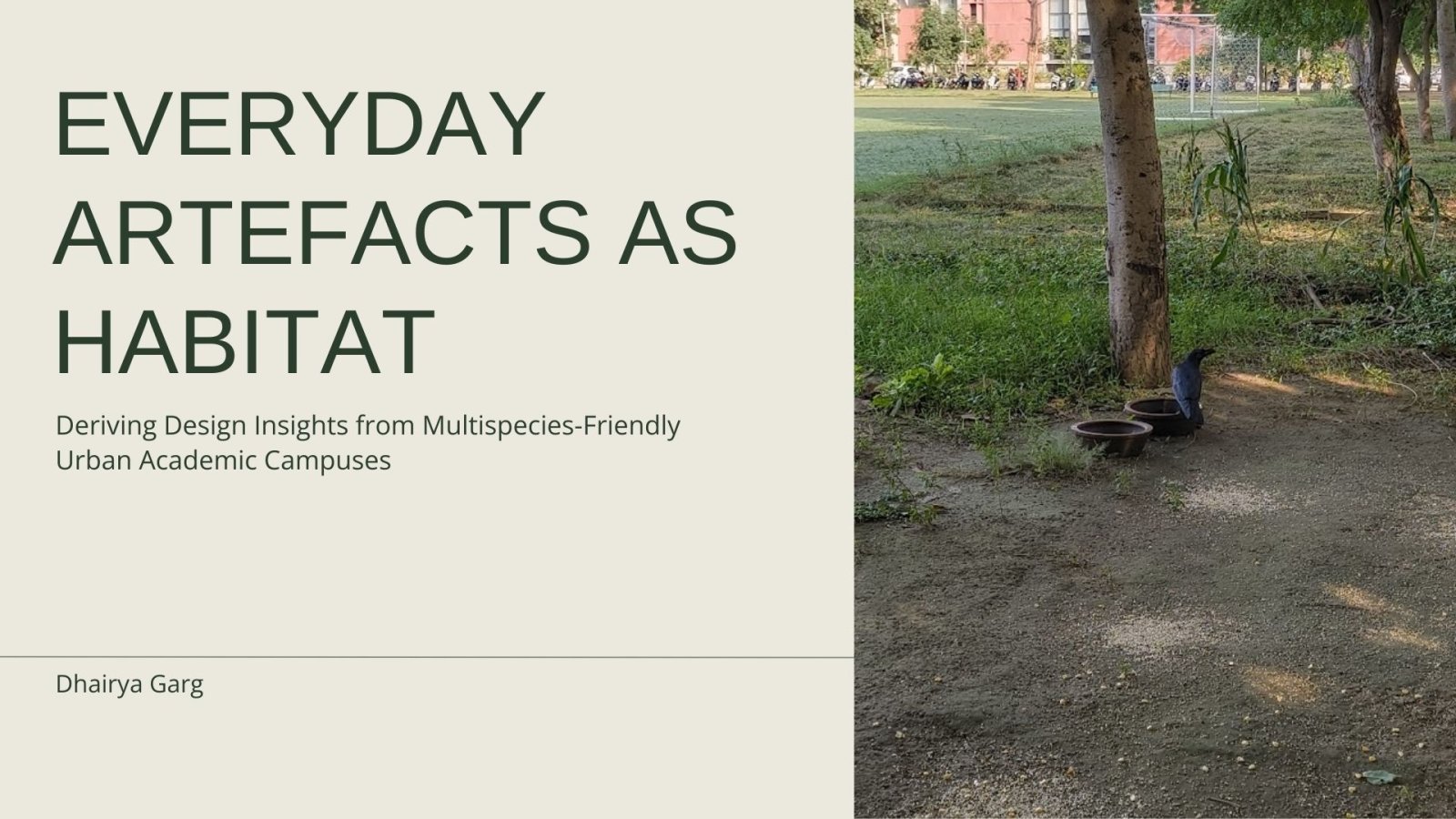
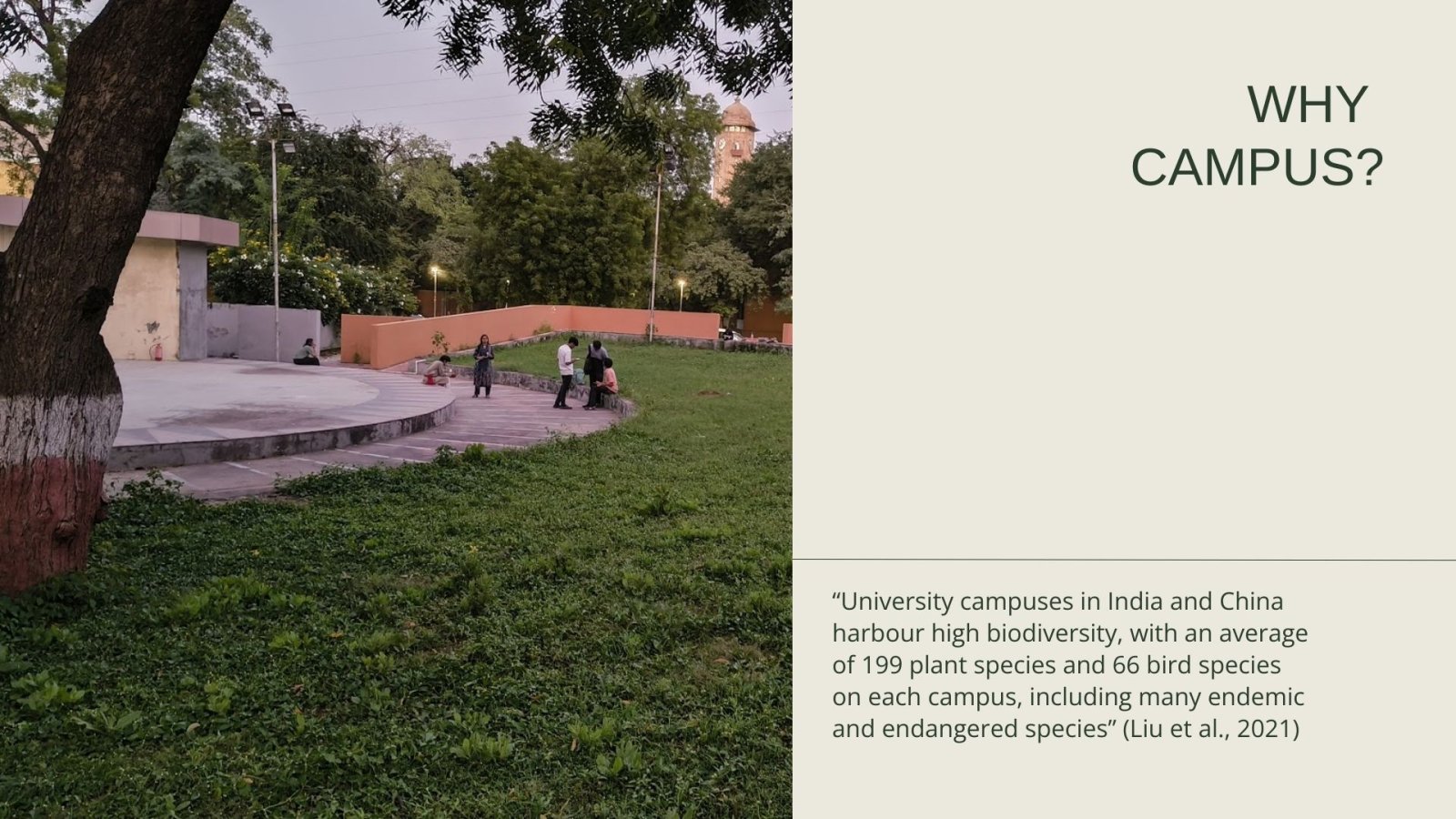
Urban campuses are inhabited not only by humans but also
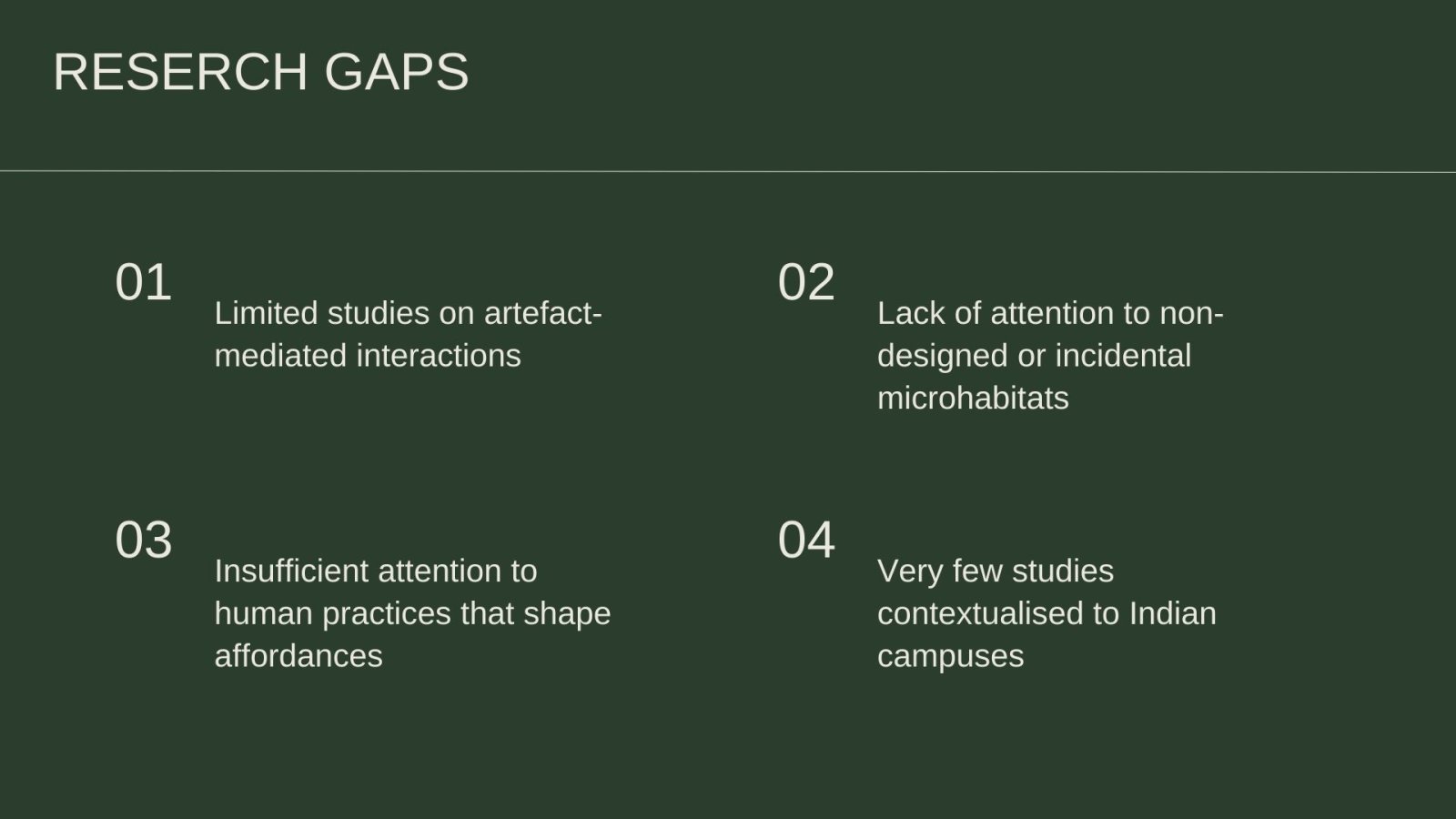
by diverse non-human species, yet the role of everyday
artefacts in shaping these interactions remains underexplored.
This study investigates how everyday artefacts mediate
multispecies coexistence within four academic campuses
located in Gujarat. Using a qualitative case-study approach,
field observations and informal interviews documented how
material, spatial, and temporal characteristics of artefacts
intersect with human routines and species behaviour to
produce dynamic microhabitats.
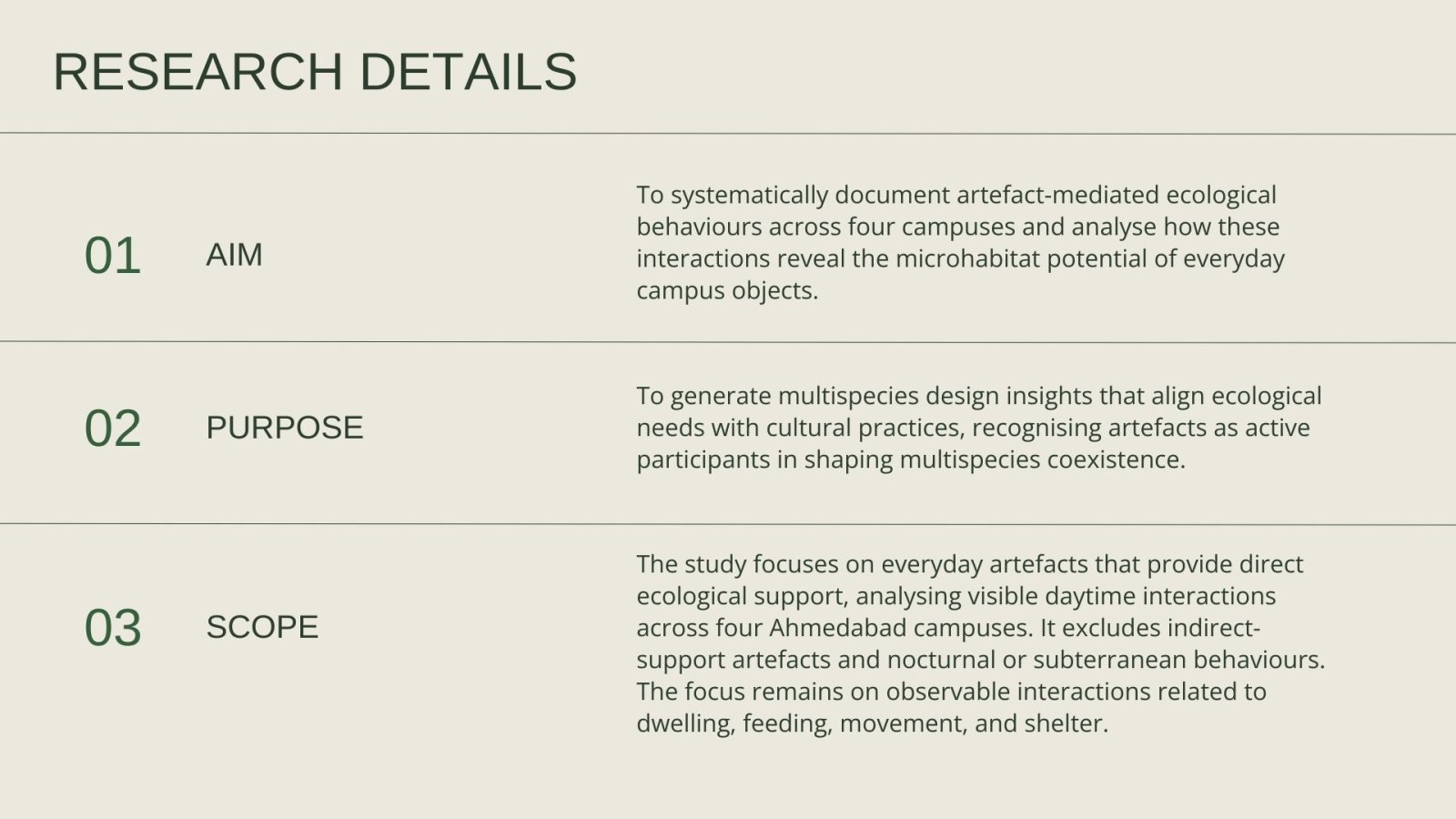
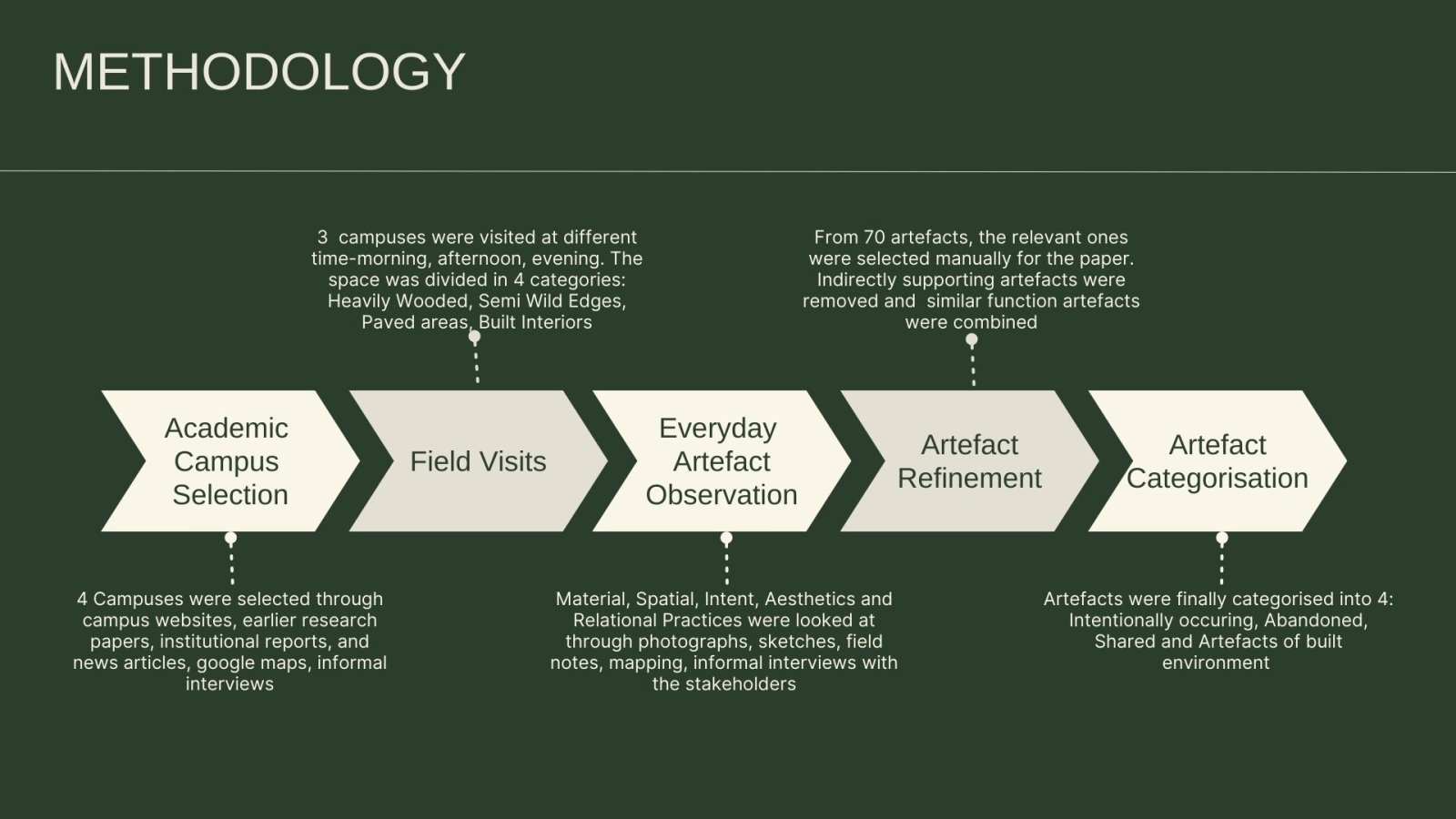
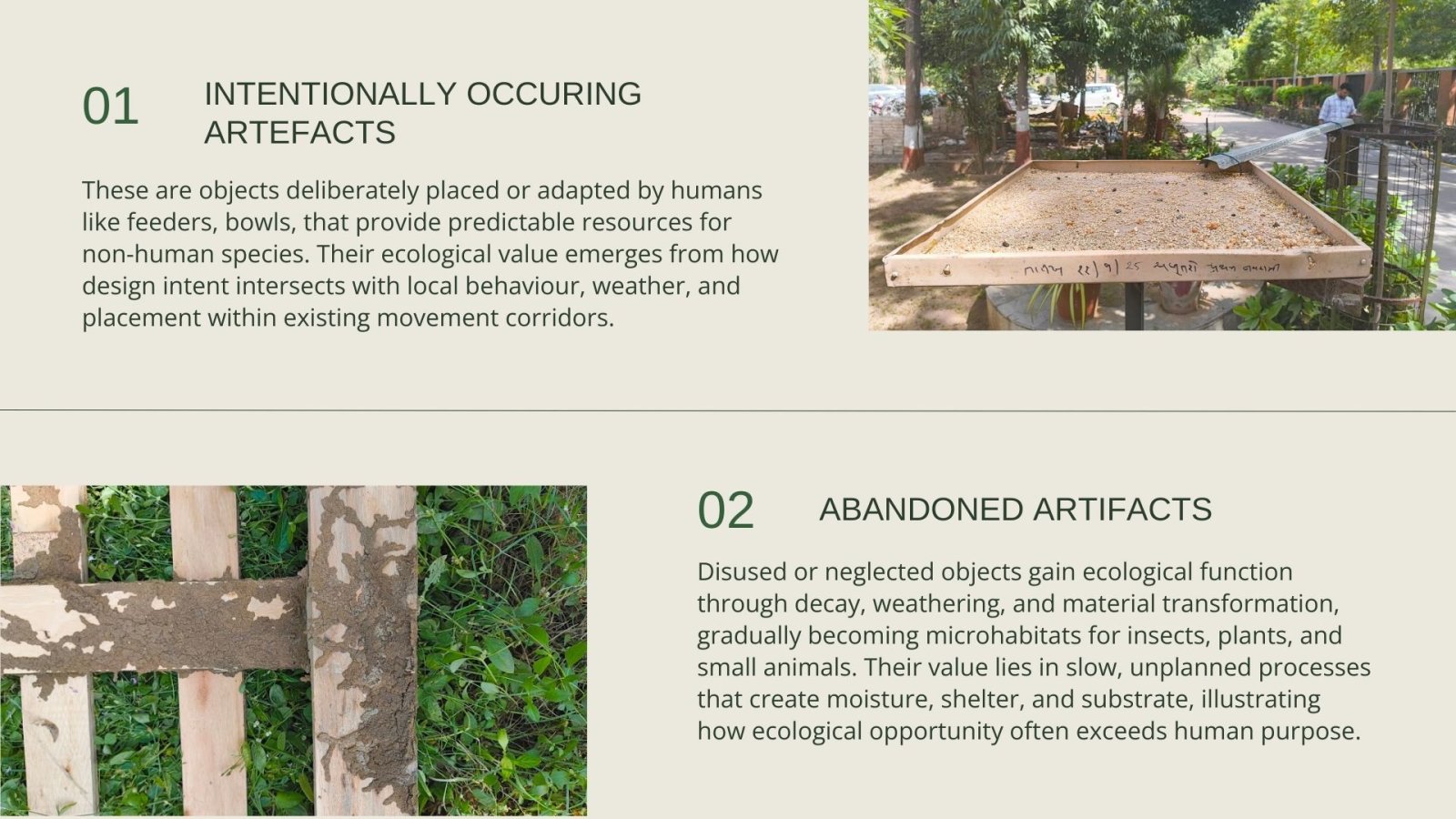
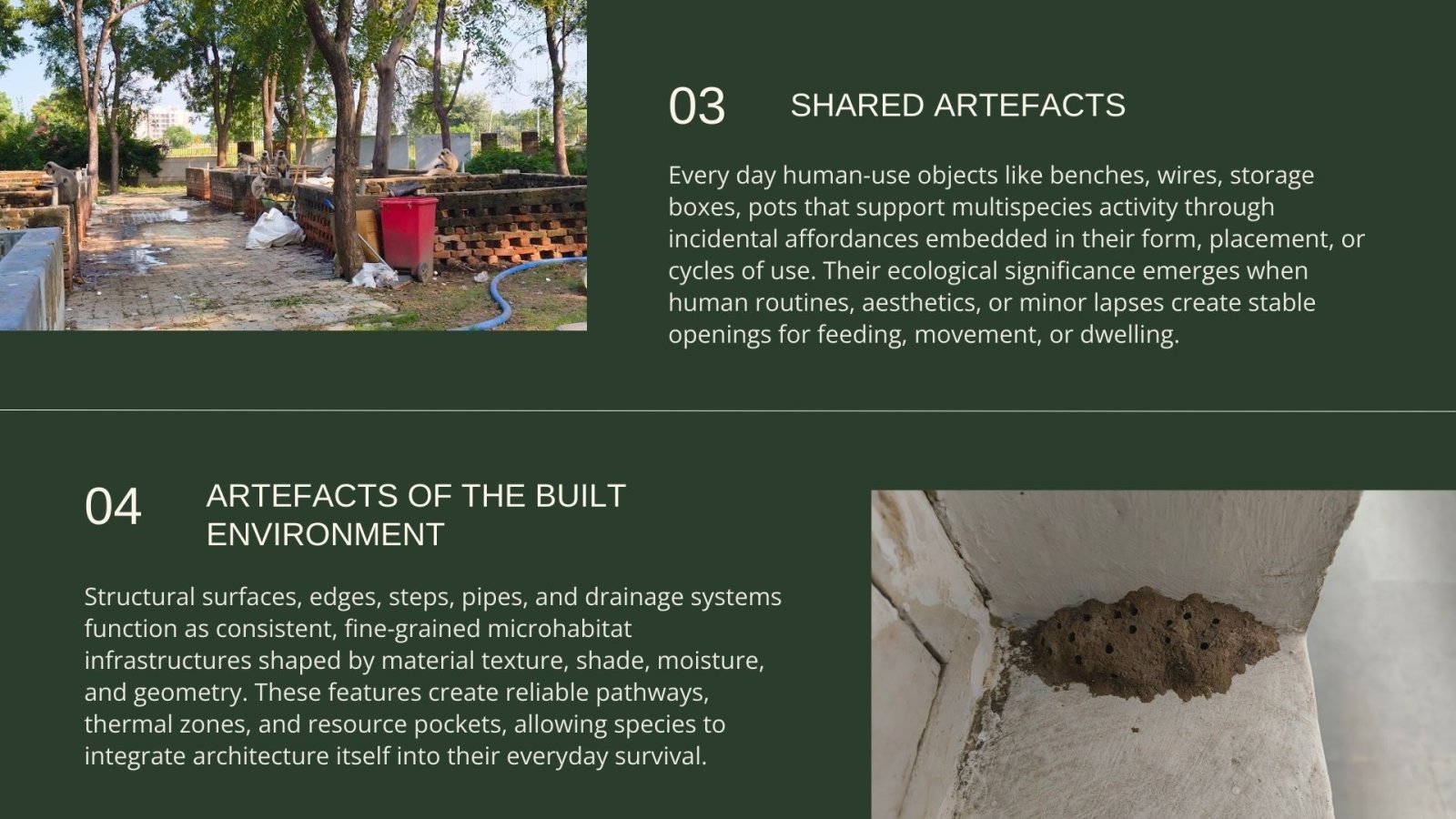
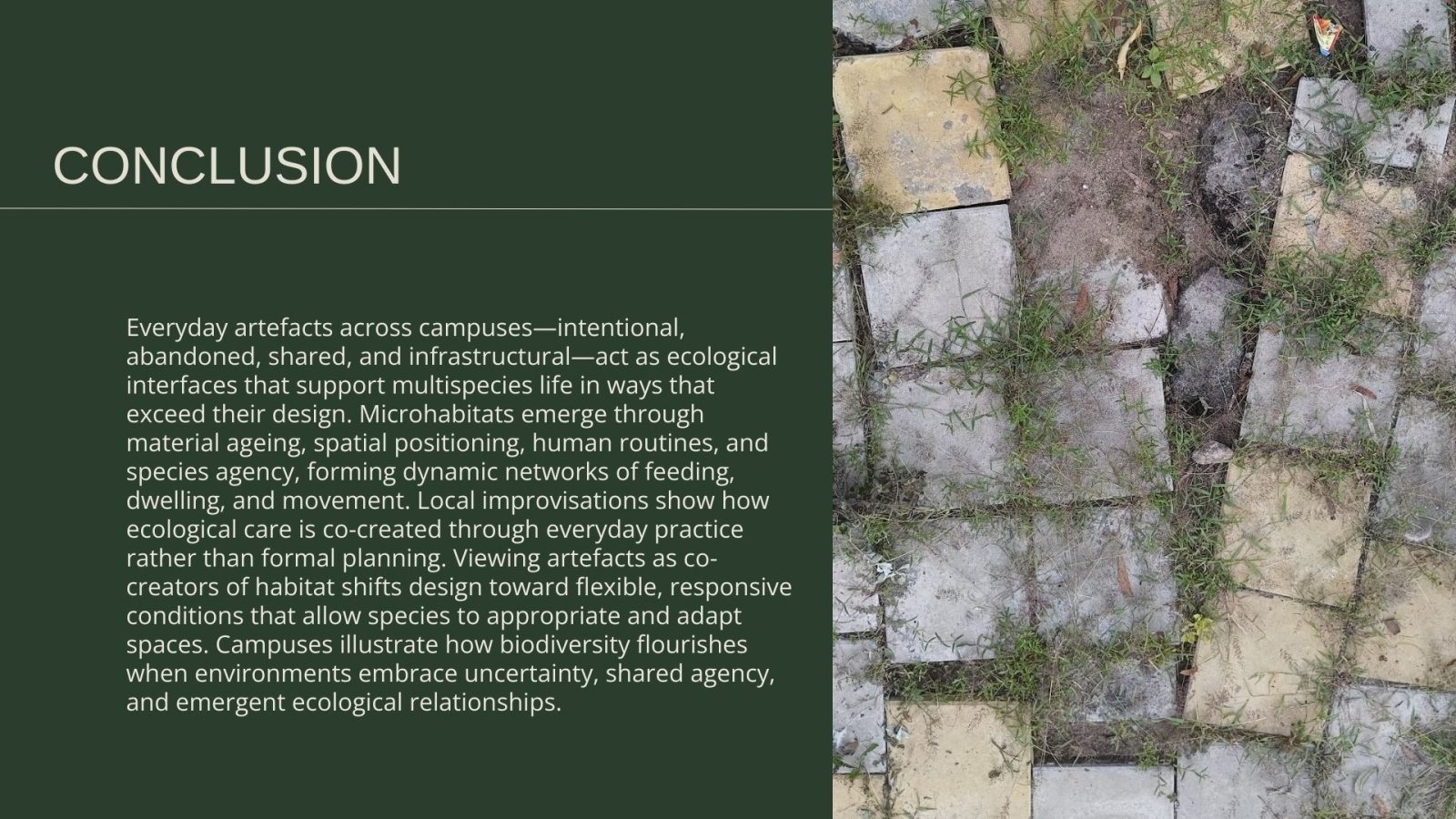
Findings reveal that ecological significance often emerges
from the interplay of material transformations, placement,
and incidental human activity, exceeding deliberate design
intent. Artefacts function as nodes within adaptive ecological
networks, supporting feeding, dwelling, movement, and
interspecies engagement. The study underscores the potential
of flexible, responsive design approaches that work with
emergent ecological patterns, highlighting everyday objects
as co-creators of biodiversity-rich, resilient, and contextually
grounded campus environments.