Vishal Kumar

UM4002-1

Governance & Funding_ Ahmedabad Metro

The study of Ahmedabad Metro’s governance and funding examines how institutional structures, decision-making mechanisms and financial arrangements shape system performance. Governance is driven by a Special Purpose Vehicle—GMRC—which coordinates planning, construction, and operations, while central, state, and city roles remain uneven, limiting city-level influence. Funding follows a mixed model: equity contributions from Union and State governments, subordinate debt, multilateral loans (JICA), and revenue from fares and non-fare sources. The study highlights gaps such as limited cities' participation, long-term financial sustainability, and integration with urban mobility systems, providing insights to strengthen accountability, efficiency for the Ahmedabad metro and its governance.
Report Content

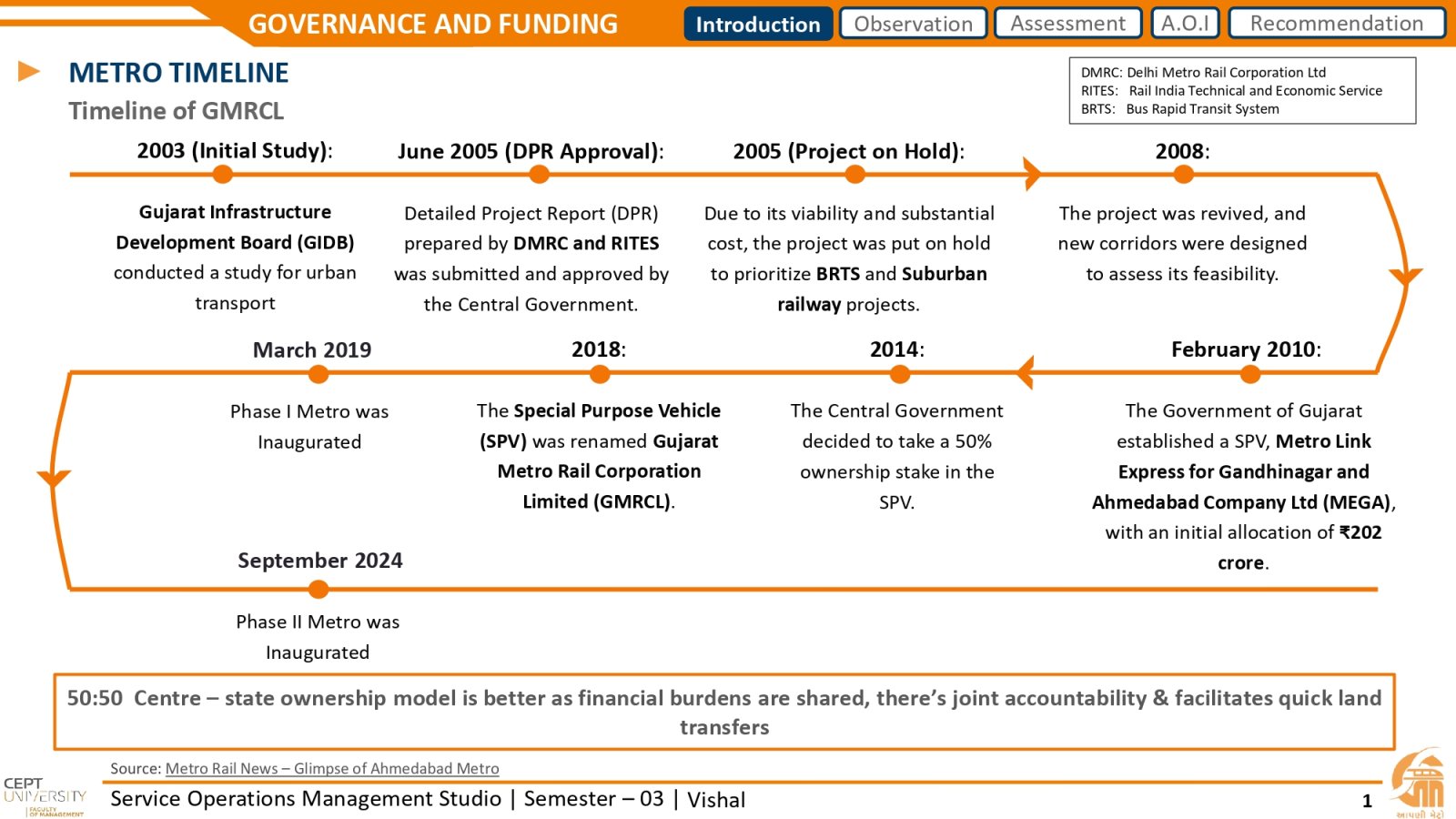
Through the timeline, it is observed that Ahmedabad metro is a project under Gujarat Metro Rail Corporation ltd. (GMRC), a SPV formed to coordinate all metro projects in Gujarat, with equity share of 50:50, Centre & State respectively.

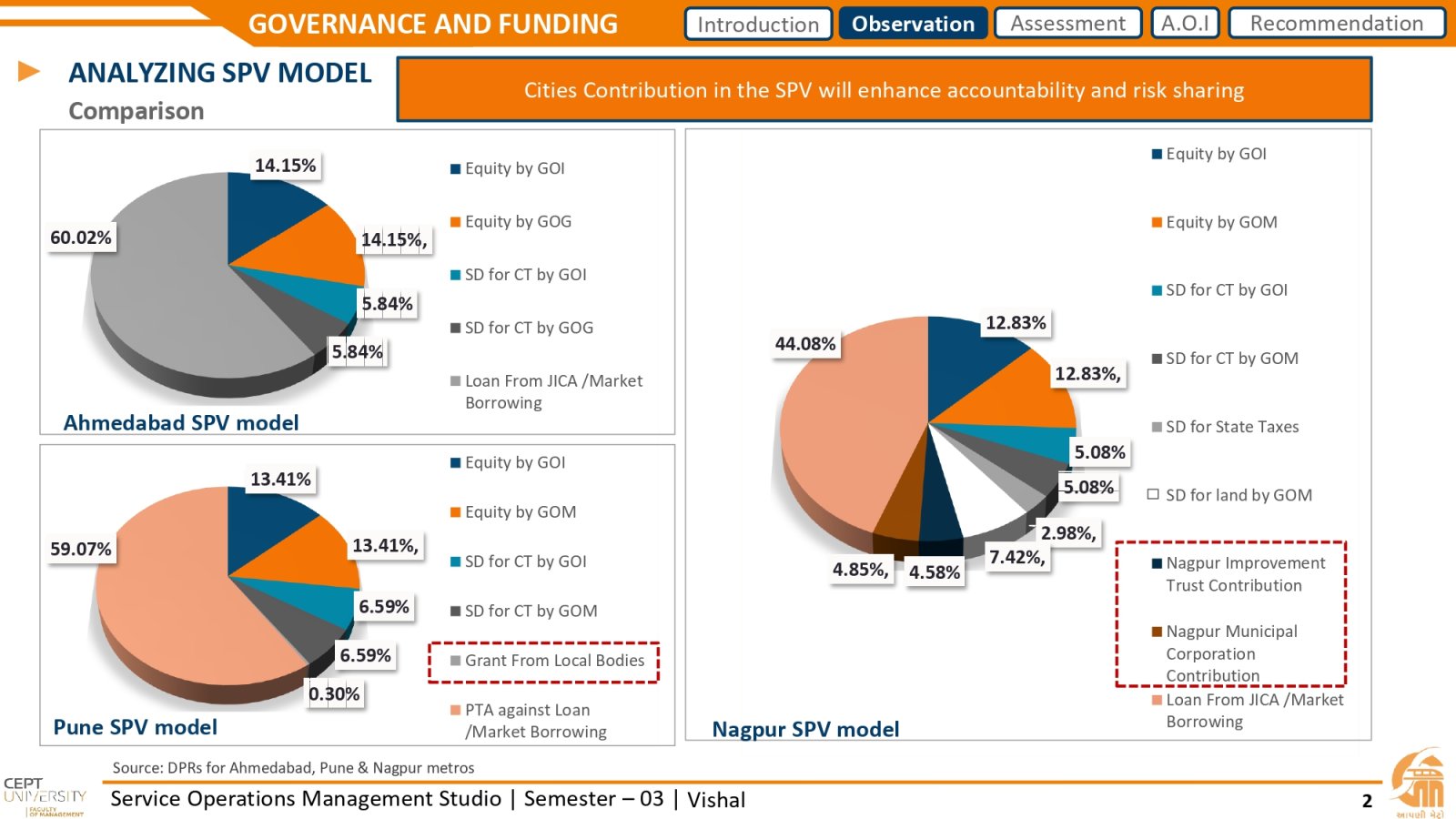
The Debt : Equity of Ahmedabad project is 60:40, which is ideal share. While comparing it with Pune SPV model and Nagpur SPV model it is found that there is some contribution of funds from local government, which indicates accountability and risk sharing from local government.

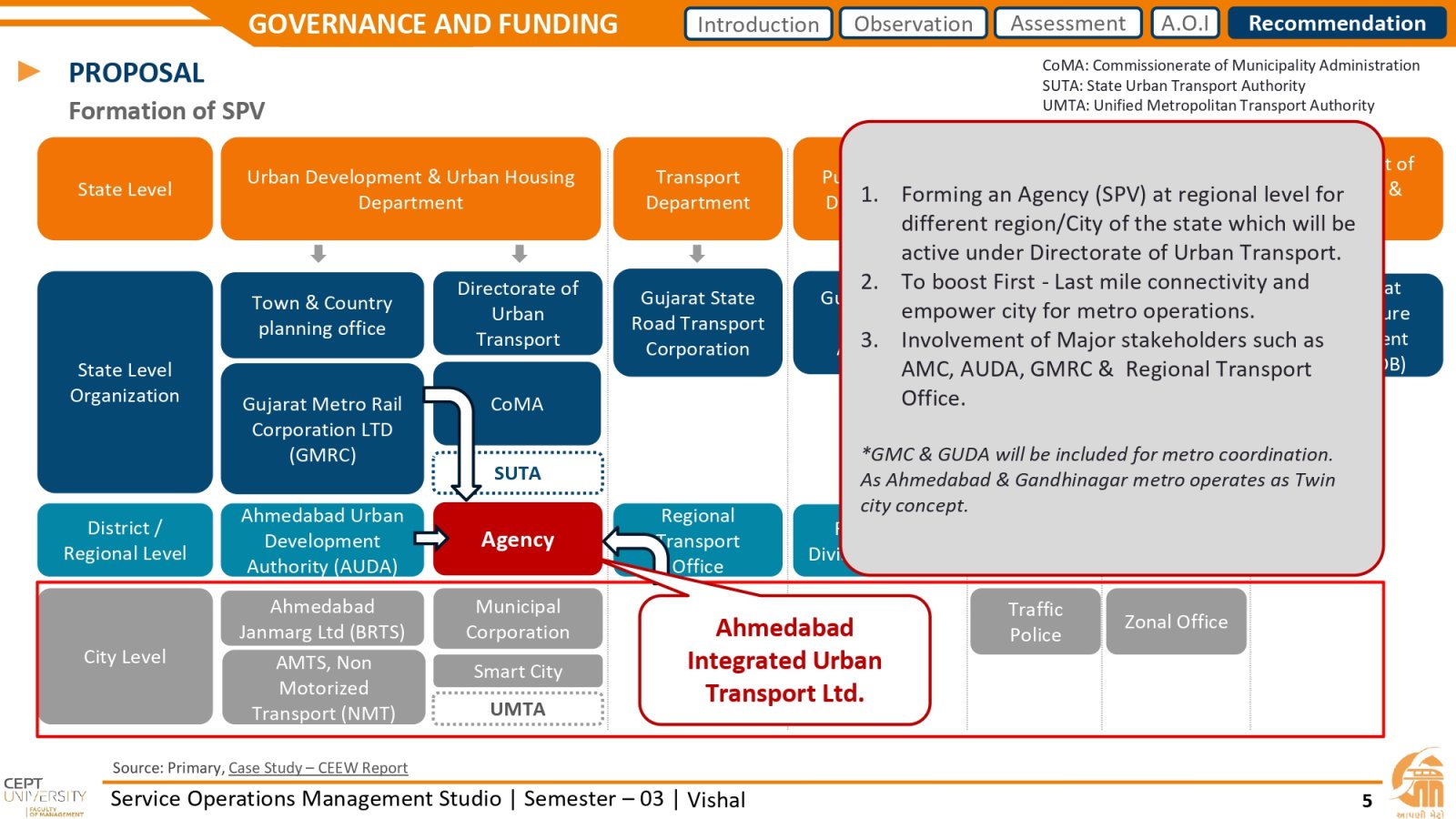
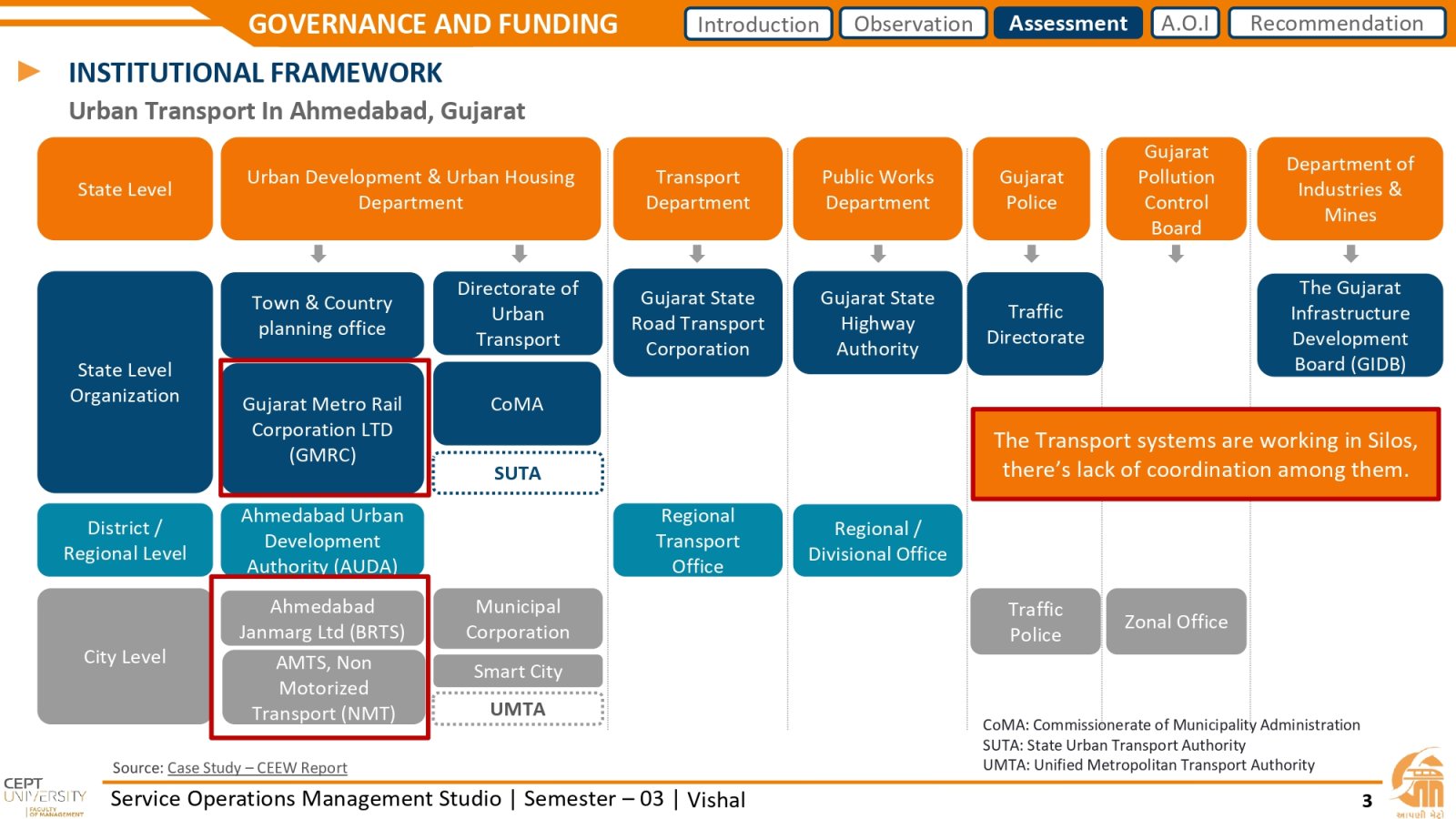
When we compare all the urban transport through the institutional framework of urban transport in Gujarat, then its observed that Metro (GMRC) is state level organization, where all other transport such as AMTS, BRTS are city level institutions, which indicated limited coordination among them and they work in silos, which do not contribute effectively to achieving urban transport integration

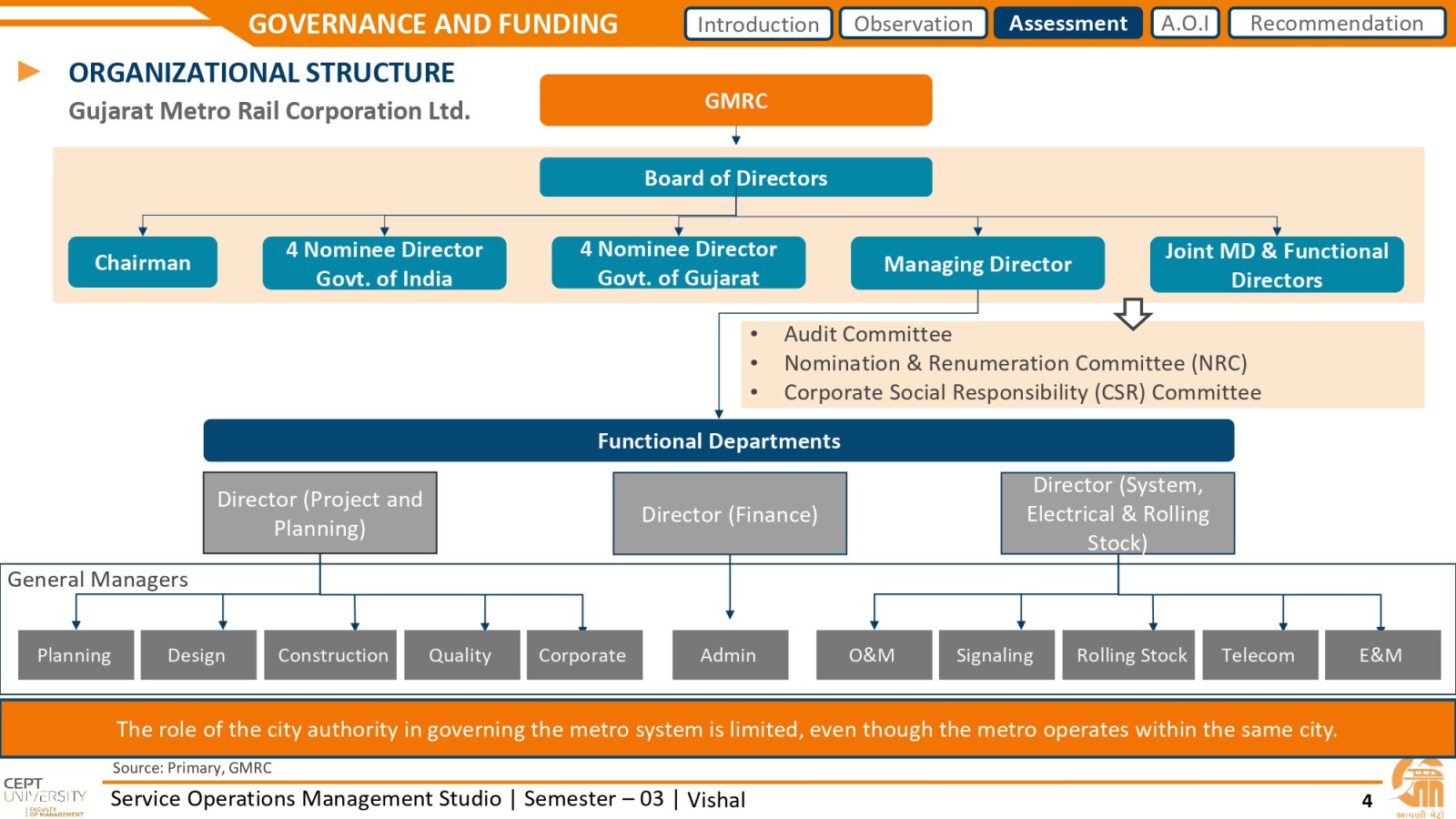
In the GMRC, organizational structure, it lacks city representation in which the city metro operates.

Considering all the areas of improvement, a proposal of forming a SPV at regional level for first & last mile integration and empower city for metro operation, with major stakeholders such as AMC, AUDA, GMRC, RTO. GMC and GUDA will also be included as Ahmedabad and Gandhinagar operates as twin city concept

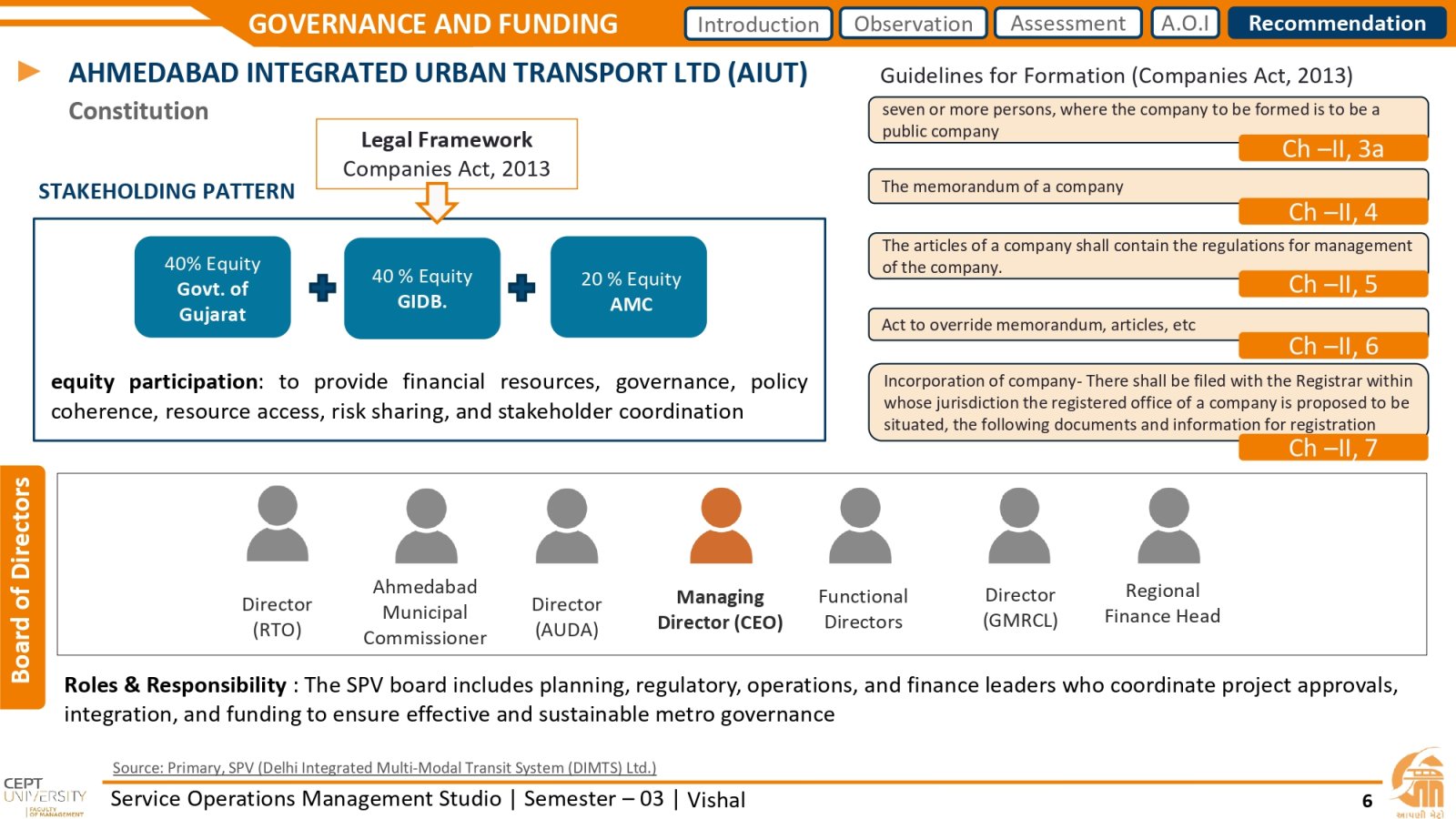
Through the Companies Act, 2013 and case studies the shareholding pattern and board of directors were decided.

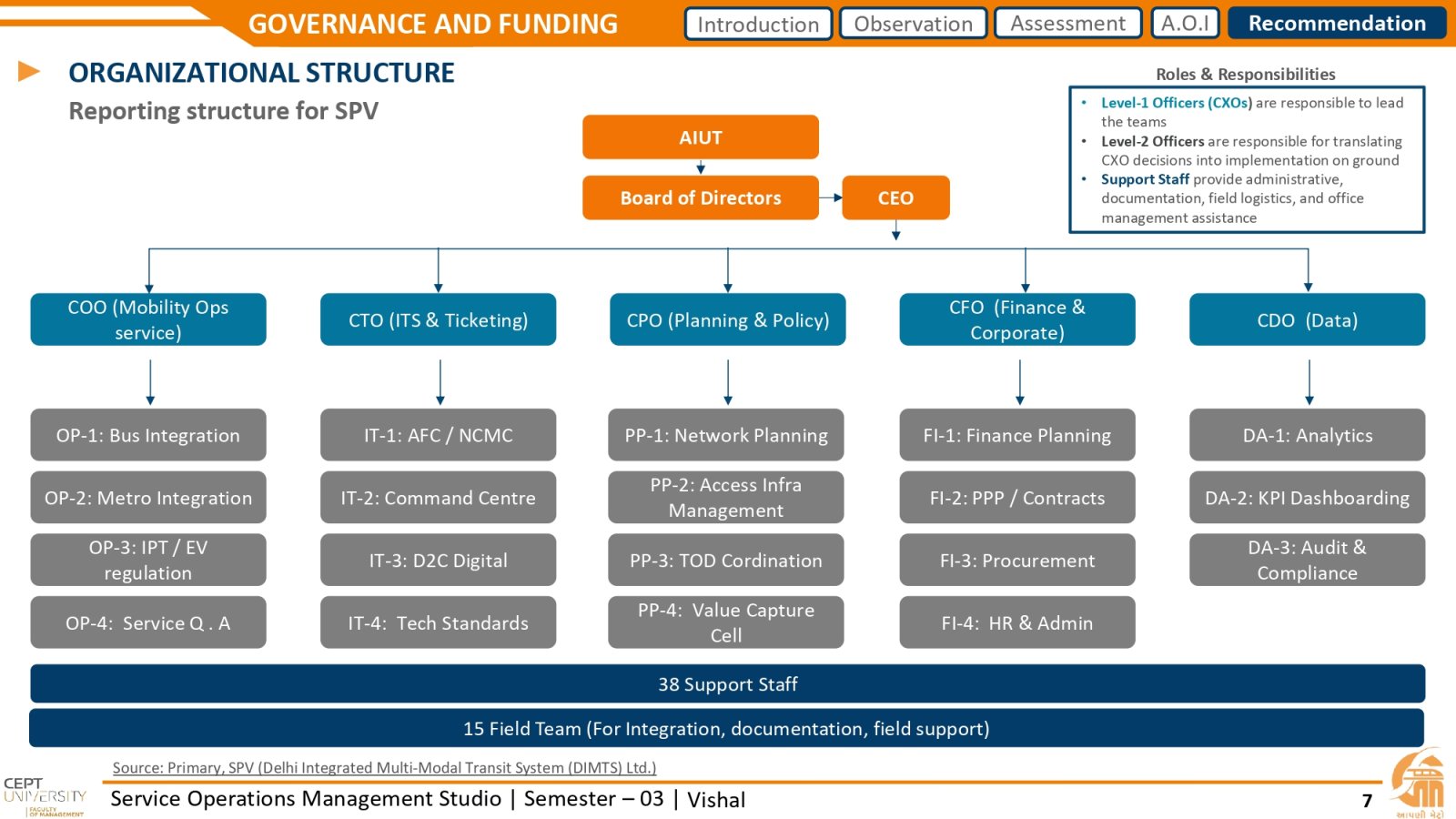
The organizational structure is formed for reporting of the project and its execution.

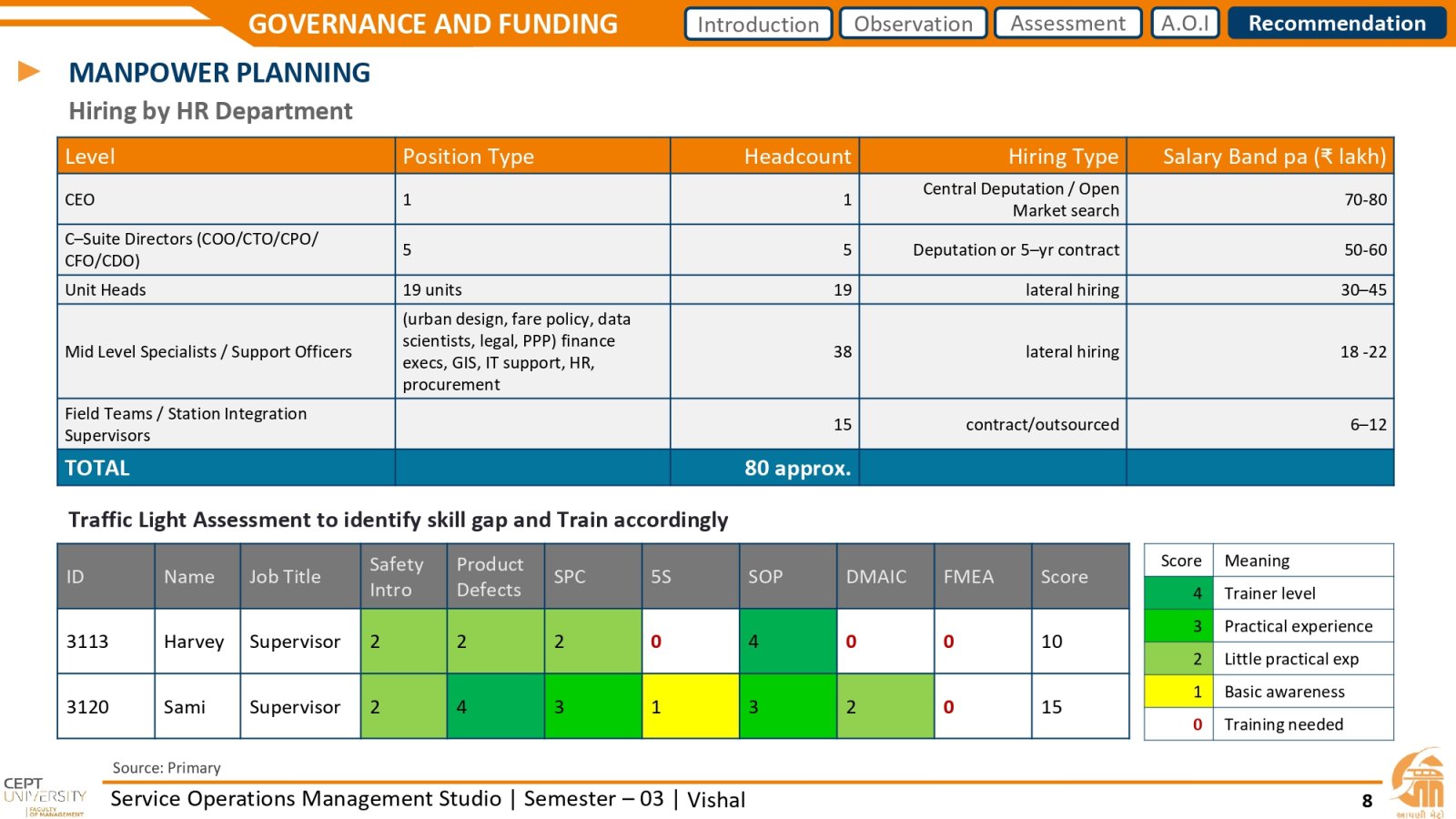
Around 80 members are required for the SPV to functional smoothly and traffic light assessment was introduced to find manpower gap for projects and upskill them

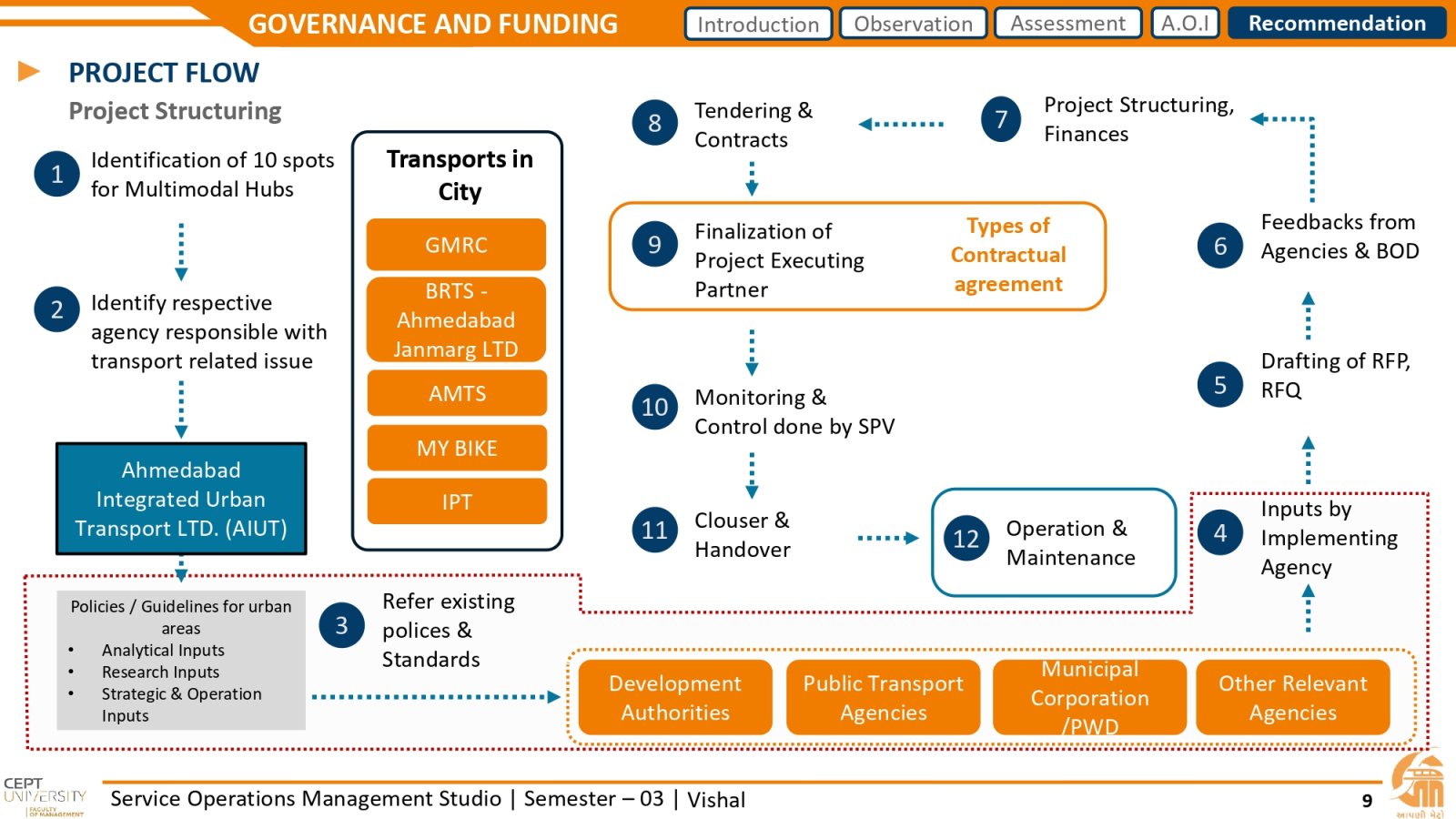
Project structuring from identification of project to handover and operation & maintainance

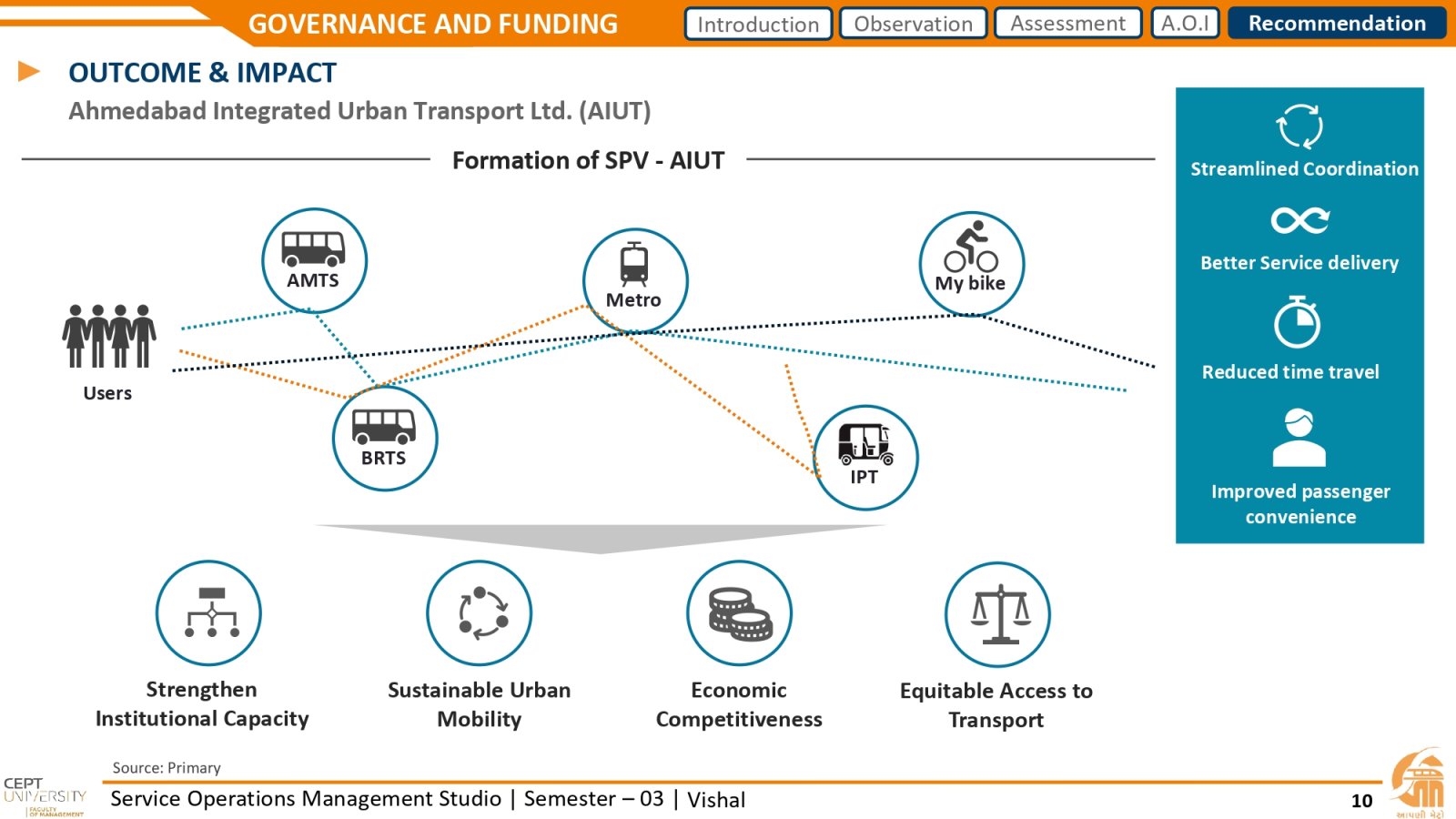
The formation of Ahmedabad Integrated Urban Transport Ltd. (AIUT) as a Special Purpose Vehicle (SPV) brings together multiple transport modes—AMTS, BRTS, Metro, IPT, and public bike-sharing—under a unified institutional framework to enhance user experience and system efficiency. By improving coordination among agencies, AIUT enables streamlined operations, better service delivery, reduced travel time, and greater passenger convenience. The SPV strengthens institutional capacity, supports sustainable urban mobility, enhances economic competitiveness, and promotes equitable access to transport. Overall, AIUT creates a more coherent and responsive urban mobility ecosystem that prioritizes user needs and long-term city-wide benefits.