Harshita Vishwa

UM4002-2

Ahmedabad Metro - Accessibility & Inclusivity

The study evaluates Accessibility and Inclusivity within the Ahmedabad Metro by examining infrastructural conditions, operational performance, and user perceptions. While accessibility elements such as lifts, tactile paths, and ramps exist, field observations reveal inconsistent functionality and fragmented responsibility, limiting independent mobility for vulnerable users. Journey mapping highlights compounded delays, and survey findings indicate low perceived safety, particularly for women after dusk. Benchmarking shows that global metros integrate real-time information, gender-responsive staffing, and retrofitted accessibility. The study proposes two SOPs, one for accessibility and one for women’s safety, to institutionalize accountability, enhance operational reliability, and create an inclusive, user-centered metro system.
Report Content

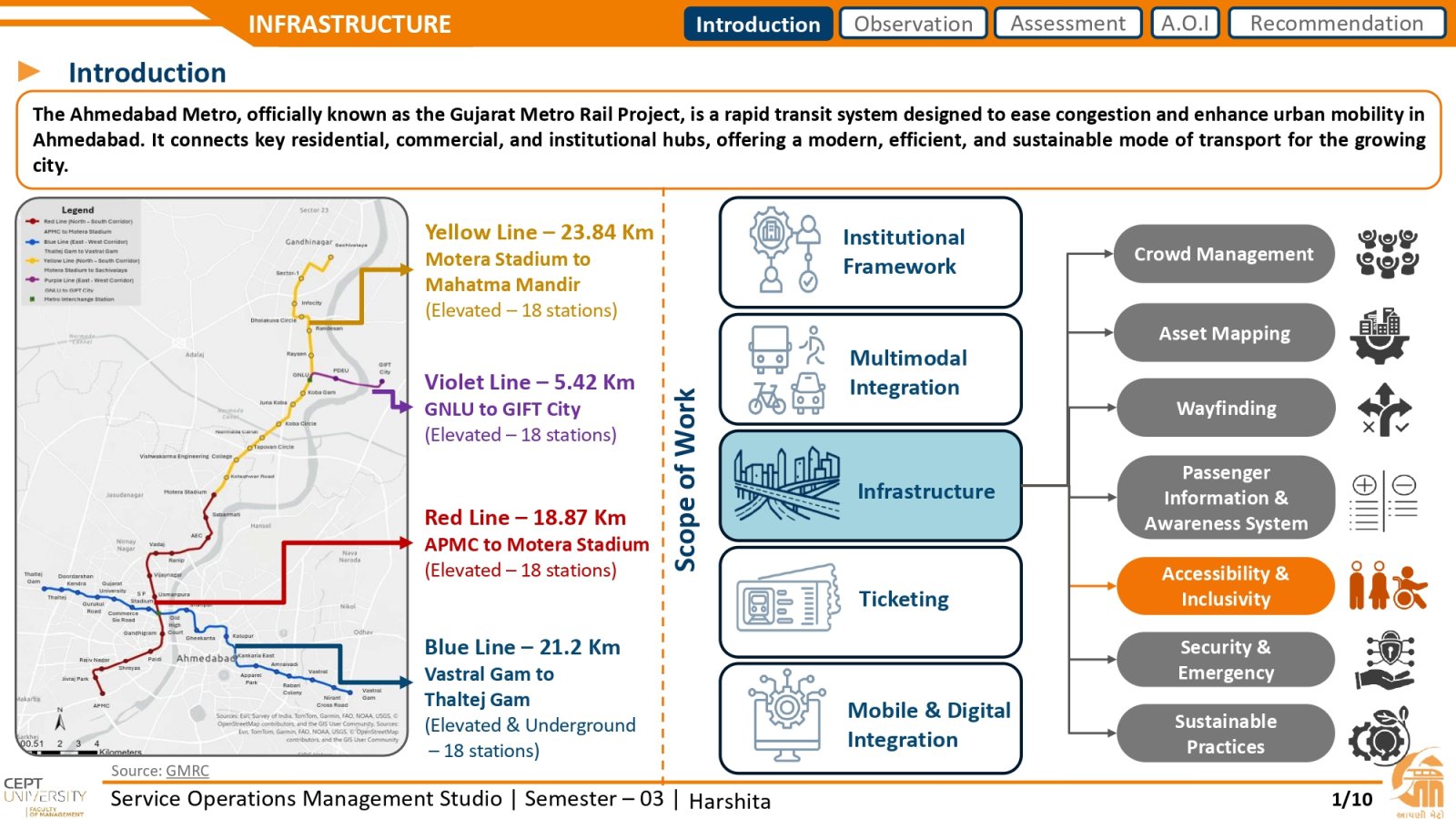
A concise overview situating accessibility and inclusivity within Ahmedabad Metro’s broader infrastructure and operational service ecosystem.

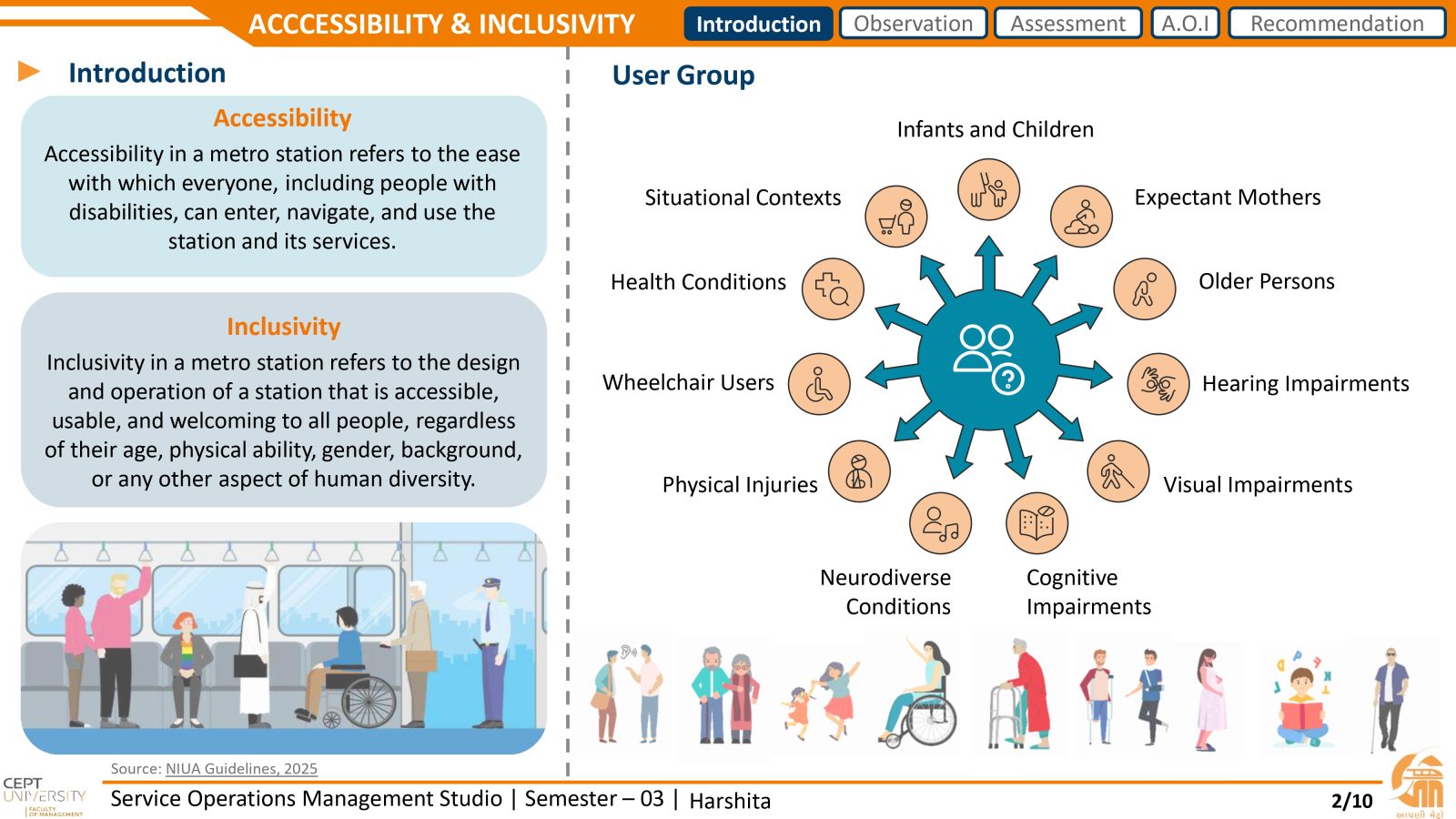
Defines accessibility and inclusivity through diverse user needs, establishing the foundational lens for evaluating equitable metro experiences.

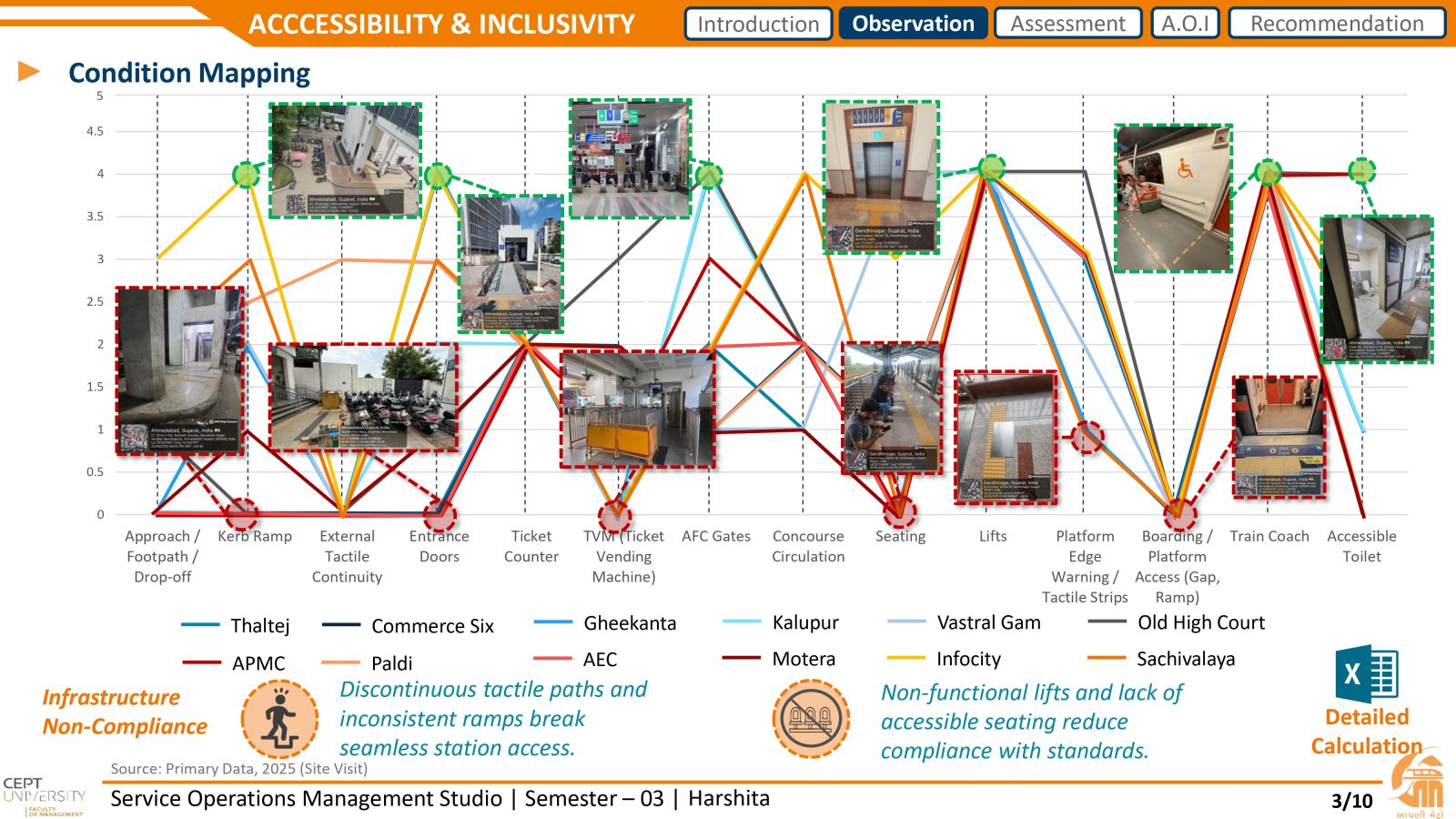
Presents station-level compliance gaps, highlighting infrastructural discontinuities and operational failures that hinder seamless accessible mobility.

Illustrates compounded travel barriers faced by wheelchair users, revealing systemic inefficiencies across navigation, staffing, and station readiness.

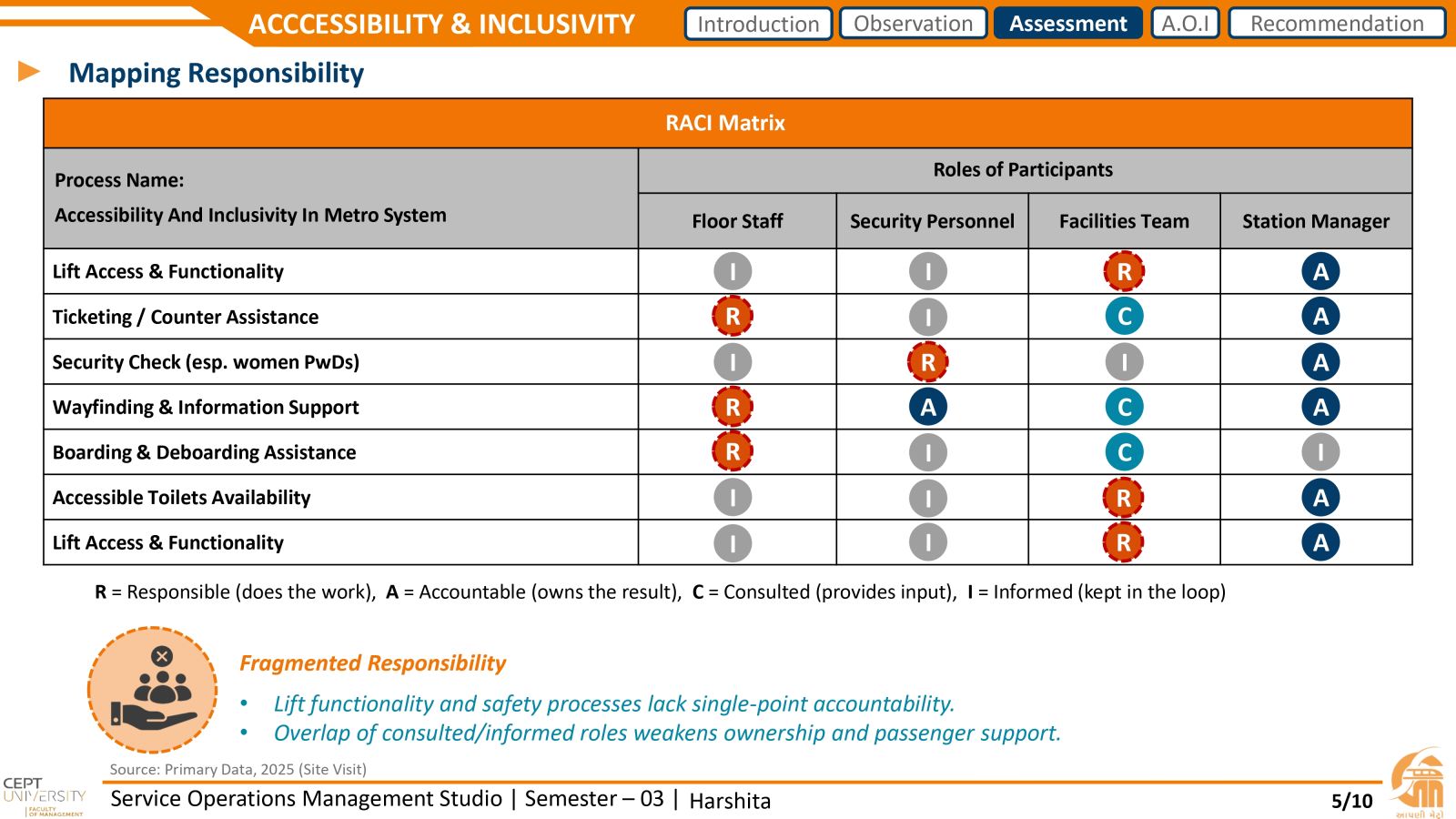
Demonstrates fragmented responsibility across teams, emphasizing the absence of clear accountability in delivering inclusive passenger support.

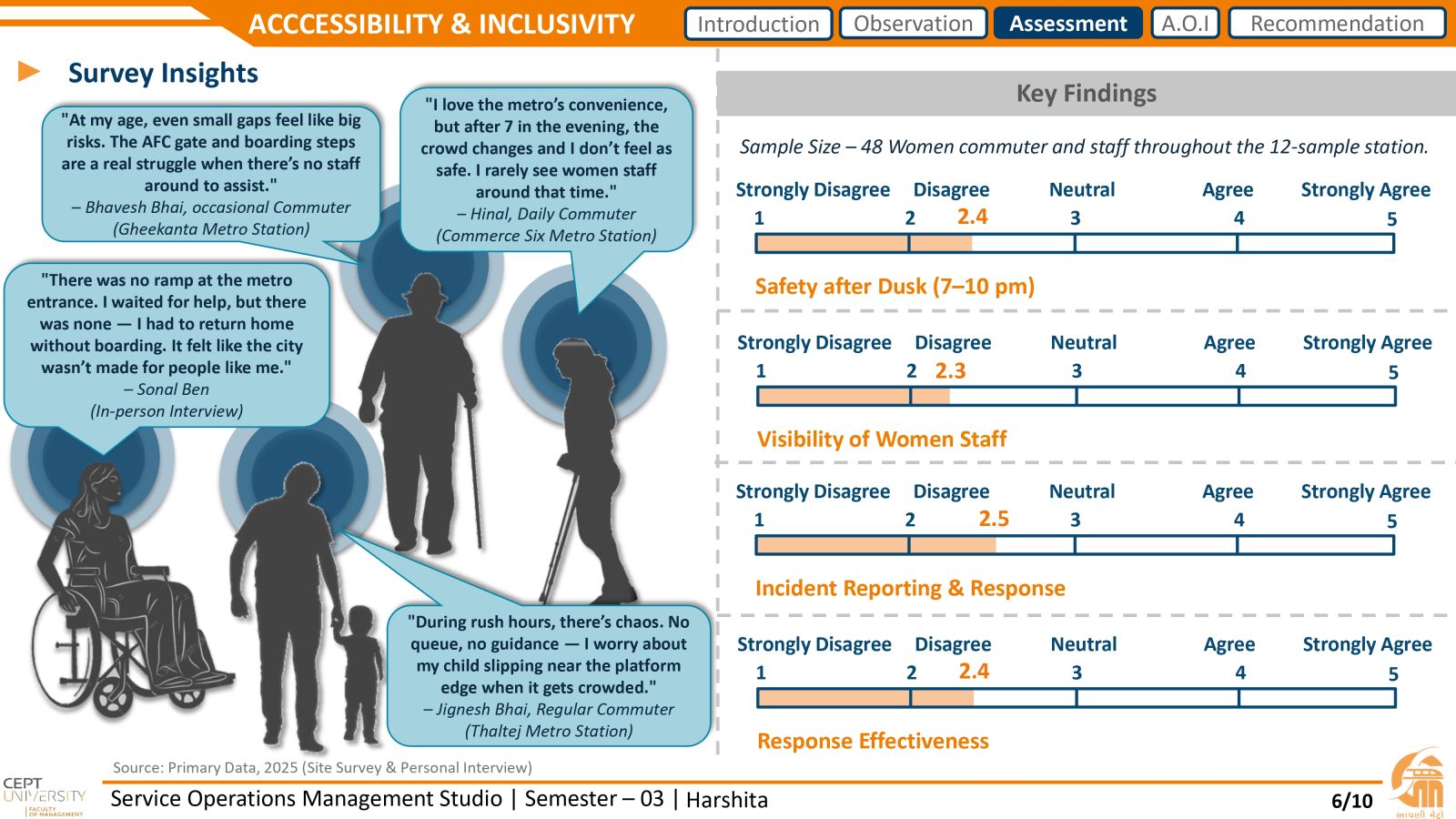
Captures commuter perceptions on safety, staff responsiveness, and accessibility, underscoring persistent experiential disparities across stations.

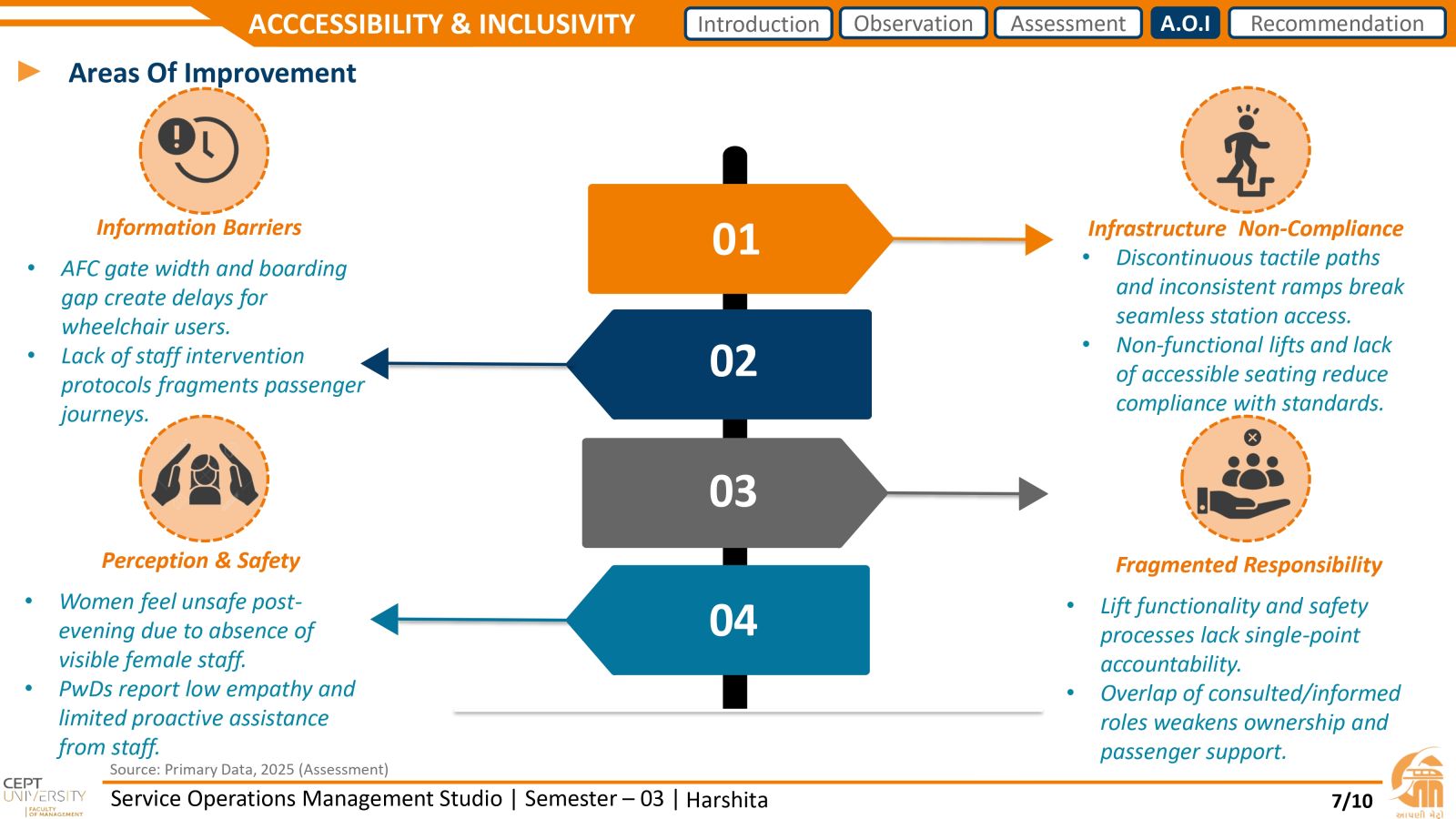
A consolidated view of systemic accessibility, safety, and operational gaps impacting commuter experience.

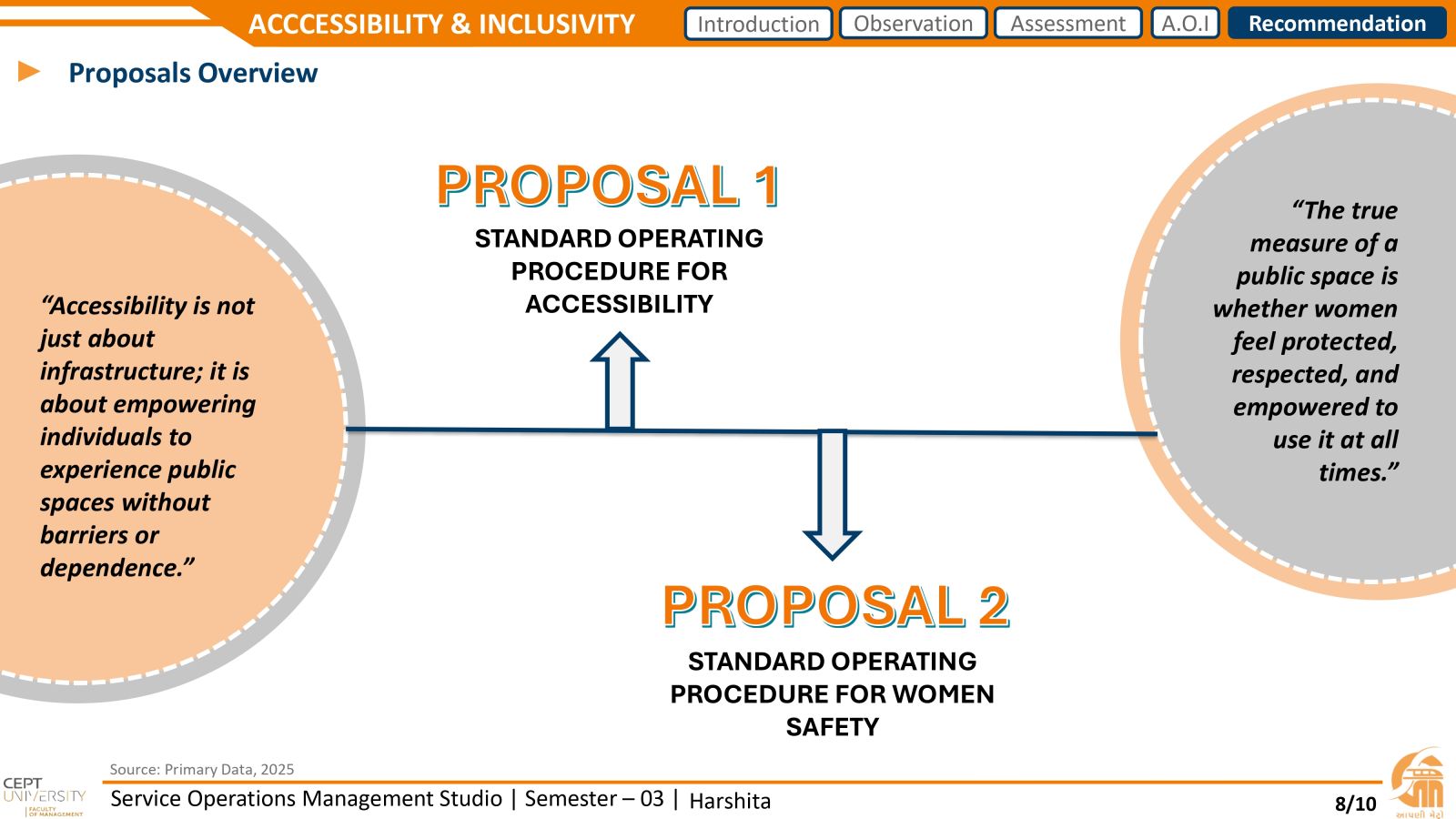
Outlines strategic operational reforms through SOP-driven frameworks targeting accessibility enhancement and improved women’s safety.

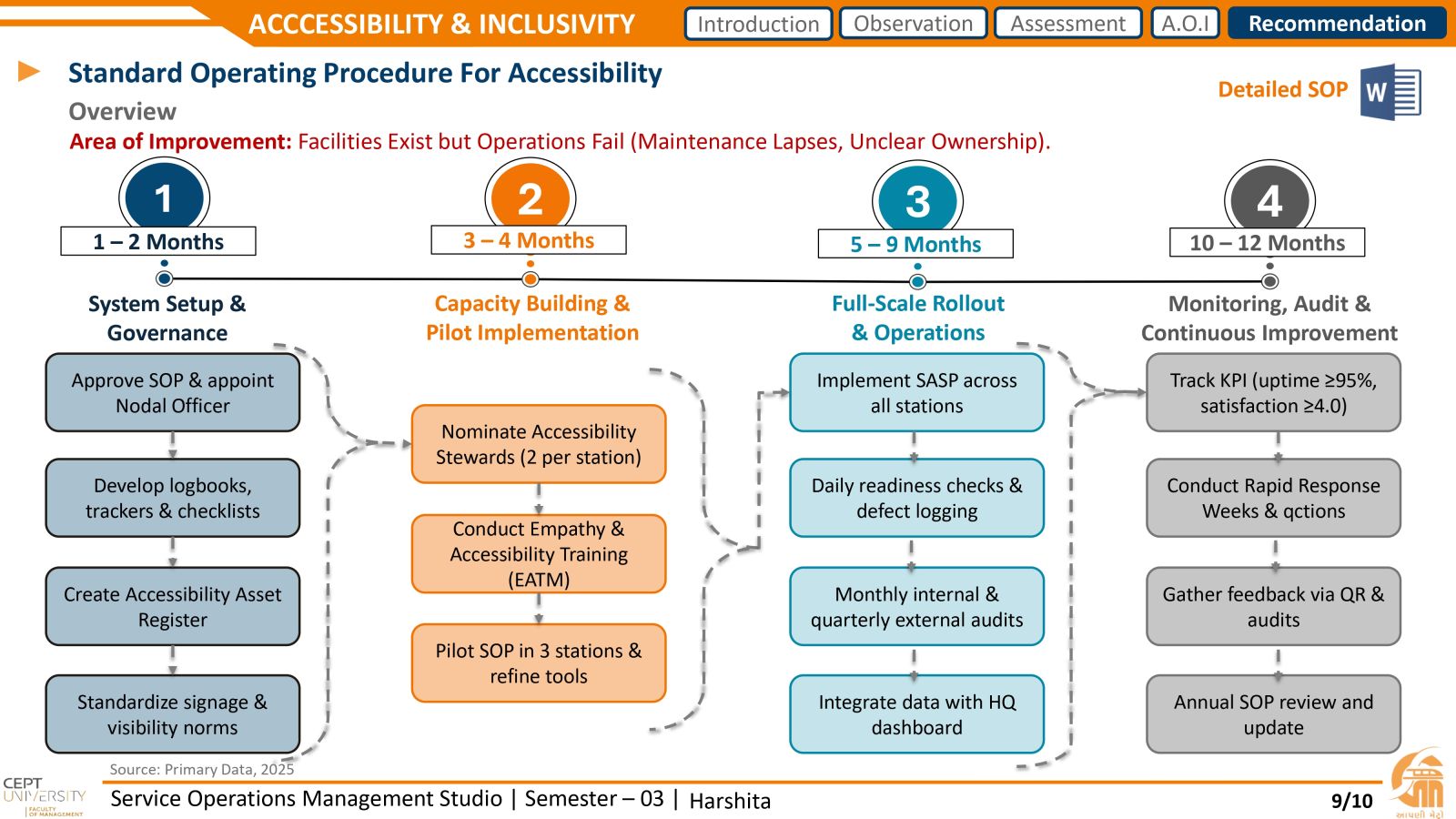
Details a phased governance, training, monitoring, and rollout mechanism to institutionalize accessibility across all stations.

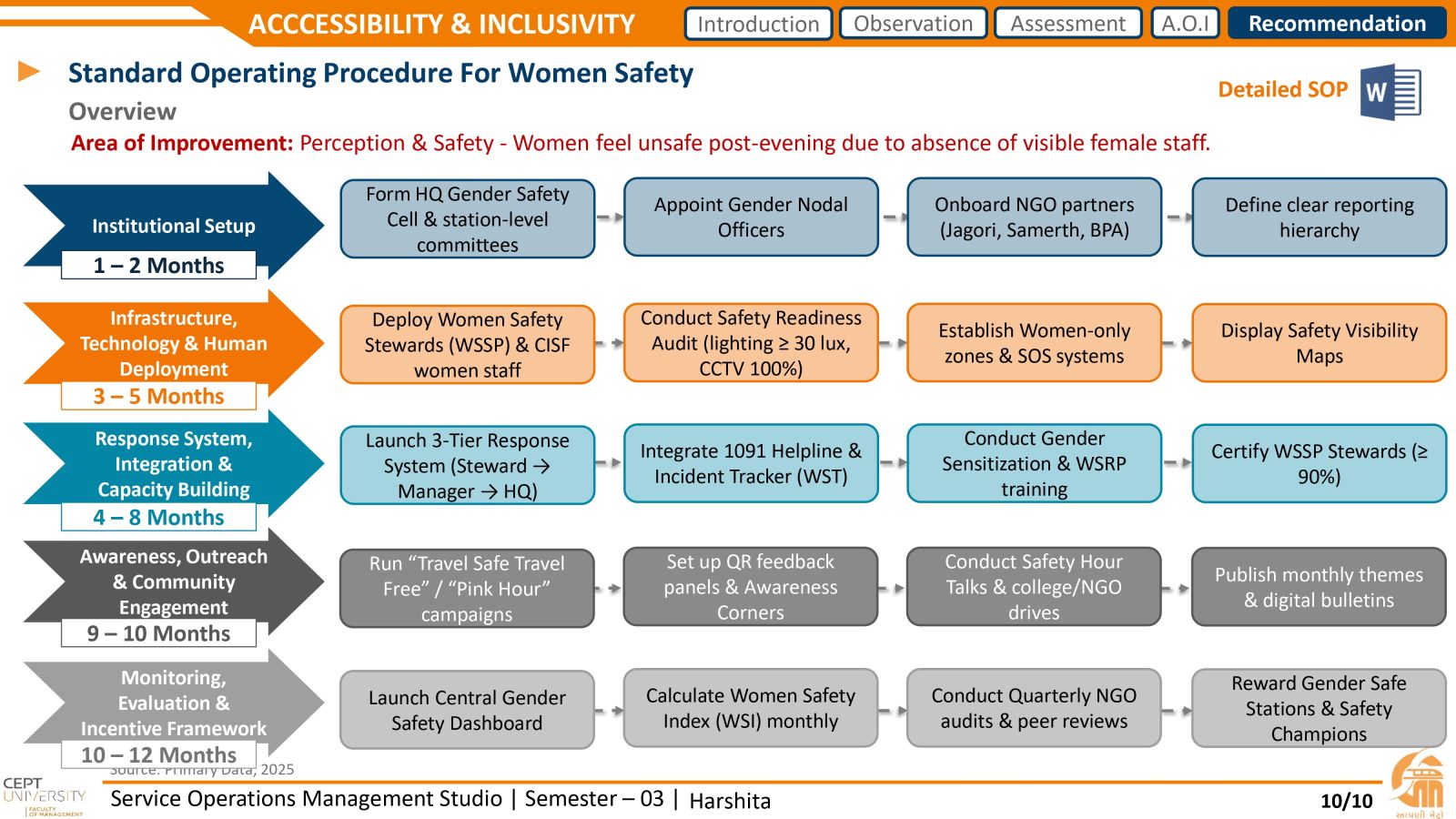
Introduces a structured safety governance model integrating staffing, technology, outreach, and performance evaluation for gender-responsive mobility.