• Home
  • FM
  • UM4004
  • Bridging Governance and Stakeholder Systems

Anannya Banerjee

UM4004

Bridging Governance and Stakeholder Systems

This portfolio examines how governance structures, stakeholder roles, and system design shape the performance of the Prahladnagar Multilevel Parking facility. Beginning with AMC’s statutory responsibilities and budget outcomes, it reveals mismatches between spending and service delivery. Through field interviews, user analysis, and stakeholder mapping, the study identifies fragmented governance, weak enforcement, and poor integration as core issues leading to low occupancy and revenue. Comparative case studies with Singapore and DLF Gurgaon highlight successful models, guiding the inference that Prahladnagar’s MLP must be repositioned as a coordinated, tech-enabled urban mobility asset.
Report Content

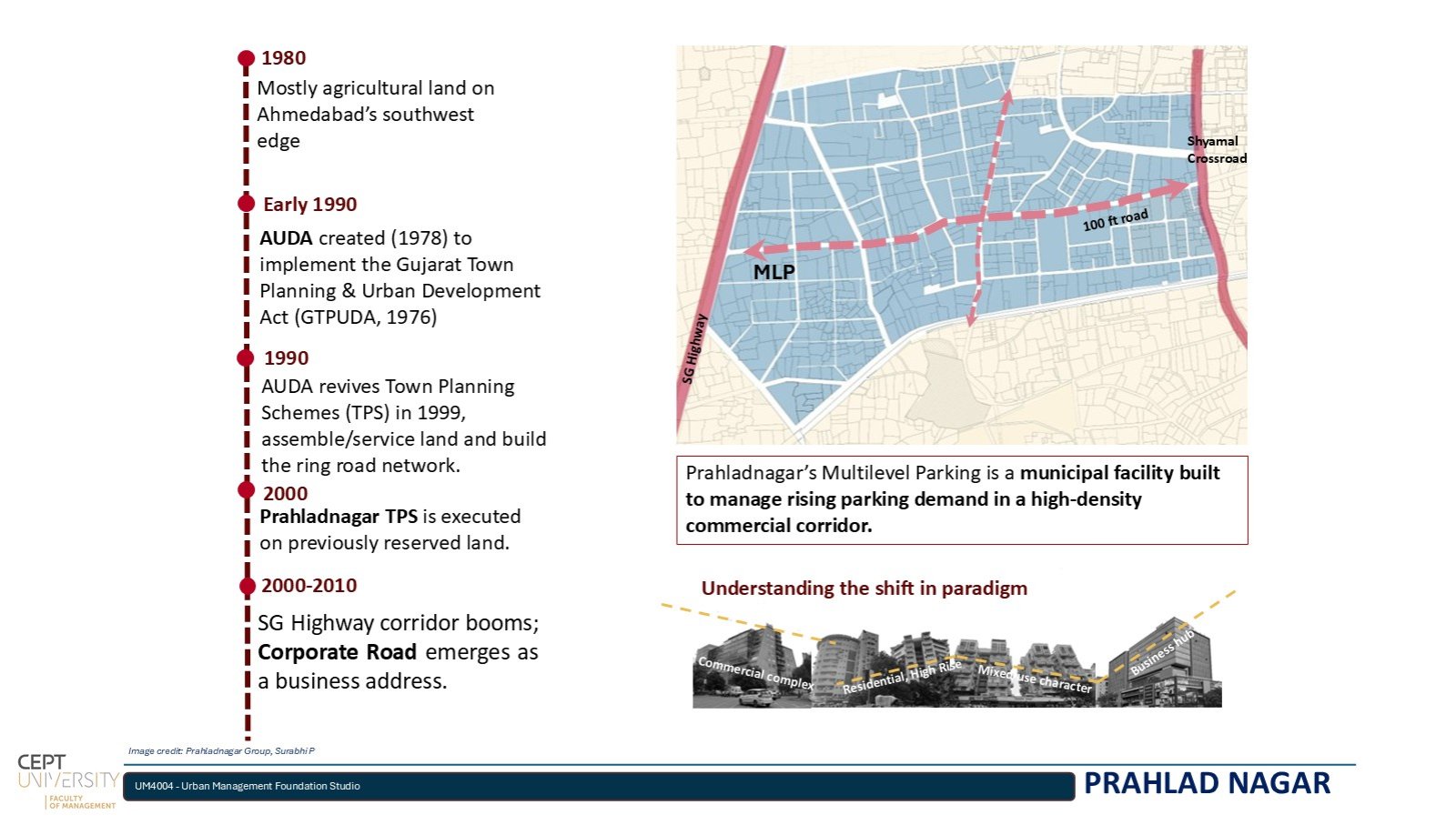
A visual timeline showing Prahladnagar’s transformation from agricultural land to a commercial hub through TPS and AUDA-led planning.

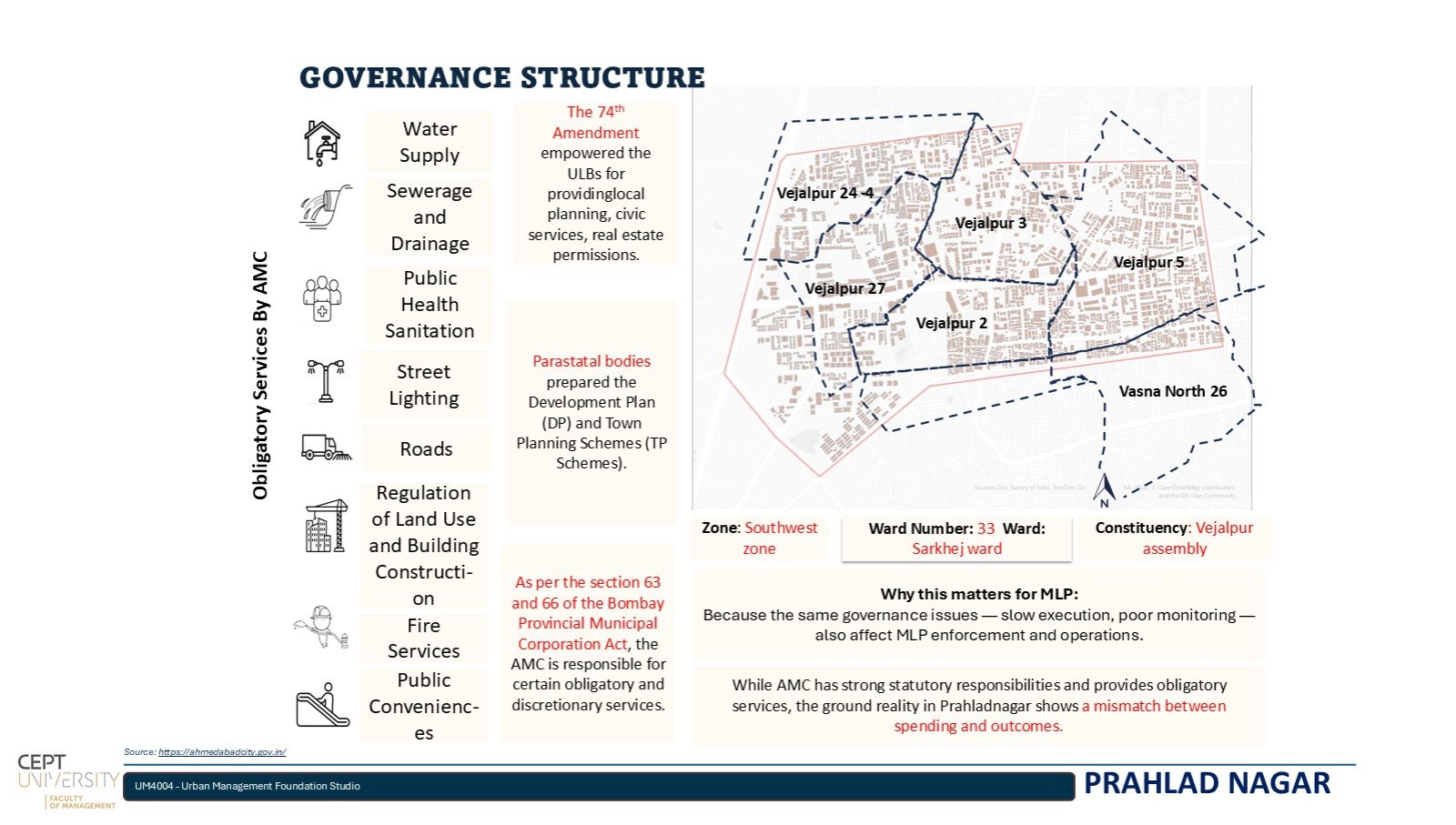
Map outlining AMC’s jurisdiction, ward boundaries, and statutory responsibilities under the BPMC Act.

Media excerpts highlighting congestion issues despite increased municipal spending.

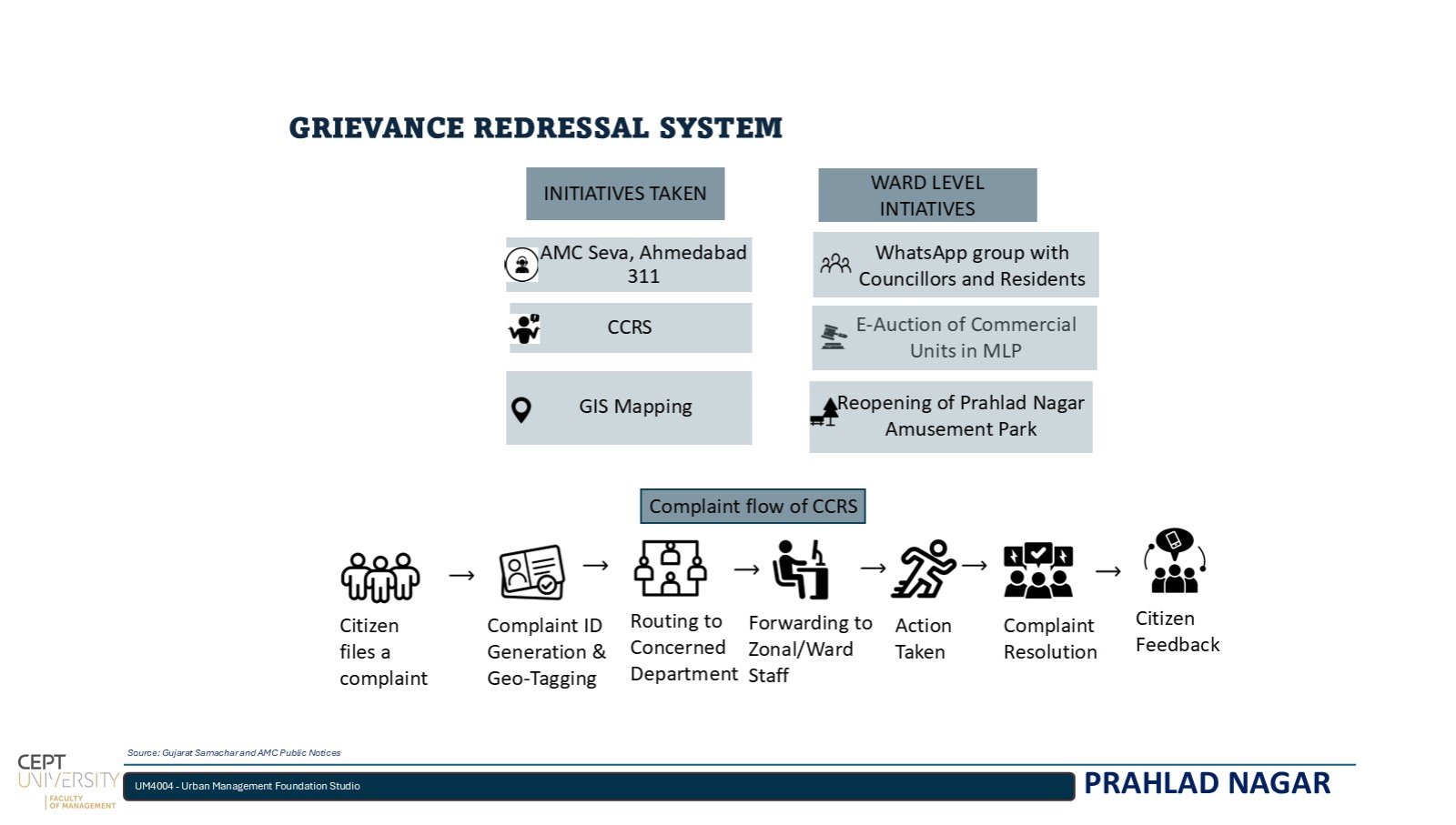
Flowchart showing AMC’s multi-level complaint routing through CCRS and ward structures.

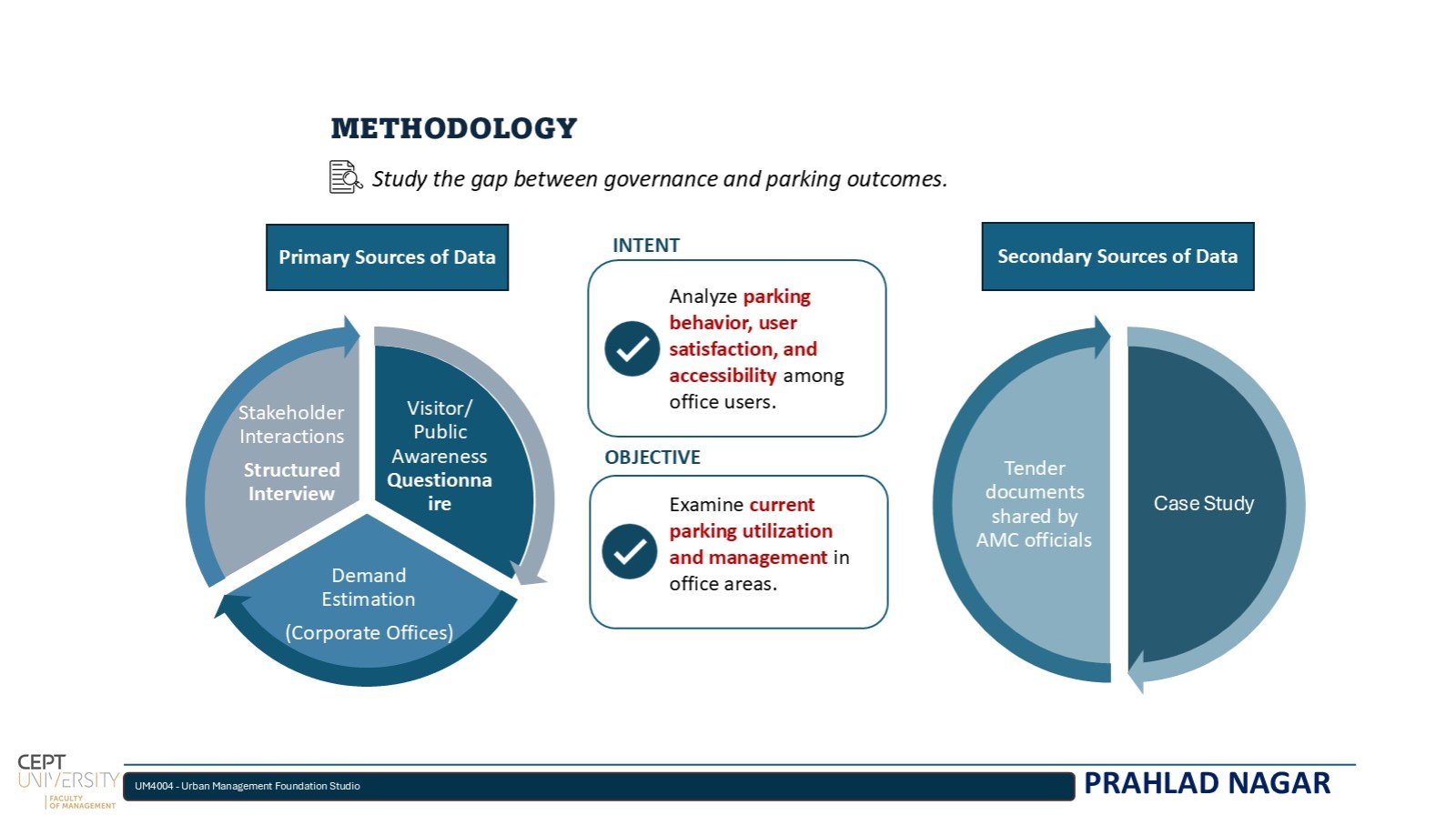
Framework showing primary and secondary data sources used to analyse parking behaviour and governance gaps.

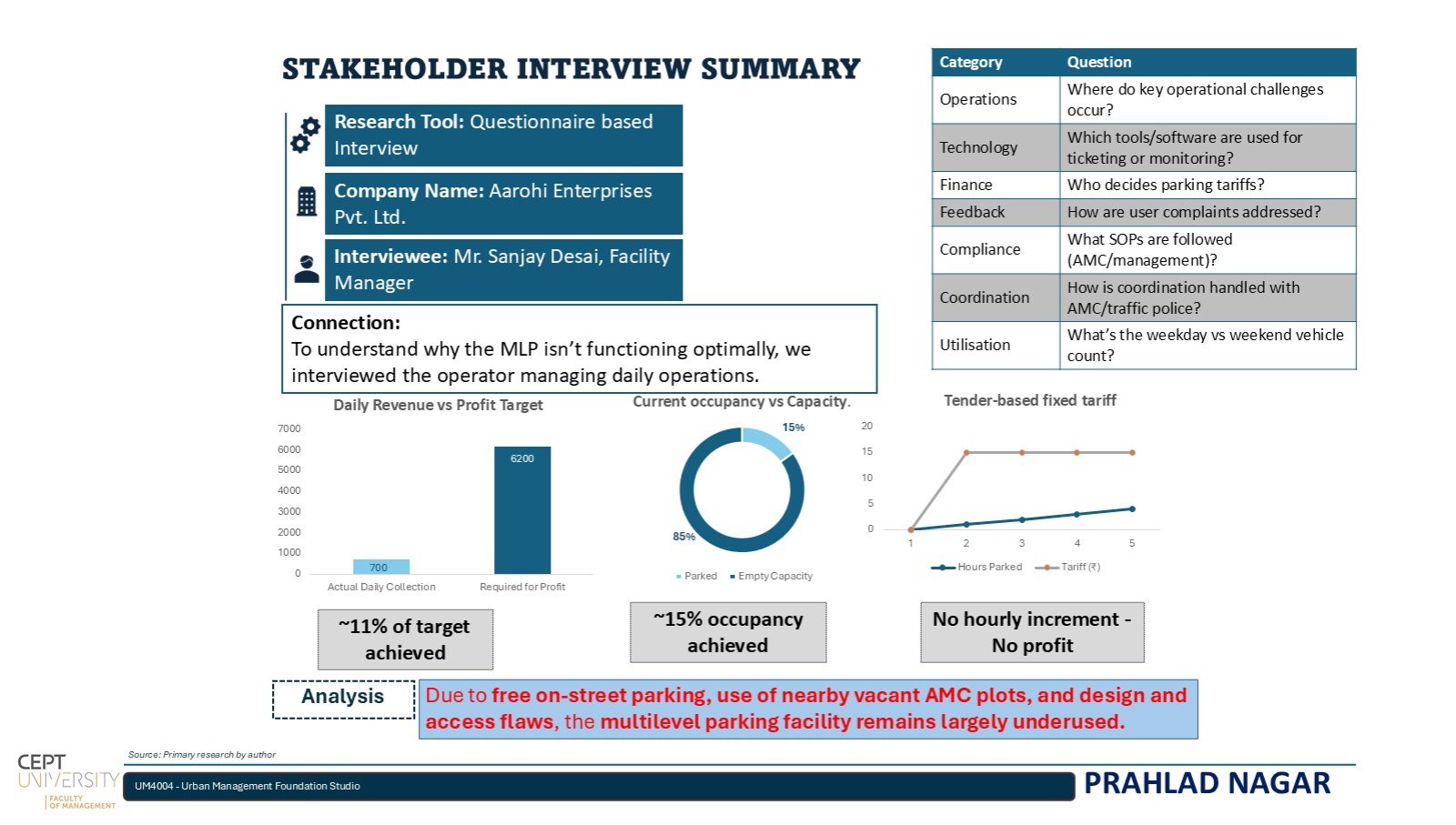
Interview data revealing low revenue and occupancy at the Prahladnagar MLP due to design, pricing, and enforcement challenges.

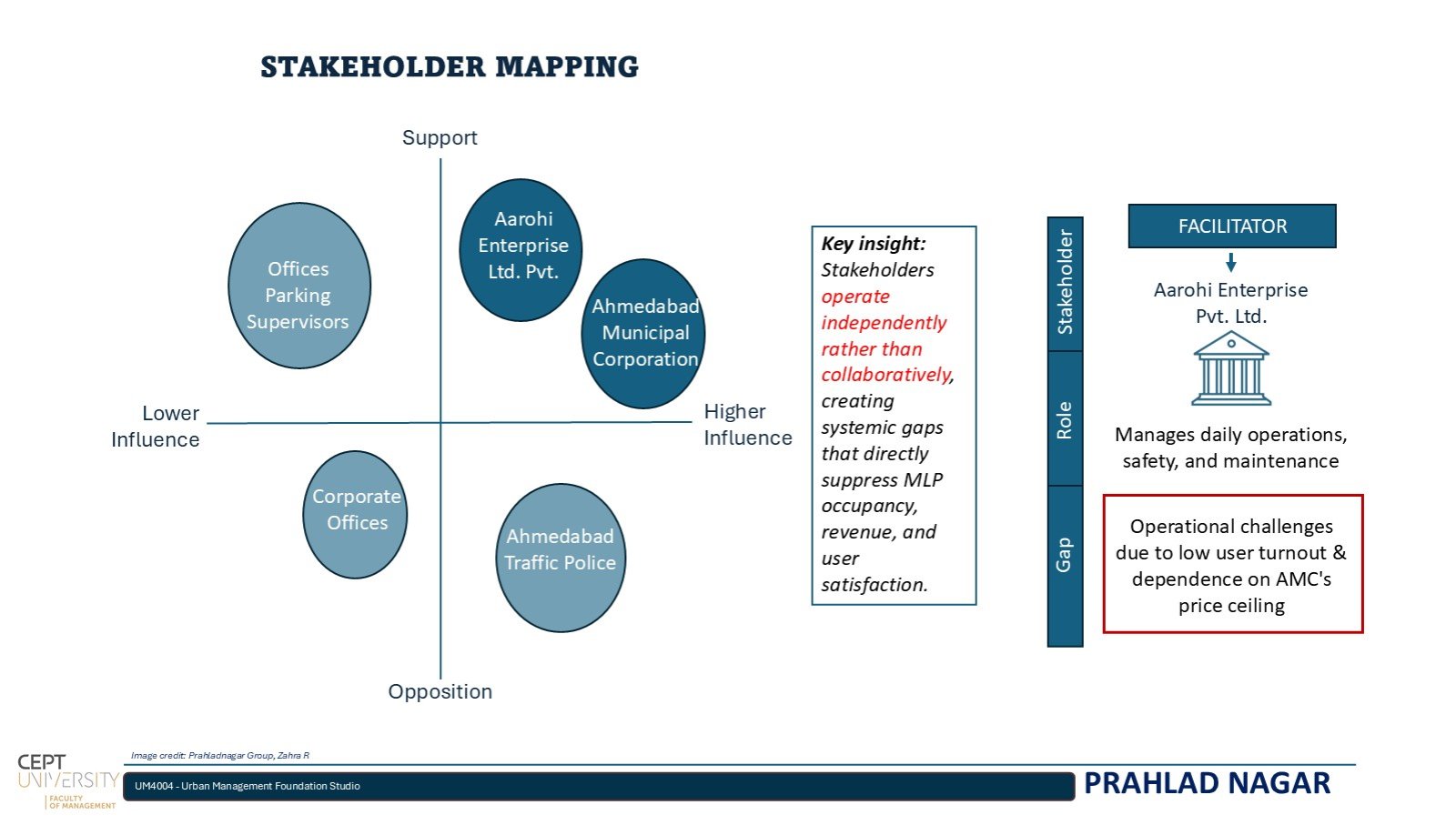
Diagram mapping AMC departments, Traffic Police, contractor, users, and corporates, illustrating fragmented responsibilities.

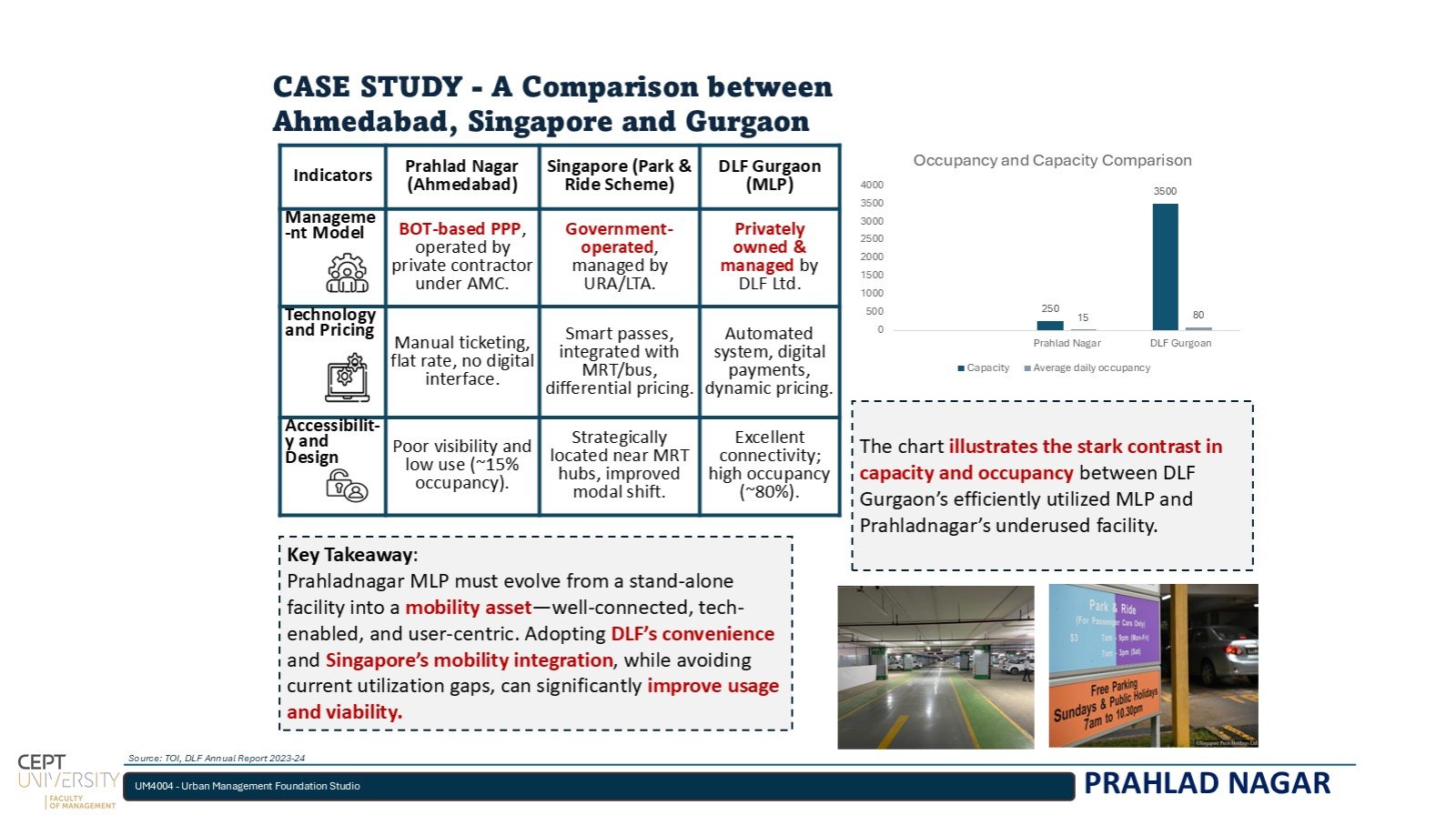
Occupancy comparison between DLF Gurgaon’s MLP, Singapore’s integrated system, and Prahladnagar’s underperforming facility

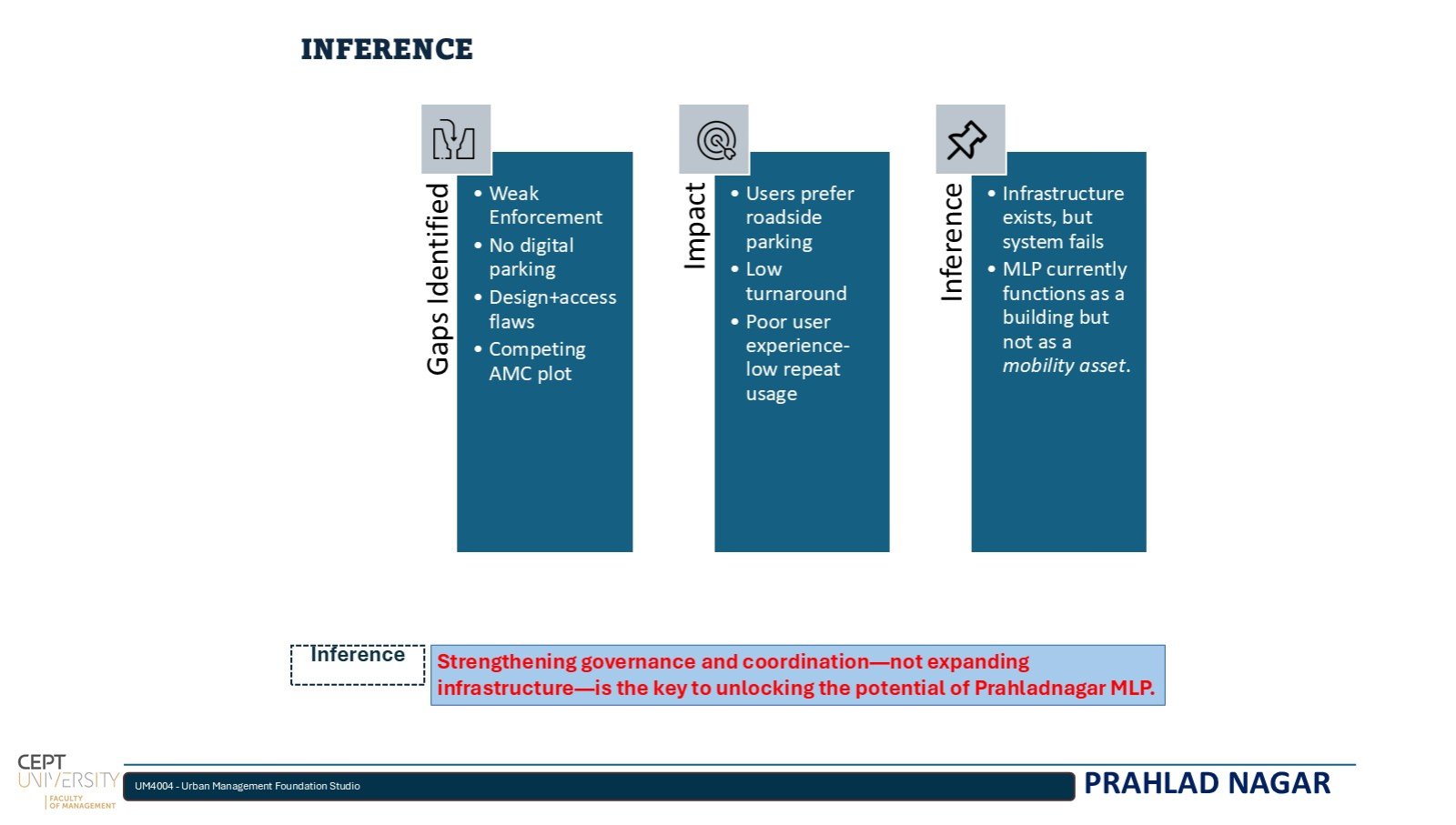
Synthesis visual linking governance gaps to MLP underperformance and the need for integrated mobility.

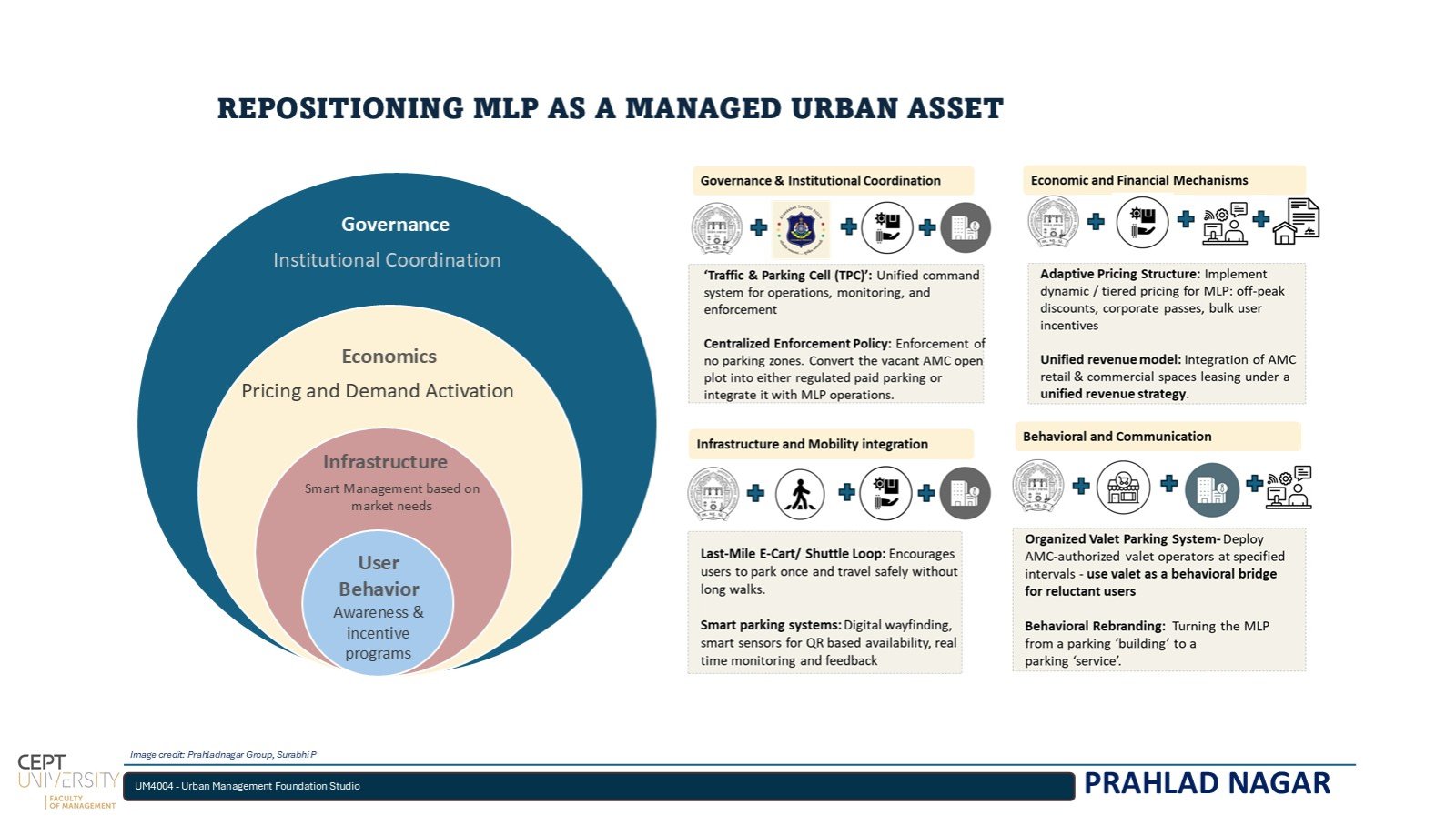
Conceptual visualization showing MLP as a smart, connected, user-centric mobility asset.