Your browser is out-of-date!
For a richer surfing experience on our website, please update your browser. Update my browser now!
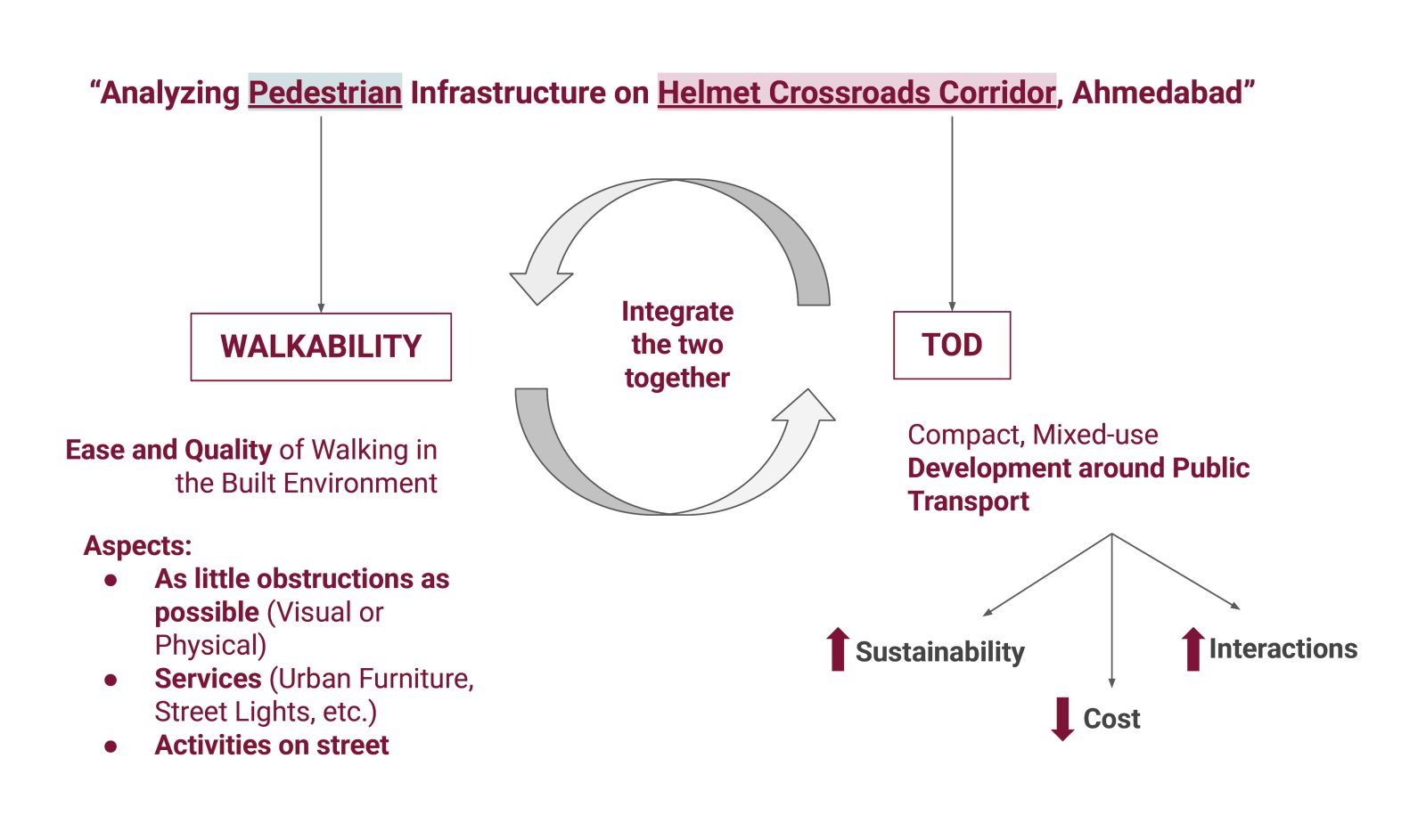
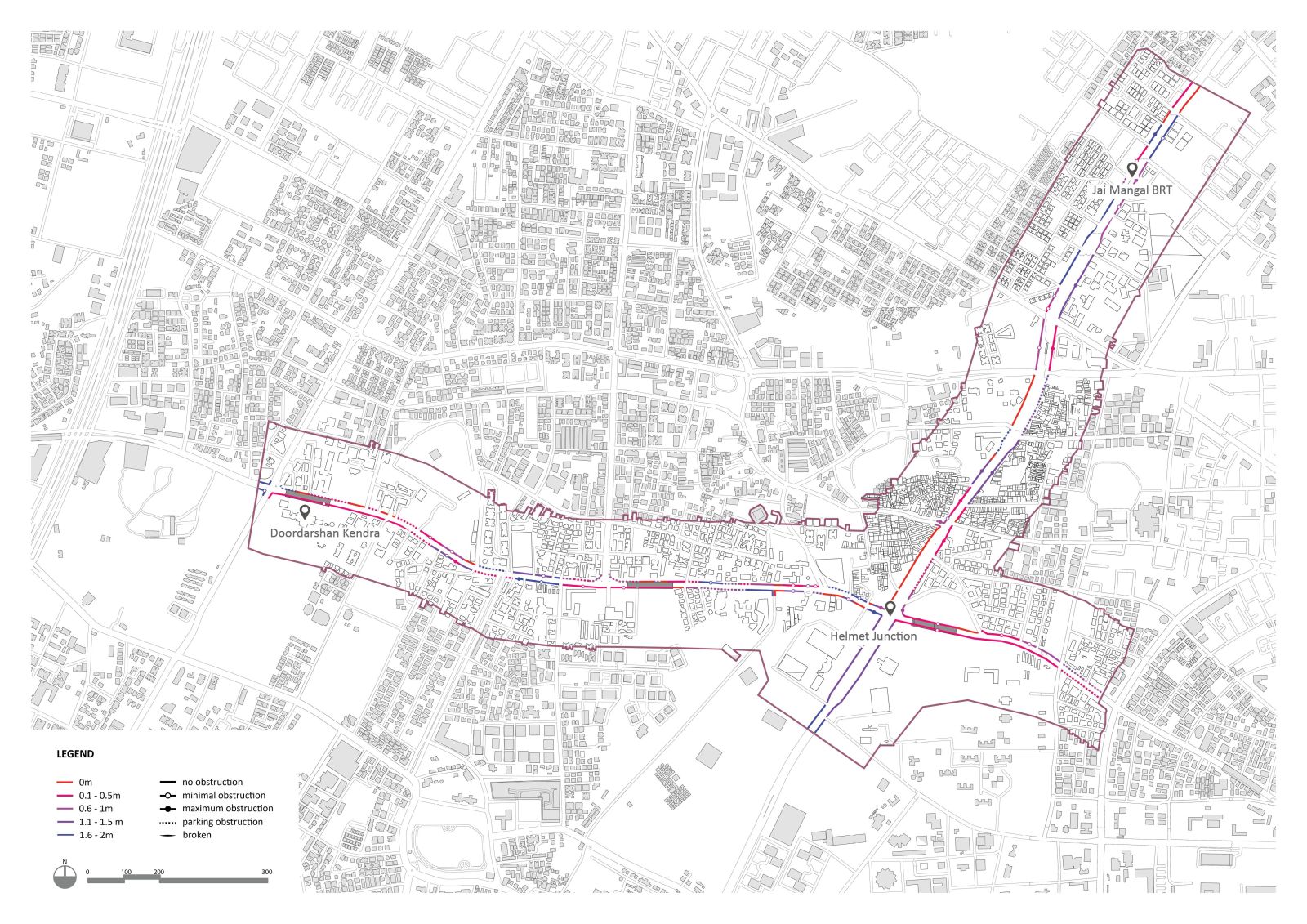
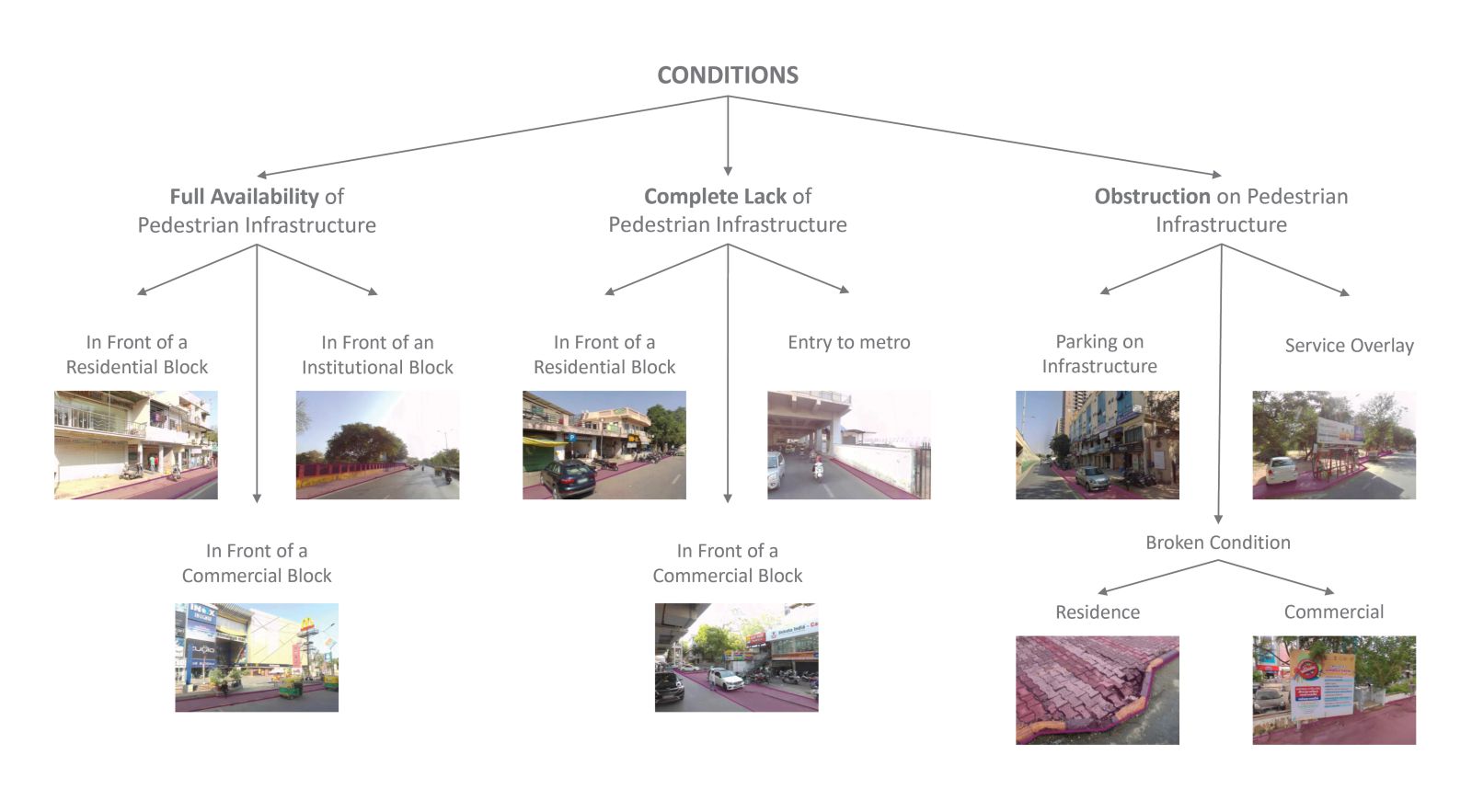
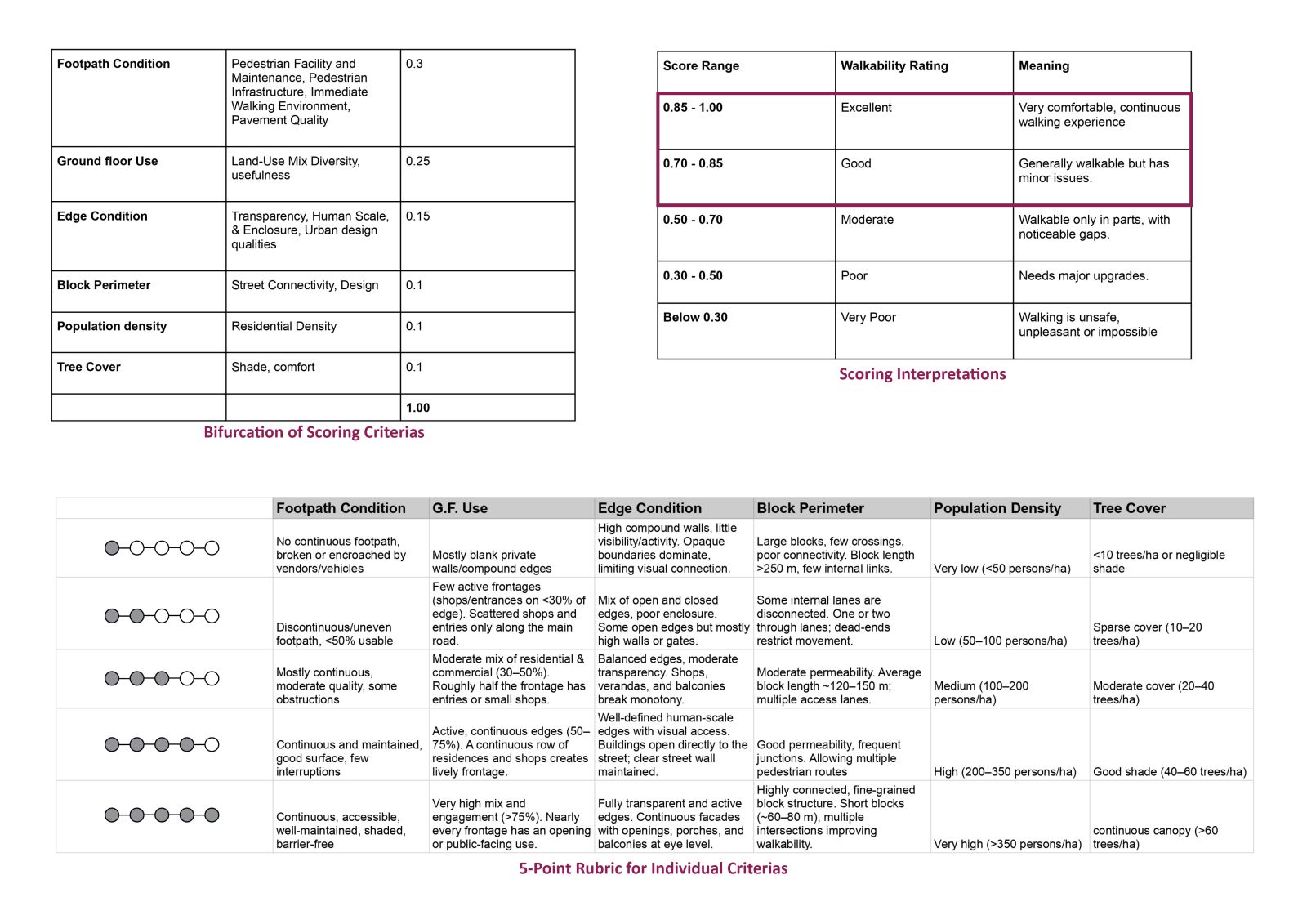
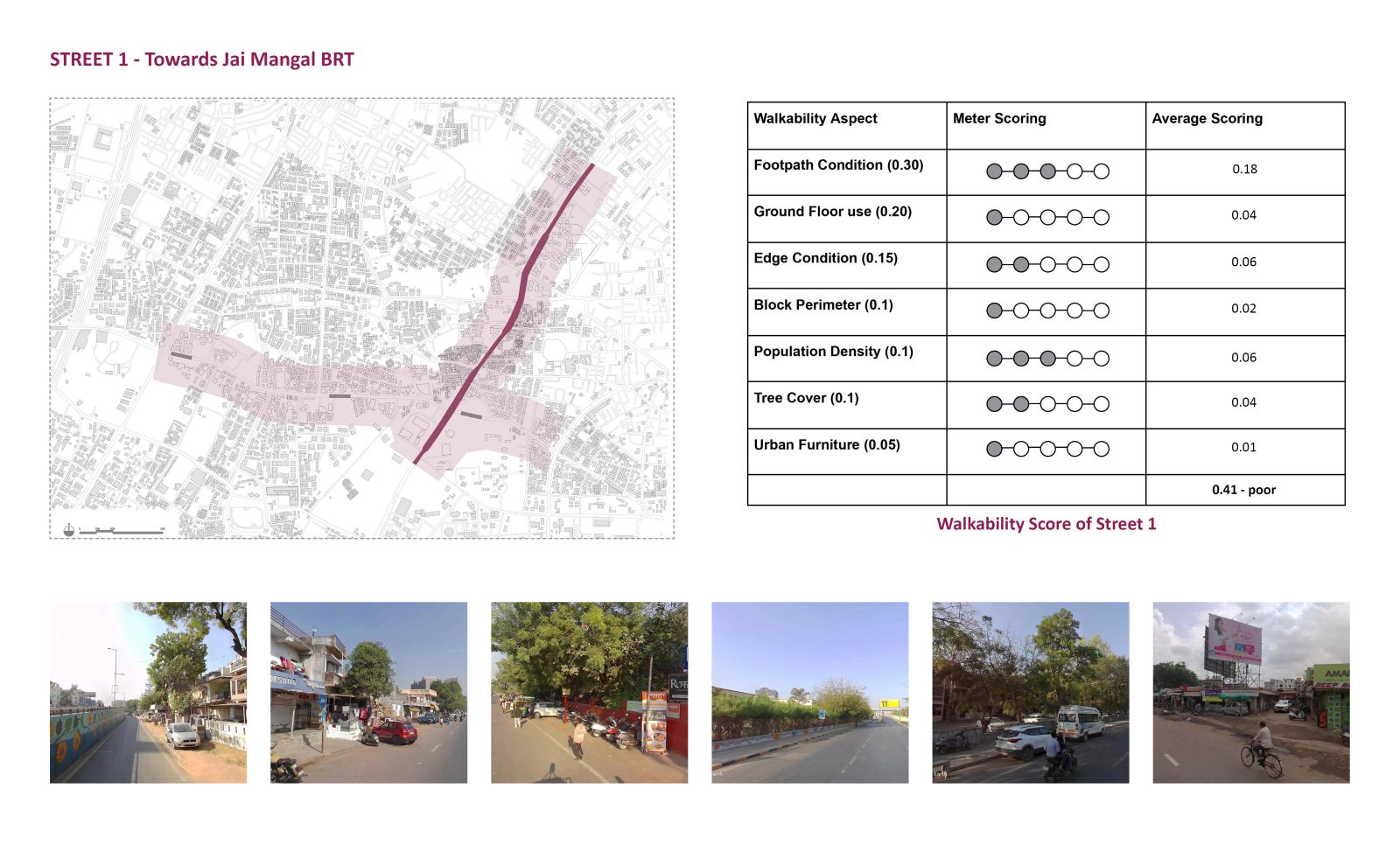
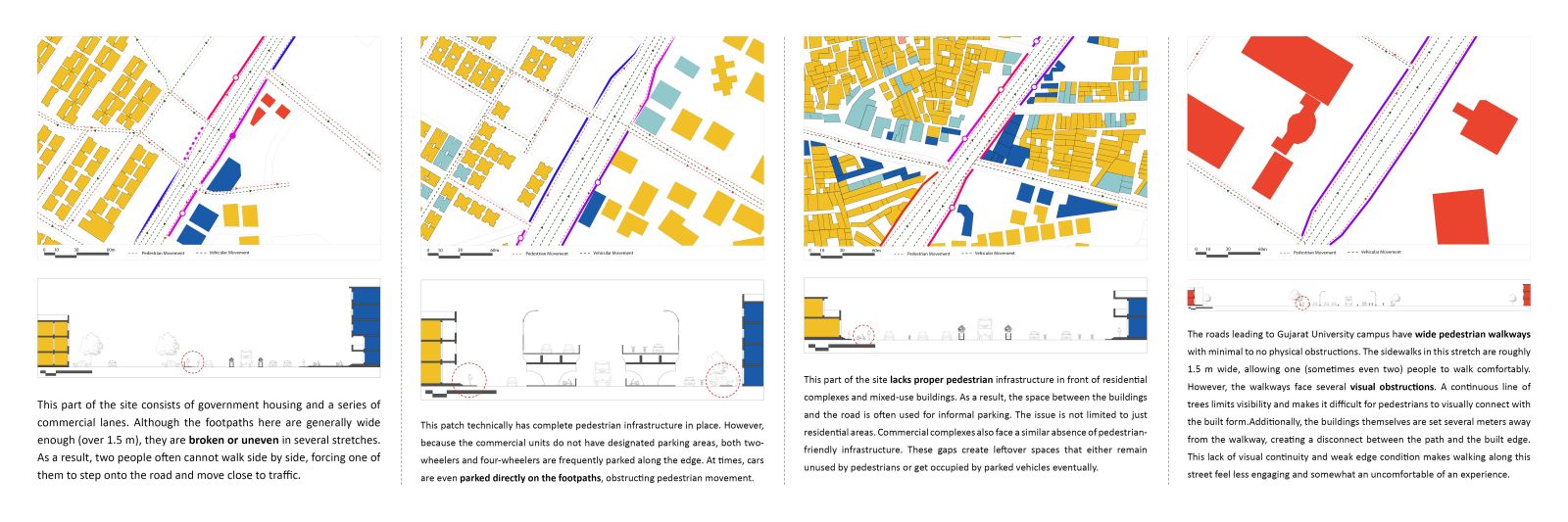
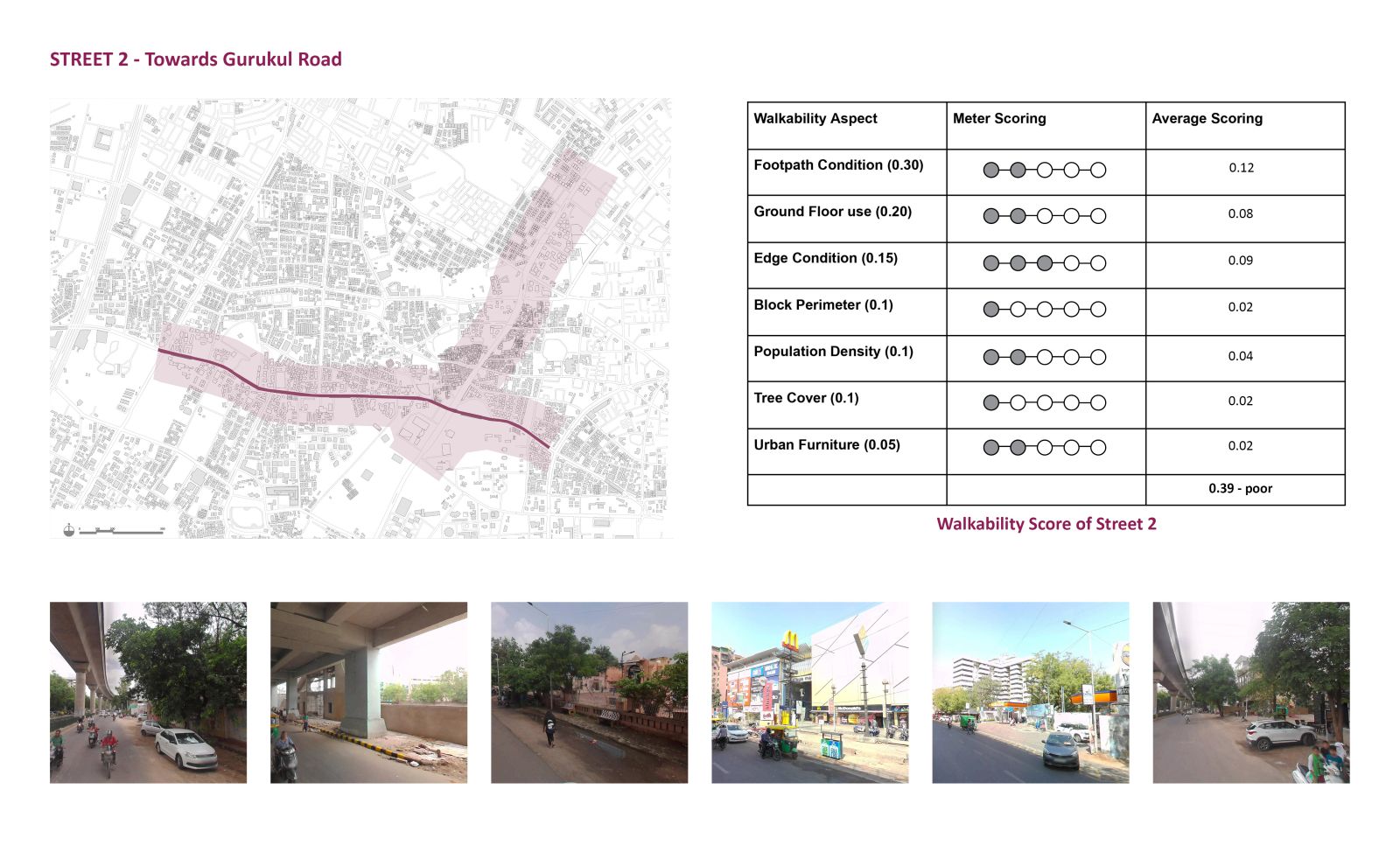
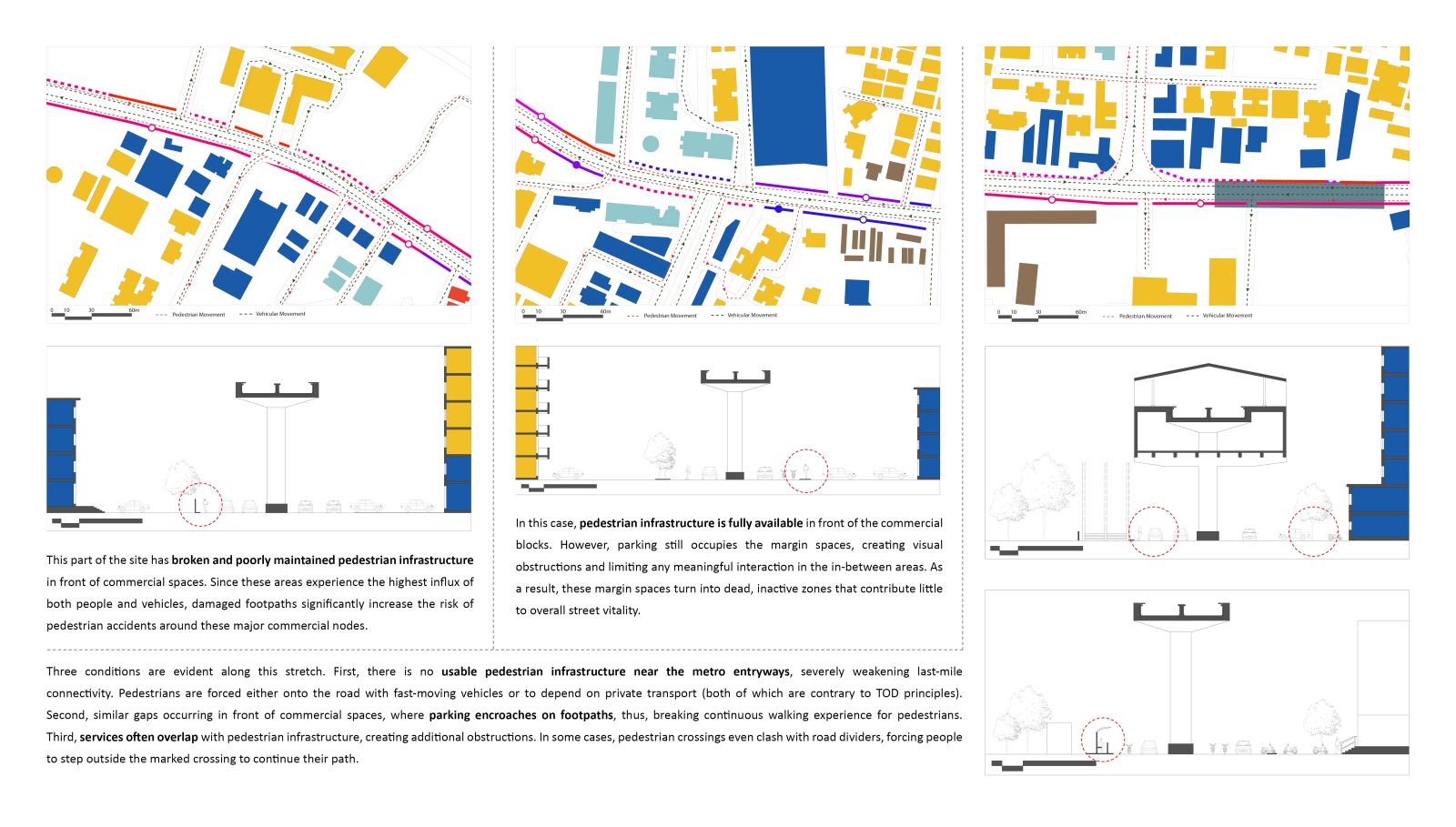
This study examines urban transformation within transit-oriented developments, focusing on the Helmet Crossroads corridor in Ahmedabad. Its primary objective is to evaluate walkability along the corridor by analysing the functionality of existing pedestrian infrastructure. Based on this assessment, the research investigates whether the quality of walkability influences people’s decisions to use public transit. Methodologically, it adopts a mixed-methods approach. Corridor-wide mapping captures mobility patterns, edge conditions, and observed user activities, followed by qualitative assessments that attempt to visualize everyday walking in the TOD zone. Walkability is interpreted and quantified through walkability scoring, supported by a review of relevant DCR provisions to validate the on-ground findings. The expected outcome is a detailed assessment supported by site-specific recommendations aligned with the three Ds of TOD (density, diversity, and design). These insights may apply to other high-density Indian contexts, highlighting the importance of strengthening walkability within TODs. This could potentially also lead to more sustainable and economically resilient cities.