Your browser is out-of-date!
For a richer surfing experience on our website, please update your browser. Update my browser now!
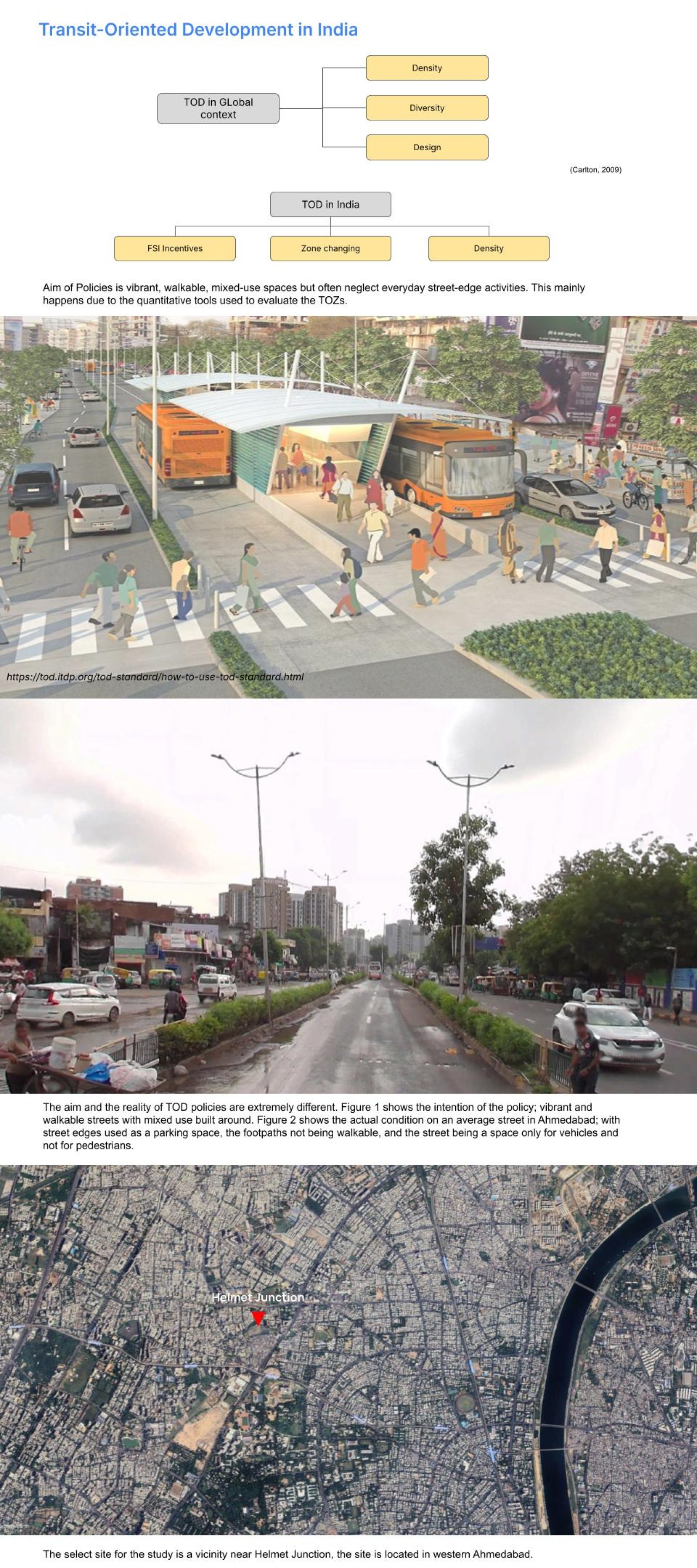
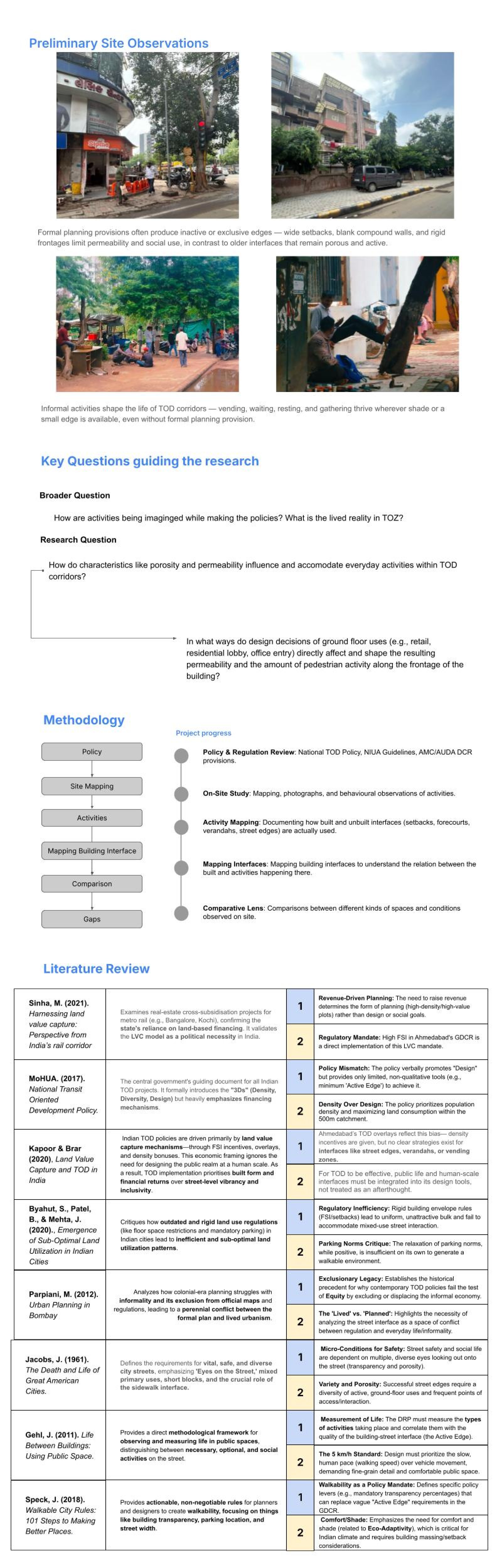
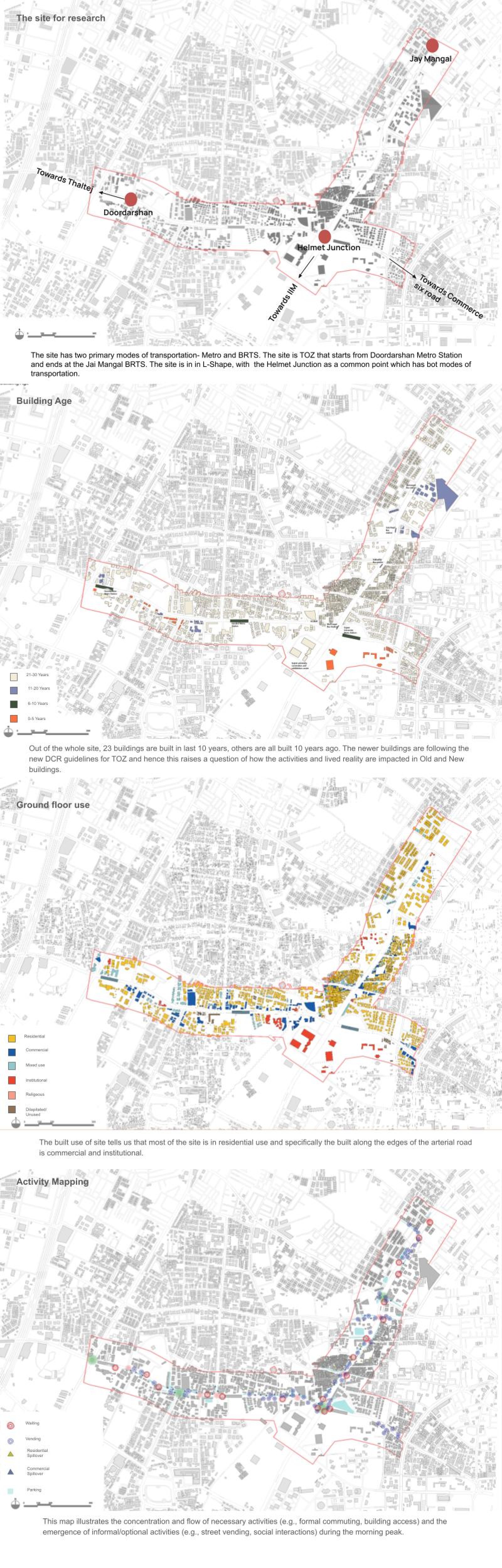
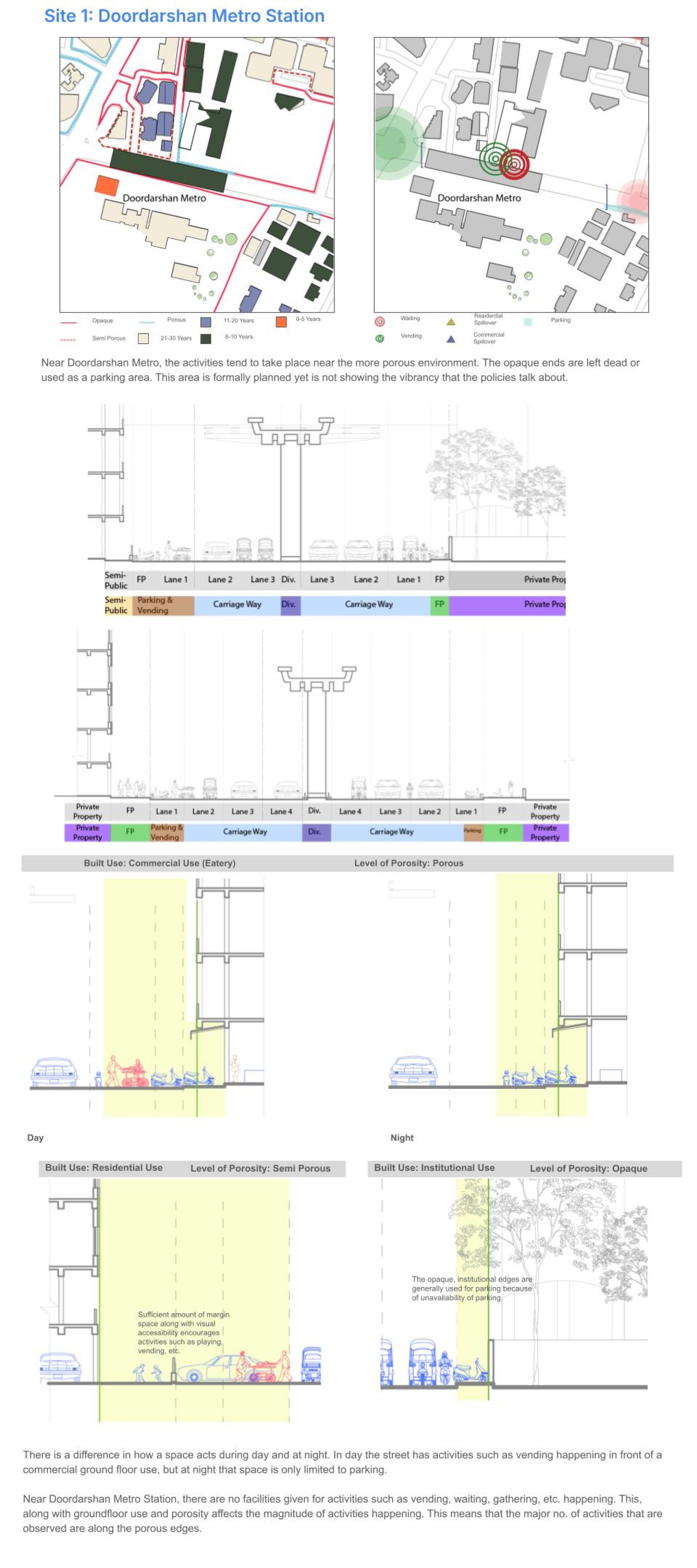
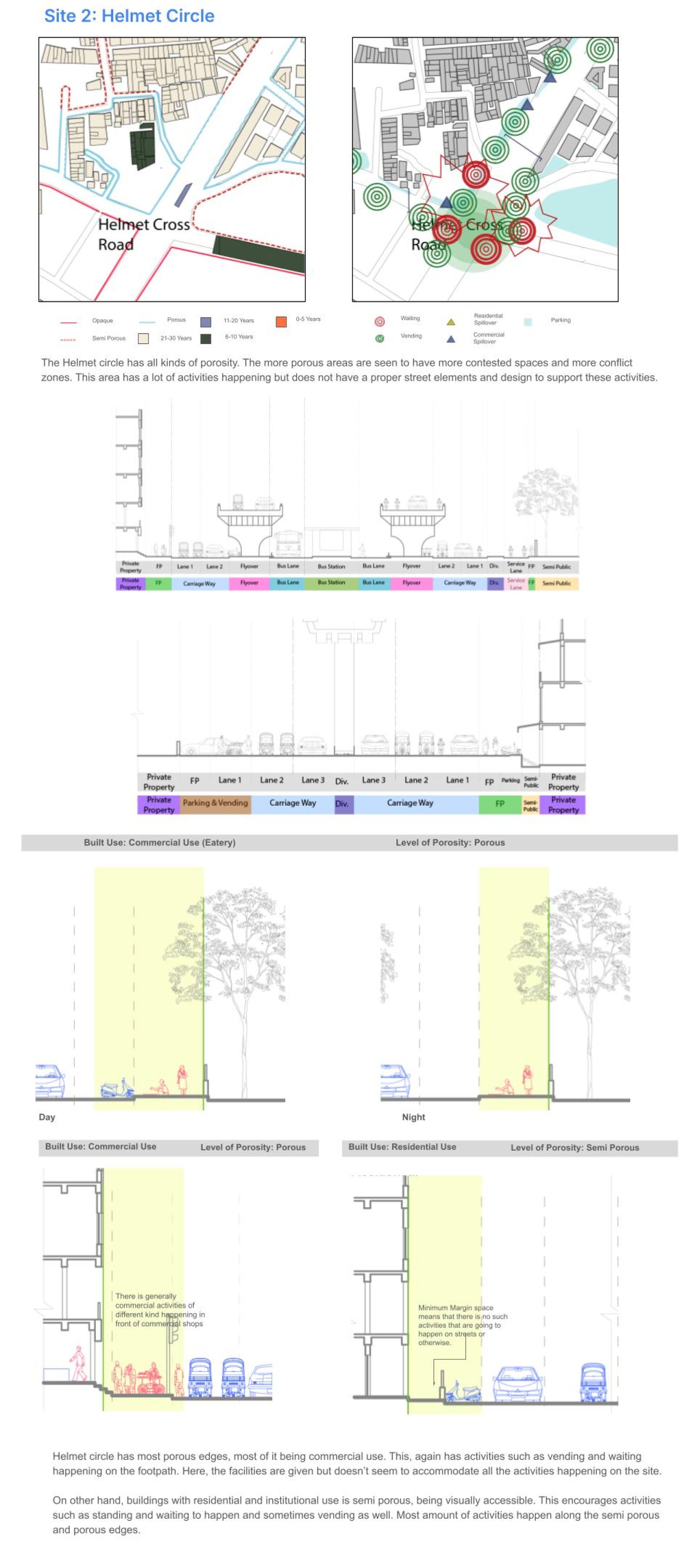
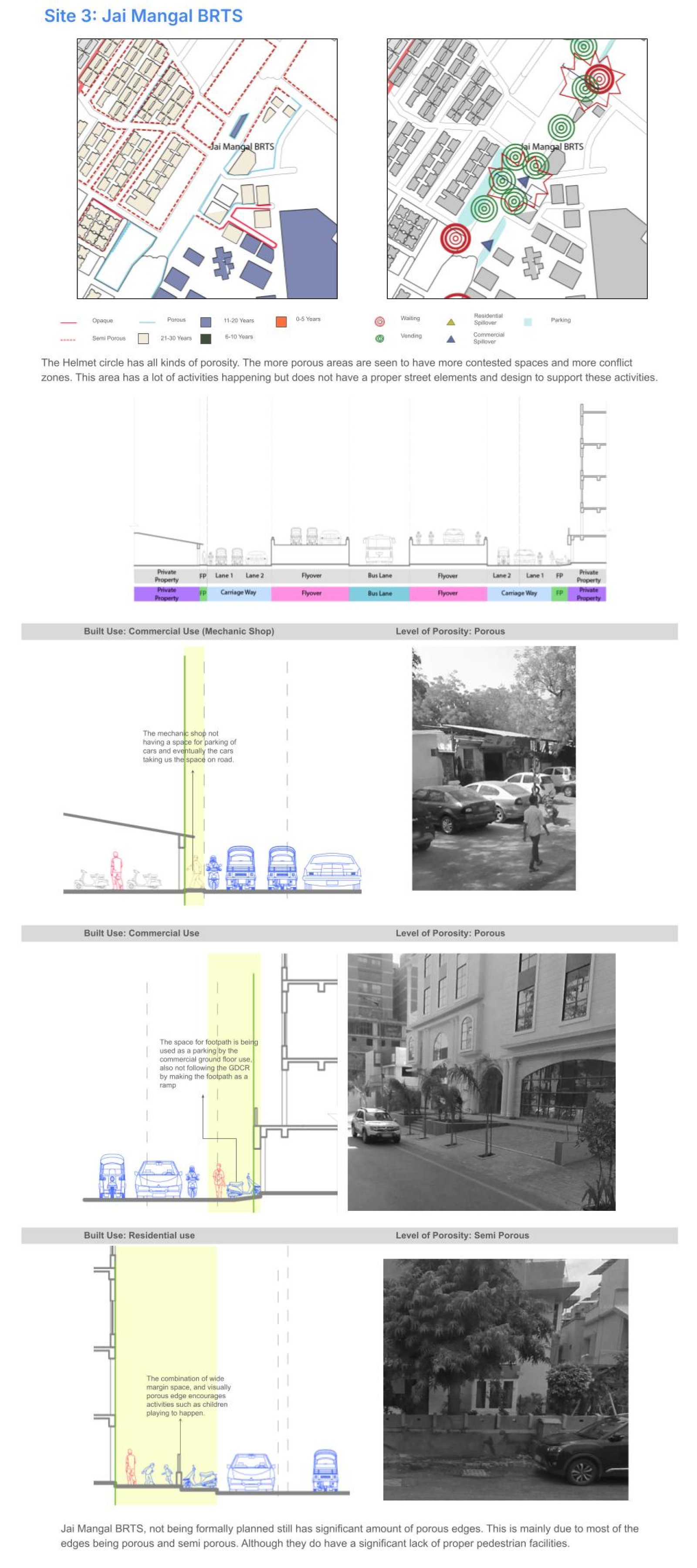
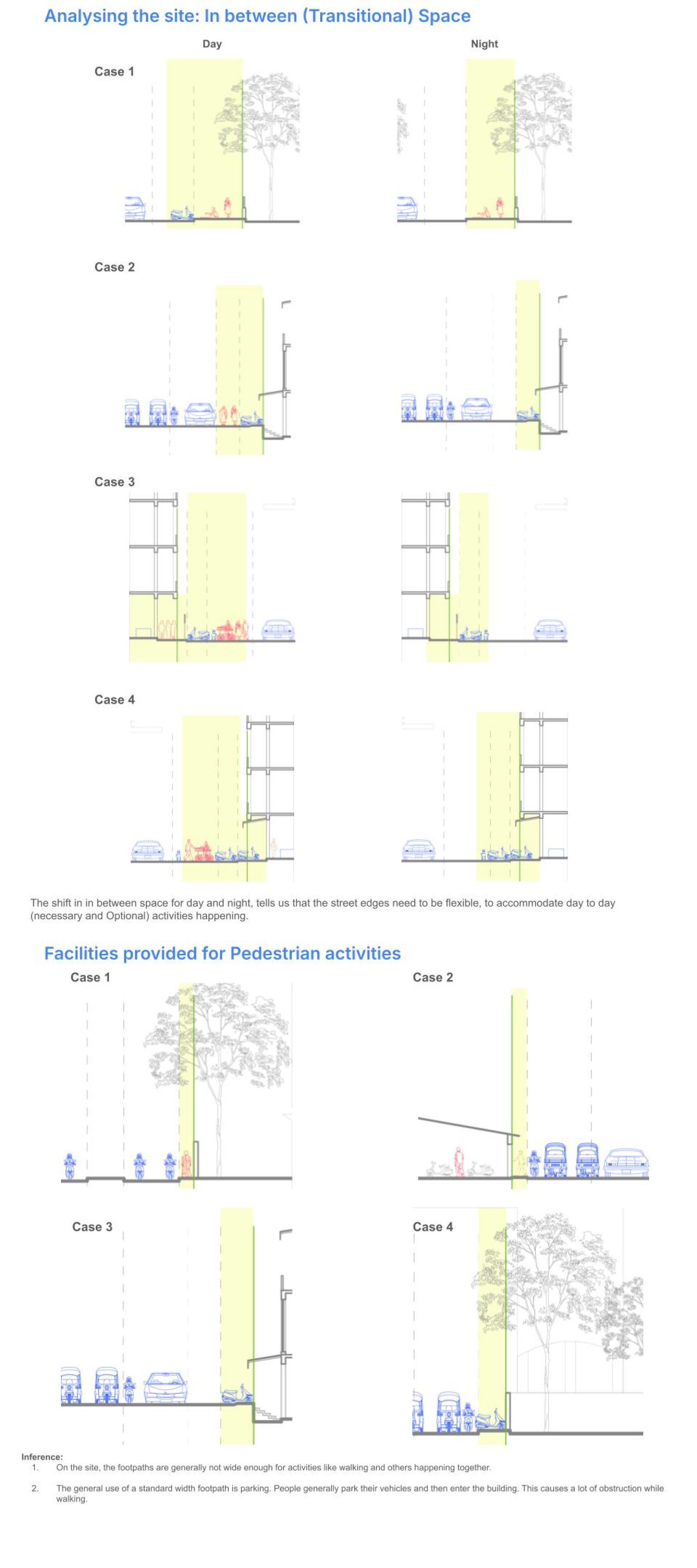
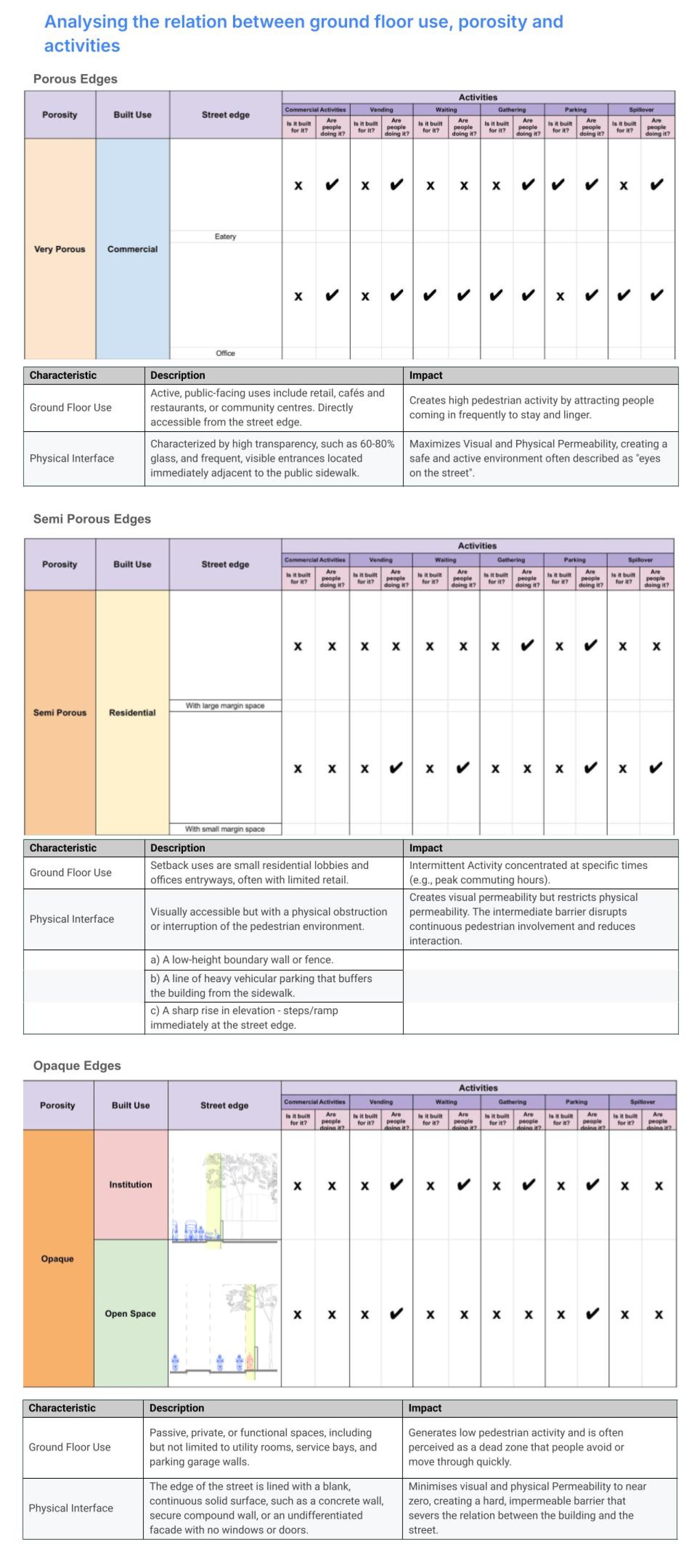
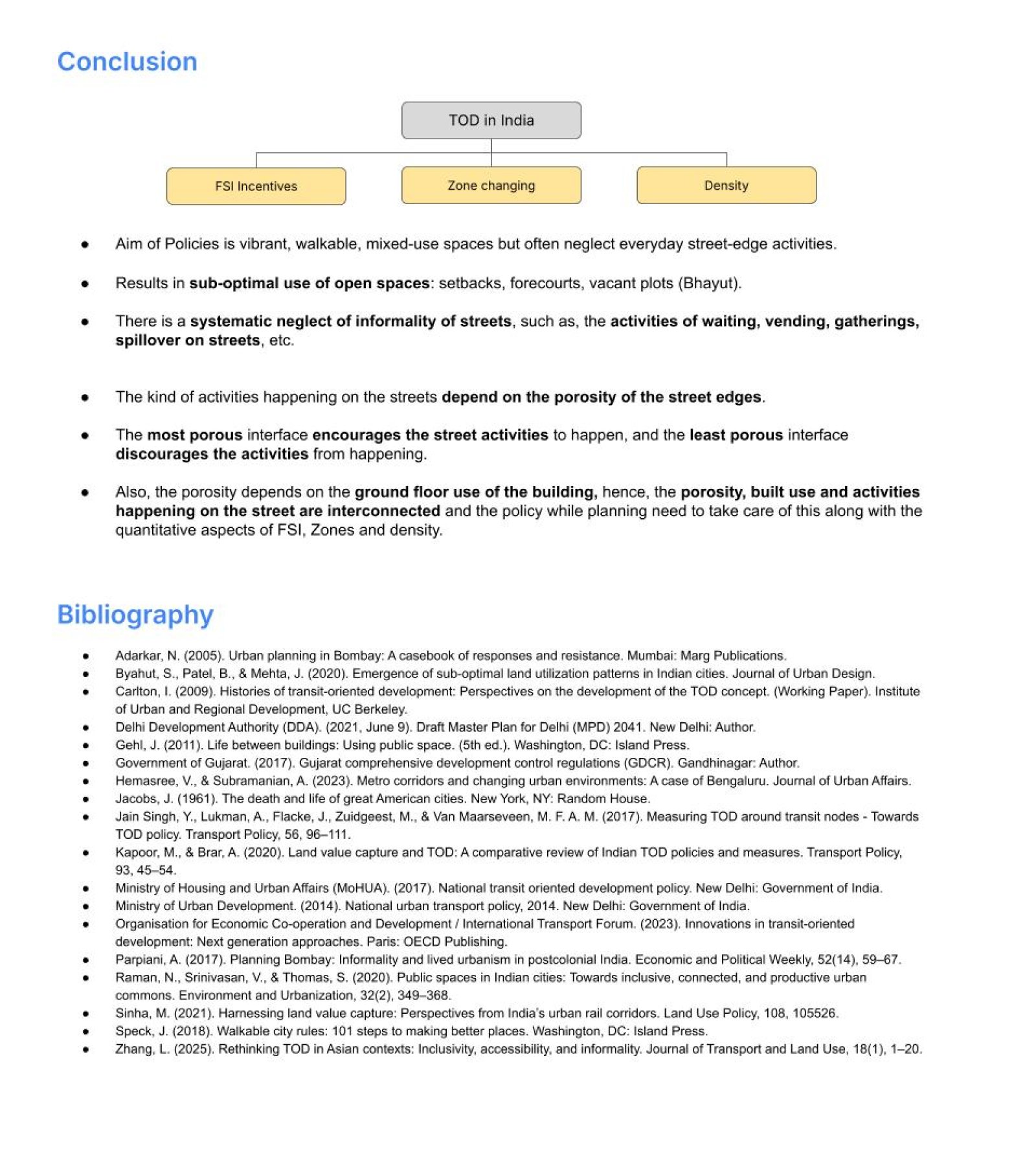
This paper explores the conflict between modern urban design and everyday street life in Ahmedabad's transit-oriented zones. Conventionally, street edges were permeable, with verandahs and setbacks that supported vending, gathering, and waiting and, therefore, enriched public life. Presently, density-oriented planning strategies create sealed edges that exclude these self-organised practices. Through mixed-methods activity mapping and regulatory review along a transit corridor, we demonstrate how the built environment fails to respond to the lived reality of the city. The aim is to reimagine the TOD as an inclusive, context-sensitive public space which reflects the needs of its users, not merely efficient transit.
View Additional Work