Your browser is out-of-date!
For a richer surfing experience on our website, please update your browser. Update my browser now!
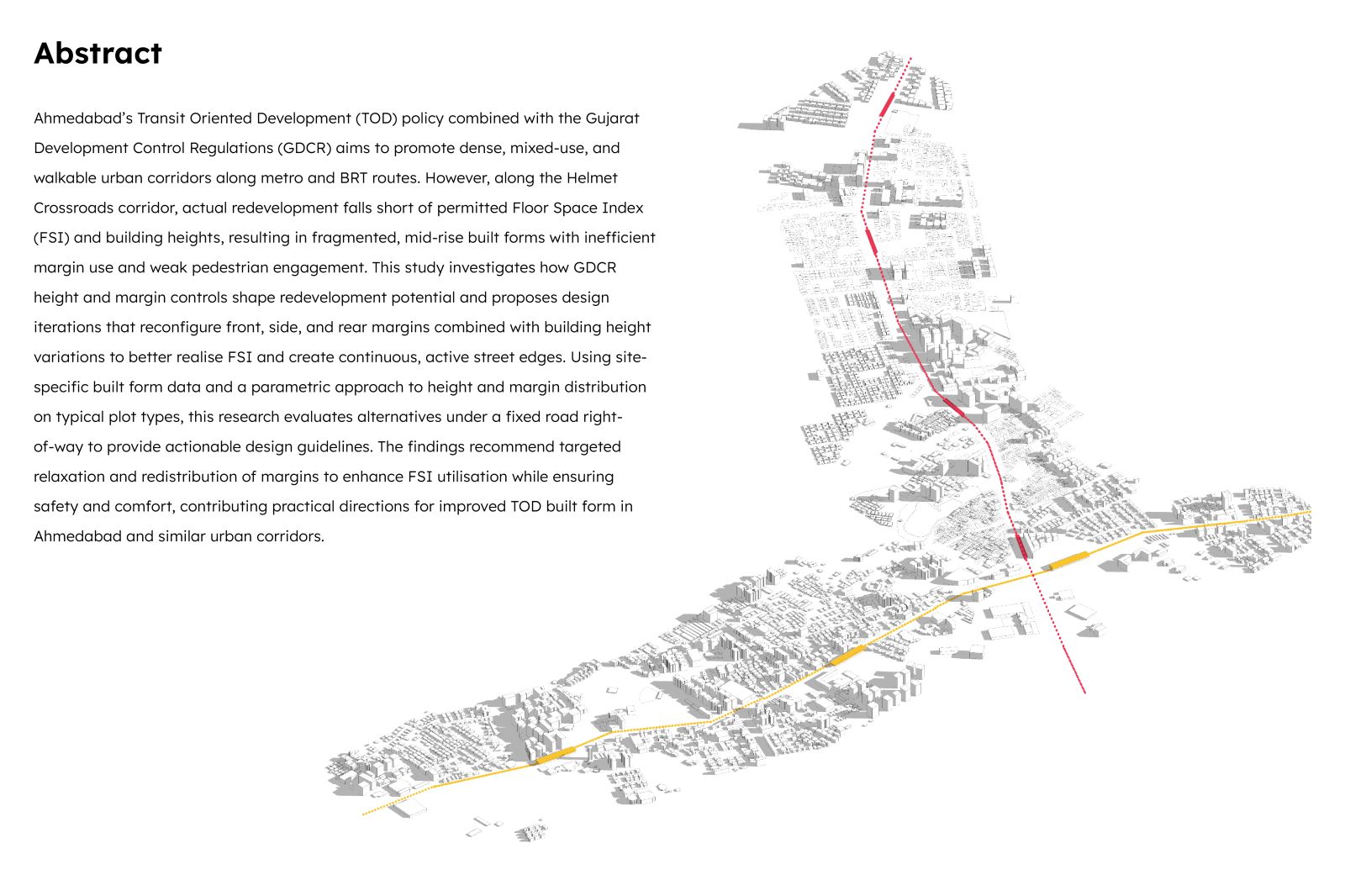
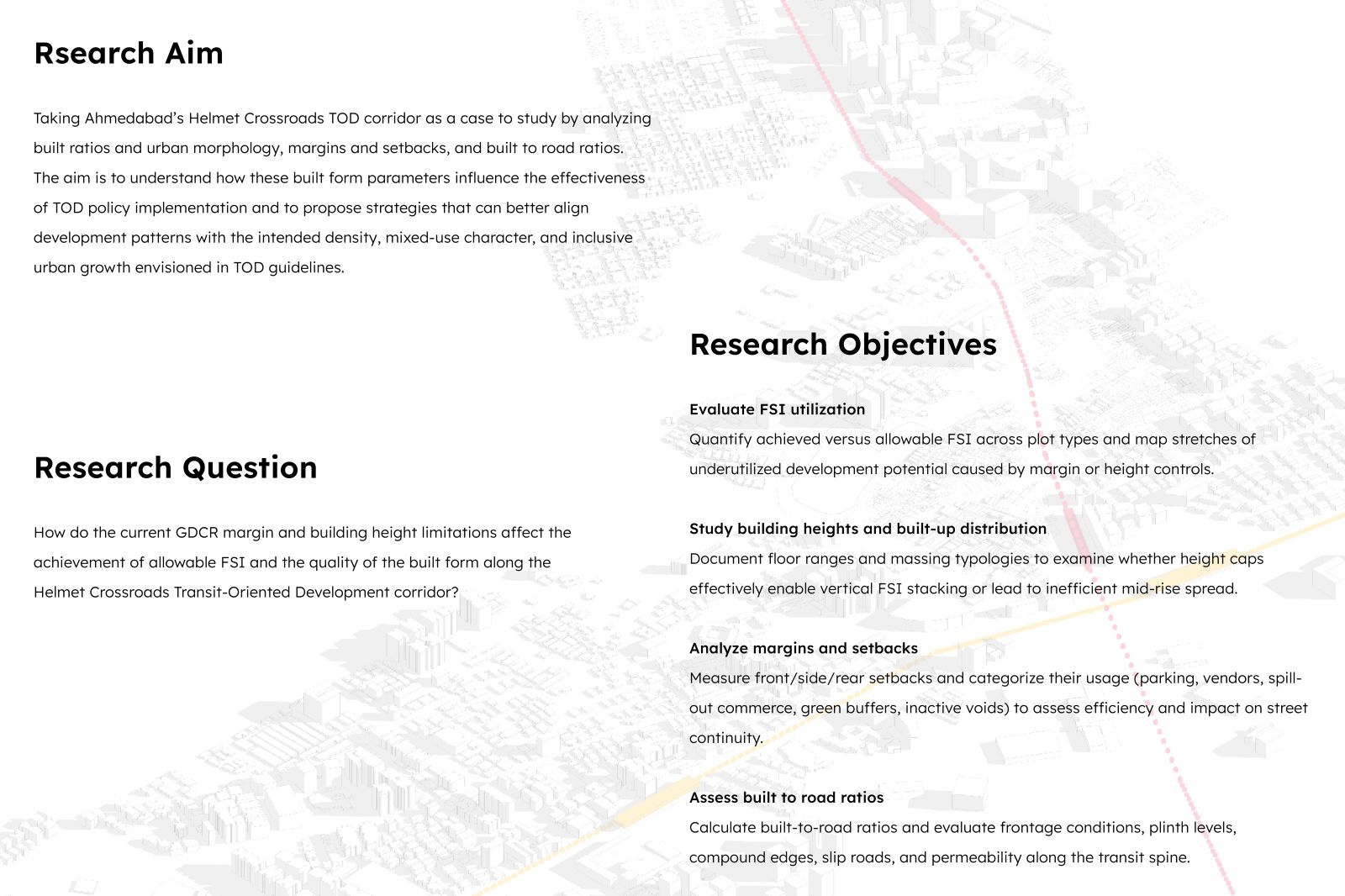
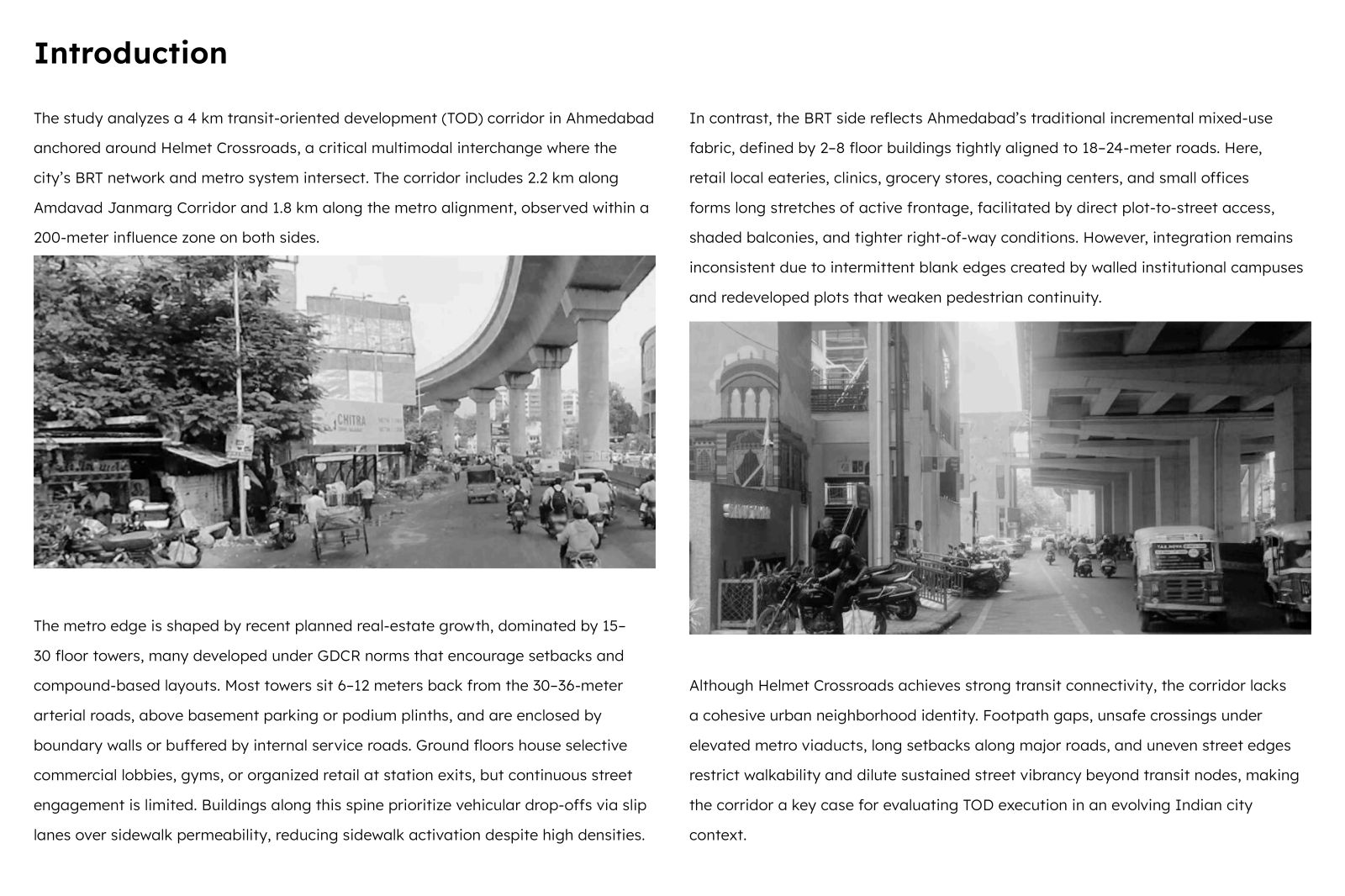
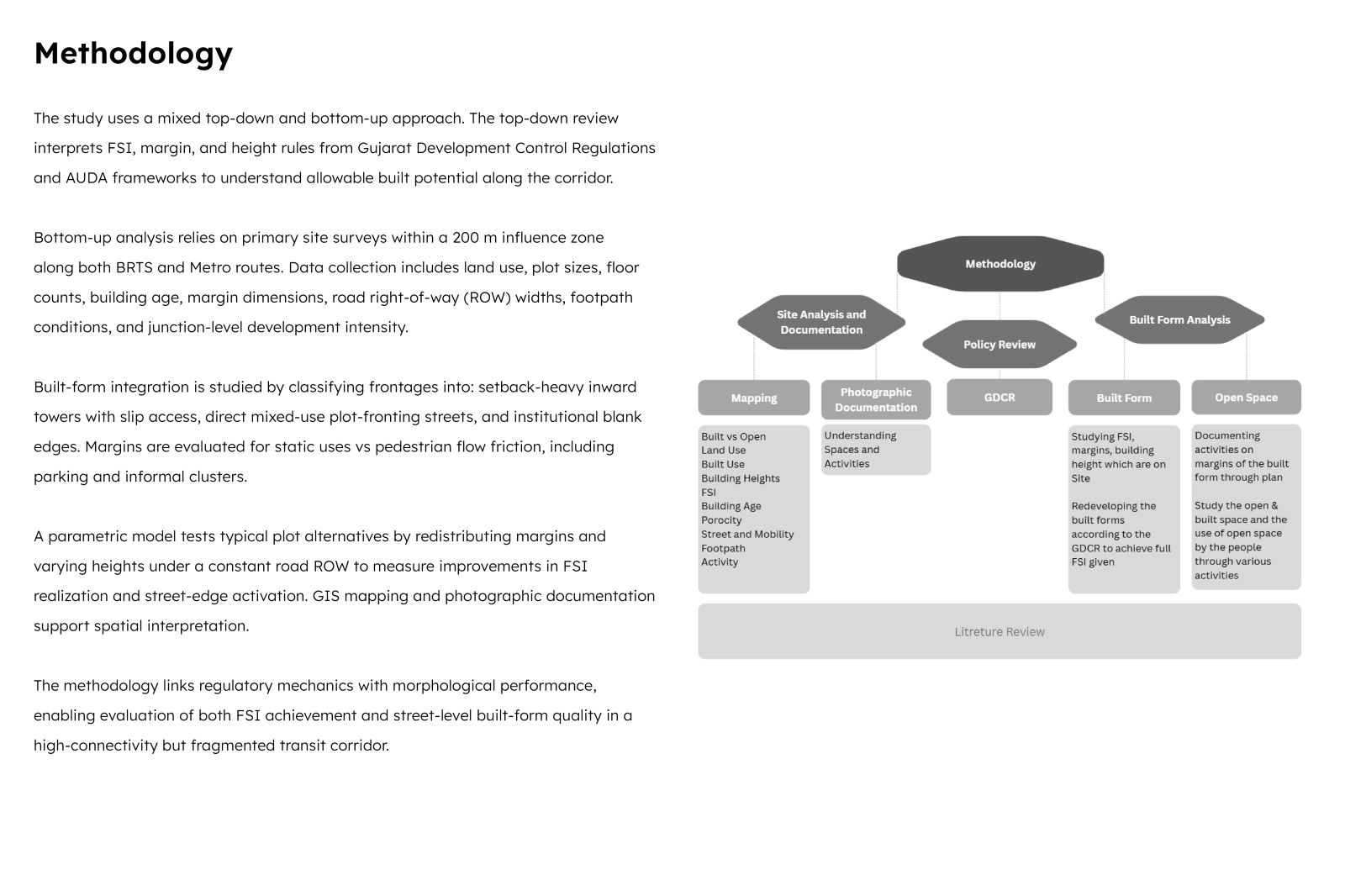
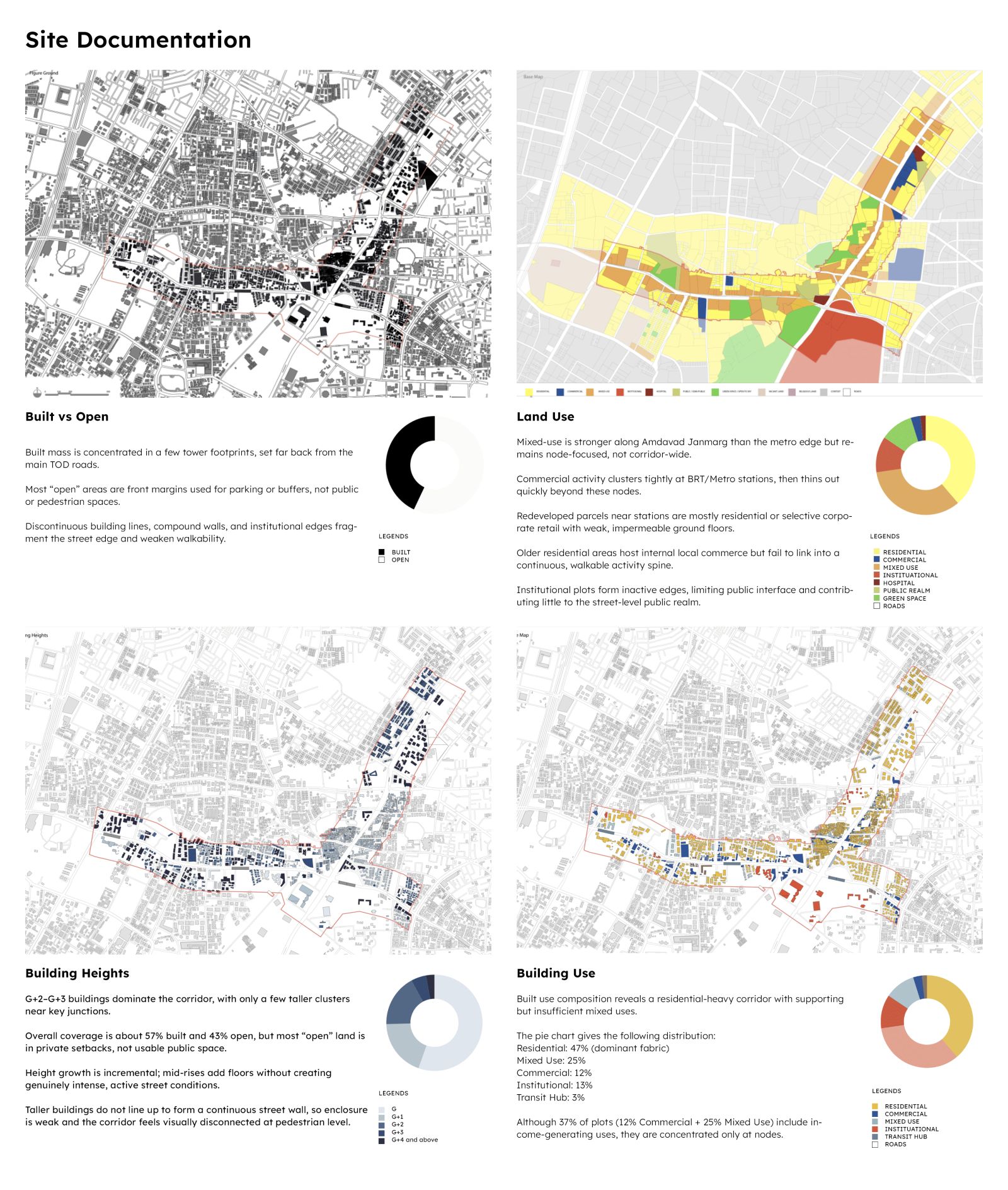
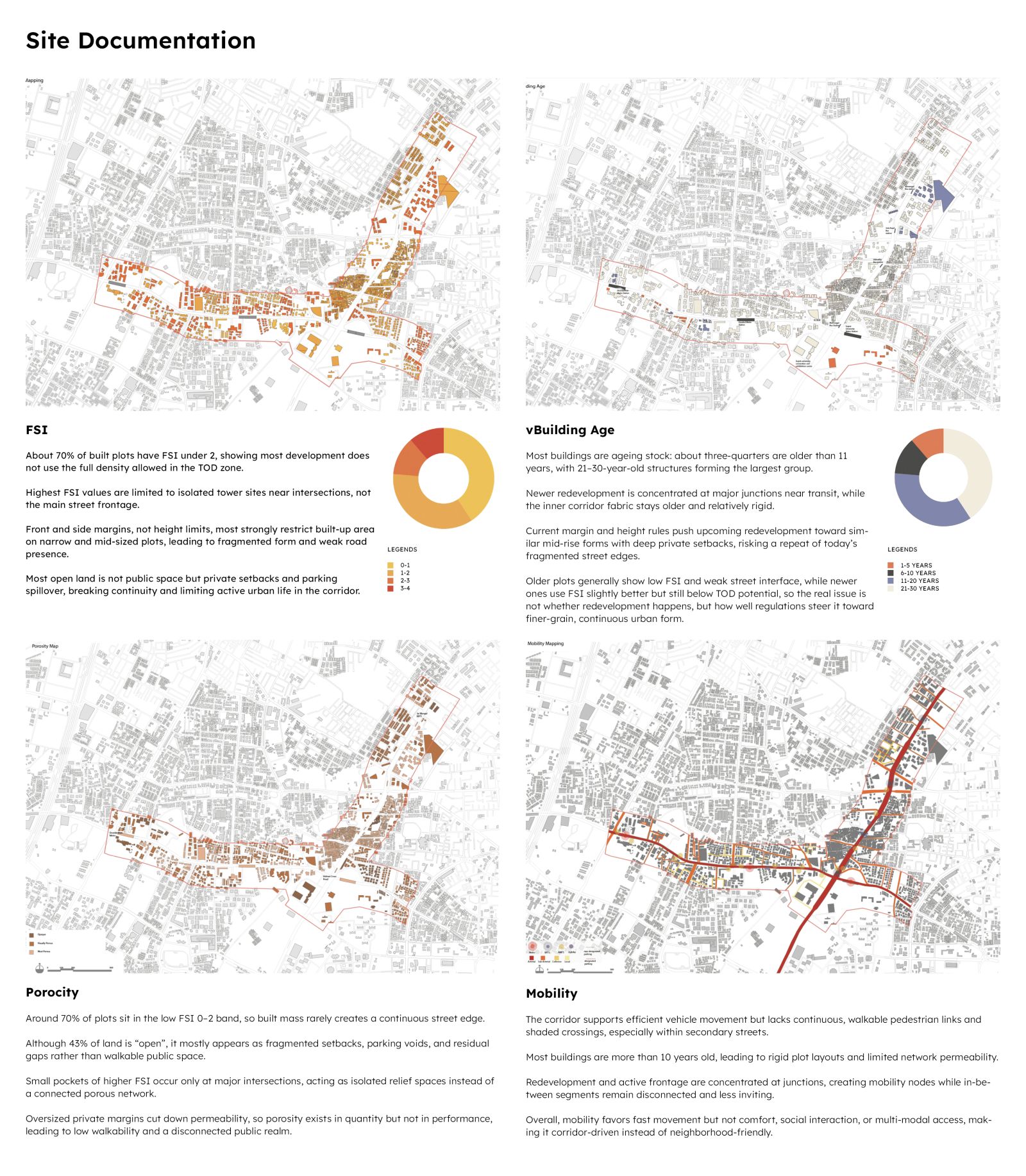
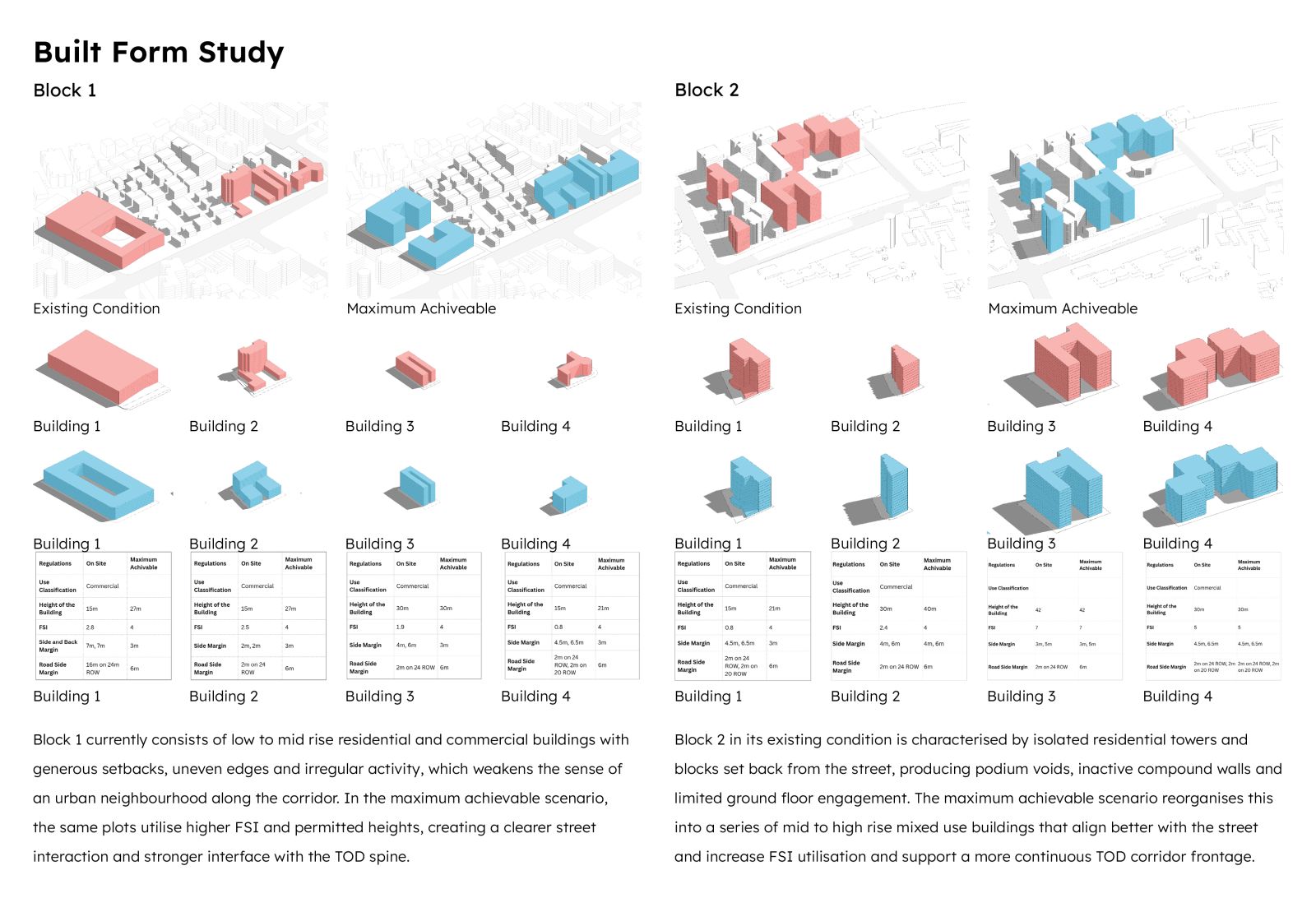
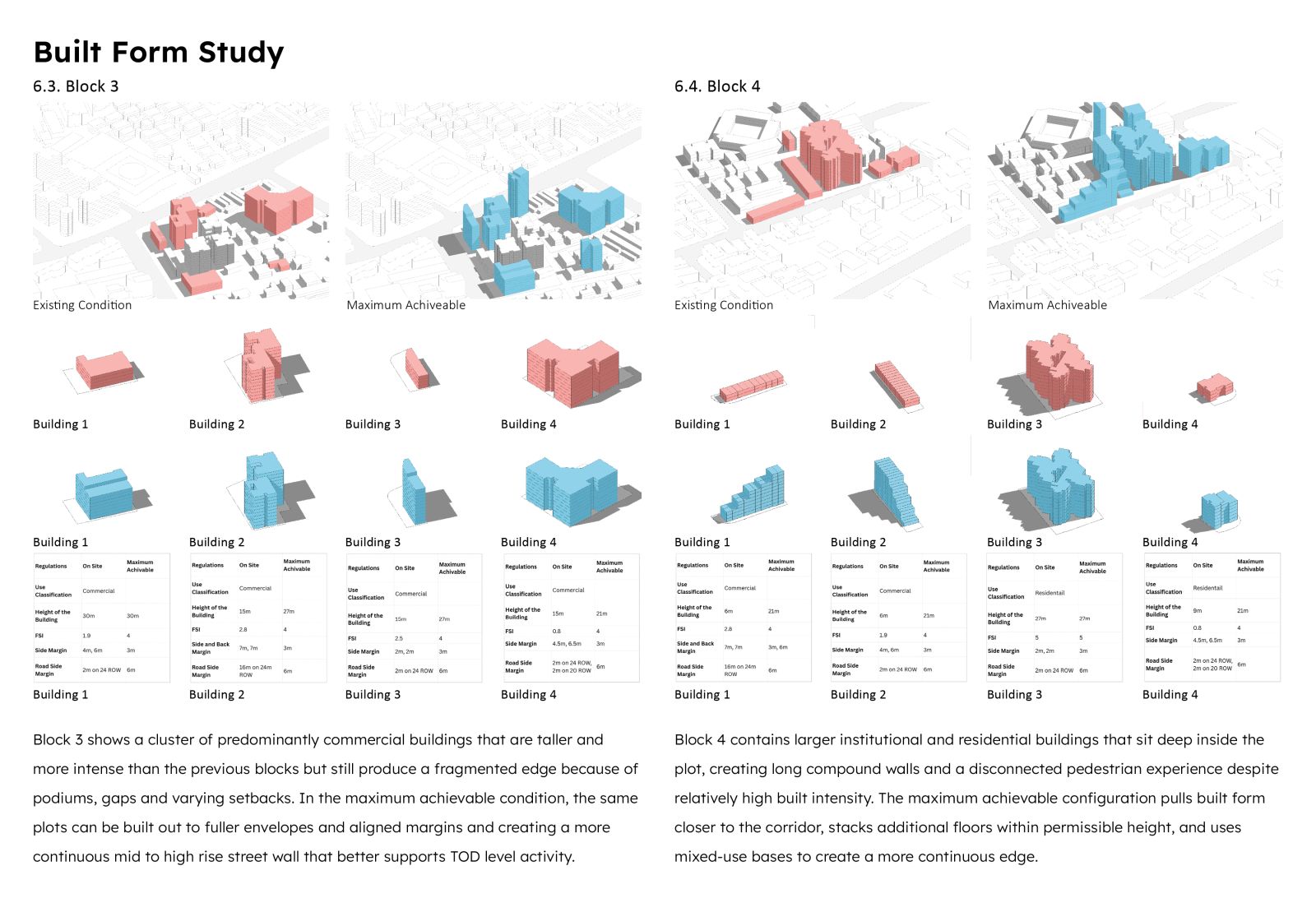
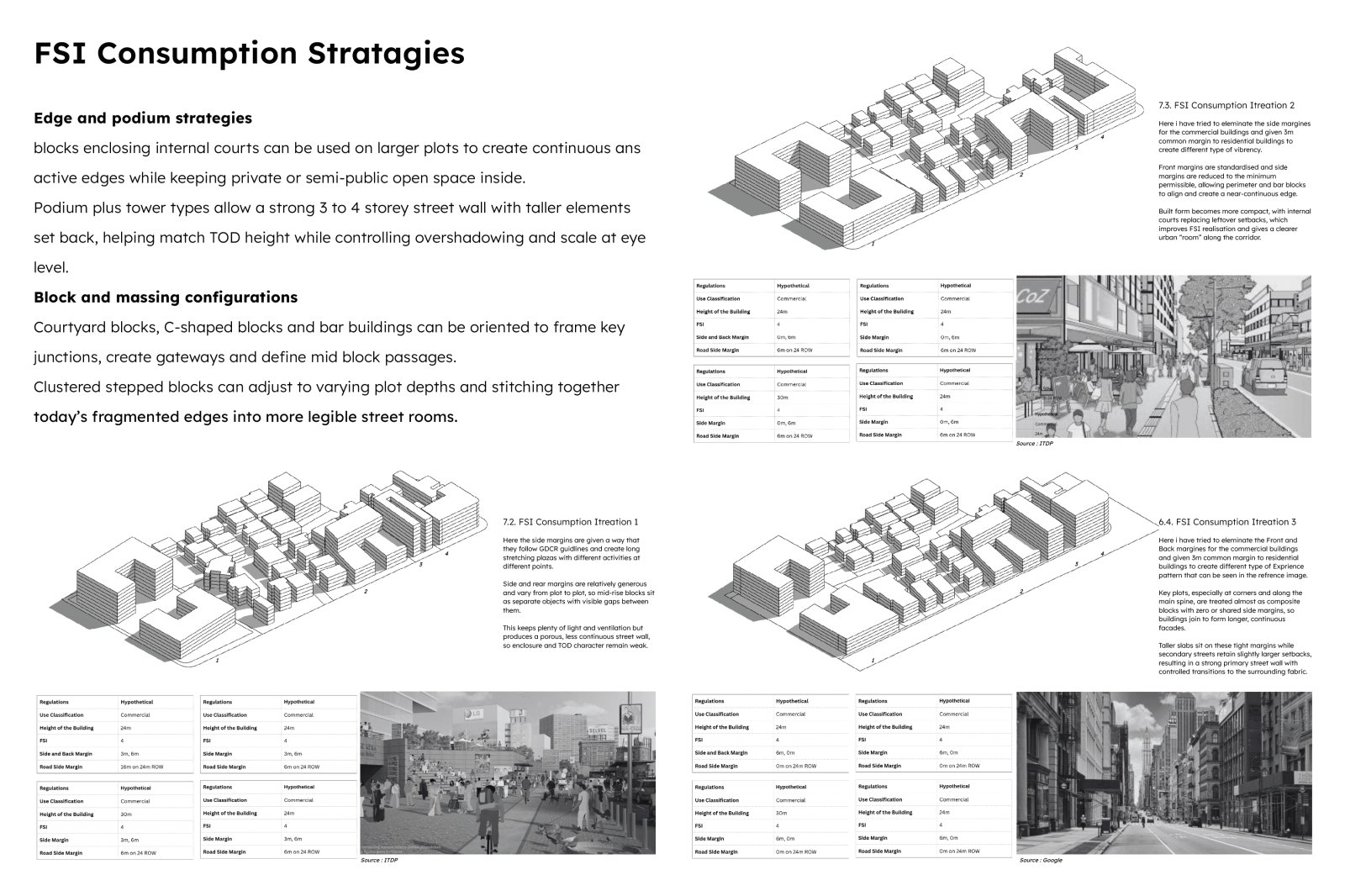
This study examines how Ahmedabad’s Helmet Crossroads corridor performs as a Transit Oriented Development (TOD) zone. Although the area has strong transit access through Metro and BRTS, the built form behaves more like Transit Adjacent Development. Most plots underuse FSI and follow rigid GDCR margin rules and create fragmented, inactive street edges. High rise towers stand isolated behind setbacks while older mixed use stretches offer activity but lack consistency. Through mapping, block analysis and design iterations, the study shows that redistributing margins, aligning frontages and strengthening continuous street walls can significantly improve walkability and urban cohesion without increasing FSI. The findings highlight the need for more form based regulations to achieve true TOD outcomes.