Your browser is out-of-date!
For a richer surfing experience on our website, please update your browser. Update my browser now!
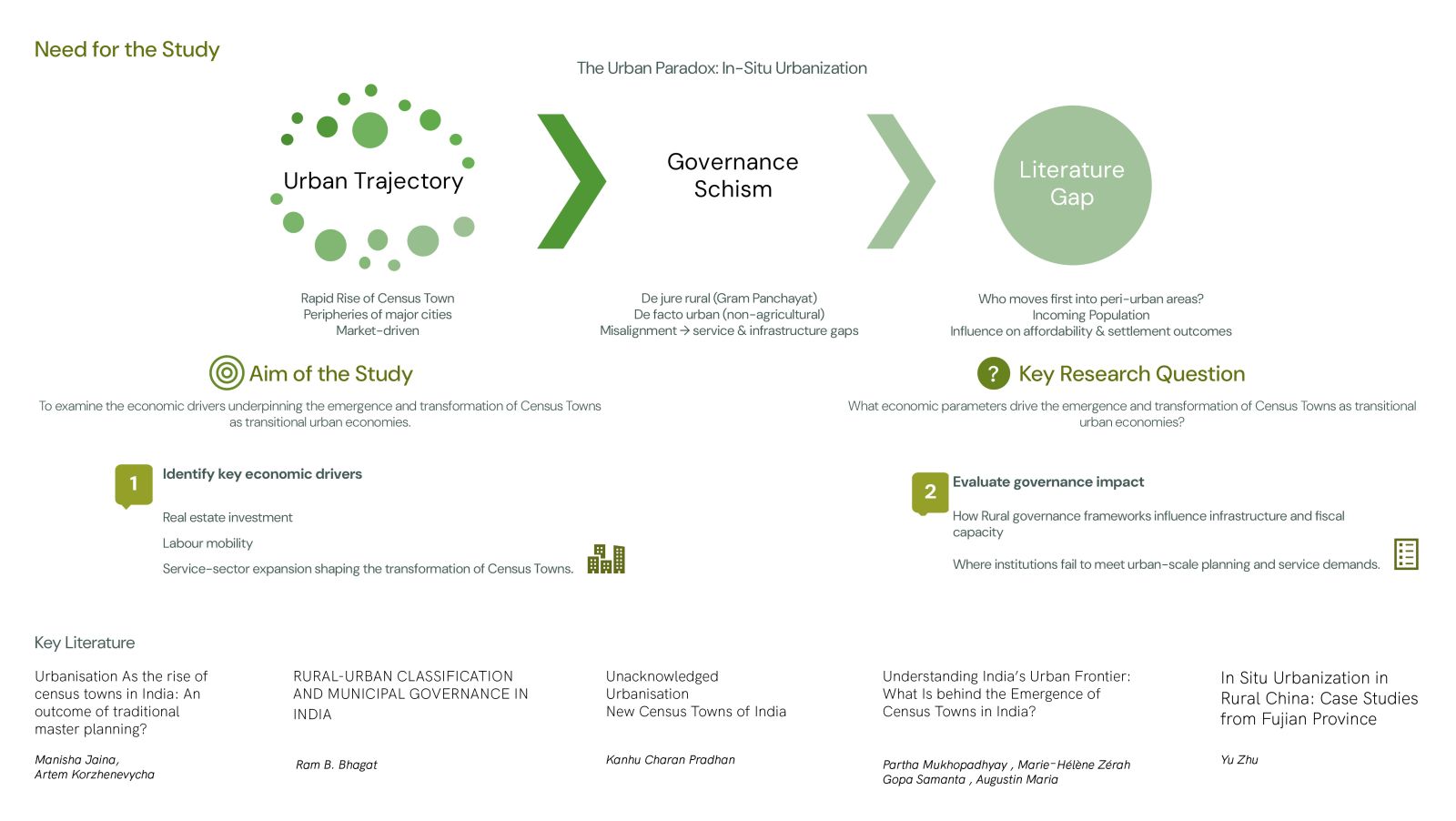
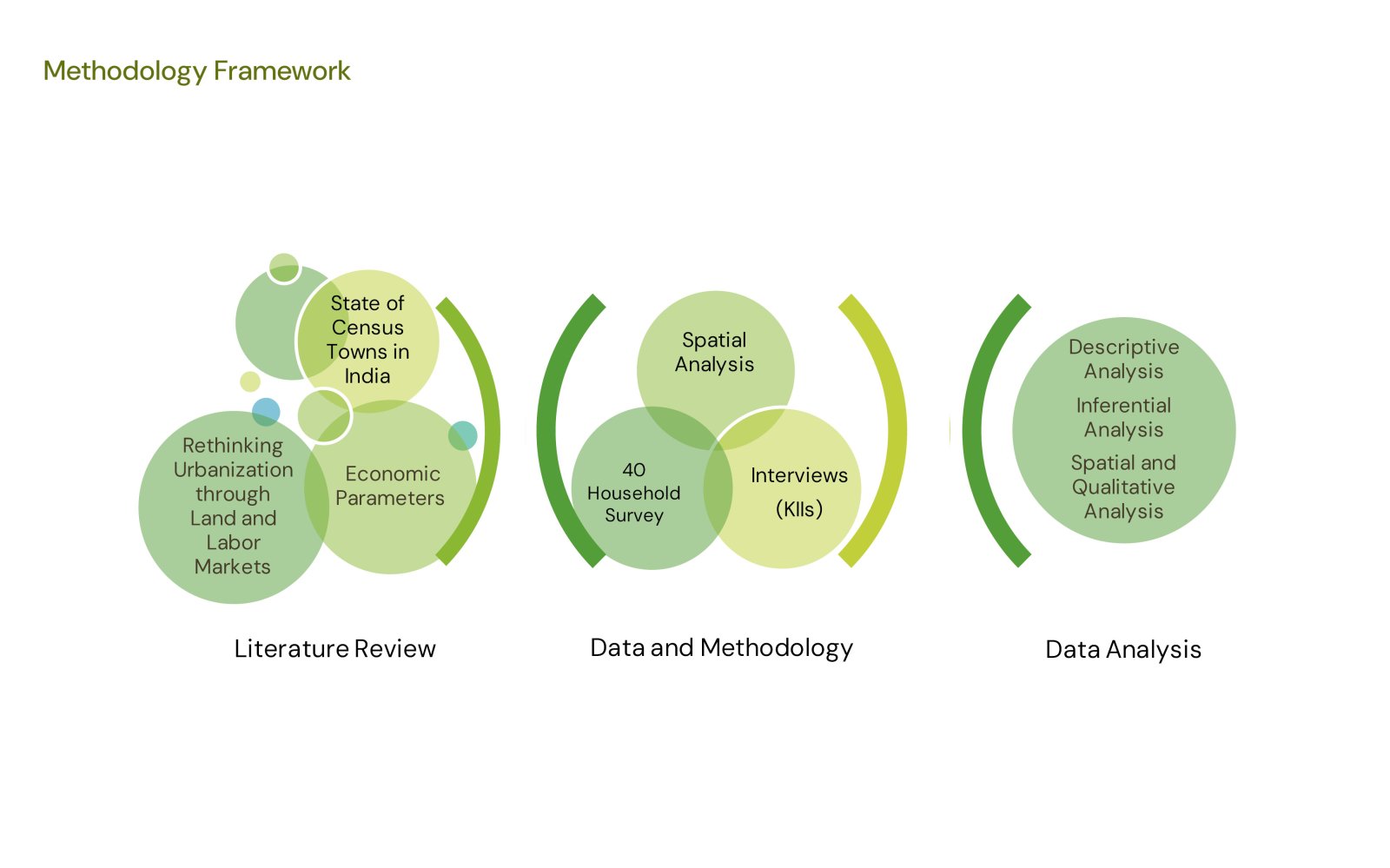
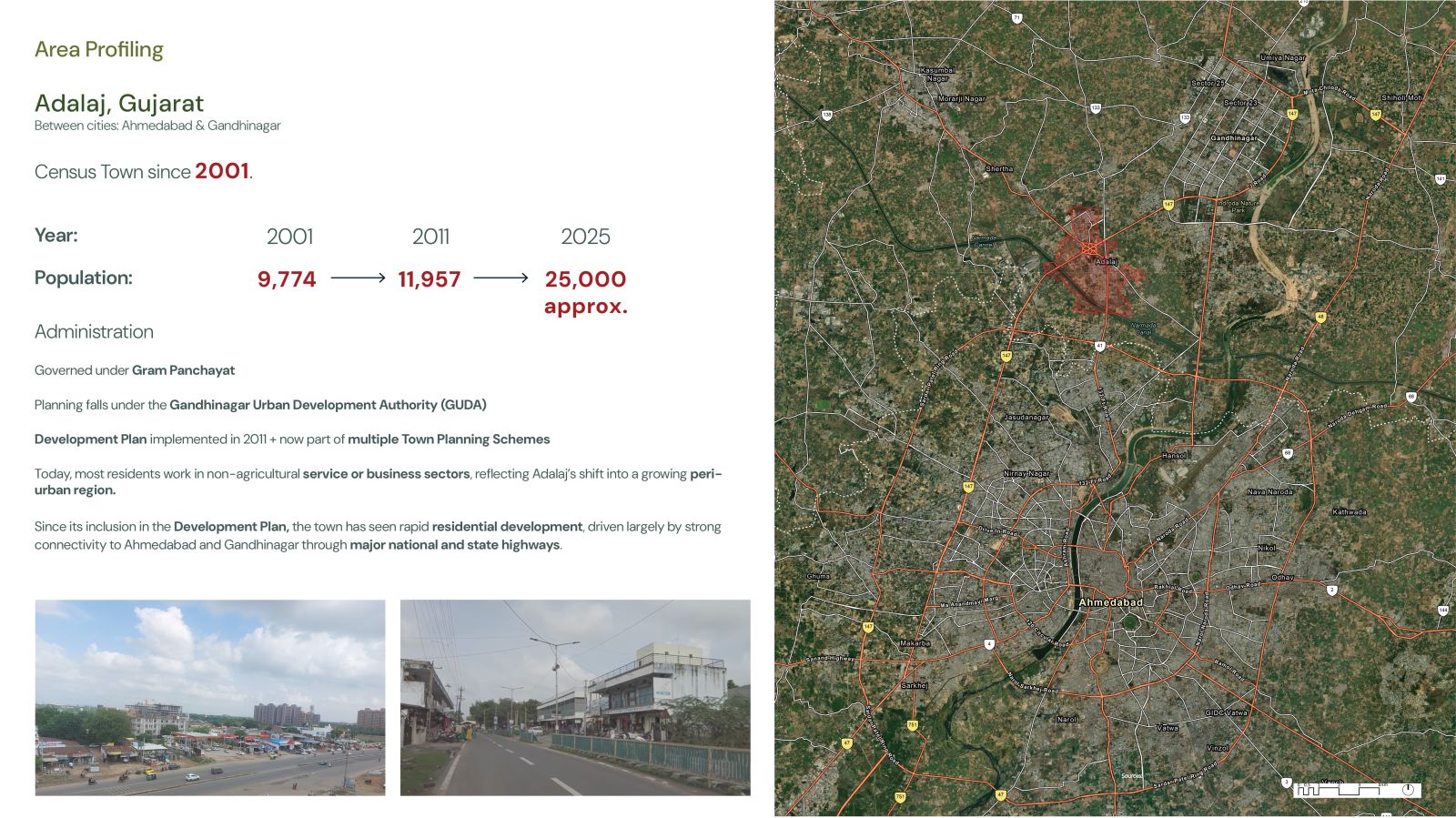
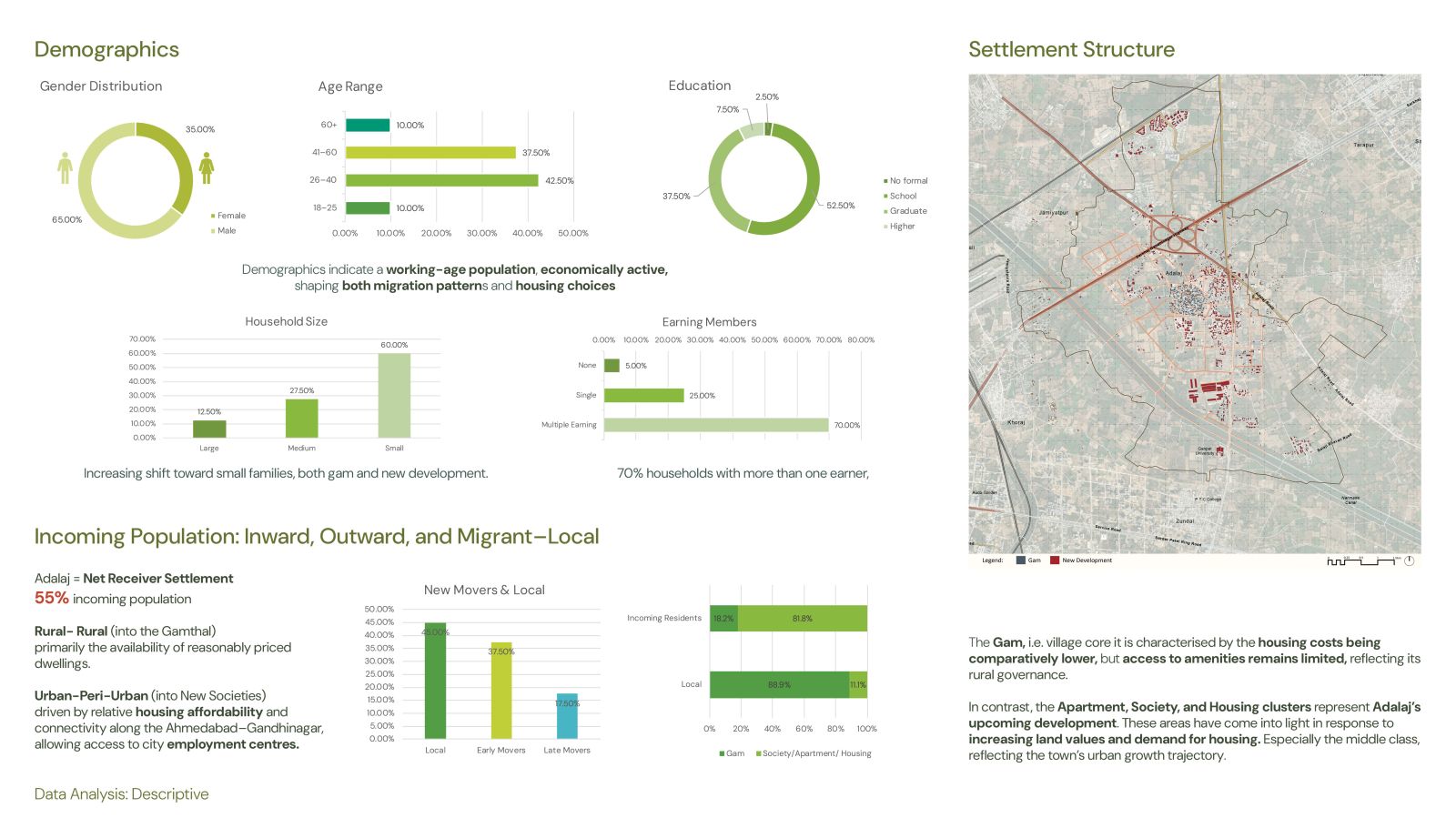
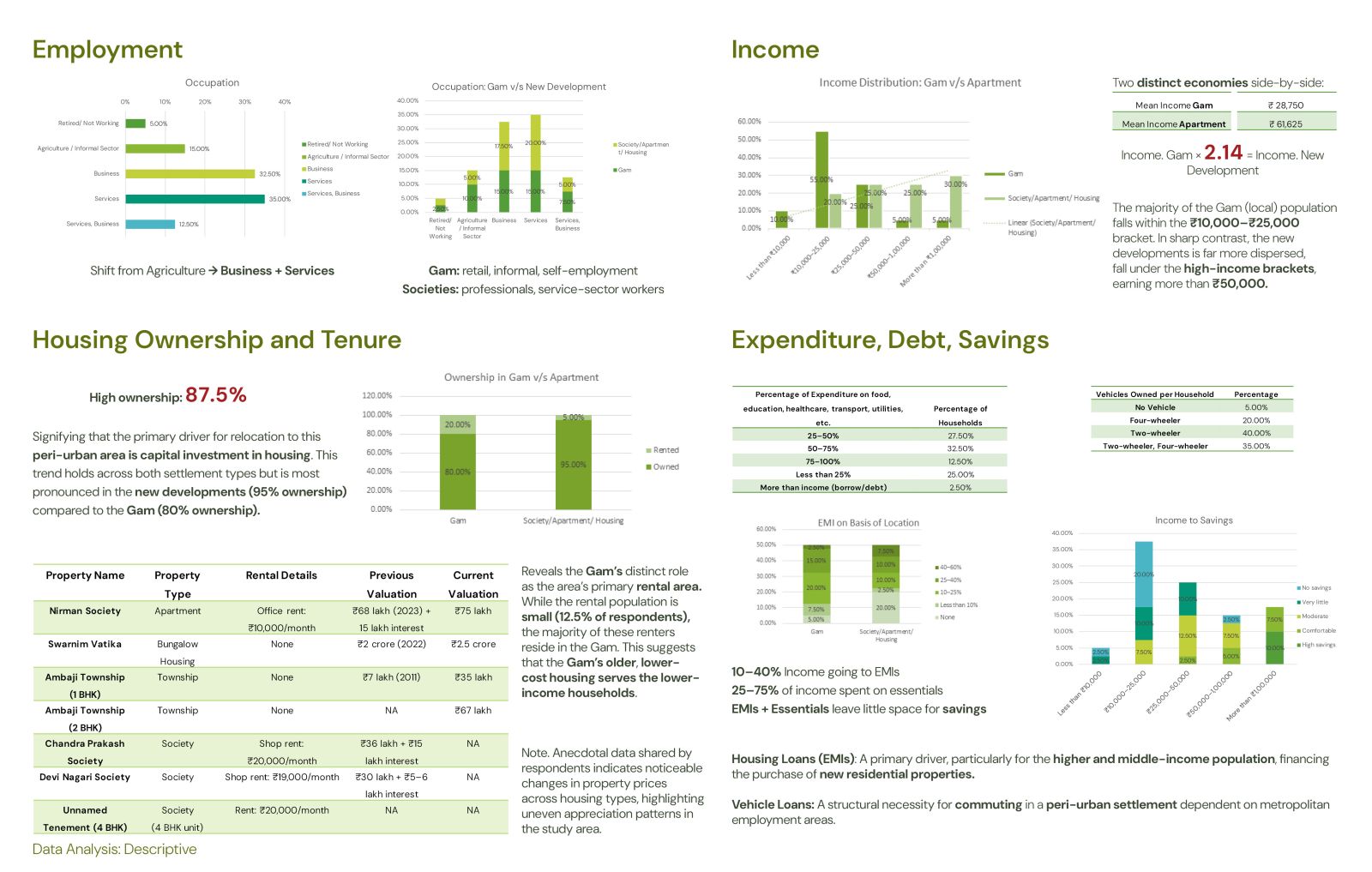
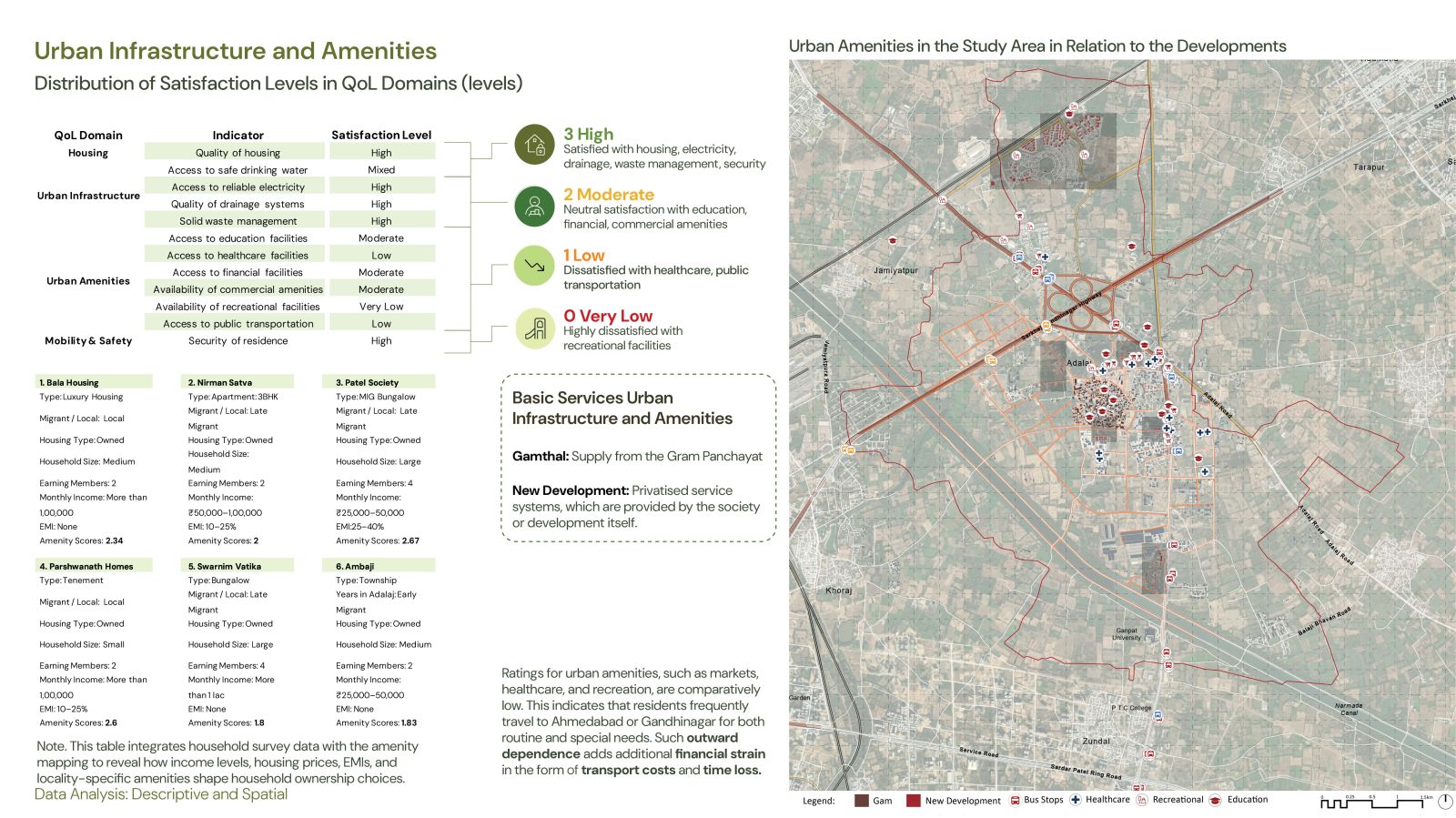
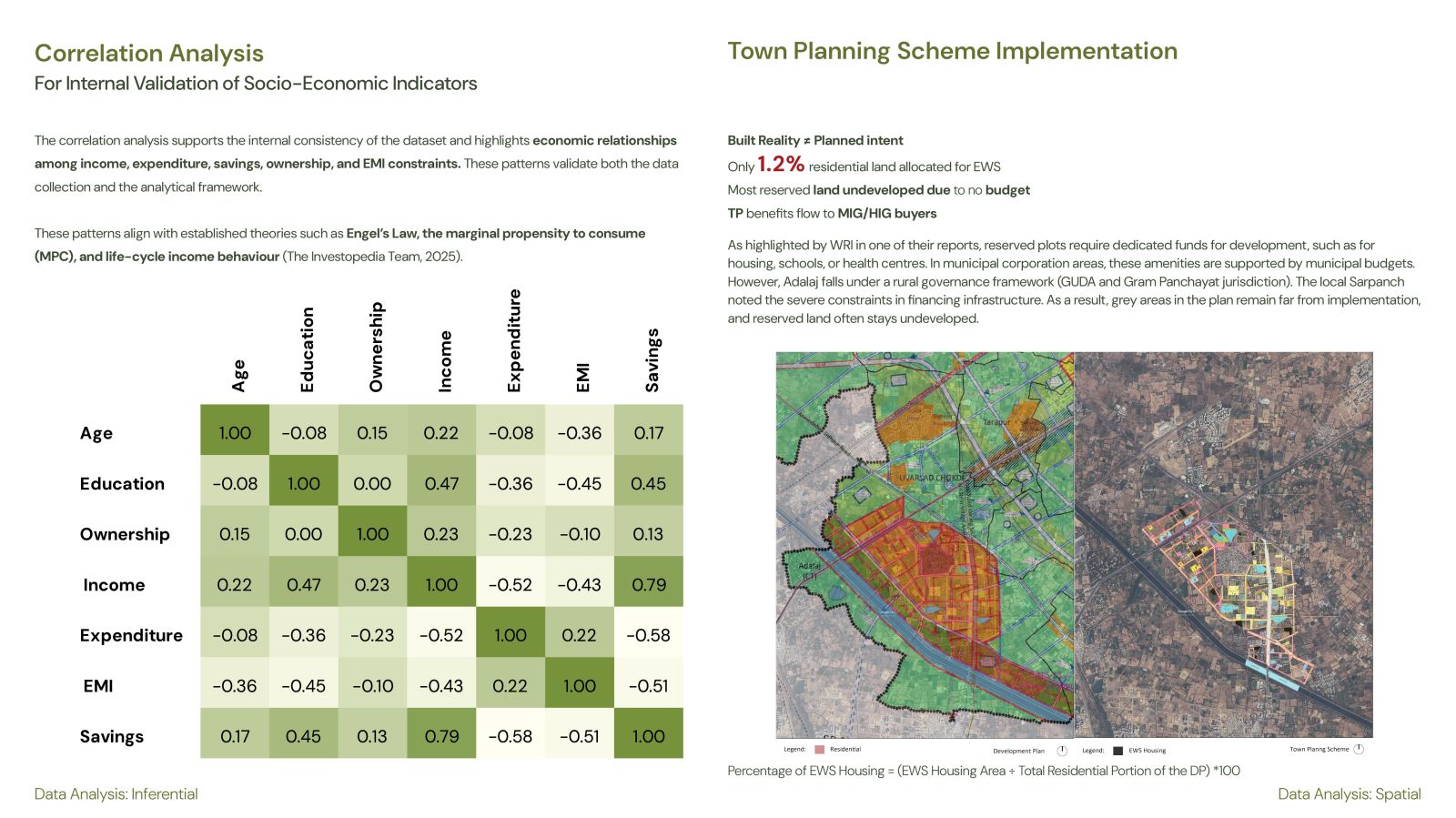
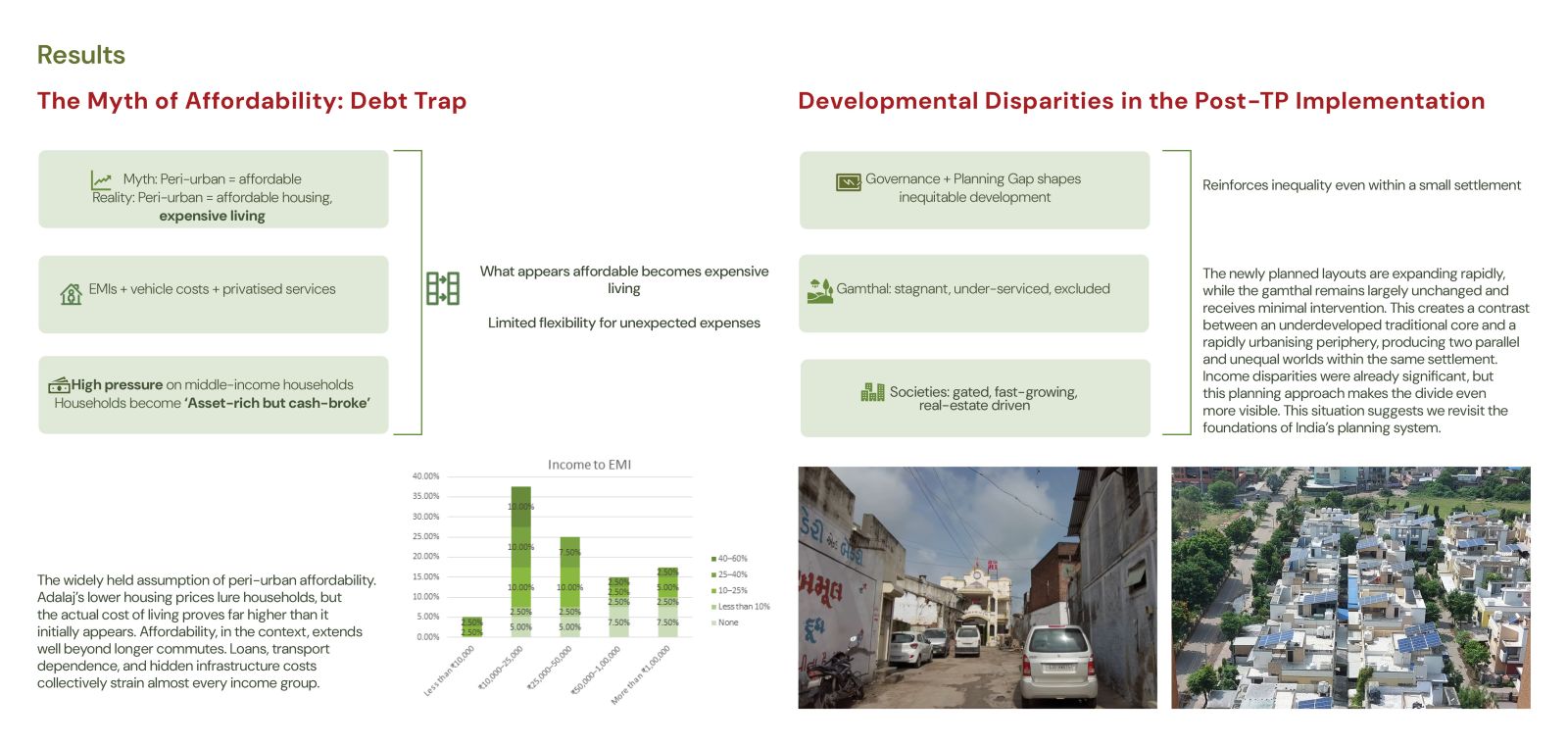
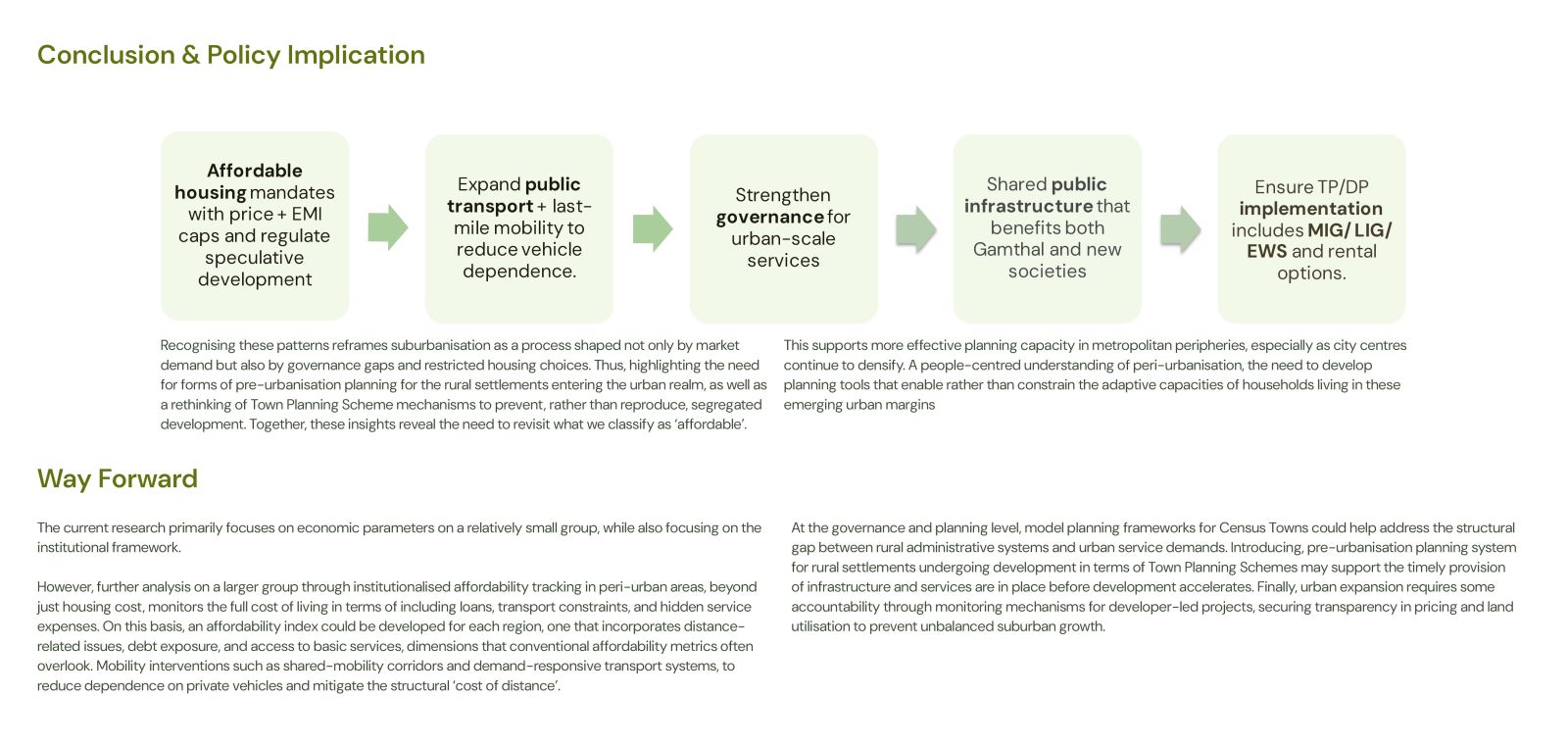
India’s urbanisation rate reached 35.39% in 2021 and is projected to rise to 40.76% by 2030. Much of this growth is occurring in the peripheries of large cities. This expansion has given rise to the paradox of Census Towns (CTs), settlements that meet all statistical criteria for urban areas yet remain governed under rural administrative frameworks. Governed by Gram Panchayats (GPs), these areas are mandated to plan for rural development and social welfare but lack the fiscal capacity, institutional mandates, and planning tools required for urban-scale development. This study investigates the economic parameters driving the emergence and transformation of Census Towns, examining how proximity to statutory towns and integration with metropolitan labour markets shape this transition, despite fiscal and institutional constraints. Employing a mixed-methods approach, including household surveys, spatial analysis, and qualitative interviews. The research investigates Adalaj, Gujarat, a Census Town positioned between Ahmedabad and Gandhinagar. Although incorporated in the Development Plan (DP) and multiple Town Planning Schemes (TPS), Adalaj continues to operate as a rural area. Findings disclose a trade-off: while households are attracted by comparatively affordable housing, these cost advantages are undermined by hidden expenditure associated with commutes, a heavy dependence on private transport, and privatised essential services. The study finds that monthly financial commitments and limited savings capacity are common across income groups. This indicates a growing reliance on household debt to finance this peri-urban living. Additionally, while TPS has stimulated real estate growth, they have failed to ensure an adequate provision of middle and lower-income housing, thereby reinforcing the socio-spatial disparities. The study concludes that Census Towns operate as transitional urban economies caught between rural governance and metropolitan pressures. Addressing this mismatch may require governance reforms that align fiscal, planning, and urban responsibilities. The inclusion of affordable housing mandates could help steer growth toward social equity and sustainable urban expansion.
View Additional Work