Your browser is out-of-date!
For a richer surfing experience on our website, please update your browser. Update my browser now!
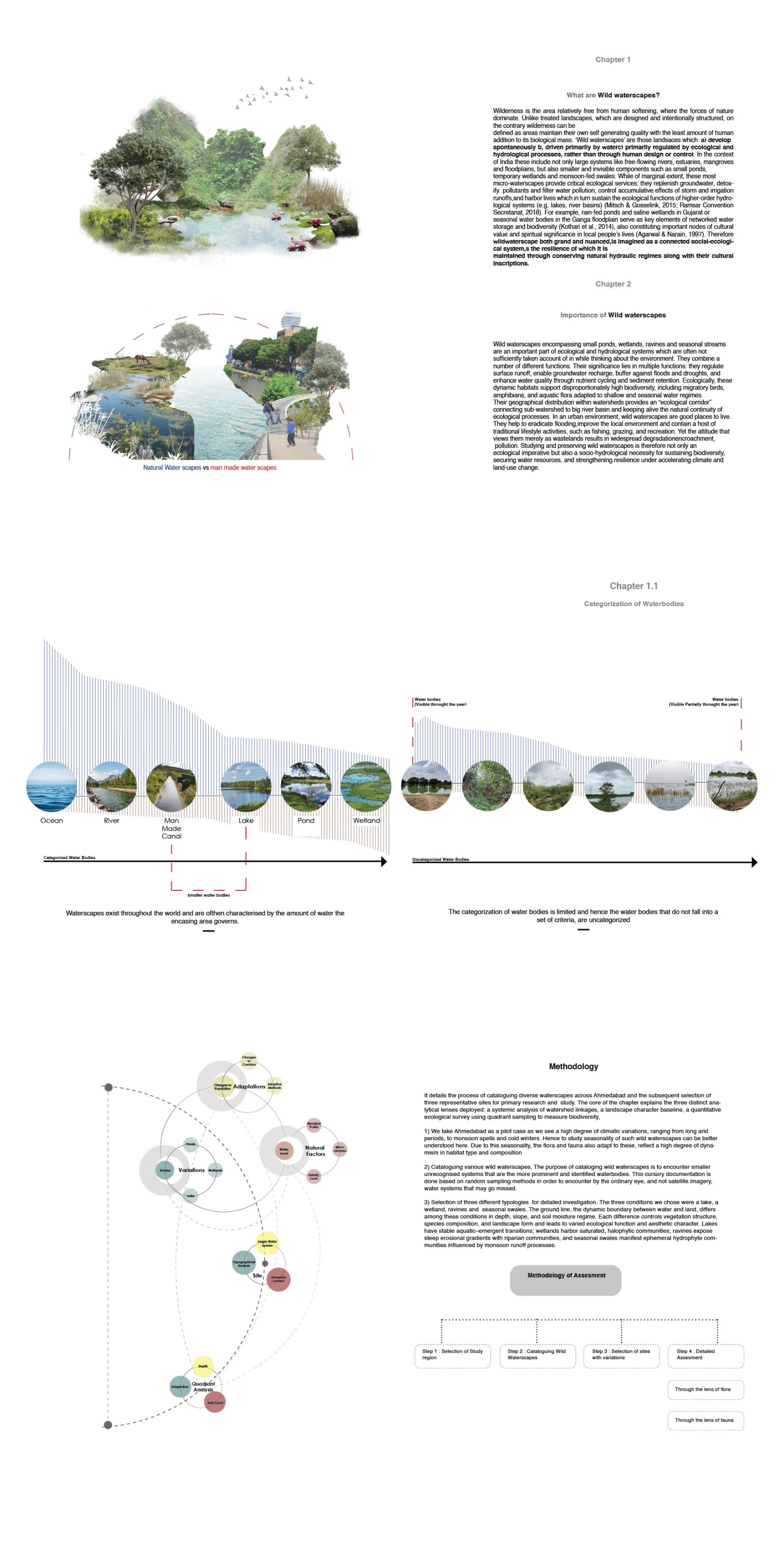
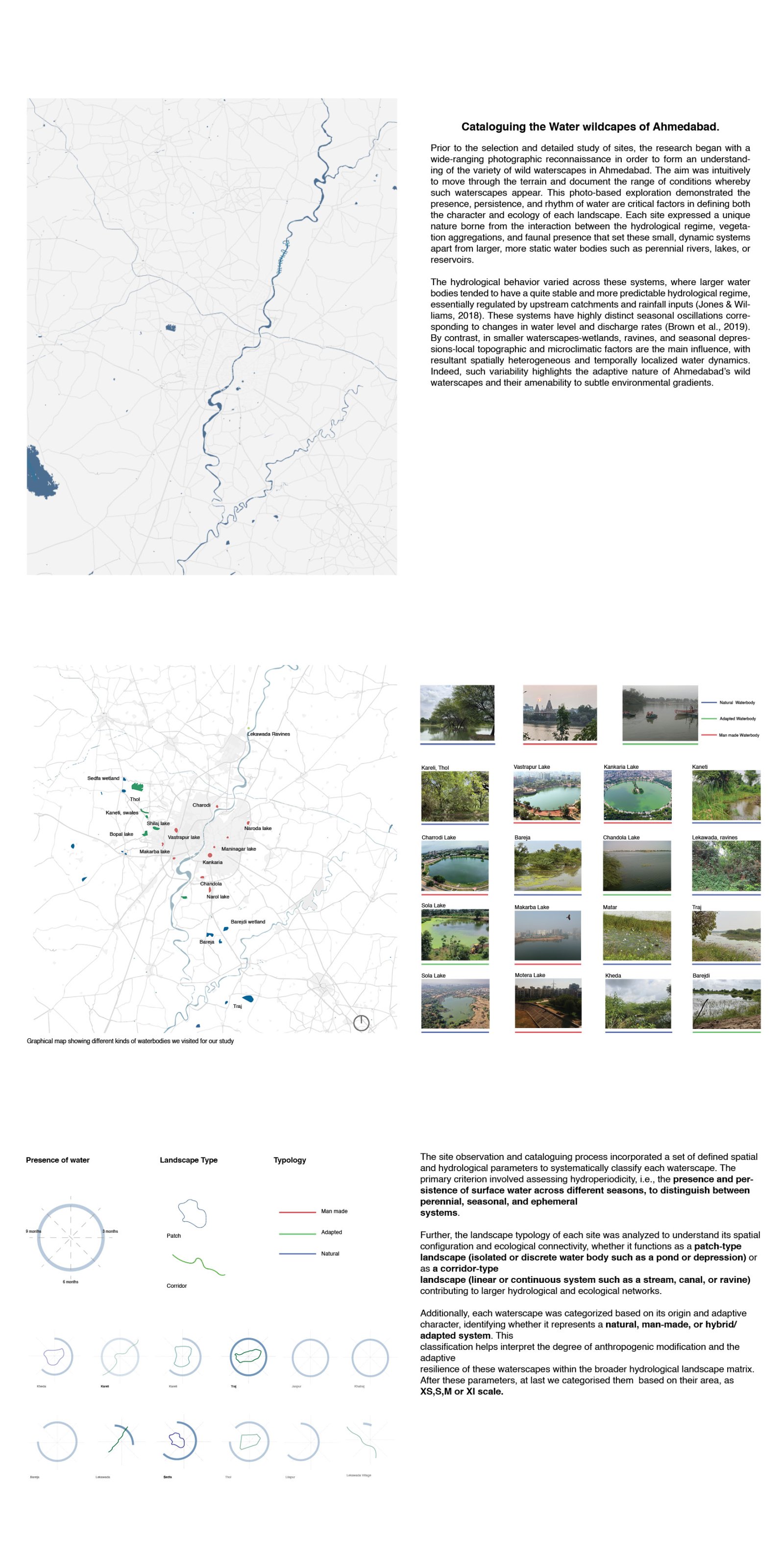
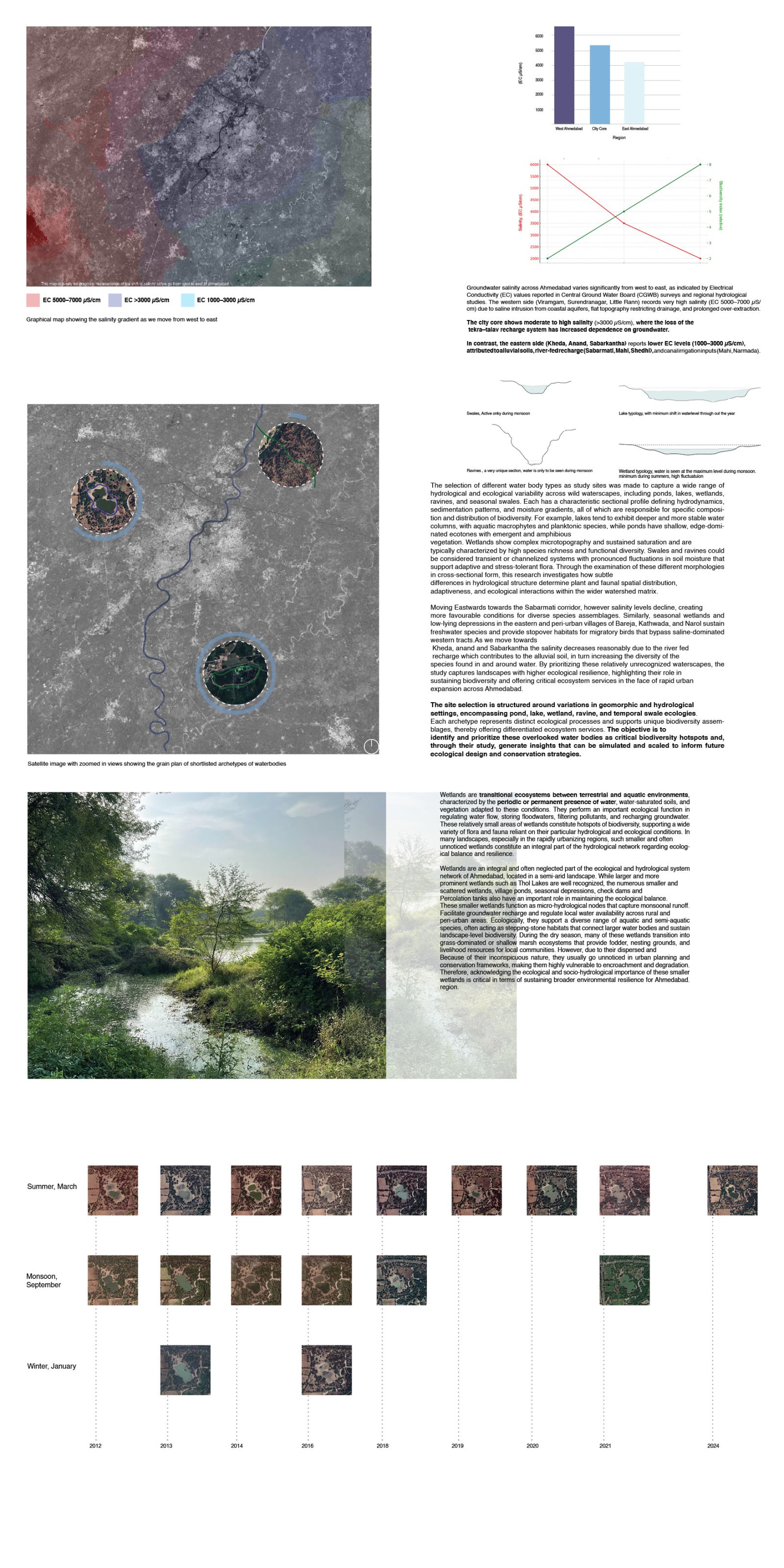
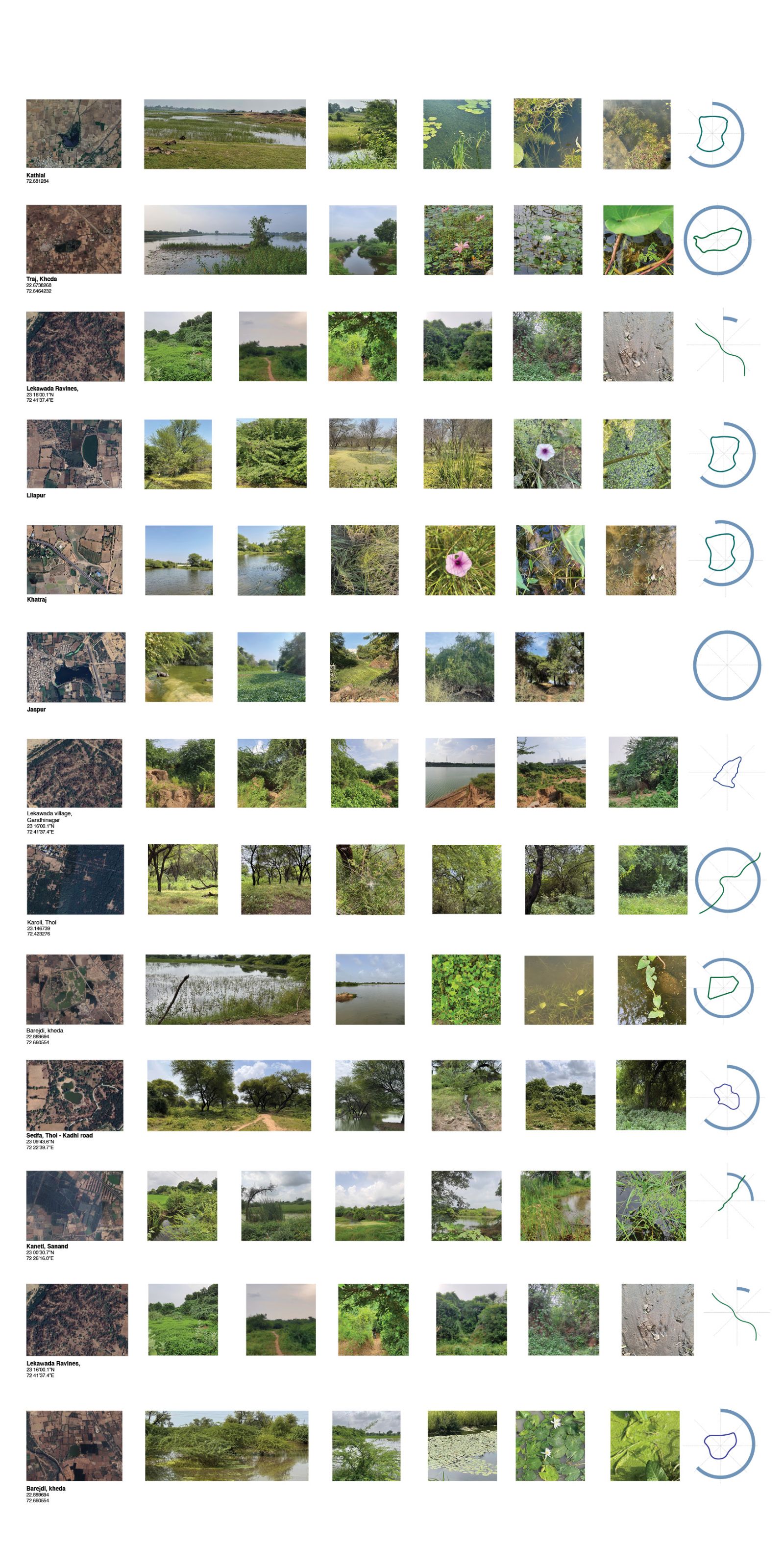
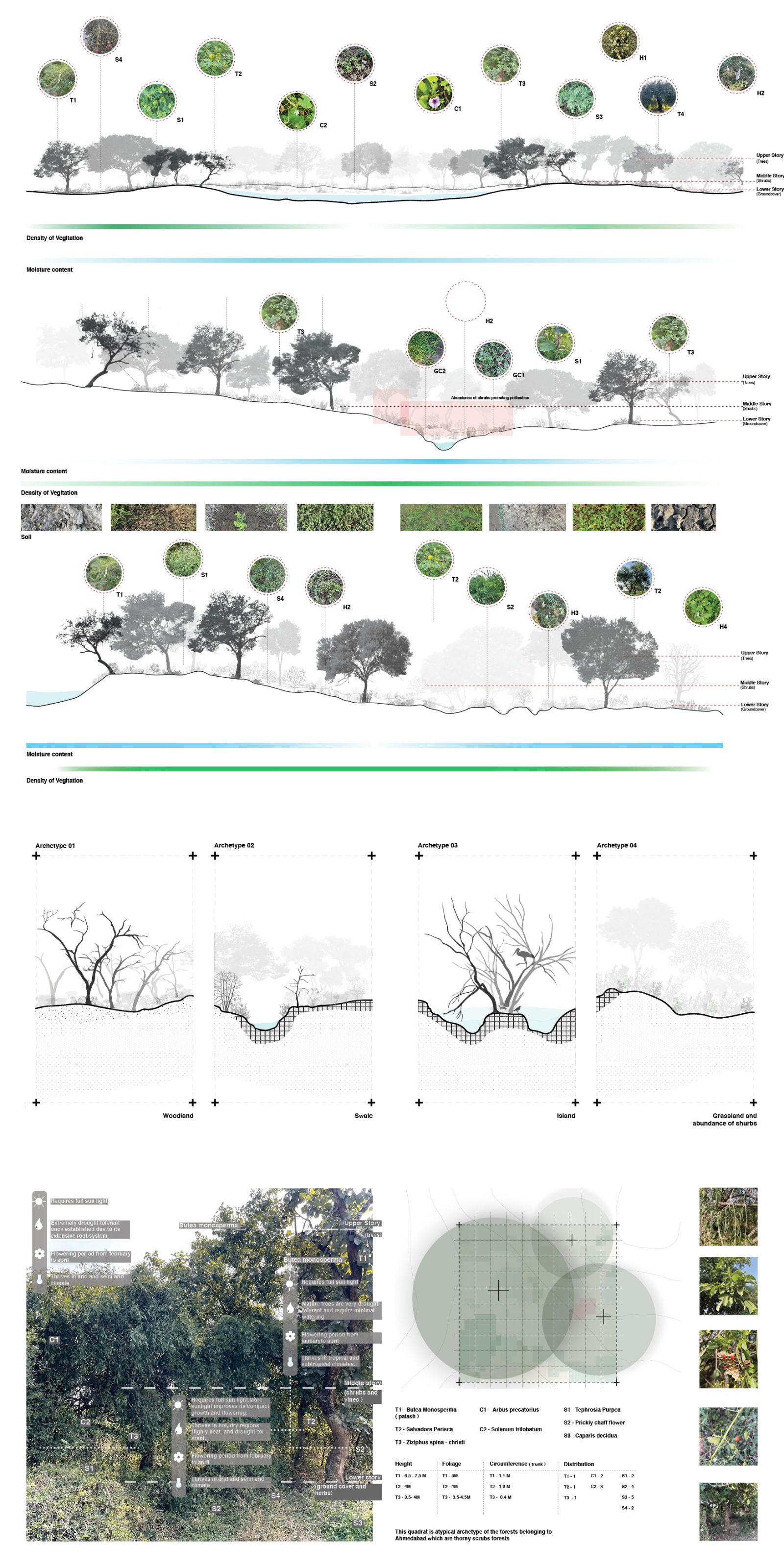
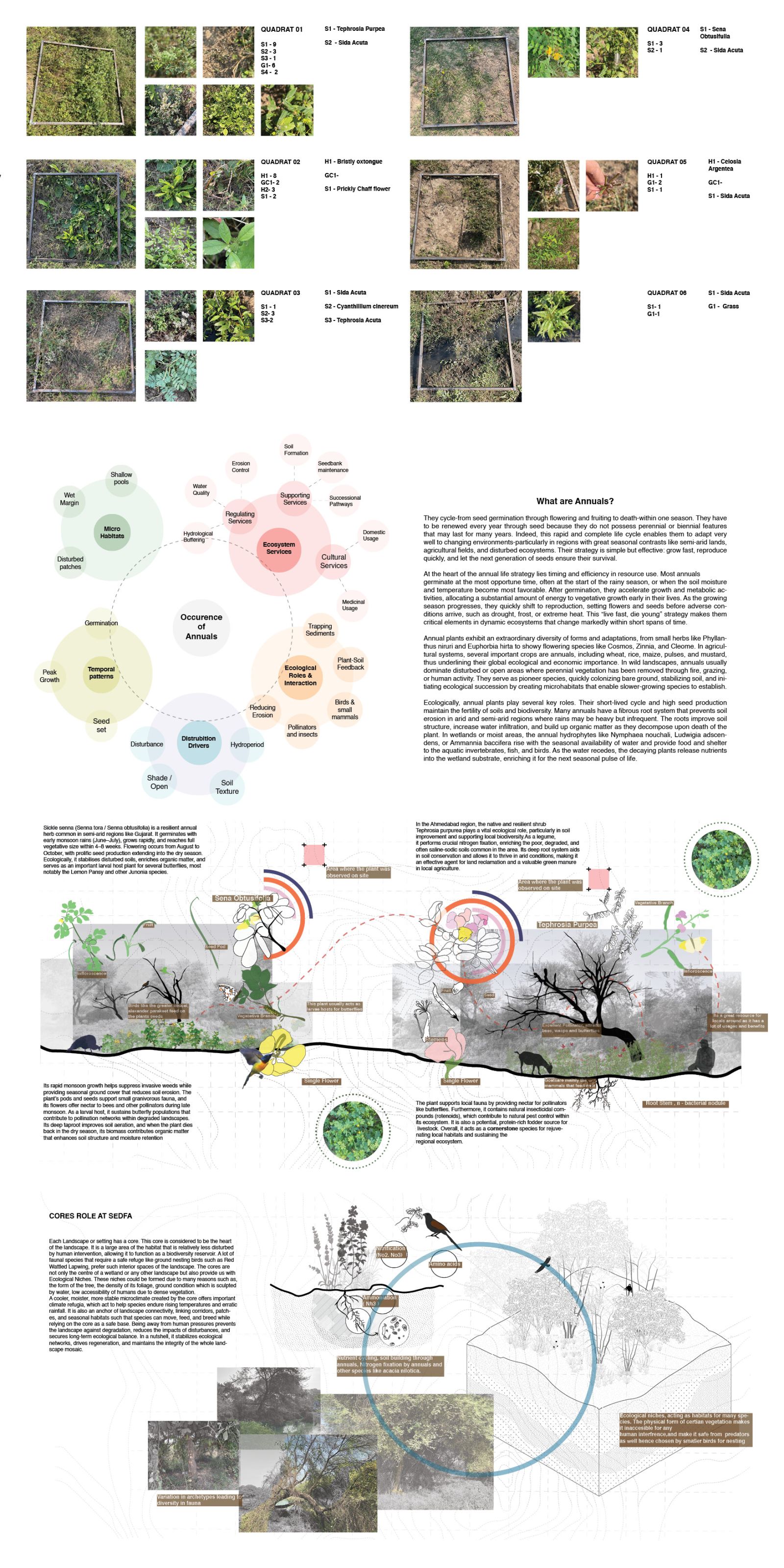
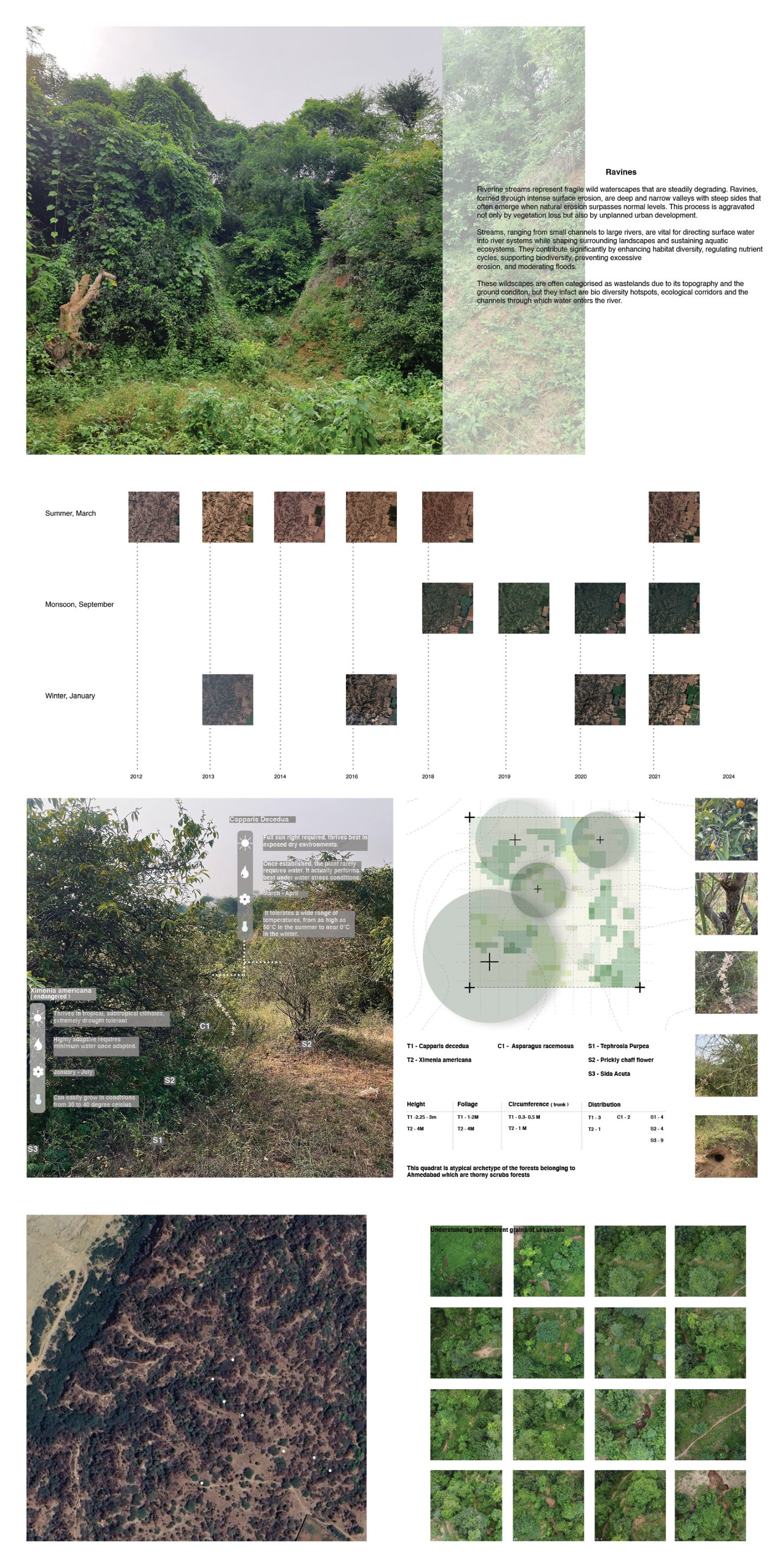
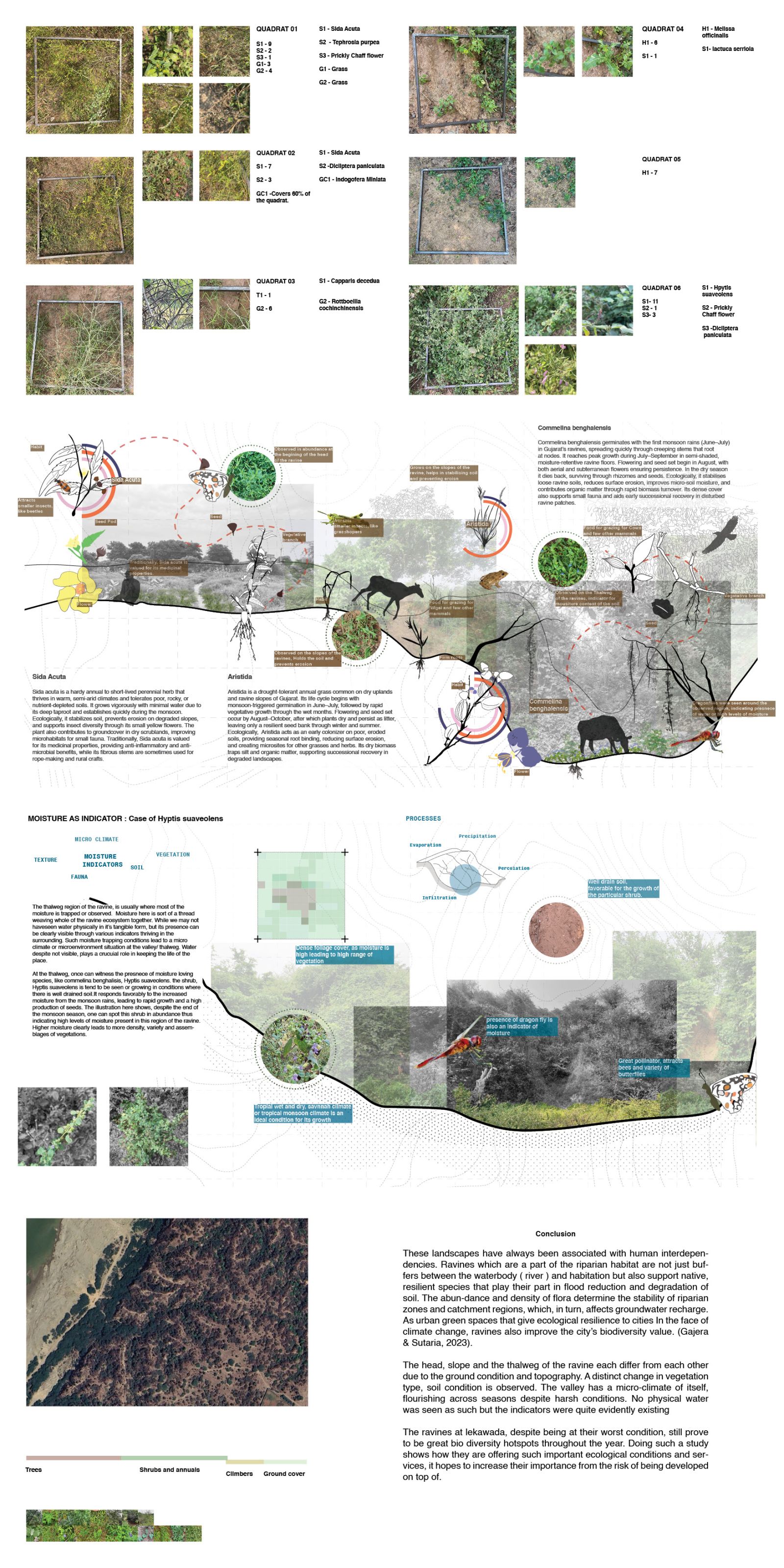
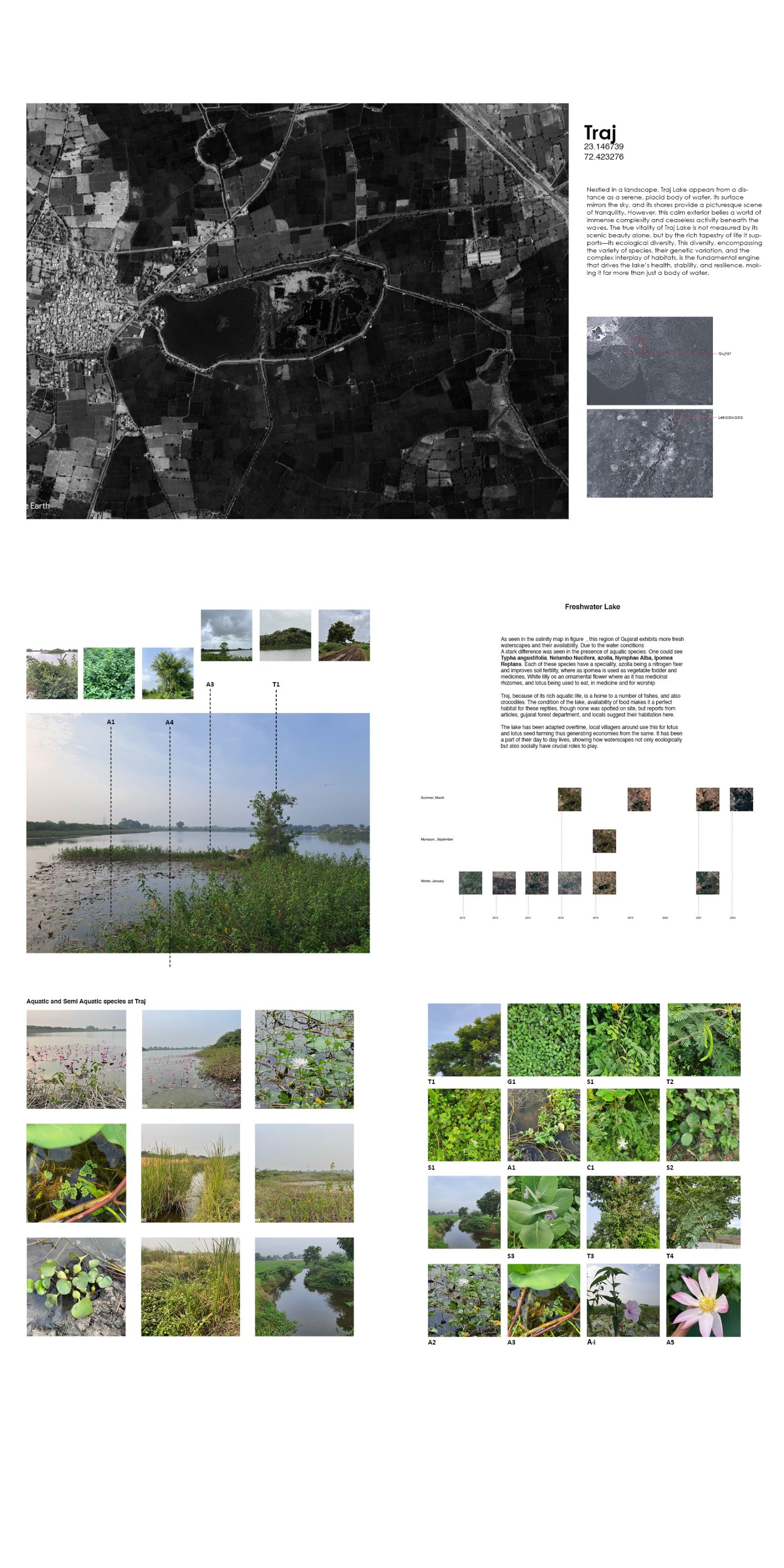
Wild Waterscapes: Shifting Ecotonal Boundaries The study explores the dynamicity of the ground line, the shifting ecotonal boundary between land and water, in shaping the vegetation structure in various wild waterscapes with different seasonal presence of water such as wetlands, lakes, ponds, ravines and seasonal streams in the semi-arid and rapidly urbanizing landscape of Ahmedabad, Gujarat. Using satellite imagery and data, intense and multiple field visits, the study tries to explore how the seasonal variations and fluctuations of the water result in a change in the groundline and biodiversity distrubution. The ground line is conceptualized as a morpho-ecological interface that generates spatial heterogeneity through microtopographic shifts. These shifts create ecological niches and spatial pockets that drive vegetative structures/zones, the range in species diversity, and biodiversity hotspots, particularly in ecotonal environments where aquatic and terrestrial dynamics intersect. The intention is to foreground the importance of such vulnerable landscapes going through rapid land-use changes, and altered water regimes impacting the stability of these transitional zones, since these are lesser known and often go unnoticed. Findings highlight the importance of such wildscapes and the role of the ground line as both a physical and ecological regulator of vegetative structure and function. By integrating spatial ecology, hydrological analysis
View Additional Work