• Home
  • FP
  • UR3013
  • The Evaporative Weave: Cooling Network for Urban Streets

Shradha Sharma

UR3013

The Evaporative Weave: Cooling Network for Urban Streets

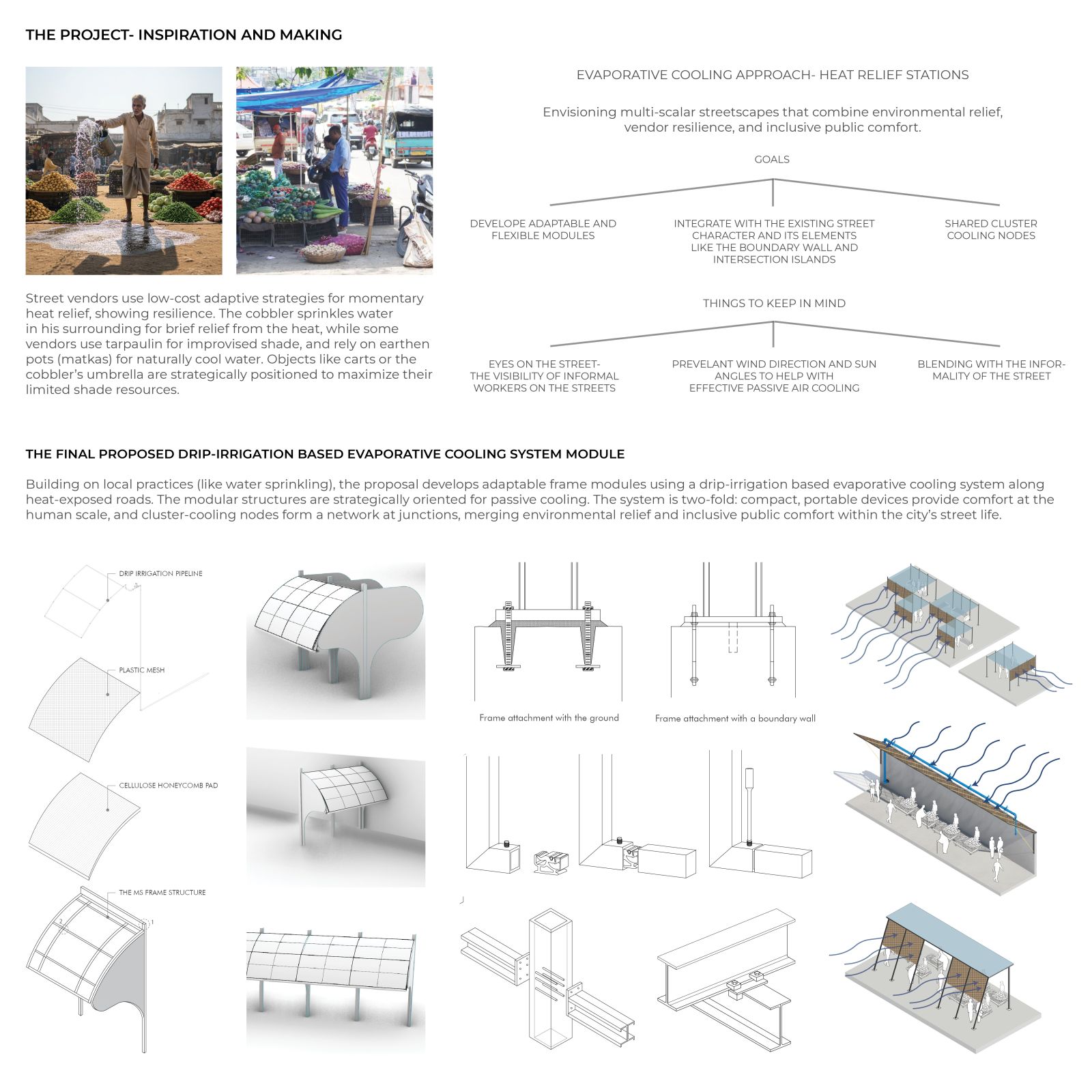
This project investigates climate-responsive interventions that mitigate heat stress for informal vendors and pedestrians in Ahmedabad. Building on locally rooted evaporative cooling practices, such as the cobbler’s strategy of sprinkling water to cool the ground- the proposal develops adaptable frame modules that use a drip-irrigation based evaporative cooling system to create heat-relief stations along the city’s most heat-exposed roads. These modular structures are strategically oriented to prevailing wind directions and sun angles to enhance passive airflow and shading. At the human scale, compact, portable devices provide comfort without occupying much vending space, designed to integrate in the everyday postures and practices of the people on the streets. At selected junctions, cluster-cooling nodes extend the system into shared resting points, forming a cooling network that merges environmental relief, vendor resilience, and inclusive public comfort within Ahmedabad’s dynamic street life.

View Additional Work
Report Content

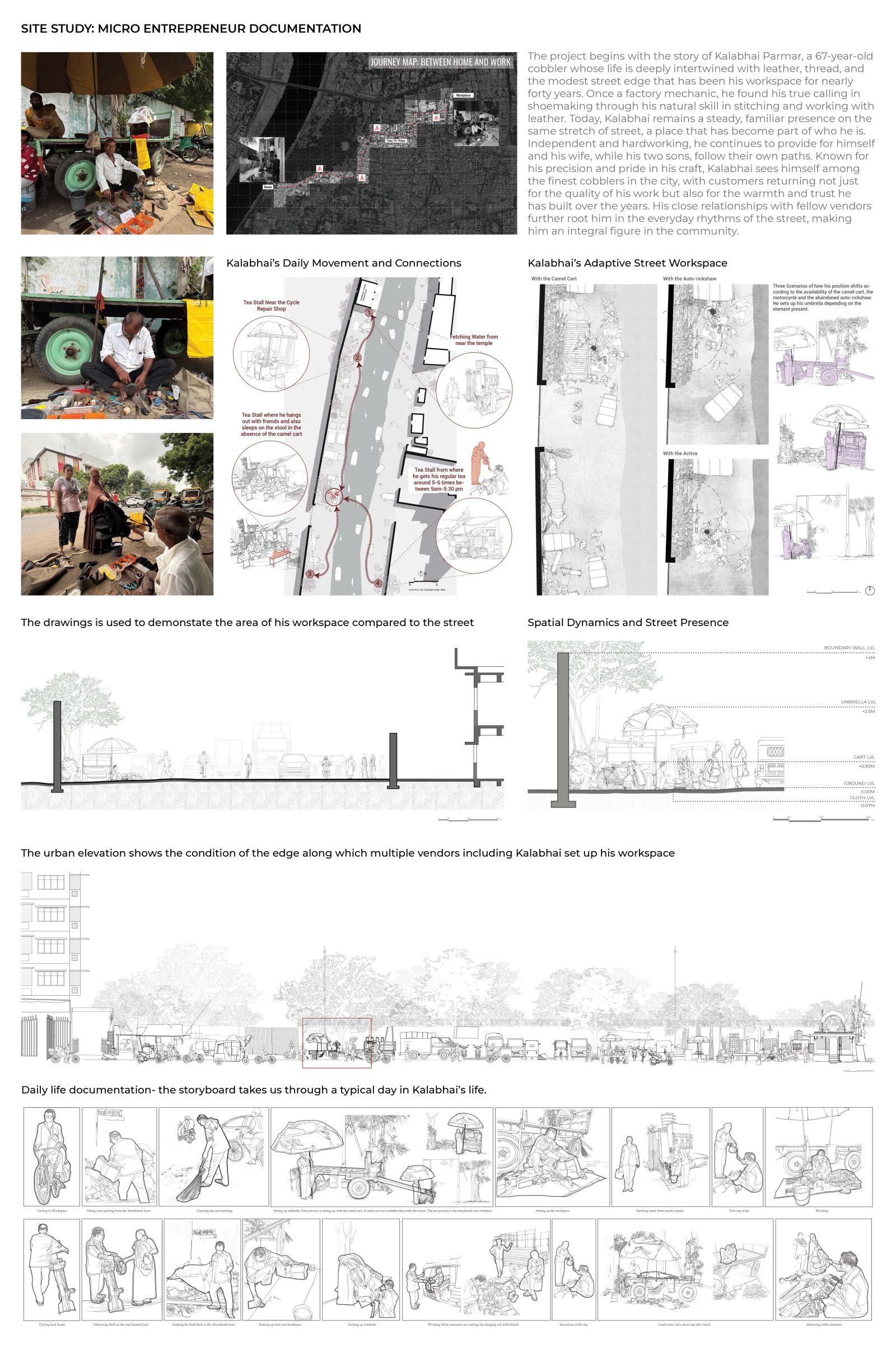
Introduction to Kalabhai Parmar, detailing the conflict between his livelihood necessity on the exposed street edge and the climatic stress (heat, pollution) he endures daily. His documentation covers his daily routine, from travel to setting up his space, and highlights the adverse site conditions, including his exposed placement to traffic, heat, and pollution

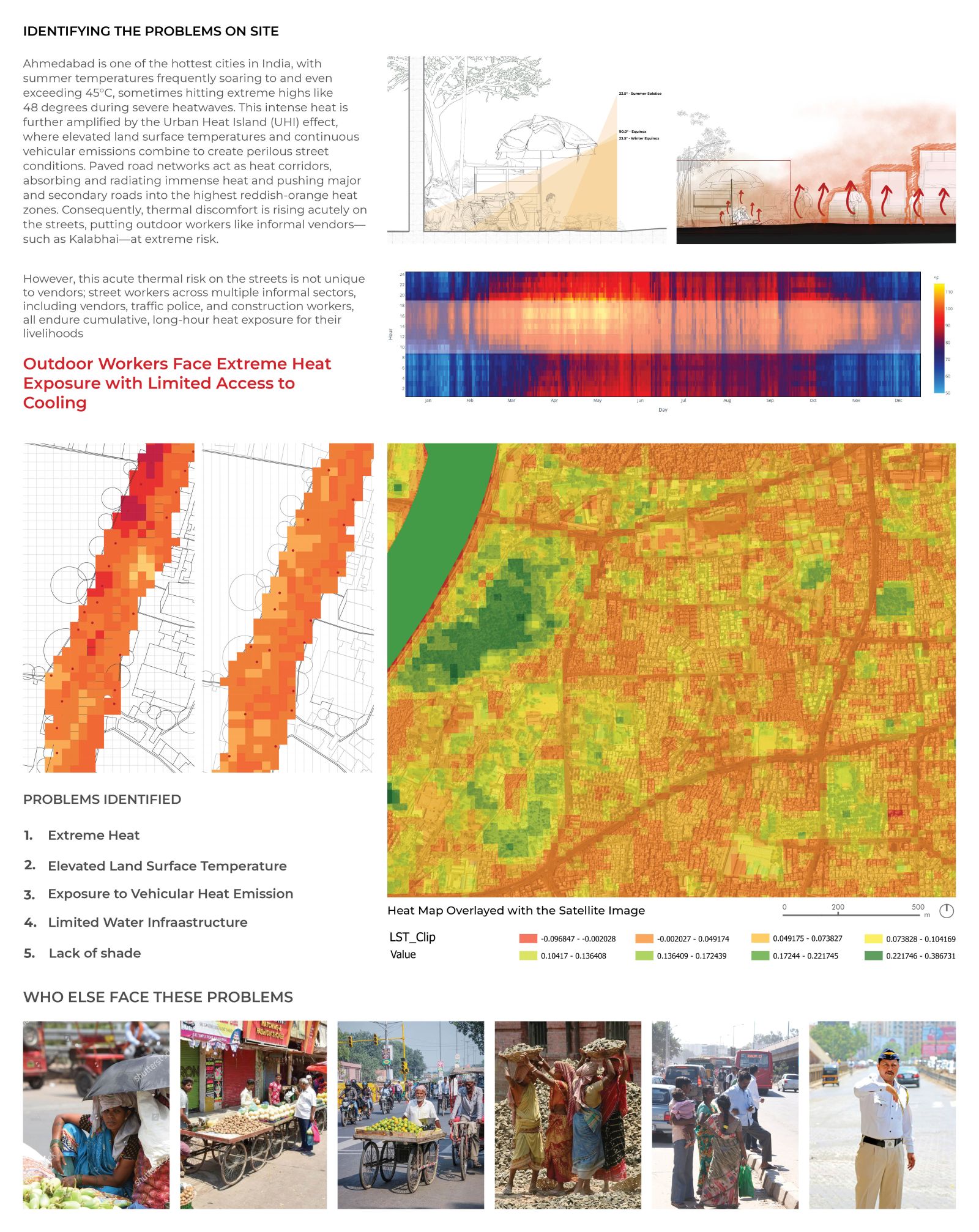
The Heat Map overlay on the Behrampura Area, Ahmedabad- satellite image clearly shows that the roads are major hot-spots, intensified by vehicular emissions and asphalt heat. Consequently, street vendors like Kalabhai are forced by livelihood necessity to endure the harshest daily heat during peak hours, directly compromising their thermal well-being

This slide features an exploded view of the cooling system, detailing its layered composition: a galvanized MS structure, Cellulose honeycomb pads, a plastic mesh layering, and an integrated drip-irrigation system. Additionally, it showcases the system’s form and joinery design, which ensures easy on-site assembly and disassembly

Material Testing: Of all the materials studied, three materials- Jute, Non-Woven Felt and Braided Woolen Cloth were tested for their efficiency. It can be seen that with high ambient temperature, Both Jute and Cloth work well as evaporative cooling materials when placed facing the prevailing wind direction and subjected to continuous water flow.

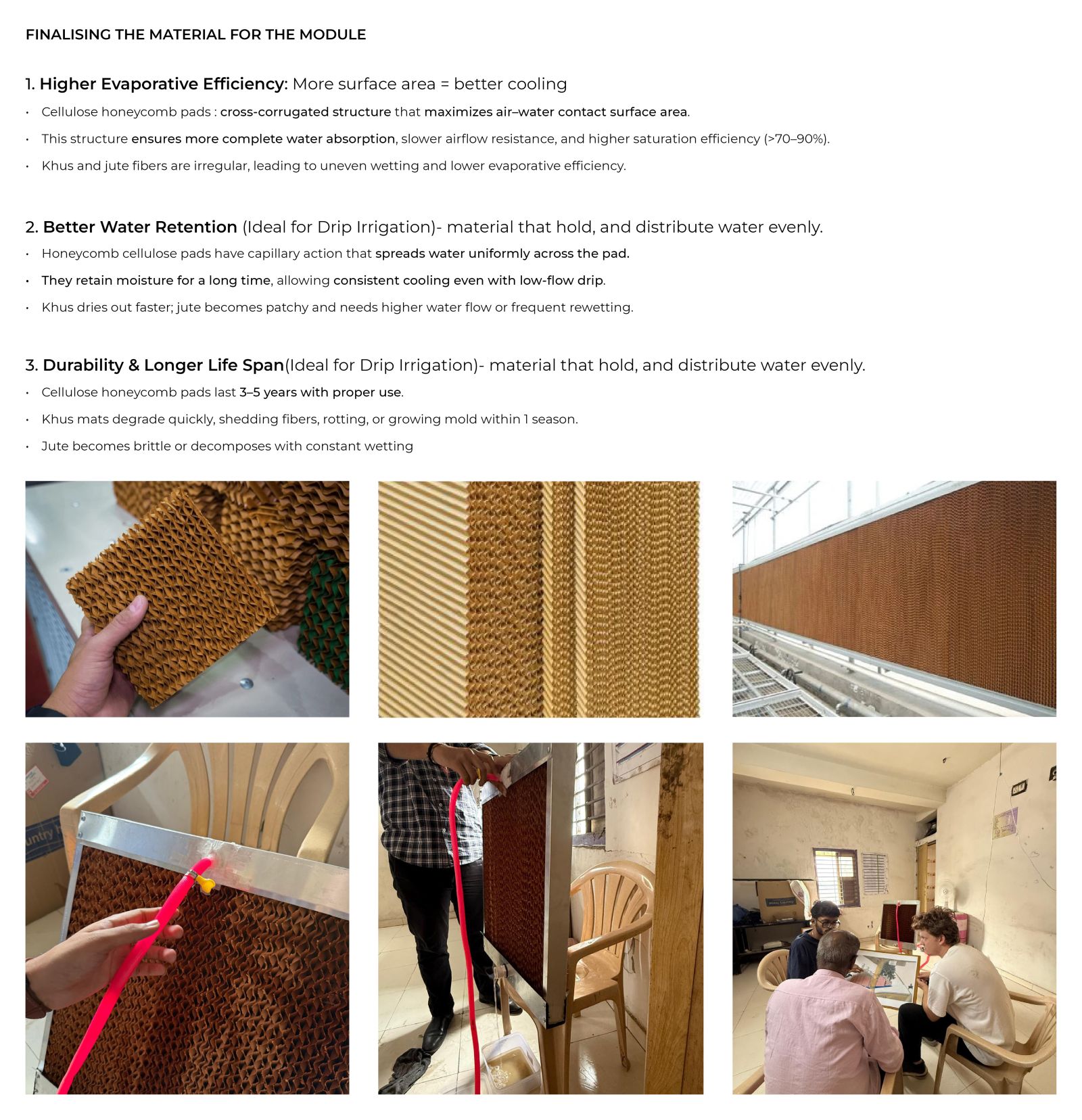
Final material decided for the structure is Cellulose Honeycomb pads. The three images below, demonstrate a working model test that proves the efficiency of the material decided.

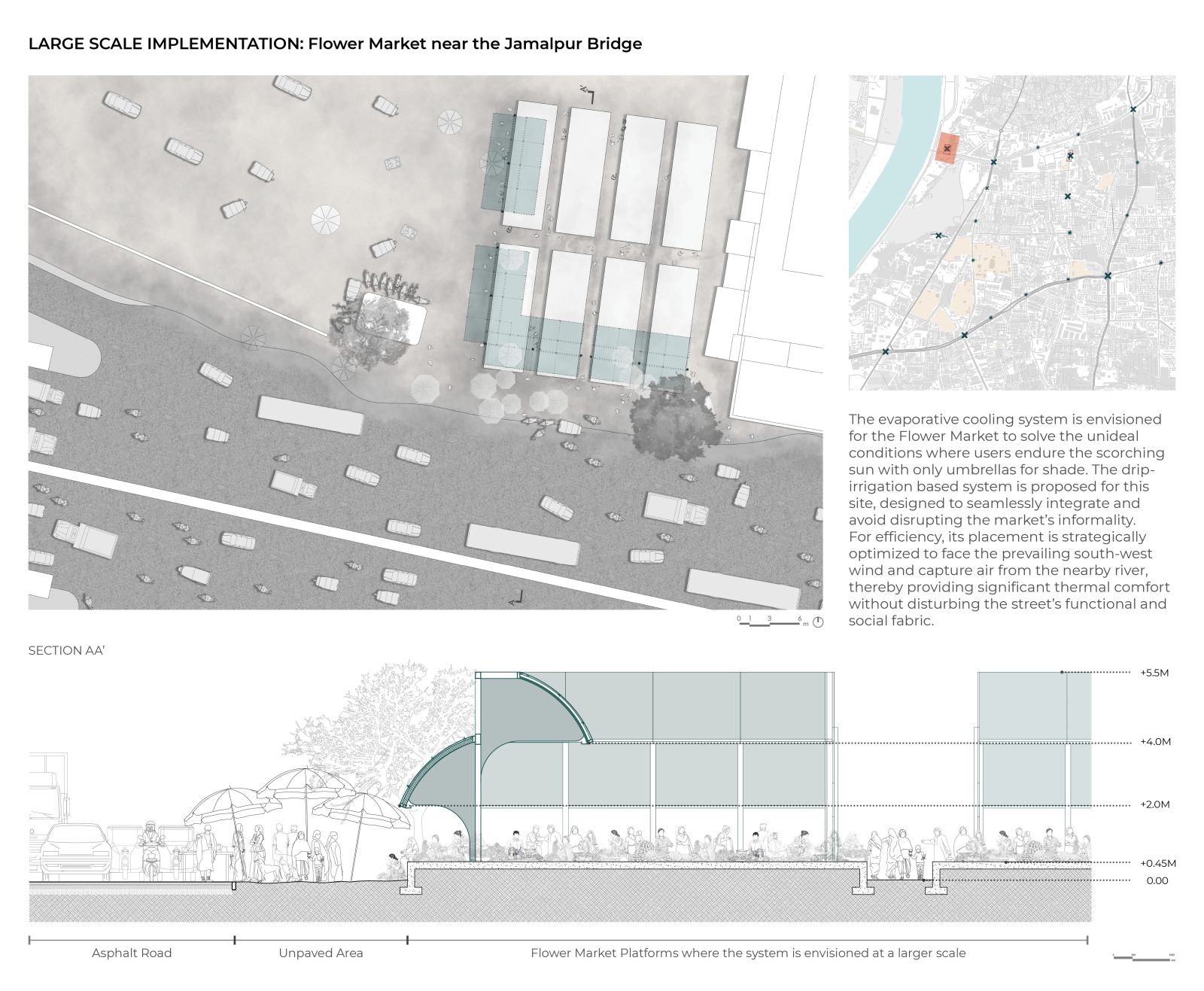
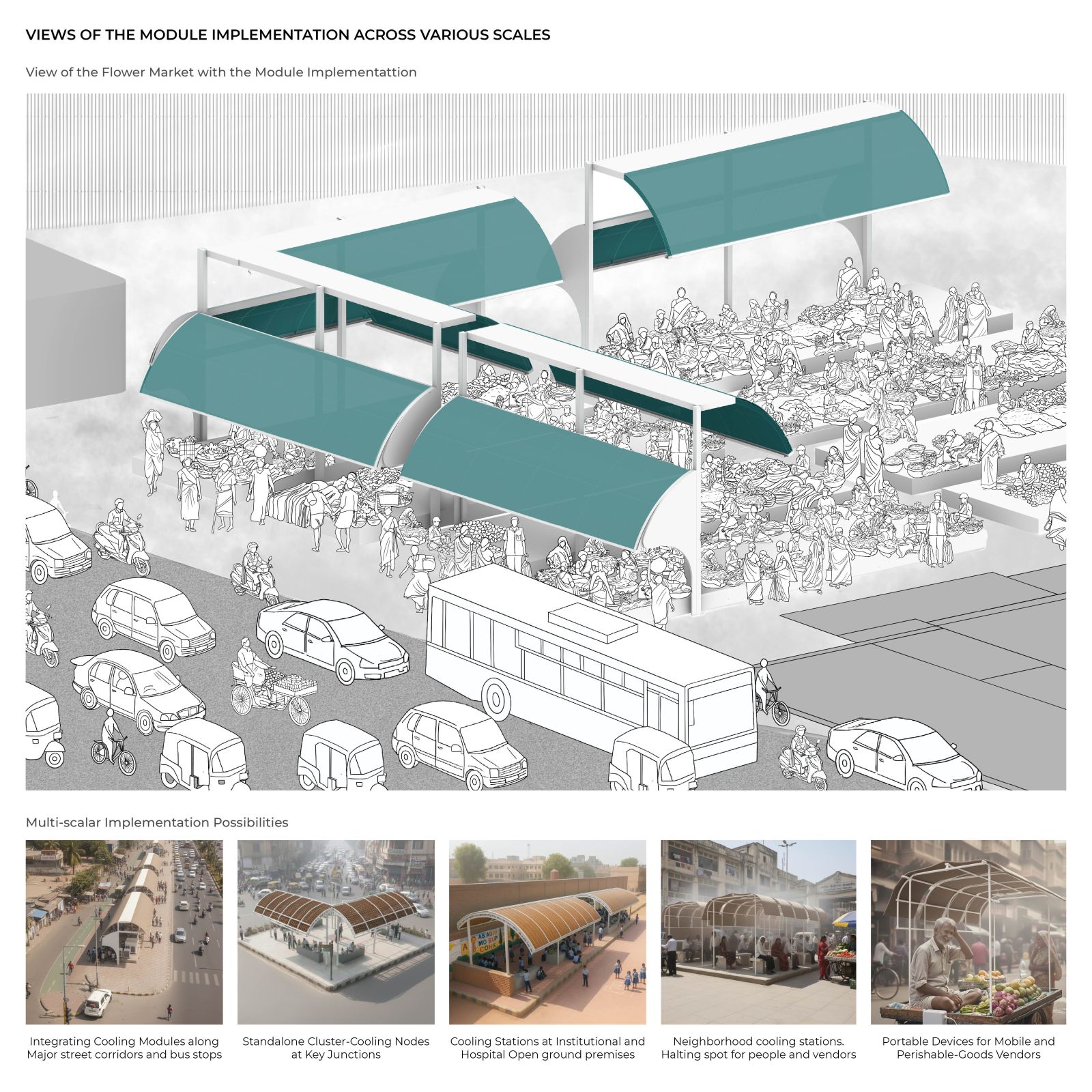
Large Scale Implementation of the Design Proposal

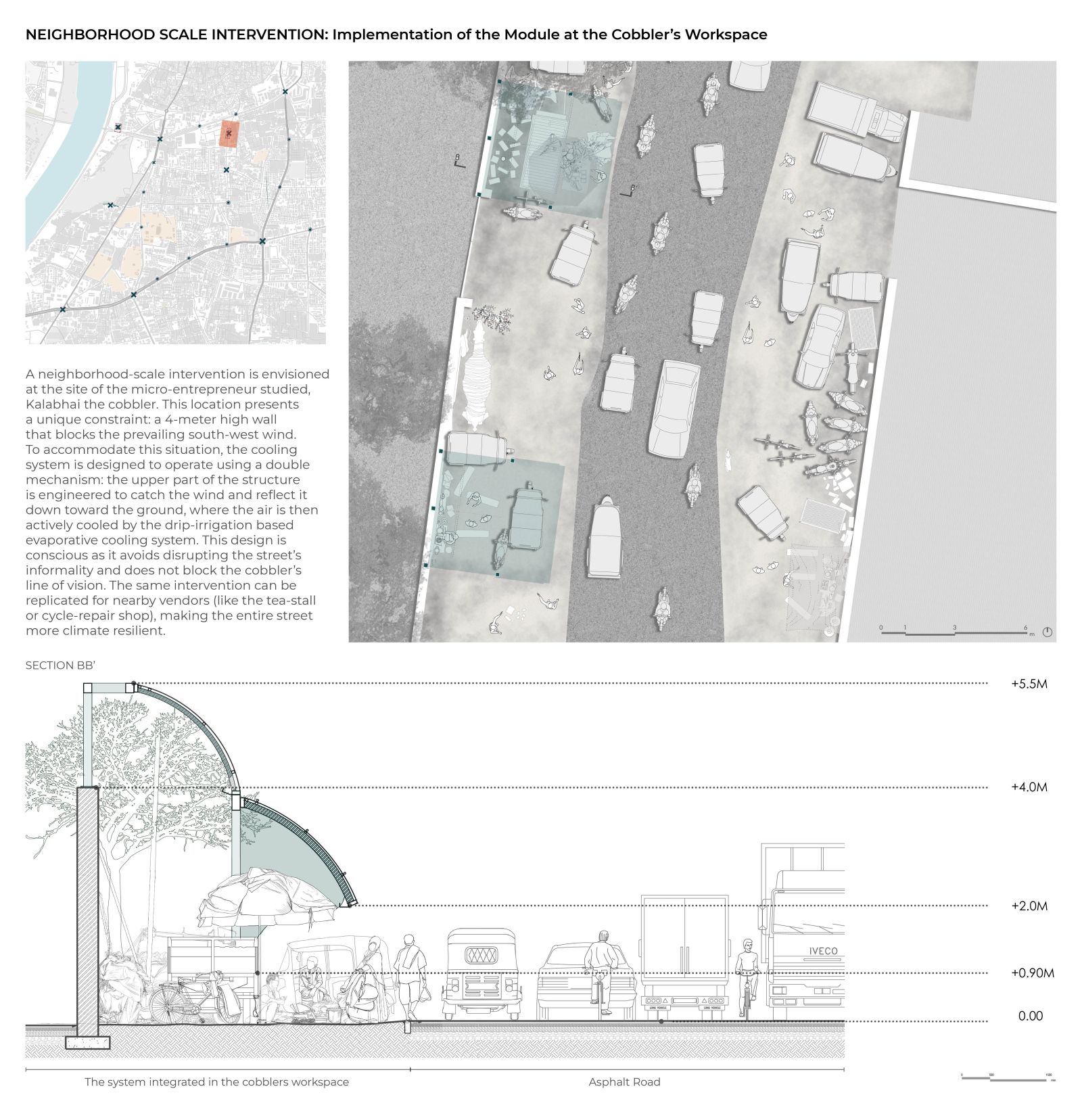
Neighborhood Scale Implementation of the Design Proposal

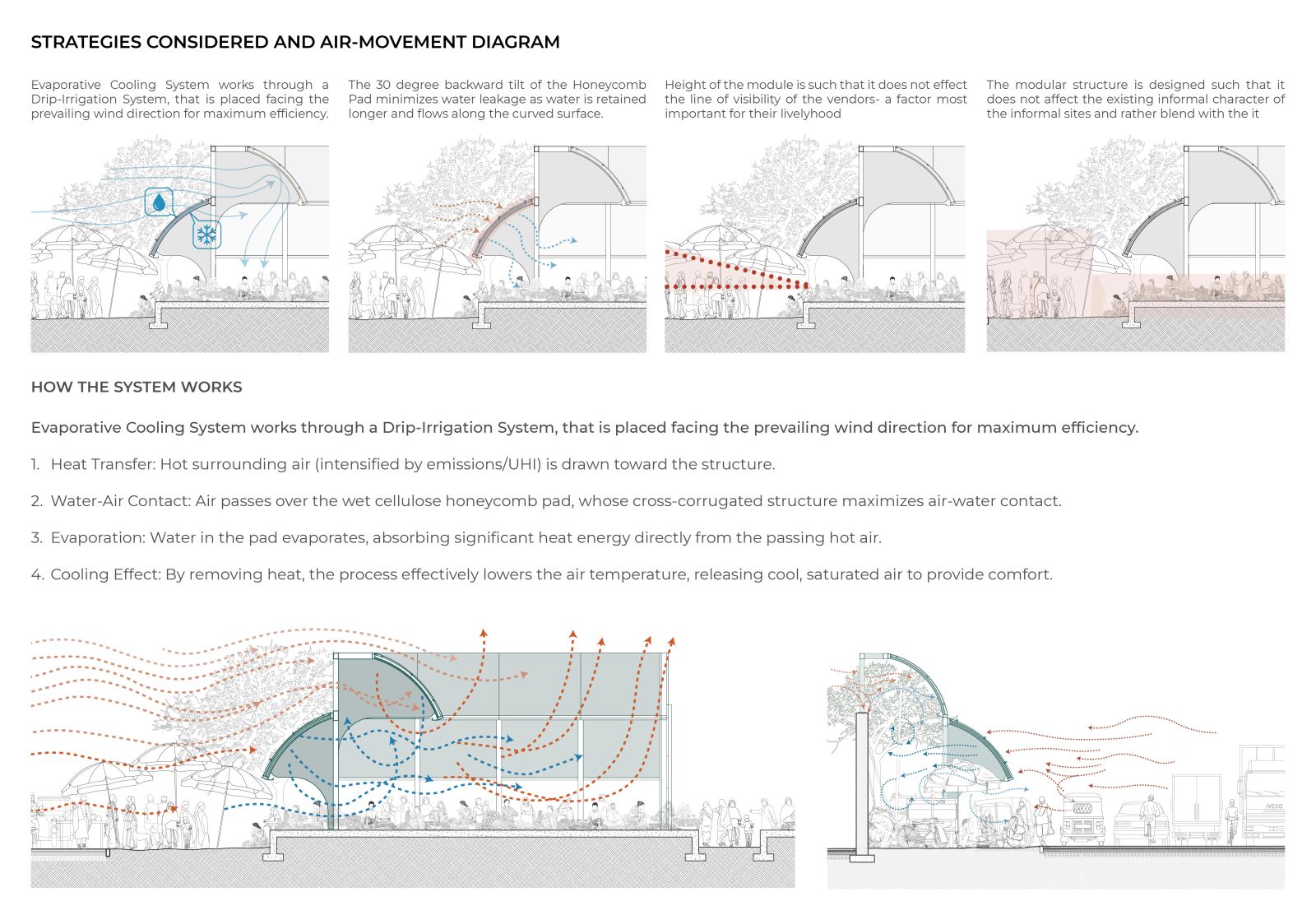
The diagrams are made to demonstrate how the structure provides comfort. The system doesn’t just block the sun; it actively creates a microclimate by delivering air that is several degrees cooler than the ambient street temperature. This targeted cooling mitigates the acute heat stress and discomfort experienced by vendors and users, making the space beneath the structure more habitable during peak heat hours.

The visuals show the large-scale and personal-level vision for the evaporative cooling system in the urban spaces, addressing the current discomfort caused by the scorching sun and inadequate shading facilities. The drip-irrigation based system is strategically designed for efficiency, facing the prevailing south-west wind in each case. It is engineered to blend , delivering vital thermal comfort to users while respecting the informality and functional/social fabric of the street.