• Home
  • FP
  • UT4002
  • Pre-Feasibility Study for Integrated Network, Surat

Veethika Dubey

UT4002

Pre-Feasibility Study for Integrated Network, Surat

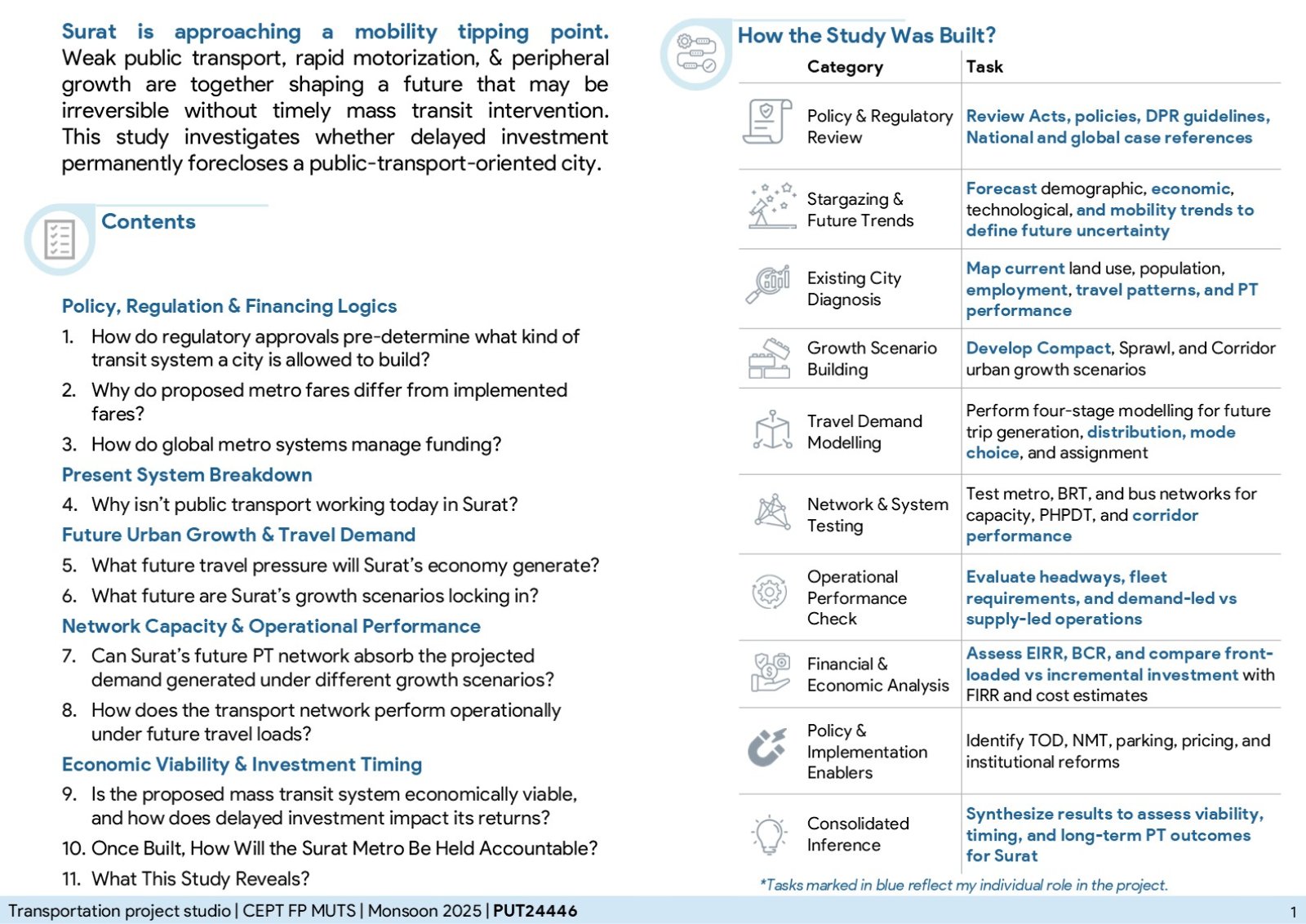
Surat is approaching a critical mobility tipping point, shaped by weak public transport systems, rapid motorization, and accelerated peripheral growth. These forces are collectively pushing the city toward an increasingly irreversible car- and two-wheeler–dependent future. This pre-feasibility study evaluates the technical, operational, economic, and institutional viability of an integrated mass transit network for Surat. It investigates how different urban growth scenarios and delayed investment influence travel demand, network capacity, modal share, and project returns. The study critically examines whether postponing mass transit implementation permanently forecloses the possibility of a public-transport-oriented urban future for the city.
Report Content

Introduction & Study Framework- Overview of Surat’s emerging mobility crisis and the structured approach used to assess integrated transit feasibility.

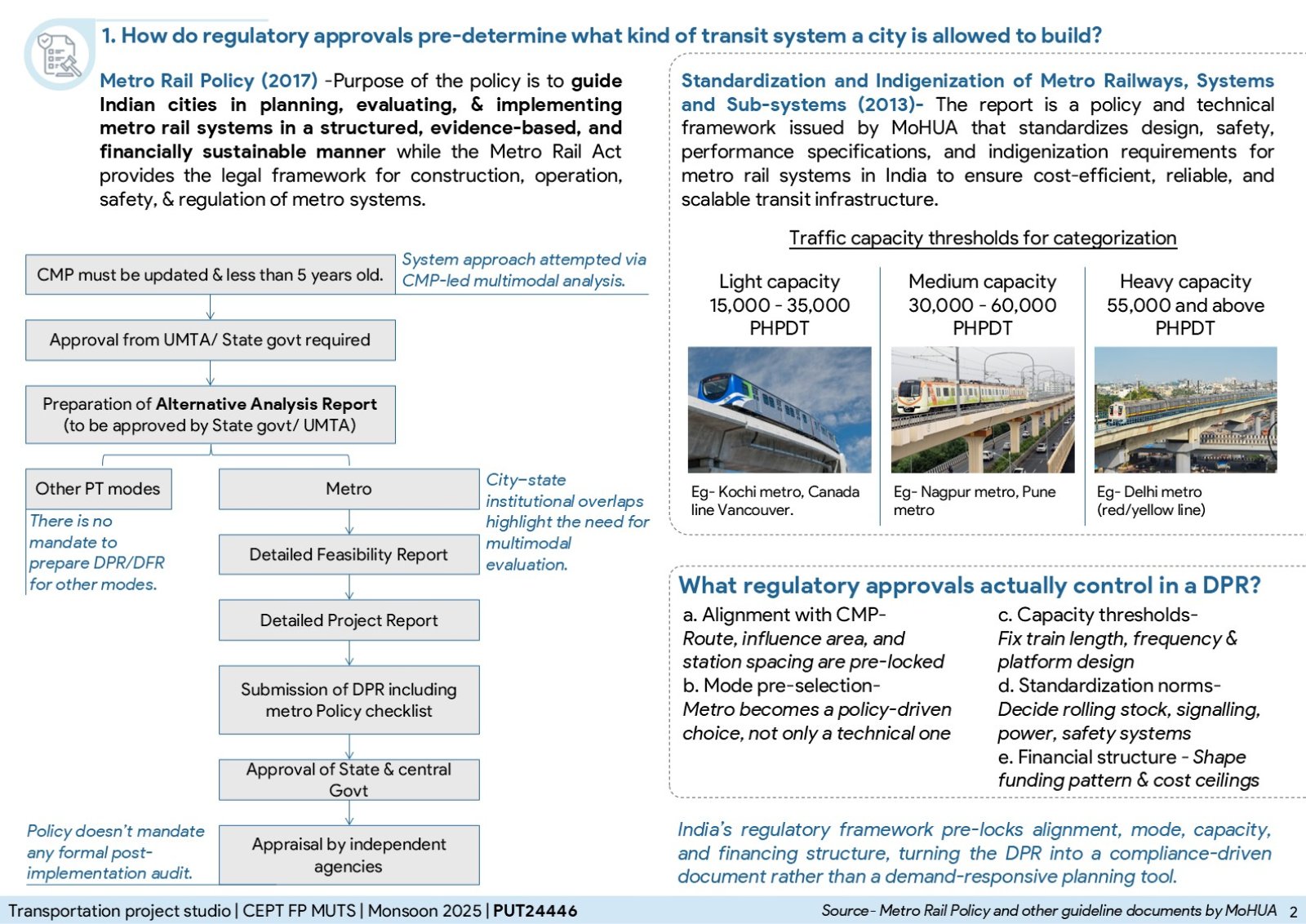
Regulatory approval process showing how policy frameworks pre-determine metro alignment, mode choice, and system capacity.

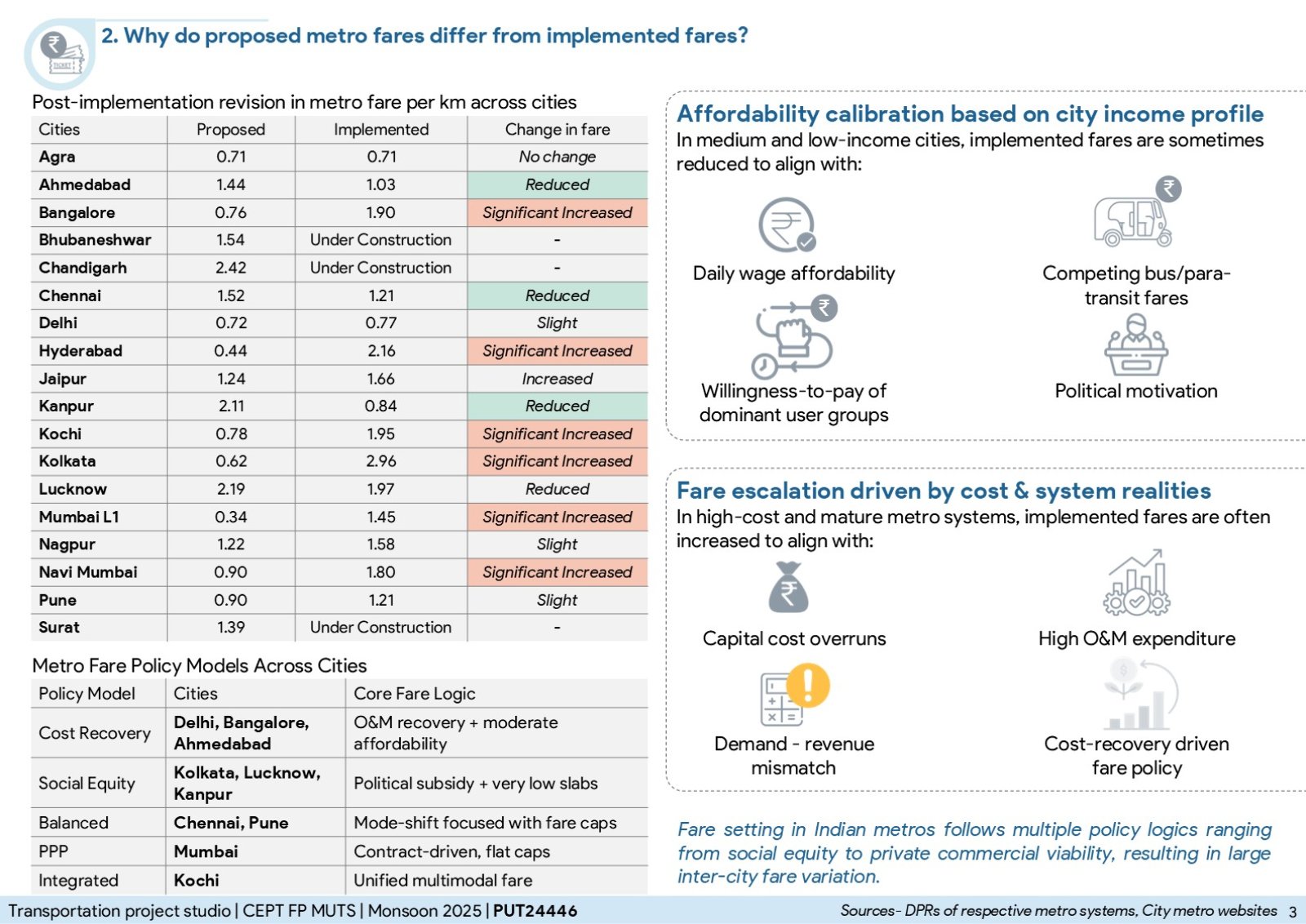
Comparison of proposed and implemented metro fares across Indian cities highlighting affordability and cost-recovery trade-offs.

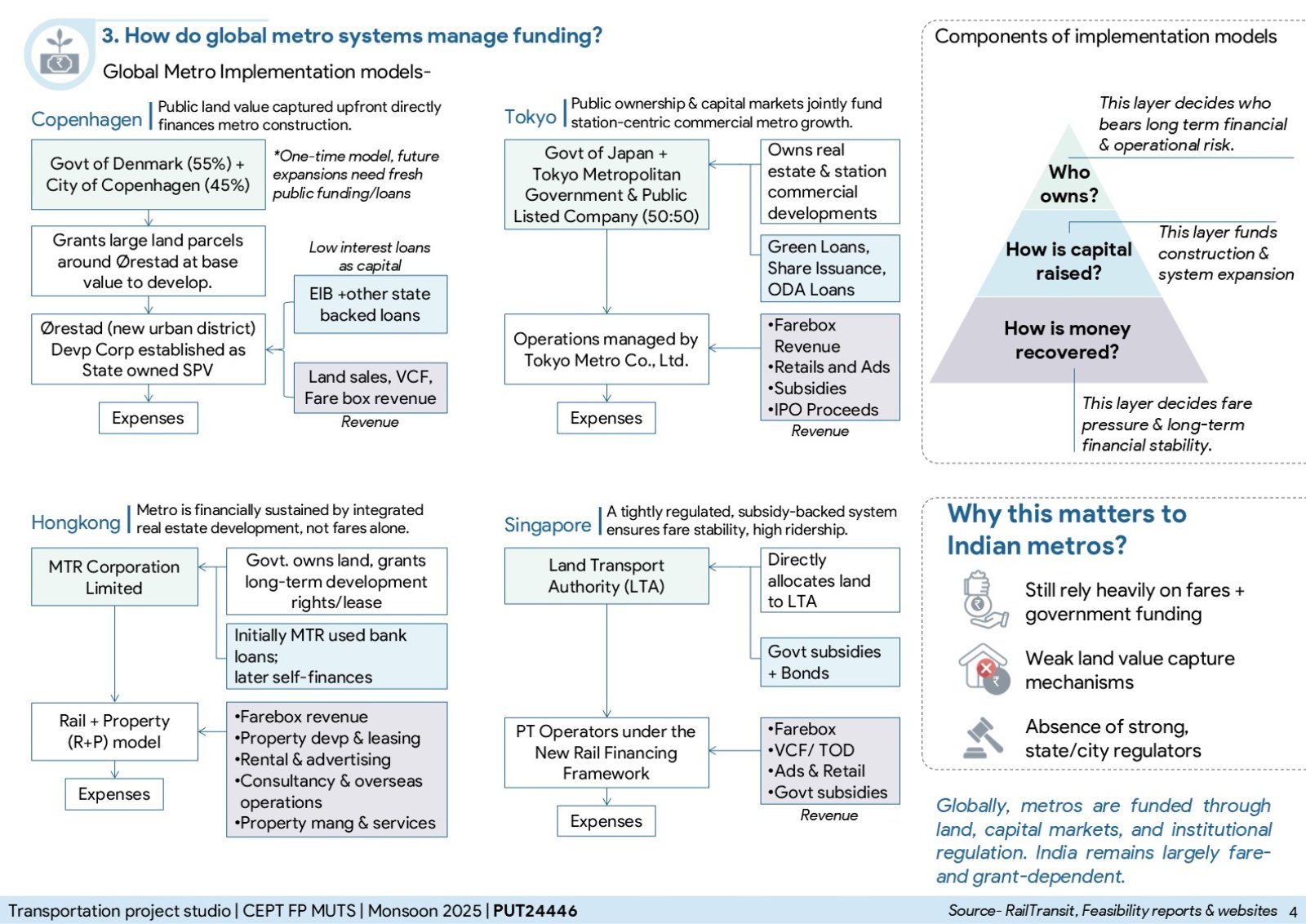
International metro funding structures illustrating land-based financing, capital markets, and institutional control.

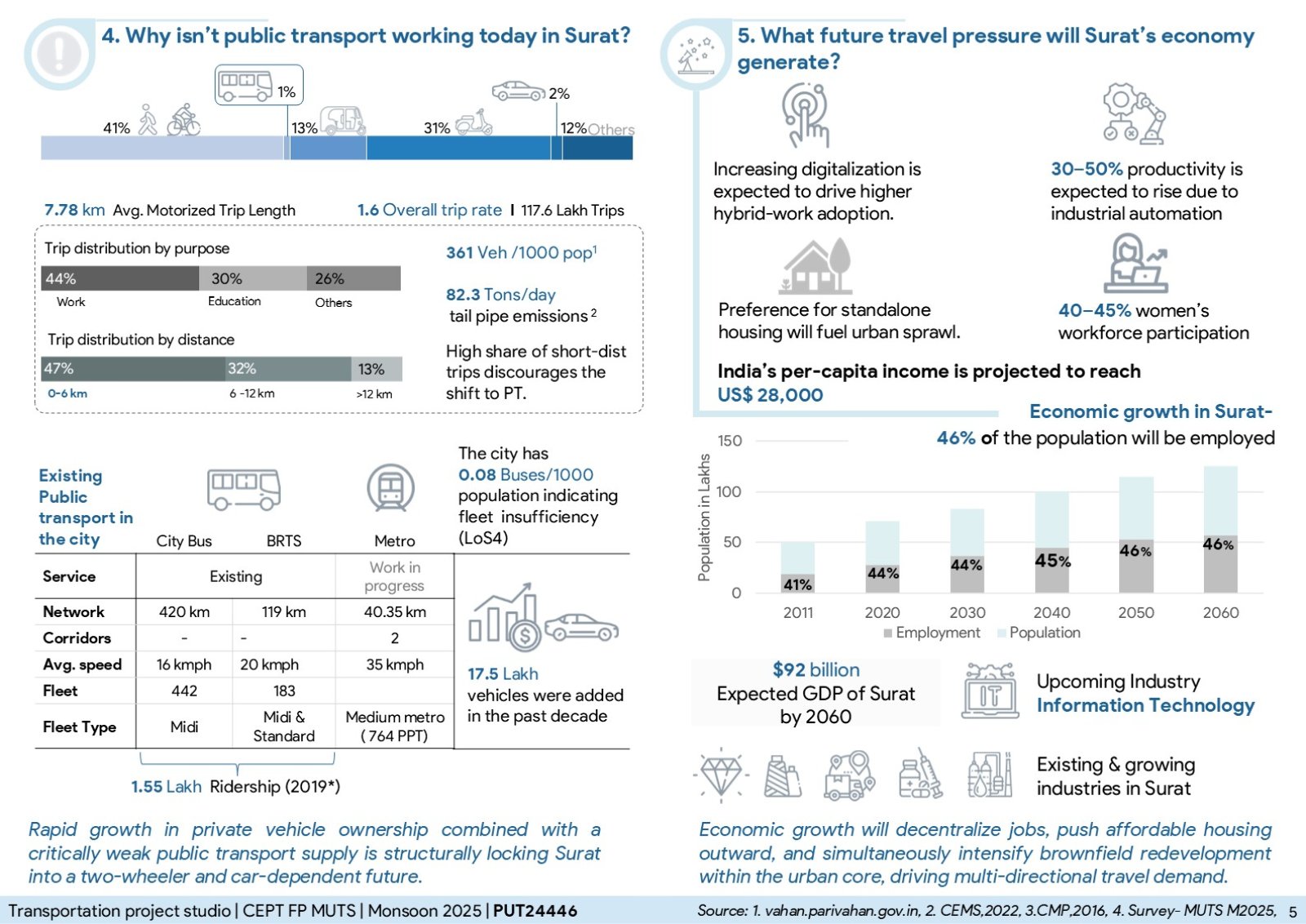
Existing public transport performance and rising private vehicle dependence and growing economic and travel demand.

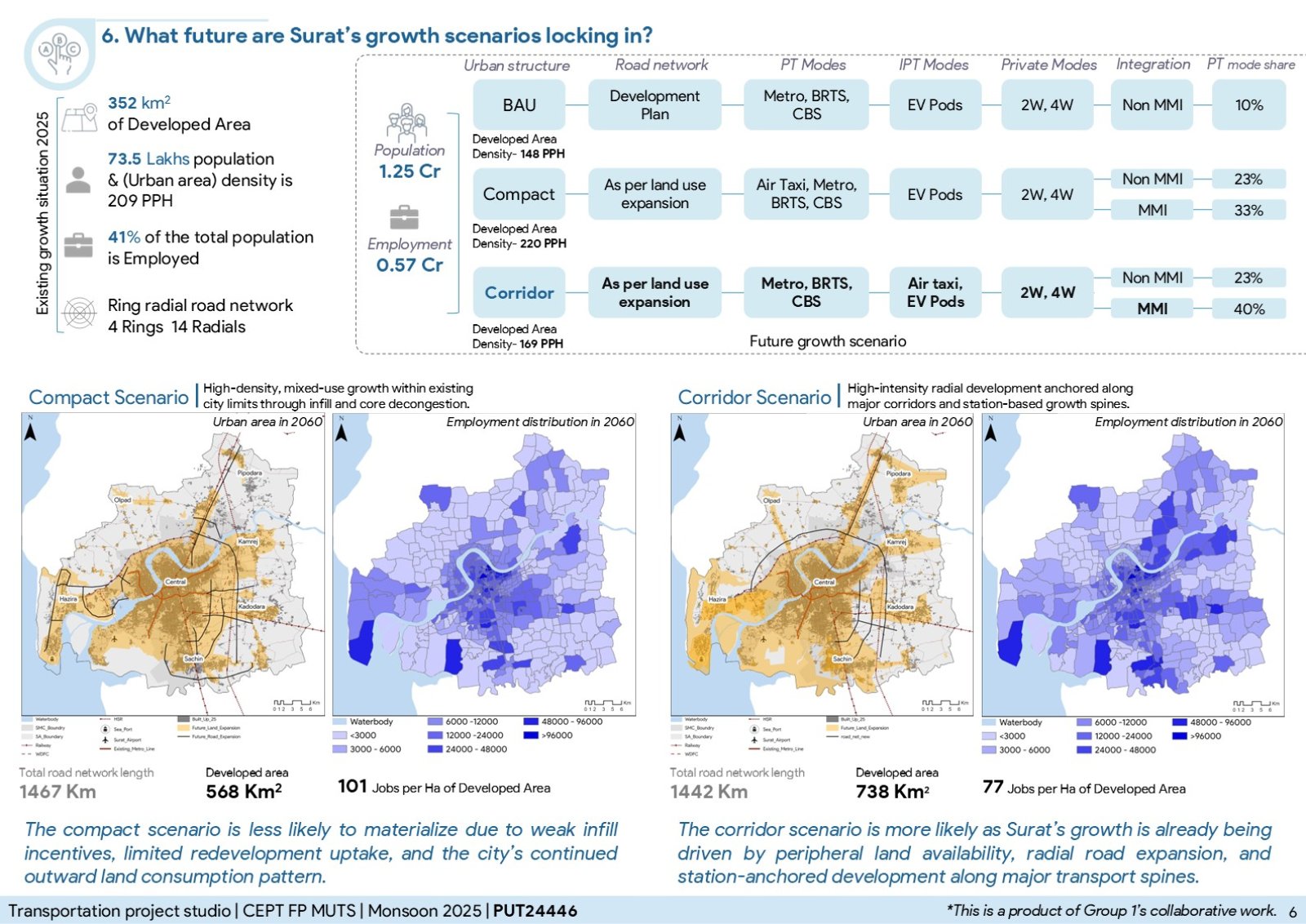
Comparison of compact and corridor-based urban growth scenarios and their implications for land use and employment distribution.

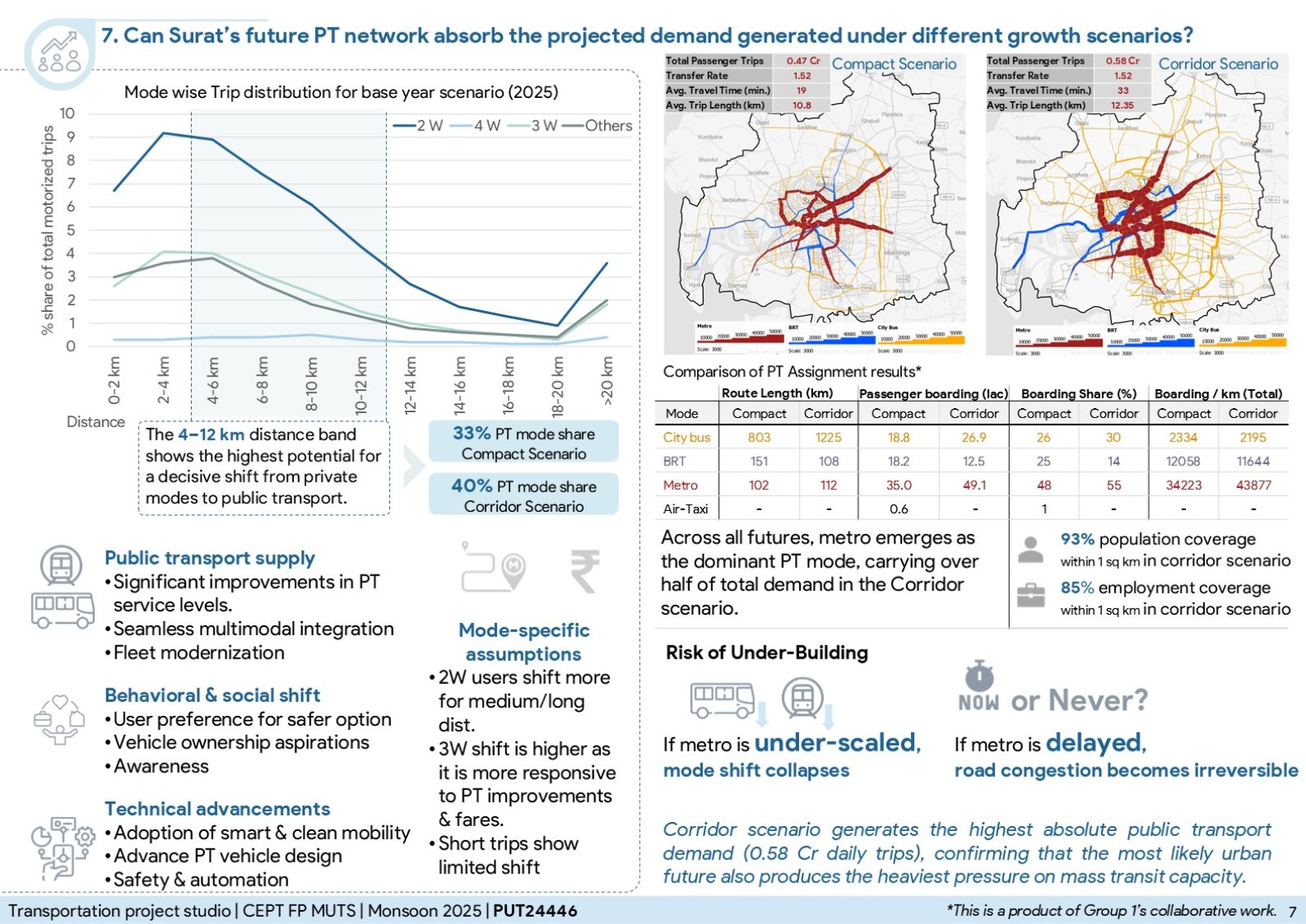
Projected public transport demand, mode share, and risk of under- or delayed metro provisioning under future scenarios.

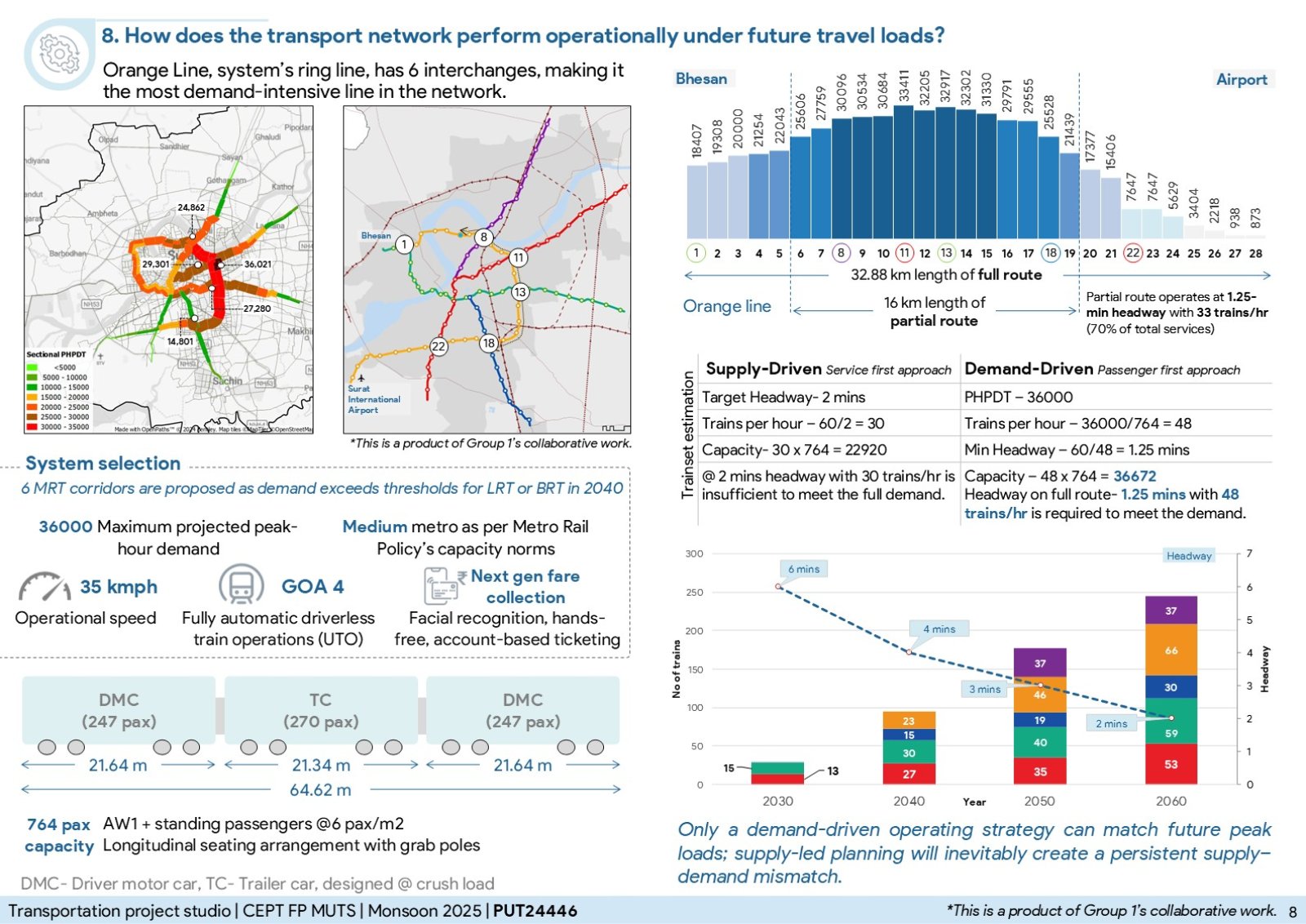
Operational performance assessment using peak-hour demand, train capacity, headways, and partial route operation.

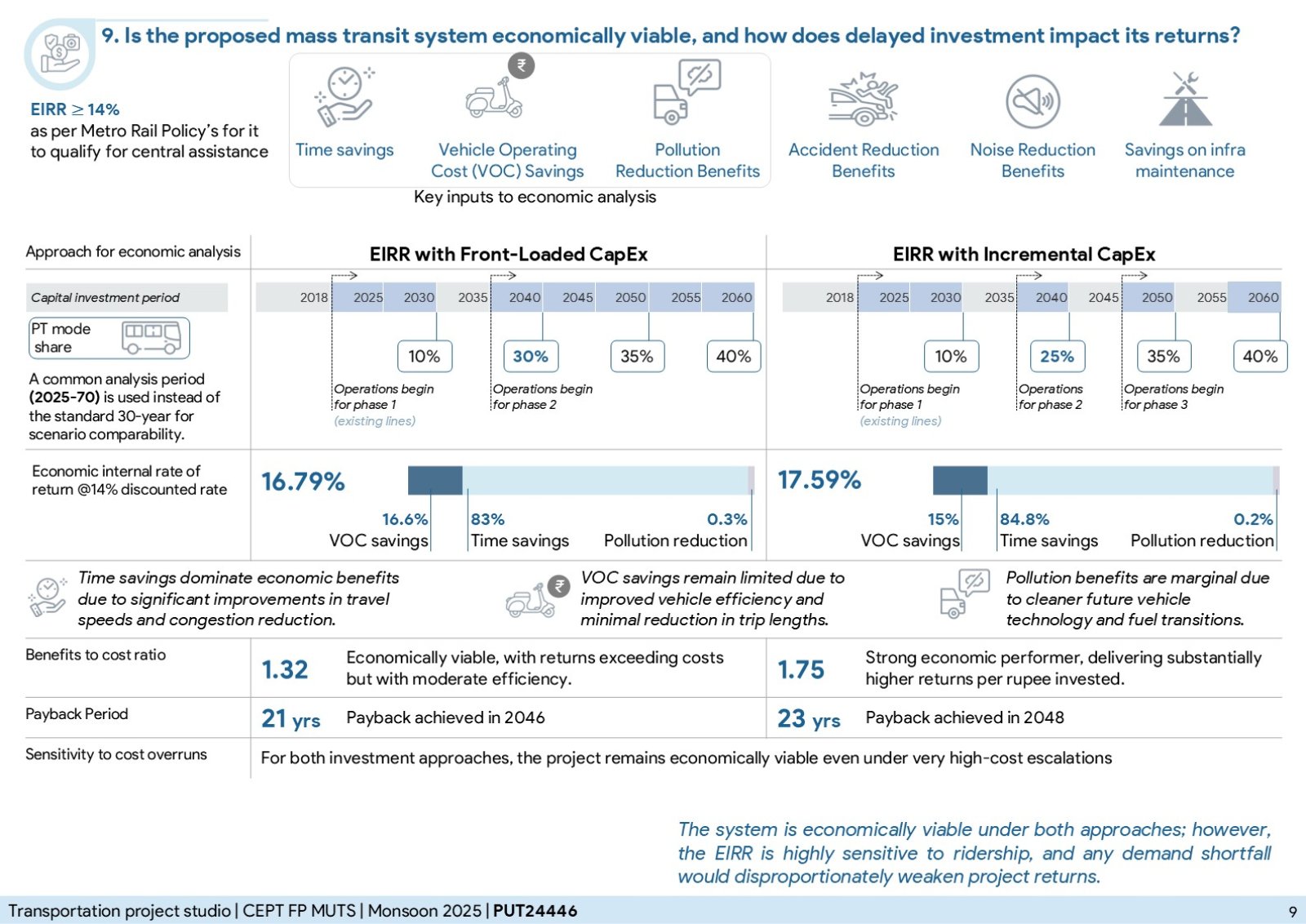
Economic evaluation of the metro system under front-loaded and incremental investment approaches.

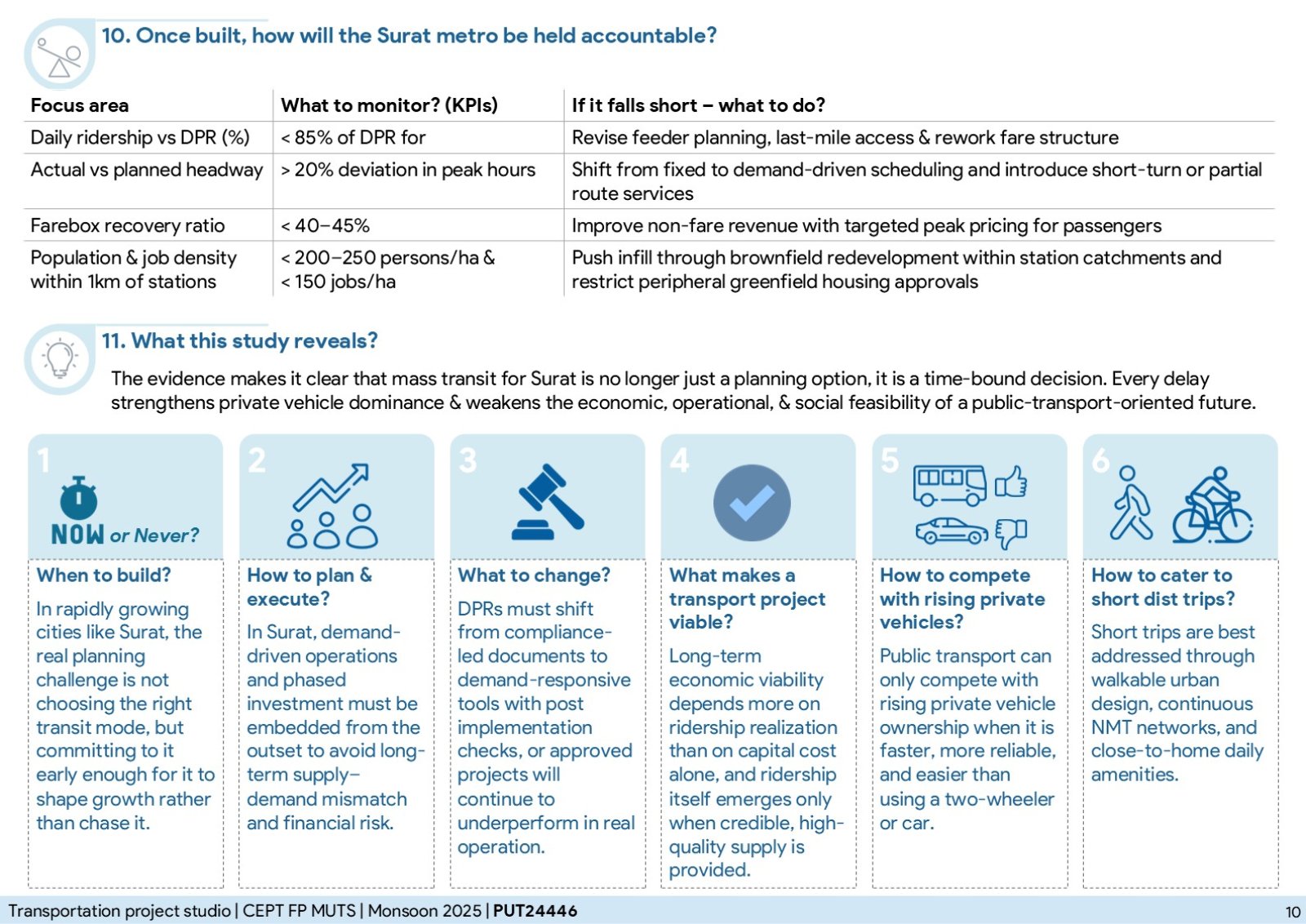
Performance monitoring indicators and corrective planning measures for post-implementation accountability.