Monisha Kurothe

UP4002-11

Chandkheda, Ahmedabad | Portfolio

Chandkheda, once characterized by agricultural lands and scattered organic settlements, has evolved into a dynamic urban precinct shaped by continuous expansion and shifting mobility patterns. Its transformation reflects a gradual layering of residential pockets, commercial corridors, and institutional edges, creating a landscape where old settlement structures coexist with newer planned developments. The area displays a clear gradient of urban character ranging from dense, organically grown gamtal-like clusters to more structured avenues with mixed-use activity and improved access to services. The precinct today sits at a transitional moment, where its mix of old and new typologies, active margins, and evolving public realm reflect both its inherited patterns and its potential for future growth. This study aims to capture those shifts and understand how Chandkheda’s built form, mobility networks, and everyday practices collectively define its contemporary urban identity.
Report Content

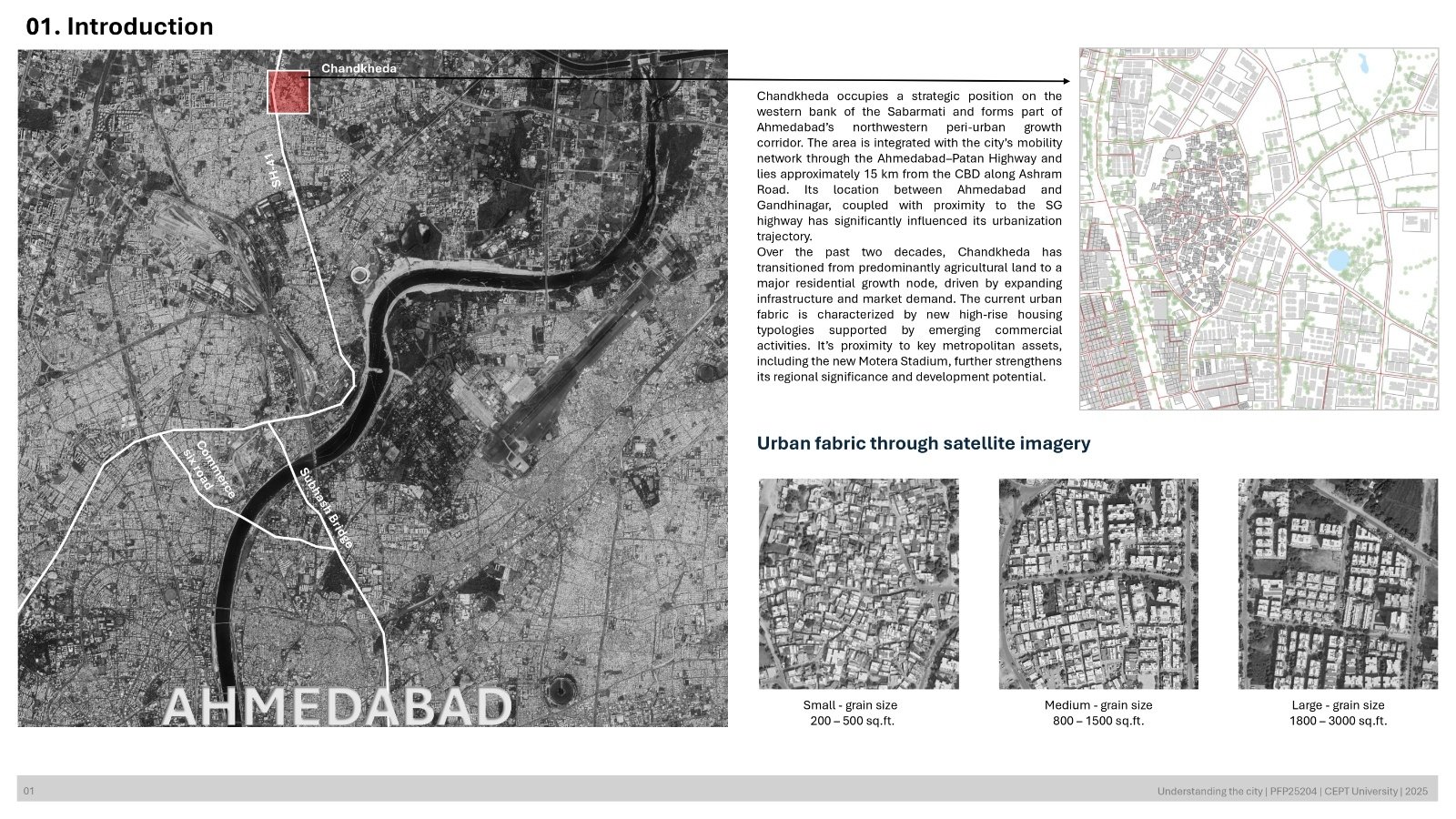
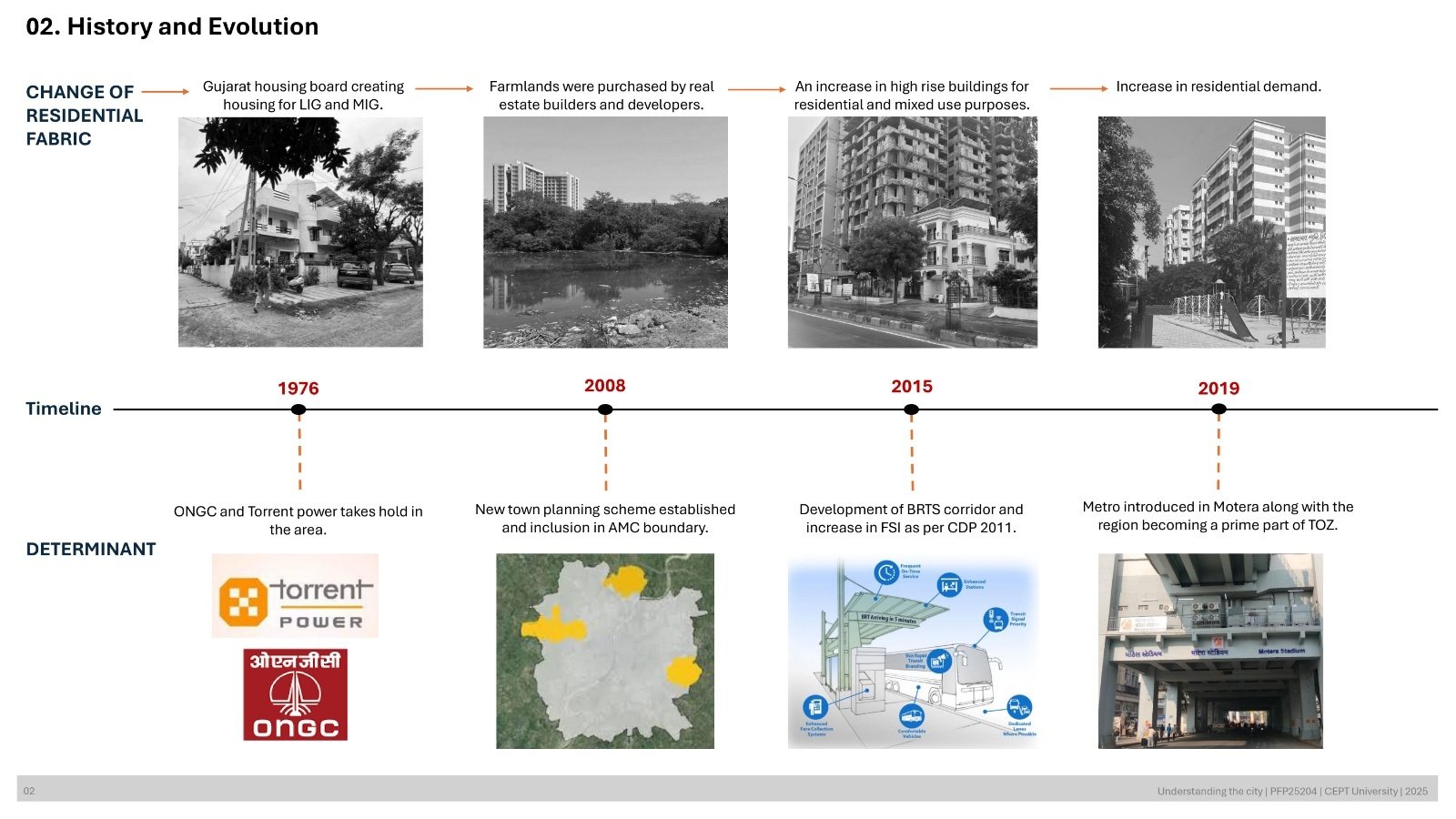
Chandkheda’s shift from agricultural land to a mixed-density urban neighbourhood reflects a rapidly formalizing fabric shaped by strategic connectivity and rising residential–commercial demand.

Chandkheda’s residential fabric has steadily intensified as institutional anchors, planning interventions, and transit investments transformed it from worker housing and farmland into a high-rise, market-driven urban precinct.

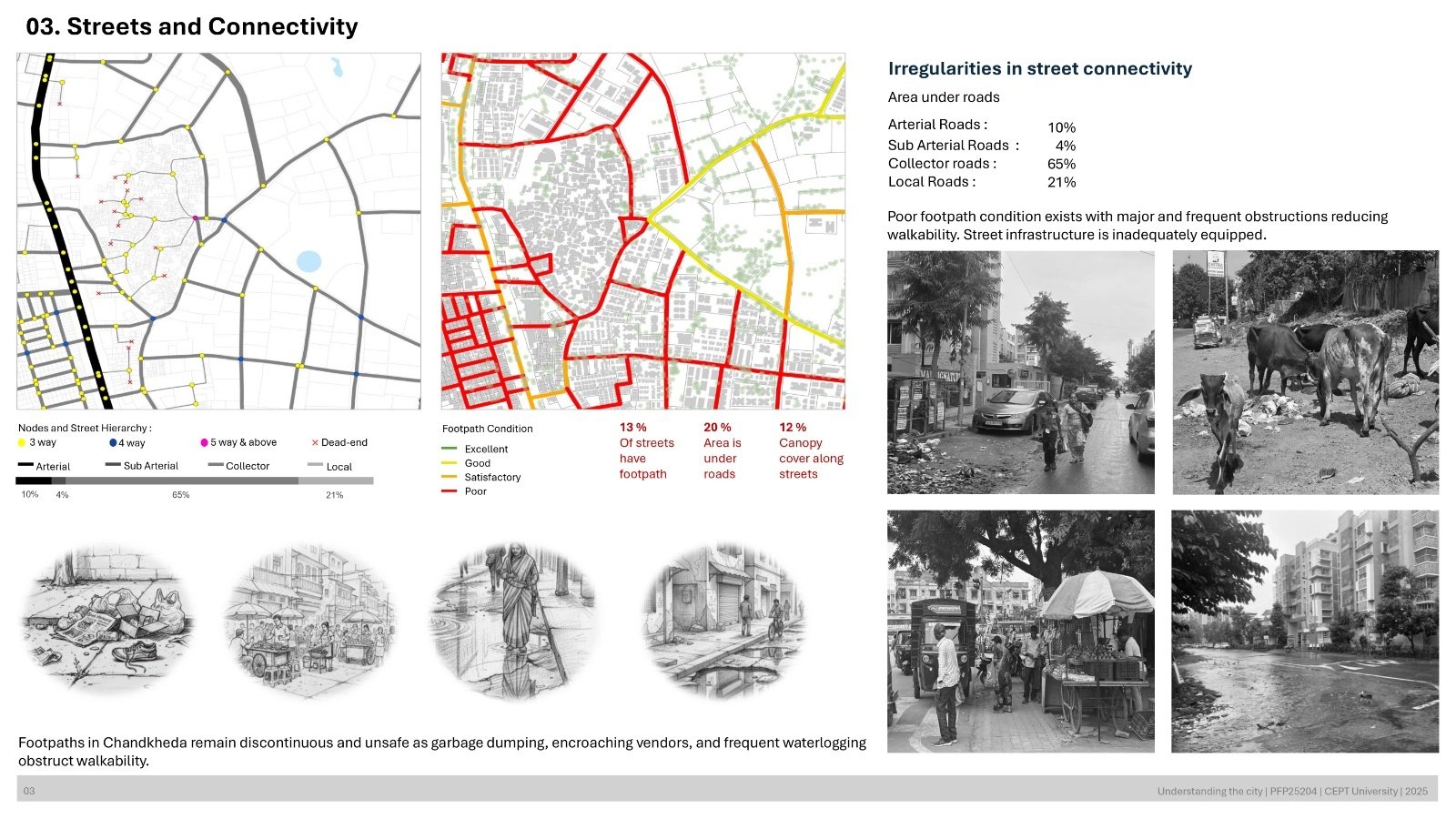
Chandkheda’s street network is structurally connected but functionally weakened, with discontinuous footpaths, obstructions, and poor pedestrian infrastructure severely limiting walkability and safe access.

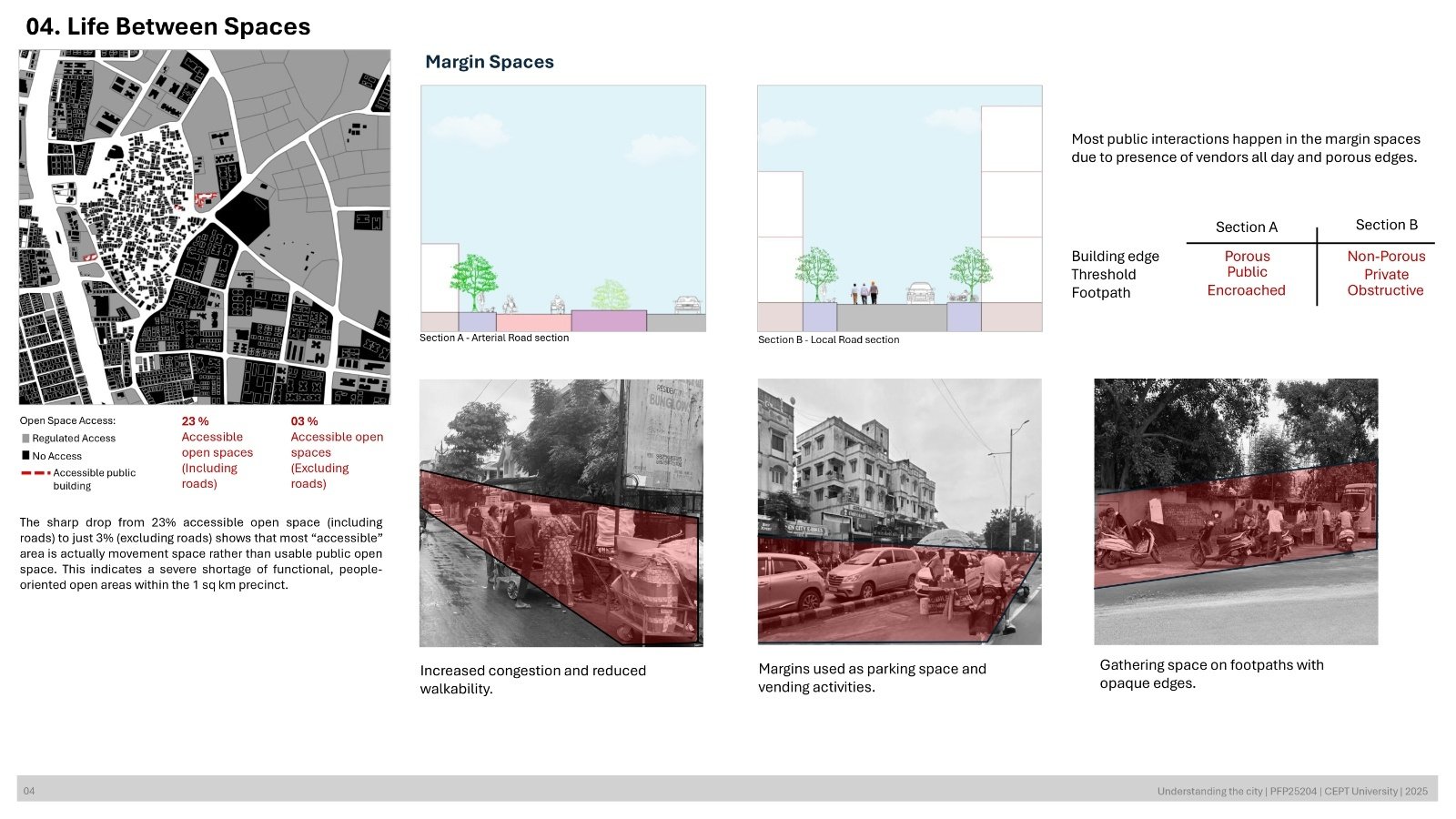
With only 3% usable open space, Chandkheda’s public life is pushed into margin spaces, where encroachments, parking, and porous edges shape informal yet congested everyday interactions.

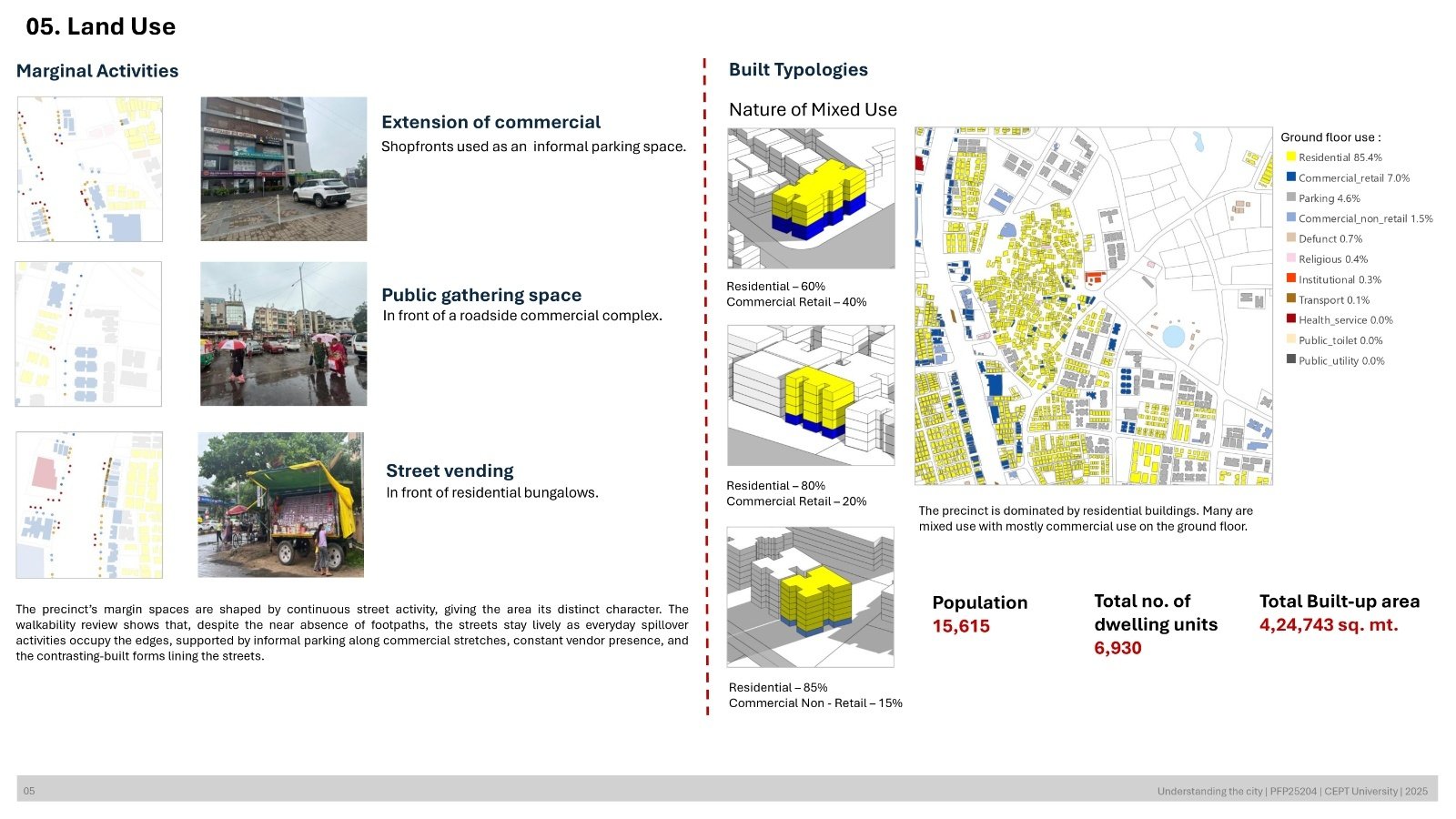
Despite being predominantly residential, Chandkheda’s ground-floor edges function as active spillover zones, where informal parking, vending, and mixed-use frontage collectively animate the streets in the absence of formal public space.

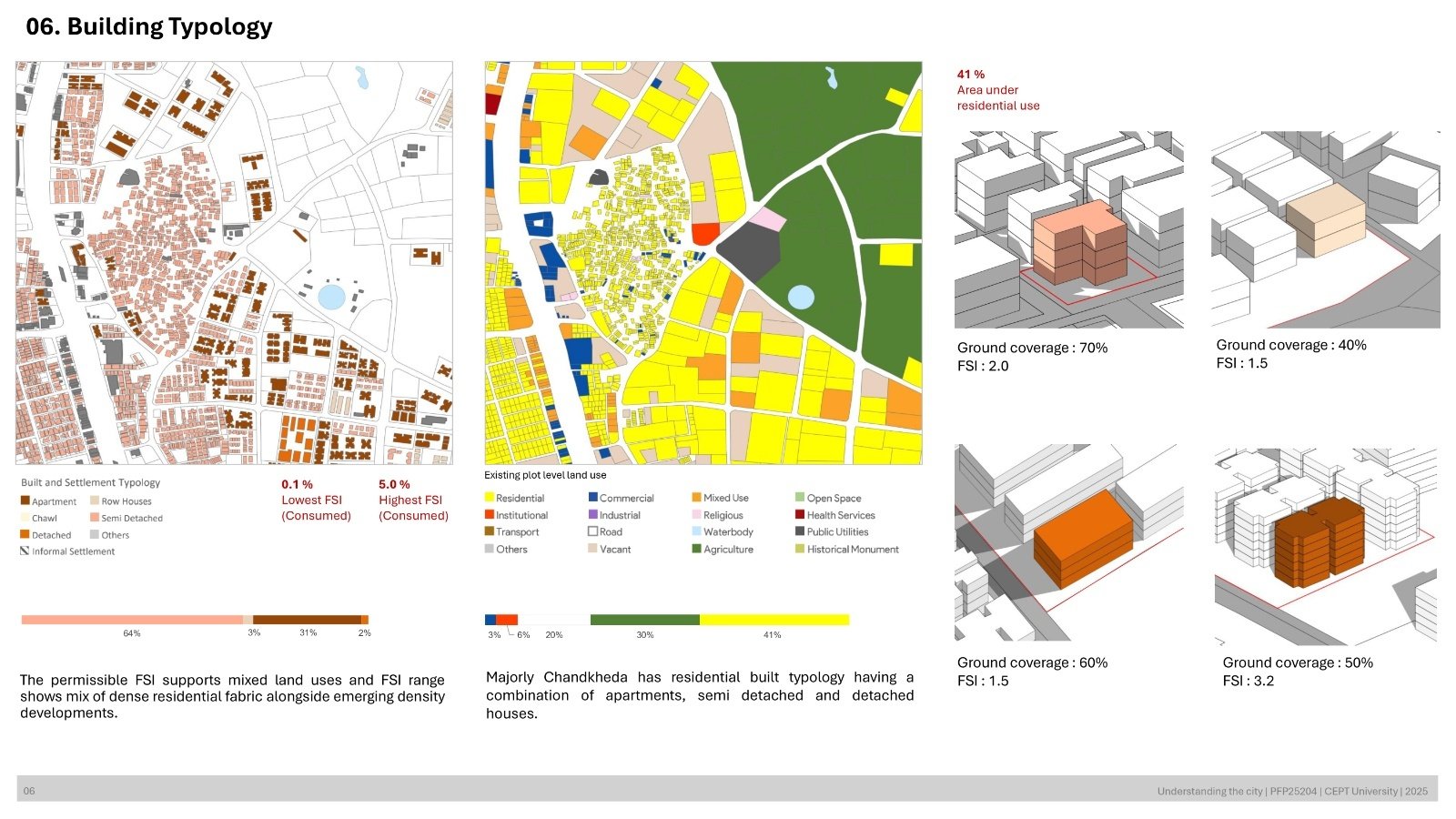
Chandkheda’s building stock combines low- to mid-rise residential forms with selective high-density blocks, reflecting varied FSI consumption driven by plot size, ground coverage, and the gradual shift toward compact apartment-based development.

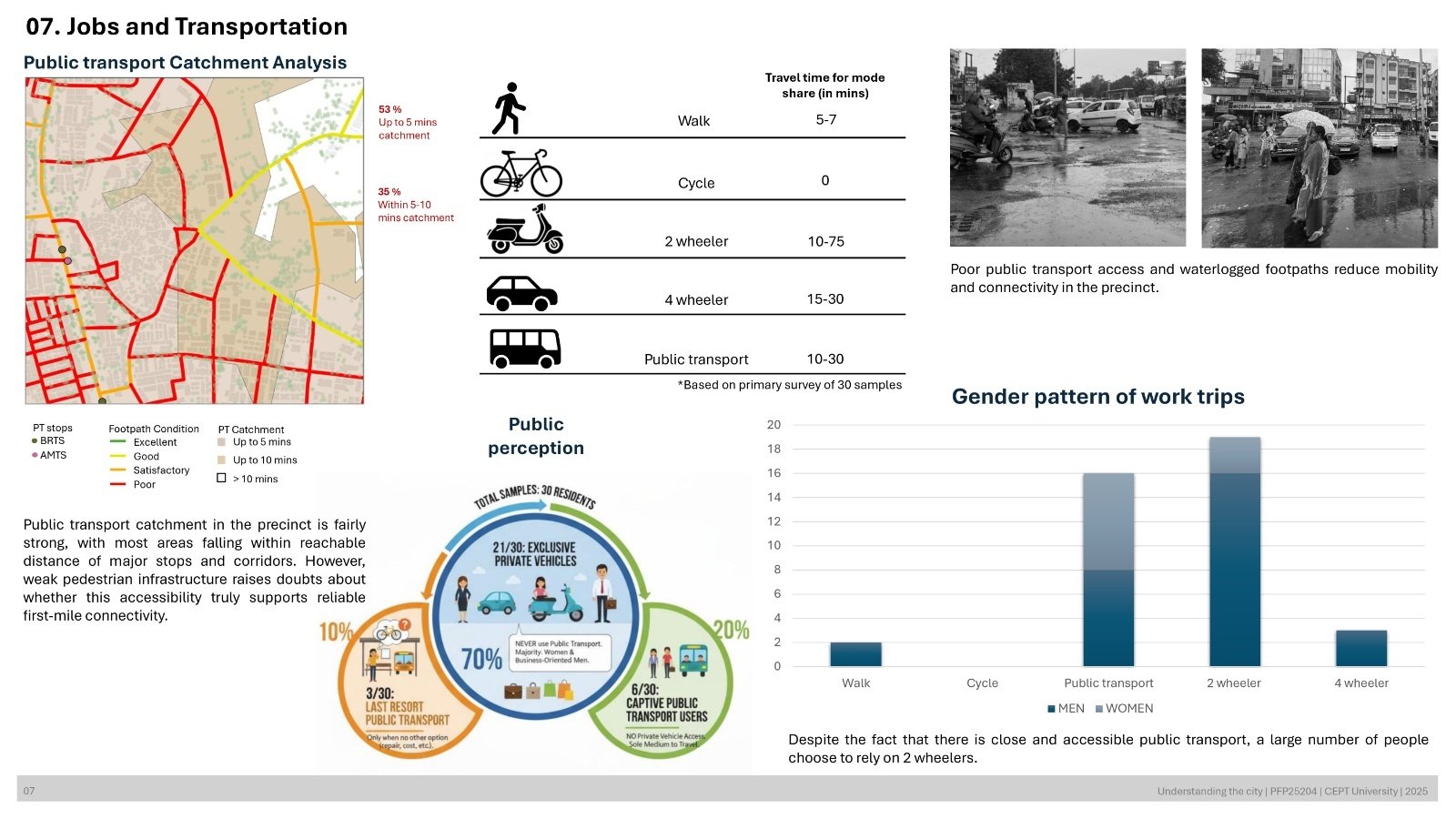
Although public transport stops are within a comfortable catchment for most residents, weak first-mile conditions—waterlogged, discontinuous, and unsafe footpaths, push people toward private two-wheelers, shaping daily mobility and gendered travel choices.

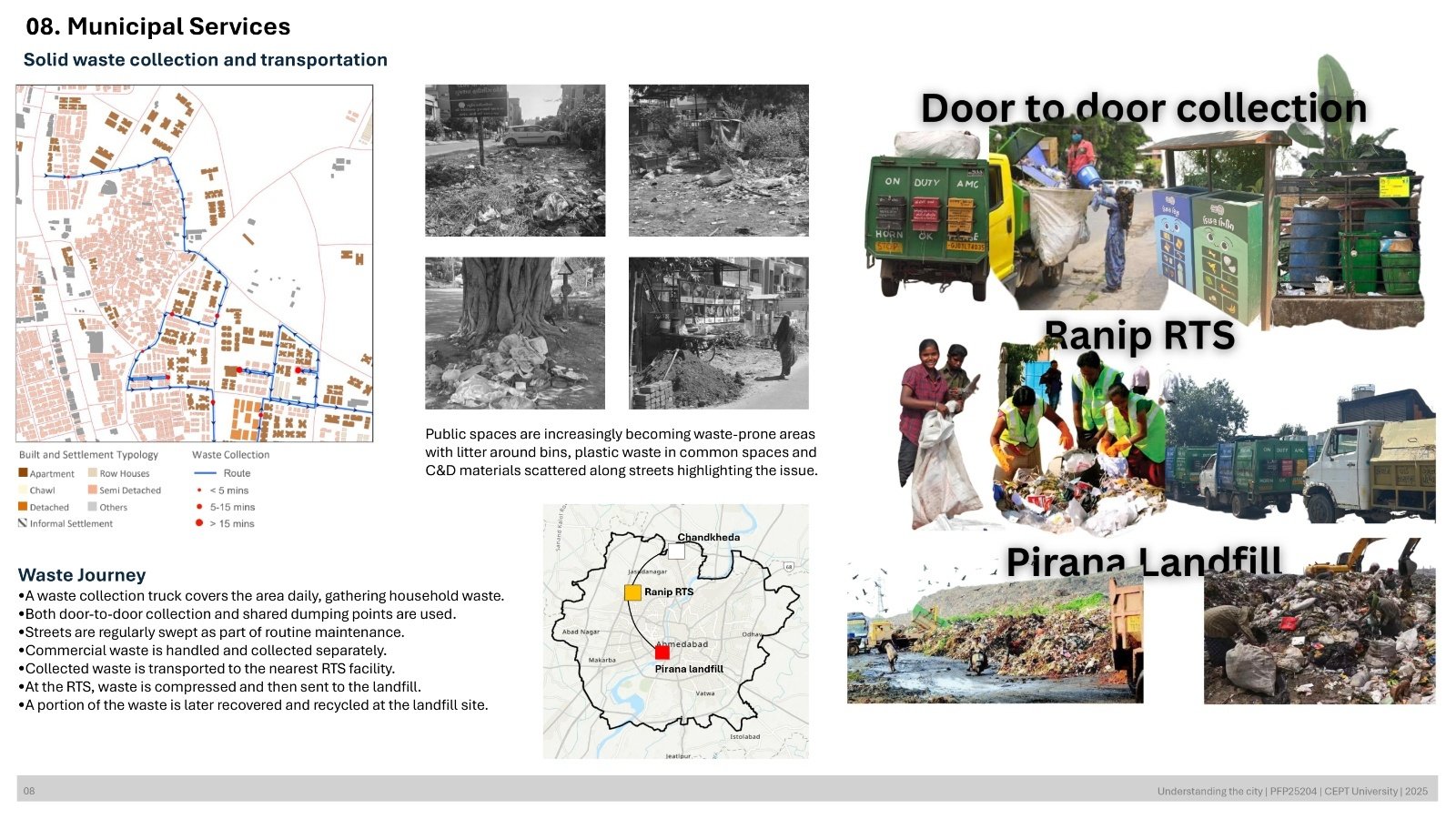
Formal waste collection exists, but inconsistent on-ground practices are turning common spaces into waste-prone zones. This reflects a clear gap between service coverage and actual street-level upkeep.

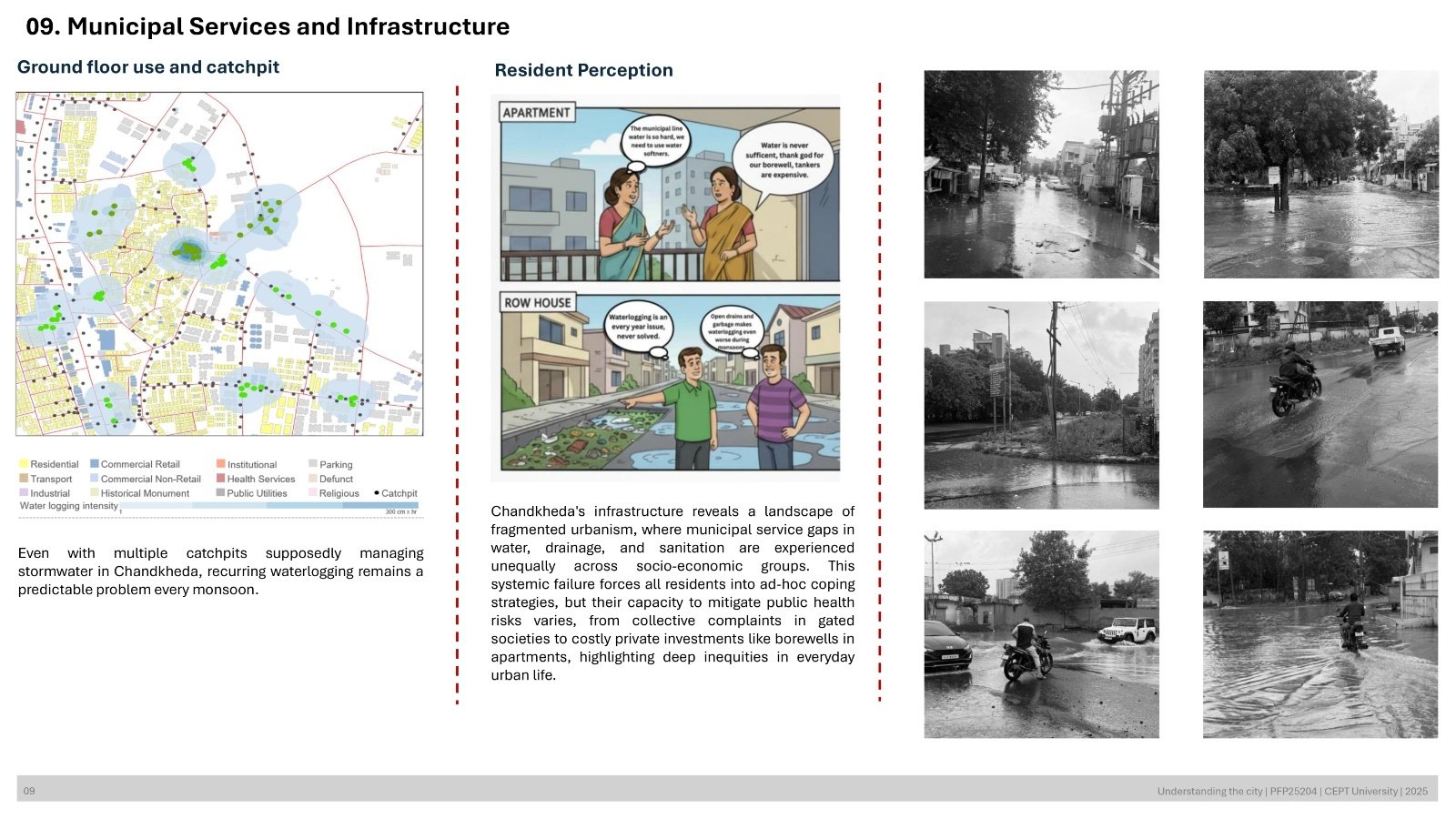
Municipal services and infrastructure in Chandkheda, particularly concerning stormwater drainage and sanitation, are inadequate, leading to frequent waterlogging and reflecting socio-economic inequalities in service provision.

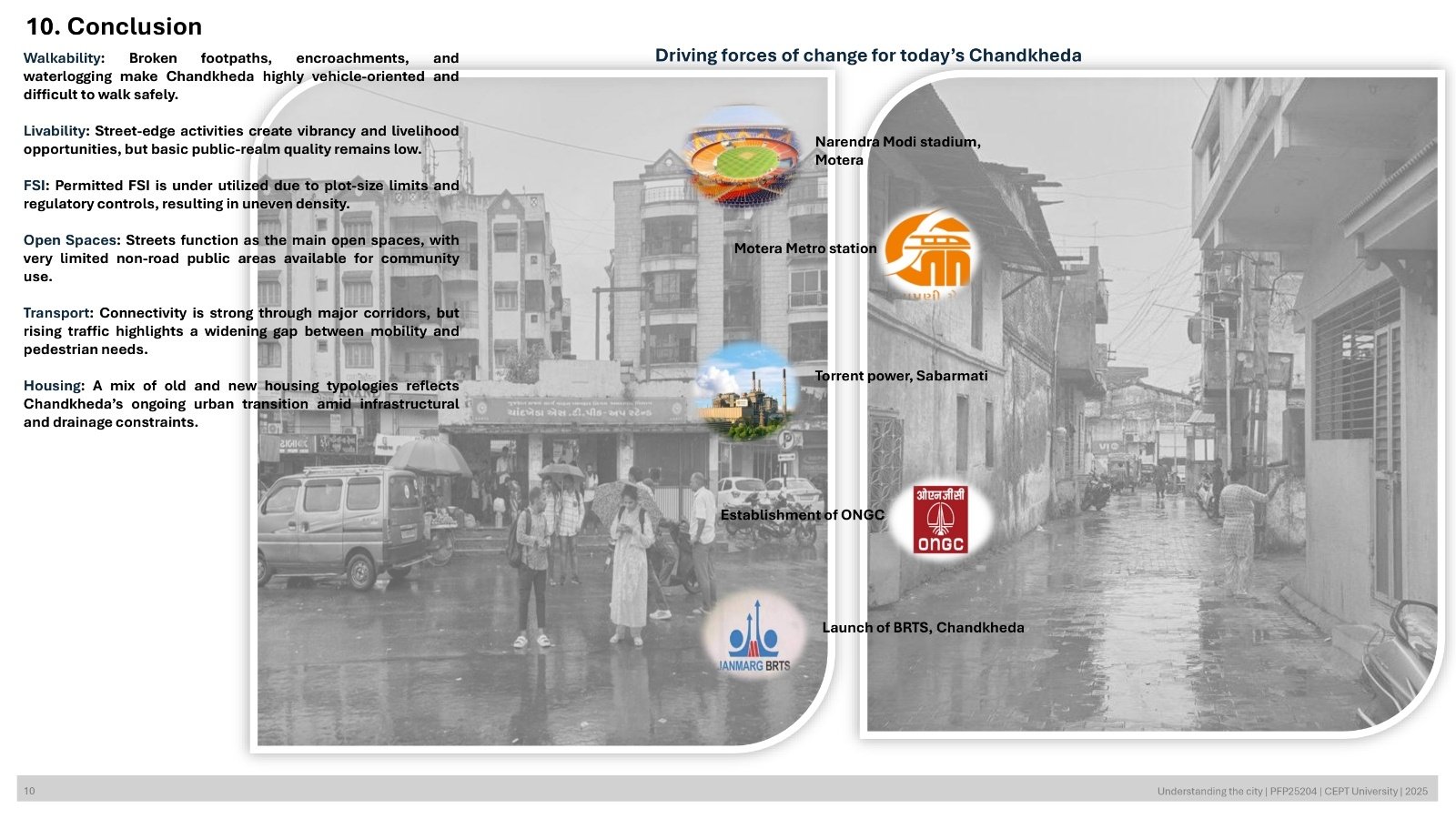
Chandkheda faces compounding urban challenges (poor walkability, low livability, infrastructure deficits) that contrast sharply with the large-scale regional developments (stadium, BRTS, riverfront) acting as powerful, yet potentially uneven, forces for change.