Hrishikesh Unmesh Baikar

UP4002-11

Odhav : A Precinct Where Industry and Daily Life Meet

Odhav as a transitional urban precinct where industry, housing, mobility, and municipal systems intersect to shape everyday life. Anchored by the GIDC industrial belt and connected through key mobility corridors, the area reveals layered urban conditions—porous and opaque edges, mixed-use streets, ecological gaps, and uneven access to public services. By mapping built form, demographics, movement, civic infrastructure, and governance, the study uncovers how inequalities in water, sanitation, mobility, and public space shape lived experiences. The project aims to understand Odhav as a negotiated urban landscape where citizens often bridge the gaps left by formal planning.
Report Content

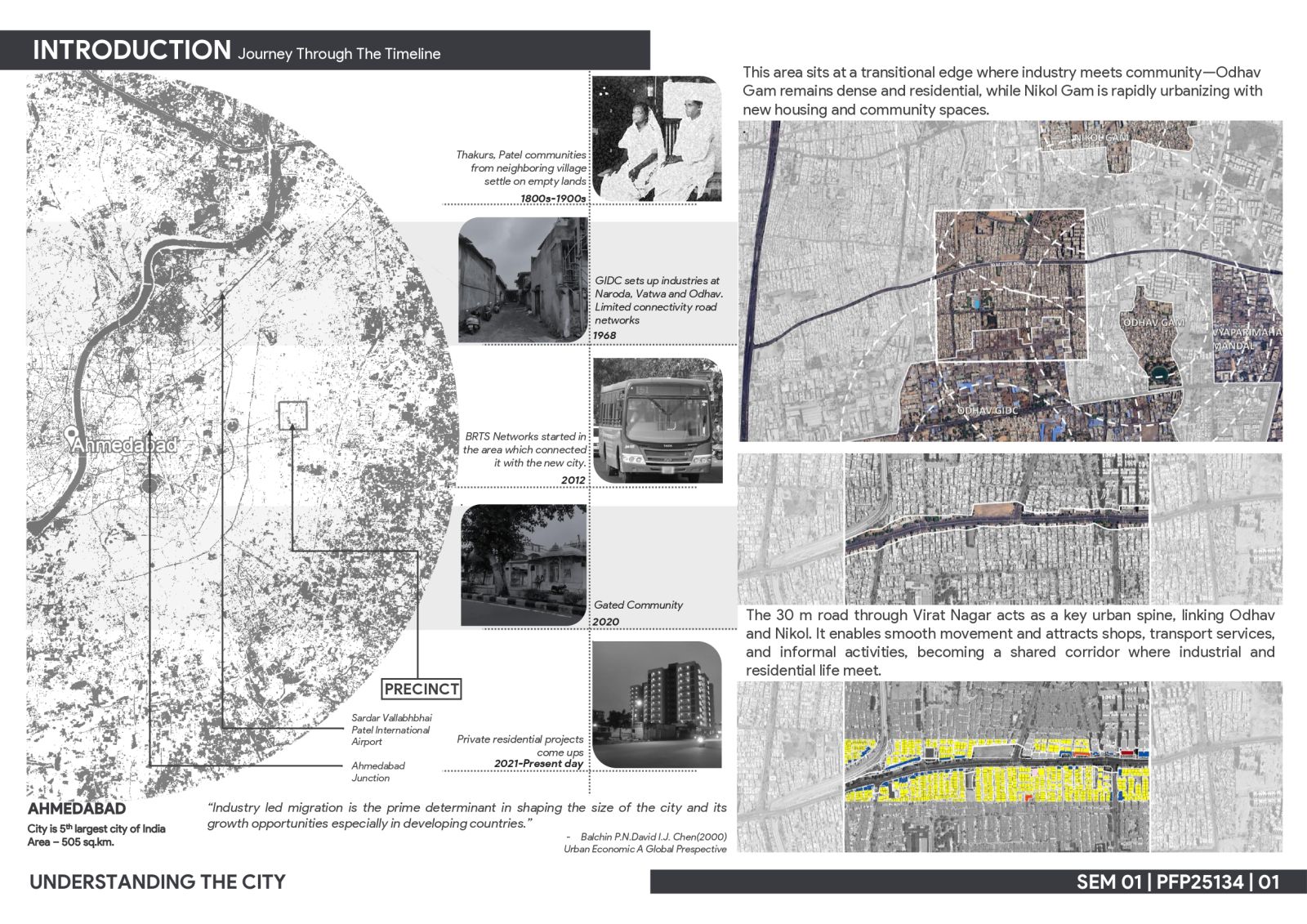
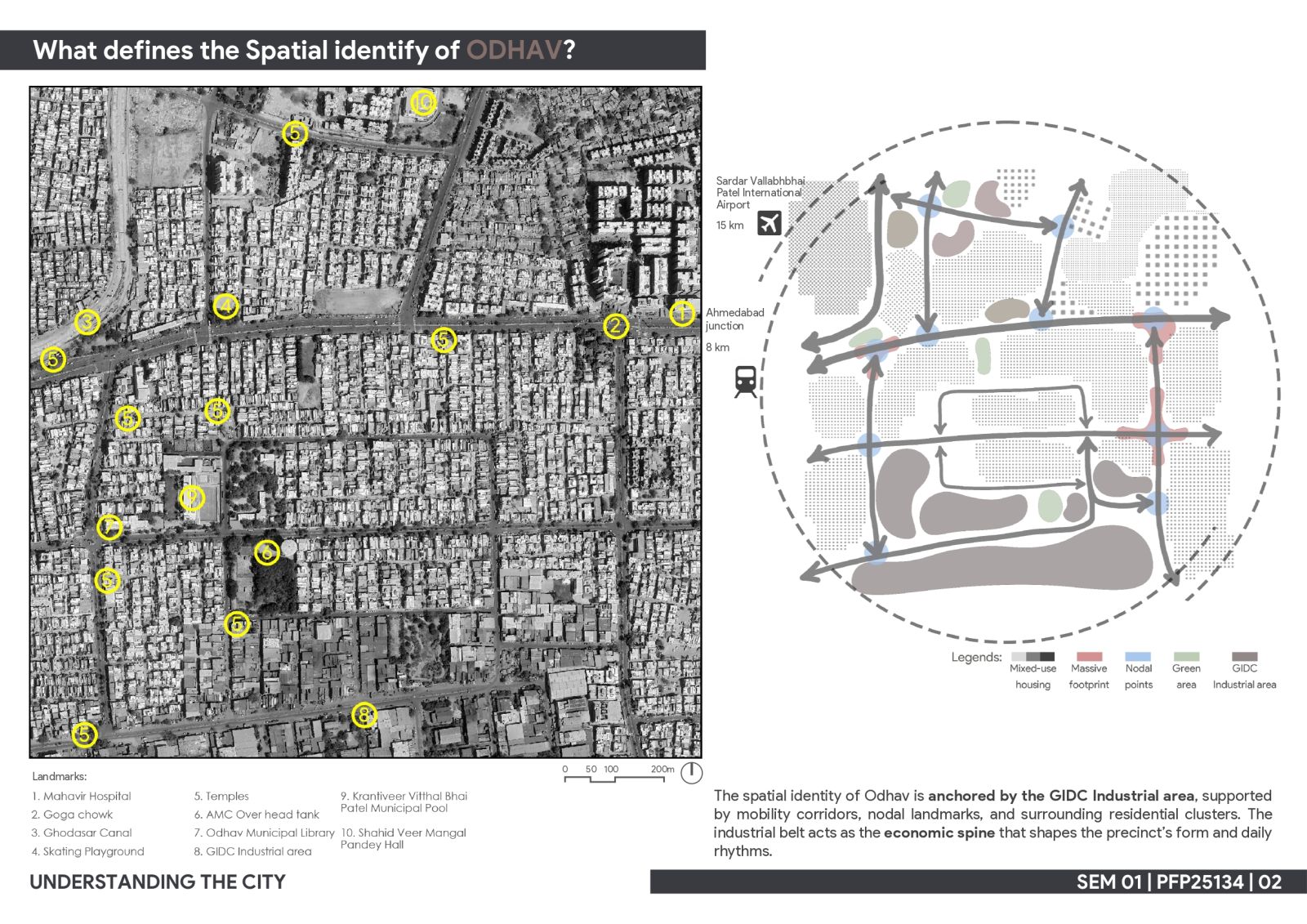
Odhav has evolved at the intersection of industry and community, with mobility corridors linking its growing residential fabric.

The GIDC industrial belt anchors Odhav’s spatial identity and drives daily urban rhythms.

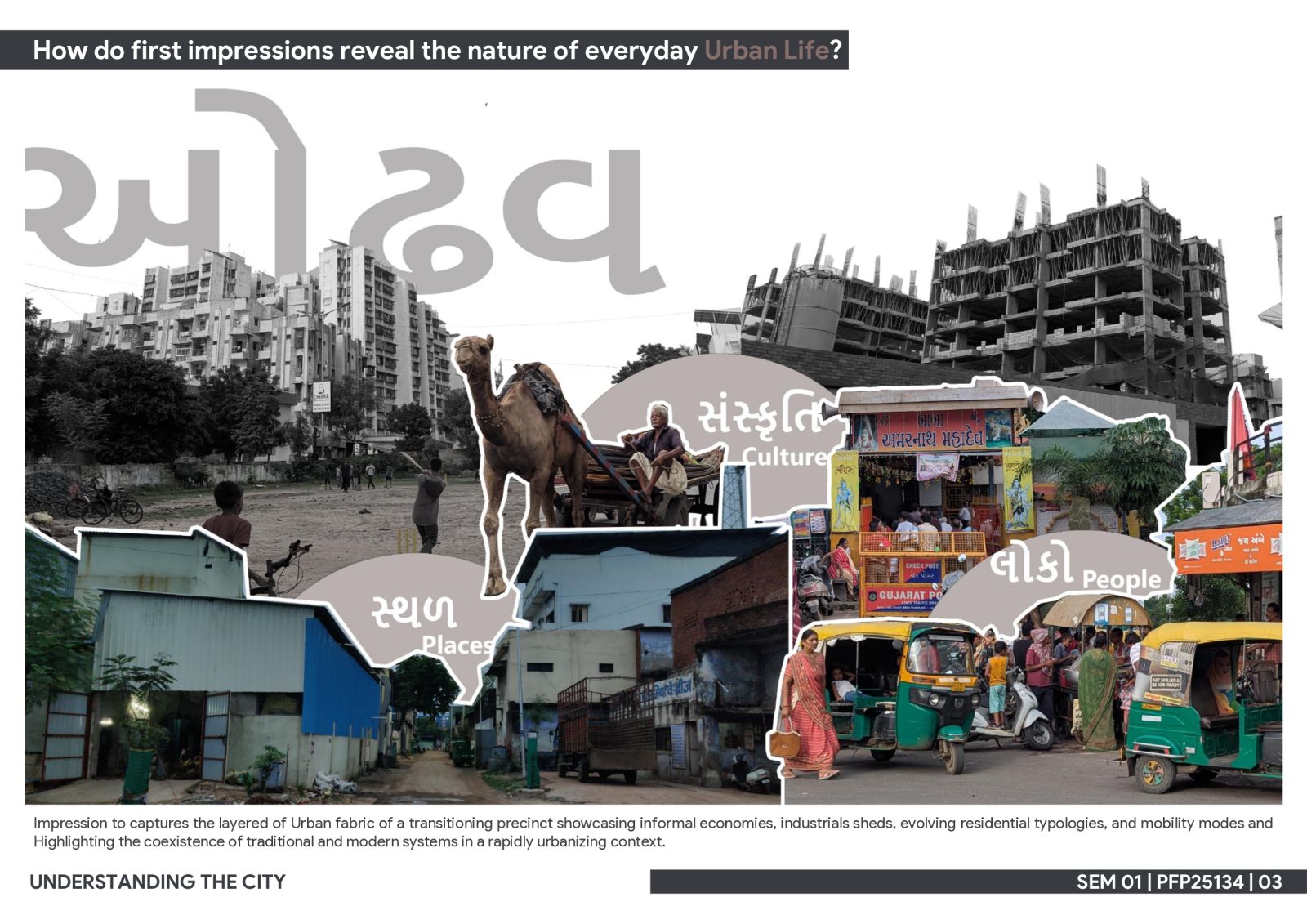
Odhav’s everyday life is defined by layered urban textures where informal and modern systems coexist.

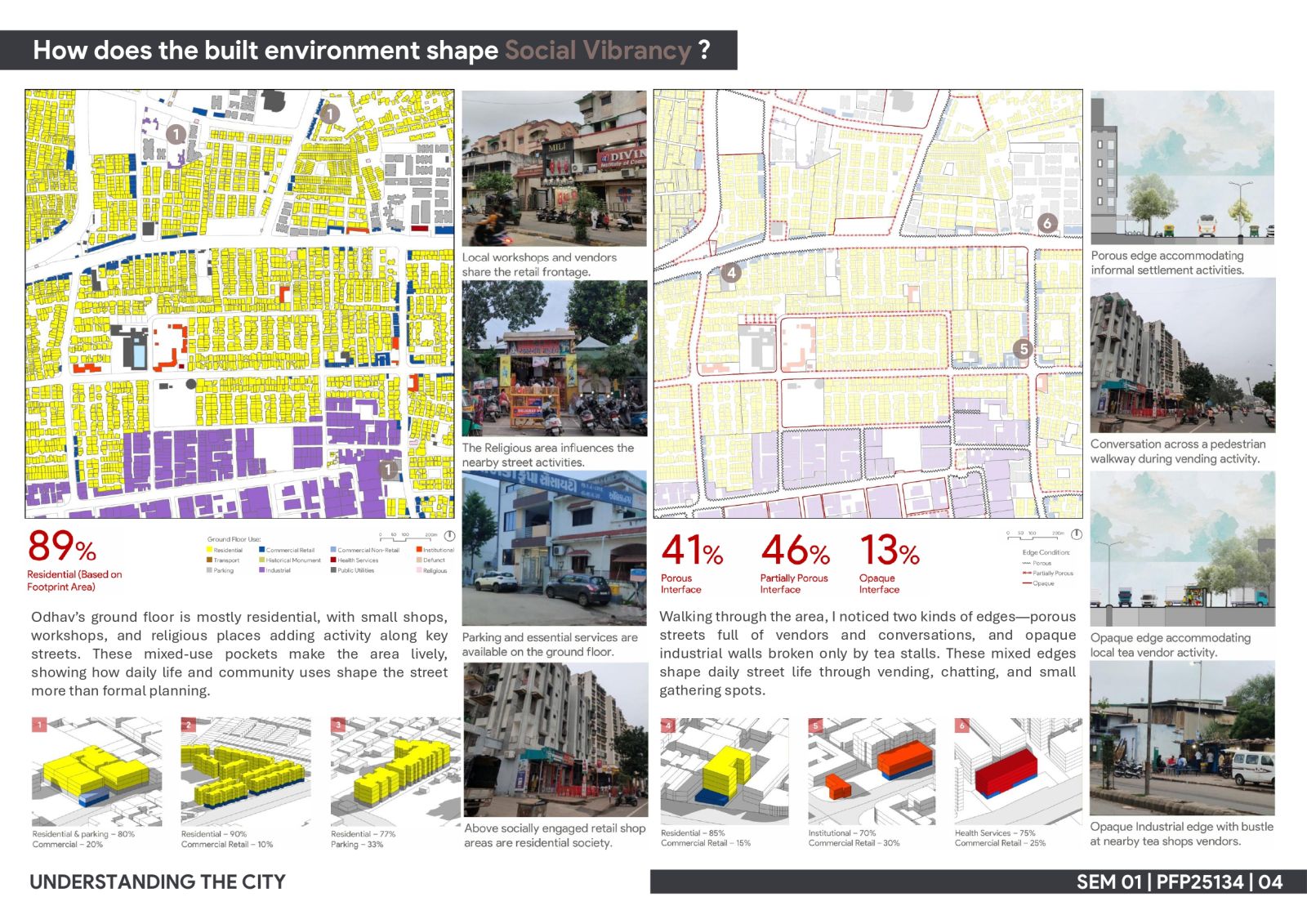
Mixed-use edges and active ground floors create lively social streets across the precinct.

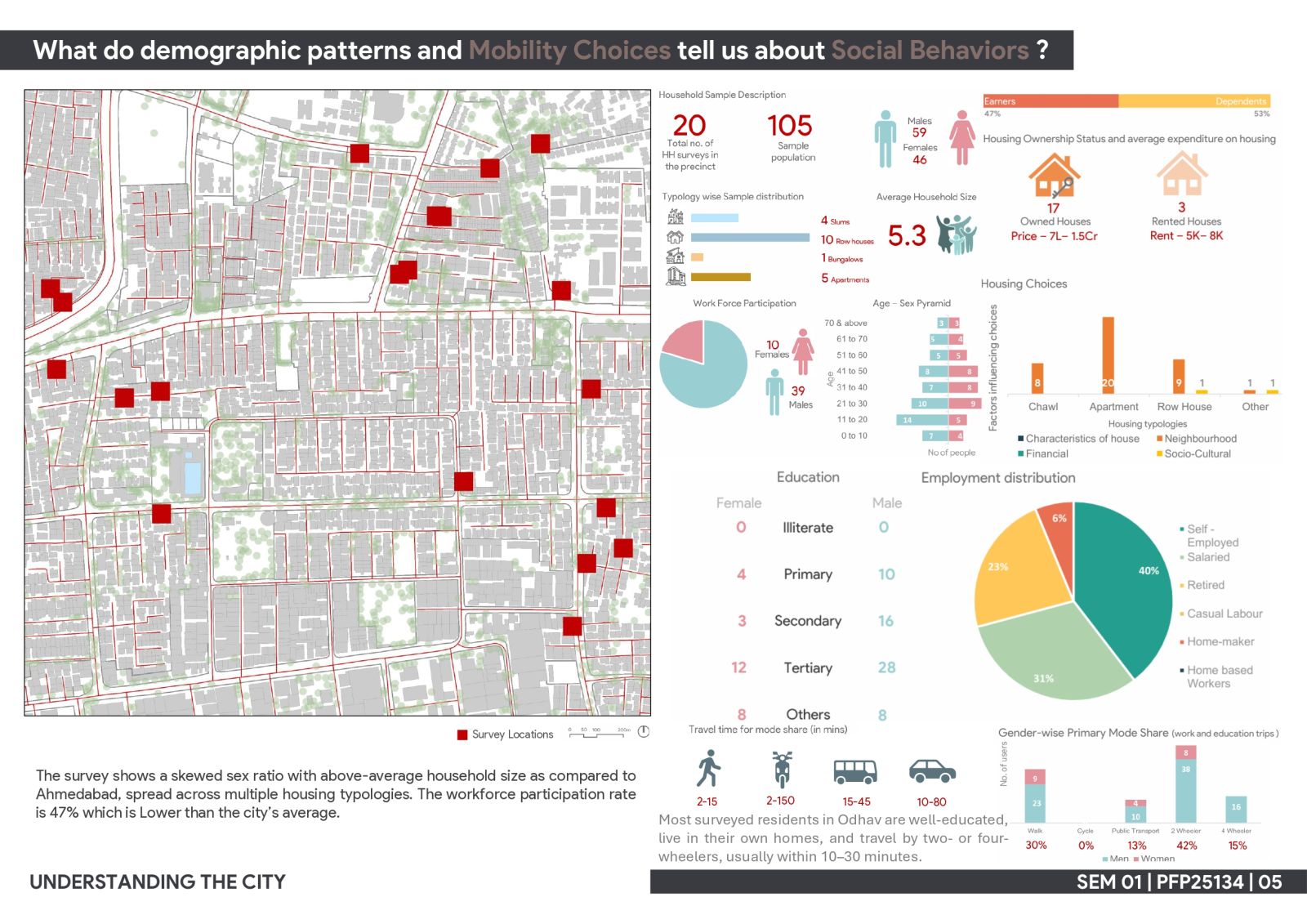
A young, educated population relies on private transport, revealing mobility dependence and uneven participation in the workforce.

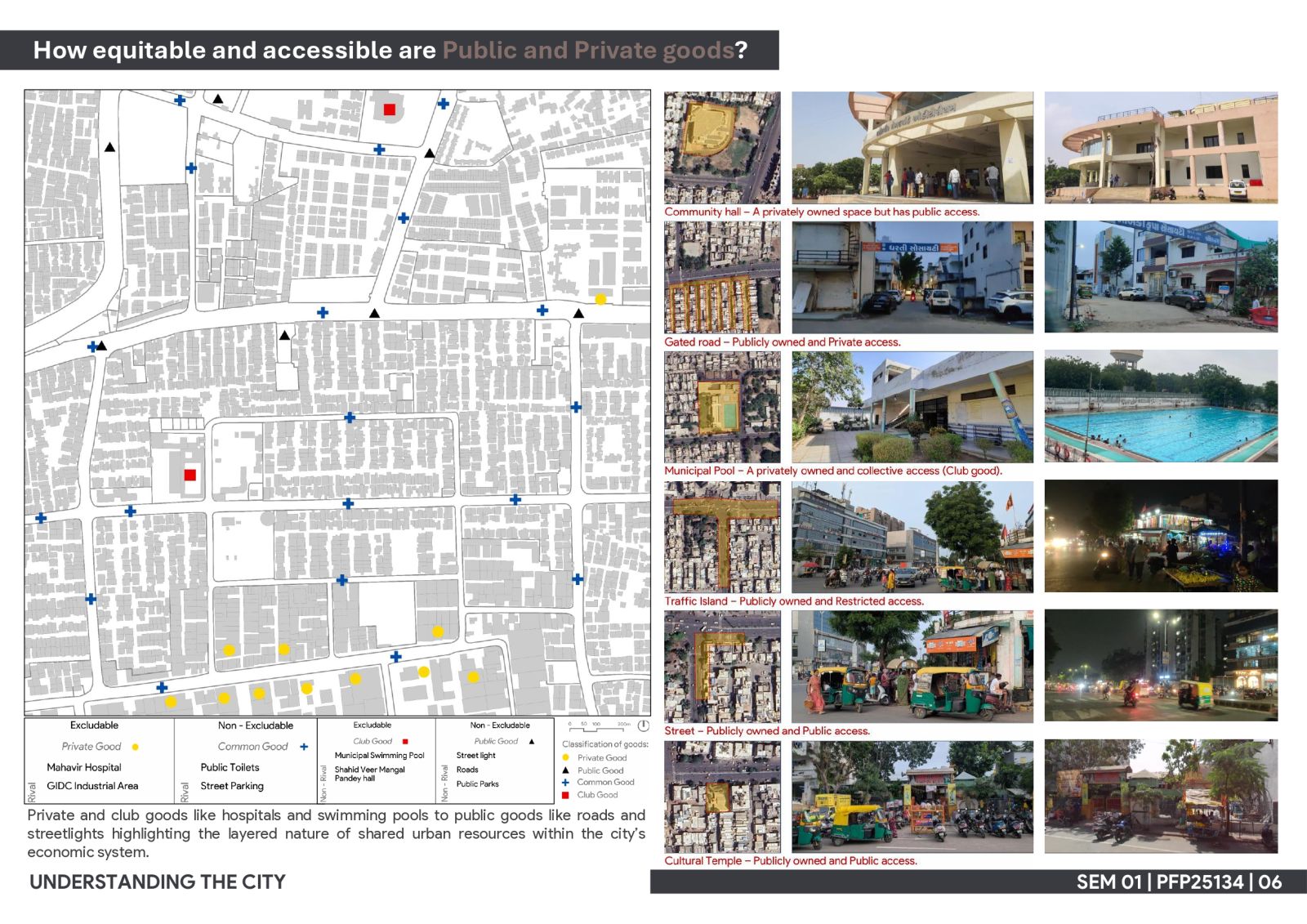
Access to public and private facilities varies widely, showing uneven distribution of shared urban resources.

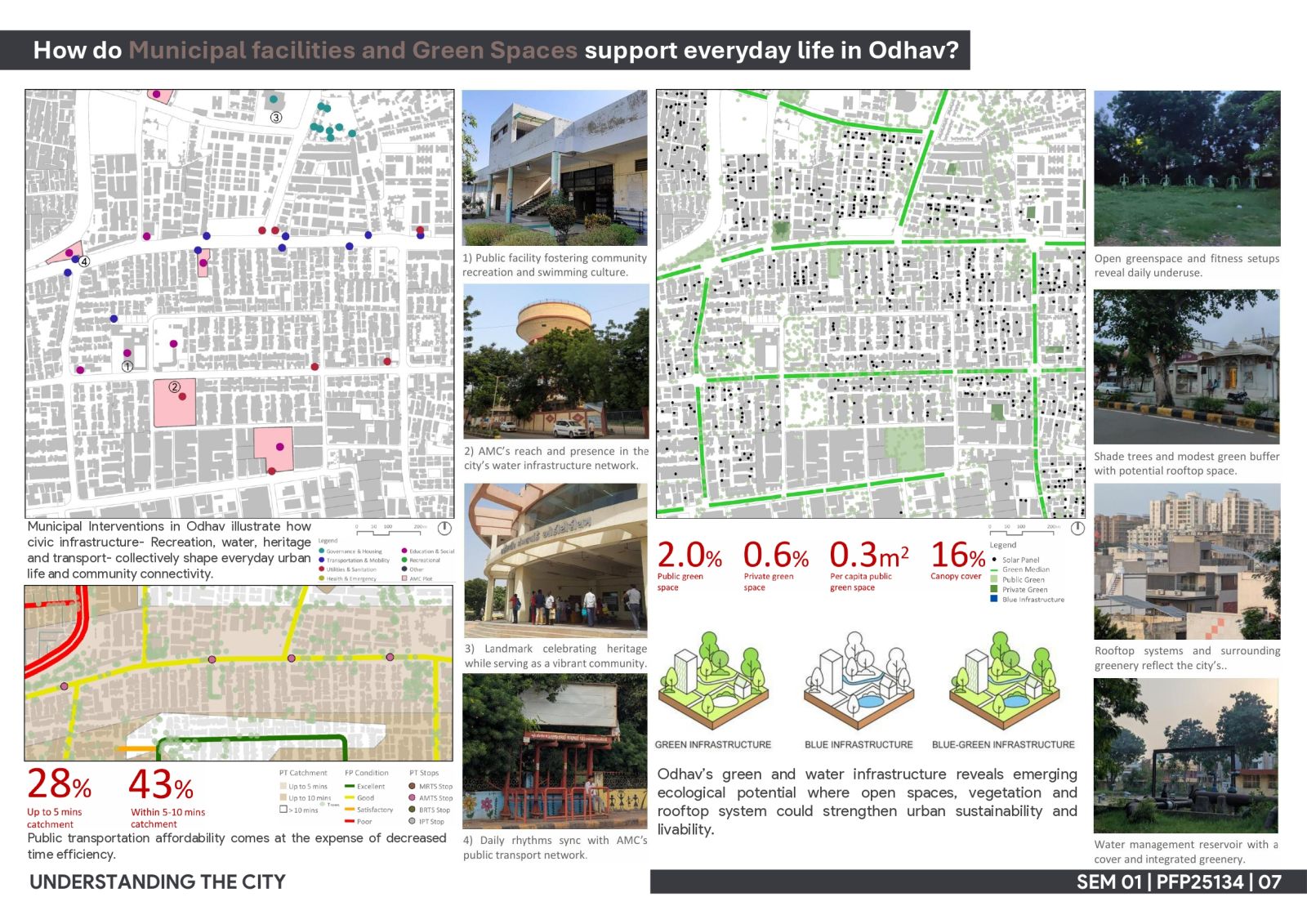
Civic services and emerging green spaces play a key role in shaping everyday livability and ecological potential.

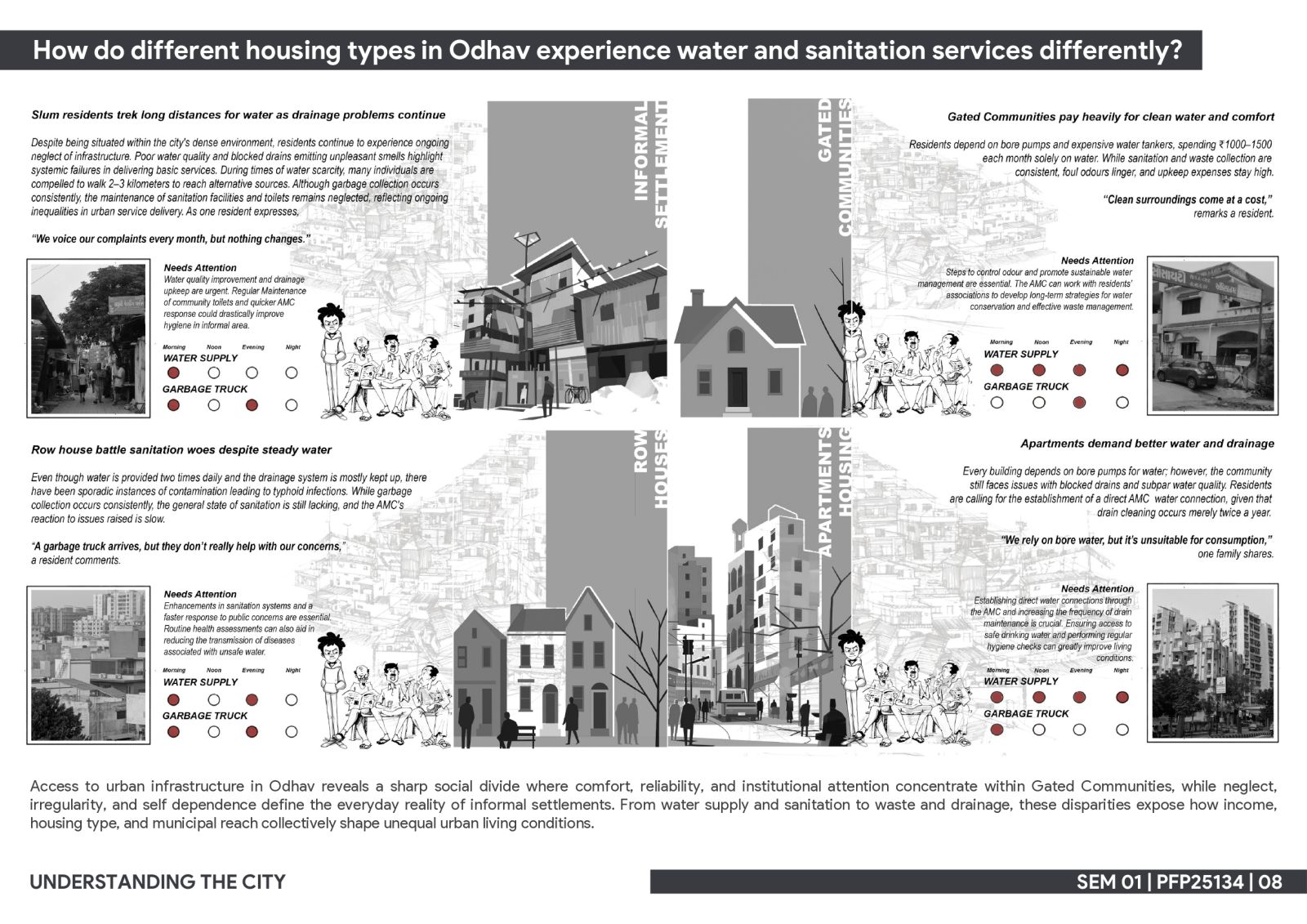
Different housing types face starkly unequal access to water, sanitation, and municipal services.

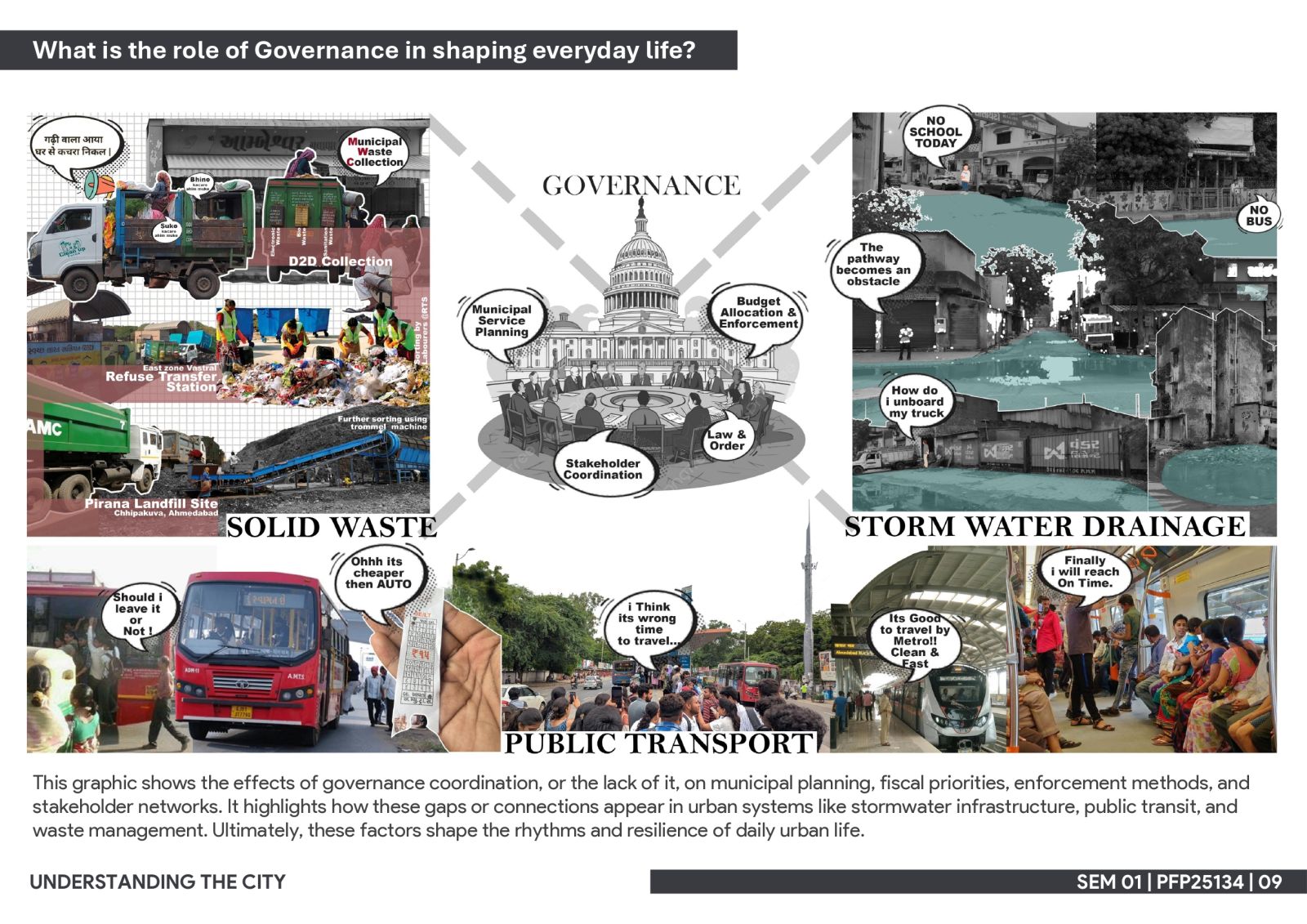
Gaps in governance directly shape the reliability of waste, drainage, and mobility systems in daily urban life.

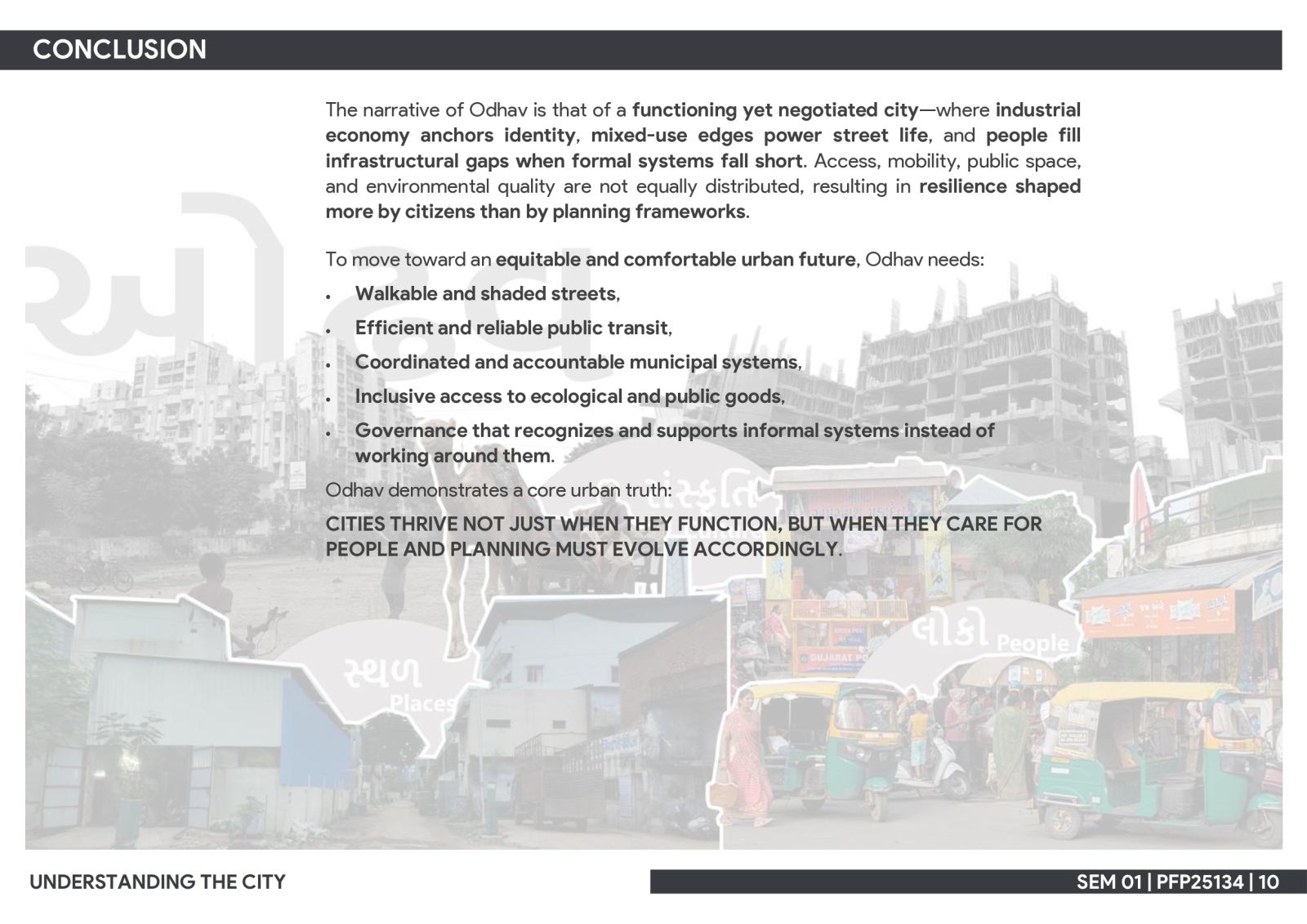
Odhav functions through negotiated resilience, where people fill gaps left by uneven planning and infrastructure.