Your browser is out-of-date!
For a richer surfing experience on our website, please update your browser. Update my browser now!
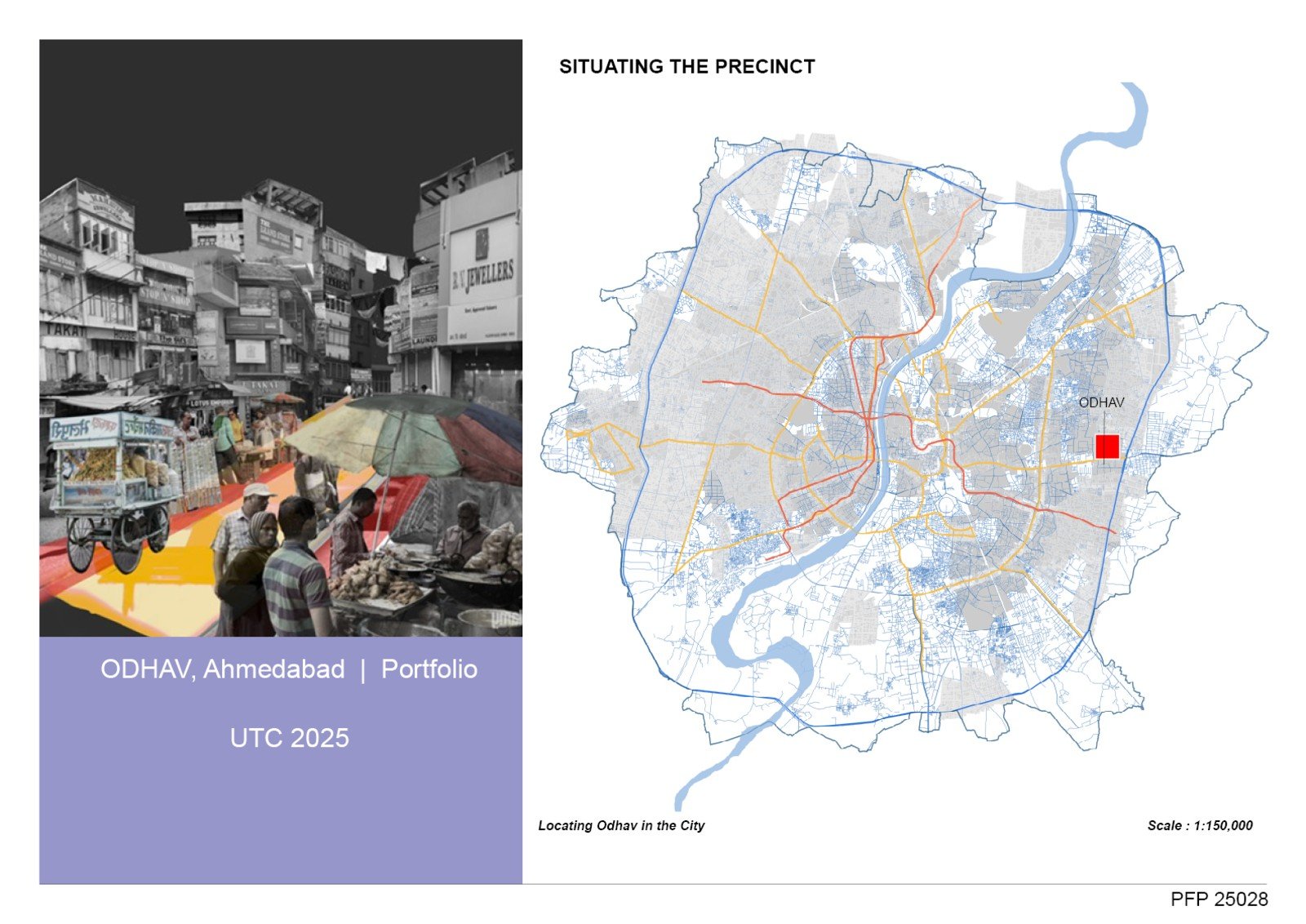
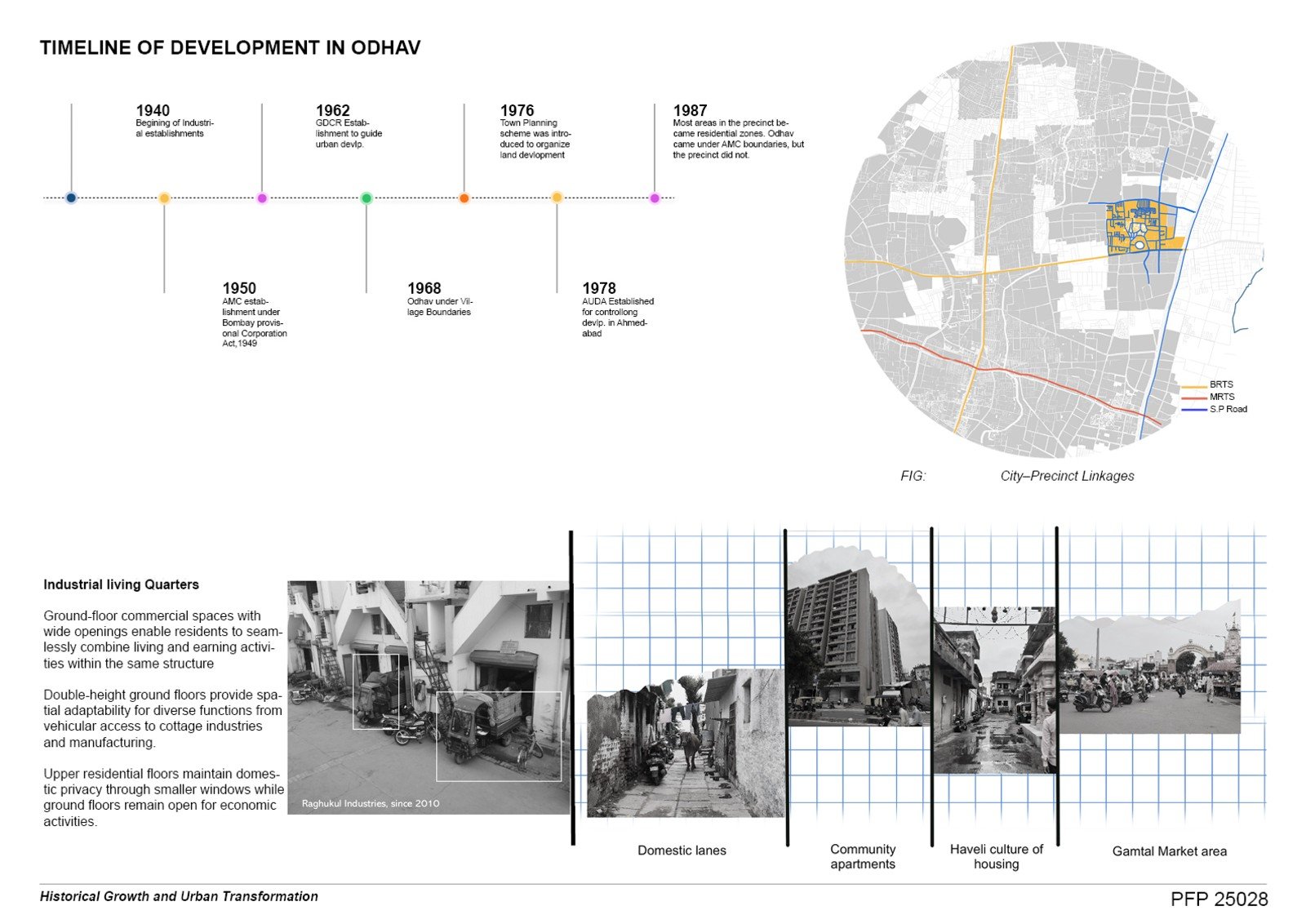
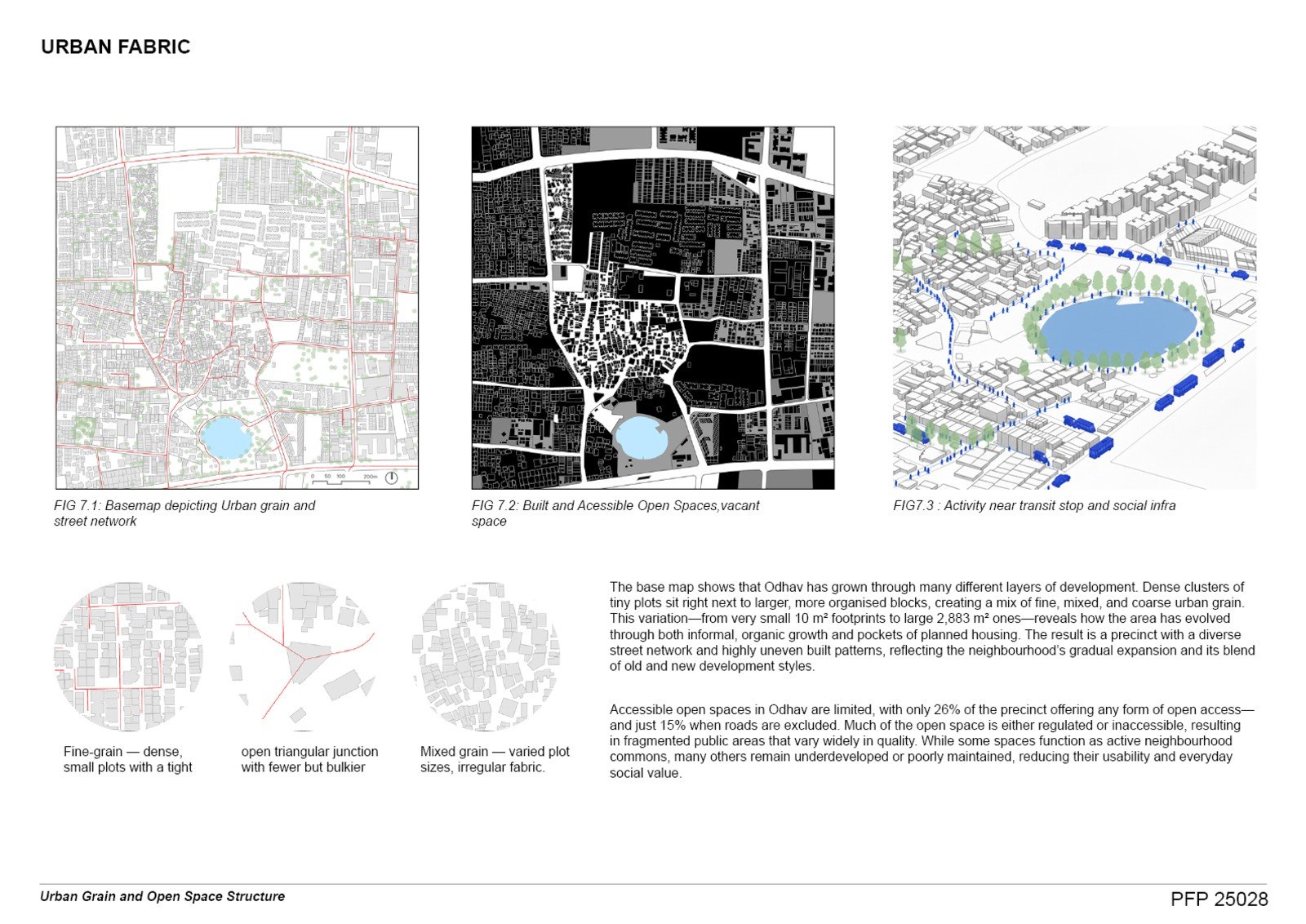
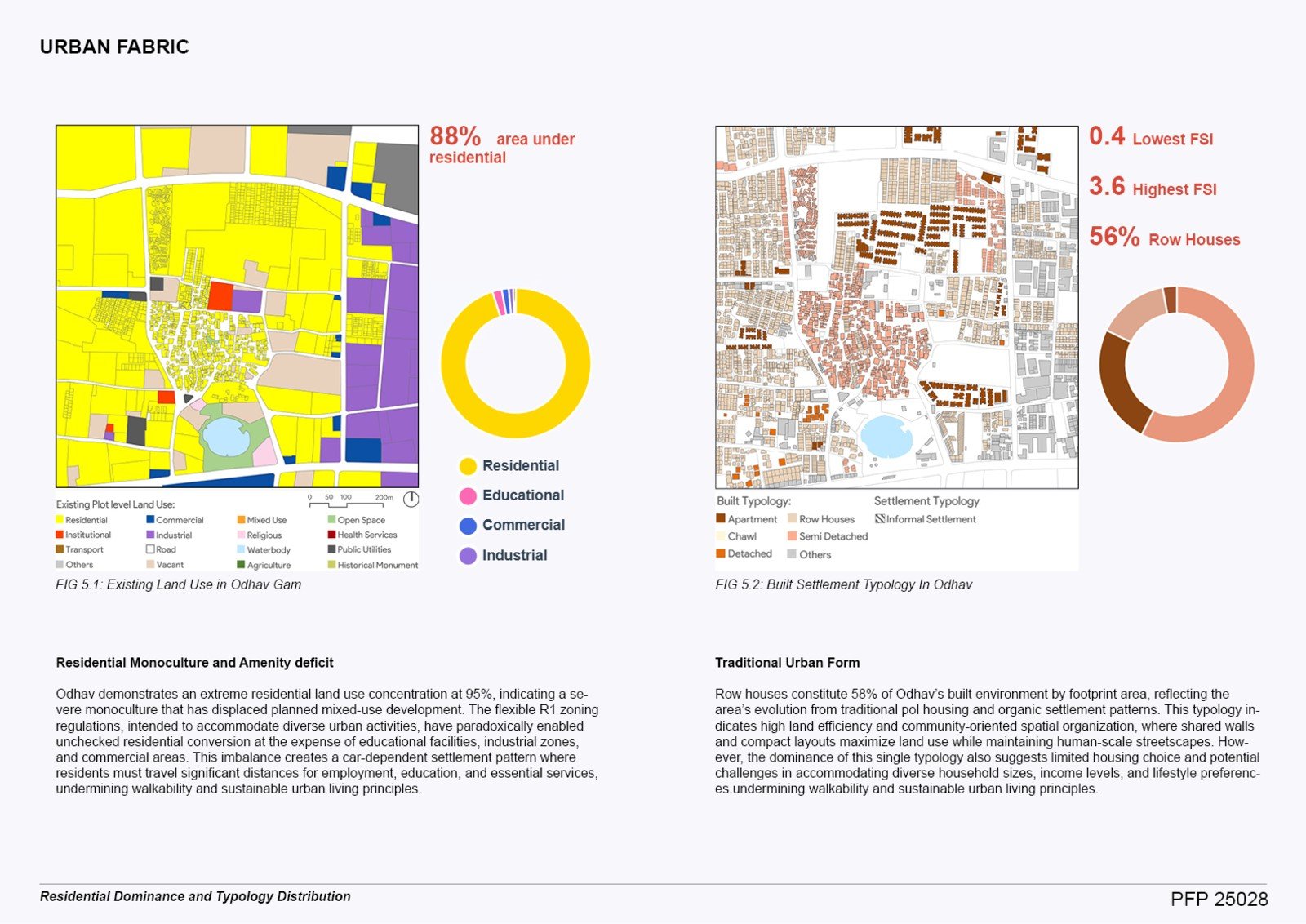
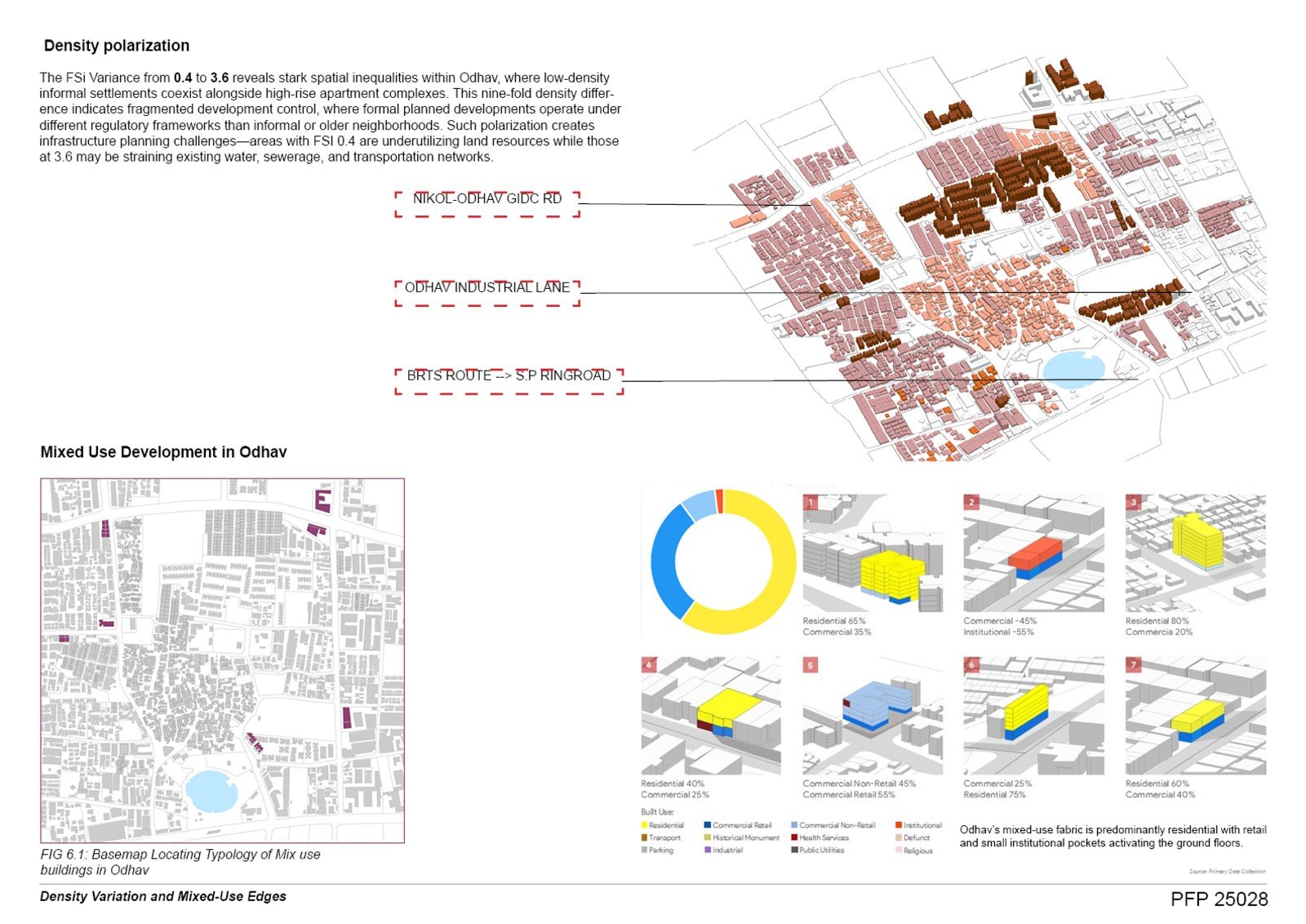
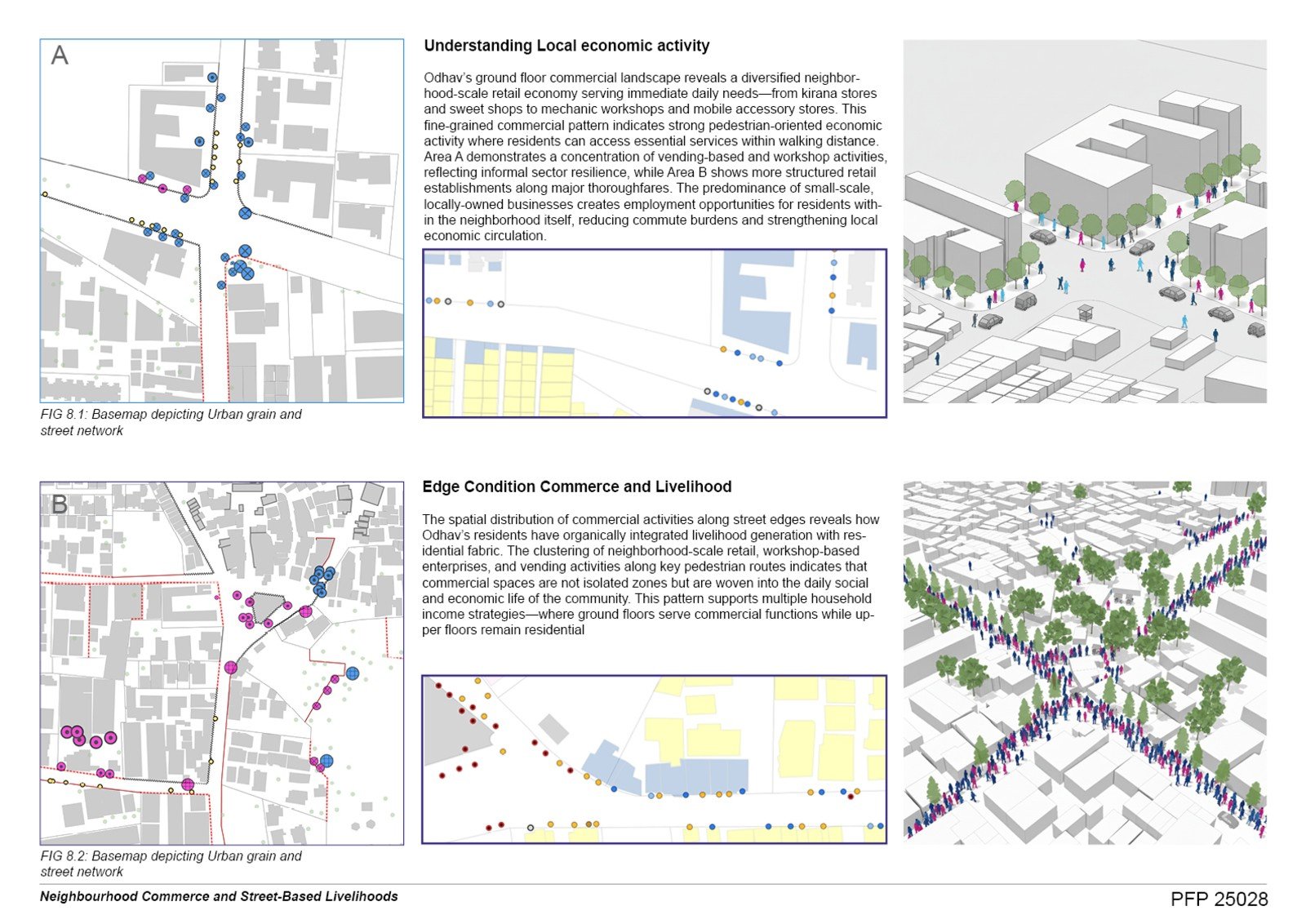
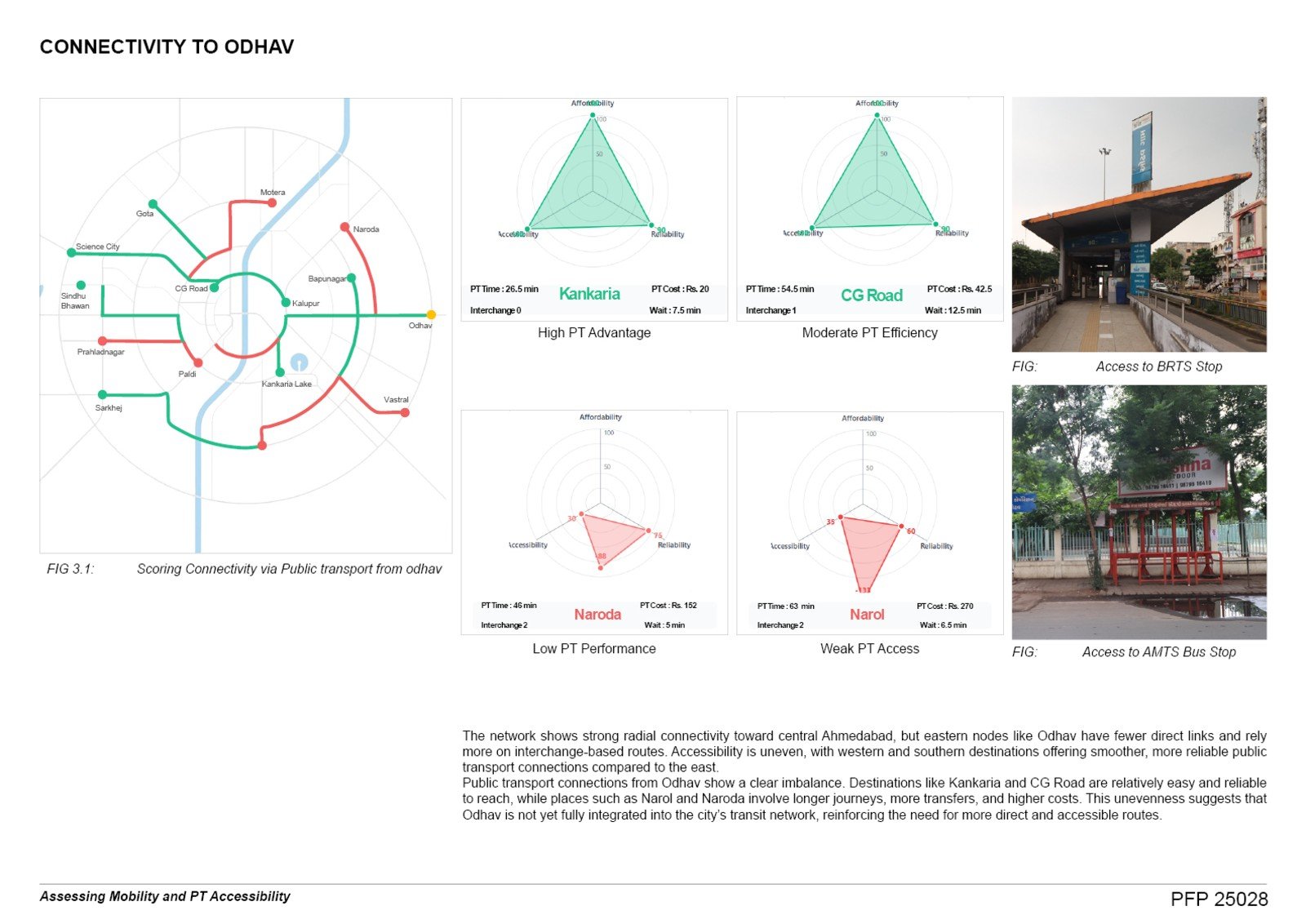
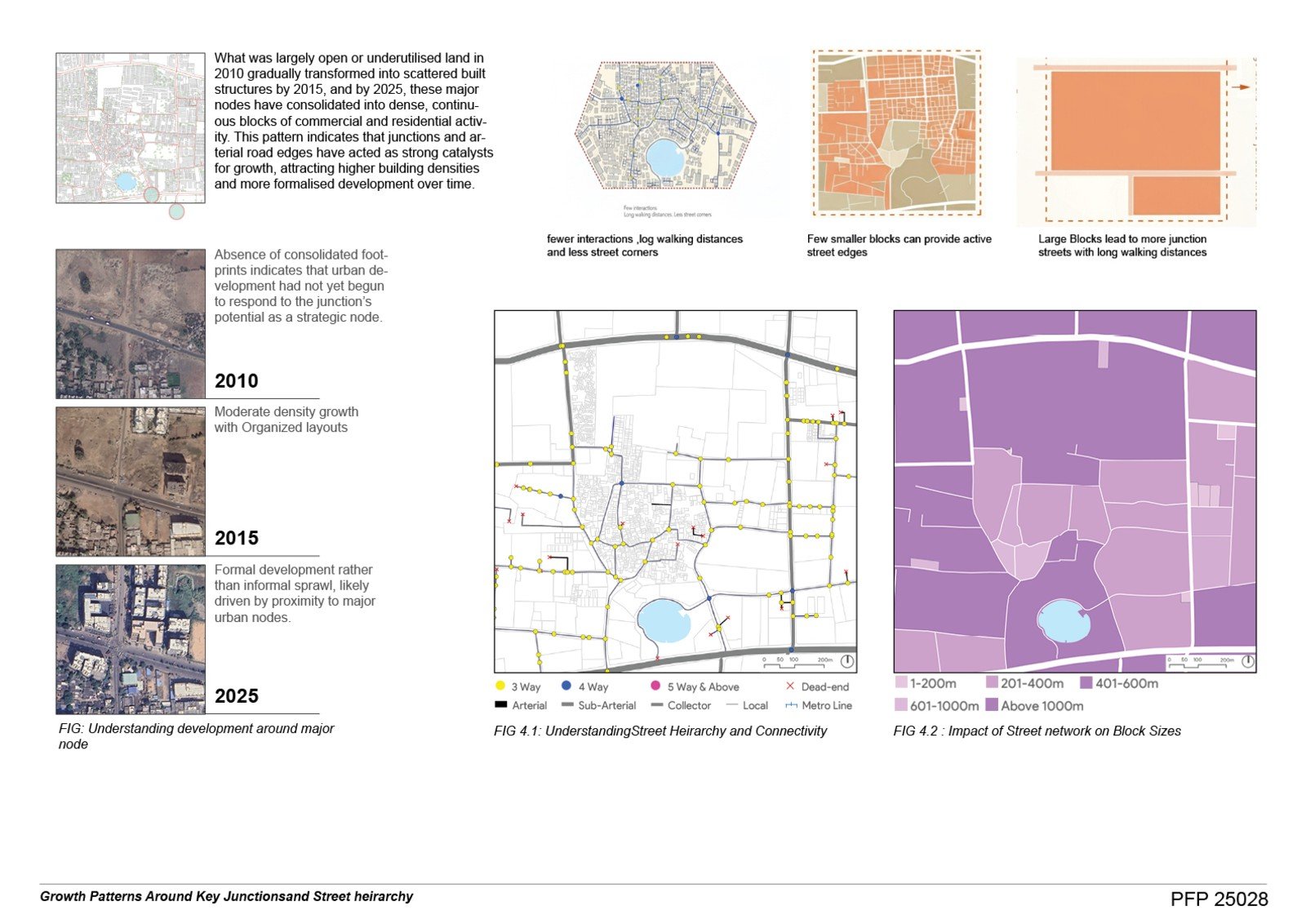
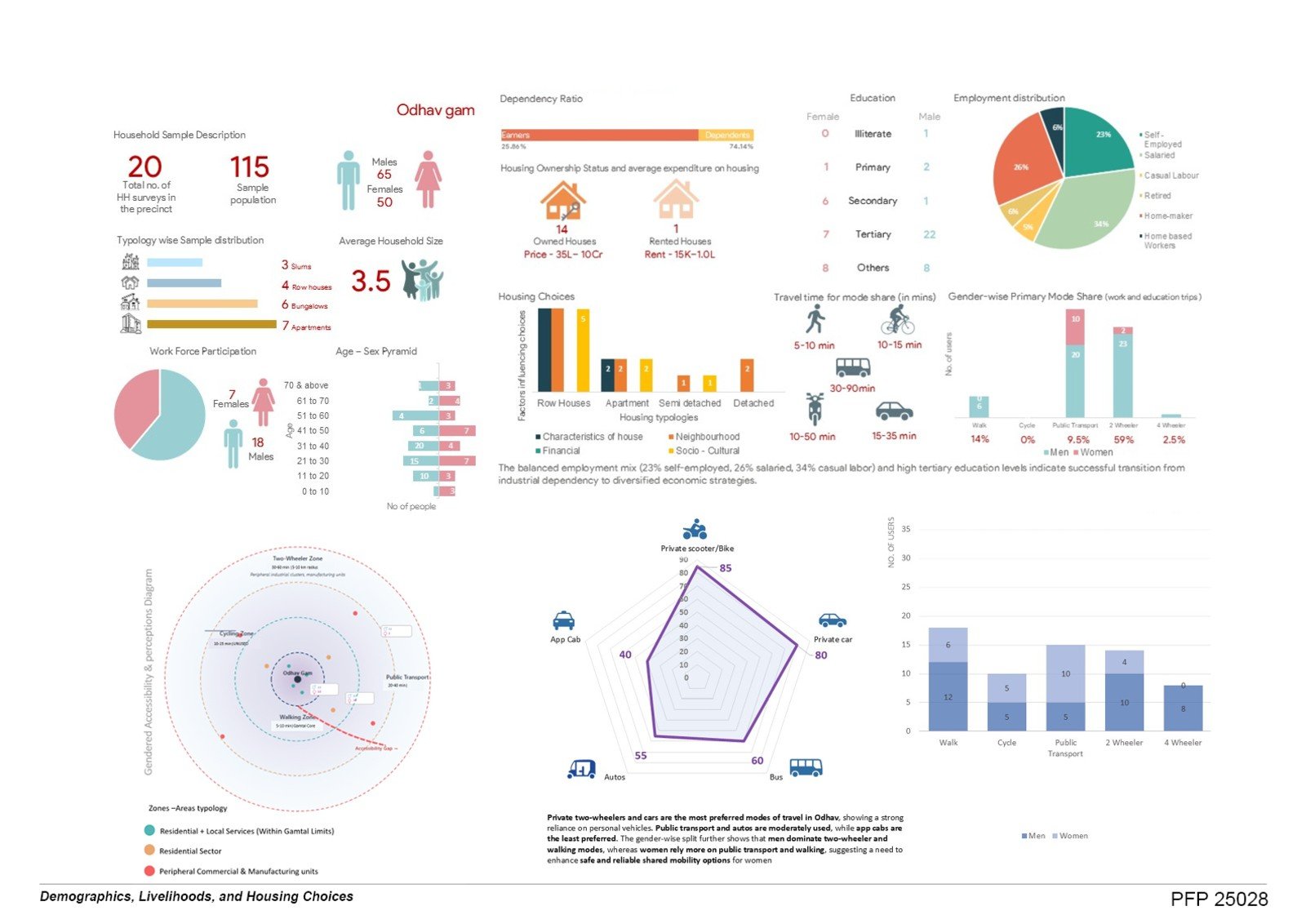
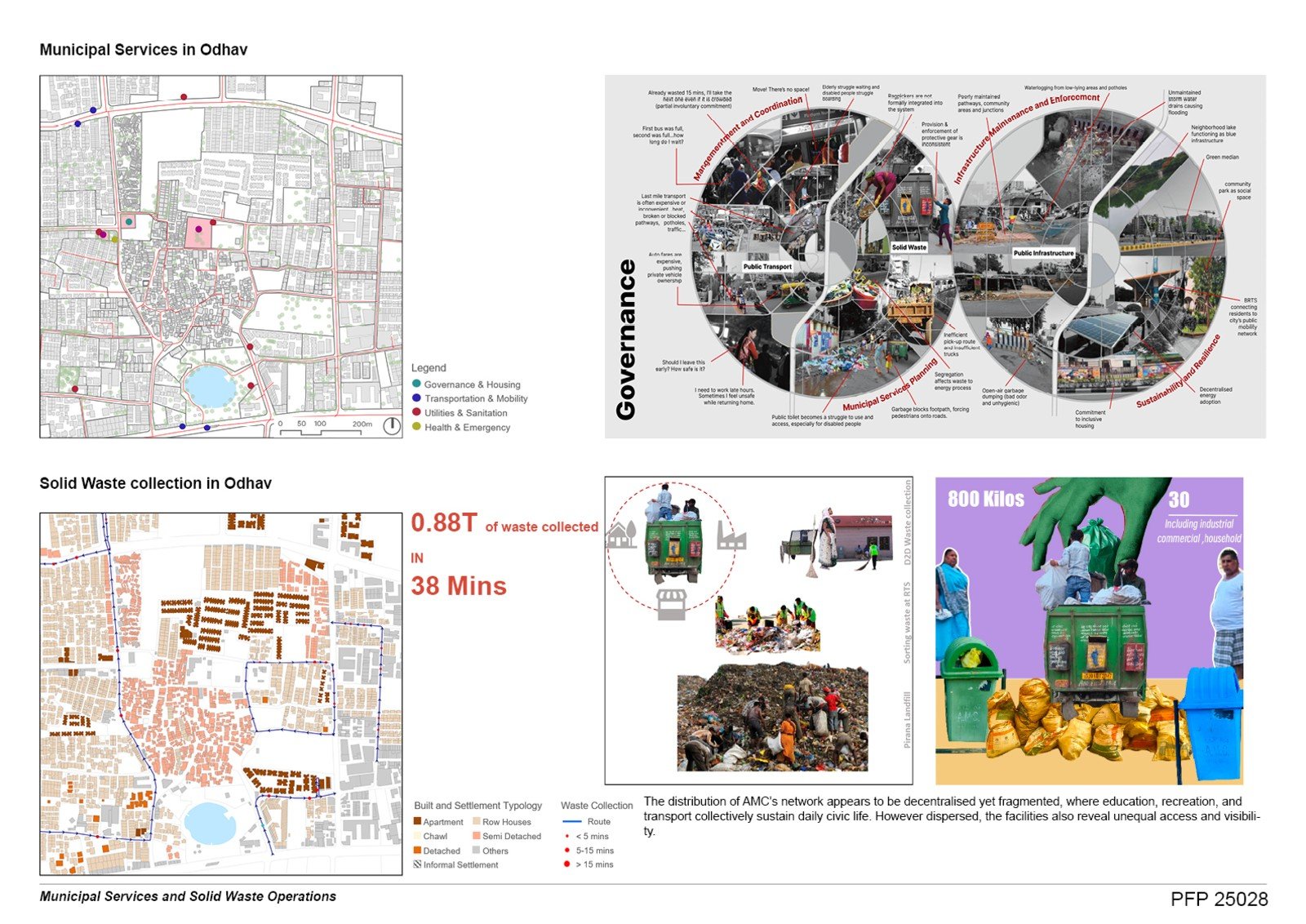
Odhav suffers from extreme residential concentration (95% land use), creating car-dependent patterns and amenity deficits. Despite organic commercial activity along street edges and traditional row house fabric (58%), the precinct lacks integration with Ahmedabad's transit network and exhibits stark density polarization (FSI 0.4-3.6). The challenge: transform fragmented urban grain and underutilized nodes into a walkable, mixed-use neighborhood. Leverage strategic junctions, BRTS connectivity, and existing ground-floor commerce to introduce complementary uses—educational facilities, employment hubs, and public spaces—while respecting the community-oriented settlement patterns and local economic resilience that define Odhav's character.