Your browser is out-of-date!
For a richer surfing experience on our website, please update your browser. Update my browser now!
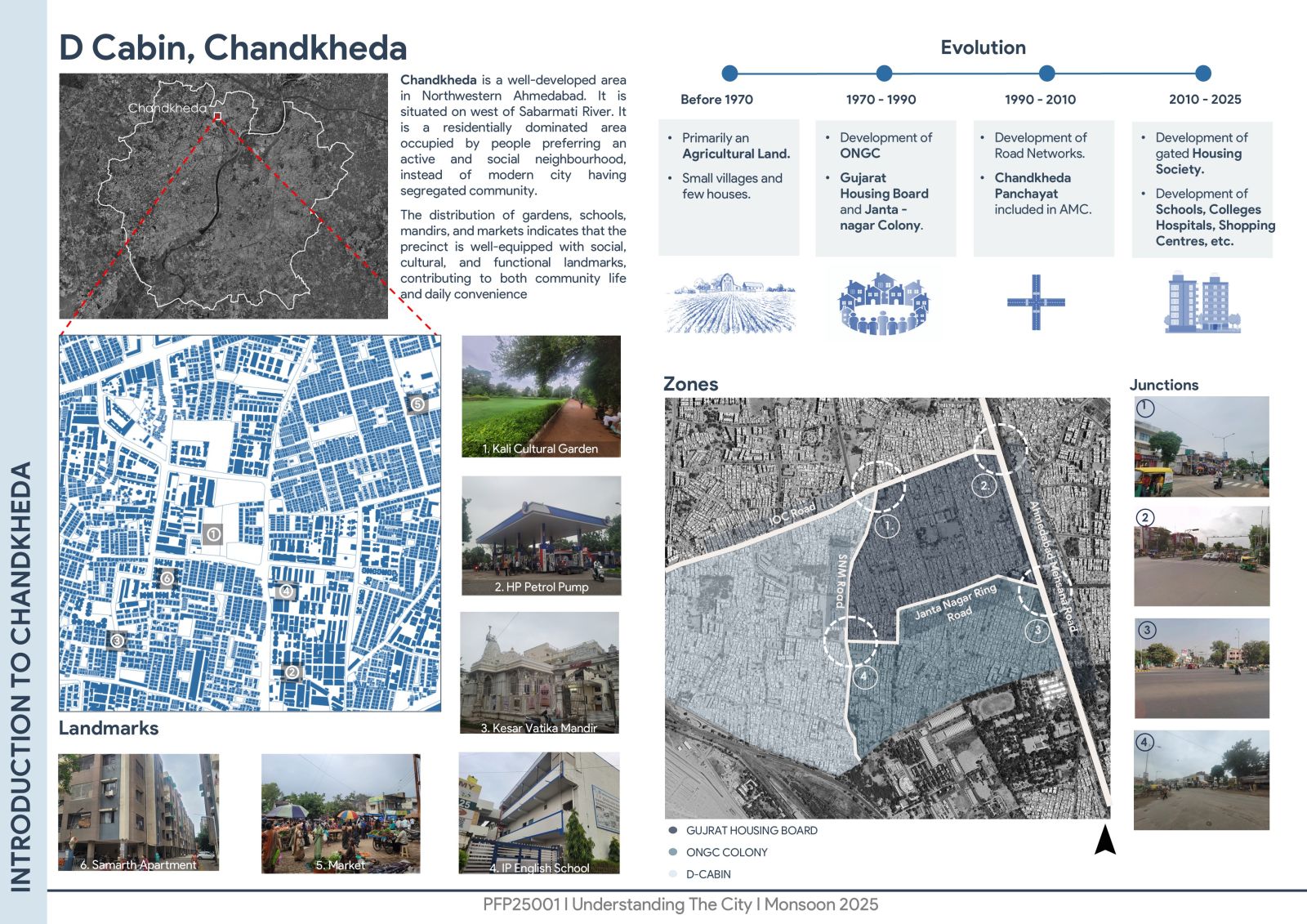
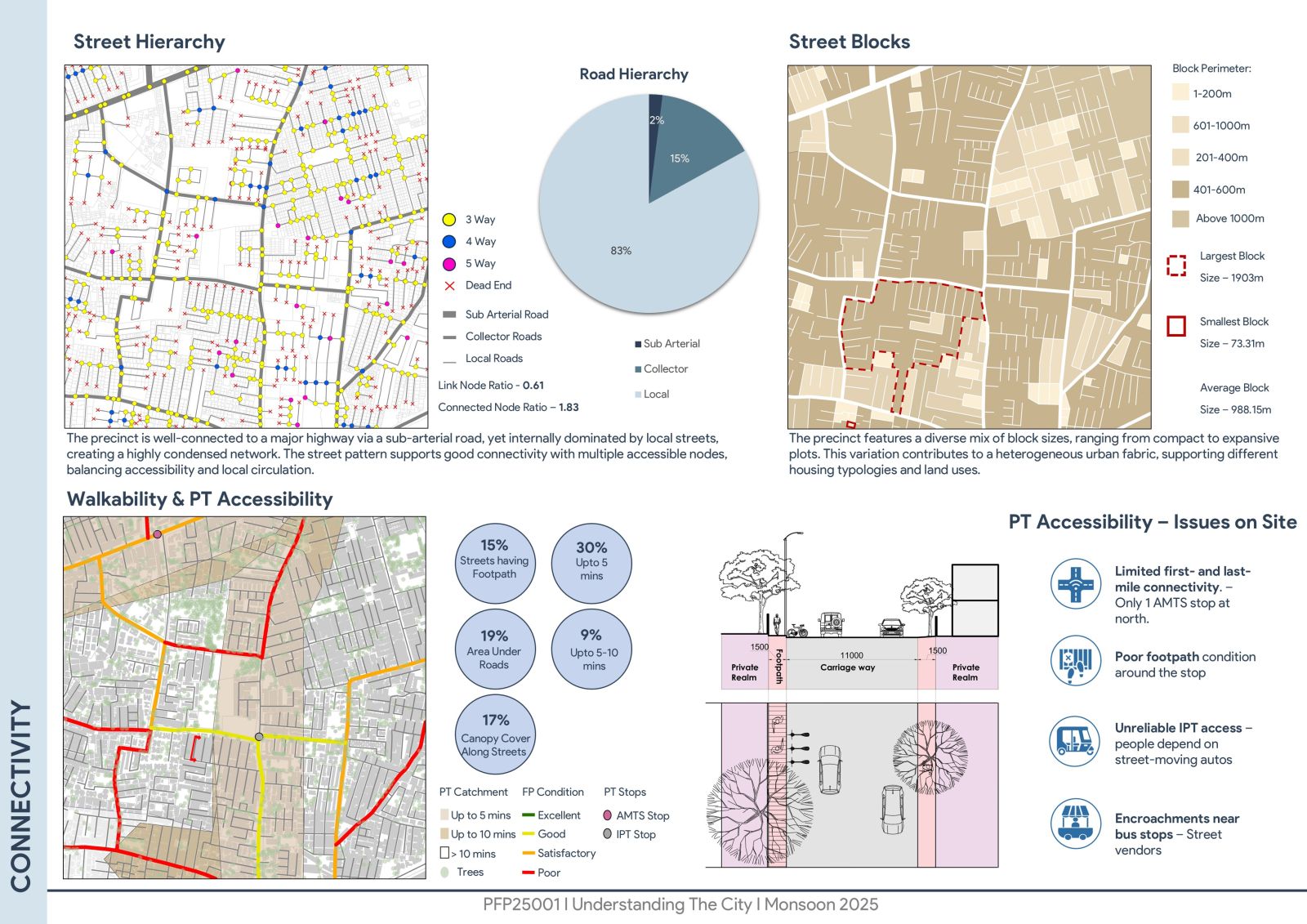
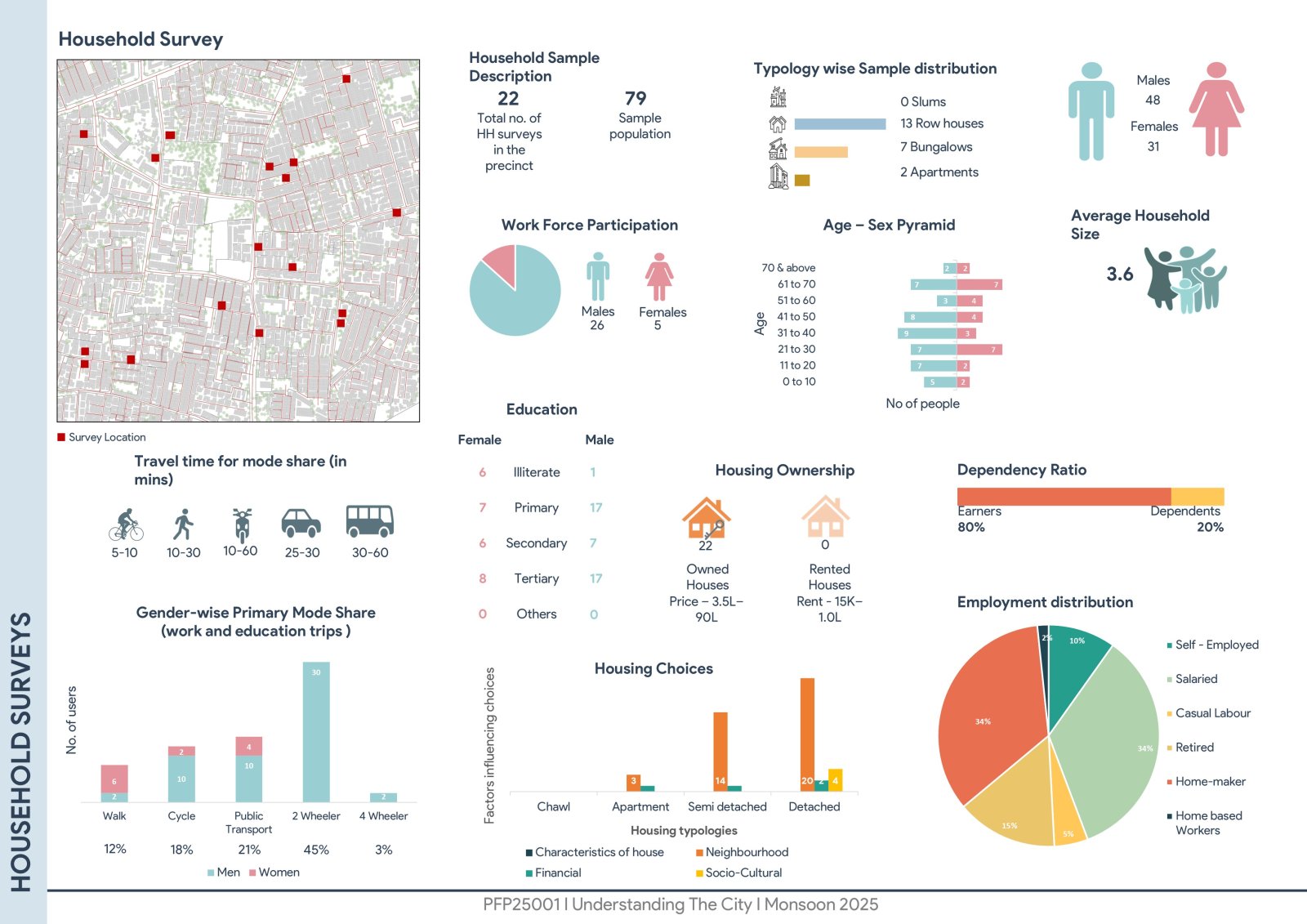
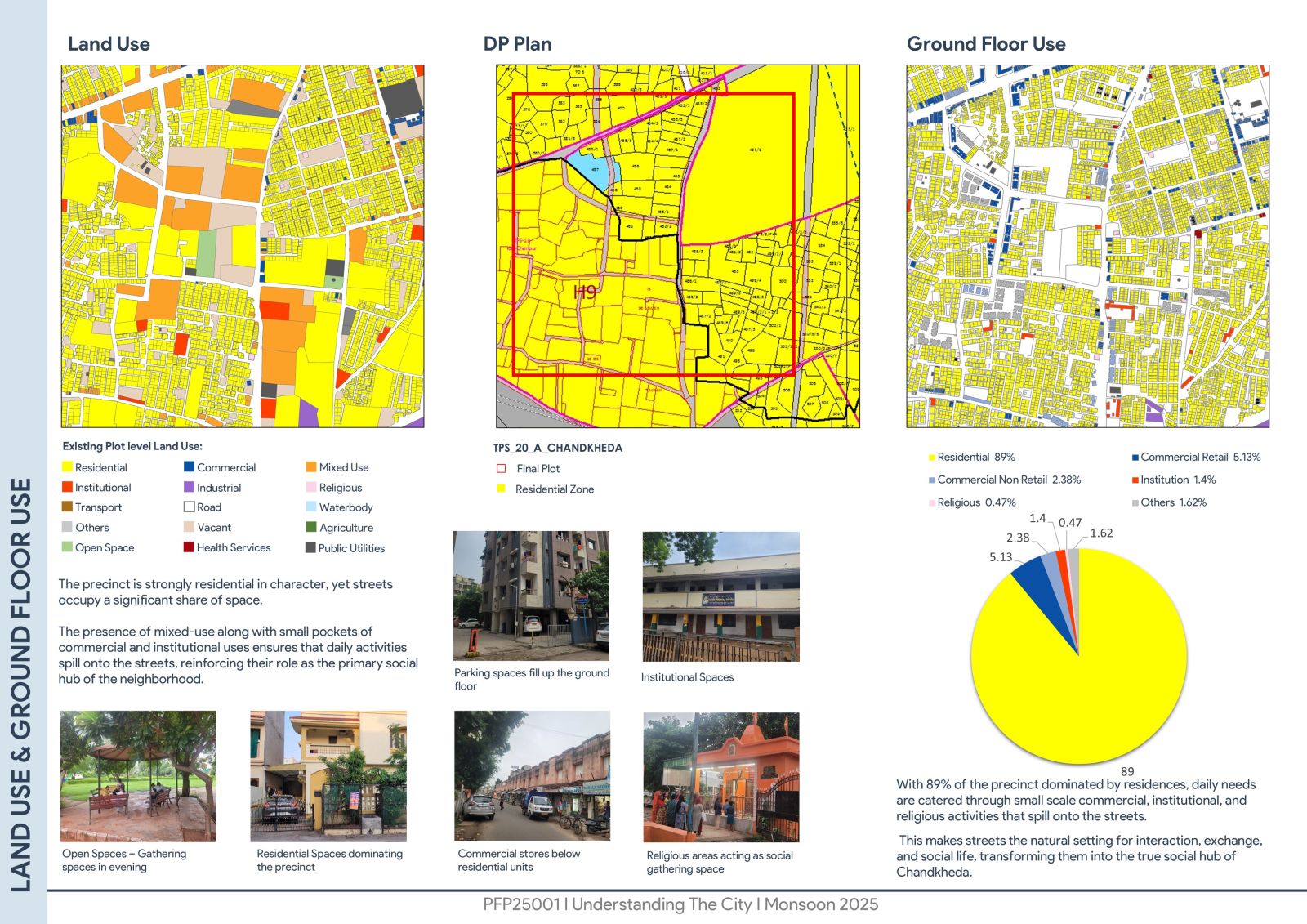
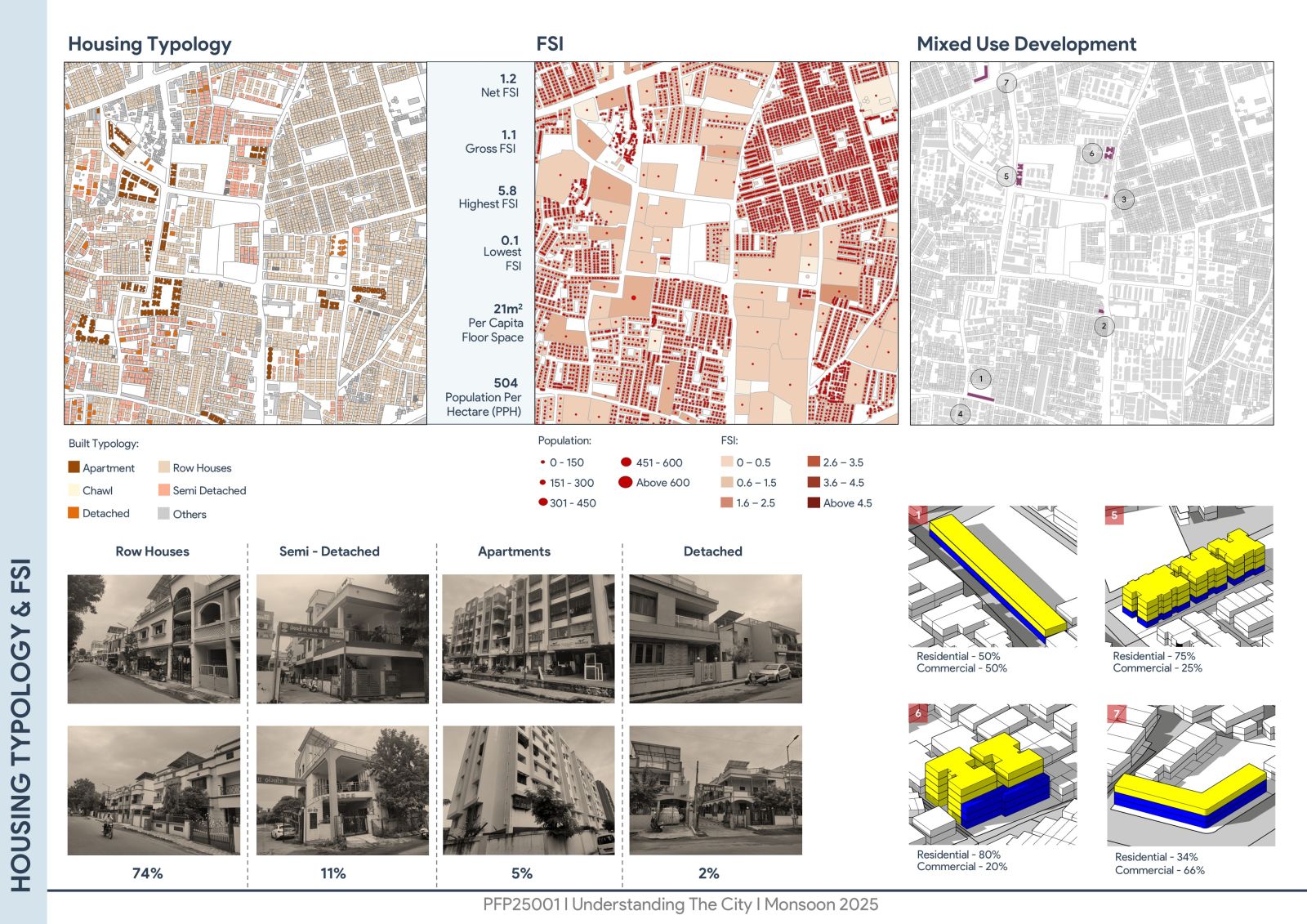
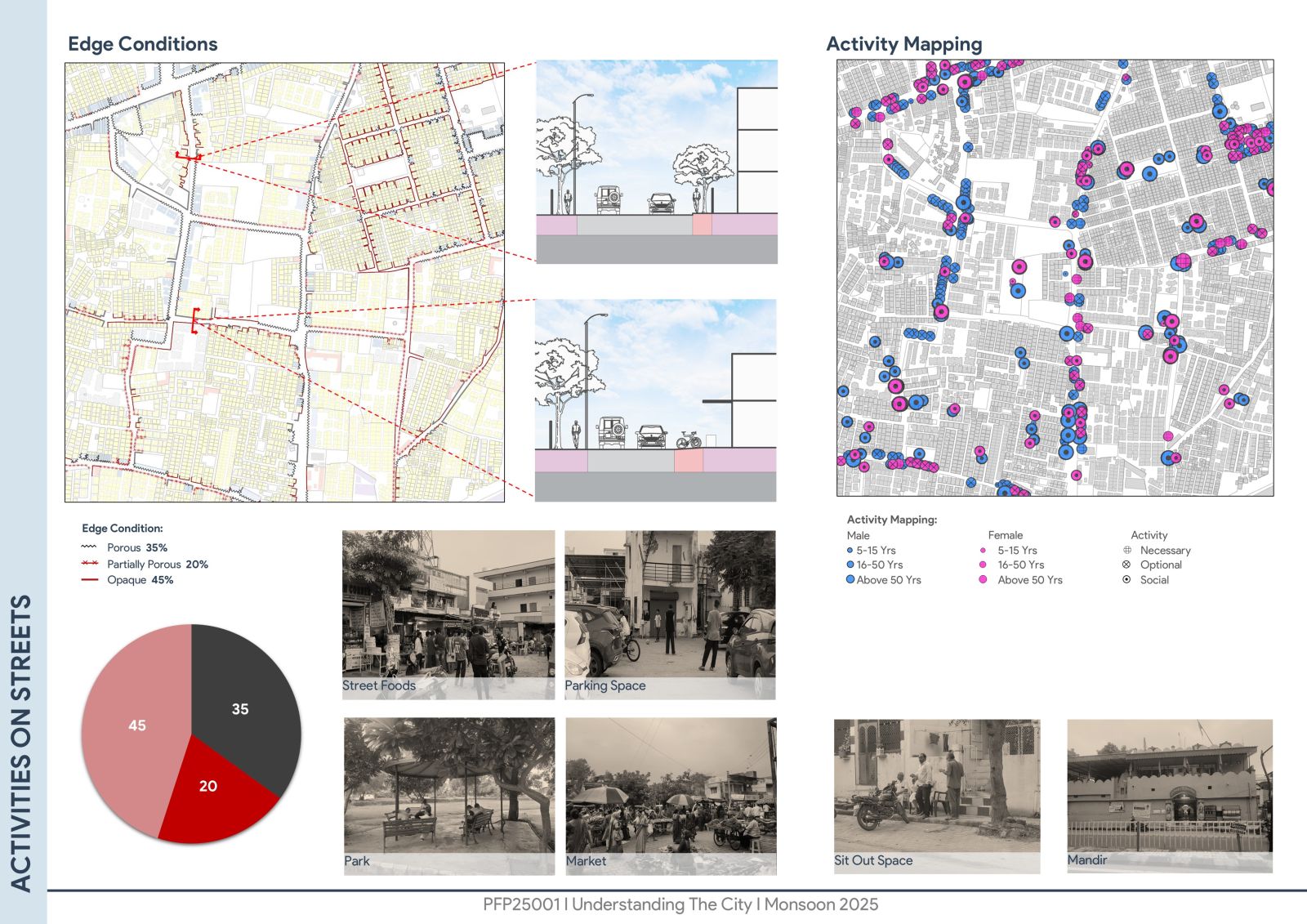
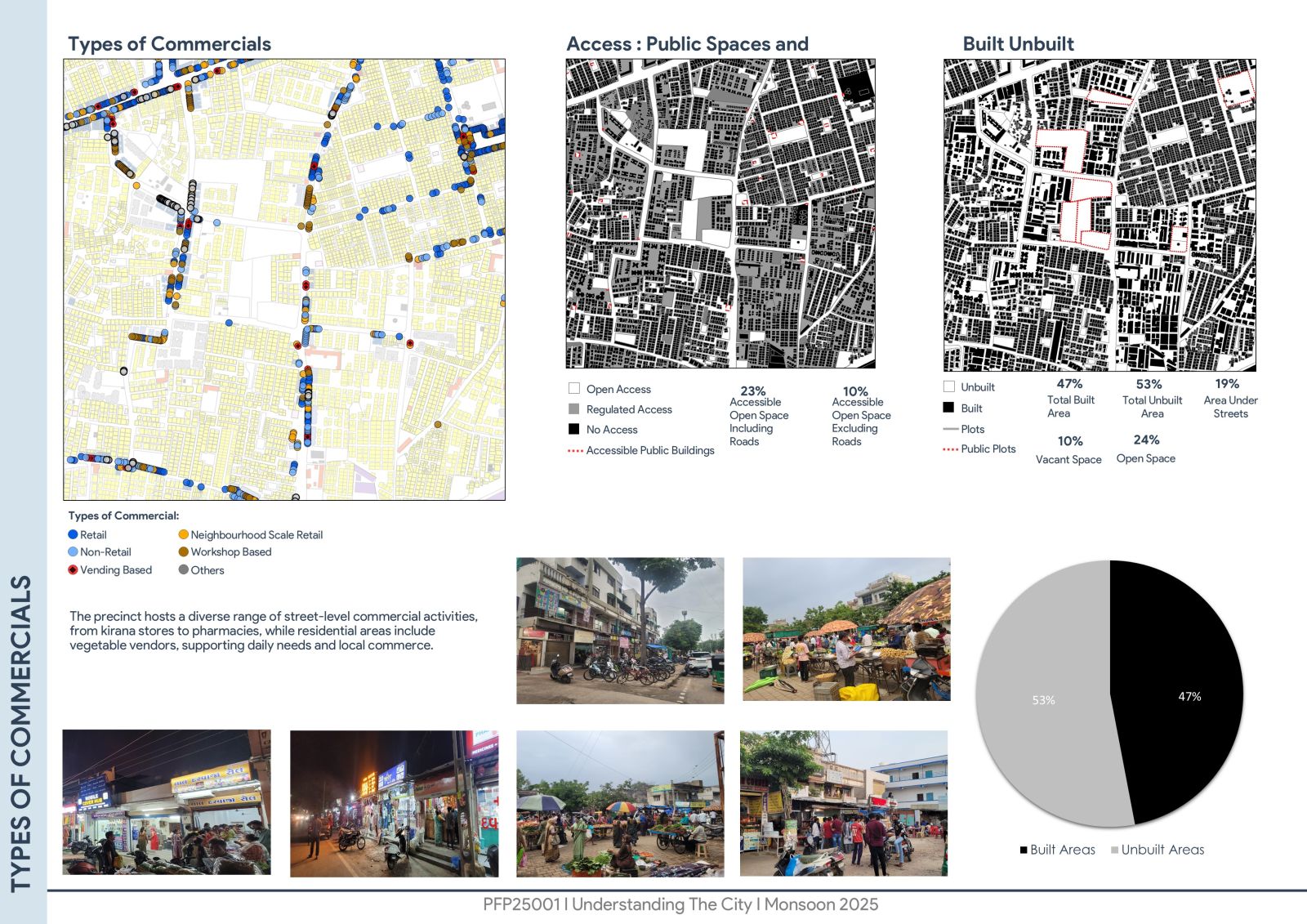
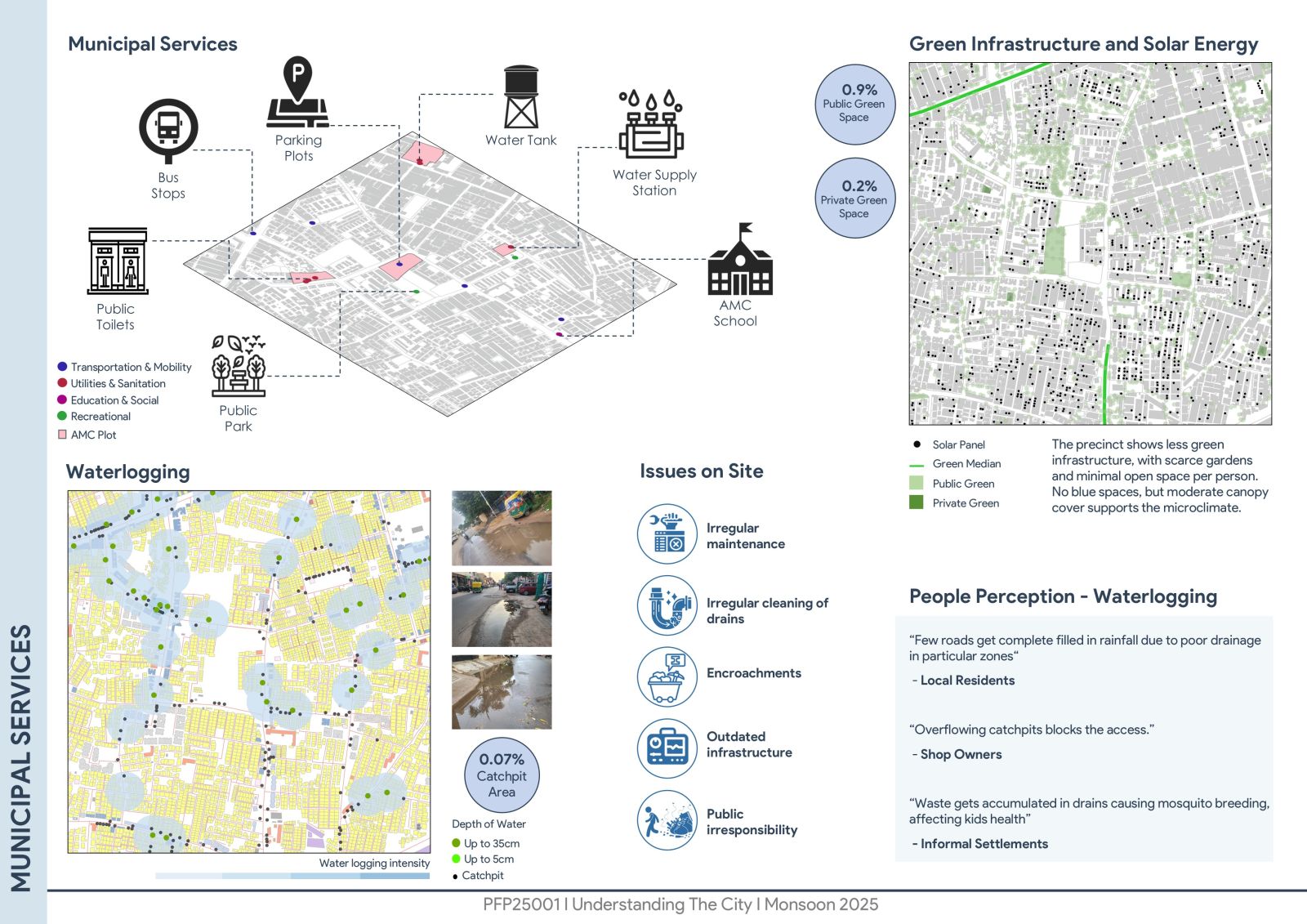
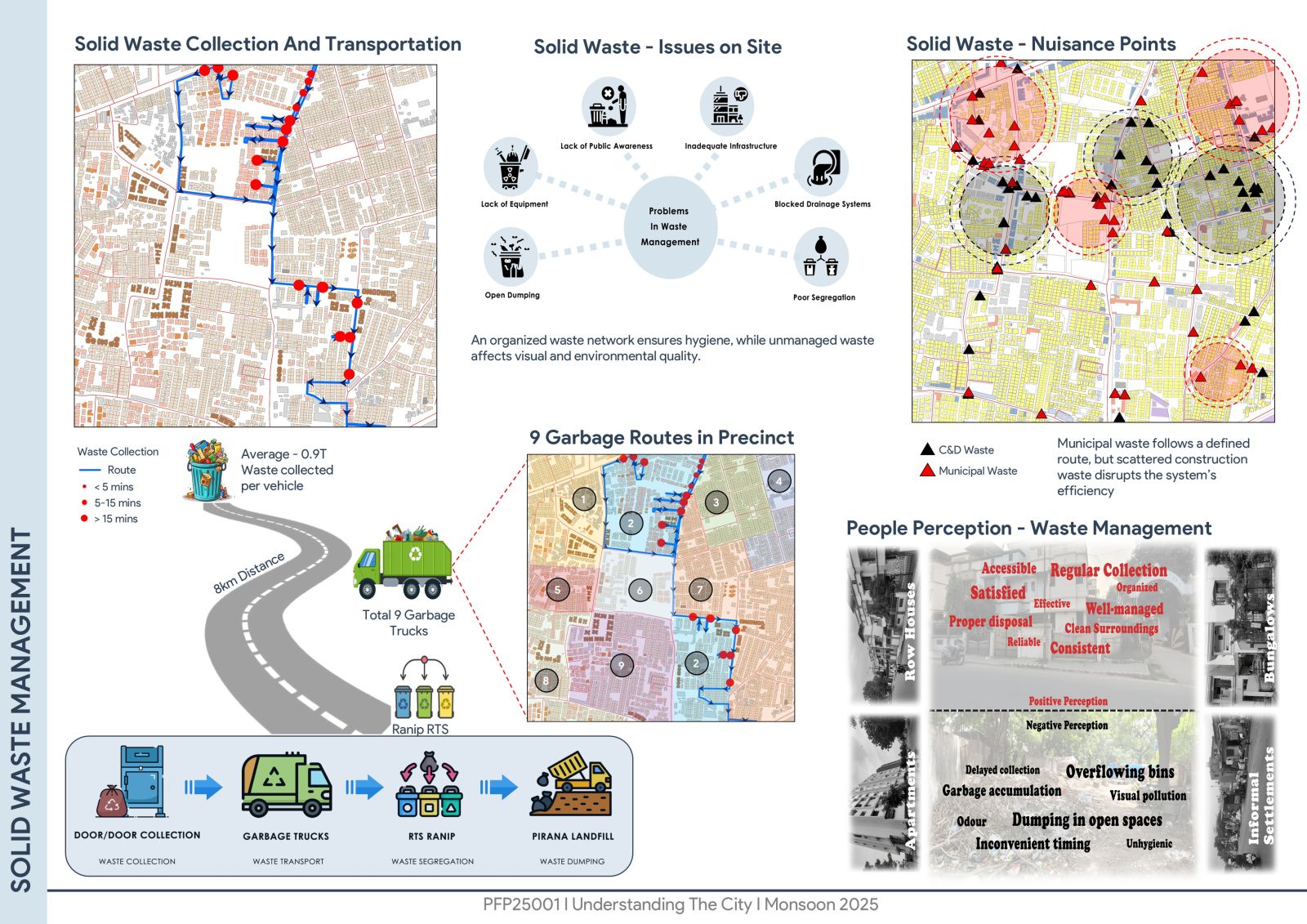
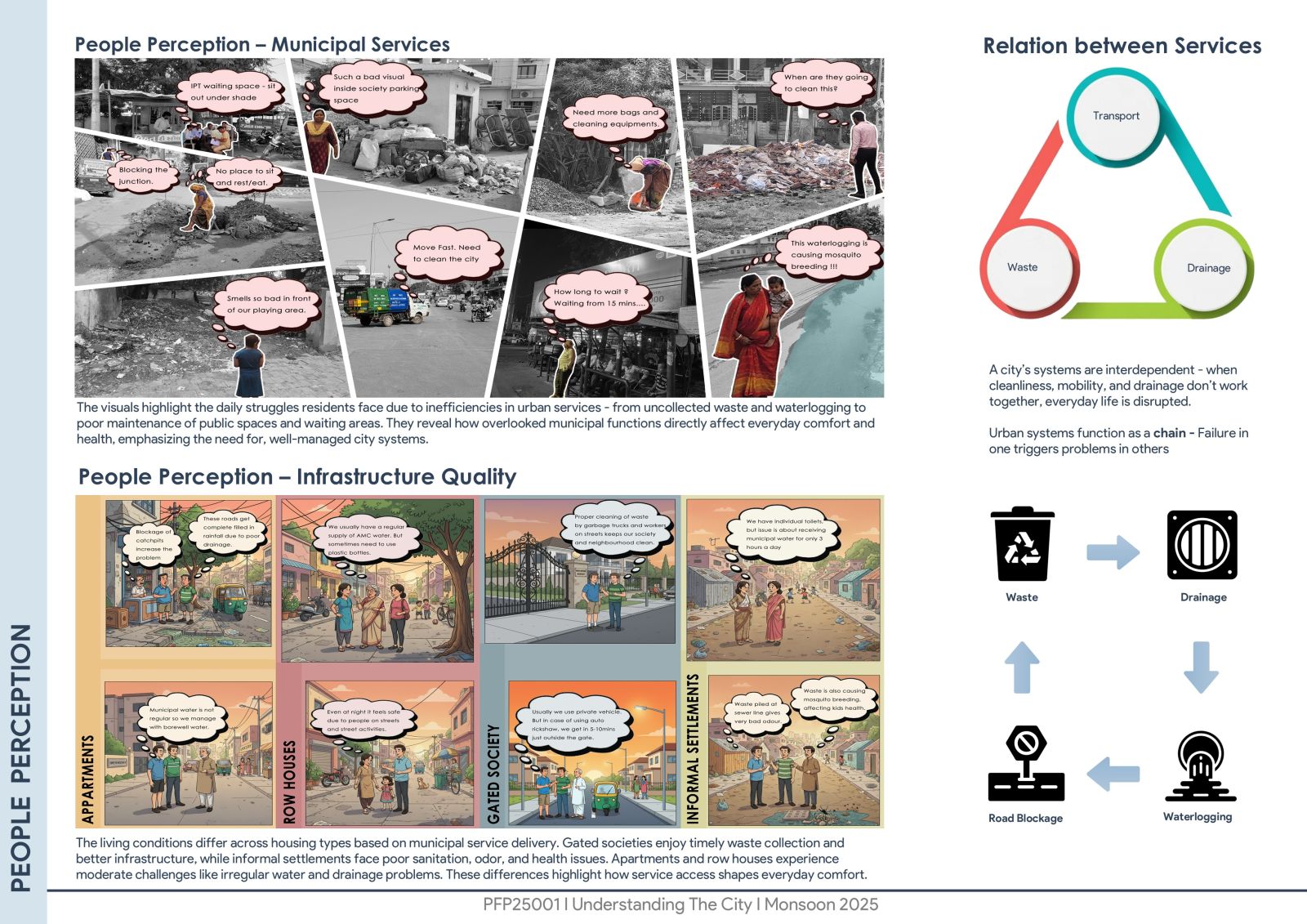
The Chandkheda precinct has evolved into a predominantly residential neighborhood supported by mixed-use clusters, institutional pockets, and a dense street network that shapes both mobility and public life. While strong internal accessibility enables active street usage, challenges such as poor pedestrian infrastructure, waterlogging, and irregular waste management reduce everyday comfort and health. Diverse housing types and uneven municipal service delivery create spatial disparities in livability across the precinct. By analyzing built form, activities, and interlinked urban systems, the study highlights how residents negotiate their environment and how planning interventions can enhance social well-being and overall urban performance.