• Home
  • FP
  • UP4002-3
  • Saraspur Circle: Necessity forges understated unity

Arya Jaiswara

UP4002-3

Saraspur Circle: Necessity forges understated unity

Saraspur is an old neighborhood in Ahmedabad, which was established in the 15th century by Sultan Ahmed Shah. Its significance in the cultural and economic life of the city has been significant throughout the centuries. Saraspur became a big industrial hub in the British times and many textile mills and chawls accommodating mill workers were built. Following independence, the downfall of the textile industry caused economic problems and the development of informal settlements. Saraspur is a residential neighborhood right till now with mixed housing patterns, vibrant markets, and solid cultures that signify the resilience, heritage, and adaptability of Ahmedabad to new urban times.
Report Content

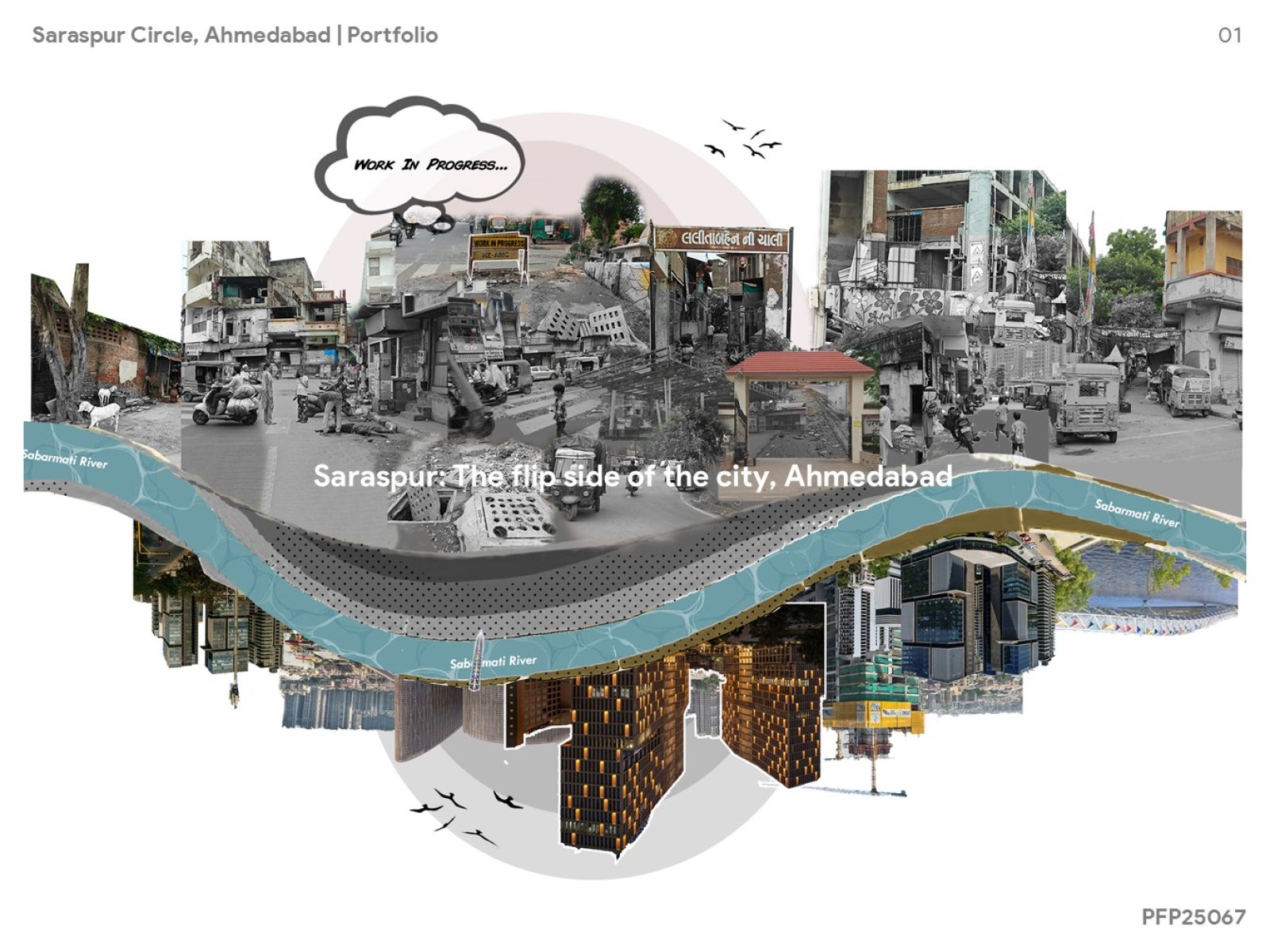
A stitched landscape where Ahmedabad’s contrasts meet — revealing how informal resilience and formal ambition coexist across the Sabarmati.

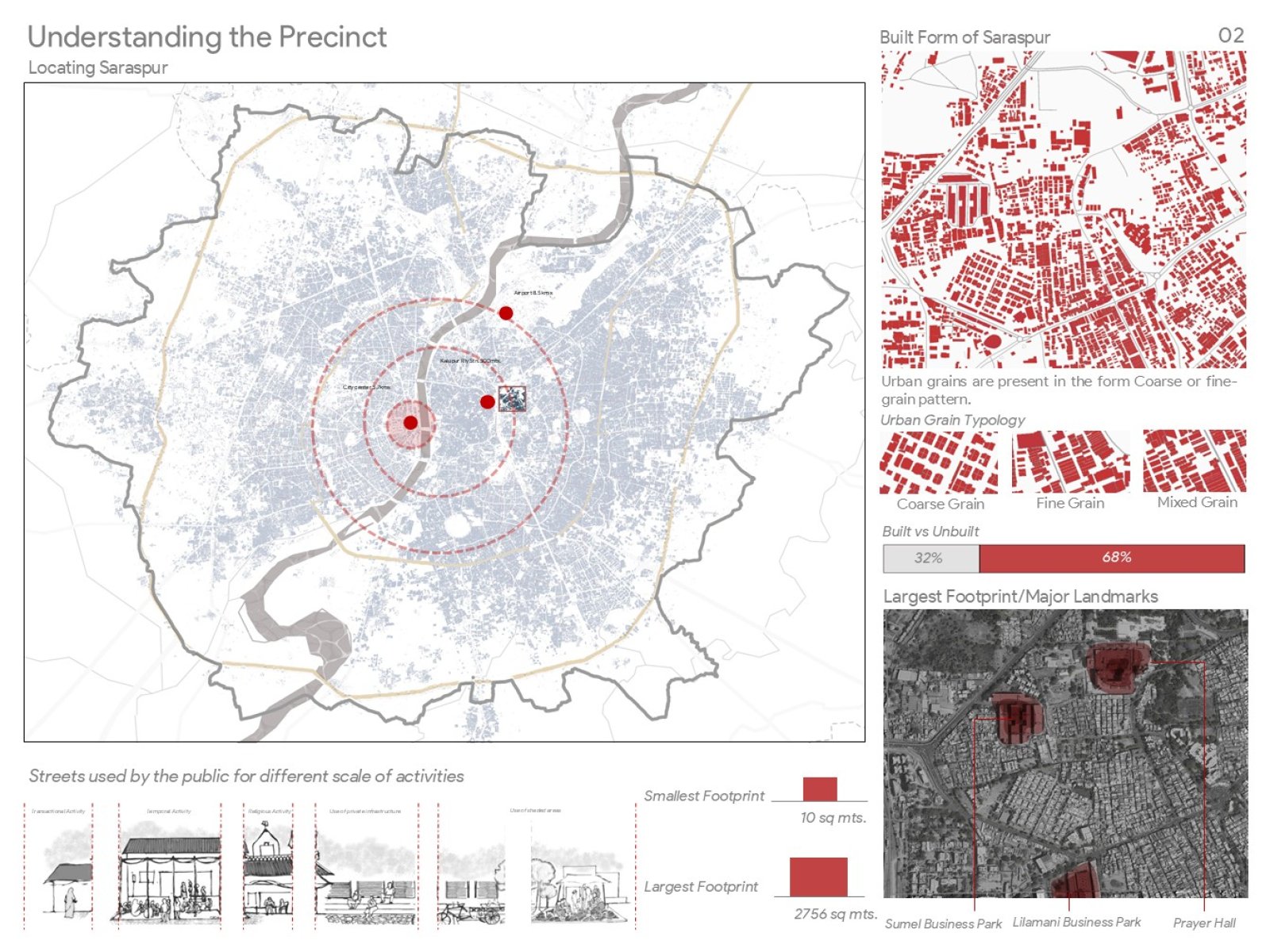
A dense, fine-grain urban fabric shaped by uneven footprints and public-life streets, mapping Sarasapur’s deep entanglement with the larger city.

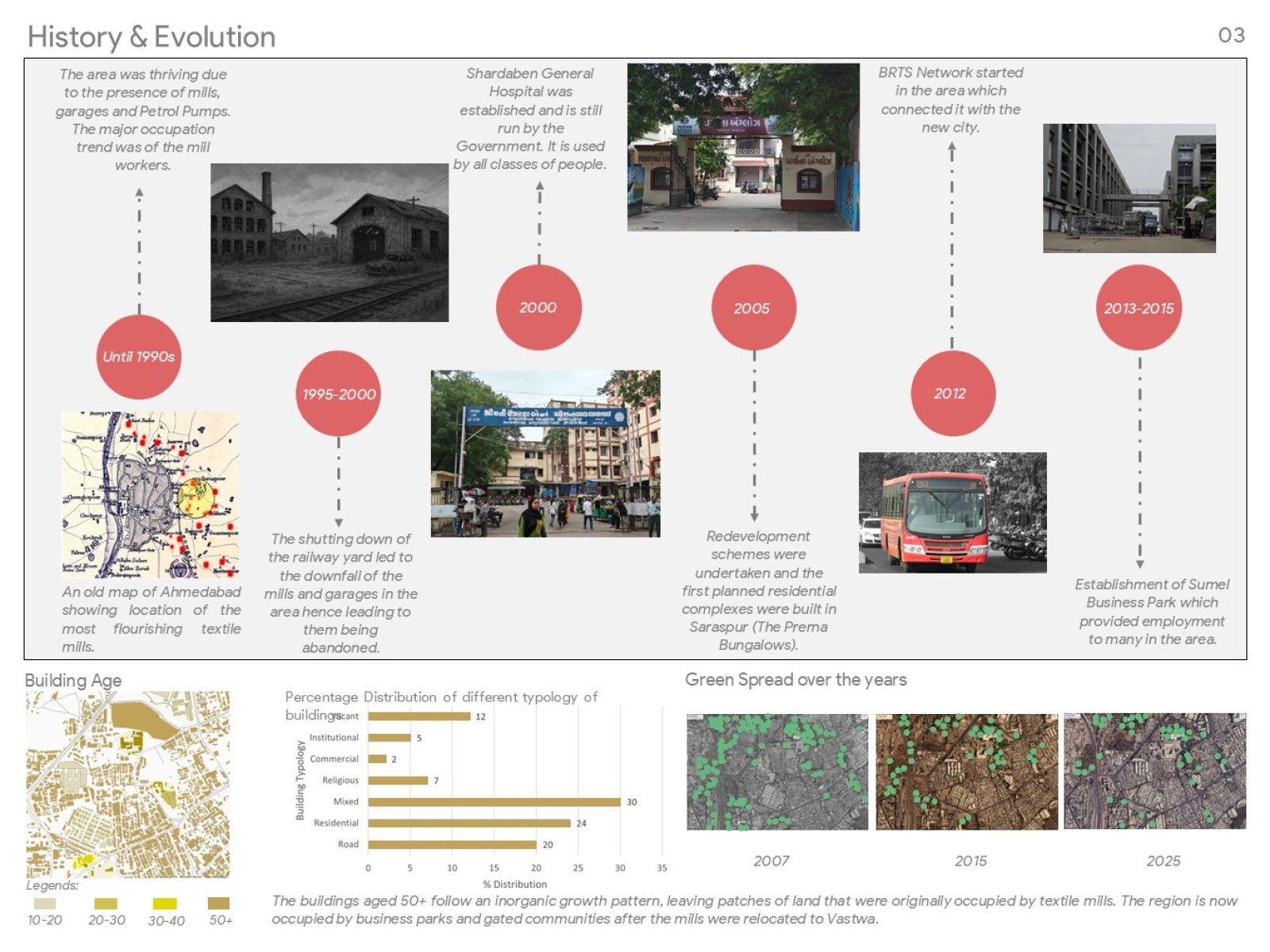
From mill prosperity to post-industrial decline, Sarasapur’s urban form narrates a shift from production landscapes to fragmented redevelopment.

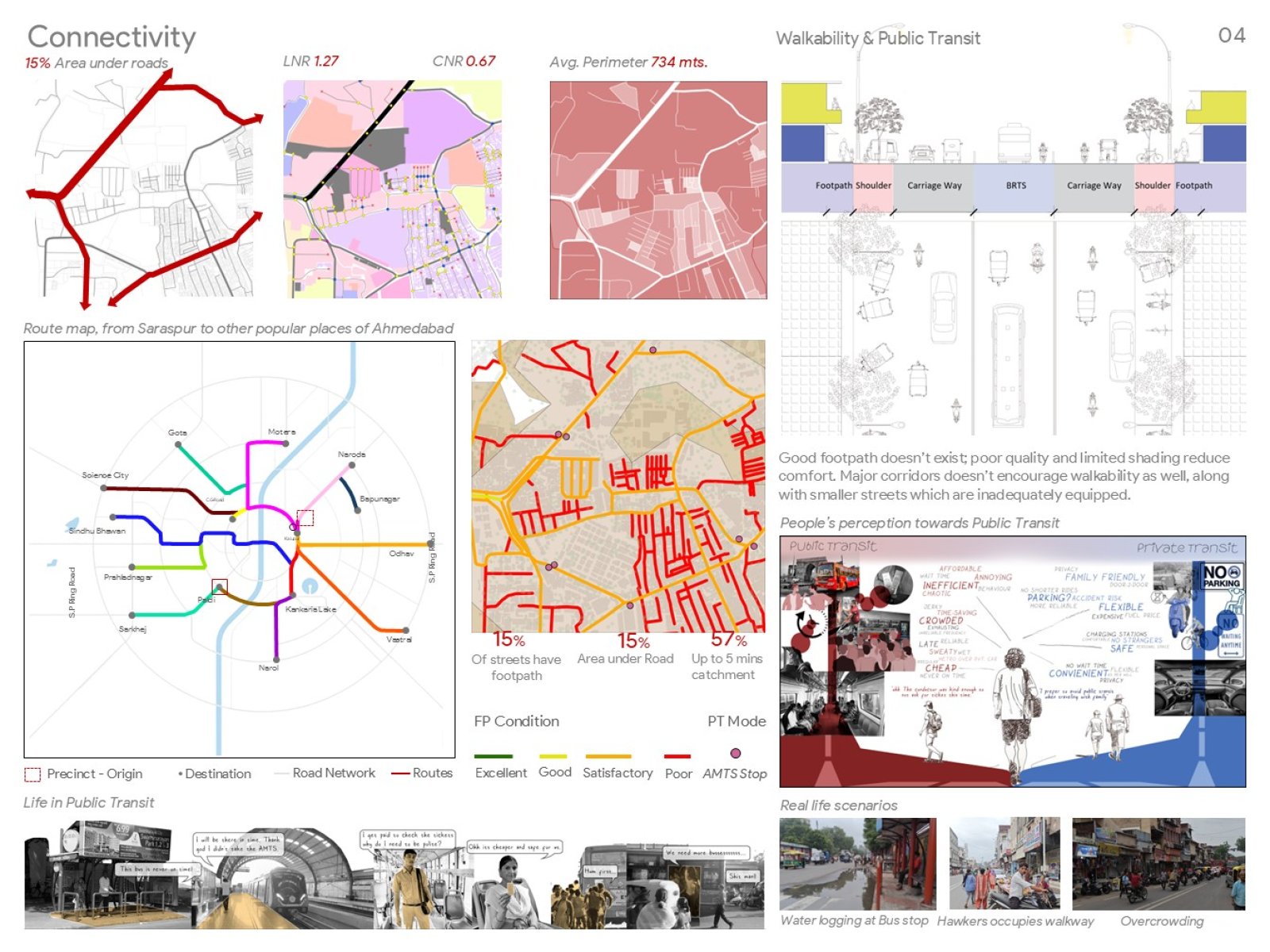
Limited walkability and uneven transit access expose how infrastructure gaps reconfigure everyday mobility and reinforce spatial inequities.

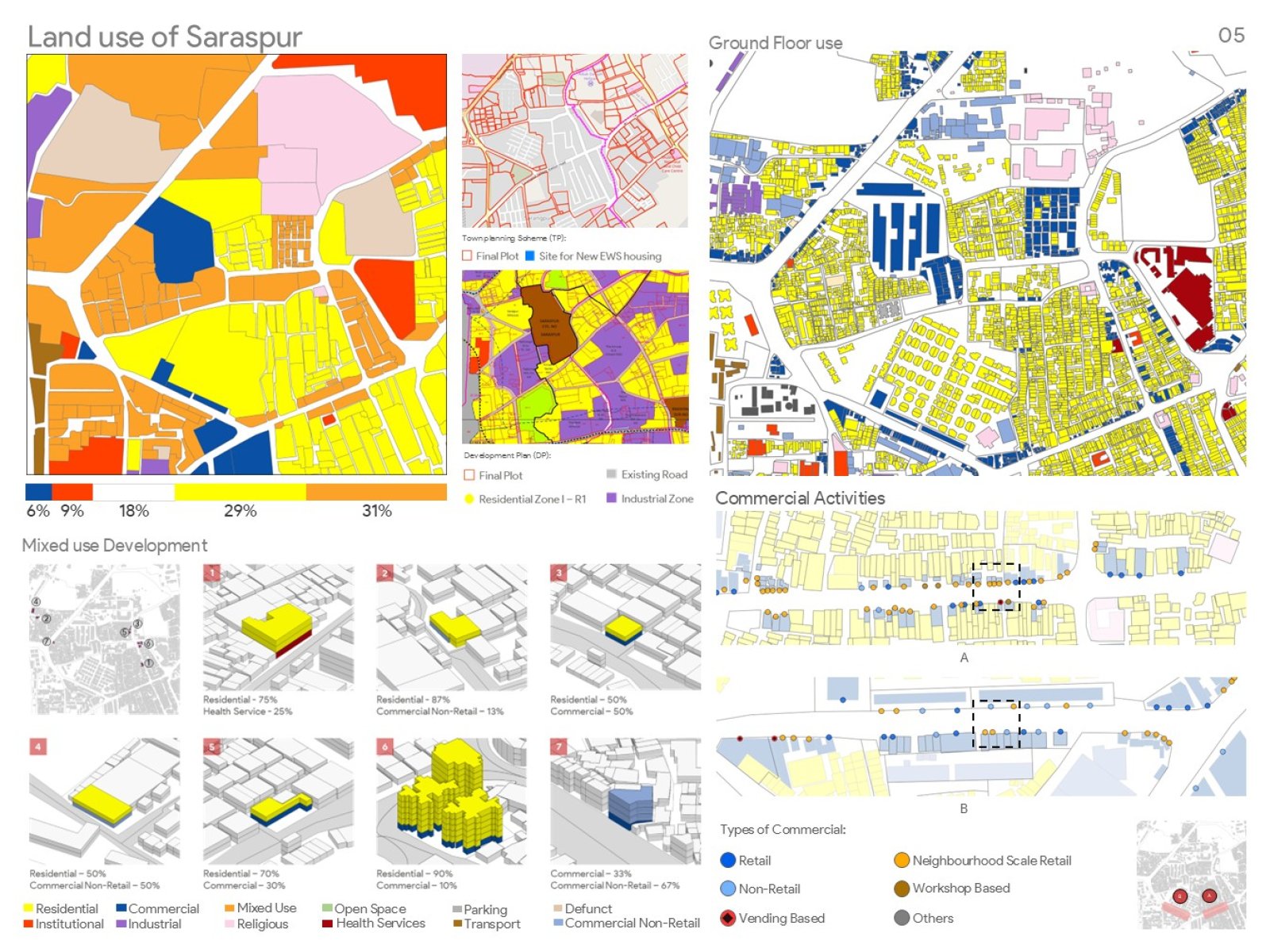
A dominantly residential fabric stitched with scattered commercial spines, where mixed-use pockets emerge as adaptive responses to economic need.

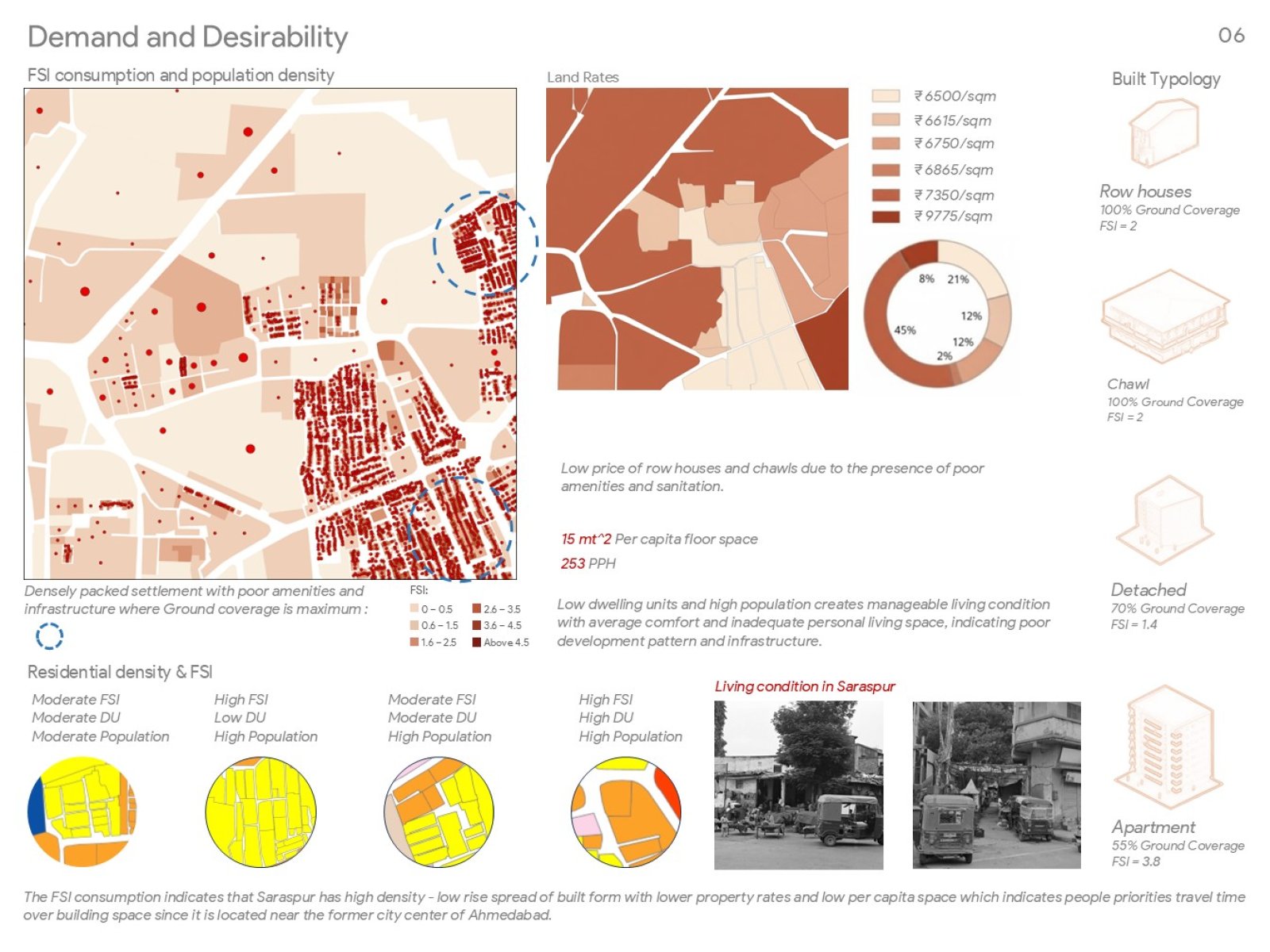
High density, low-rise living with minimal per-capita space reflects how affordability, infrastructure deficits, and inherited typologies shape habitation patterns.

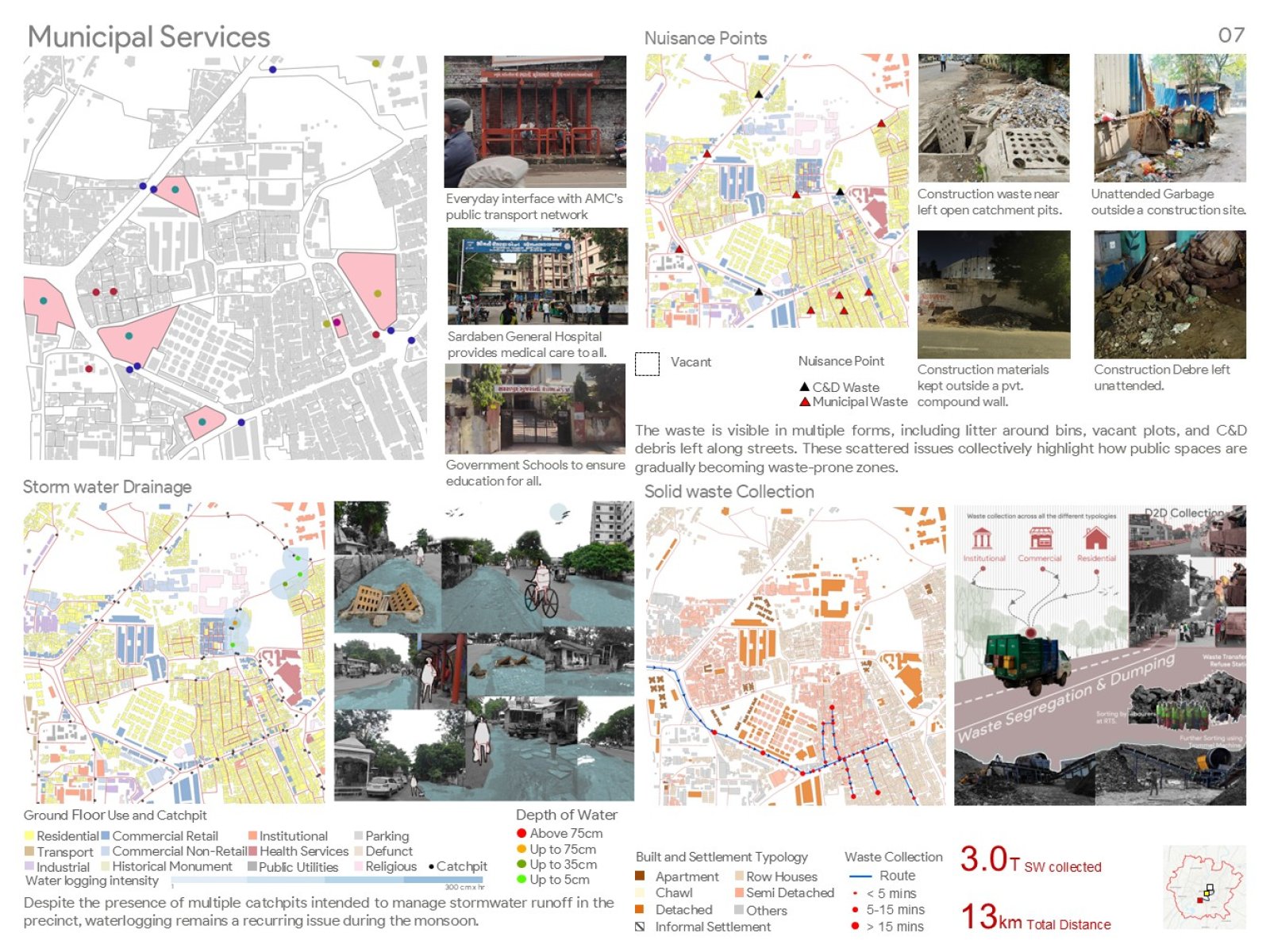
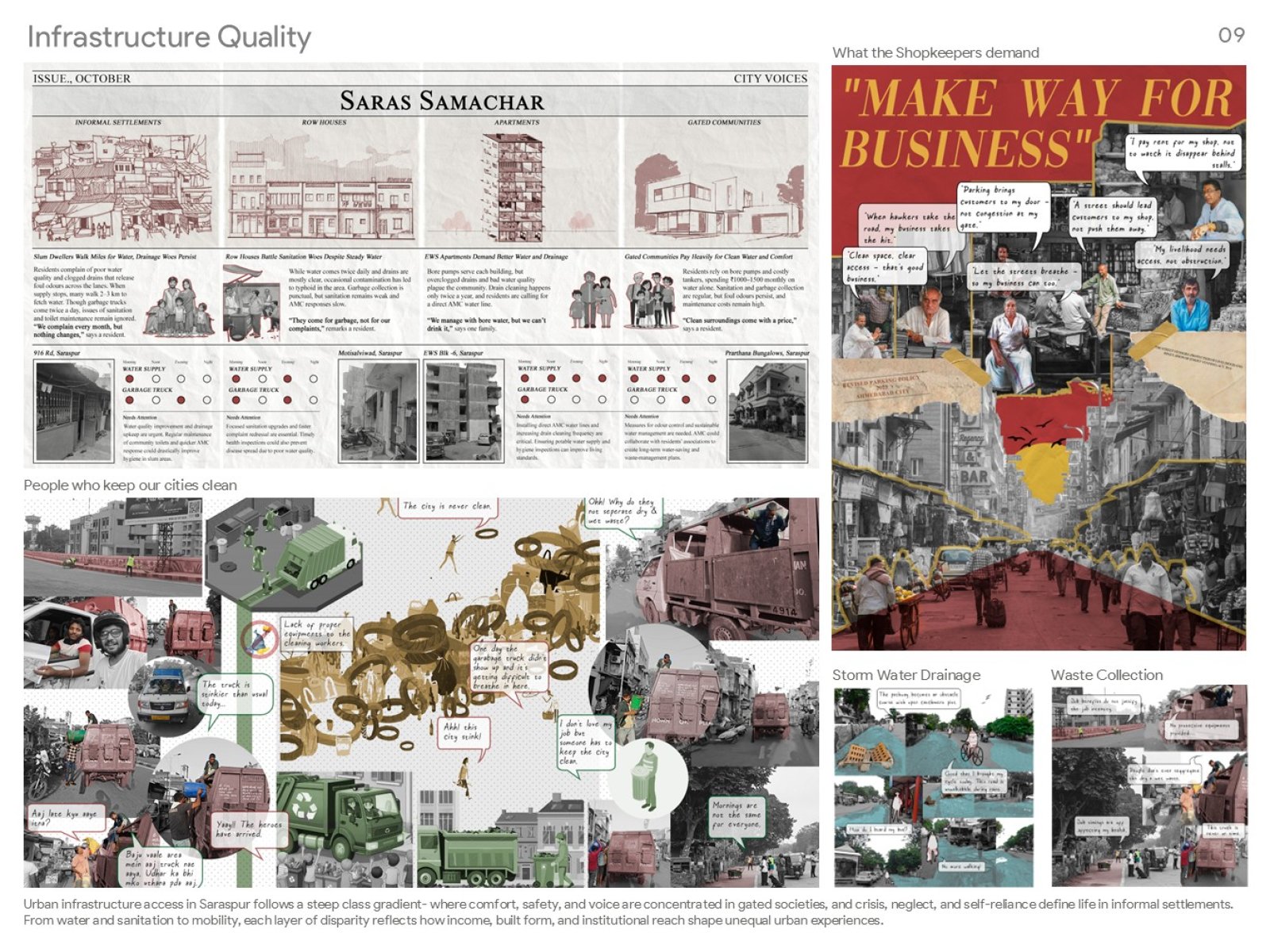
Fragmented municipal reach and inconsistent waste management reveal how neglect transforms public surfaces into stress points during daily cycles.

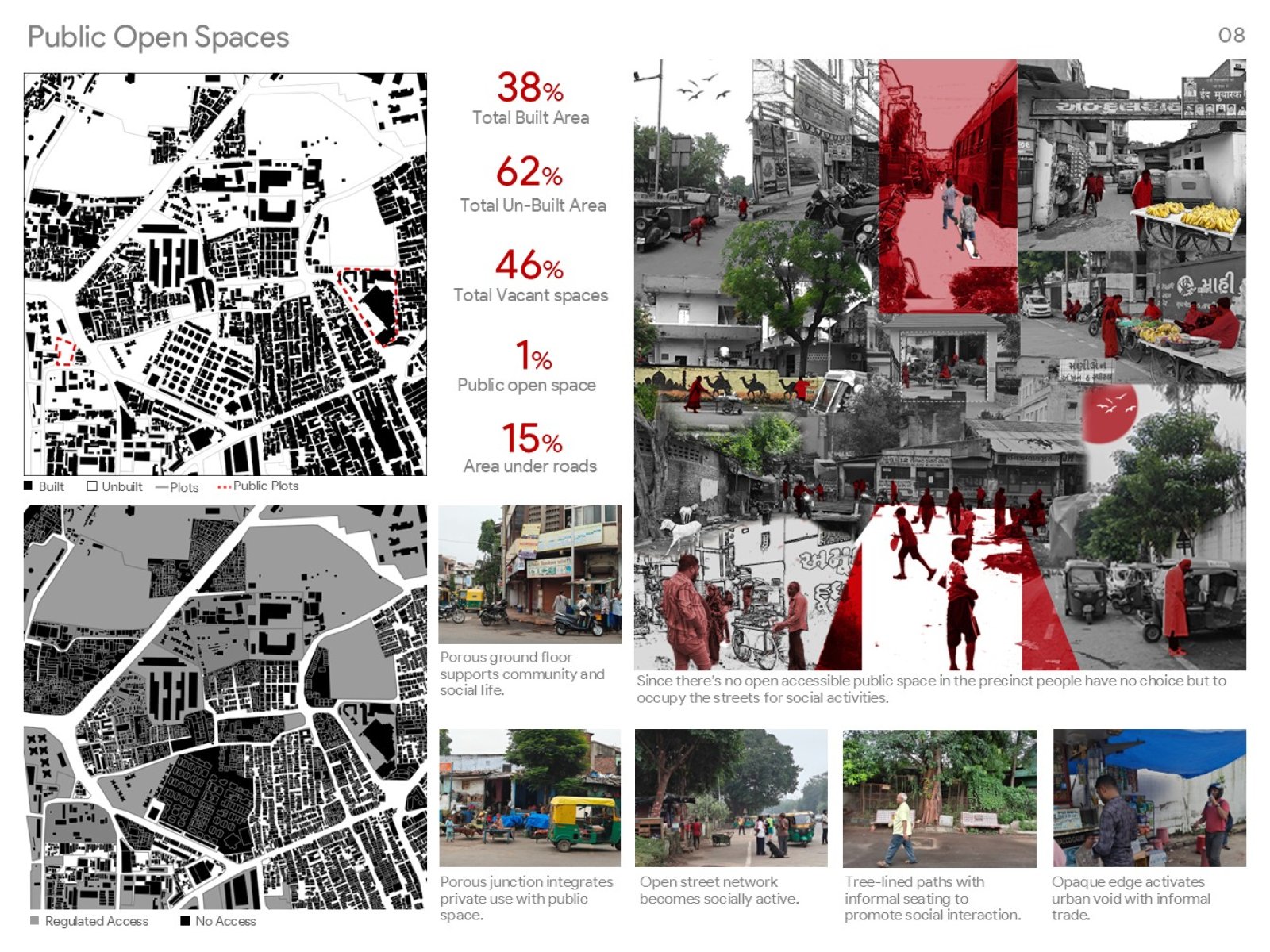
With almost no formal open space, streets become the city’s true social rooms—absorbing community life through improvisation and necessity.

Infrastructure access follows a steep class gradient where privilege ensures comfort while informal settlements navigate crisis through self-reliance.

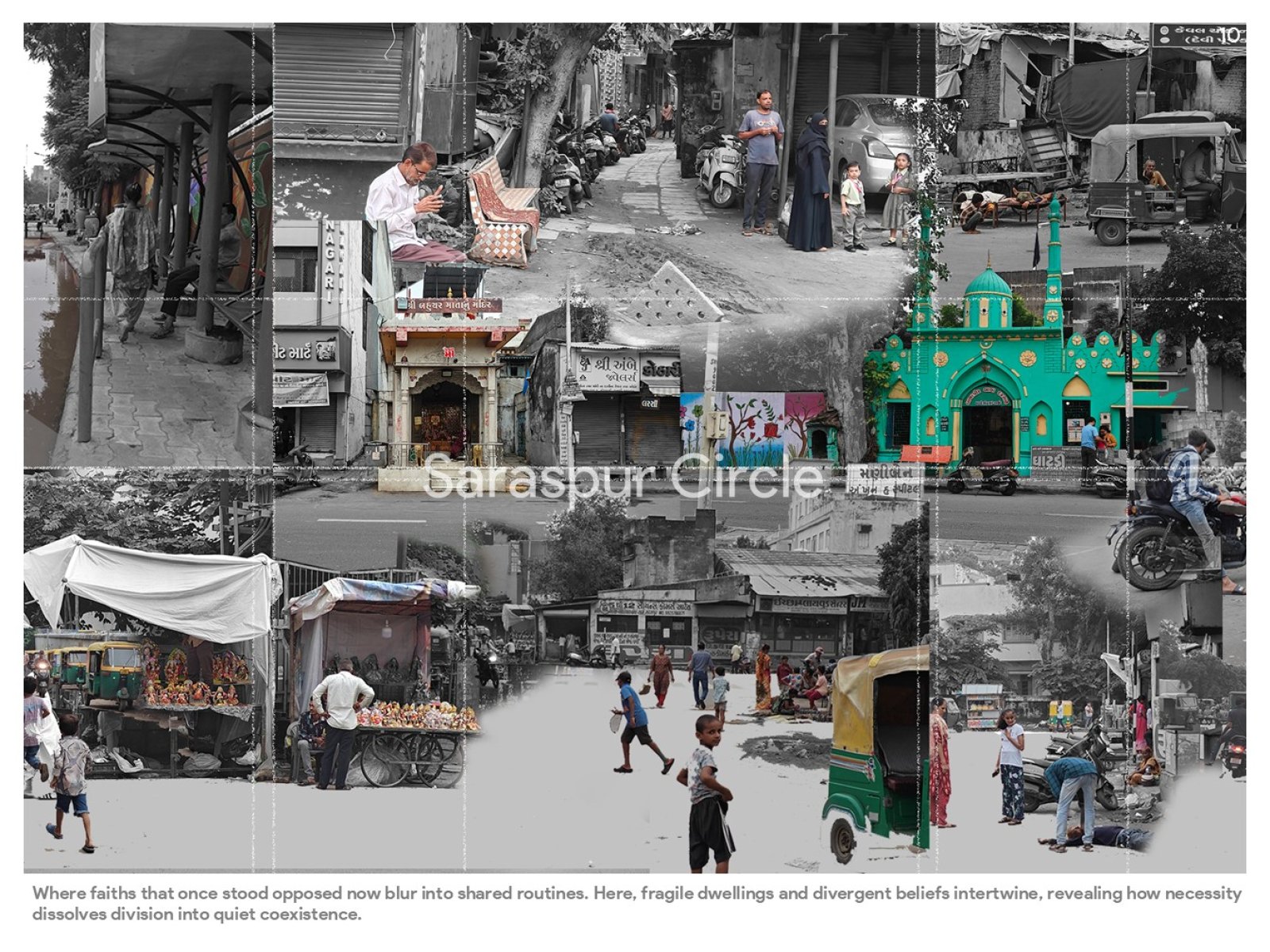
A shared urban stage where different faiths, routines, and vulnerabilities overlap, demonstrating coexistence shaped less by design and more by survival.