Your browser is out-of-date!
For a richer surfing experience on our website, please update your browser. Update my browser now!
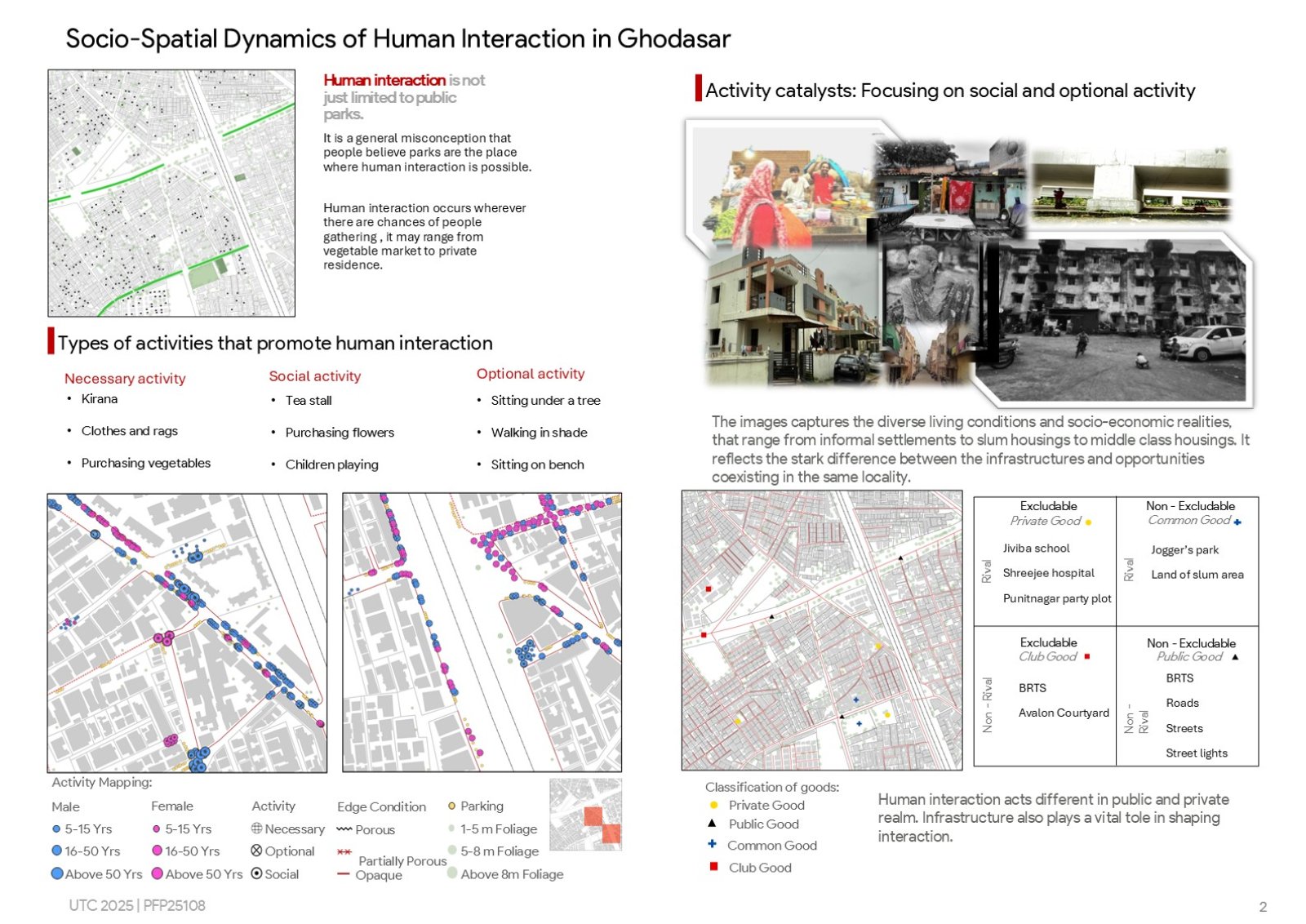
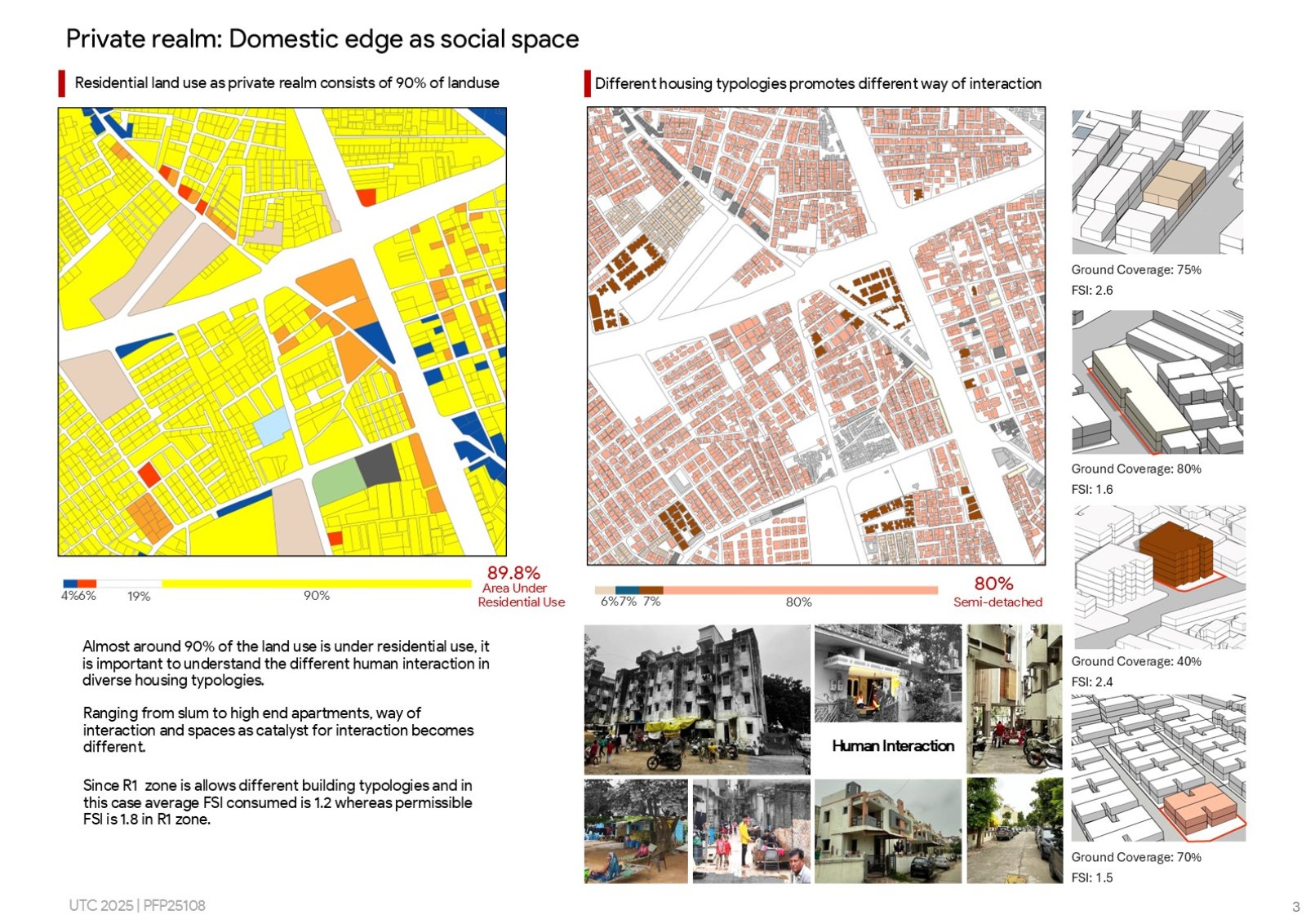
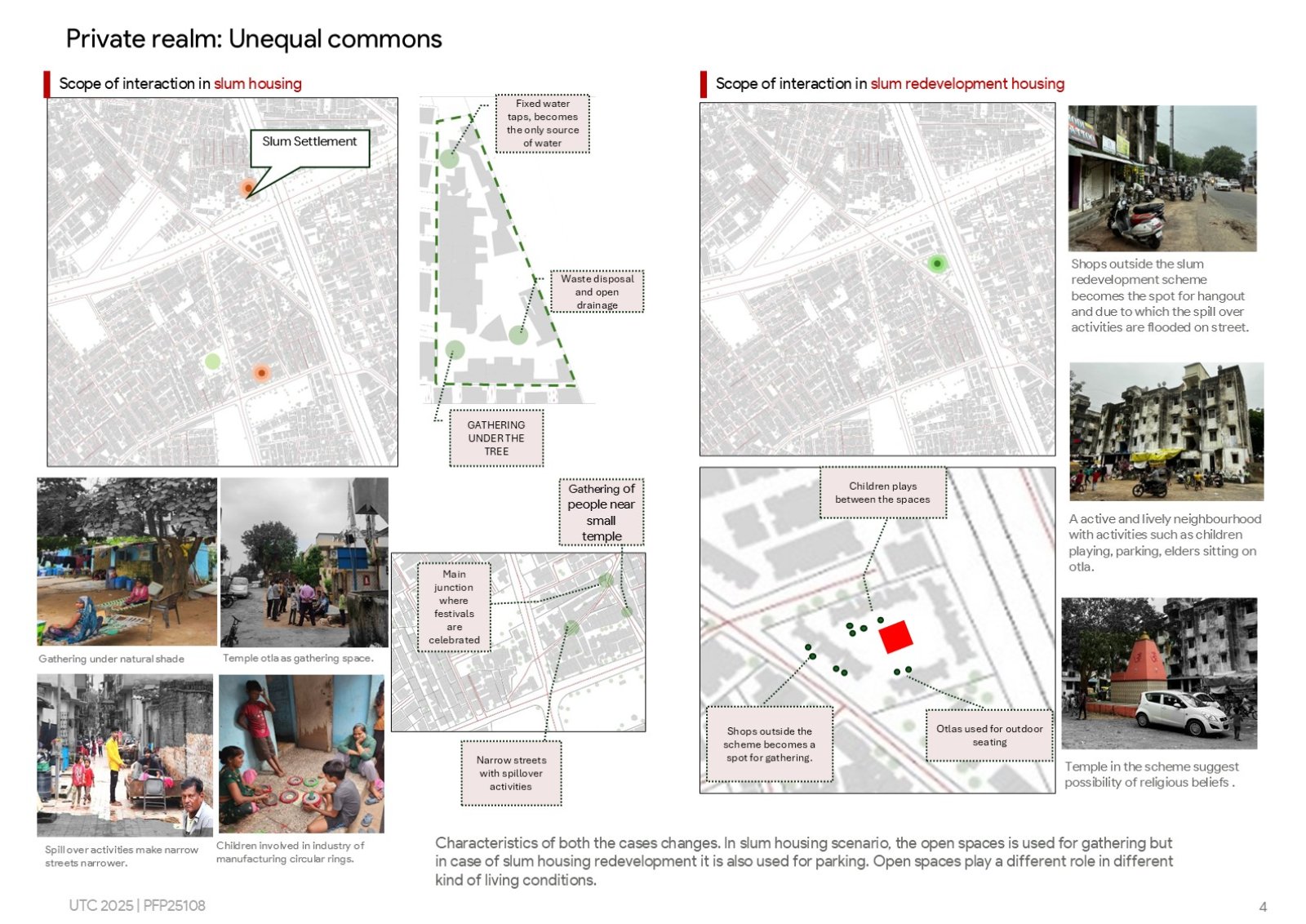
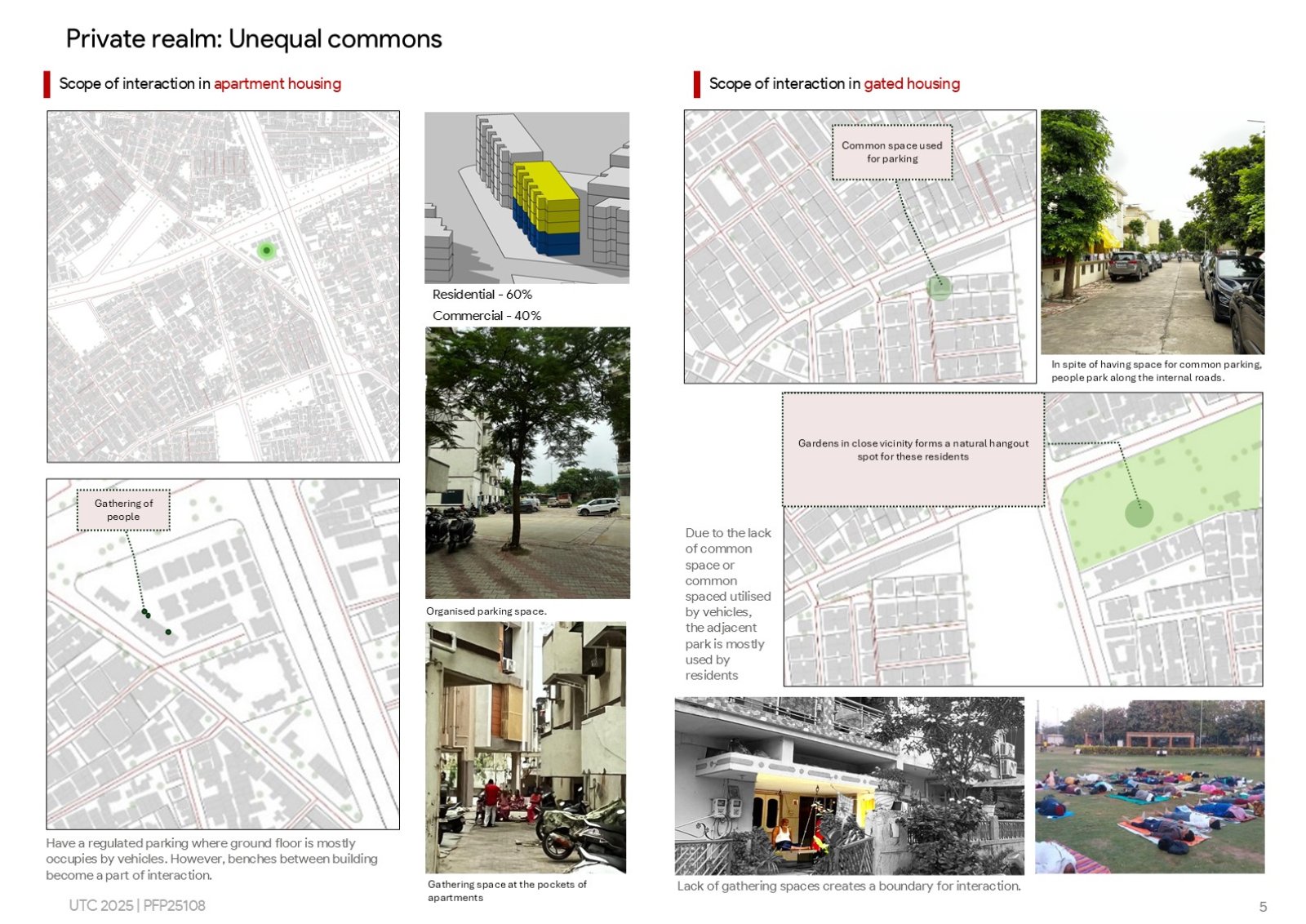
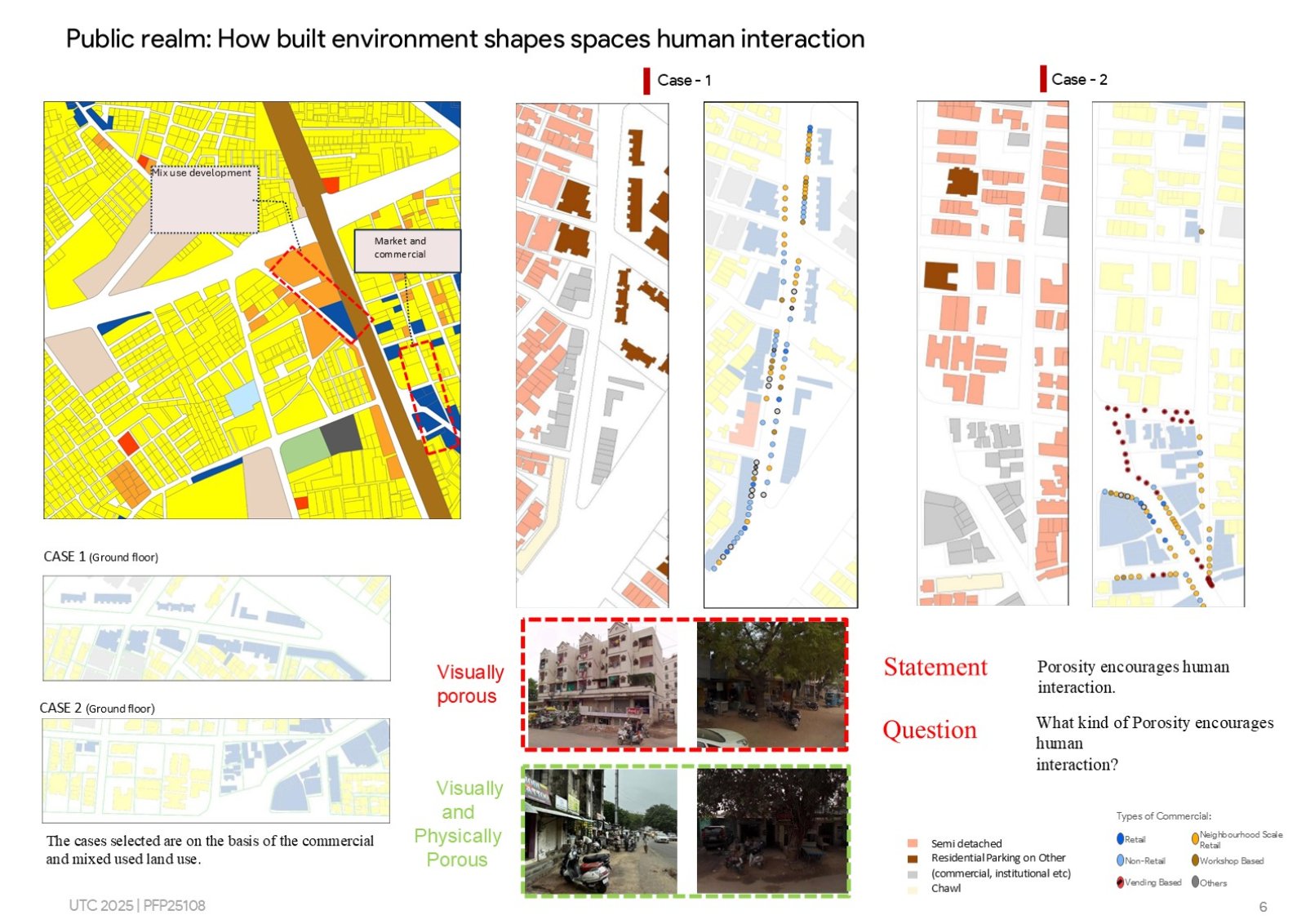
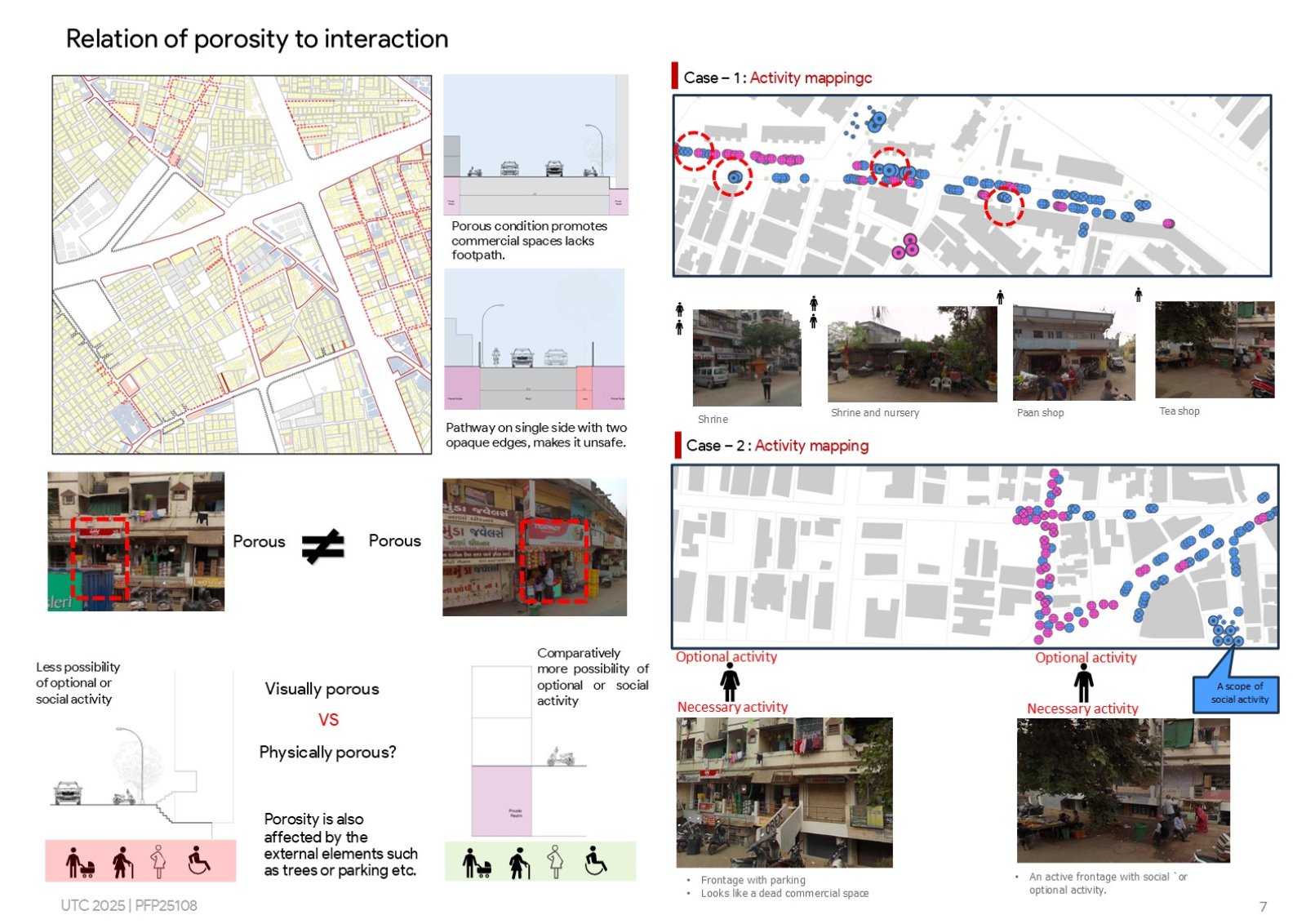
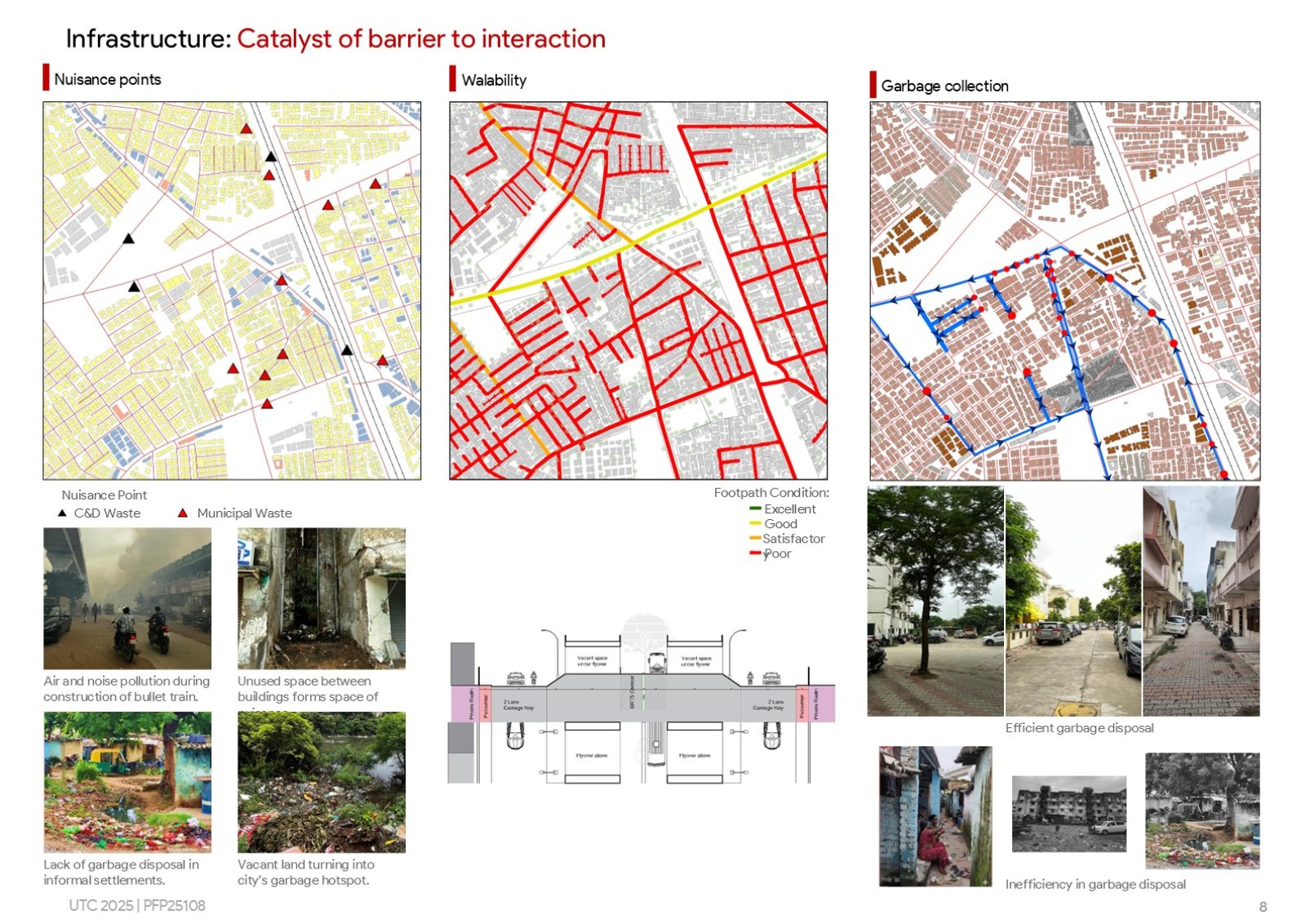
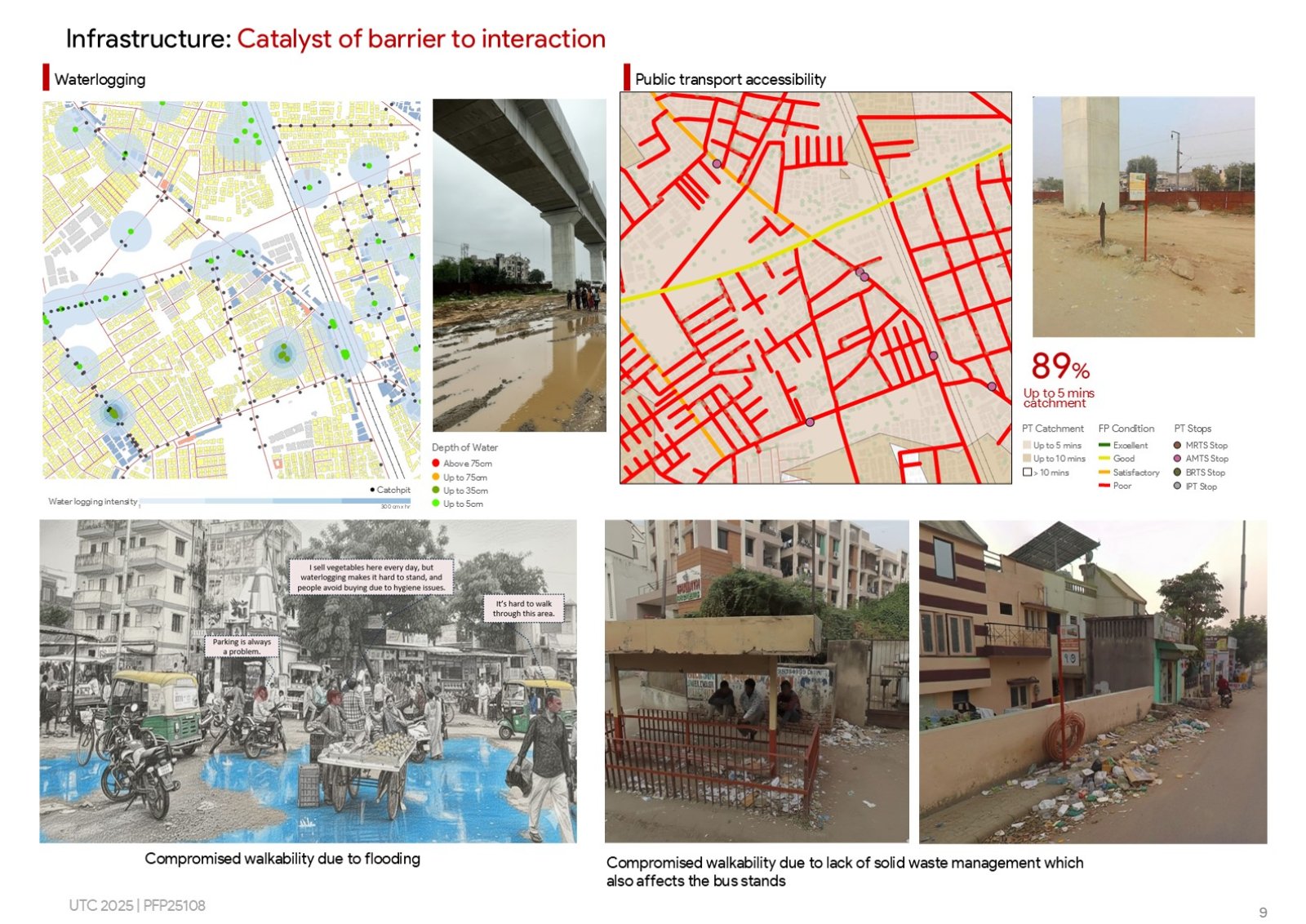
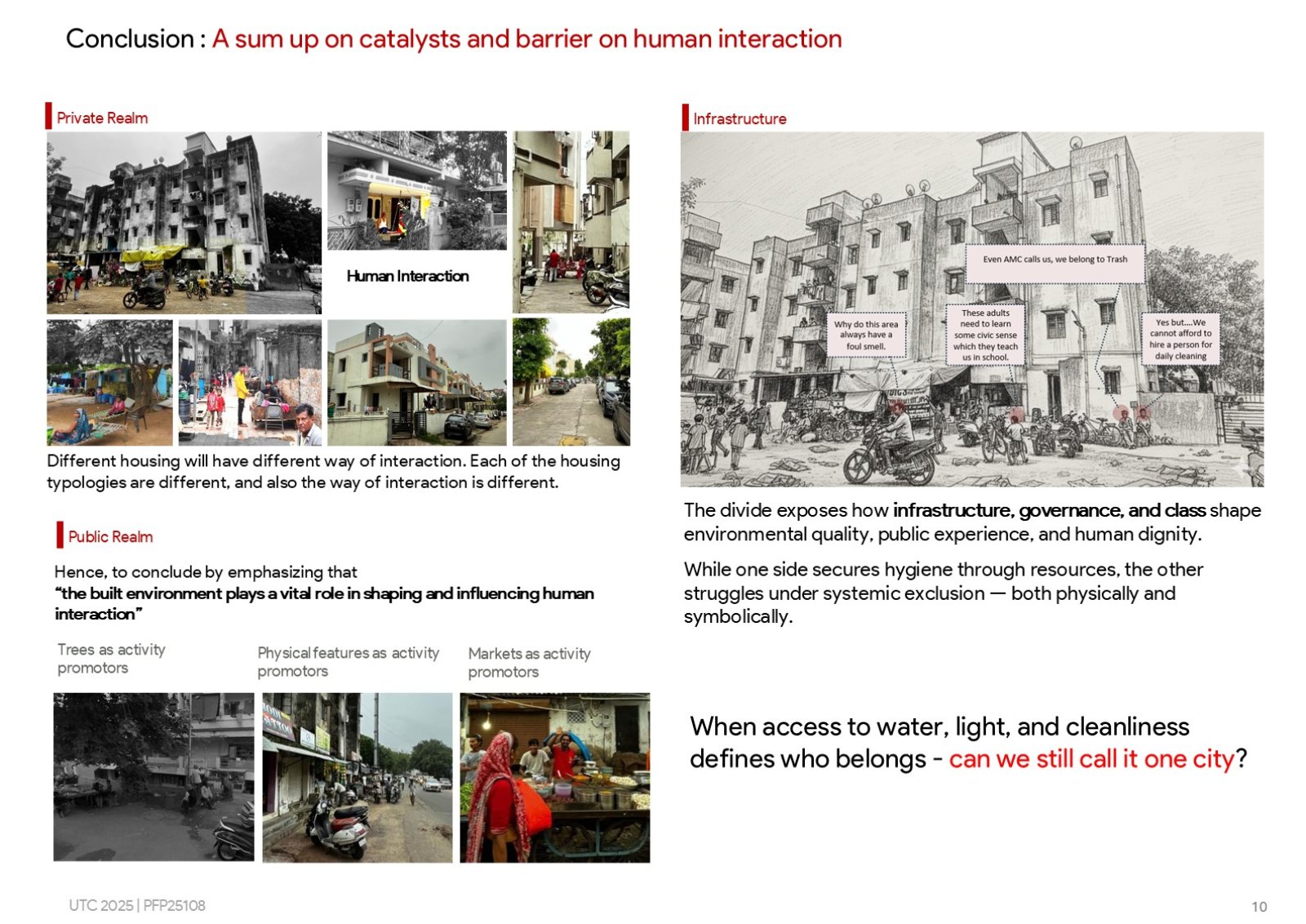
The study examines how the built environment shapes everyday social interaction and belonging in Ghodasar. Housing typologies- from informal settlements to gated communities- define the nature of private social spaces and opportunities for collective life. Public realm conditions such as commercial edges, porosity, and shaded nodes influence where optional and social activities occur. Infrastructure systems including waste management, drainage, lighting, and mobility either enable or restrict social presence and safety, revealing inequities in access and dignity. Together, these dimensions demonstrate that spatial and infrastructural design fundamentally constructs who belongs in the city.