Apurva Anant Patil

UP4002-9

Nikolgam: A Rural–Urban Interface

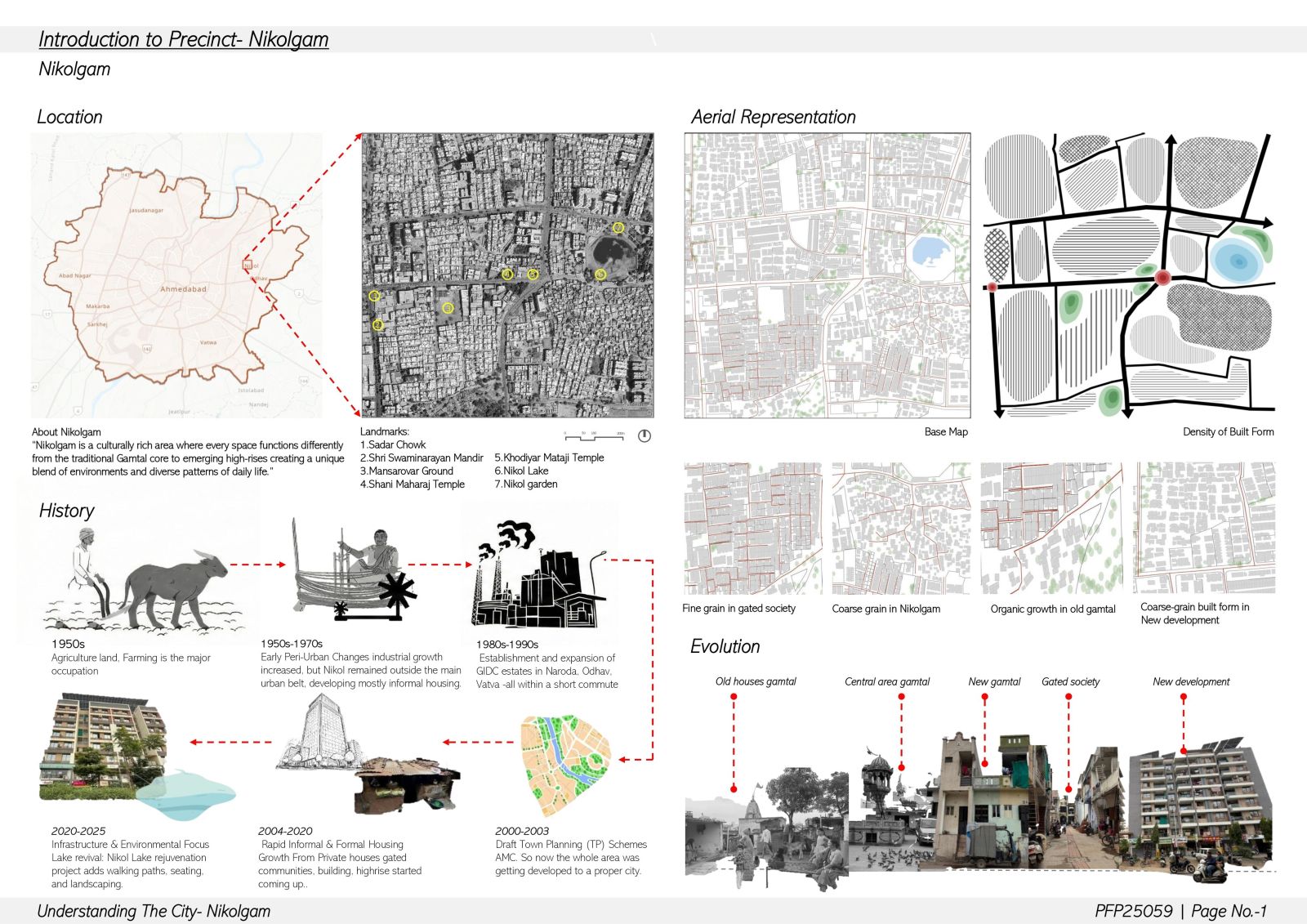
Nikolgam, located in eastern Ahmedabad, has evolved from vast agricultural land into a dense residential precinct. Initially influenced by its proximity to the Odhav GIDC, the area witnessed rapid yet unregulated growth, prompting AUDA’s intervention through planned infrastructure such as Virat Nagar Road and various government housing schemes. Over time, Nikol has transformed from a traditional Gamtal settlement to a fully urbanized city fabric, showcasing a rare continuity of contrasting typologies within one area. It now accommodates a spectrum of built forms: organized apartment clusters with integrated commercial activities, affordable but less porous row-house developments catering to dependent populations, and the organically grown, low-rise Gamtal core that reflects its rural roots. Despite this diversity and socio-economic mix, Nikol continues to face challenges—most notably poor public transport connectivity and inconsistent street infrastructure. The area thus presents a dynamic blend of urban opportunities and structural limitations, shaped by its journey from Gamtal to emerging city.
Report Content

Nikolgam shows a clear transition from an organic Gamtal core to structured new developments, reflecting its shift from rural origins to a fully urbanized precinct.

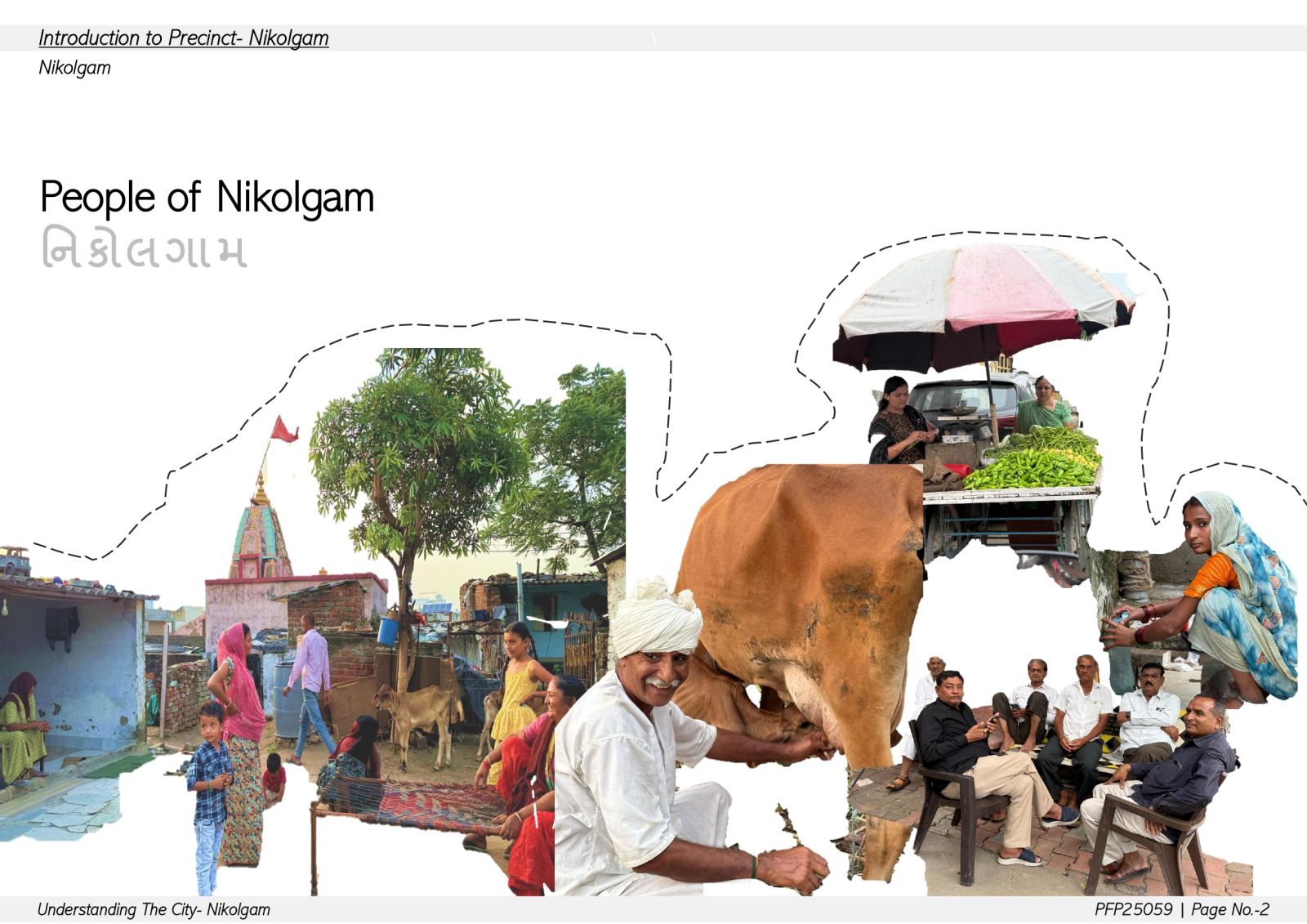
The people of Nikolgam reflect a blend of traditional rural lifestyles and emerging urban livelihoods, showcasing a community in cultural and economic transition.

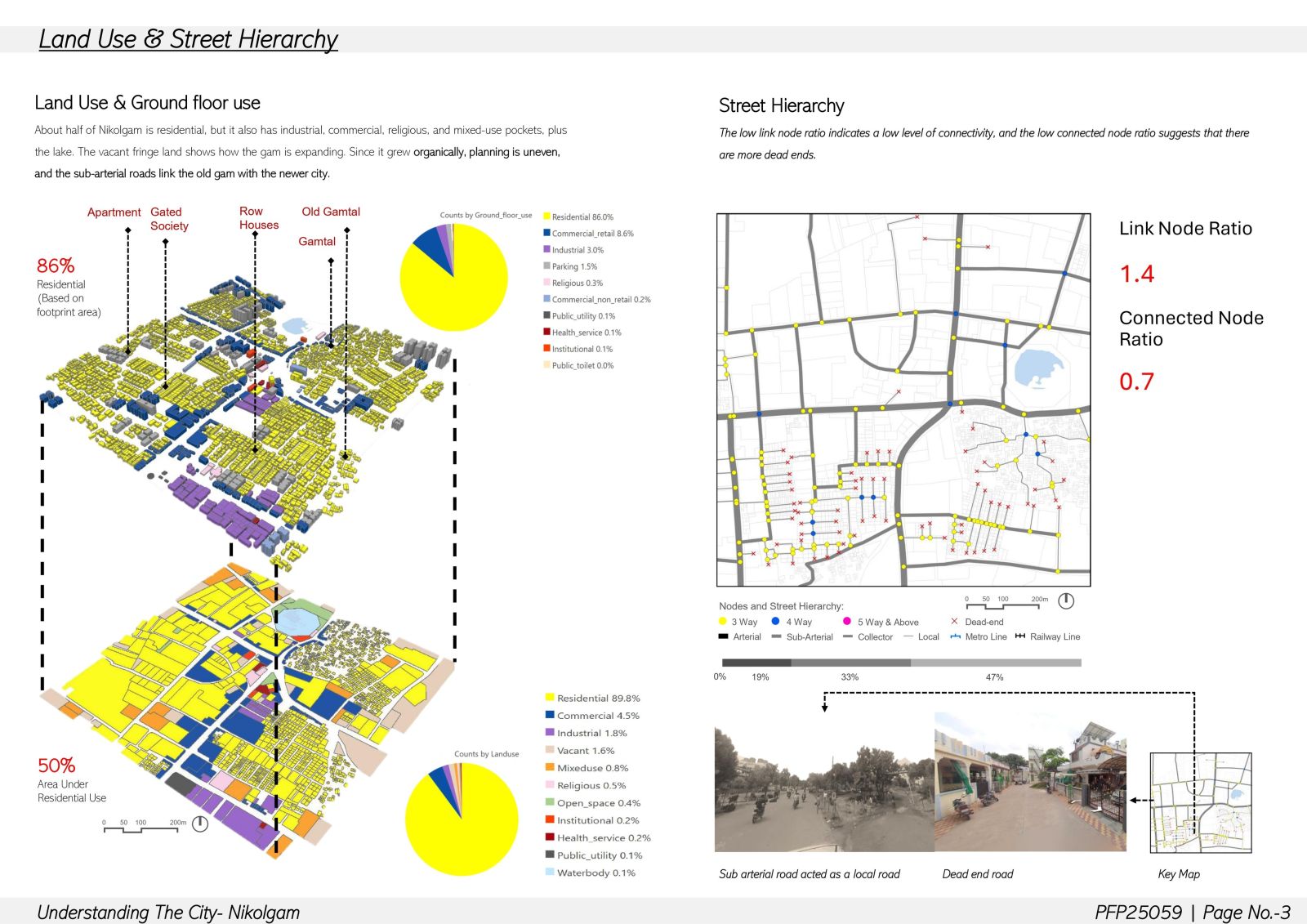
Nikolgam is predominantly residential with organic, uneven planning, resulting in low street connectivity and many dead-end roads.

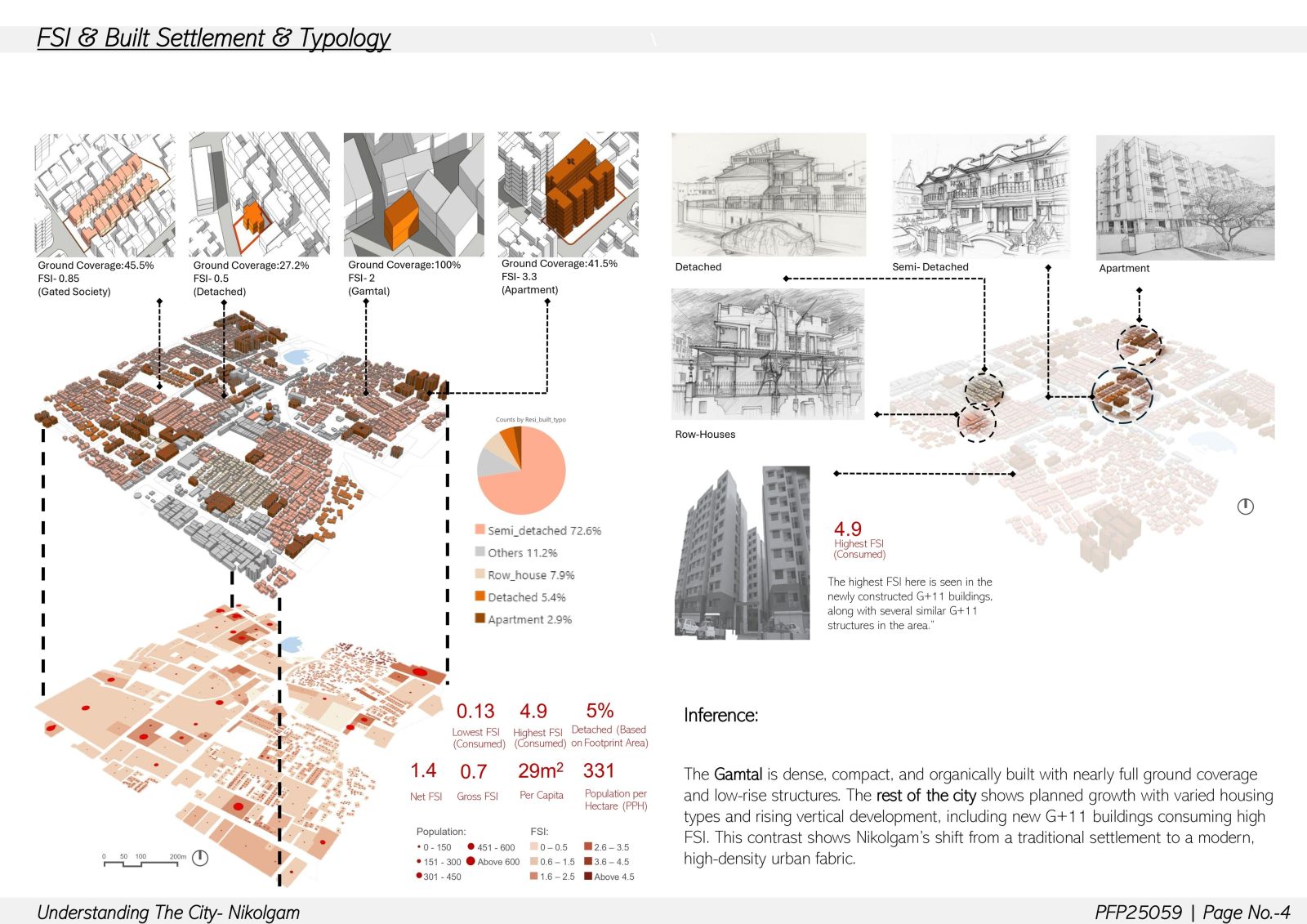
Nikolgam contrasts between its dense, organically built Gamtal core and the surrounding planned areas marked by rising vertical development and higher FSI consumption.

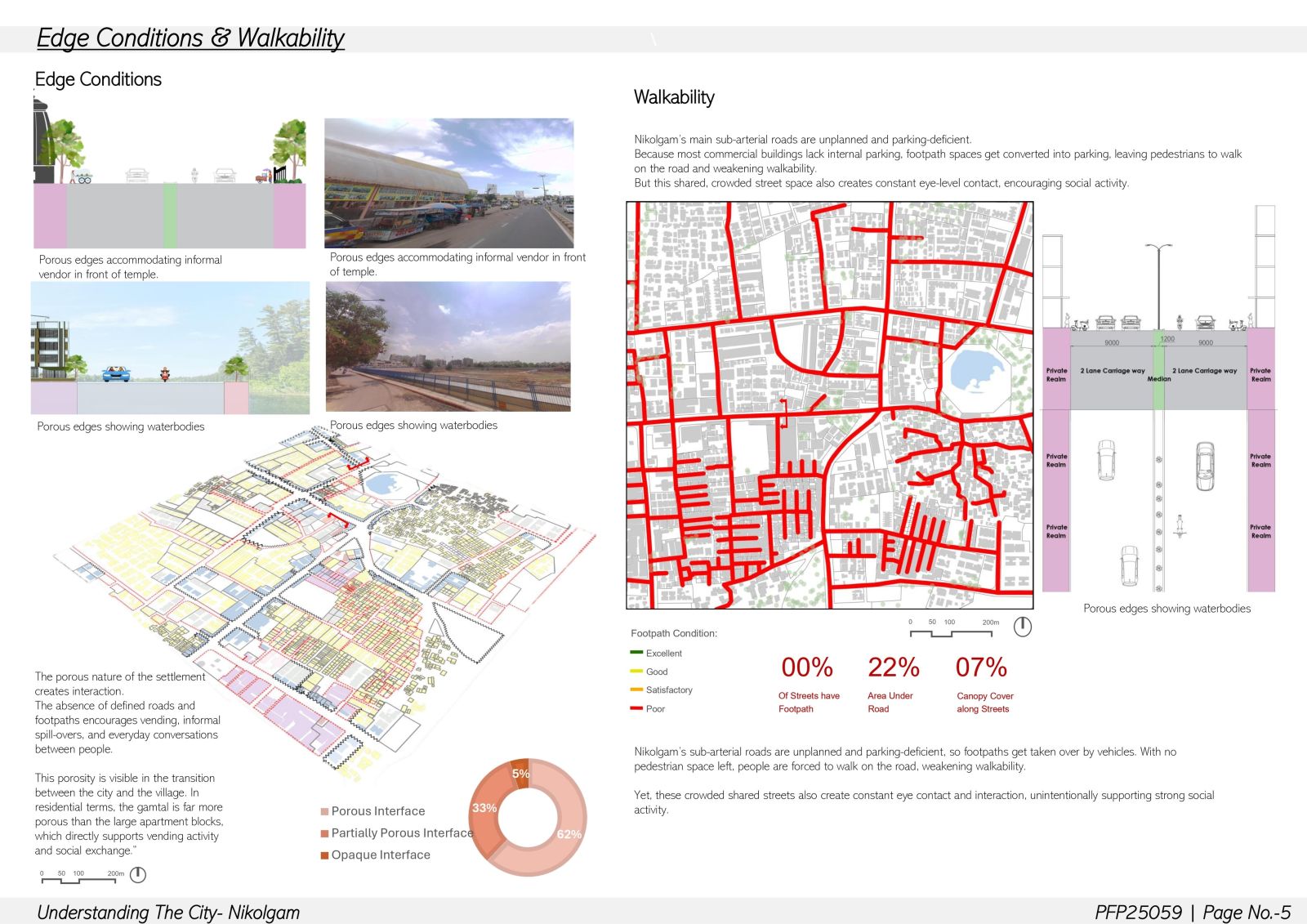
Nikolgam’s highly porous edges and lack of footpaths reduce walkability but simultaneously create vibrant, socially interactive shared streets.

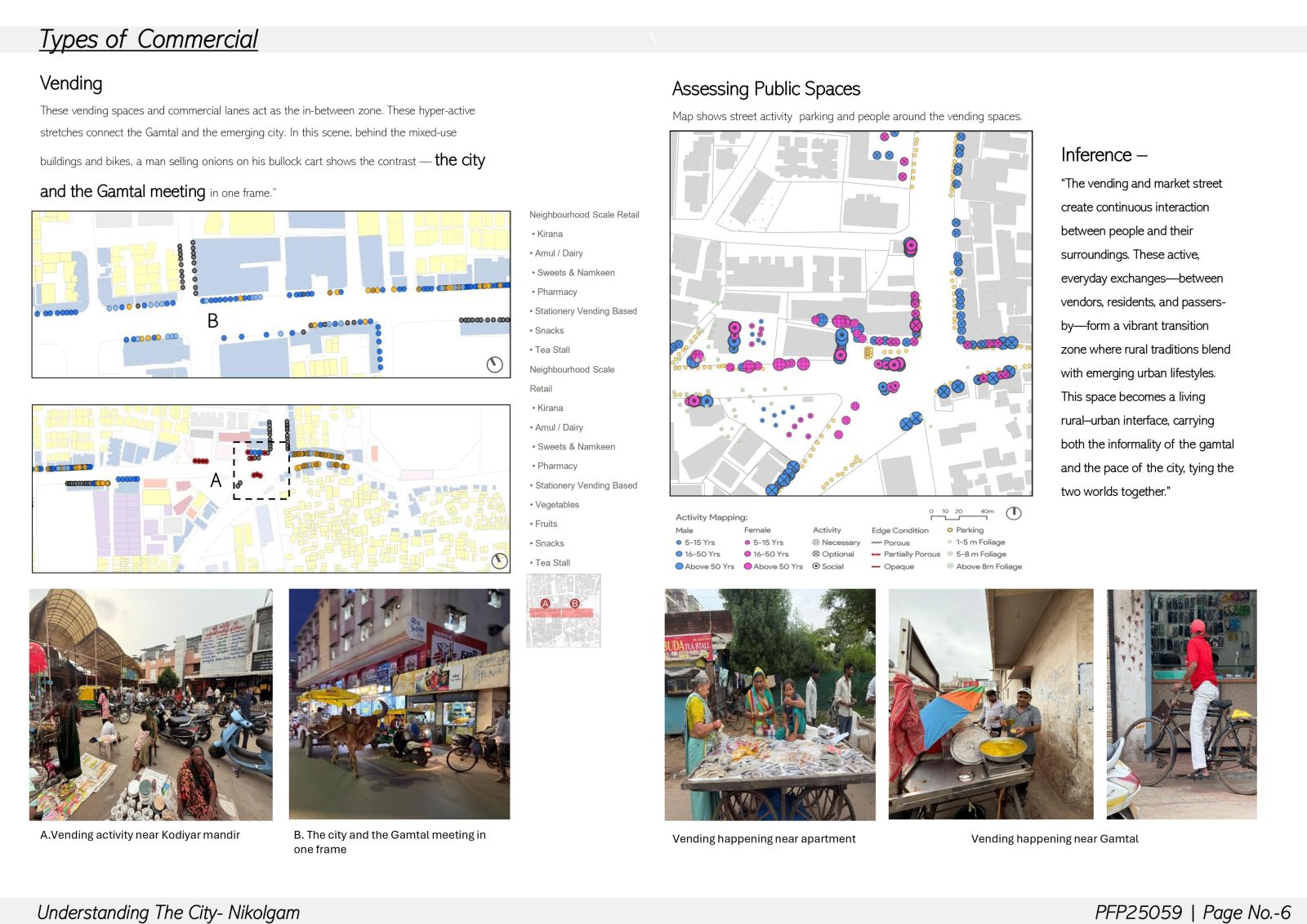
Nikolgam’s vending streets act as a lively rural–urban interface where everyday markets seamlessly connect the Gamtal’s informality with the emerging city’s pace.

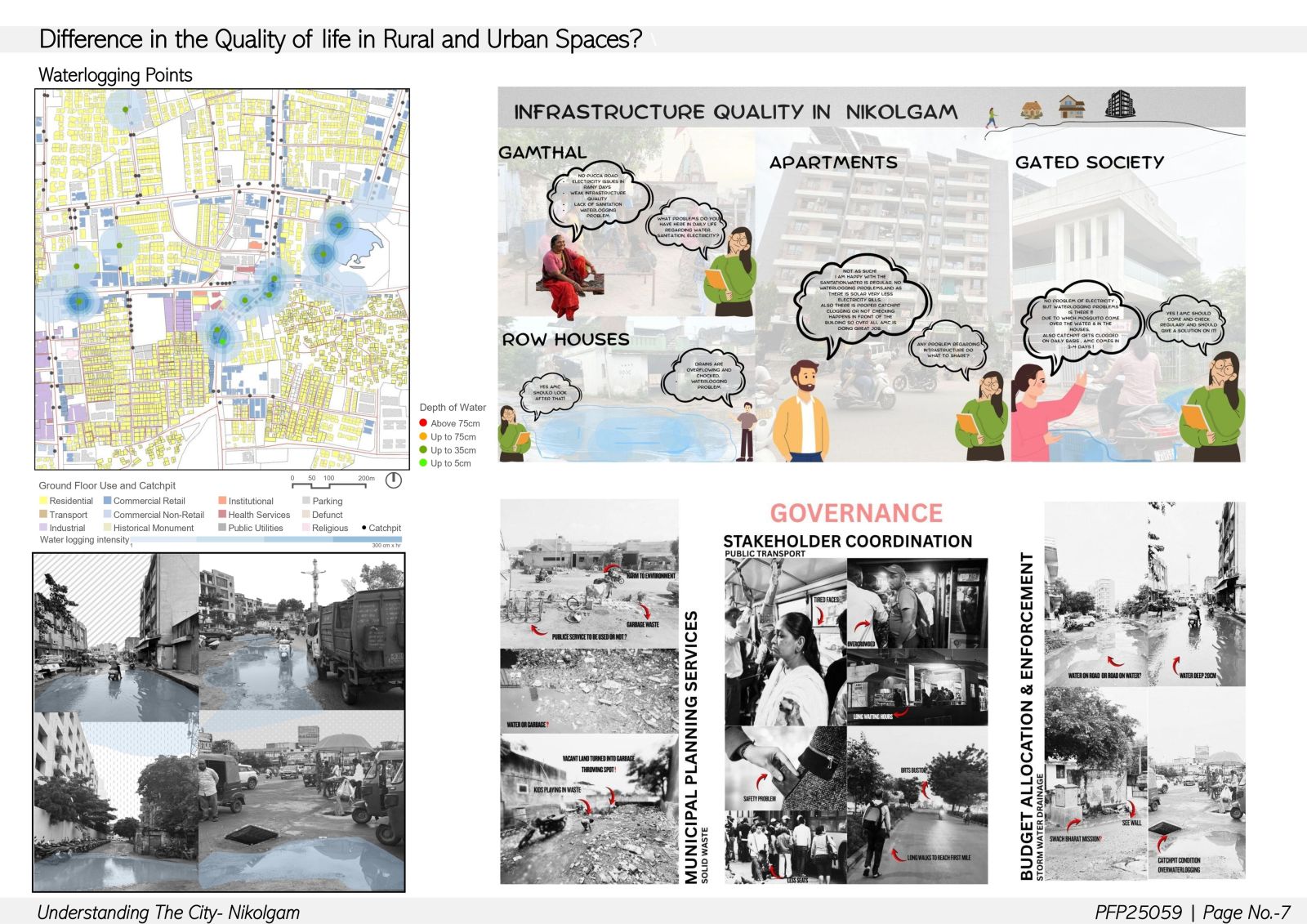
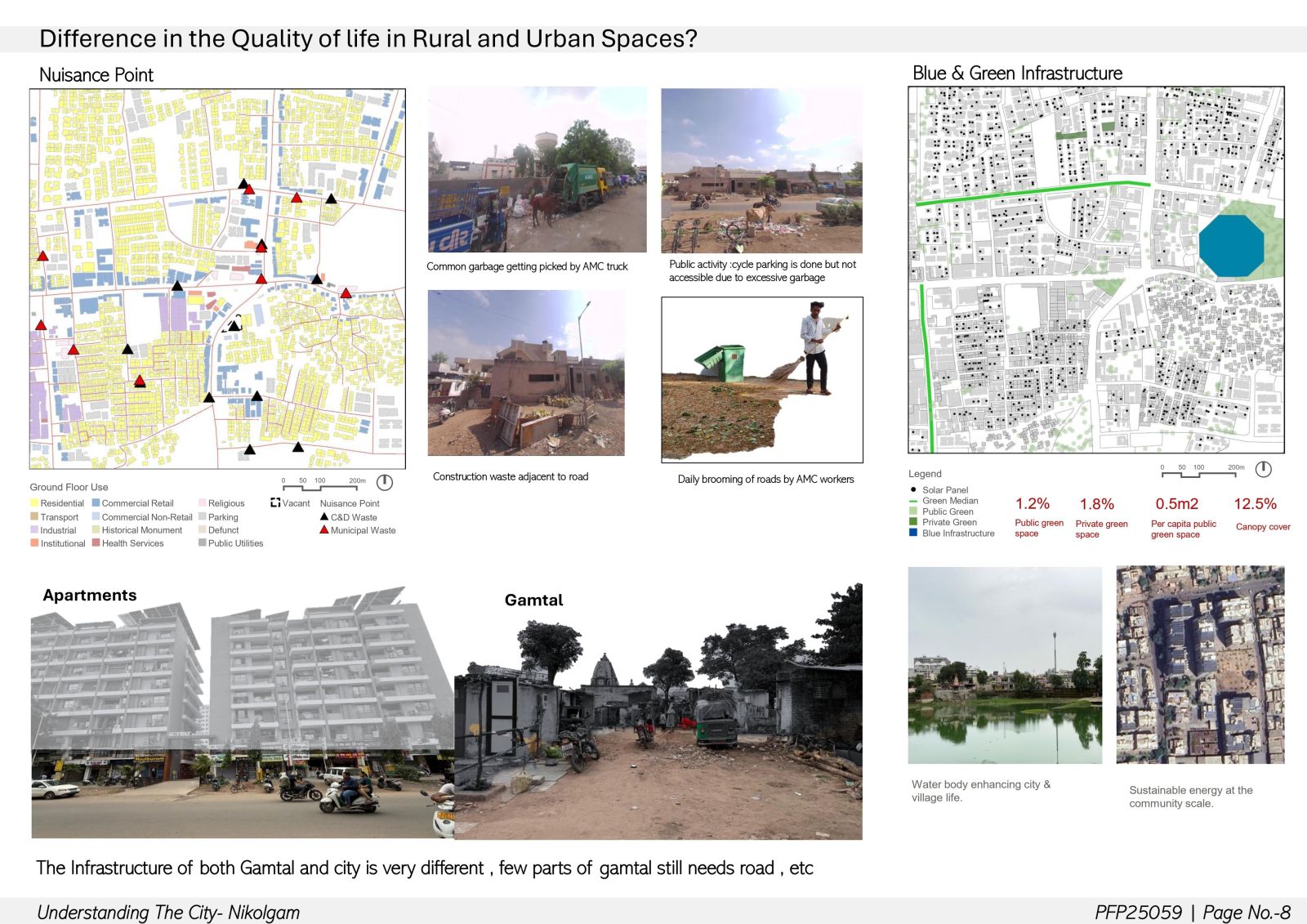
Nikolgam shows sharp disparities in infrastructure and governance, with Gamtal areas facing waterlogging and poor services while newer urban pockets enjoy better facilities.

Urban areas show better infrastructure and services, while the gamtal still faces gaps in sanitation, open spaces, and road development, highlighting a clear rural-urban quality-of-life contrast.