Malay Piyushkumar Gajera

CT2015

???????? ????????

This project explores pervious concrete as a solution to urban flooding, drainage failure, and falling groundwater levels. Through material testing, five mix trials, and performance evaluation of strength and permeability, the study identifies rounded 6.3–10 mm aggregates as the optimal choice. The work includes mould experimentation, FRP mould making, and finally casting Baankadu—a breathable, lightweight pervious concrete block with strong edges, high permeability, and stable form. The project demonstrates concrete’s versatility and its potential for sustainable urban applications.
Report Content

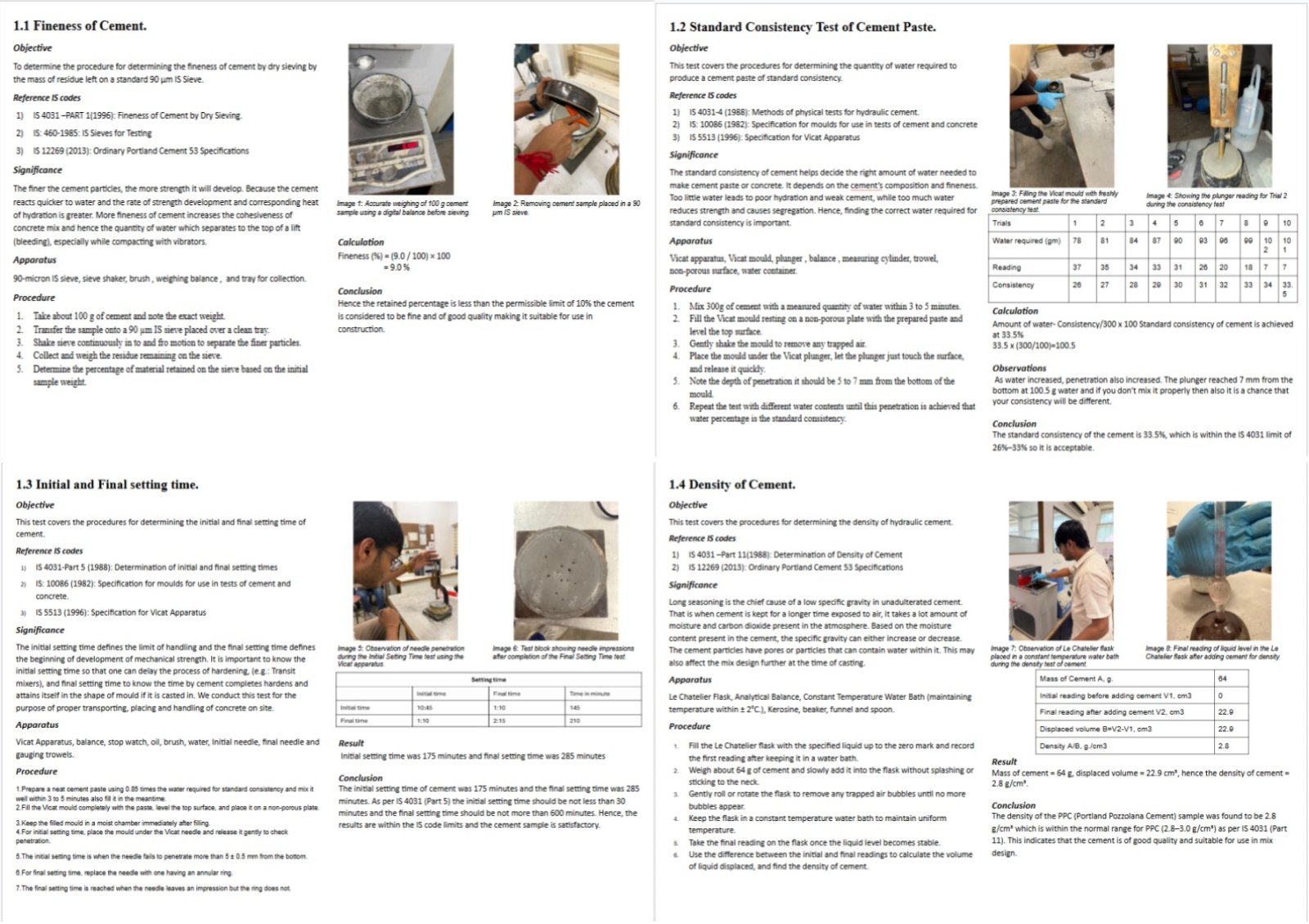
This sheet presents four fundamental cement laboratory tests Fineness of Cement, Standard Consistency, Initial & Final Setting Time, and Density of Cement—each explained with objectives, significance, reference codes, apparatus, procedure, calculations, observations, and conclusions. The layout includes step-by-step instructions supported with real laboratory images and final result .

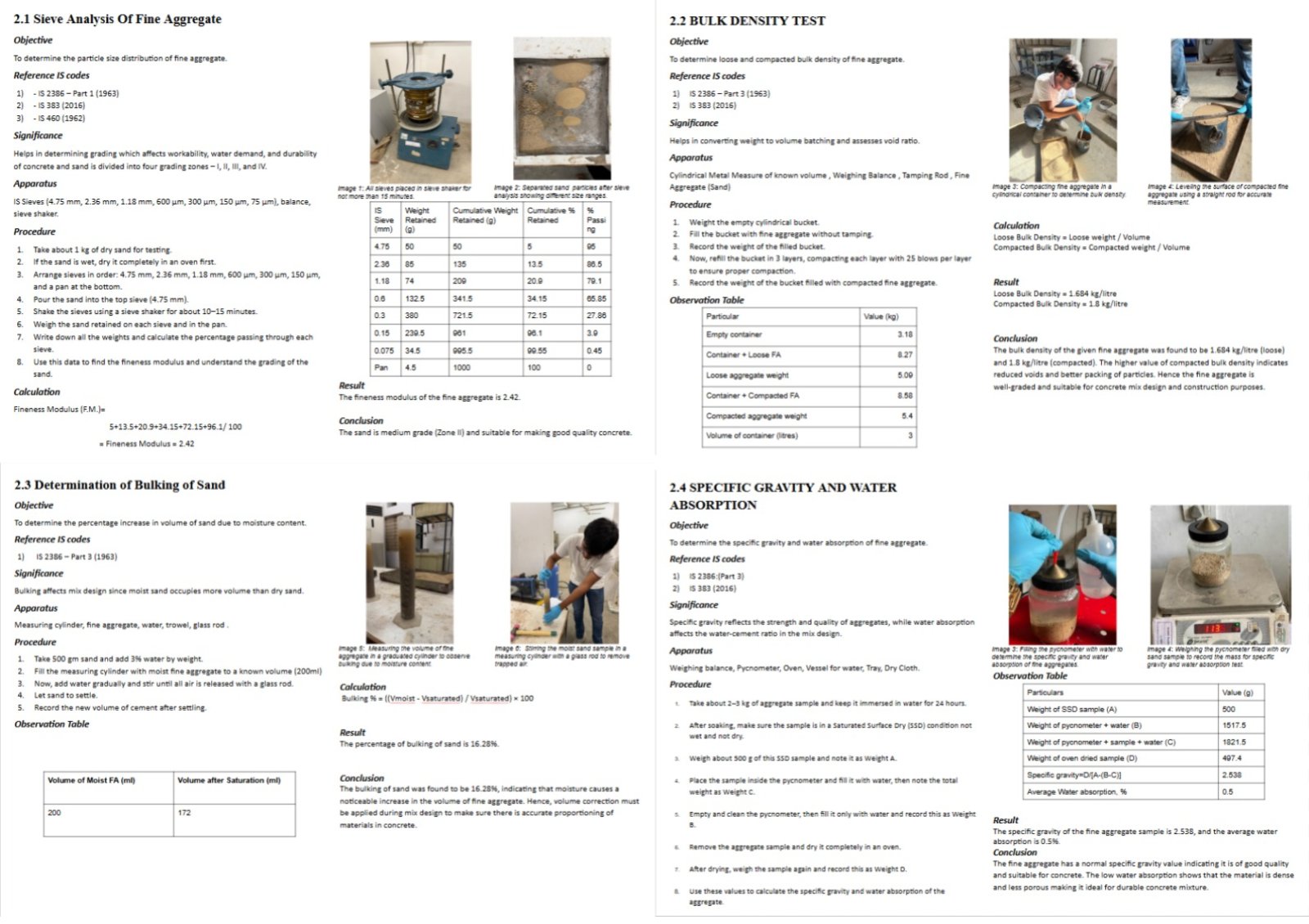
Experimental Analysis of Fine Aggregate: Sieve Analysis, Bulk Density, Bulking of Sand, and Specific Gravity with Water Absorption.

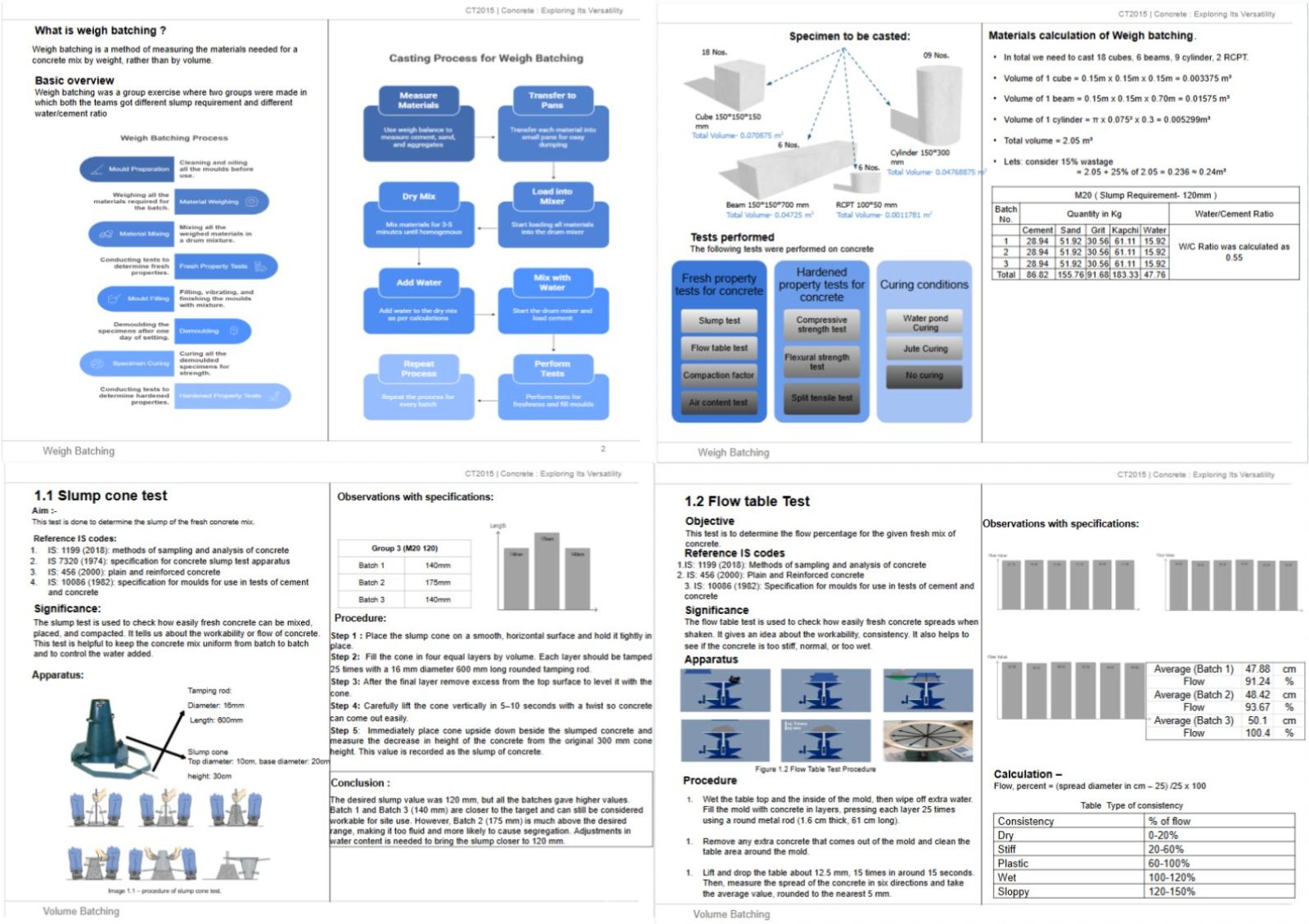
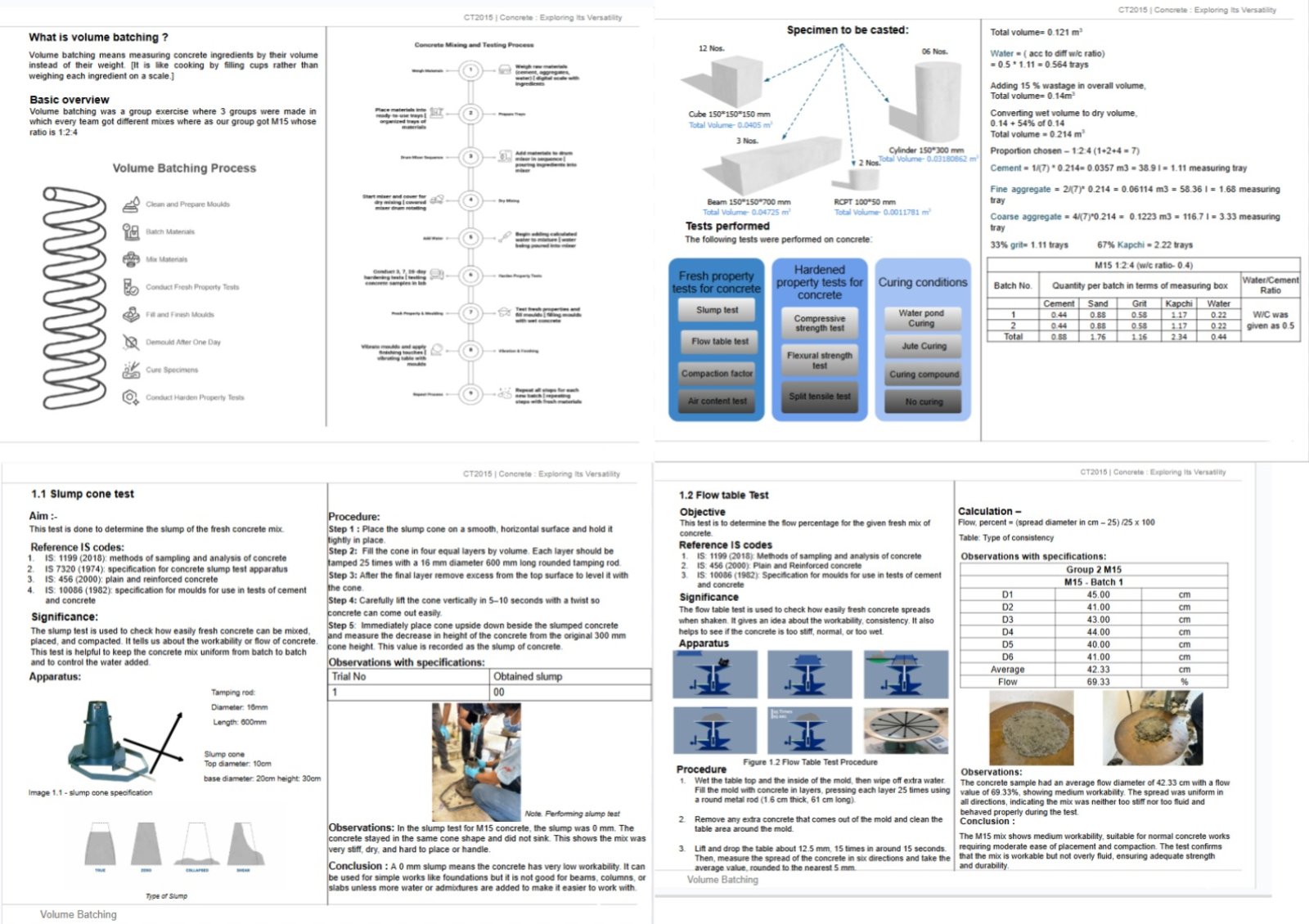
Overview of the concrete volume batching process, testing sequence, specimen casting details, mix design calculations, and fresh concrete tests such as slump test and flow table test for the M15 mix.”

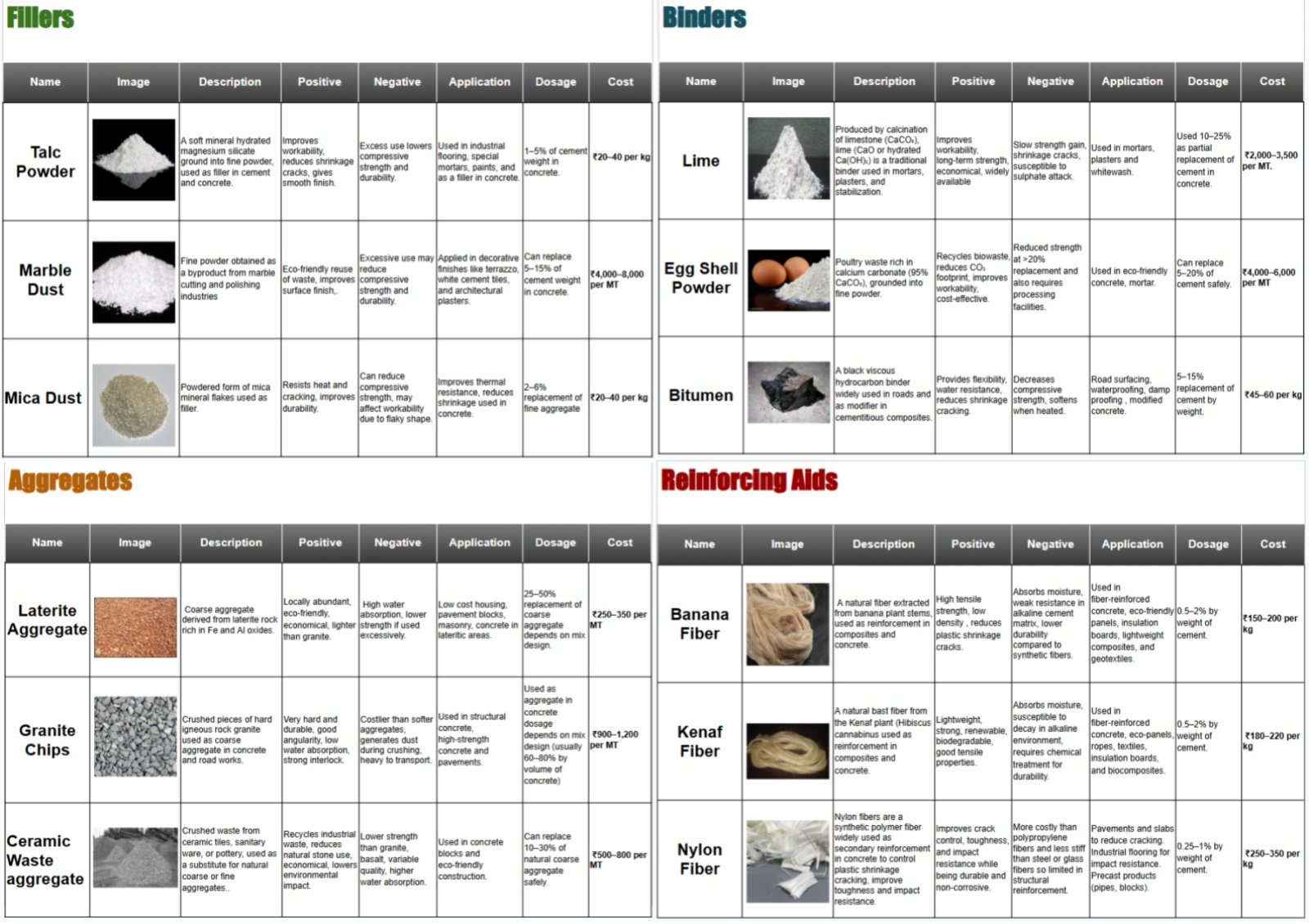
Material Alternatives in Concrete: Overview of natural, industrial, and recycled fillers, binders, aggregates, and fibres with performance impacts and usage guidelines.

Complete weigh batching workflow—from measuring materials to casting specimens—along with slump and flow table tests used to assess the workability of the concrete mix.

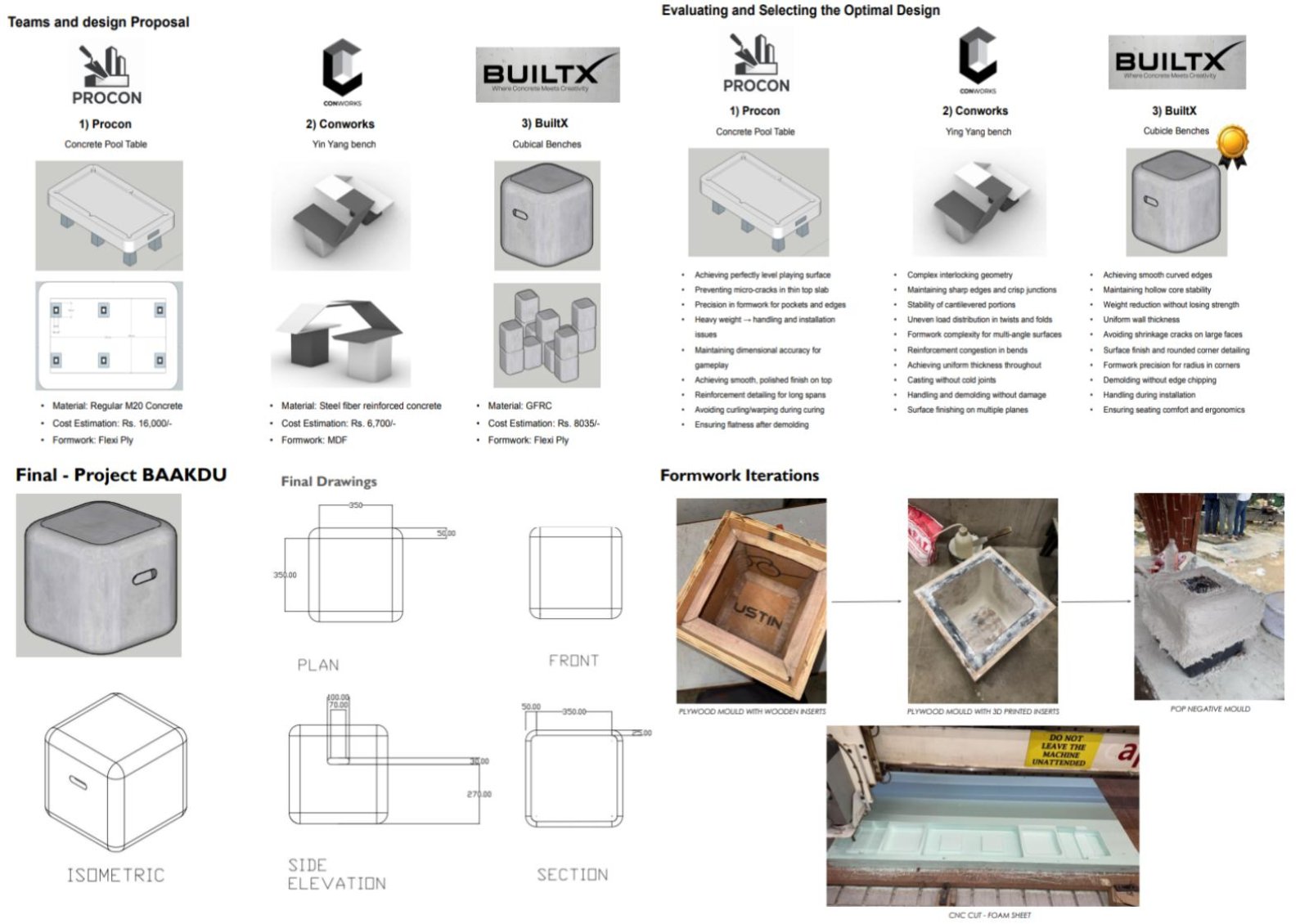
Concept development to final prototype: comparison of team proposals, evaluation of design challenges, final chosen product (BAAKDU), detailed drawings, and step-by-step formwork fabrication iterations.

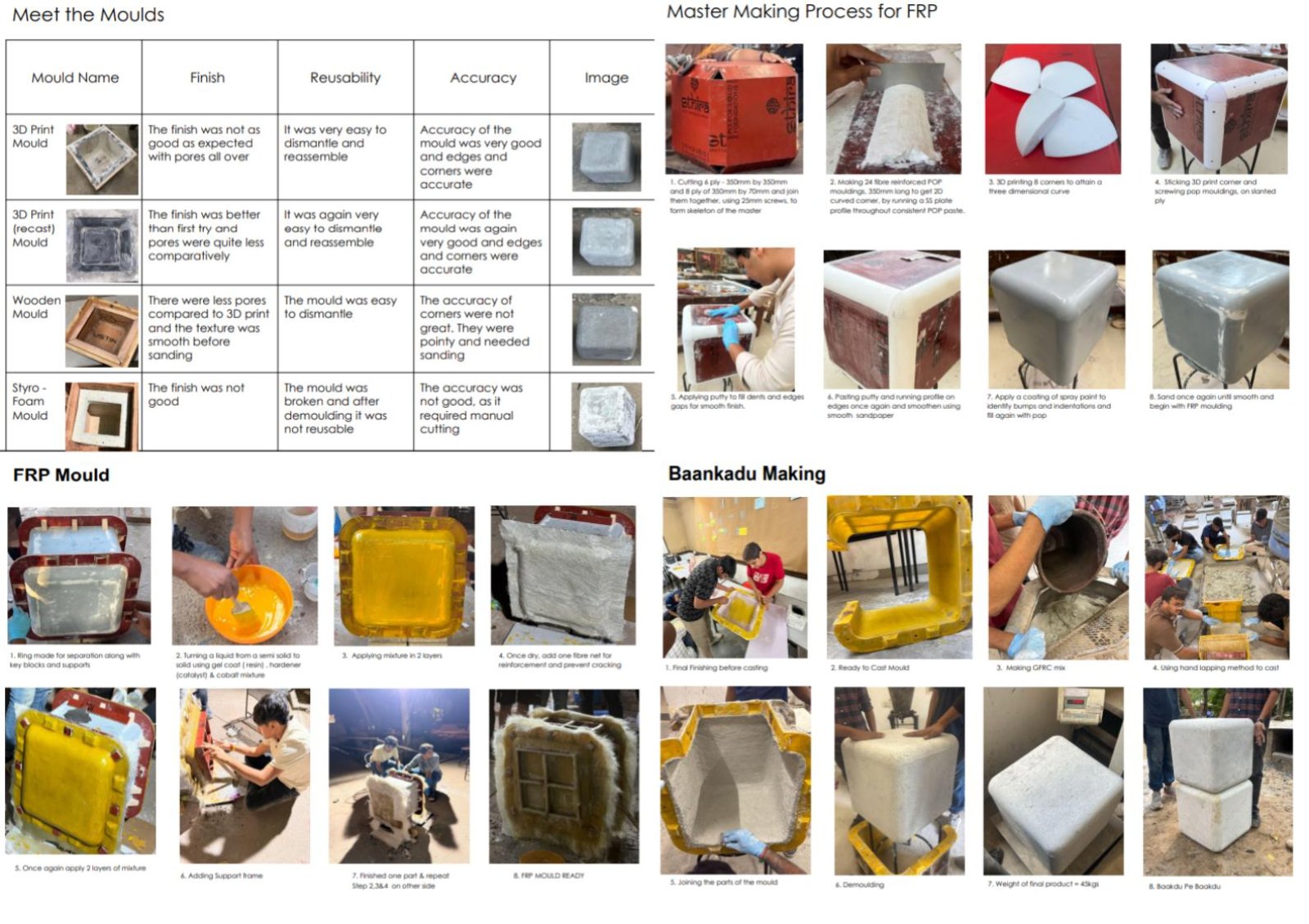
Overview of mould trials (3D print, wooden, foam), detailed FRP master-making workflow, creation of the final FRP mould, and step-by-step Baankadu casting process using GFRC.

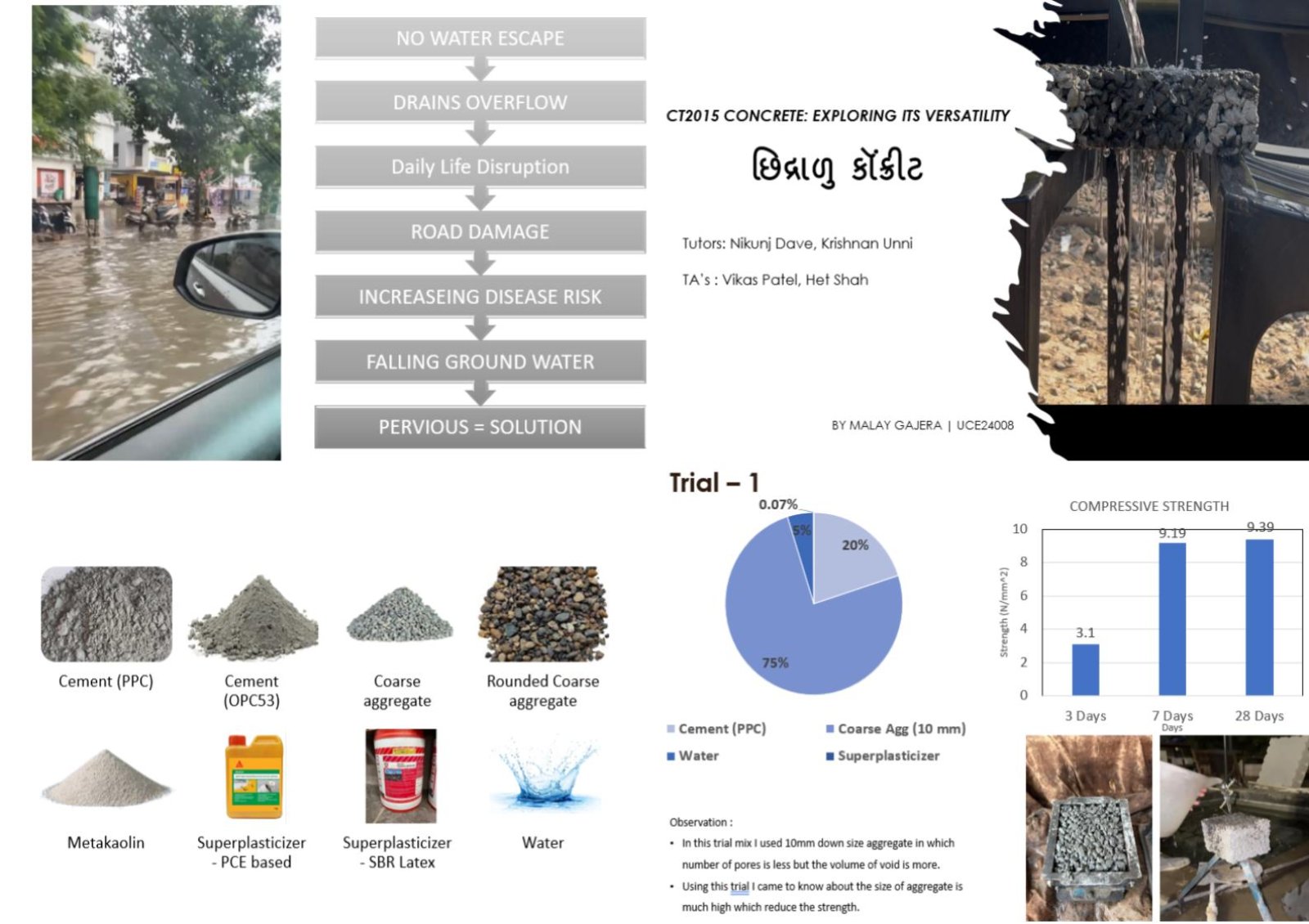
Introduction to the pervious concrete project—highlighting urban flooding issues, material selection, Trial-1 mix proportions, pore structure observations, and compressive strength results across curing ages.

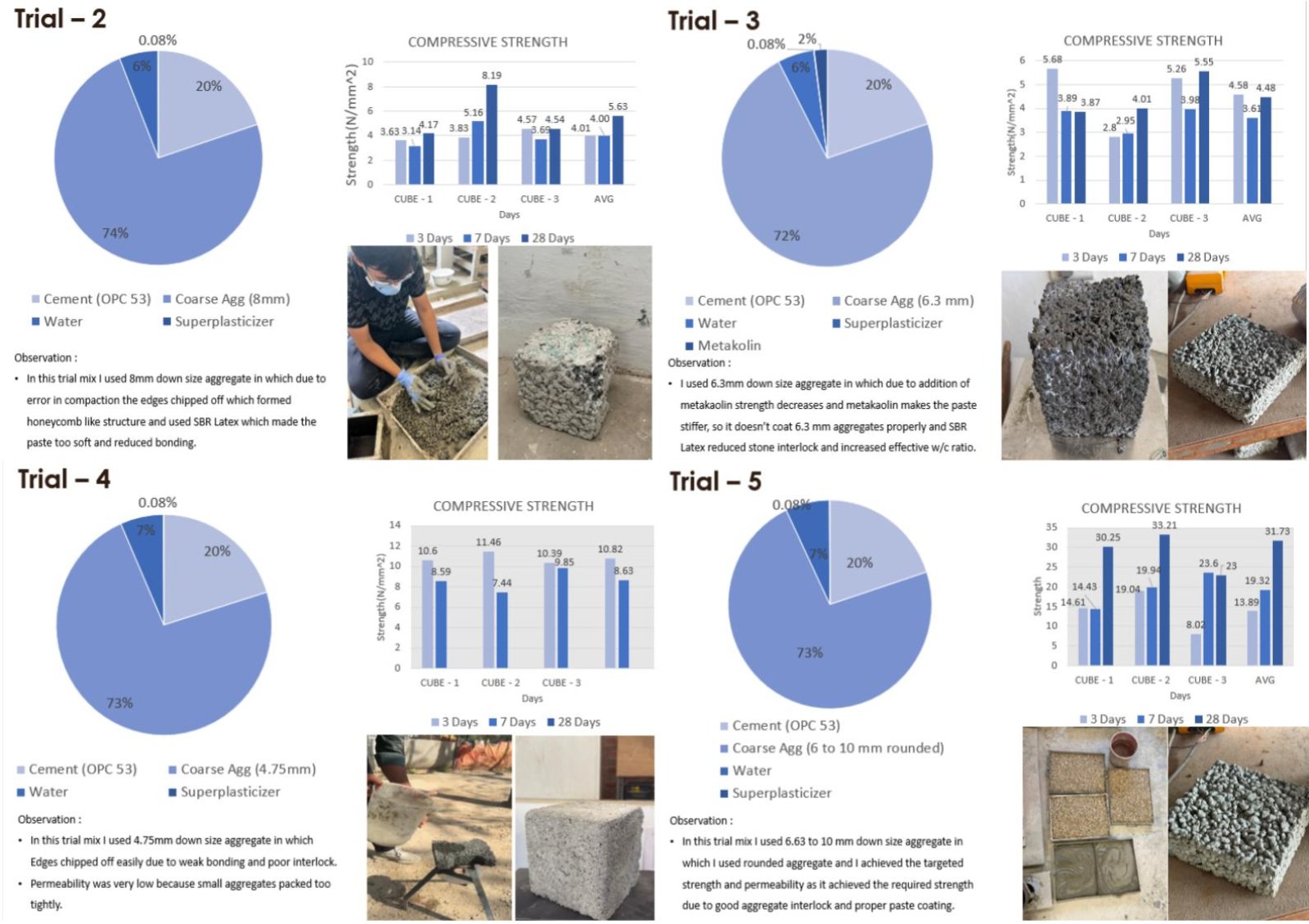
Comparative analysis of pervious concrete Trials 2–5, showing changes in aggregate size, material proportions, mix behaviour, and the resulting compressive strength trends across 3, 7, and 28 days.

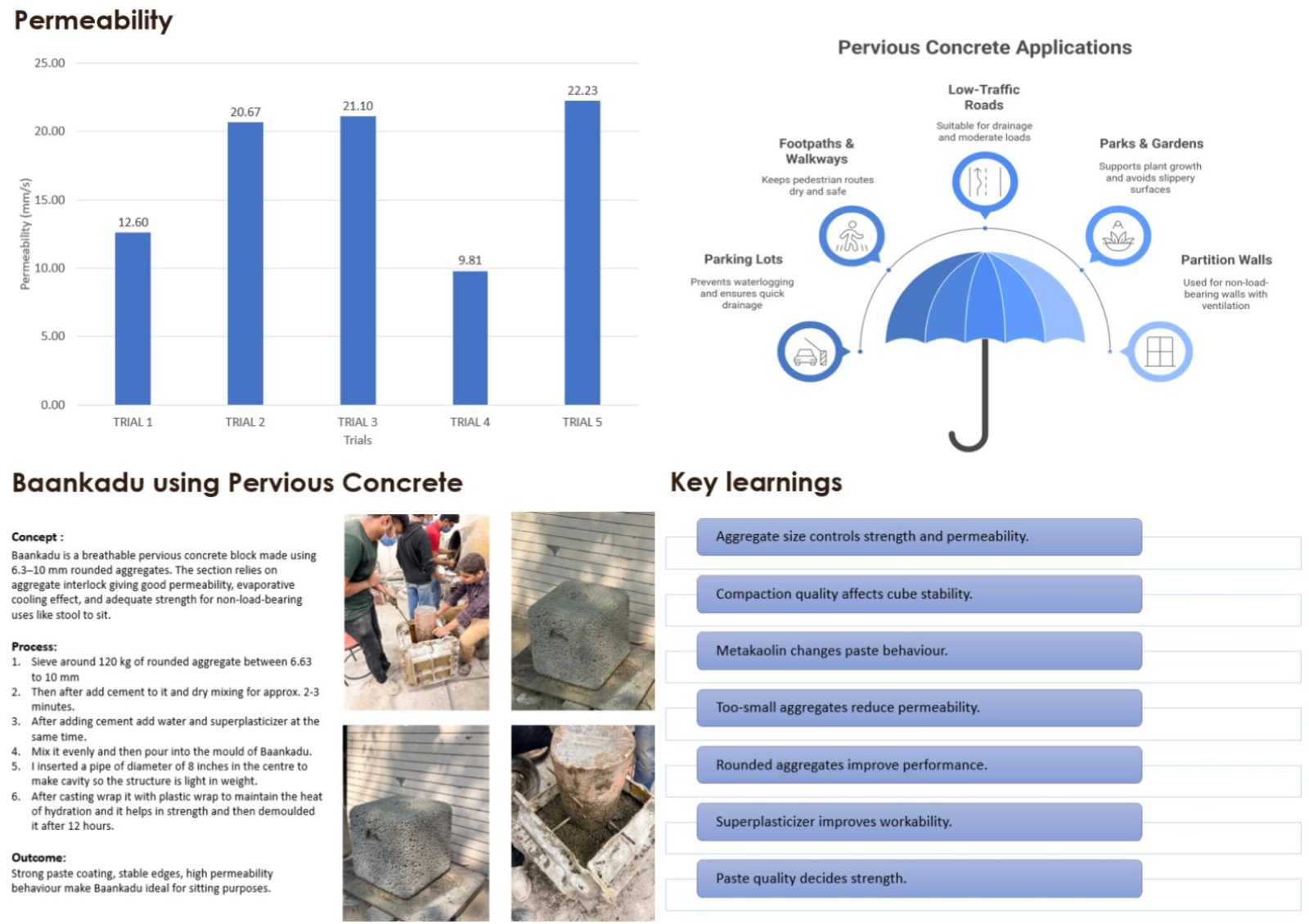
Summary of pervious concrete performance across trials with permeability comparison, practical applications, Baankadu block made using optimal aggregate sizing, and key technical learnings from the experimental process.