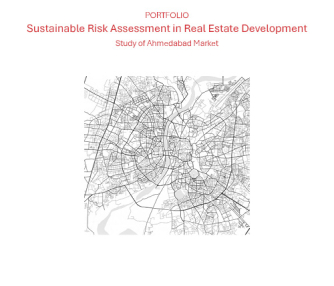
Sustainable Risk Assessment in Real Estate Development: Study of Ahmedabad Market
The real estate sector creates a significant impact on the environment, social relationships and economic development. It is responsible for approximately 40% of energy consumption and 36% of CO2 emissions in the European Union. To become the fastest-growing large economy in the world, India has set a target growth rate of 9%, reaching an economy of $5 trillion by 2024-25. It is an immense challenge to meet the growth target and keep the CO2 emissions under control. Thus, building sustainability into real estate is inevitable to achieve a positive environmental impact. Projects are most chosen considering only their risk and return, and there are very few indices and methods to assess the sustainability of a project. Consequently, there is a lack of knowledge and experience on how to use the methods and indices that are already developed and, more importantly, which method or index for measuring sustainability to choose. Moreover, all the existing indices and models used to assess the sustainability of an investment project consider only three dimensions of sustainability: environmental, social and economic. This study seeks to promote the risk assessment integration of sustainability into Indian real estate projects by incorporating a technological dimension within the concept of sustainability.