Priyansh Singh

CT2016

Self-Balancing Water Distribution Network

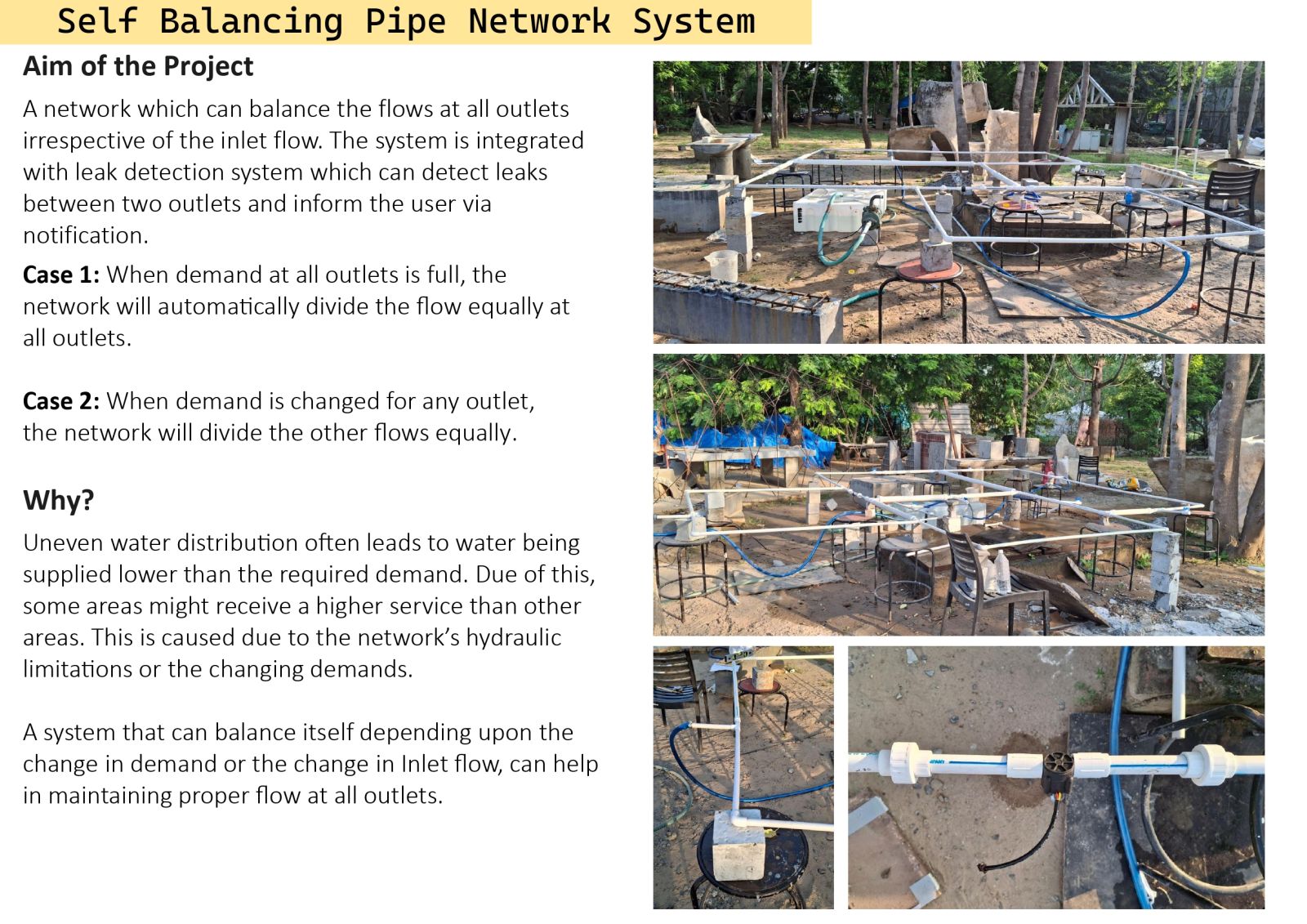
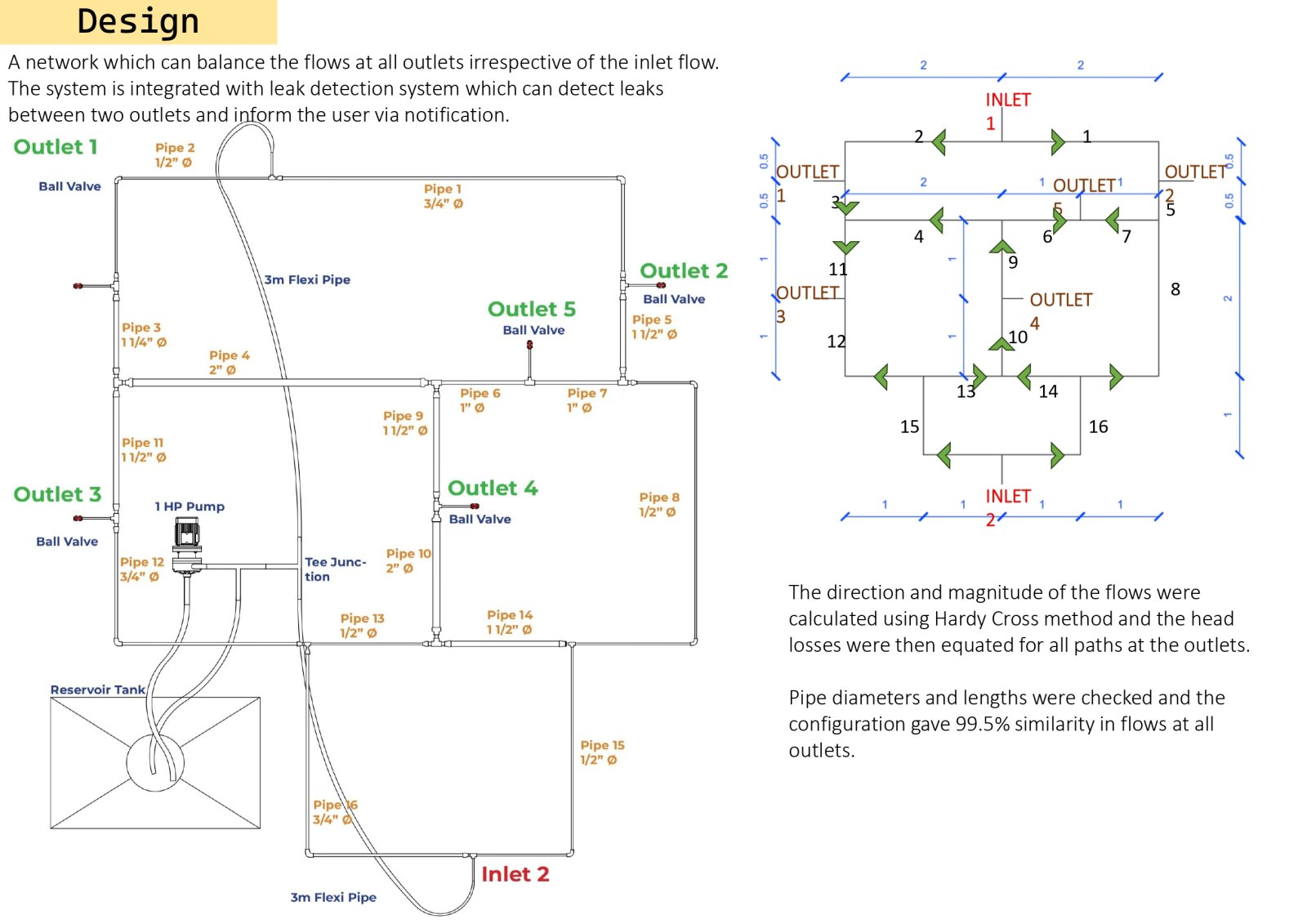
In this project, I have made a self sufficient and smart water distribution network, which is designed to balance flows equally at all outlets within a specified inlet range. Water networks often face uneven supply due to limitations, changing demands, leaks and improper valves, which cause hydraulic imbalance. My system tackles with these issues directly to resolve them. I have also integrated a similarity based leak detection system that detects leak from monitoring only outlet flows. It uses adaptive thresholding with leak severity evaluation and notification alerts.  Hence, through testing, I was able to conclude that the system balanced the flows and accurately detected both major and minor leaks, offering a practical and scalable solution.

View Additional Work
Report Content

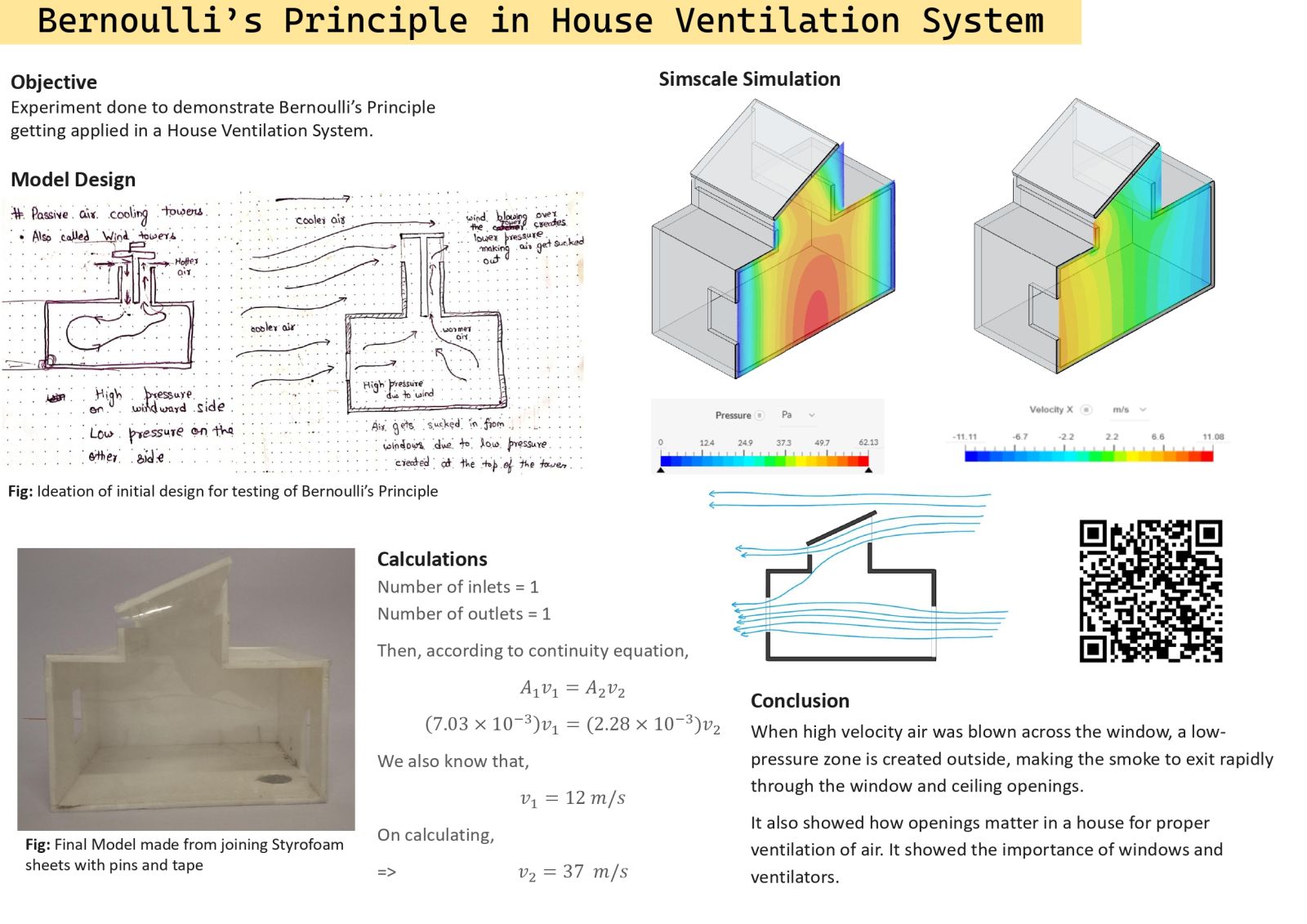
Bernoulli’s Principle: In this exercise, I demonstrated Bernoulli’s Principle through a house-ventilation model. Air was directed across the openings from different angles to observe the behaviour of smoke. Through this experiment, I was able to successfully prove the principle and the results were close to what was predicted in simulation.

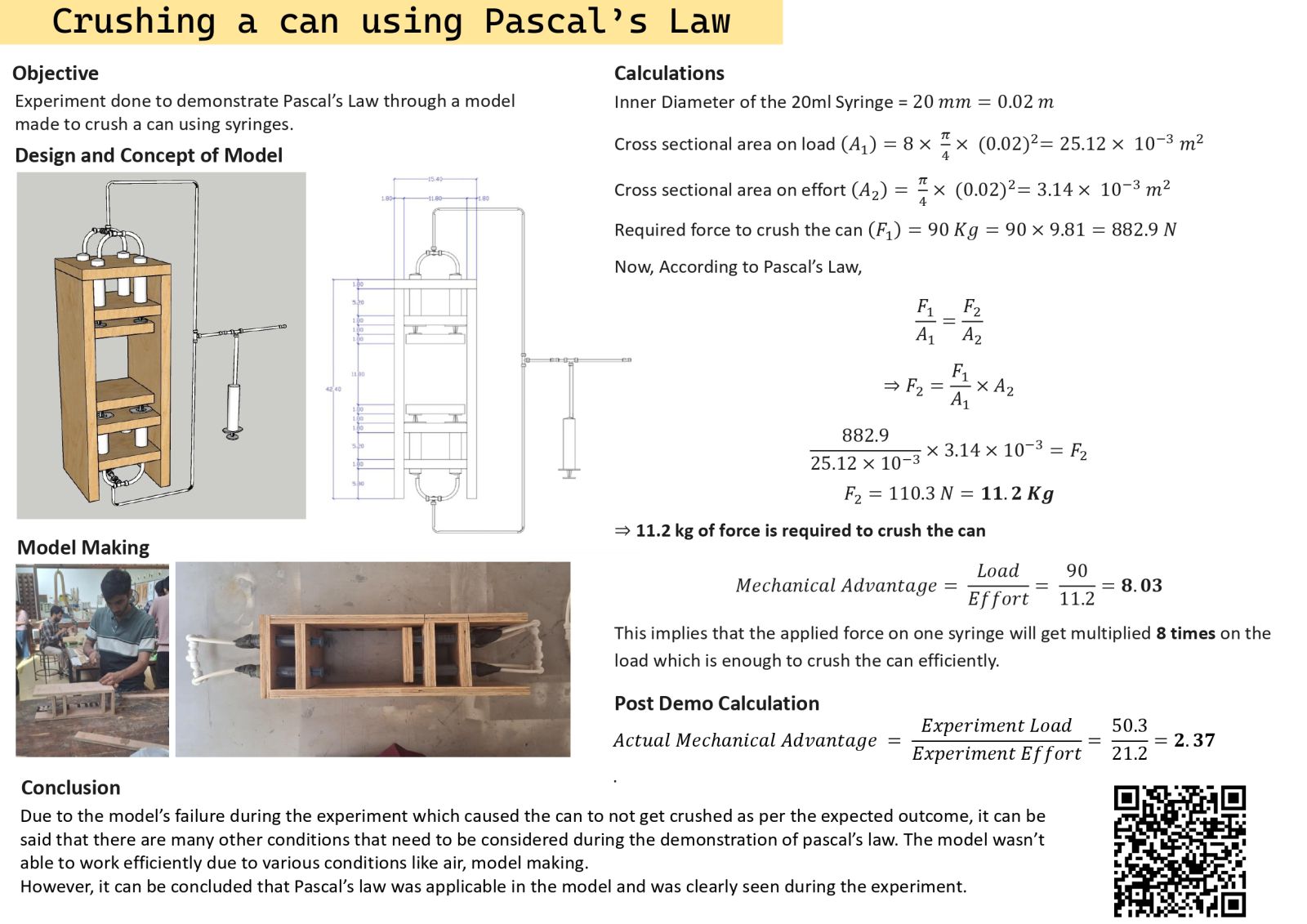
Pascal's Law: In this exercise, I made a model to crush a can through hydraulics using Pascal's Law. The calculated mechanical advantage came out to be 8, but on testing the model, the actual mechanical advantage was 2.3.

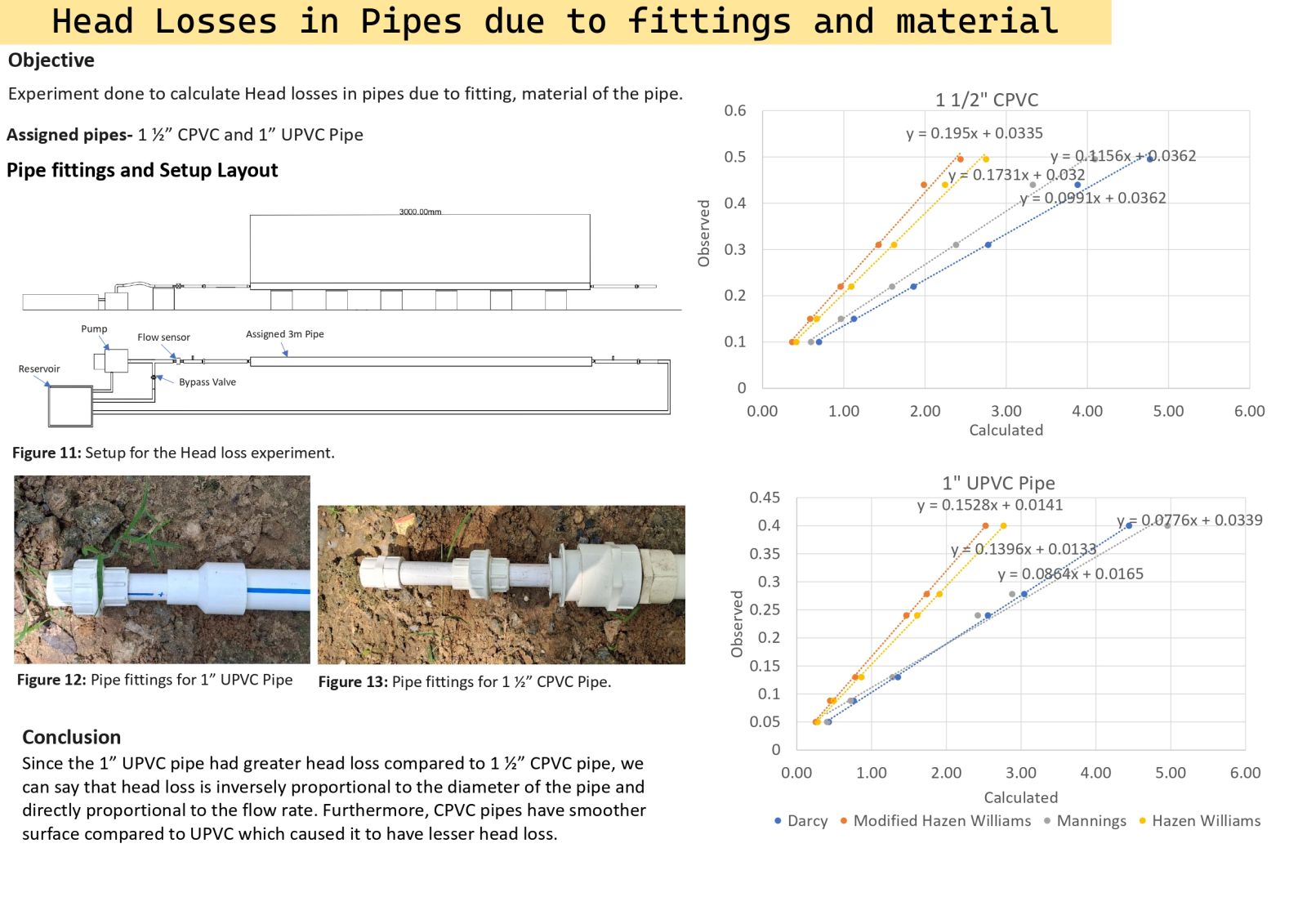
Head Loss: In this experiment, I was given two pipes of different material and diameter. The pipes assigned were 1 1/2" CPVC and 1" UPVC. The goal of the exercise was to calculate head losses using different head loss equations and find the closest equation to the observed values along with inferences from the experiment.

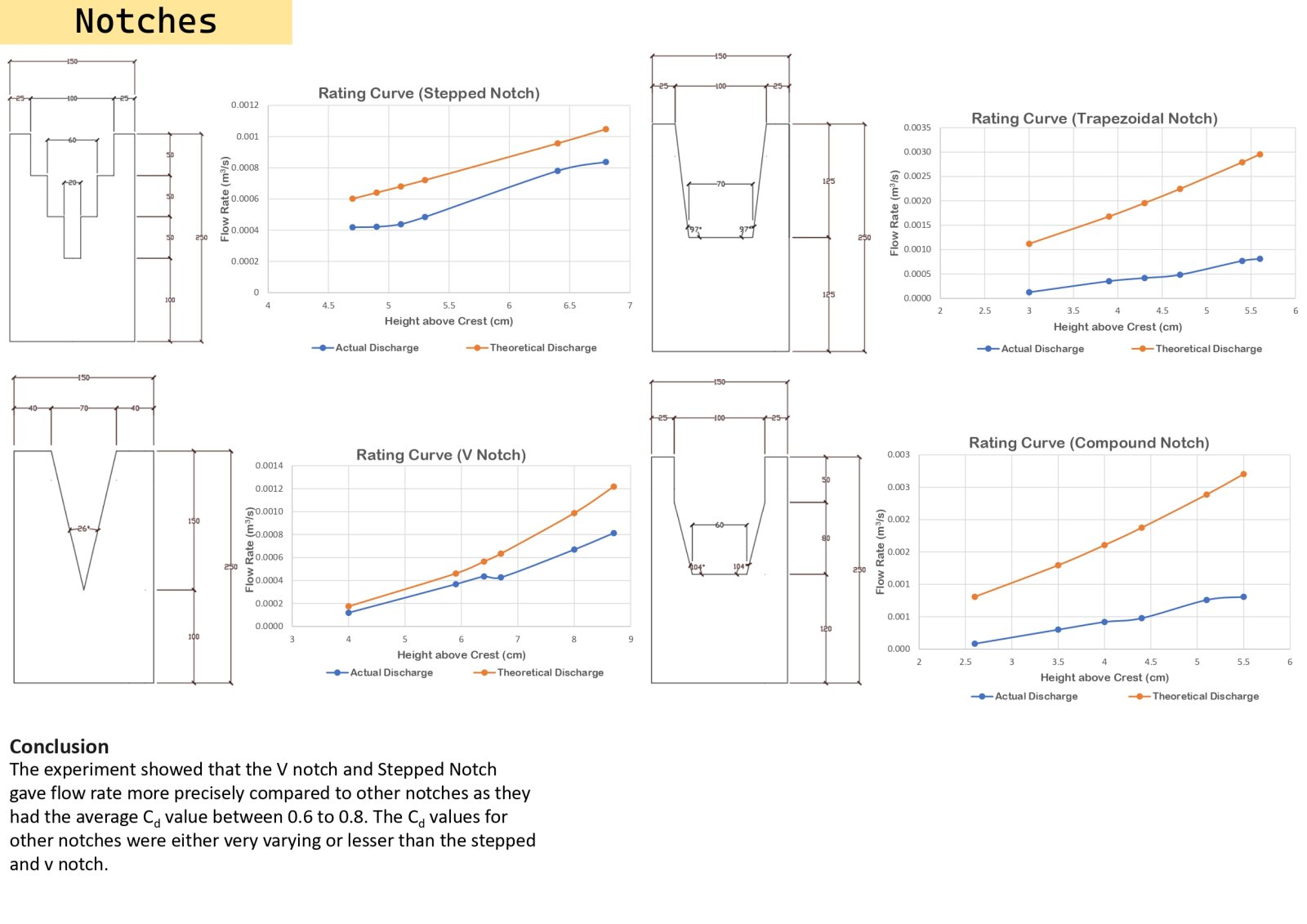
Notches: In this exercise, I have analysed the working of different notches- Stepped, Trapezoidal, V-Notch, and Compound Notch. Rating curves were then made that compared actual flow rates with theoretical predictions. From the results, the V-Notch and Stepped Notch showed the most consistent and accurate discharge behaviour, while the other notches displayed more variation in performance.

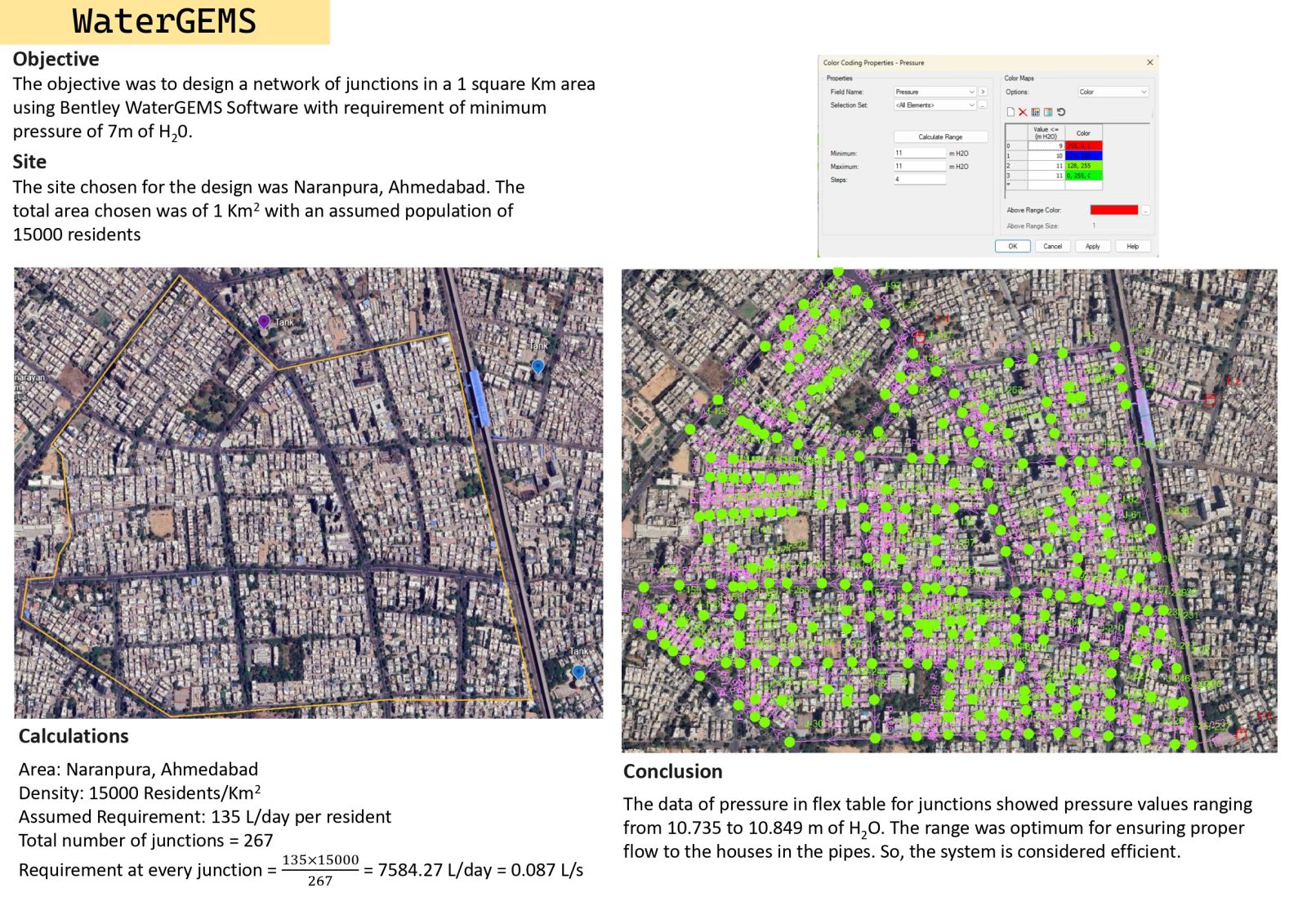
WaterGEMS: In this exercise, I designed a water distribution network for a 1 square km area in Naranpura, Ahmedabad, using Bentley WaterGEMS. The objective was to create a junction network that maintains a minimum pressure of 7 m of H2O. The assumed population of the area was assumed to be of 15,000 residents and a demand of 135 L/day per person, the required flow at each of the 267 junctions was calculated and after modelling and running the simulation, the pressure values across the network ranged from 10.735 to 10.849 m of H2O.

Final Project: In my final project, I have made a pipe network which can balance the flows at all outlets equally irrespective of the inlet flow. Along with that, I have also made a flow controlling valve that can be controlled as a cost effective alternative to the industry used proportional solenoid valve.

Design: The design of the network included a 4 looped system with five outlets and one inlet placed at different locations. This was done to replicate real networks and perform analysis on them. Head losses were calculated for all paths through excel. The calculated similarity between all path head losses was 99.5%

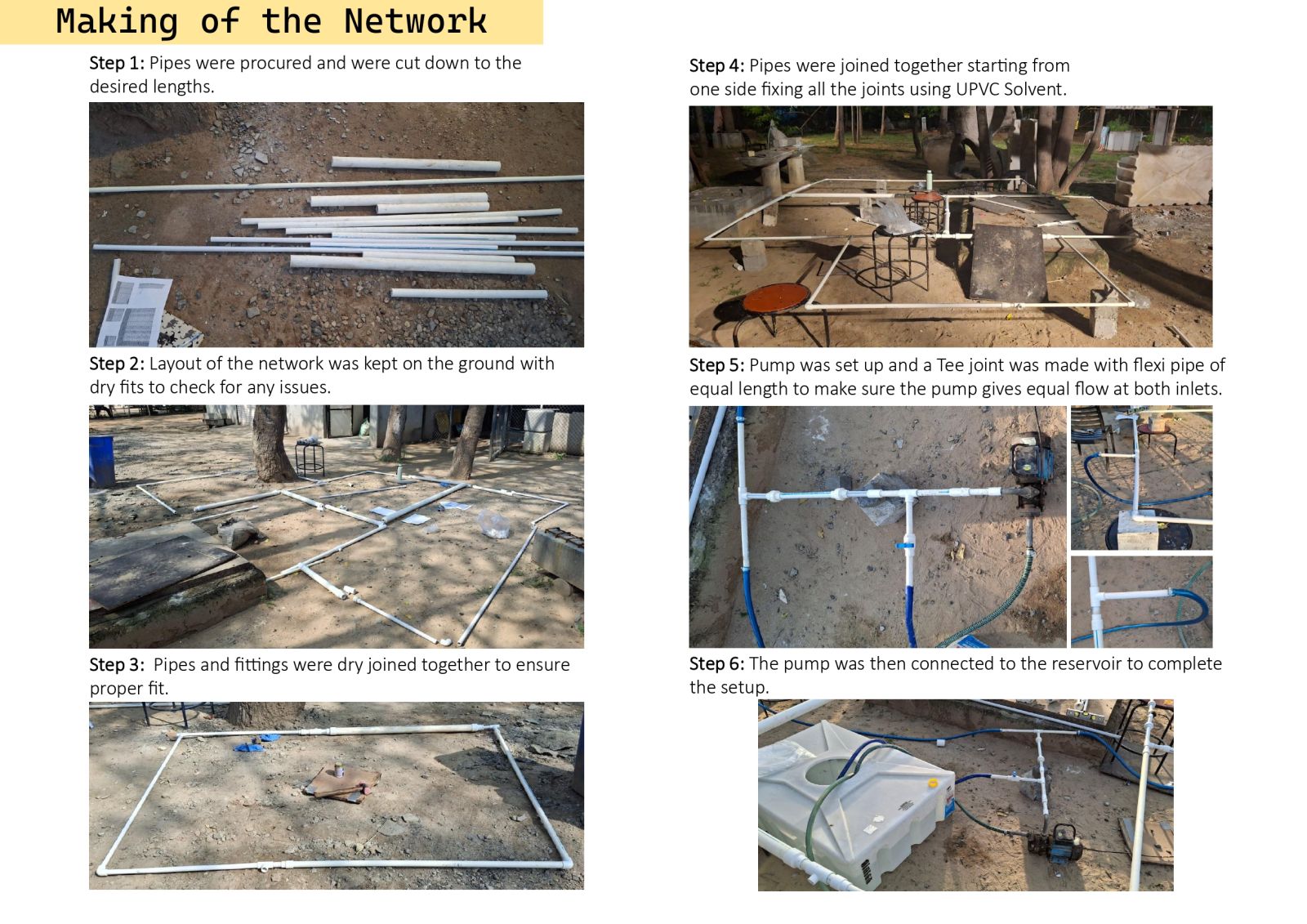
Making of the Network: During the making, every step was crucial to make sure the network was made without any issues. From cutting the pipes, assembling, joining and testing, proper process was followed to ensure correct readings and accurate results.

Flow Controlling Valve: The flow controlling valve was made to control and balance the flow at the outlets. When two or more outlets were closed, the valve was kept at one of the outlets to balance the flows at other outlets. Through operating the valve, the flows were balanced again.

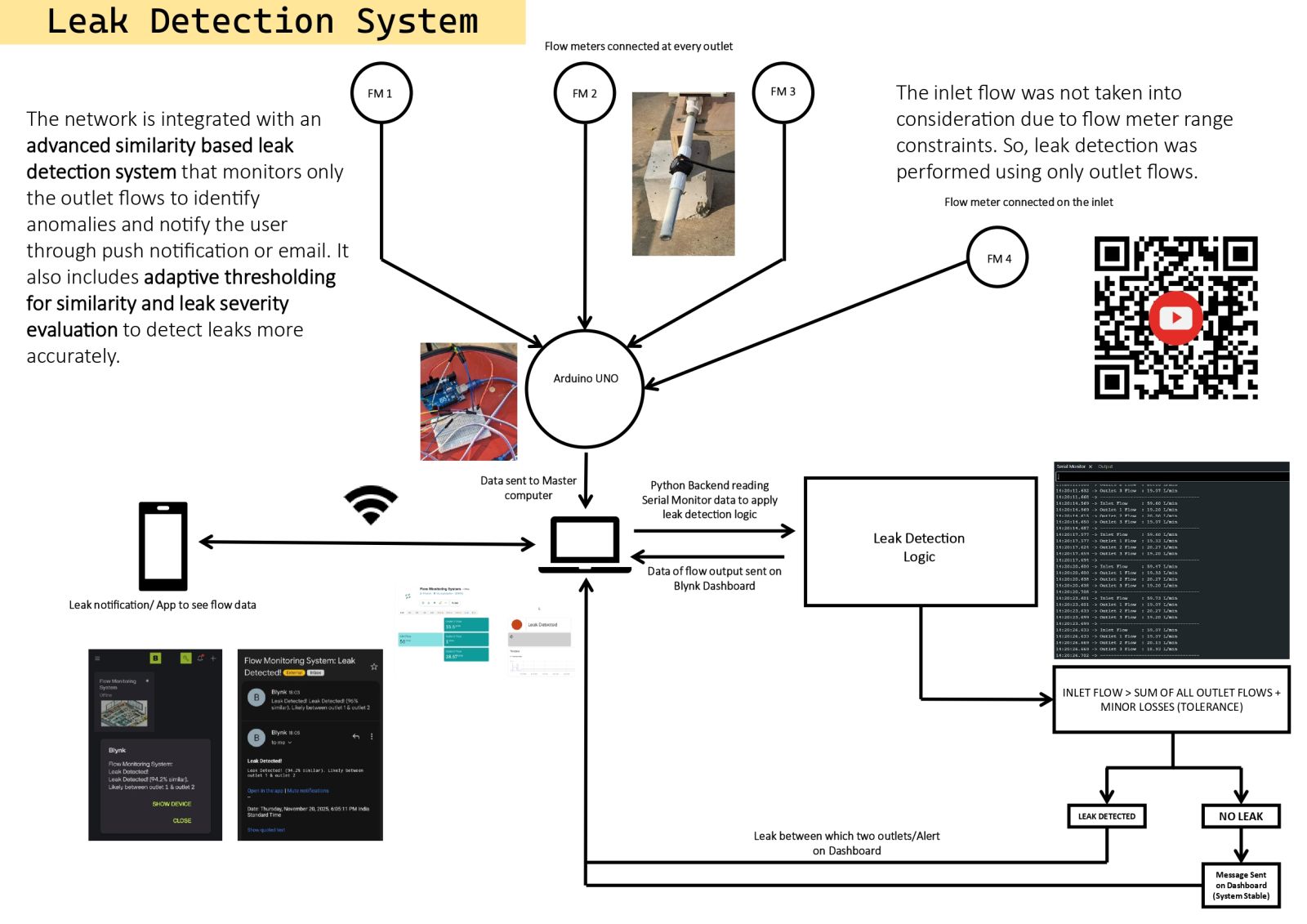
Leak Detection System: The system was also integrated with an advanced similarity based leak detection system which estimated the leak severity and location between outlets and informed the user via notification. The system was equipped with similarity based leak detection with adaptive thresholding along with leak severity evaluation. The system was able to detect the minor as well as major leaks in the system.