Your browser is out-of-date!
For a richer surfing experience on our website, please update your browser. Update my browser now!
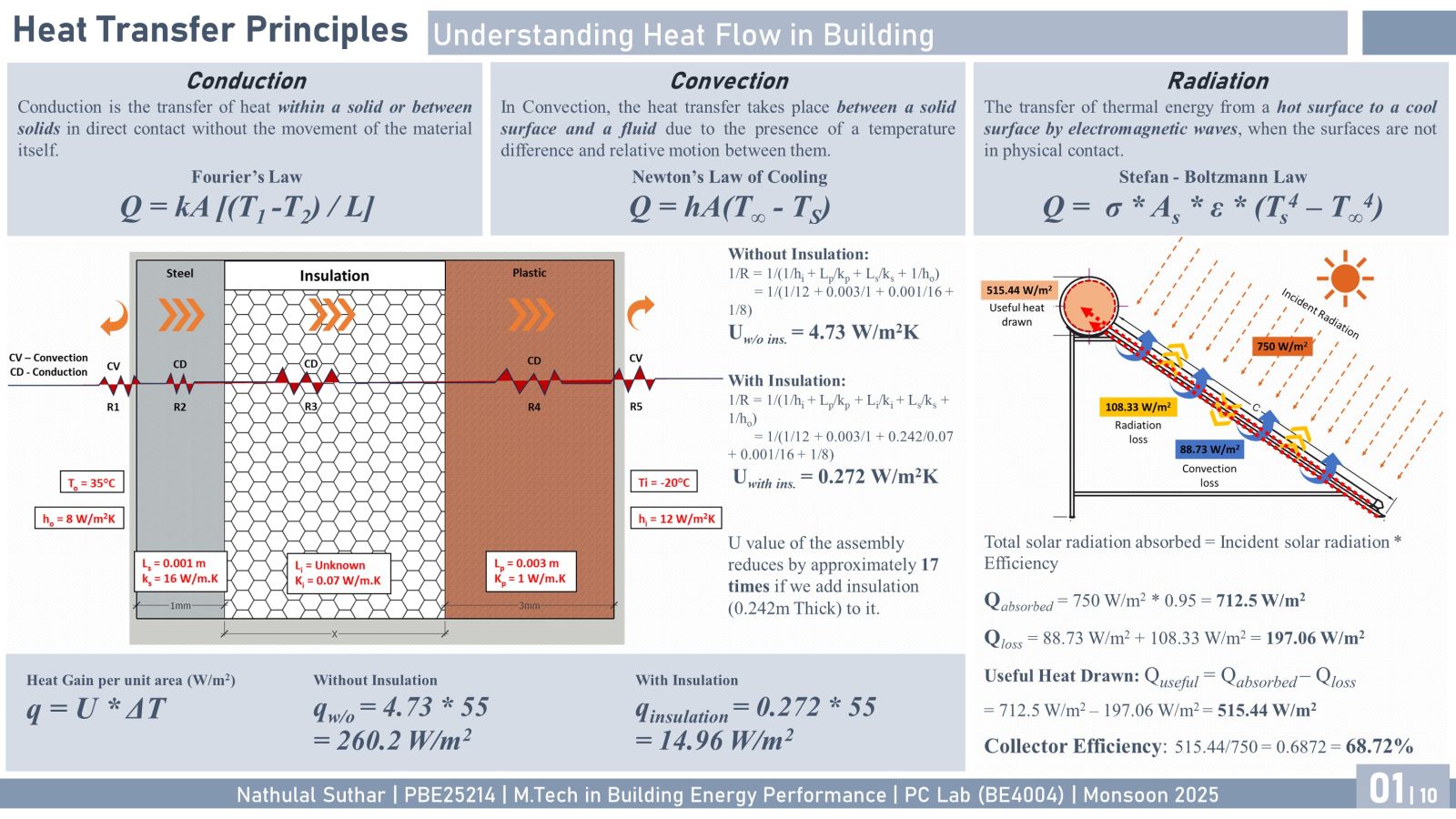
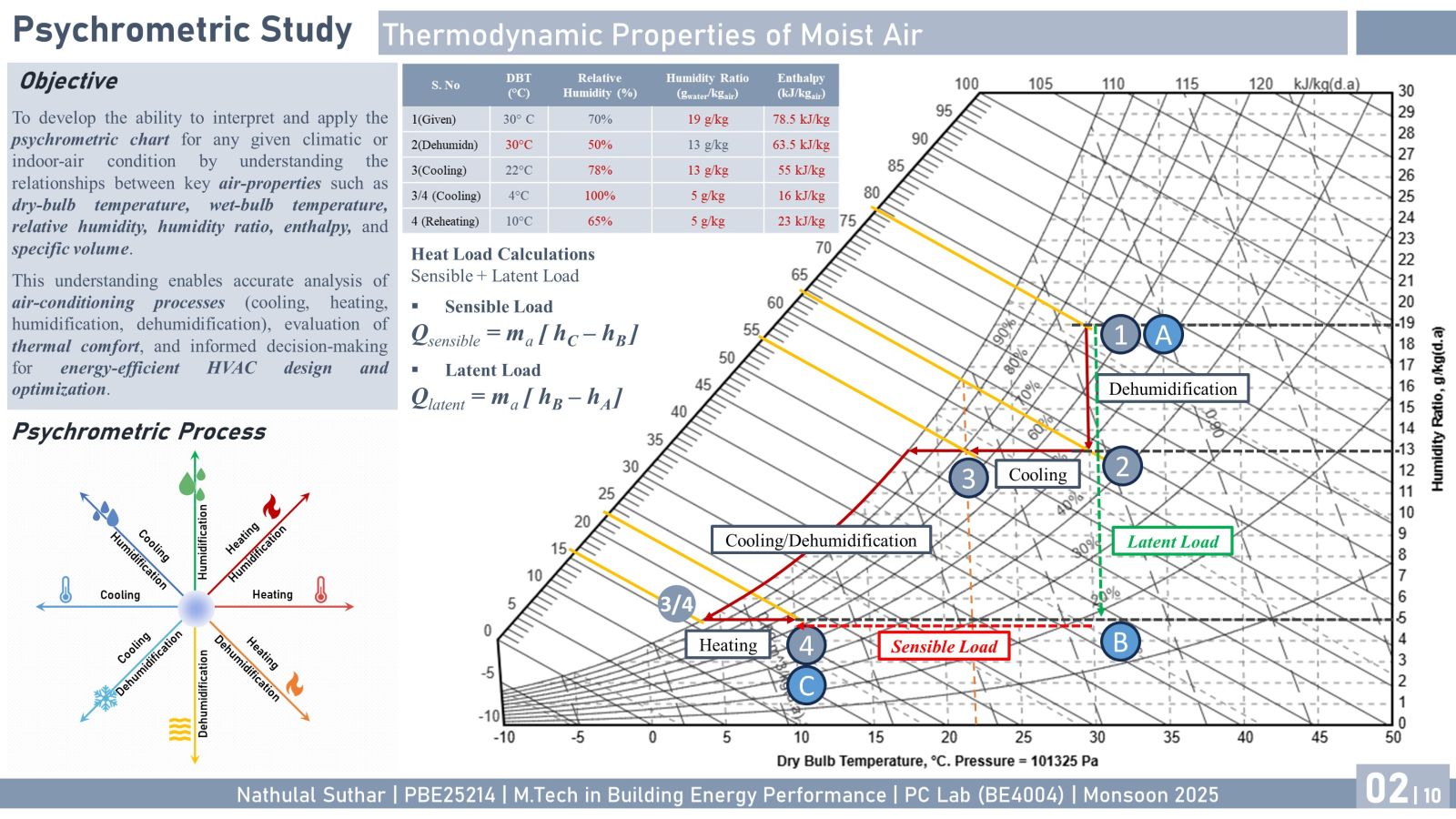
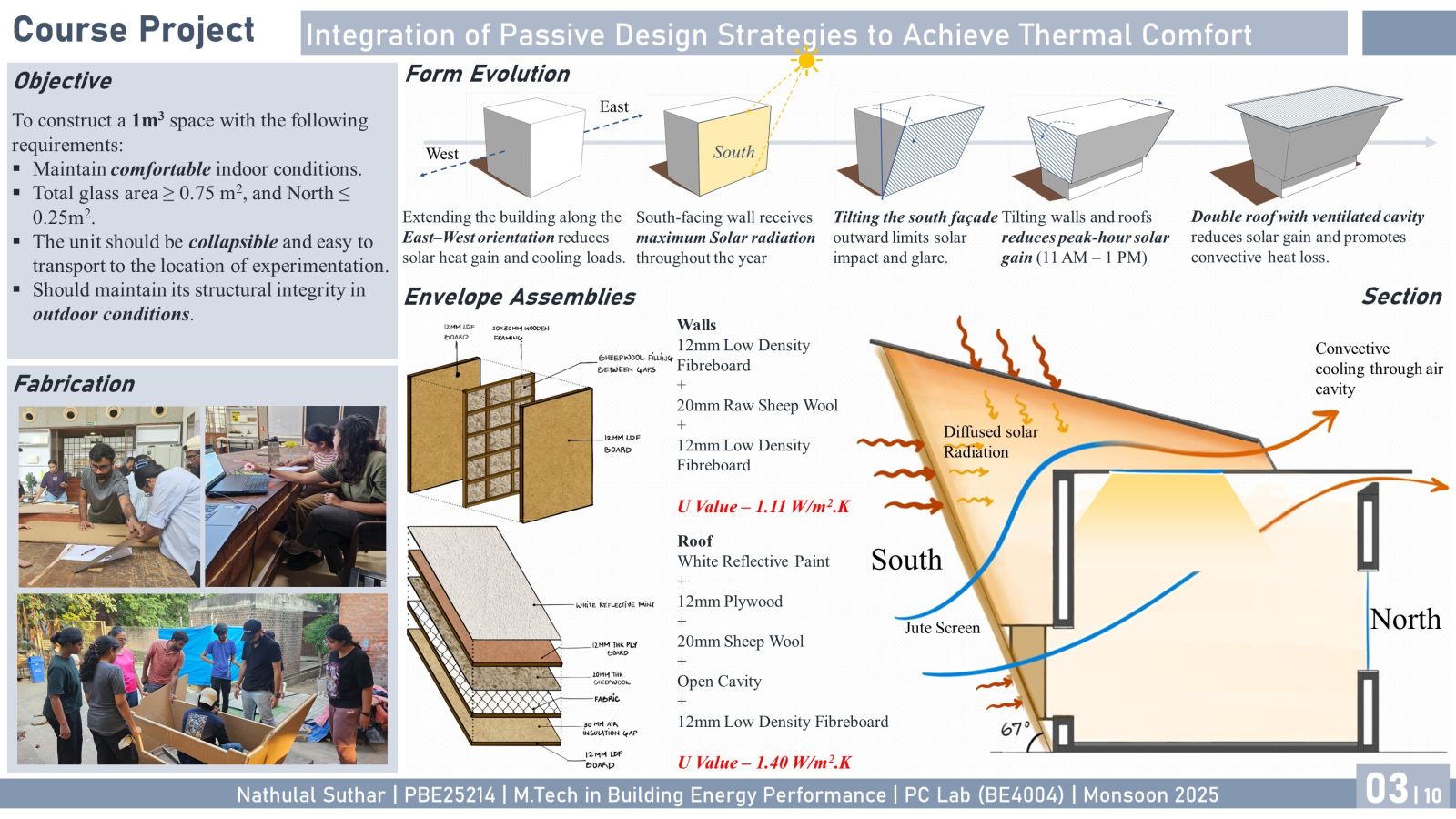
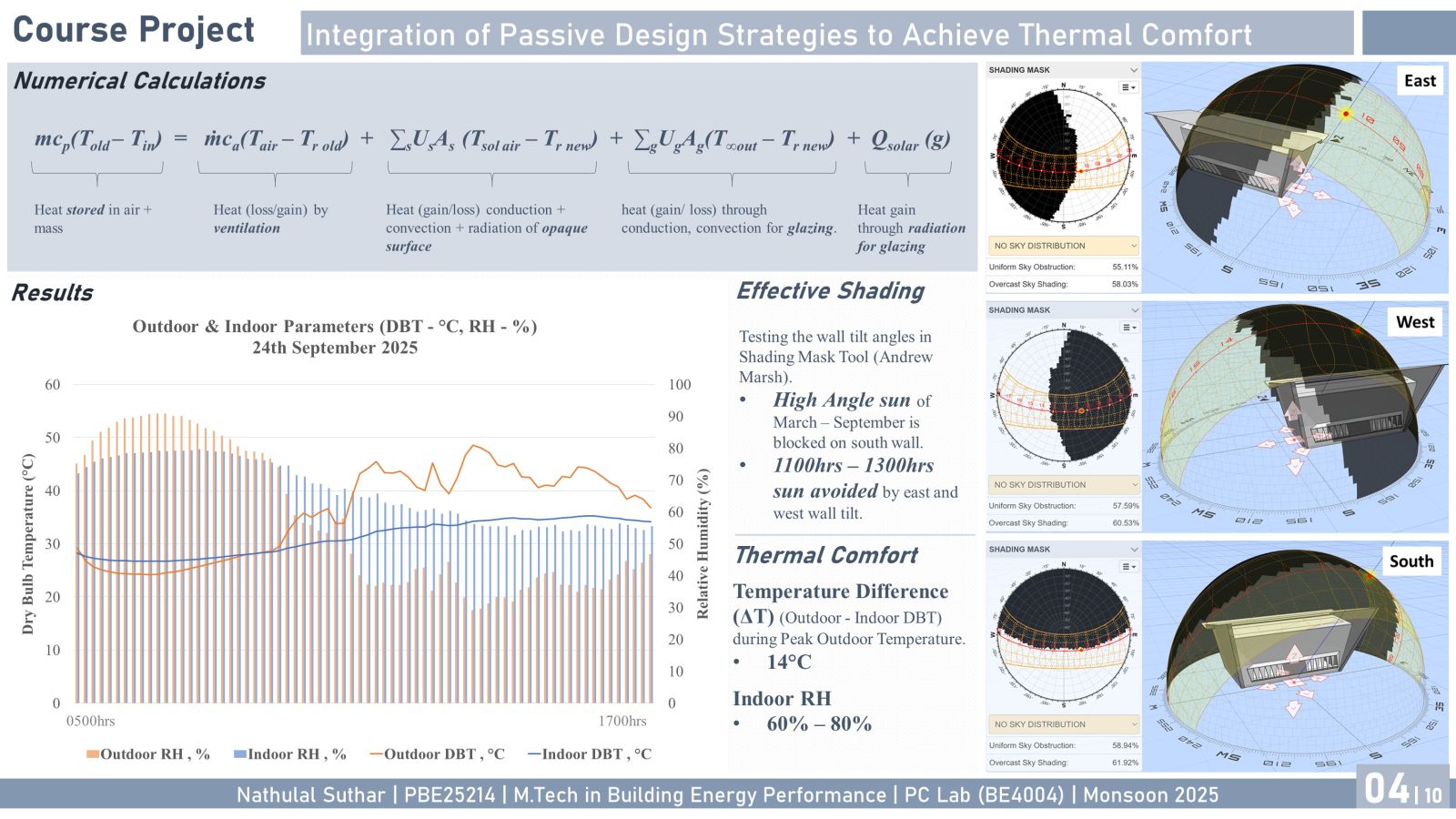
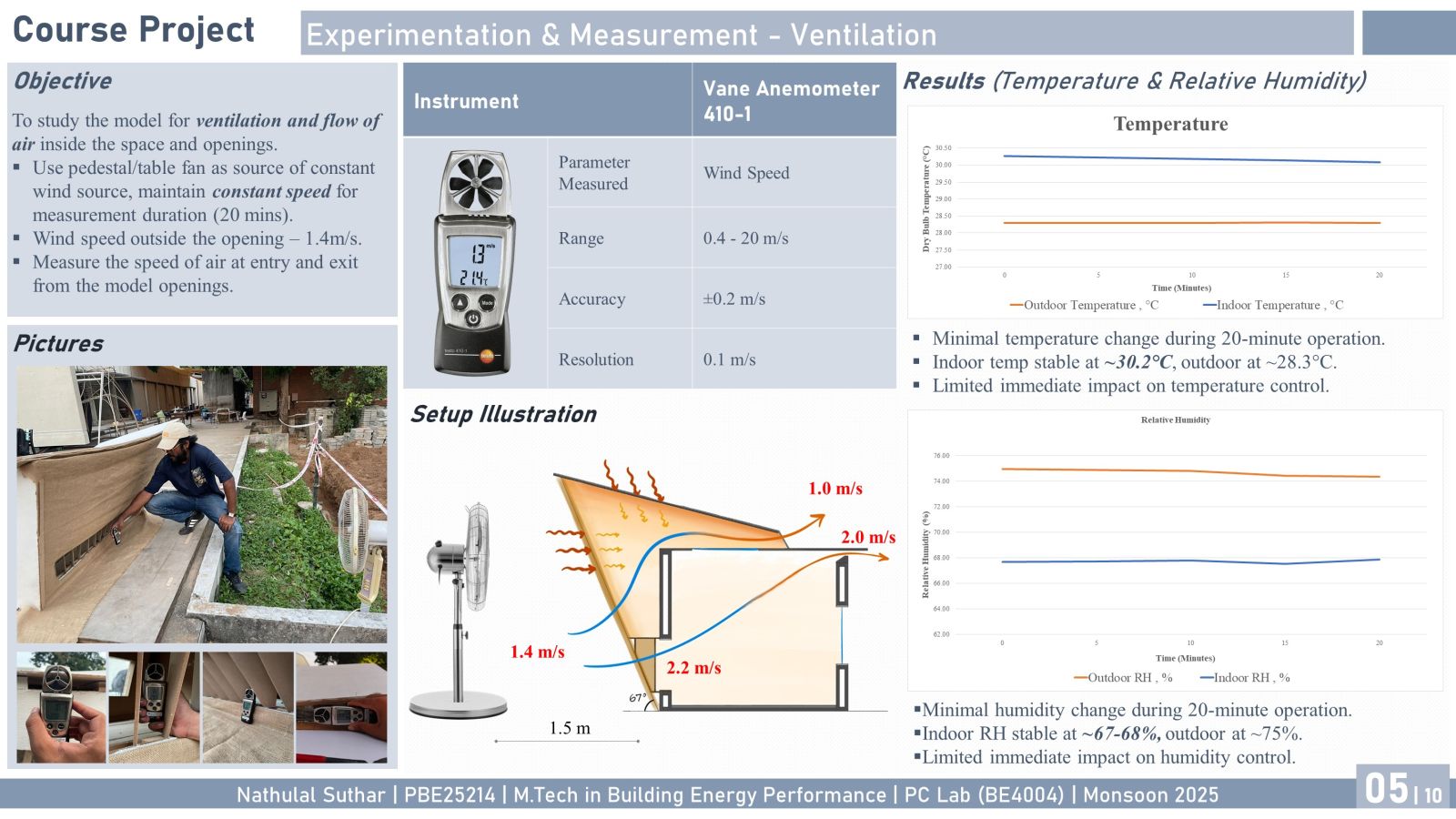
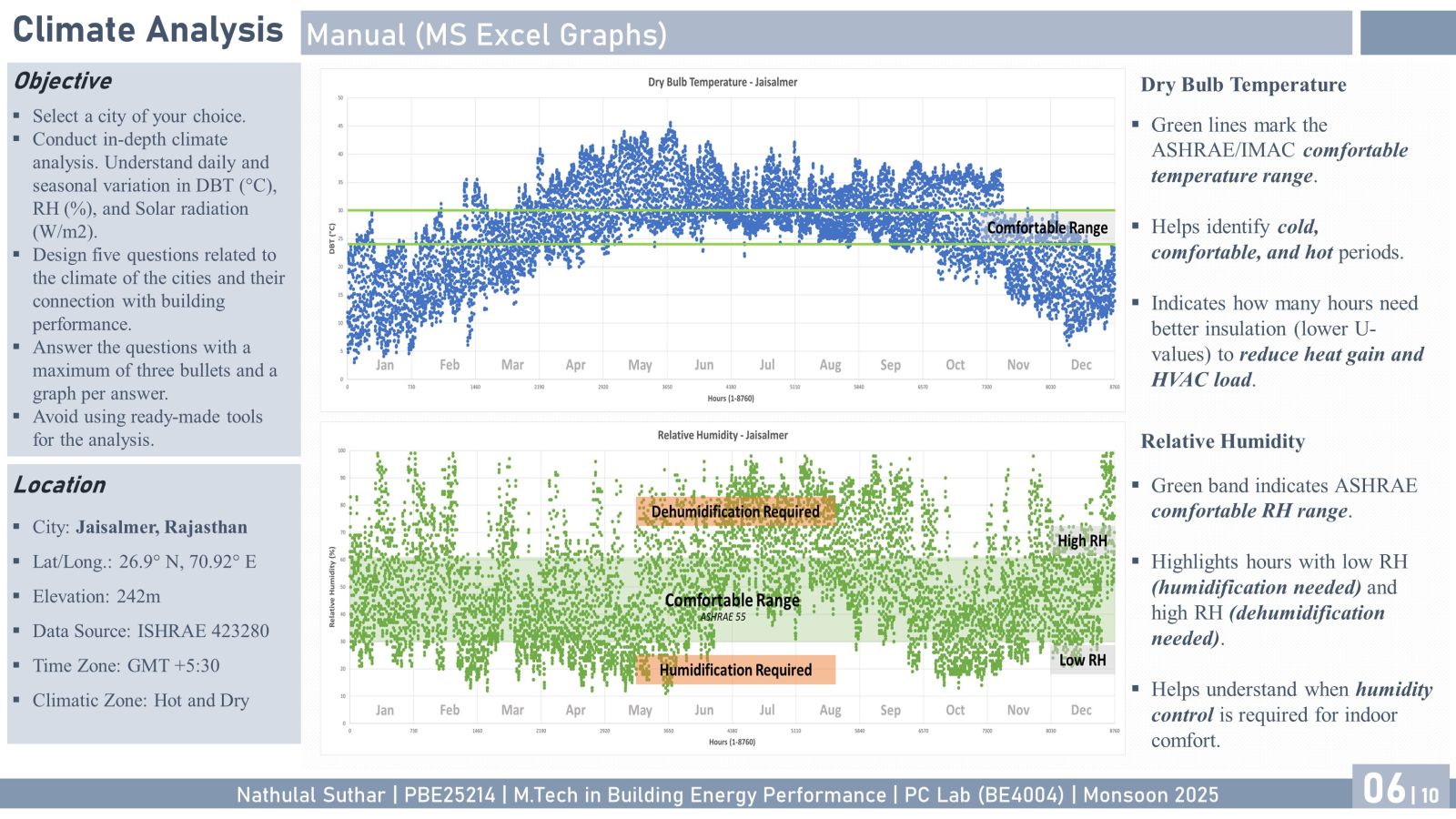
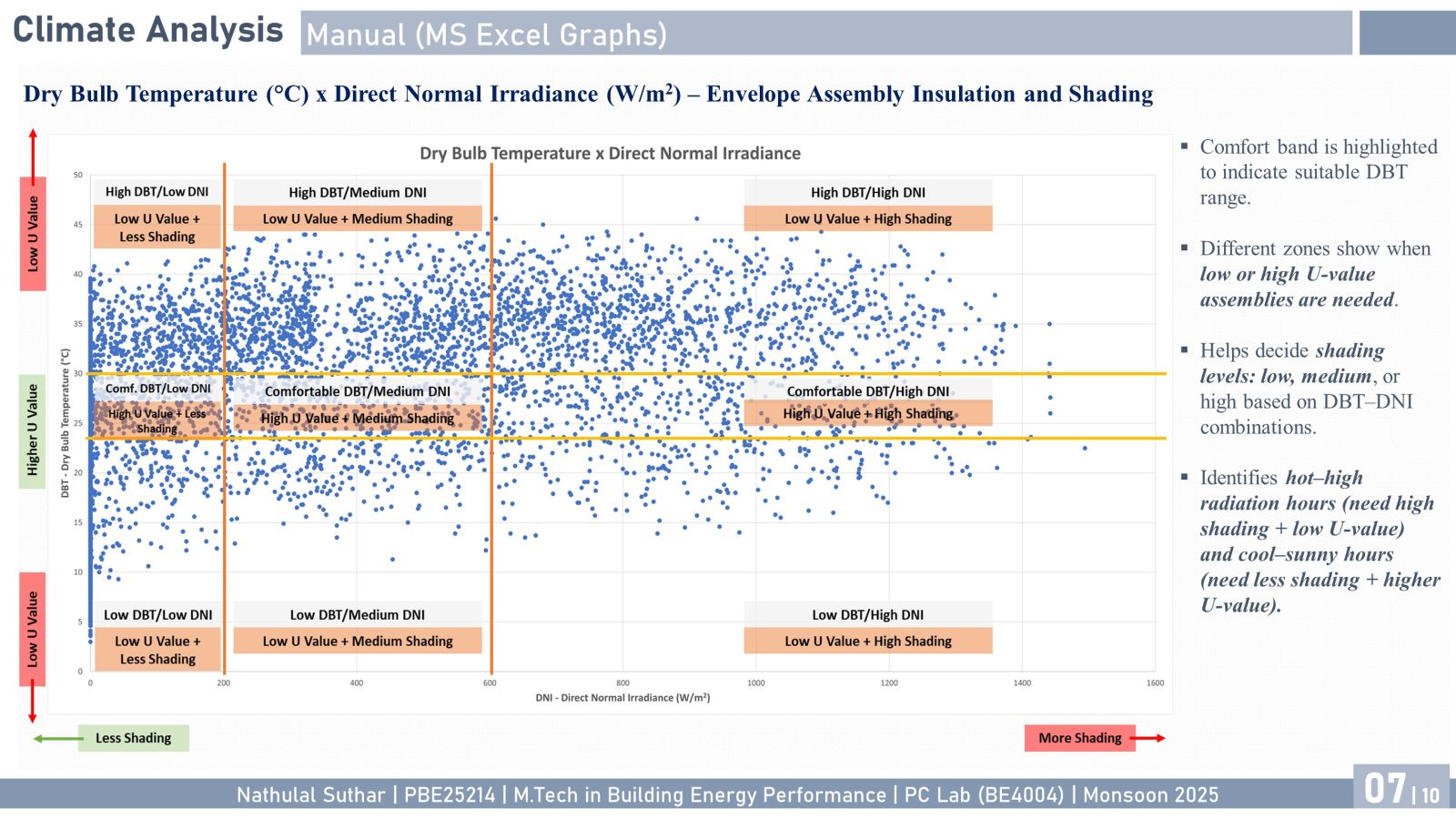
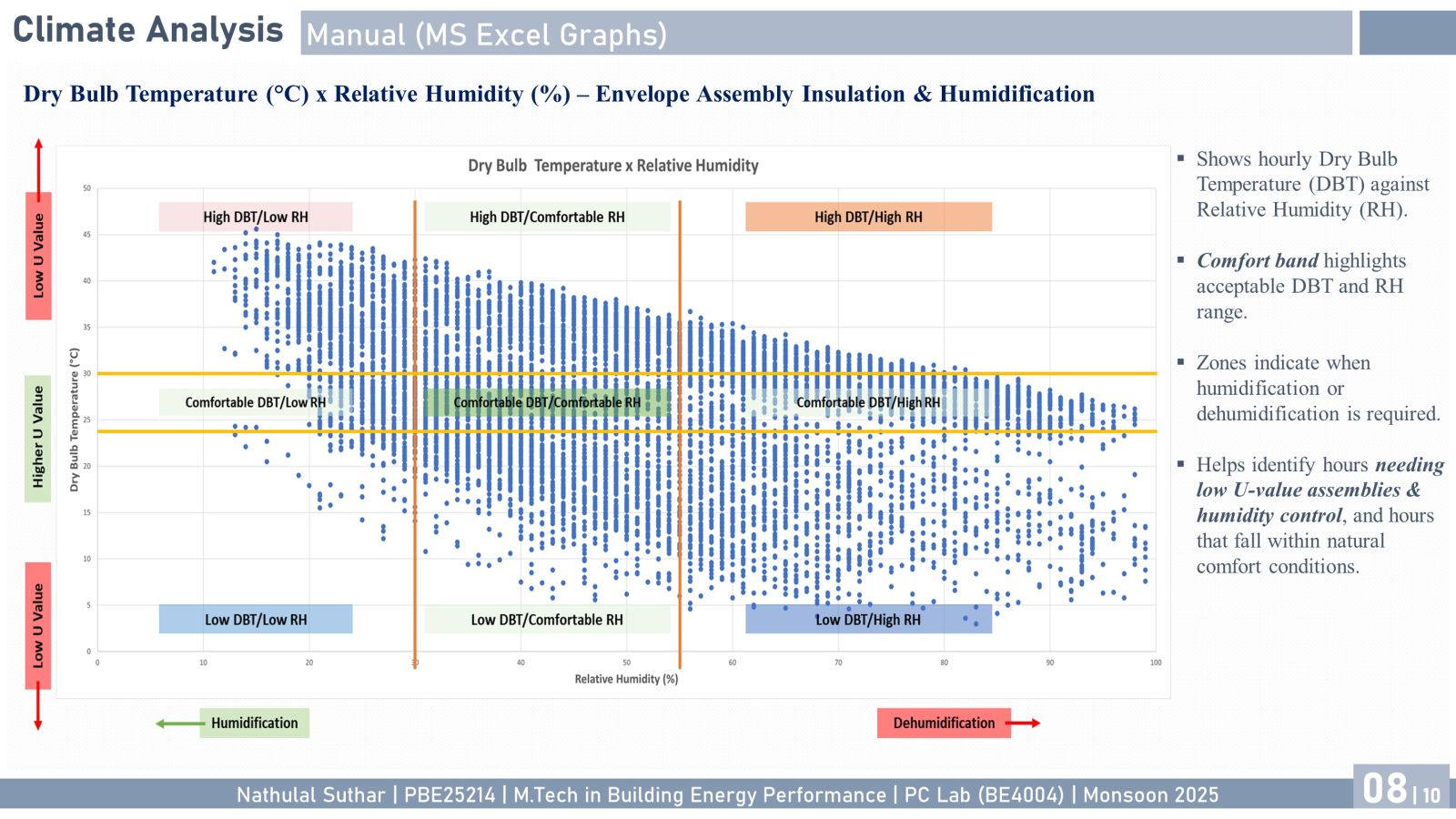
The Passive Design and Thermal Comfort Lab integrates theoretical understanding of building physics with practical exploration of heat transfer, climate response, and passive strategies for achieving indoor comfort. The coursework covers a wide spectrum of topics including solar geometry, psychrometry, natural ventilation, thermal comfort metrics, and the behaviour of materials and assemblies under varying environmental conditions. The studio component involves iterative analysis of envelope elements, allowing students to study how insulation levels, shading devices, surface reflectance, glazing properties, and orientation influence heat gains and losses. A hands-on project forms the core of the lab, enabling the construction and testing of a small-scale envelope system to observe real-time variations in temperature, humidity, and airflow. Complementing this, the simulation module strengthens quantitative understanding by modelling incremental changes in parameters such as U-value, SRI, and SHGC, and evaluating their combined impact on thermal loads. Together, these exercises build the ability to connect climate, material behaviour, and design strategies, ultimately equipping students to optimise buildings for improved thermal comfort through passive strategies.