Your browser is out-of-date!
For a richer surfing experience on our website, please update your browser. Update my browser now!
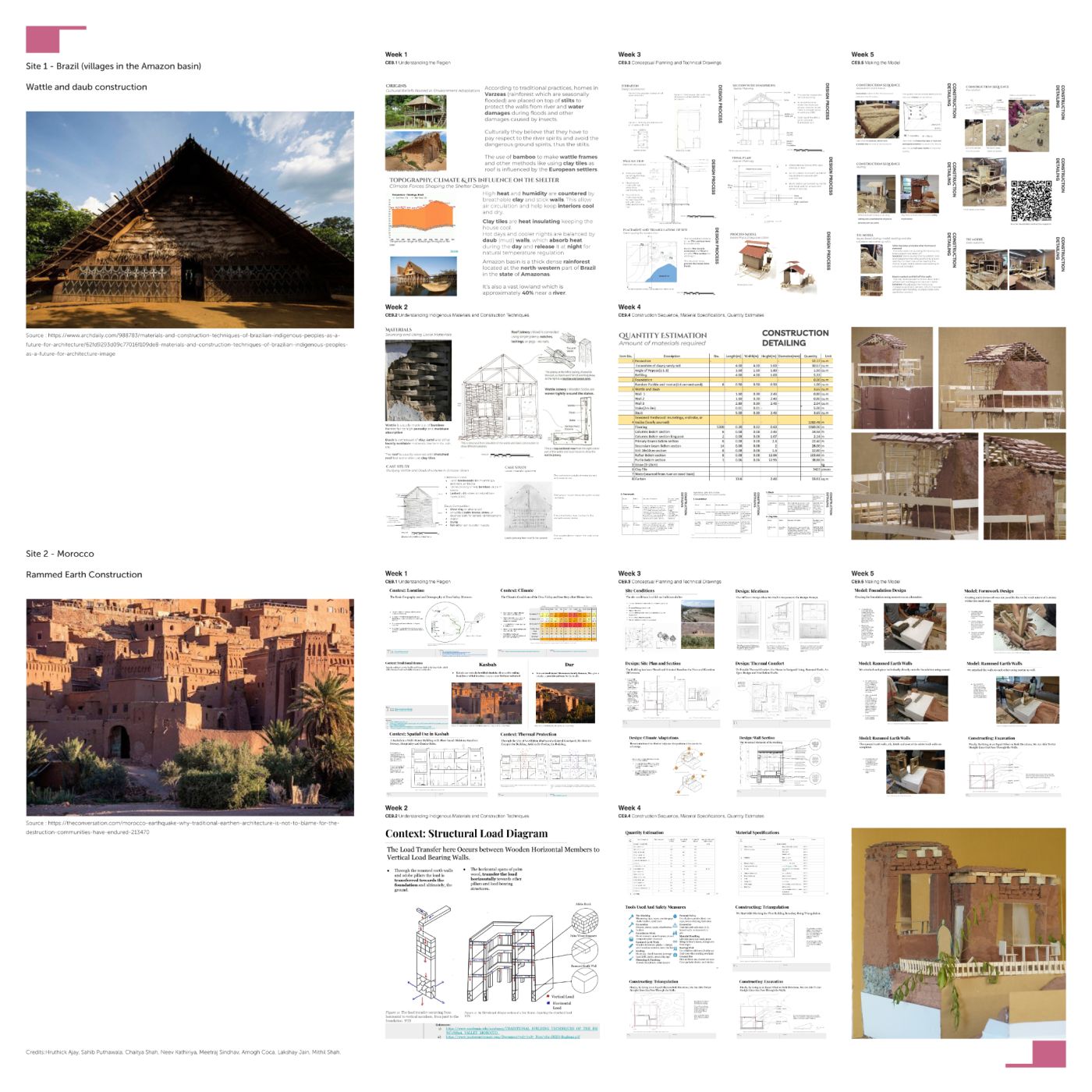
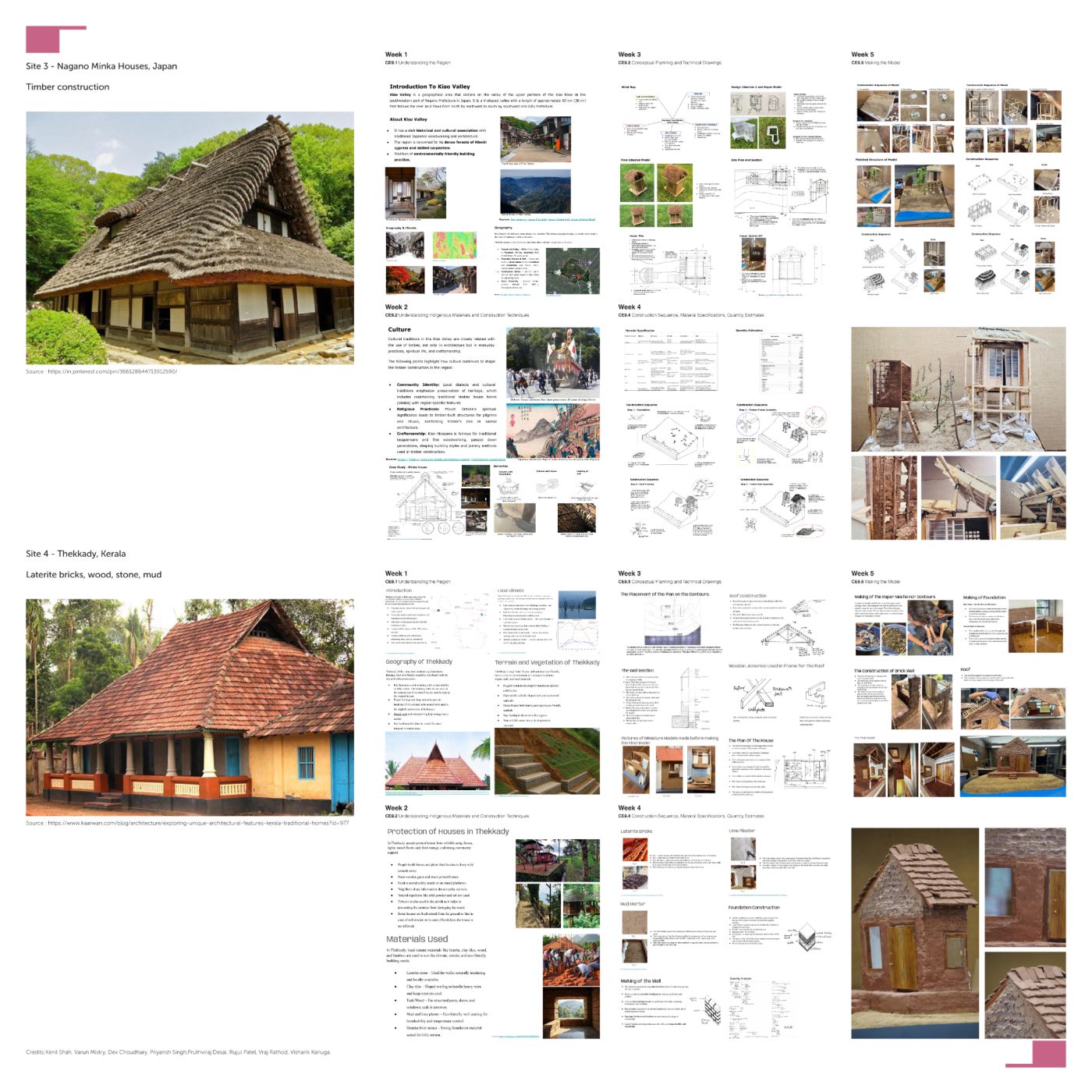
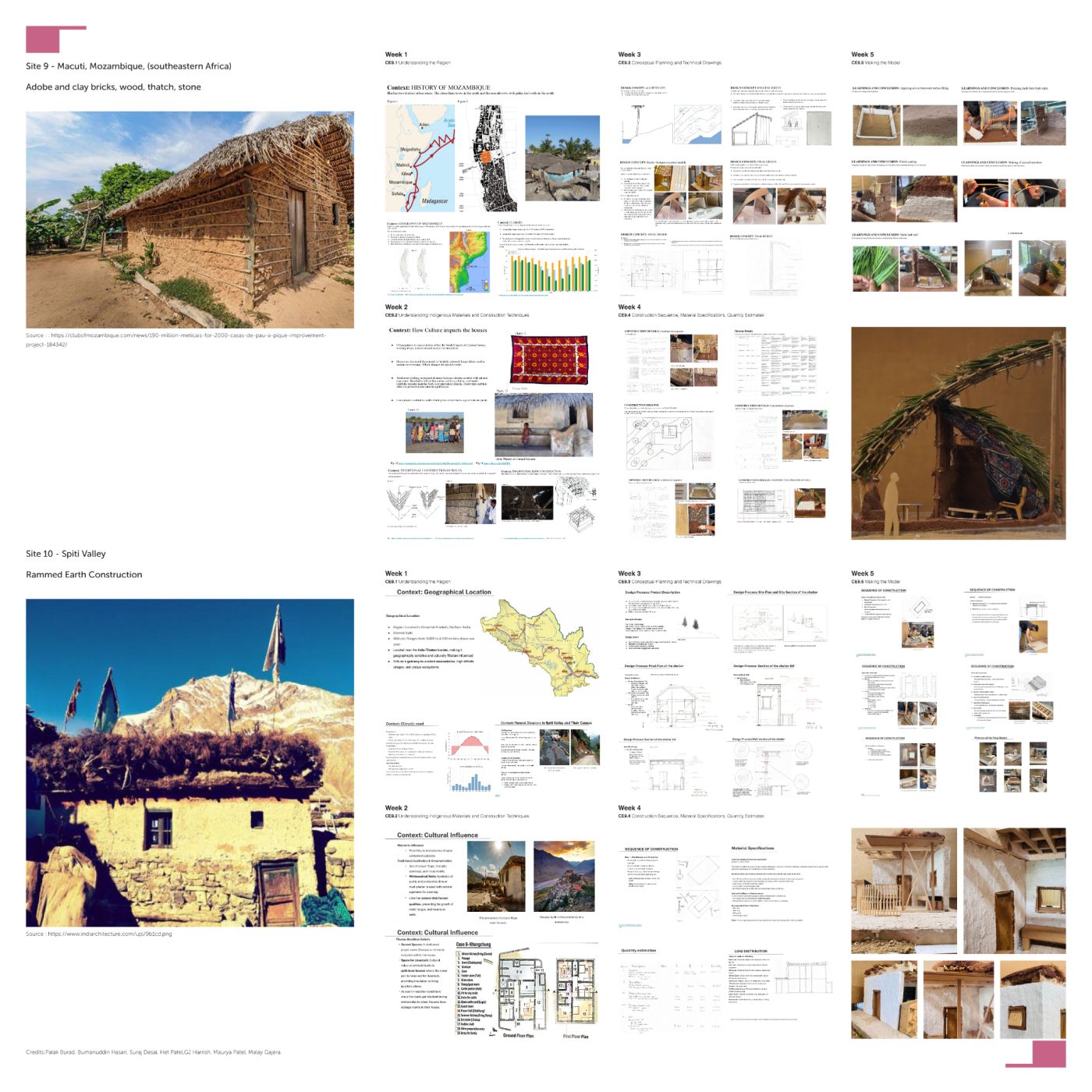
This module encouraged students to explore the roots of construction by reflecting on traditional building techniques shaped by context, climate, culture, and available resources. It emphasized how indigenous practices embody the joy of discovery and innovation through necessity, demonstrating how communities across the world developed effective construction methods long before the advent of modern materials like cement and steel. Students were divided into groups, each assigned a specific region to study. They researched the influence of geography, climate, society, and local materials on regional construction techniques. Based on their findings, each group designed a shelter for two explorers, incorporating a sleeping area and a study space. They developed detailed drawings, construction sequences, material specifications, and quantity estimates, and then constructed scaled models using locally available representative materials. The process concluded with presentations where students communicated their design rationale and construction approach to a panel. Through this hands-on and research-driven module, students gained a deeper appreciation for traditional knowledge systems and their relevance to sustainable and context-responsive construction practices today.