Your browser is out-of-date!
For a richer surfing experience on our website, please update your browser. Update my browser now!
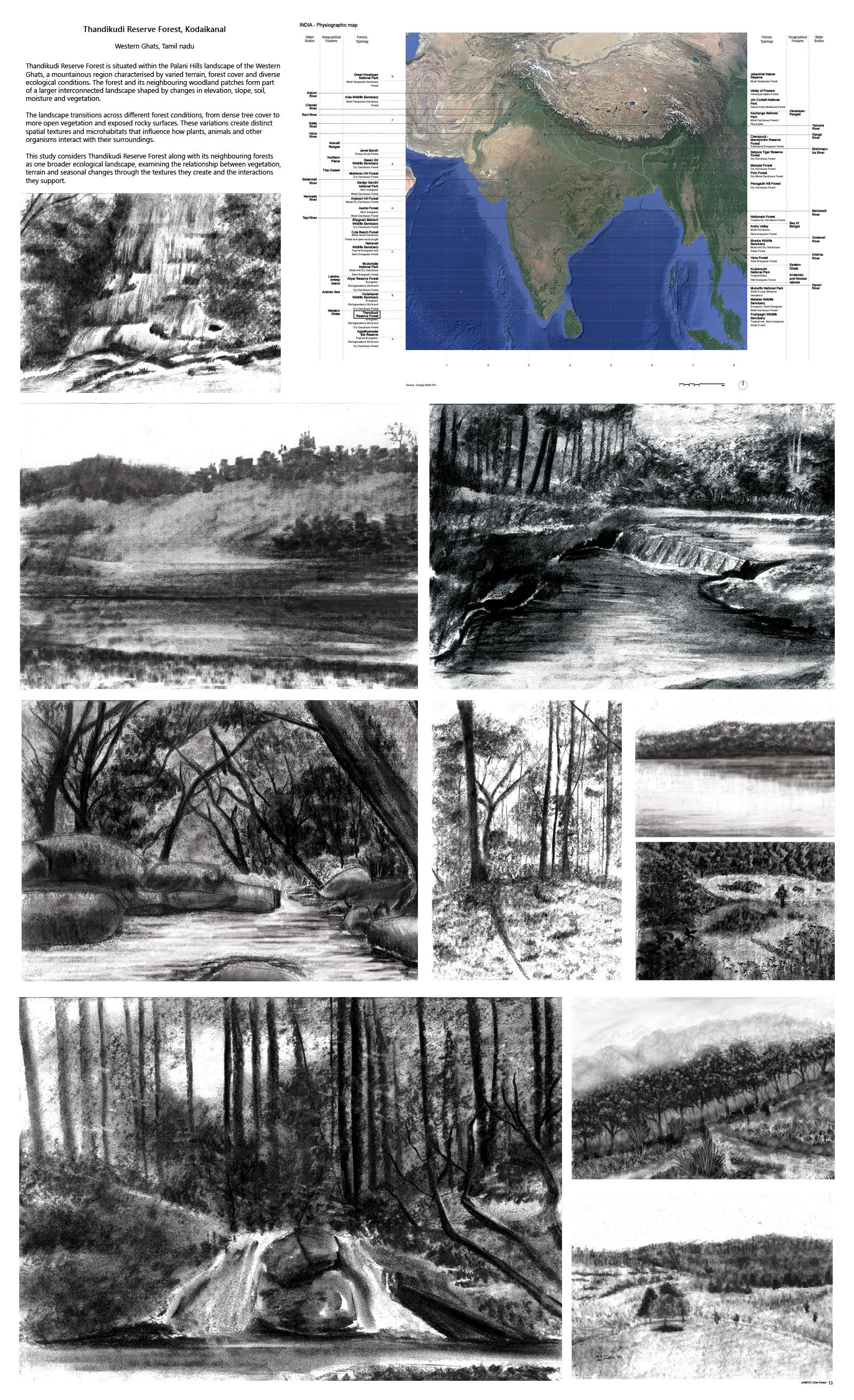
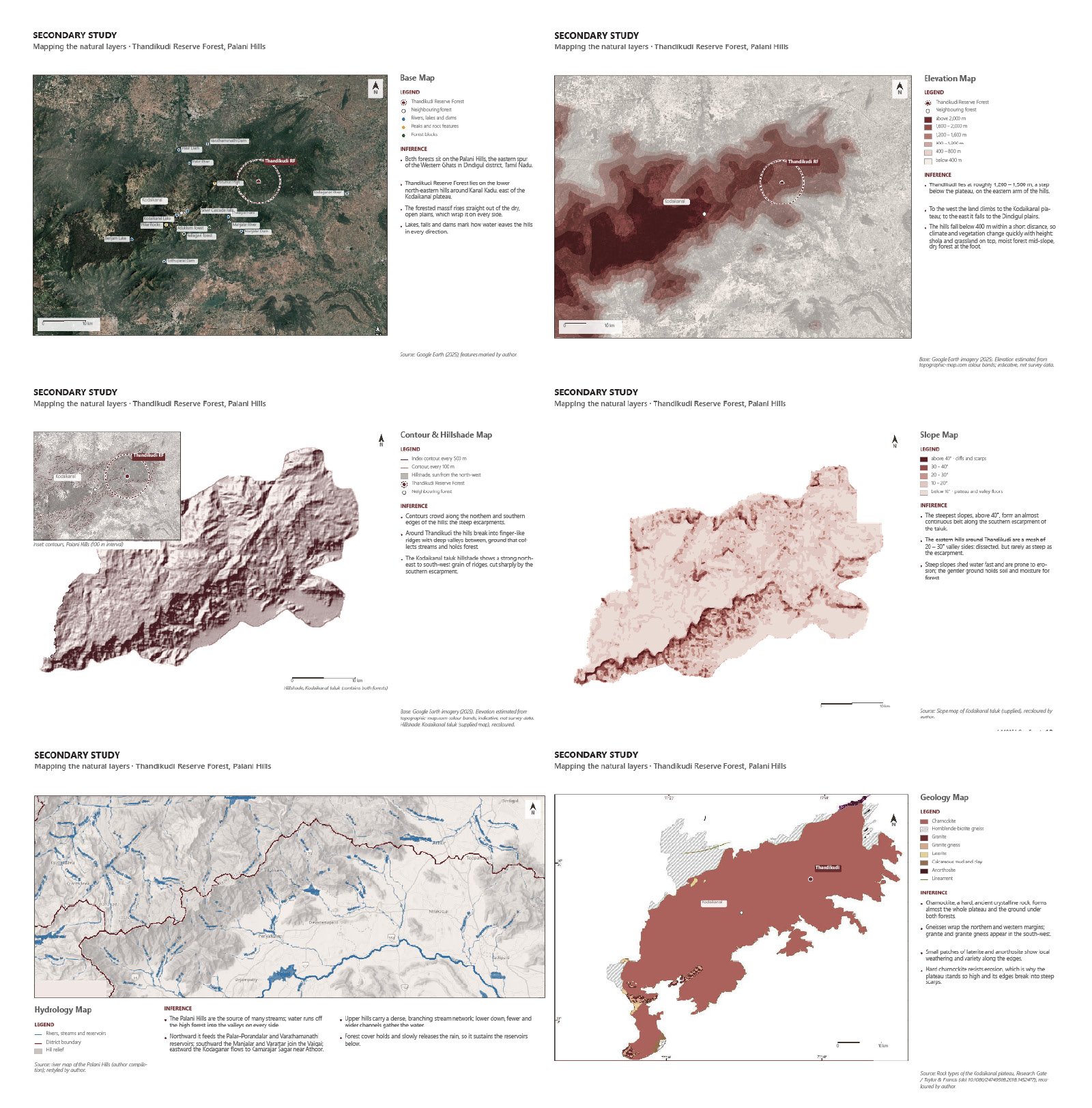
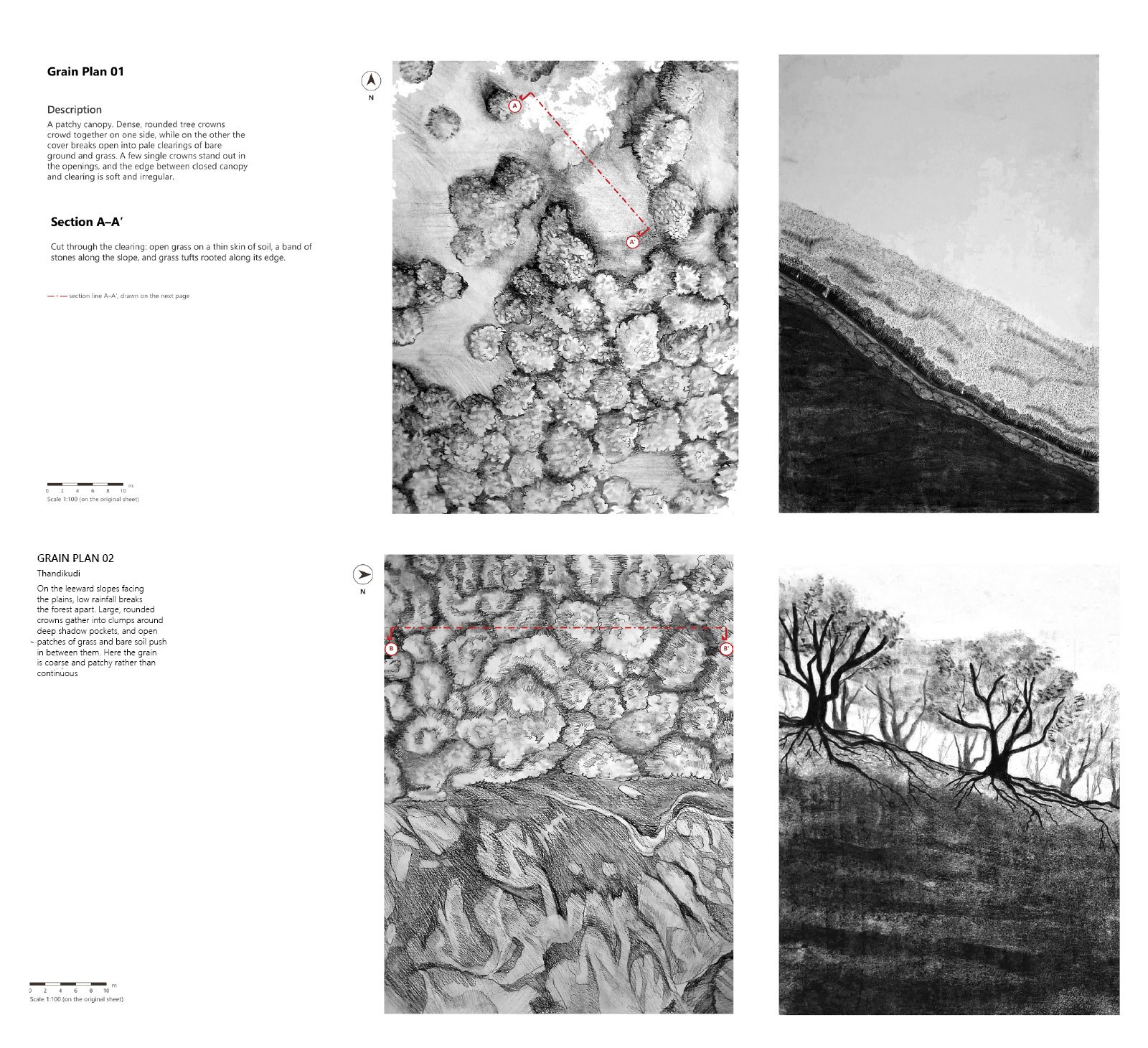
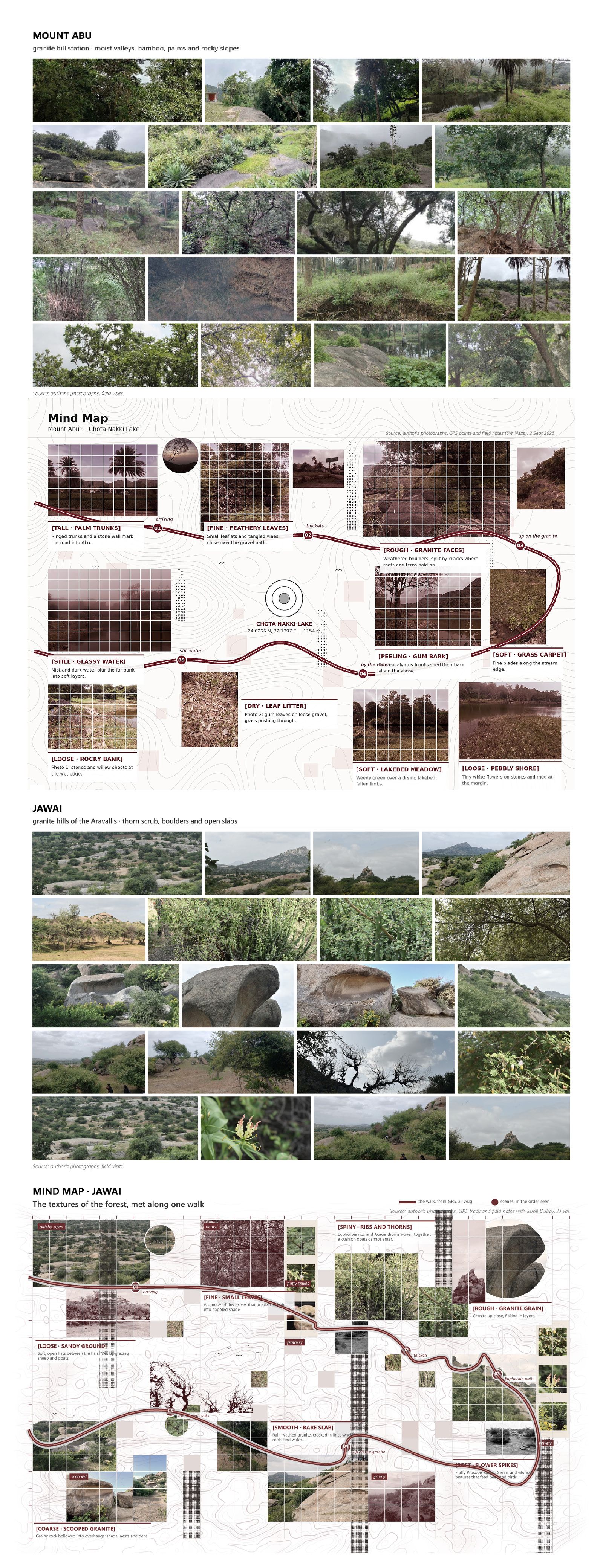
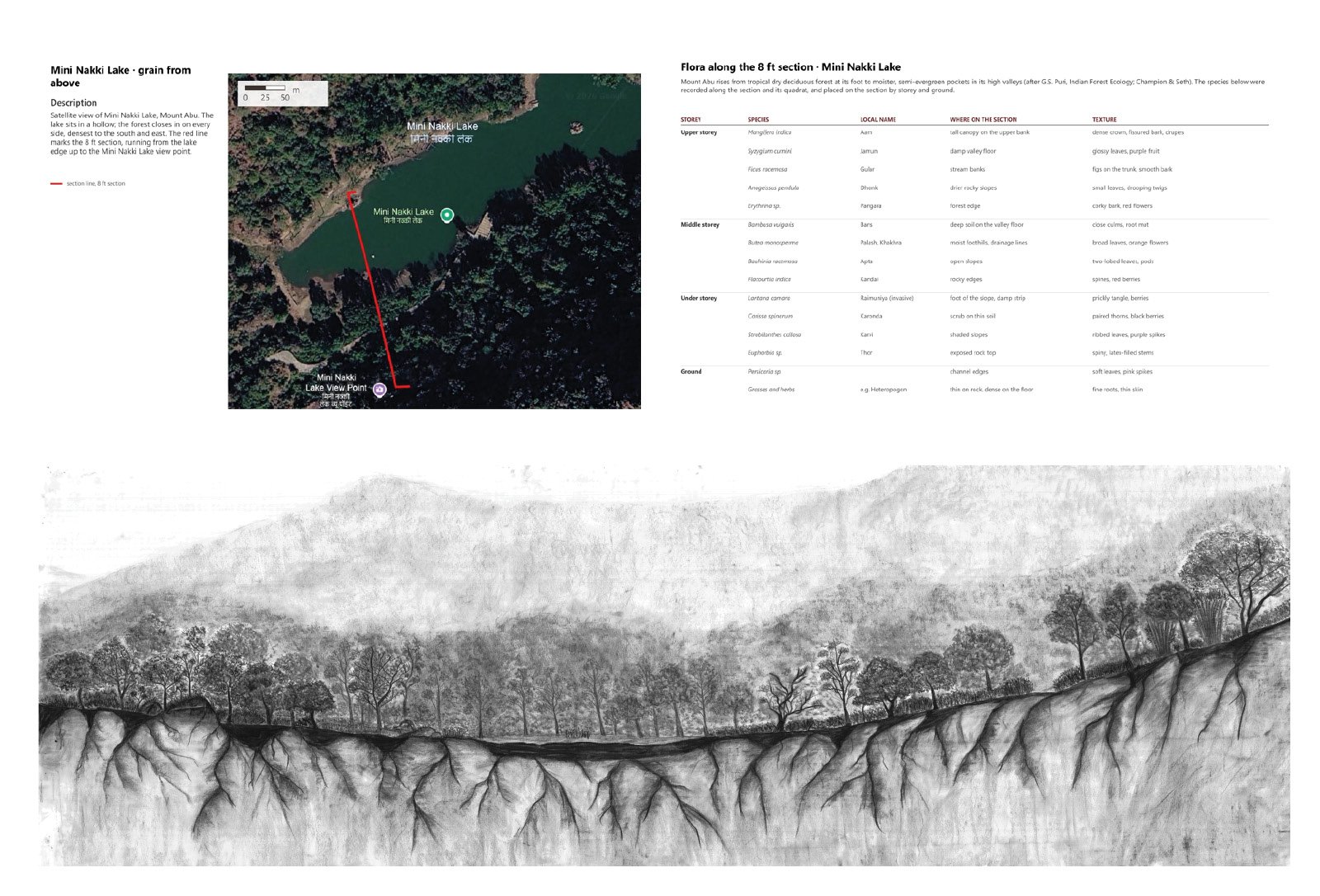
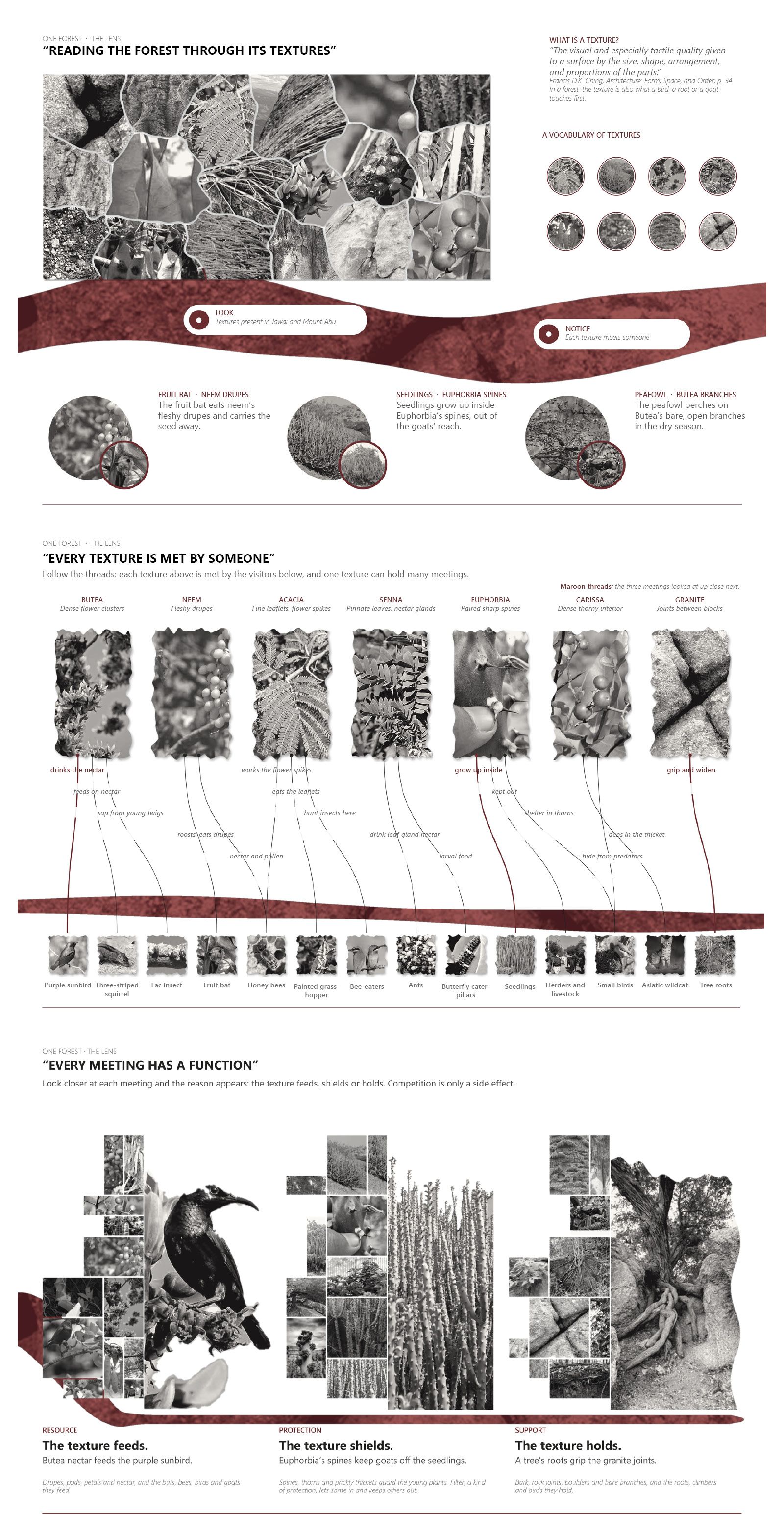
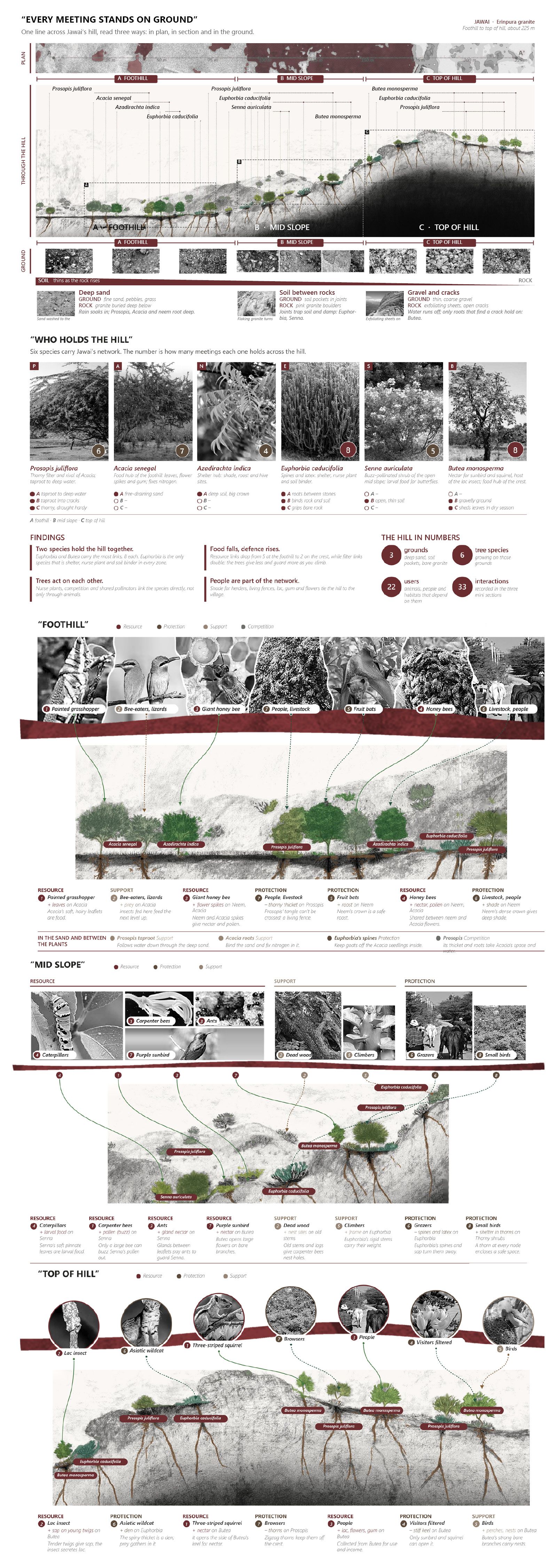
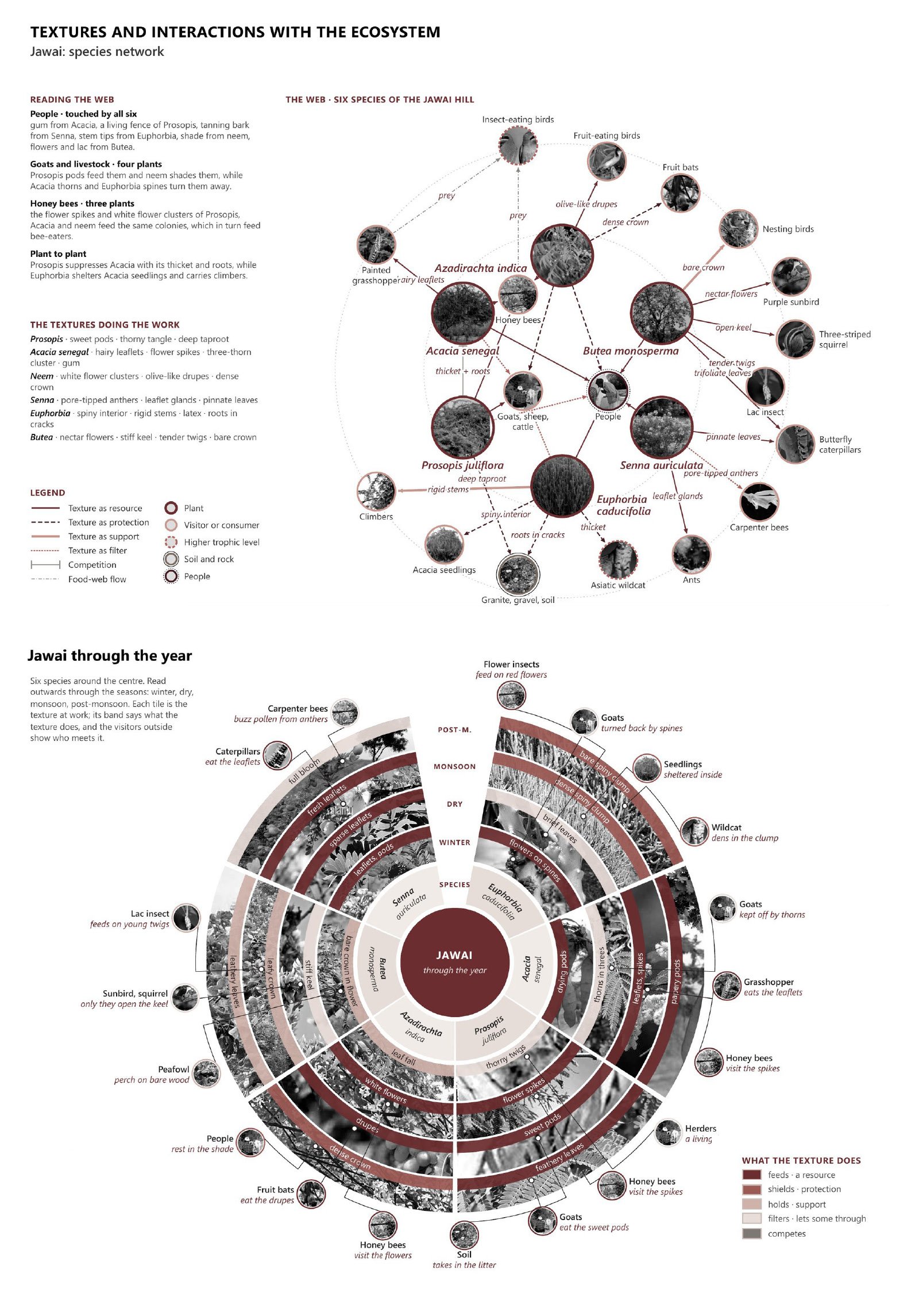
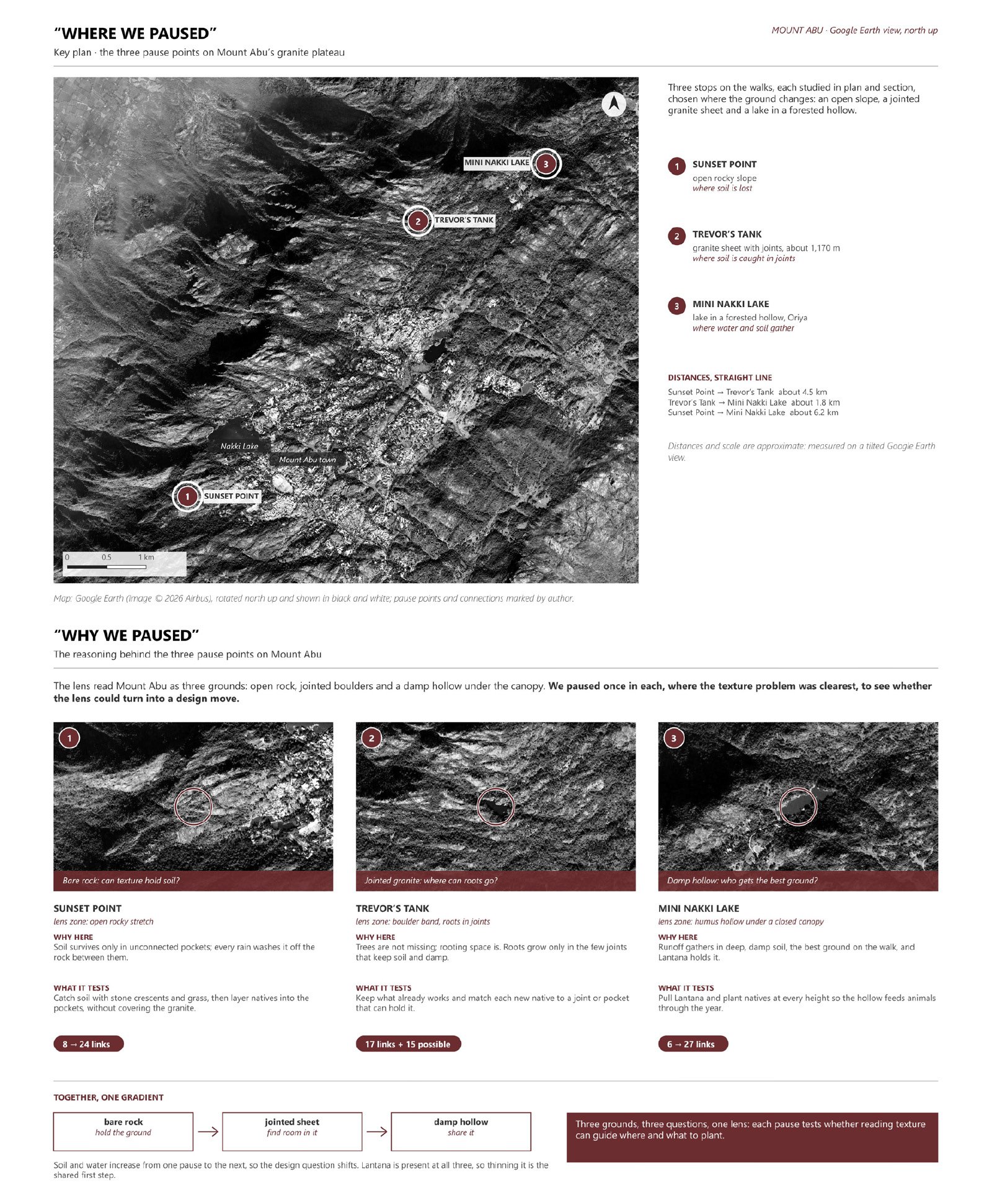
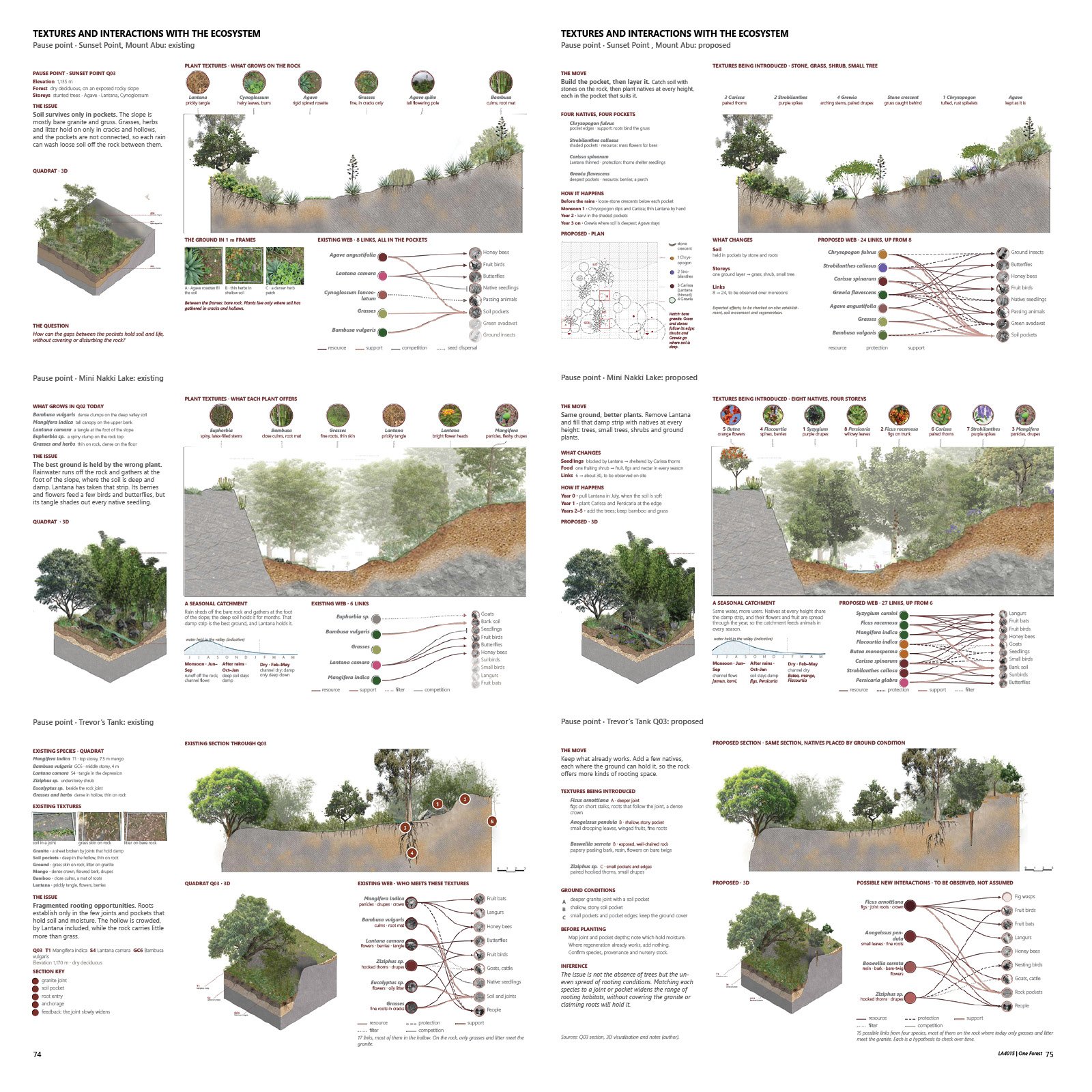
A forest can be understood through its textures—the bark of a tree, the thorns of a shrub, the form of a leaf, or the roughness of a rock. This project explores how these textures shape and influence ecological interactions in the forests of Jawai and Mount Abu. Each texture serves a purpose, offering resources, protection, shelter or support to other organisms. These characteristics change with the seasons, altering the relationships within the ecosystem. Through field observations, texture mapping and interaction studies, the project identifies significant ecological relationships and translates them into landscape interventions that aim to strengthen and restore these connections.
View Additional Work