Your browser is out-of-date!
For a richer surfing experience on our website, please update your browser. Update my browser now!
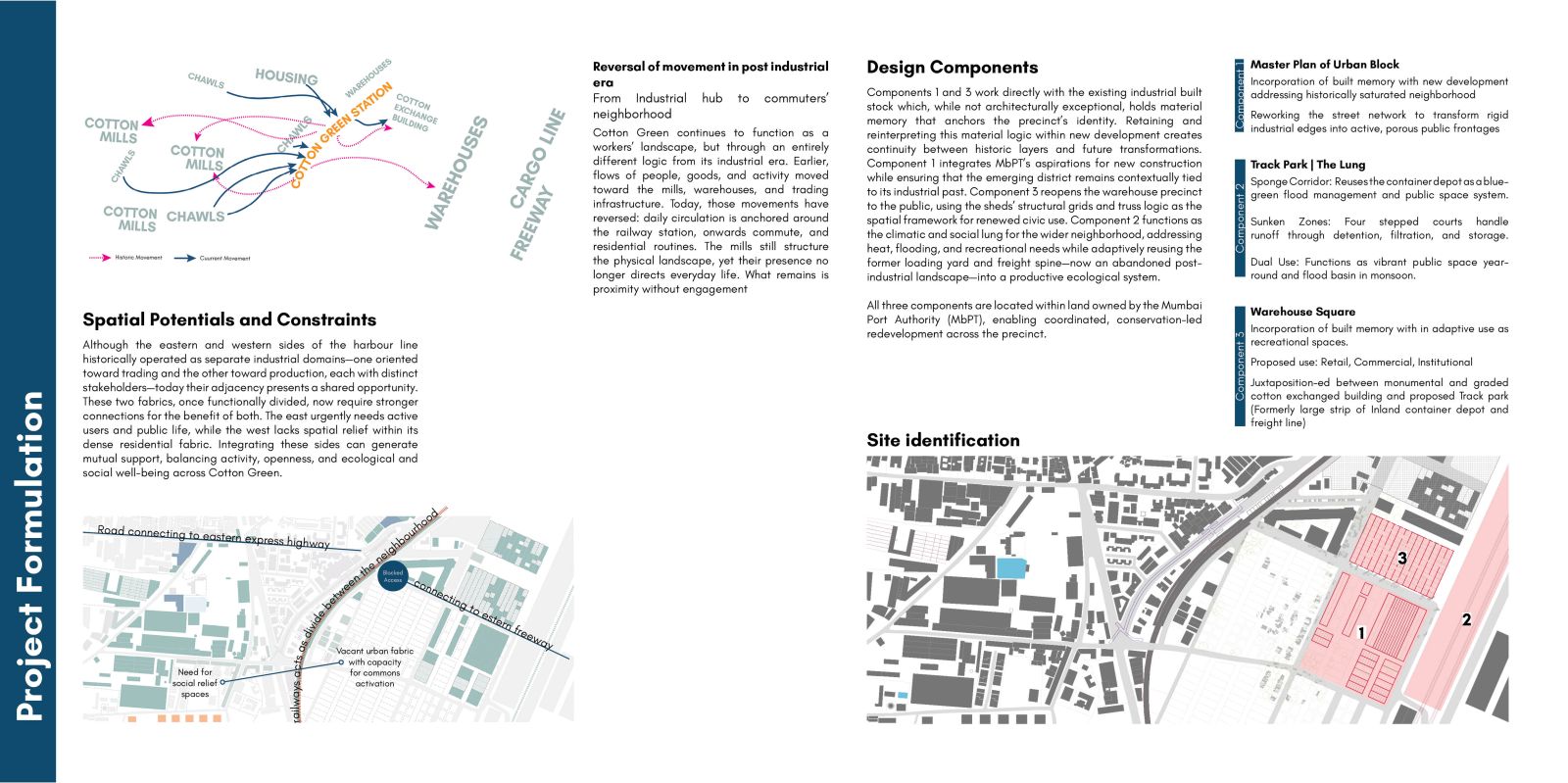
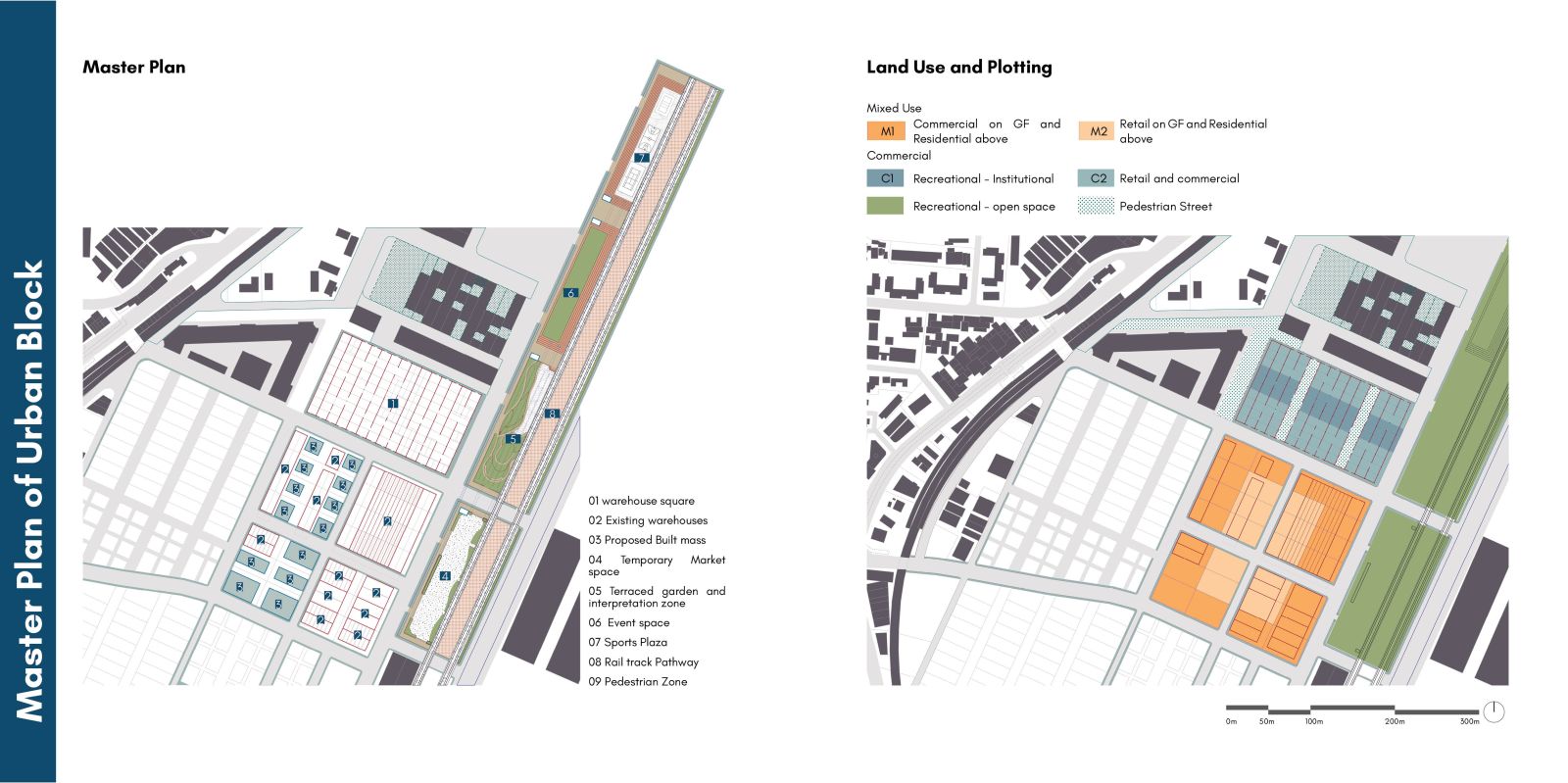
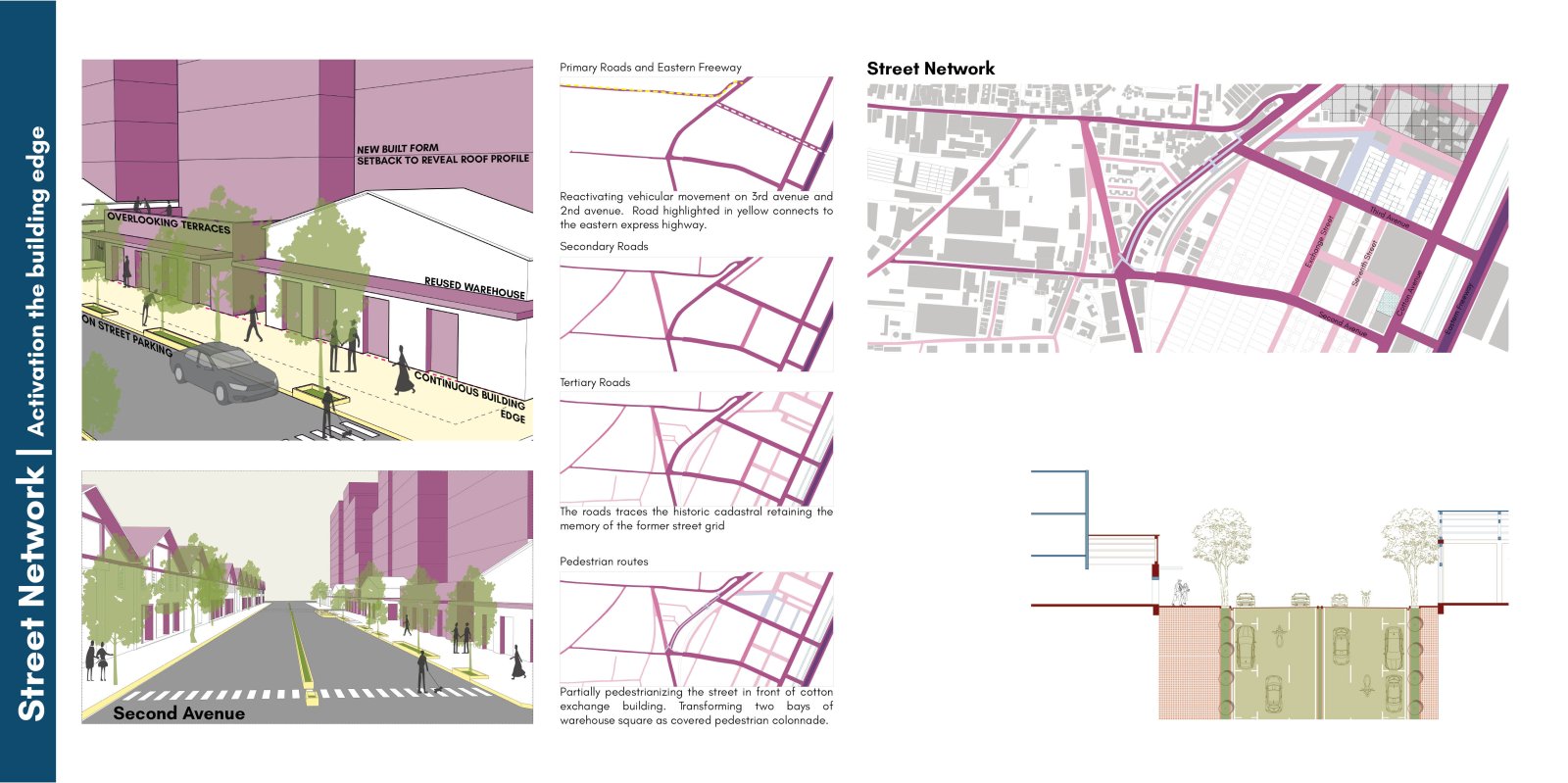
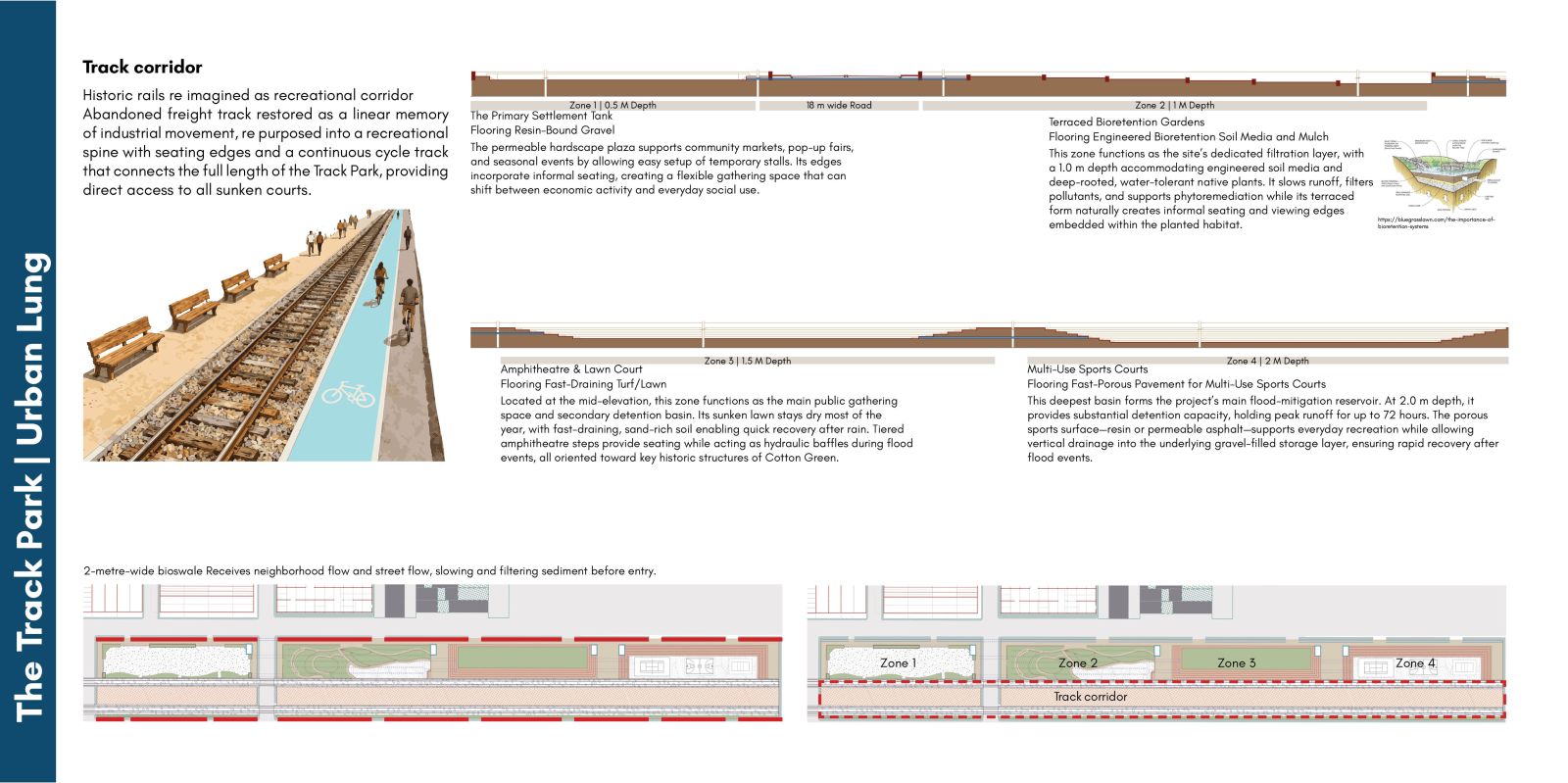
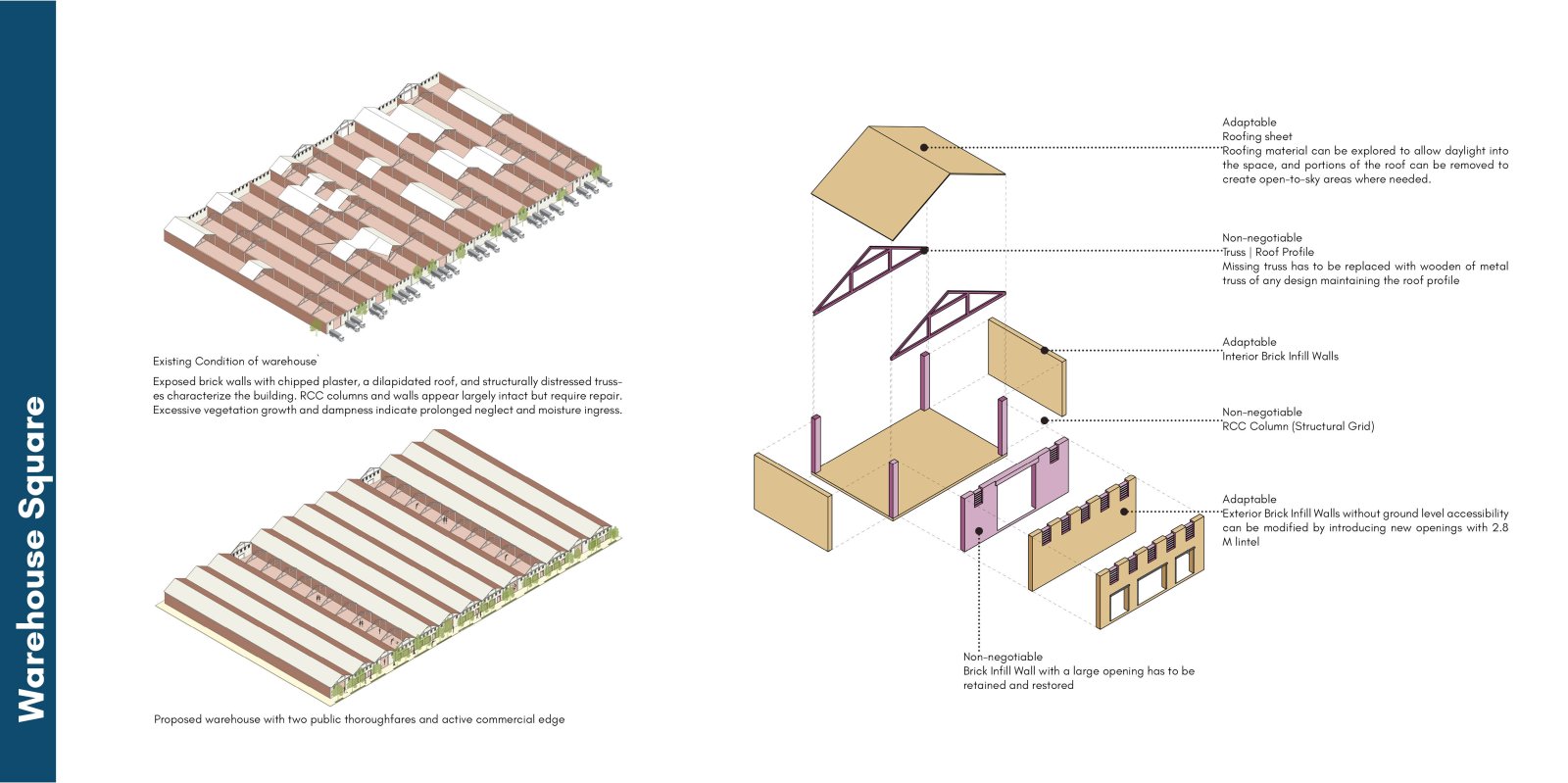
Cotton Green’s post-industrial landscape, once central to Bombay’s cotton economy, now stands fragmented, undervalued, and increasingly threatened by speculative redevelopment. This project reframes the precinct not as obsolete land but as a historically saturated urban system whose industrial memory, spatial porosity, and embodied carbon form the foundations of a renewed, climate-resilient neighborhood. The proposal advances three strategic components. First, the Industrial Street Edge is transformed from rigid warehouse boundaries into active public frontages by carving new openings, adapting walls for ground-floor commerce, and allowing contextually scaled new buildings to coexist within the historic district; responding to high land value without erasing industrial form. Second, the Sponge Corridor / Track Park adaptively reuses the former container depot and freight spine as a linear flood-management landscape. Terraced basins, sunken courts, and bio-retention systems follow the geometry and material logic of the original yard, creating an urban lung that cools the precinct while conserving industrial movement memory. Third, Warehouse Square reorganizes the monumental Cotton Exchange building and surrounding sheds into a civic and commercial anchor, with plinths, trusses, and industrial grids shaping its spatial identity. These interventions position Cotton Green’s industrial fabric as an urban common, supporting ecological resilience, public life, and renewed relationships between new communities and industrial past.