Your browser is out-of-date!
For a richer surfing experience on our website, please update your browser. Update my browser now!
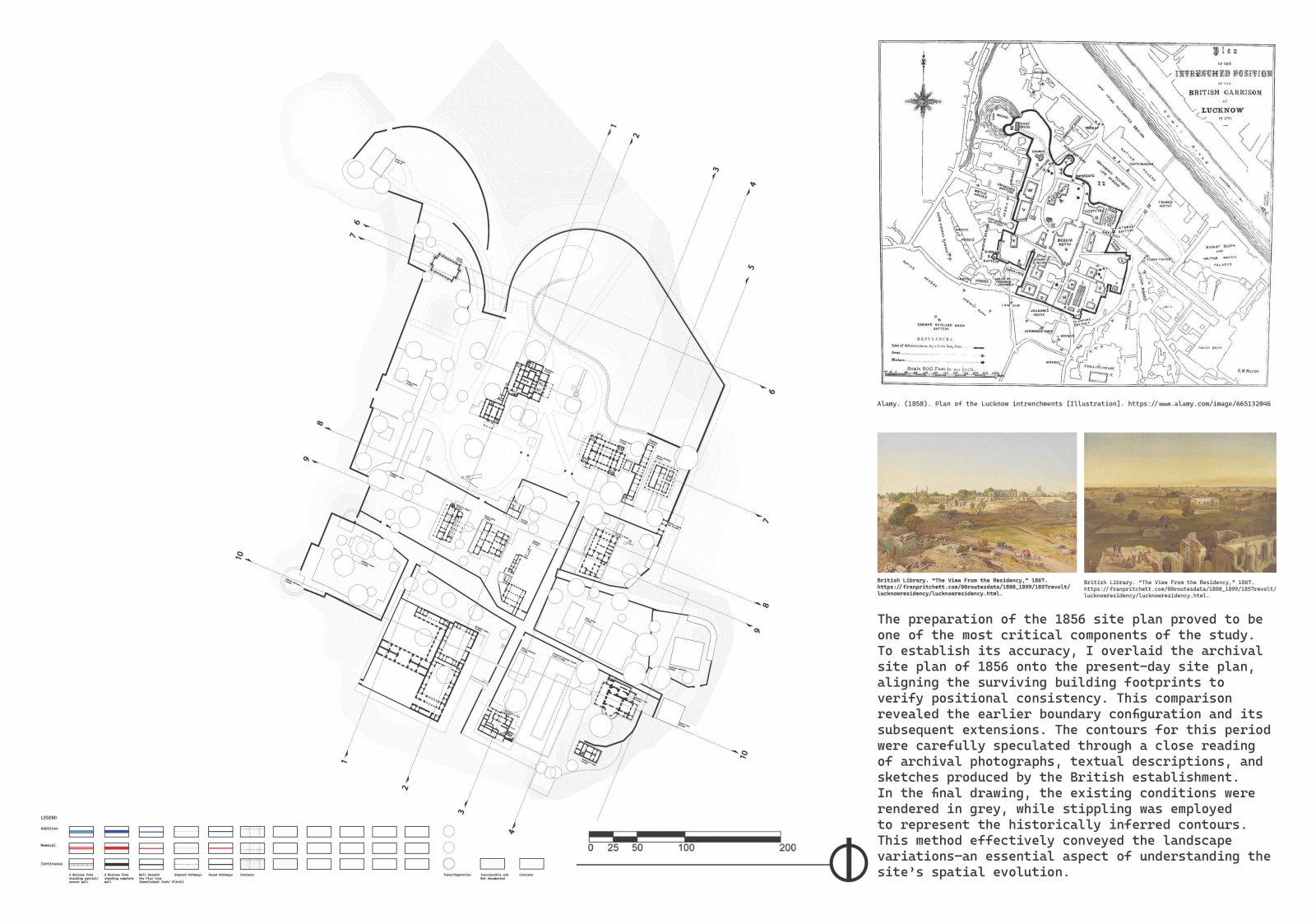
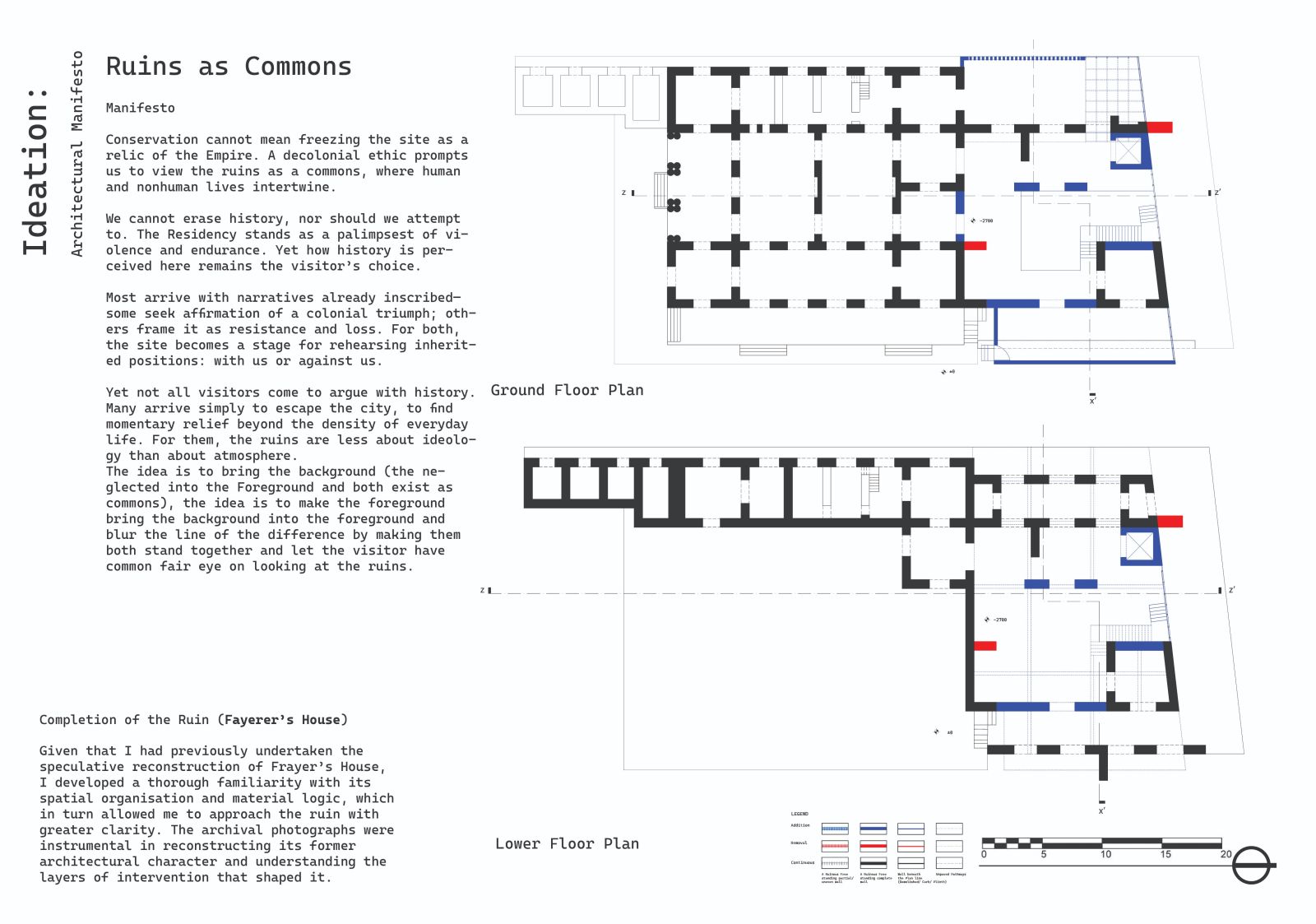
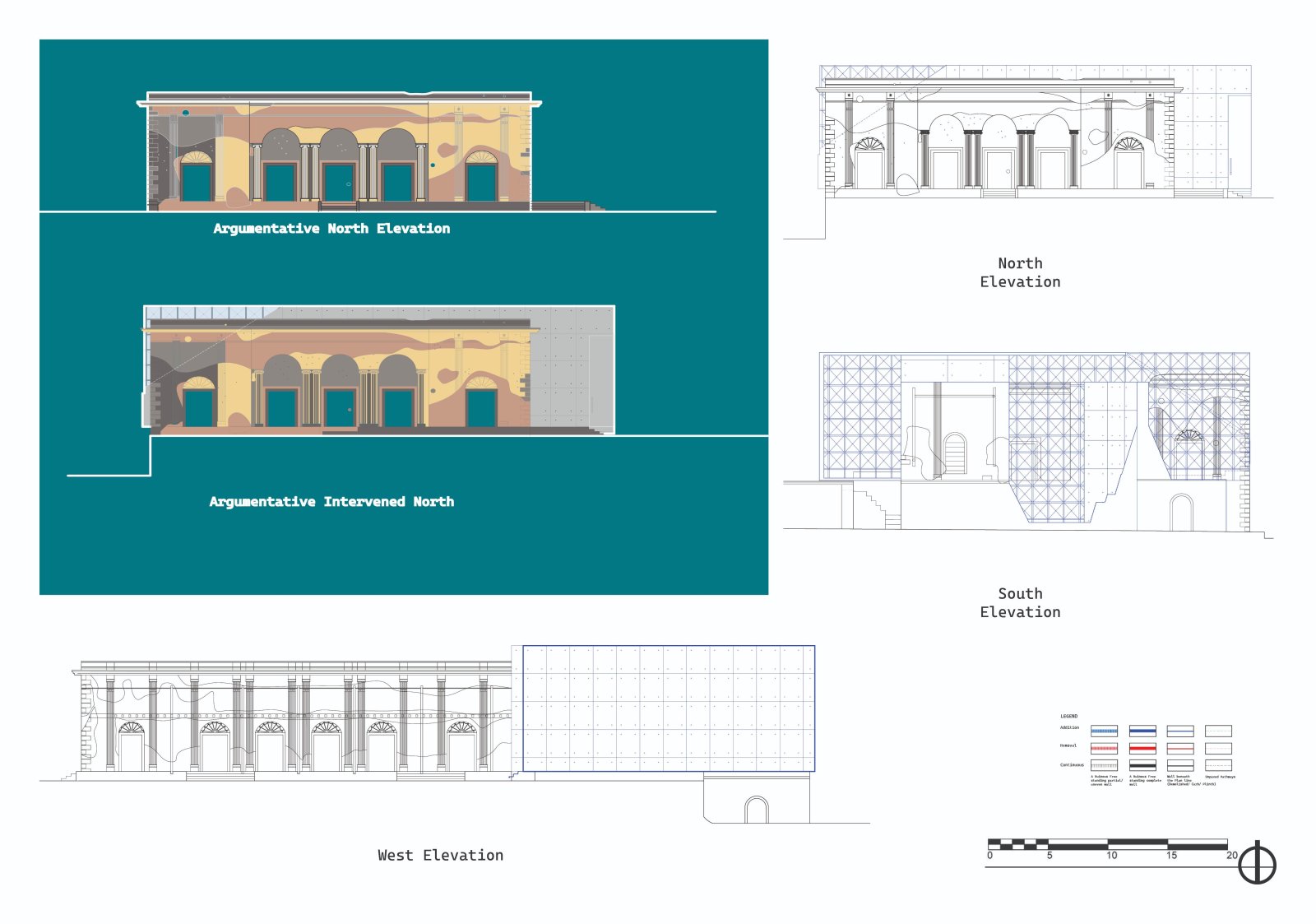
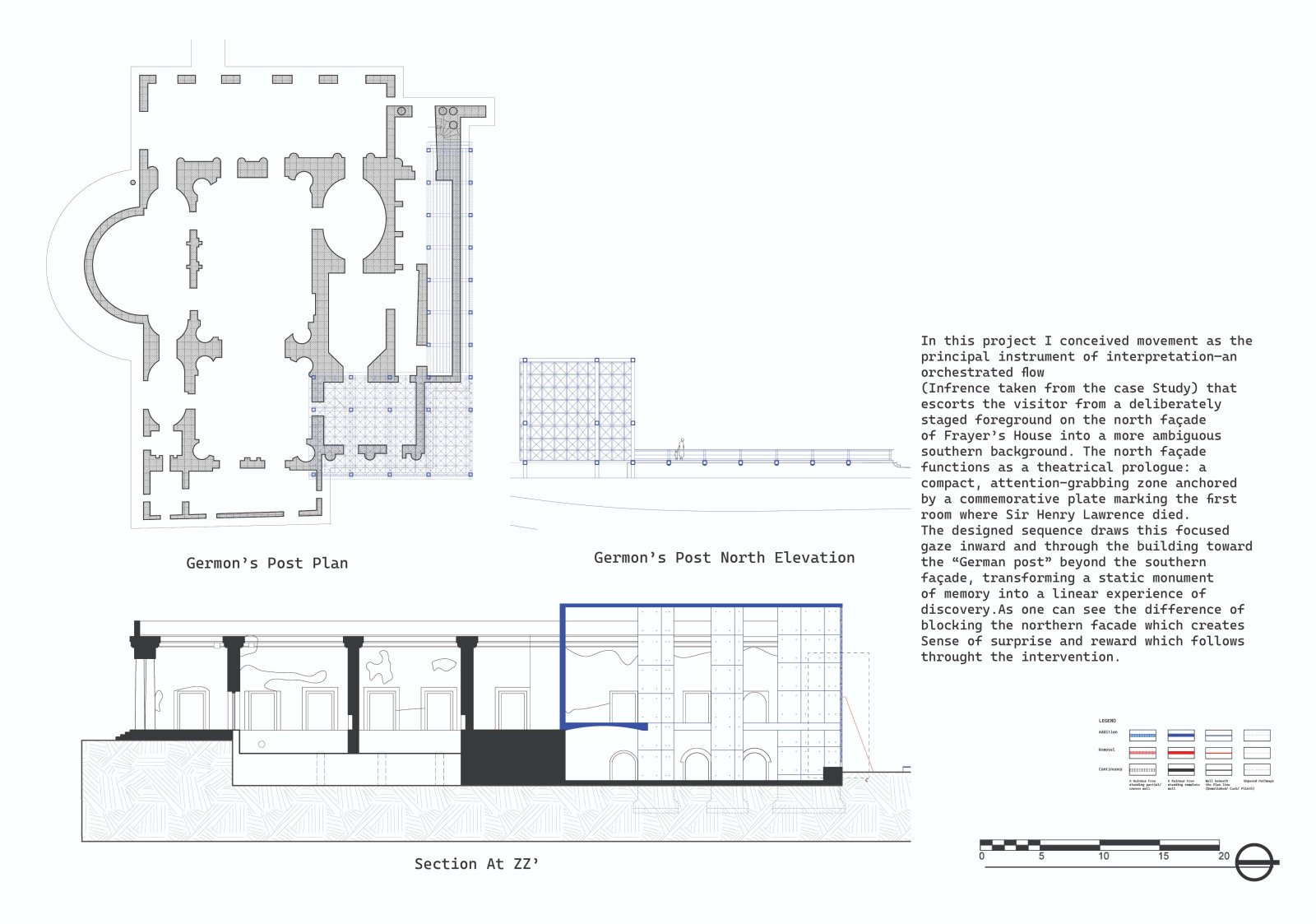
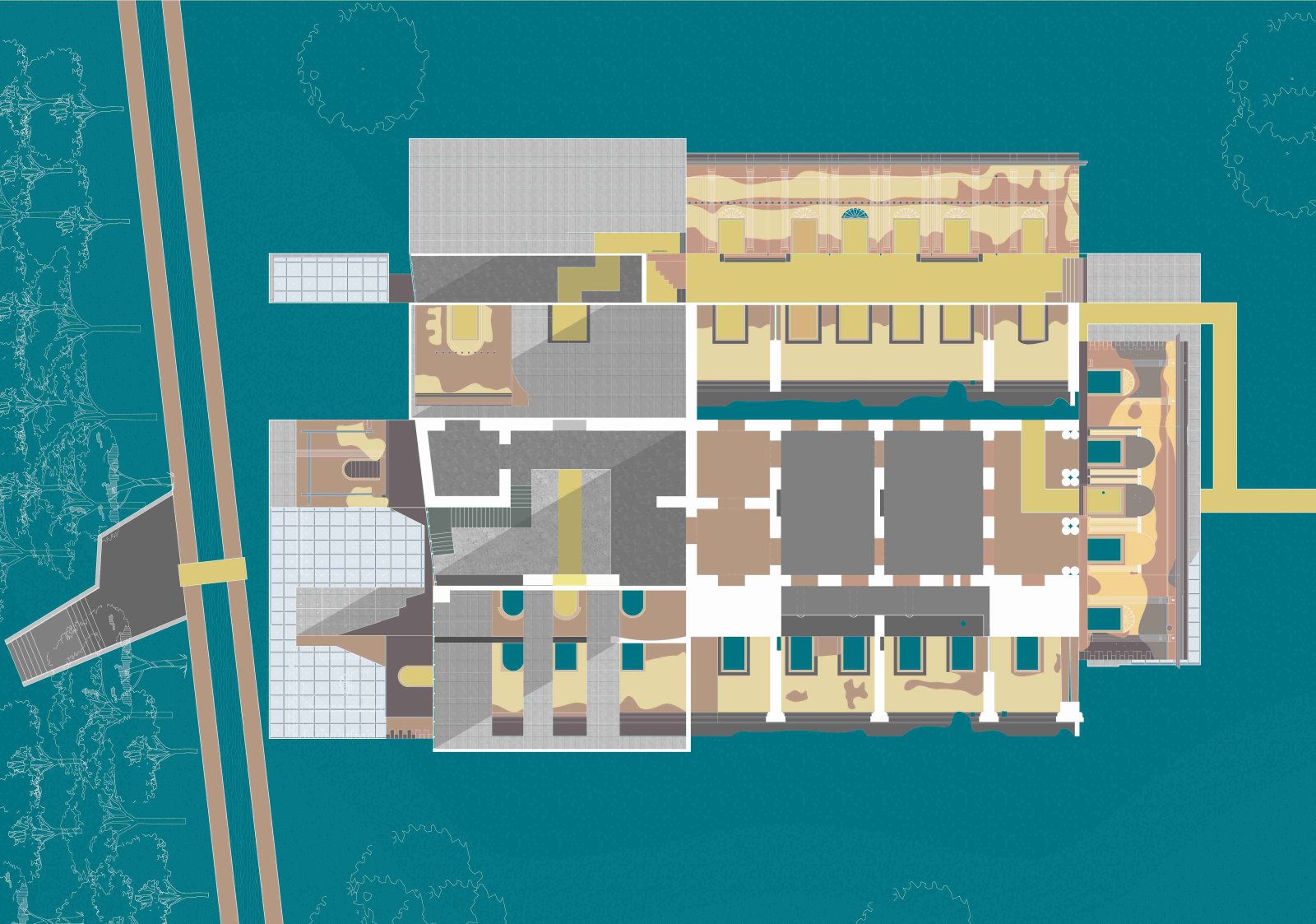
The conservation design approach for The Lucknow Residency seeks to reposition the overlooked background within the experiential foreground, allowing both conditions to operate as shared spatial commons and encouraging visitors to engage with the ruins free of hierarchical bias. Movement functions as the primary interpretive apparatus, guiding users from an intentionally framed point of entry toward historically marginalised zones, thereby softening distinctions between dominant and neglected narratives. This spatial choreography deliberately destabilises singular, authoritative readings and establishes a neutral interpretive field in which epistemic agency is transferred to the visitor, fostering a critical and reflective encounter with the site’s layered histories.