Your browser is out-of-date!
For a richer surfing experience on our website, please update your browser. Update my browser now!
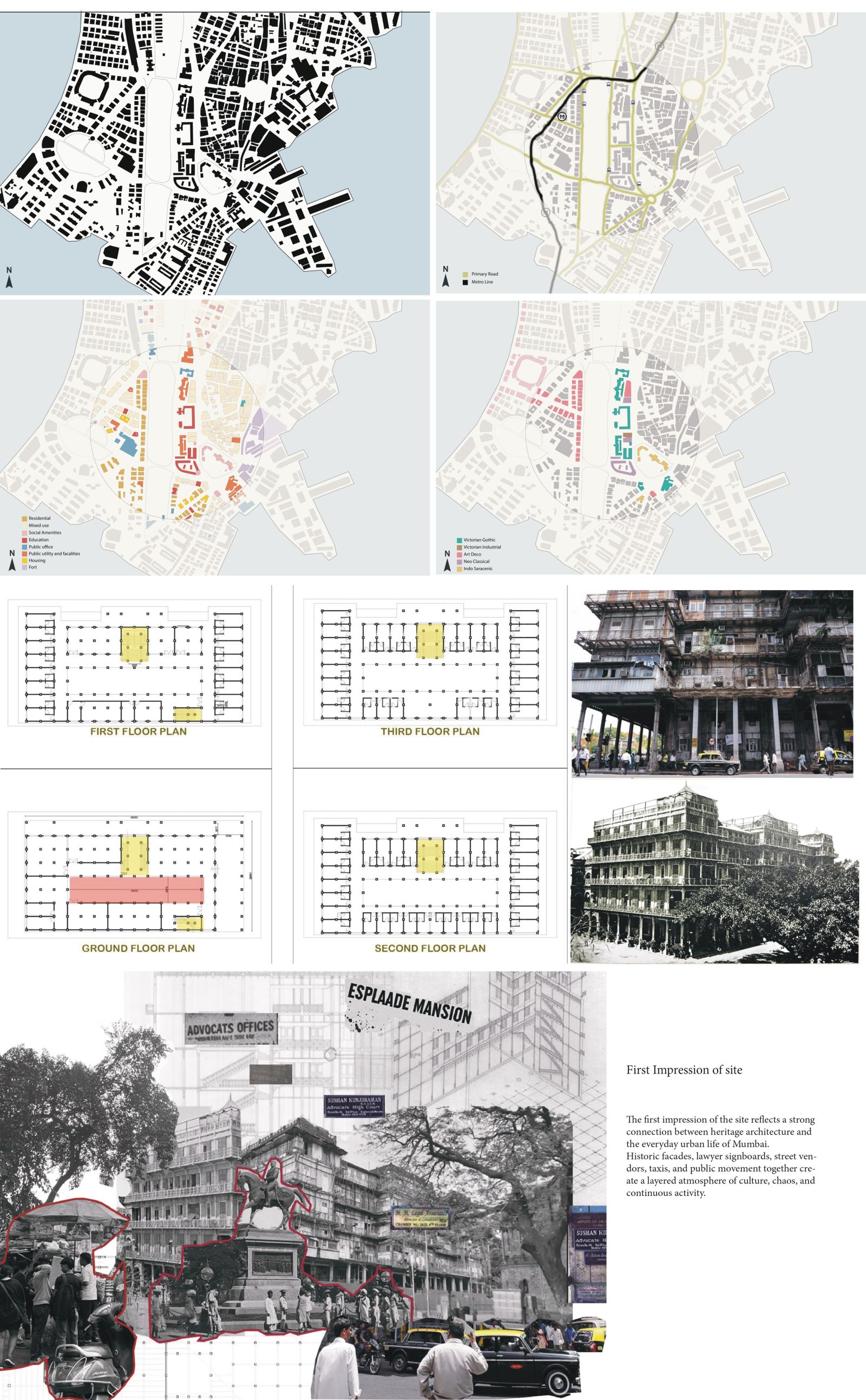
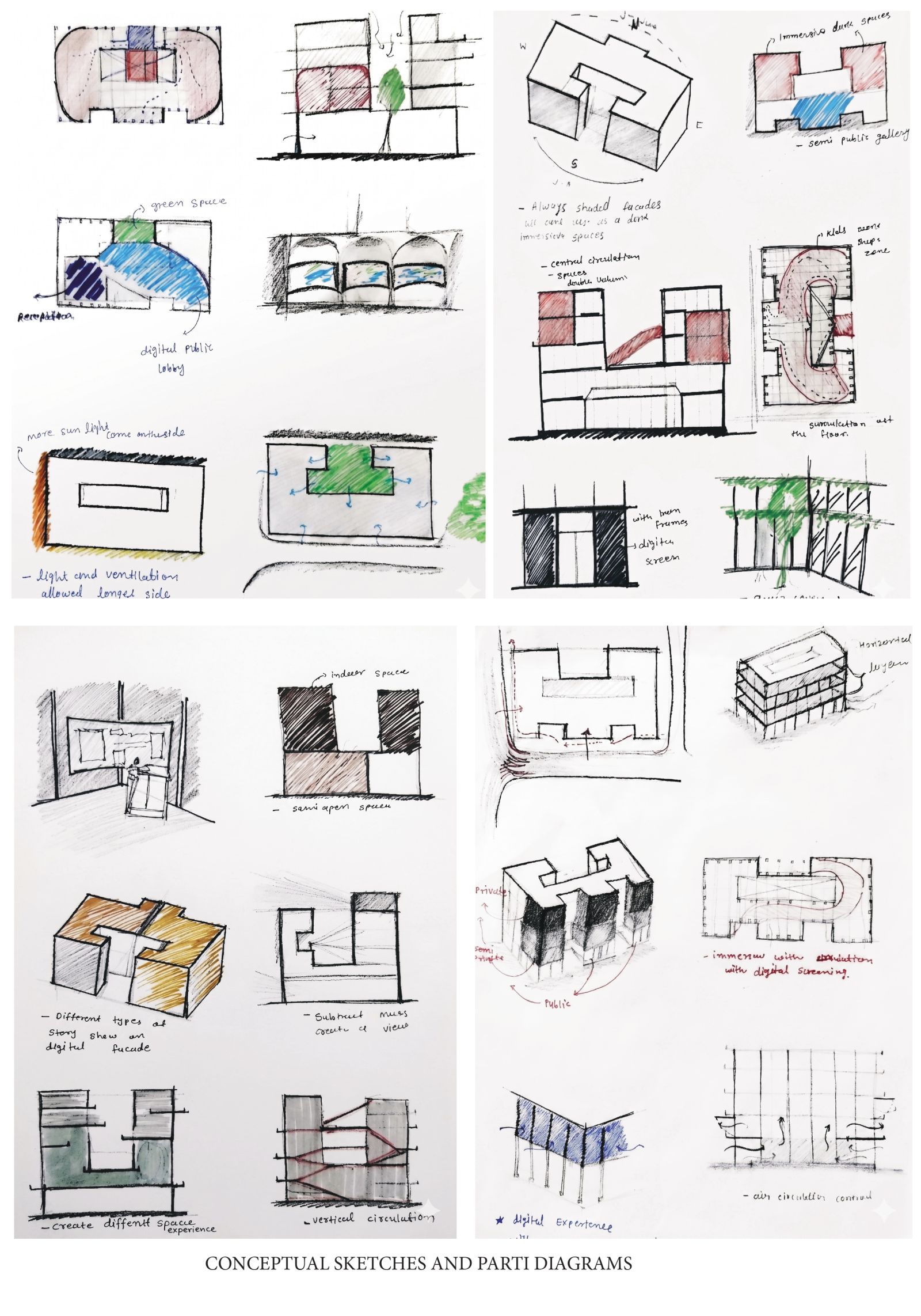
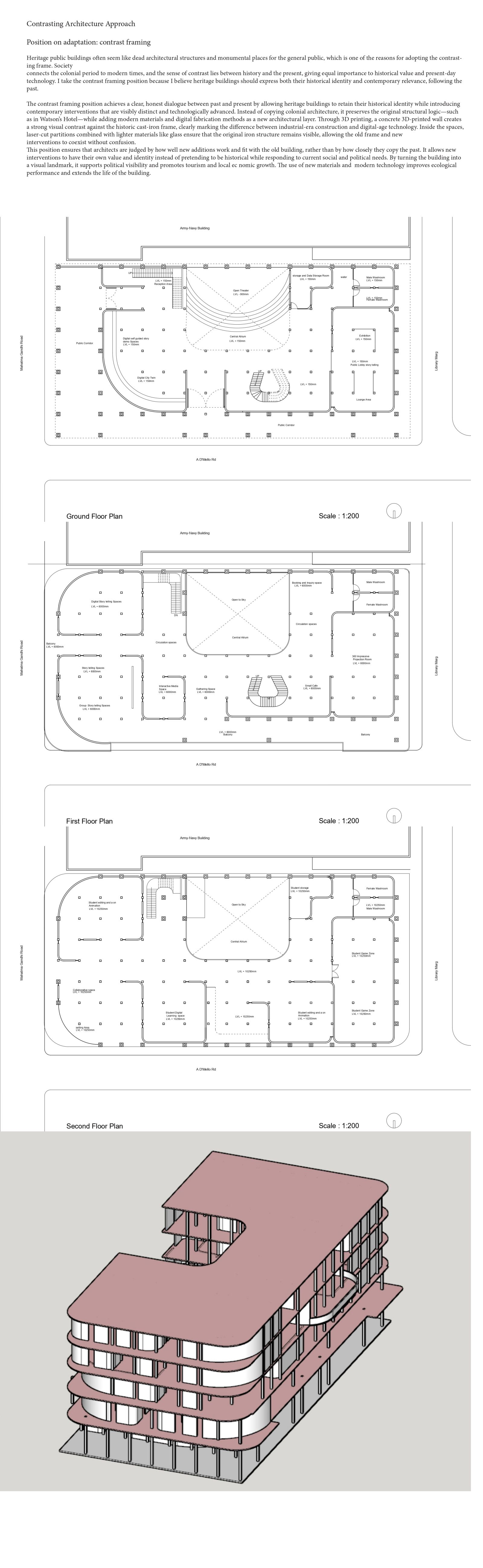
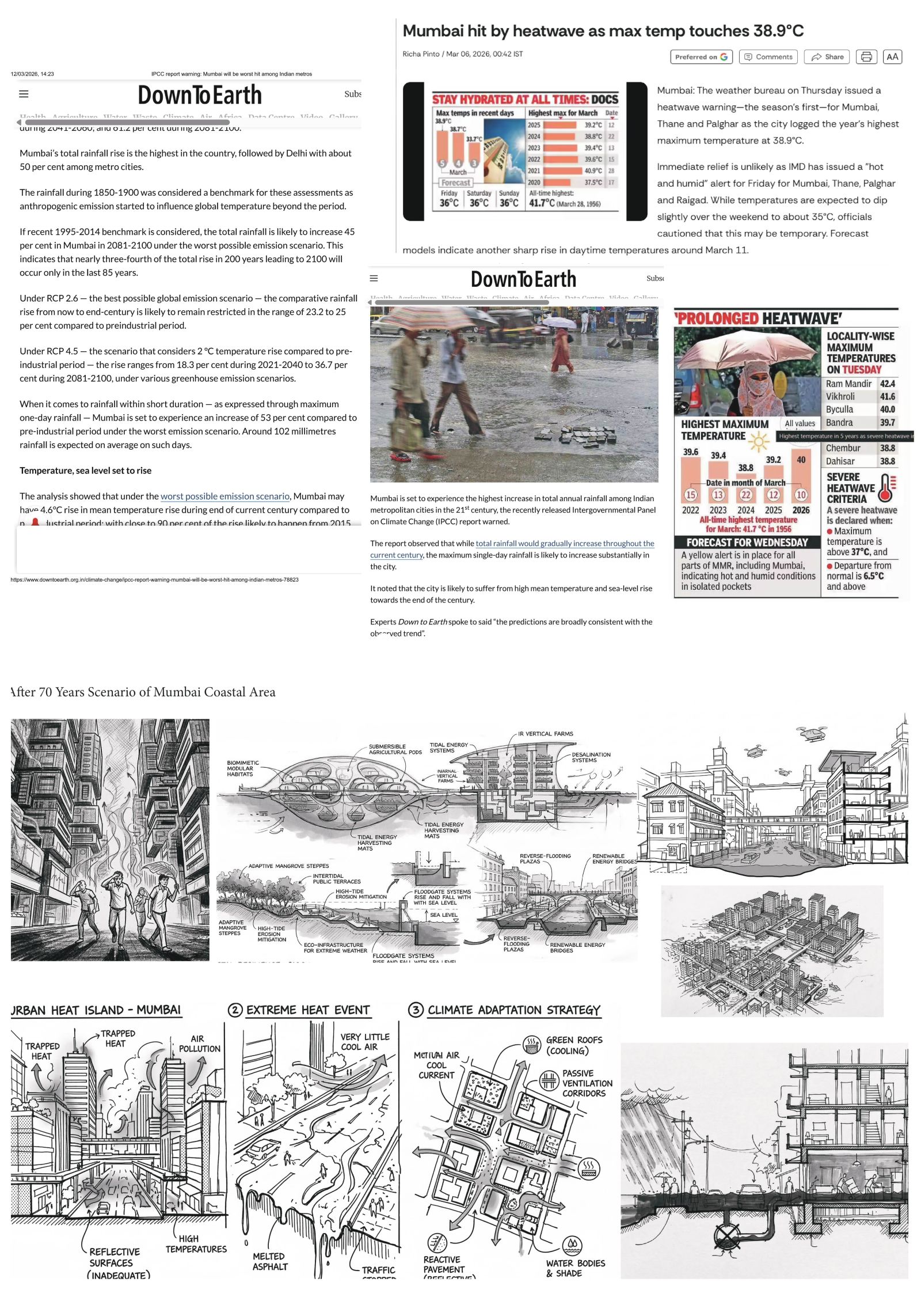
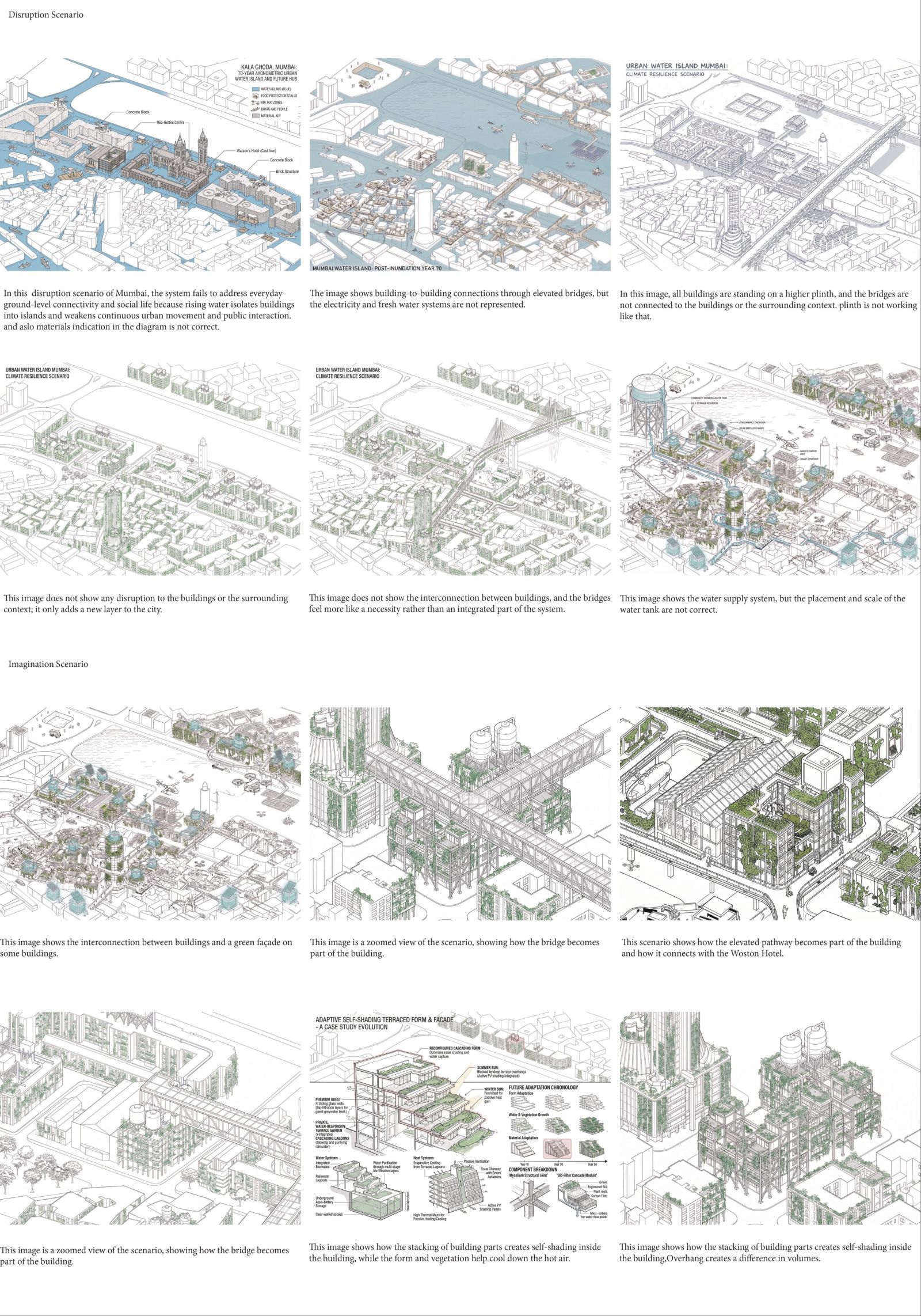
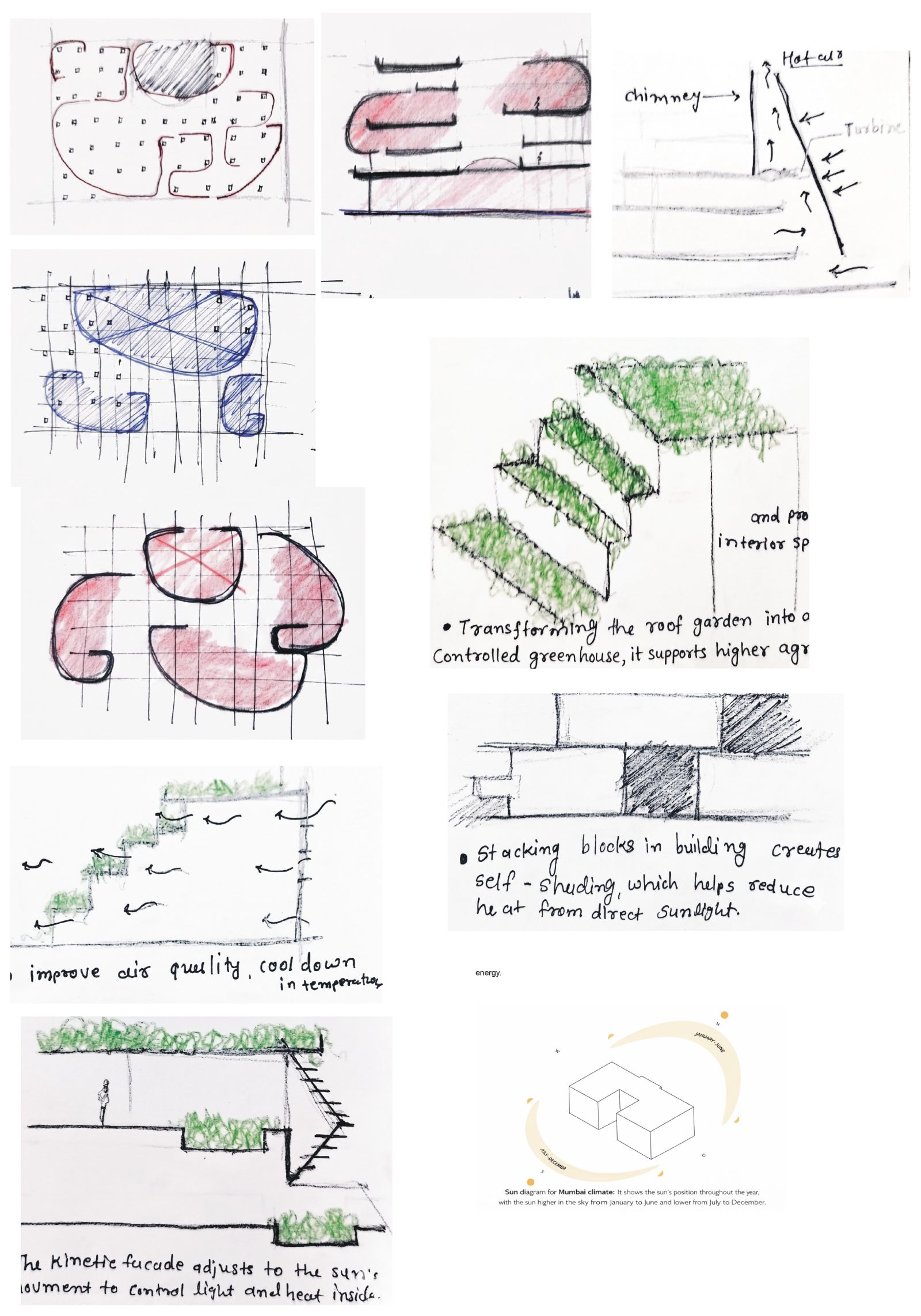
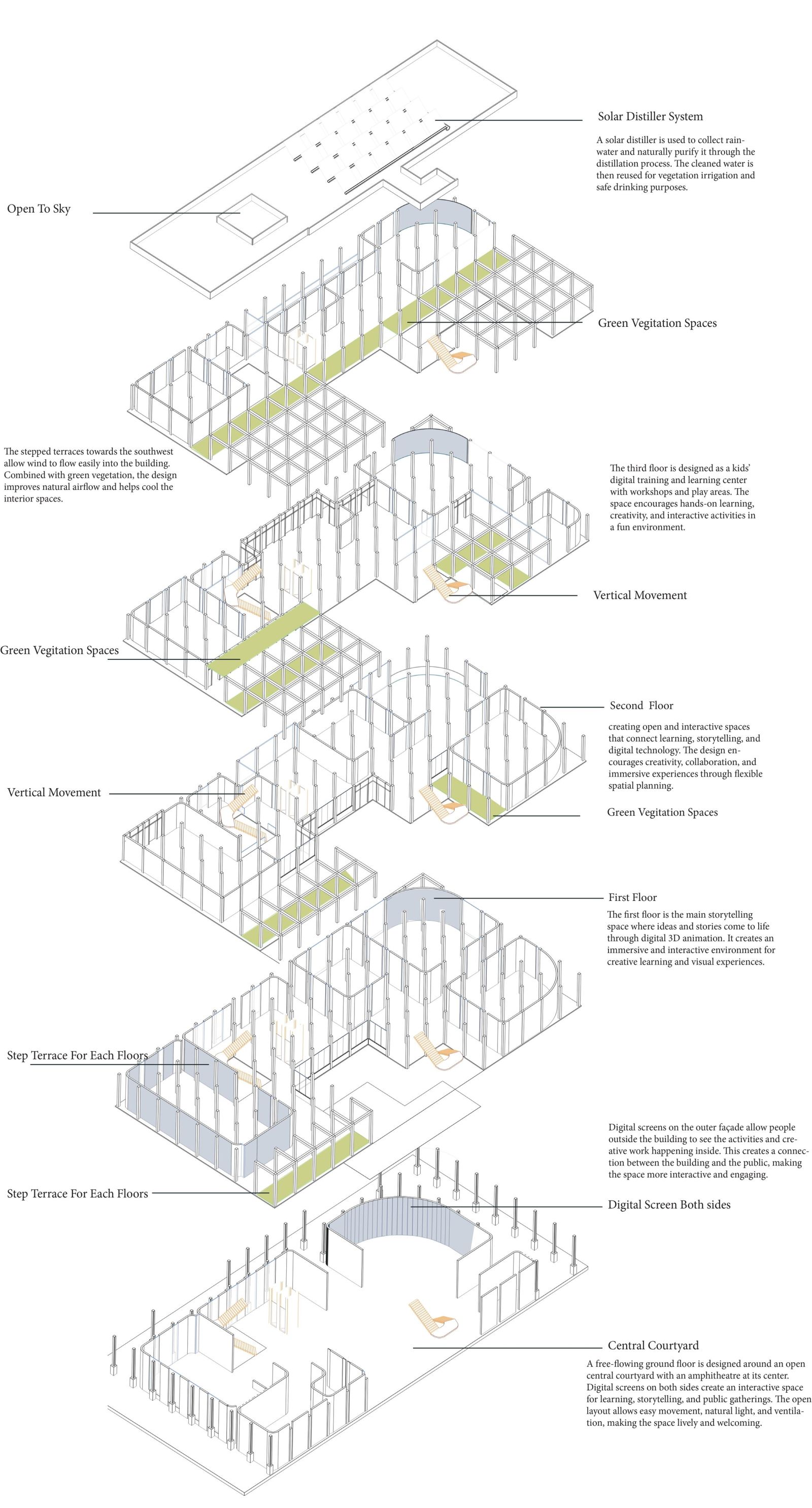
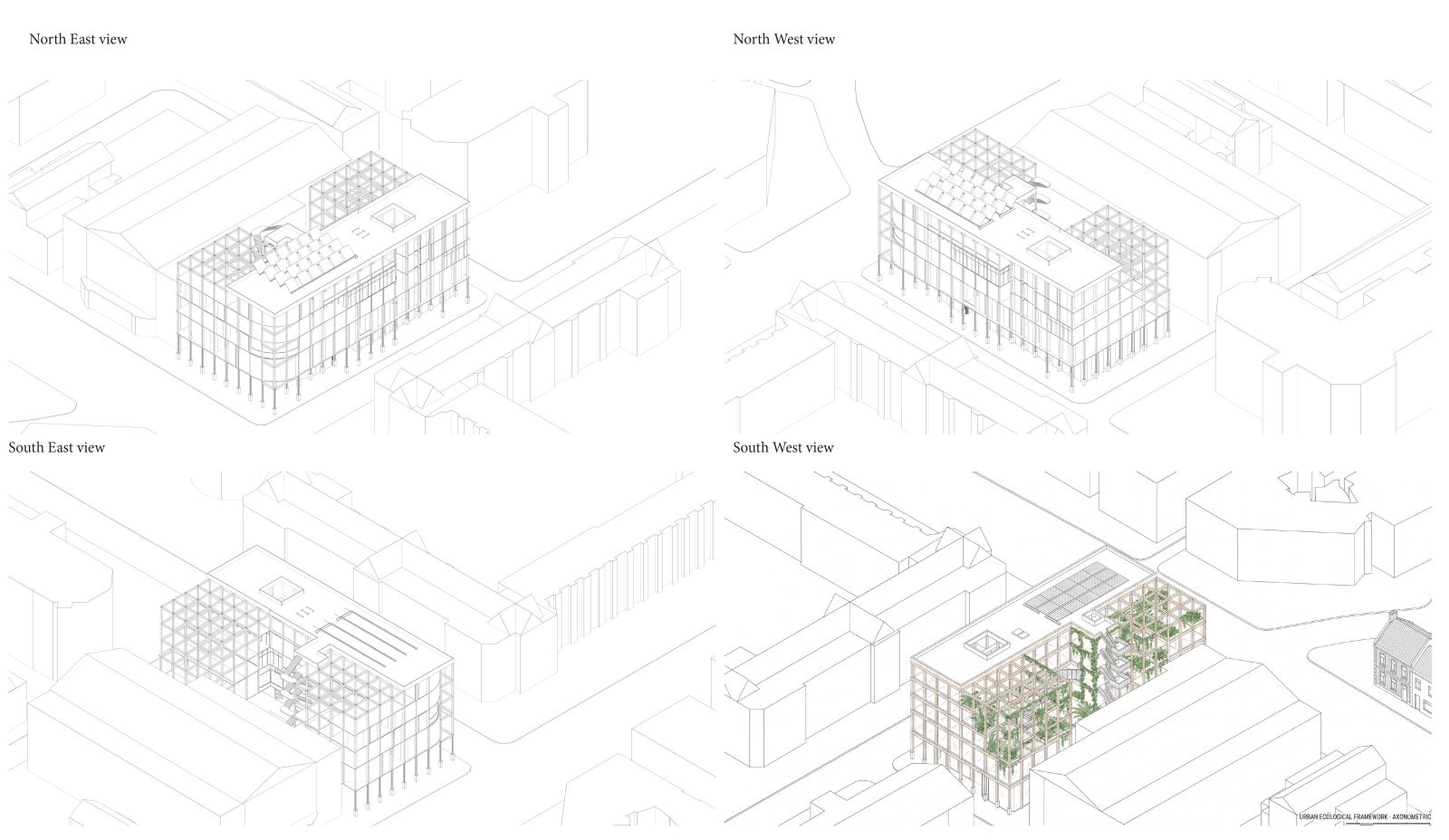
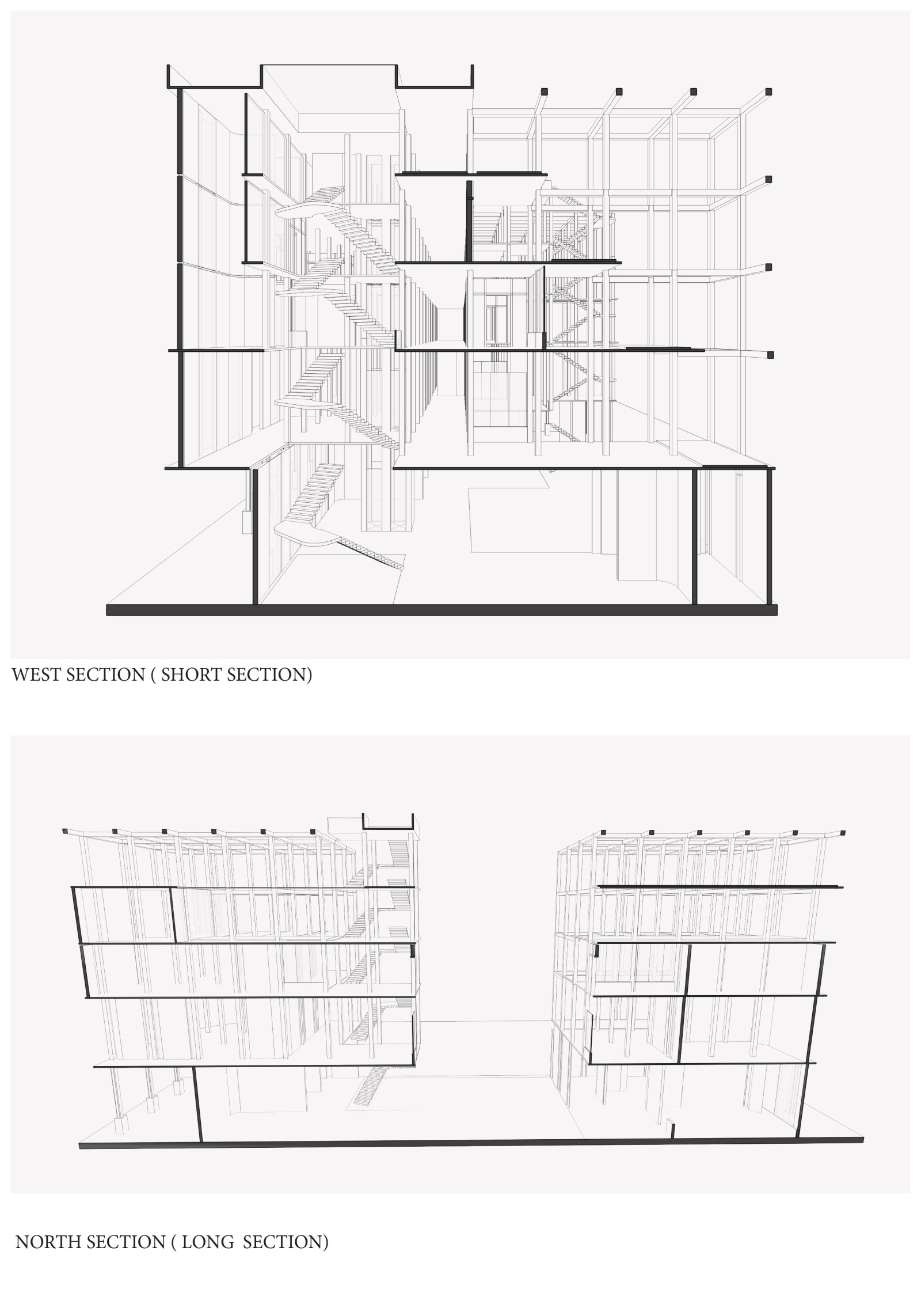
In the context of Mumbai, the Kala Ghoda area is adapting to contemporary urban needs while preserving its strong colonial heritage. Historic buildings such as Watson's Hotel remain valuable cultural landmarks, but they also need to function within the demands of modern city life. Instead of demolition, many structures are reused and transformed into active public and private spaces that support tourism, cultural activities, and events like the Kala Ghoda Arts Festival. This approach allows the district to remain economically useful and socially vibrant while maintaining its historic identity. The contrasting framing position creates a clear relationship between old and new architecture. Rather than copying colonial styles, contemporary interventions are introduced as distinct layers through modern materials and digital fabrication methods. In Watson’s Hotel, the historic cast-iron structure is preserved while new additions such as 3D-printed concrete walls and laser-cut partitions create visual contrast and highlight technological advancement. Curved forms and digital screens further express the possibilities of present-day construction techniques. By 2070, the building becomes climate-responsive through stepped green terraces that channel southwest winds through vegetation, naturally cooling and filtering the air before it enters the interior spaces.