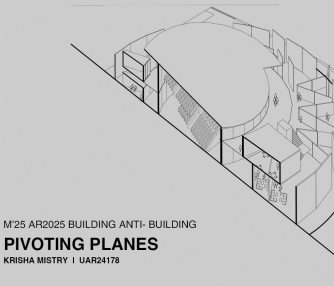
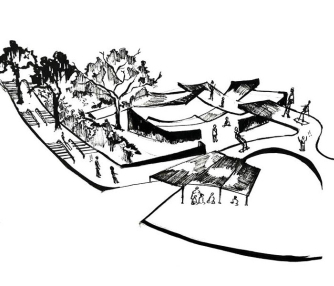
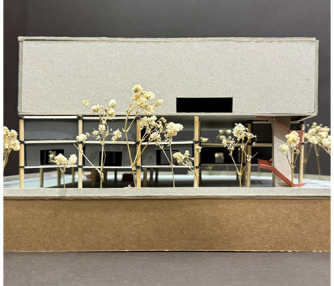
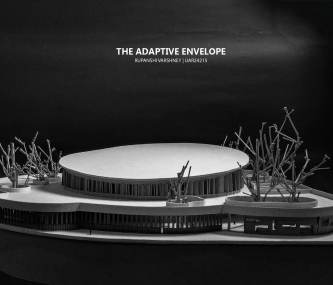
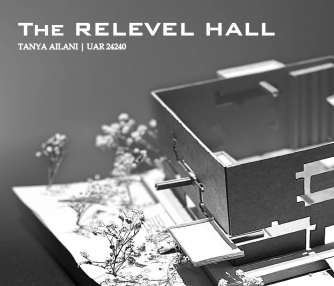
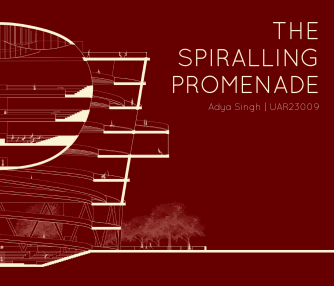
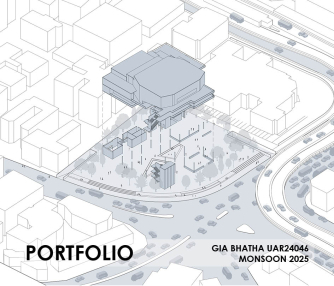
The term ''Anti-Building'' was coined by British architect Cedric Price. He challenged the conventional idea behind the building as driven only to attain the defined programmatic outline and exclusivity attained via architect''s vision. He believed that building should primarily serve people. They should be able to radically transform and be flexible to meet diverse demands of both the present and the future. His vision of 1960s which was far too advanced for its time and is responsible for many famous built-forms (Pompidou center,Greenwich Dome,The shed-New York) that we all cherish and look up to.
In addition philosophically the scenario also reviews the present demands on urban land which is highly pressurised thus each built form takes away many possibilities that the land may offer to inhabitants by occupying the piece of land while accommodating only a few uses.
This unit offers a unique ground-breaking journey to look at the built-form through a completely different perspective challenging conventions,engaging in creating meaningful transformations of built-form adopting and transforming itself to address many diverse demands of its users. Inclusivity creates a unique position for a designer, while shaping it for the present and imagined future would demand a narrative comprehending near or distant future.
Studio Unit
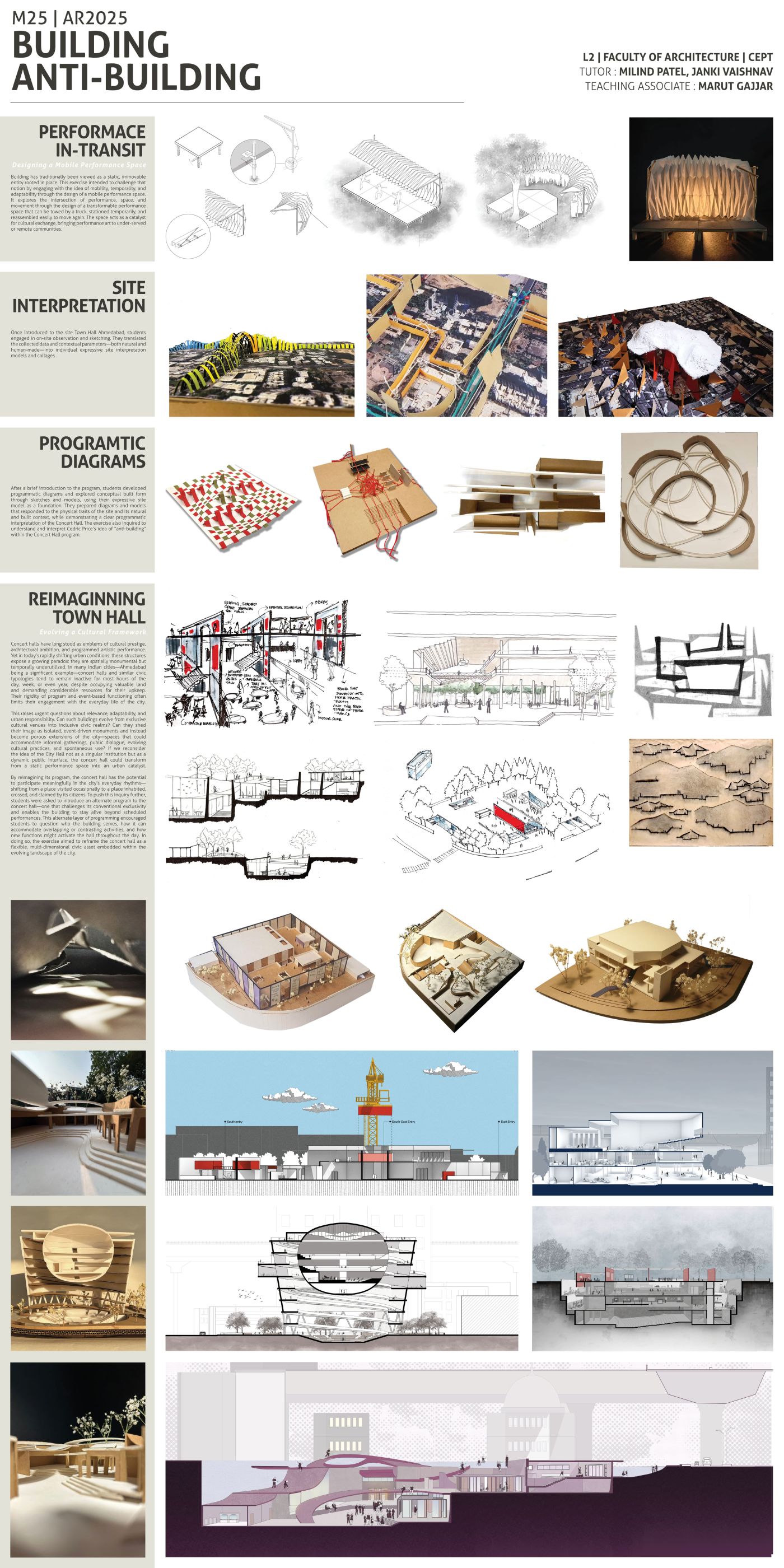
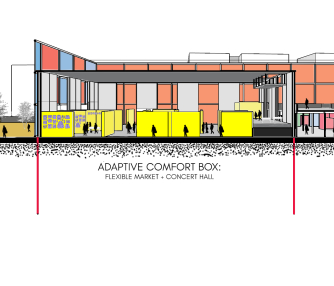
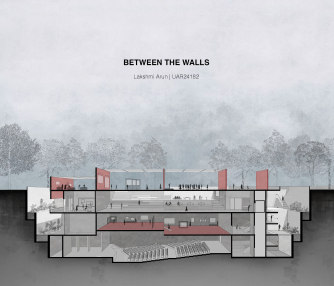
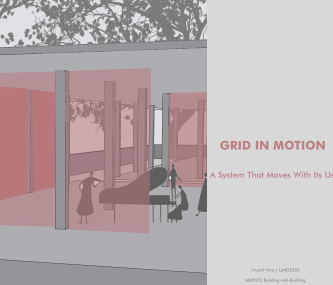
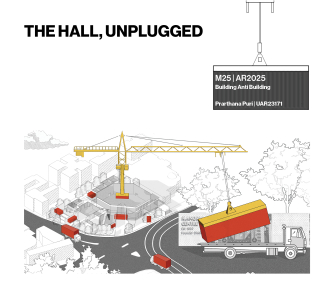
Concert halls have long stood as emblems of cultural prestige, architectural ambition, and programmed artistic performance. Yet in today’s rapidly shifting urban conditions, these structures expose a growing paradox: they are spatially monumental but temporally underutilized. In many Indian cities—Ahmedabad being a significant example—concert halls and similar civic typologies tend to remain inactive for most hours of the day, week, or even year, despite occupying valuable land and demanding considerable resources for their upkeep. Their rigidity of program and event-based functioning often limits their engagement with the everyday life of the city.