Your browser is out-of-date!
For a richer surfing experience on our website, please update your browser. Update my browser now!
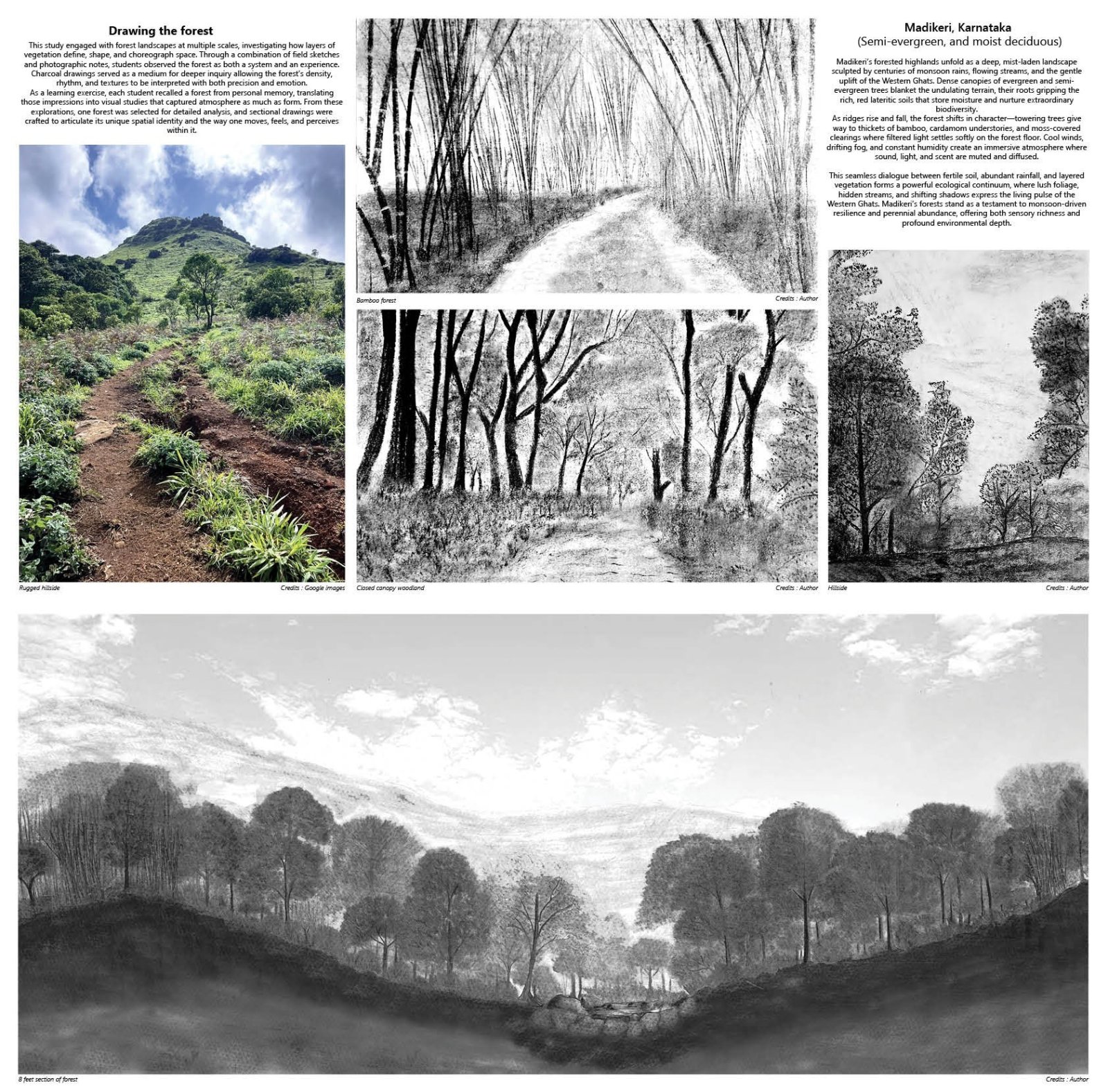
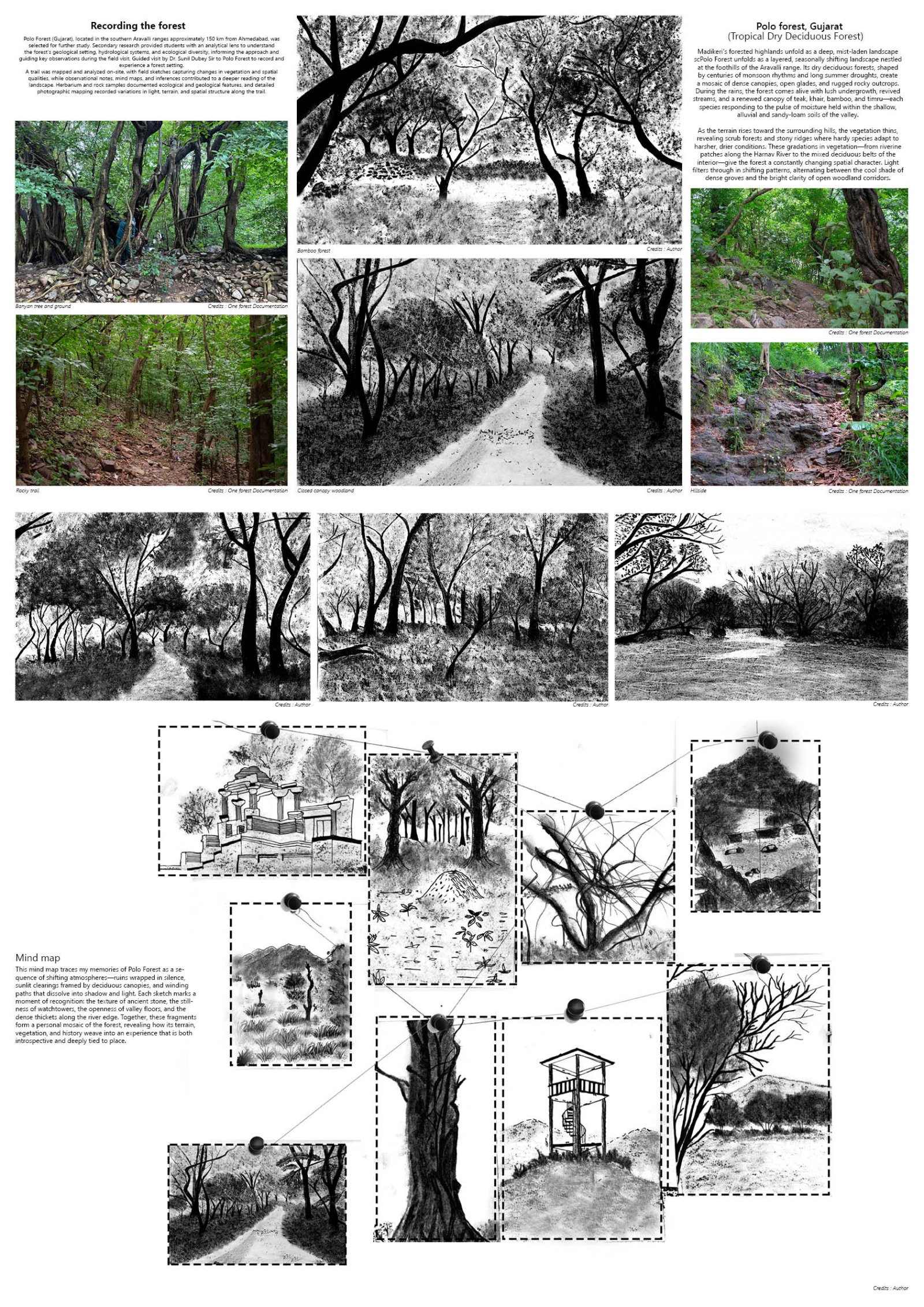
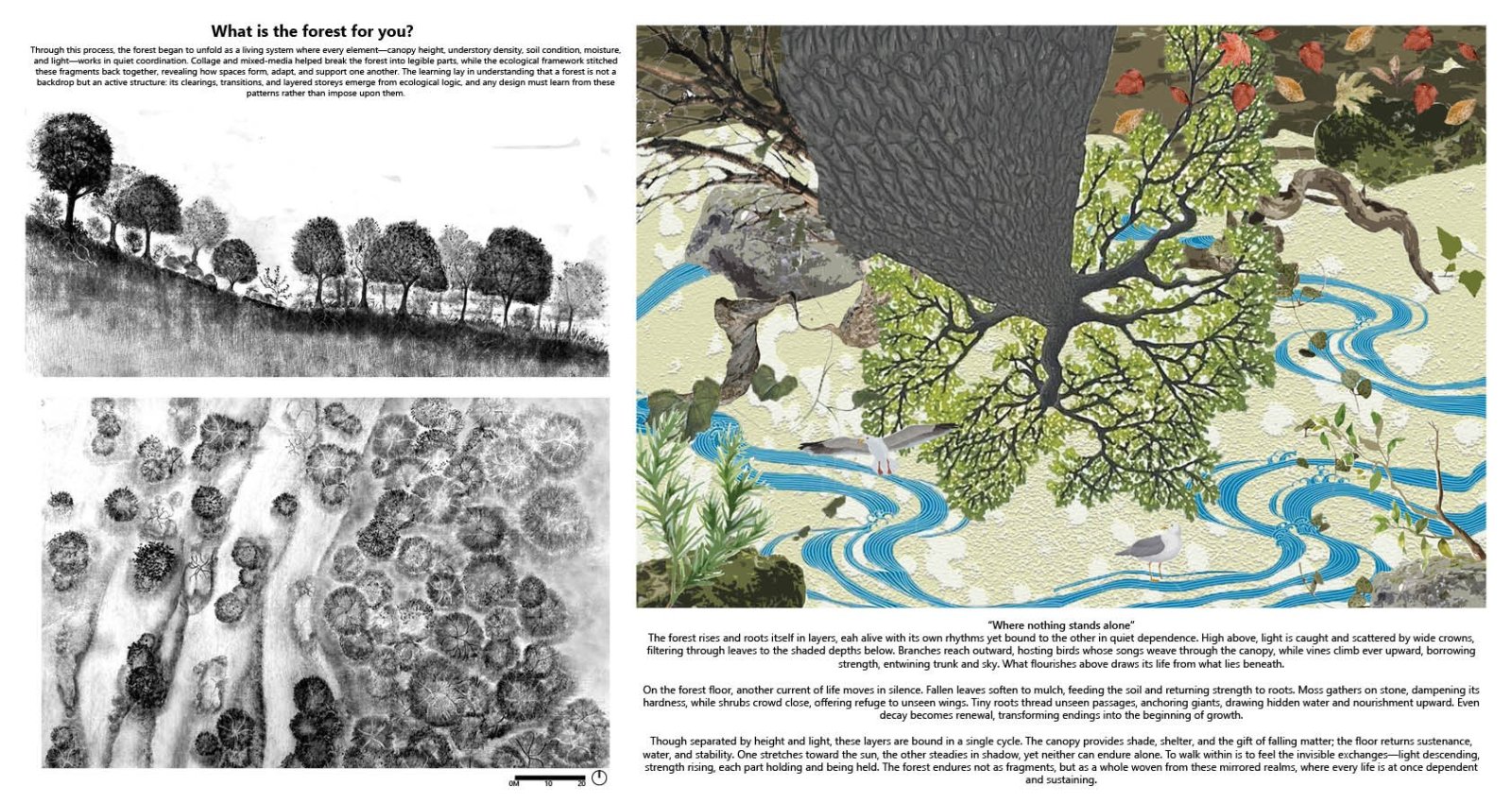
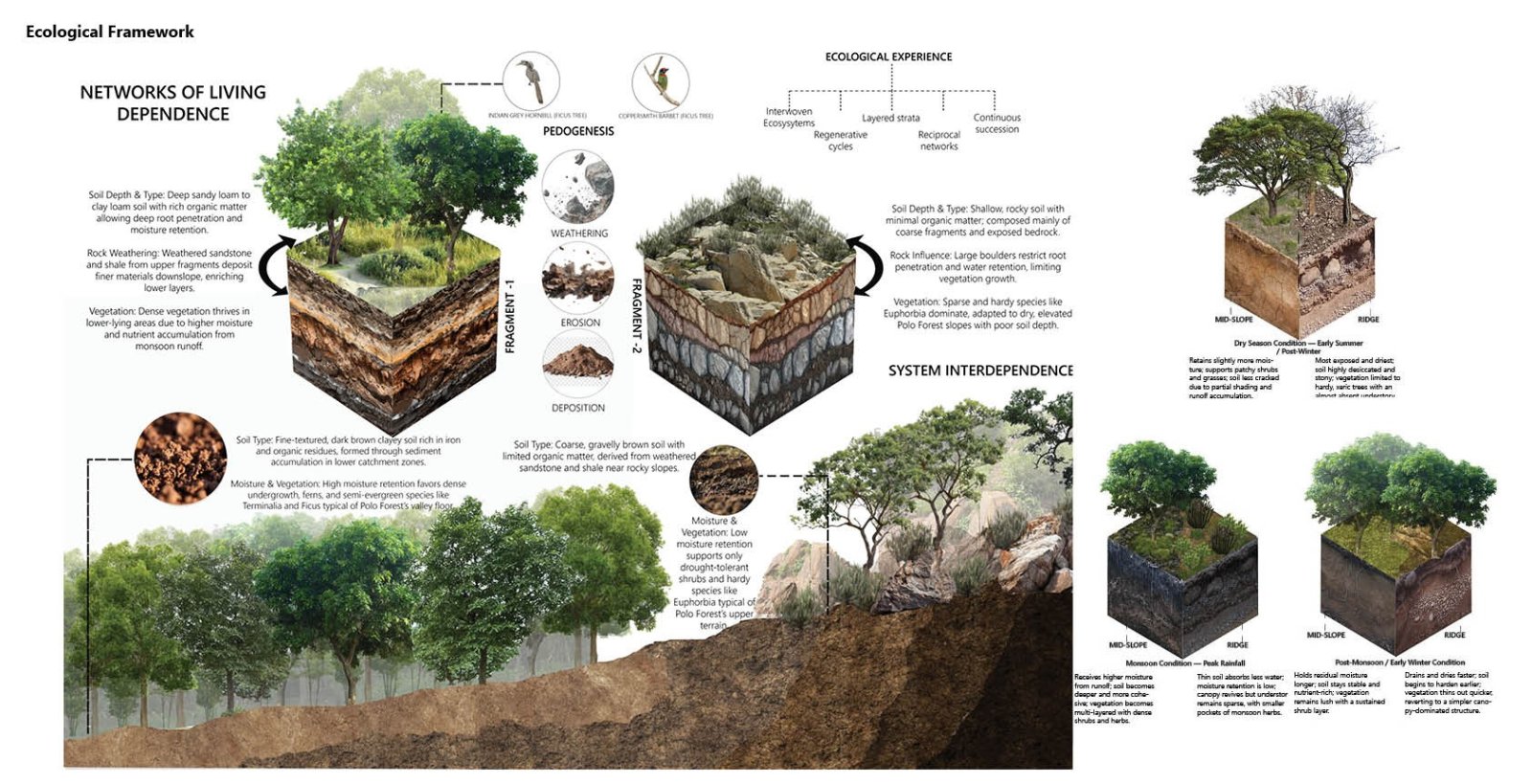
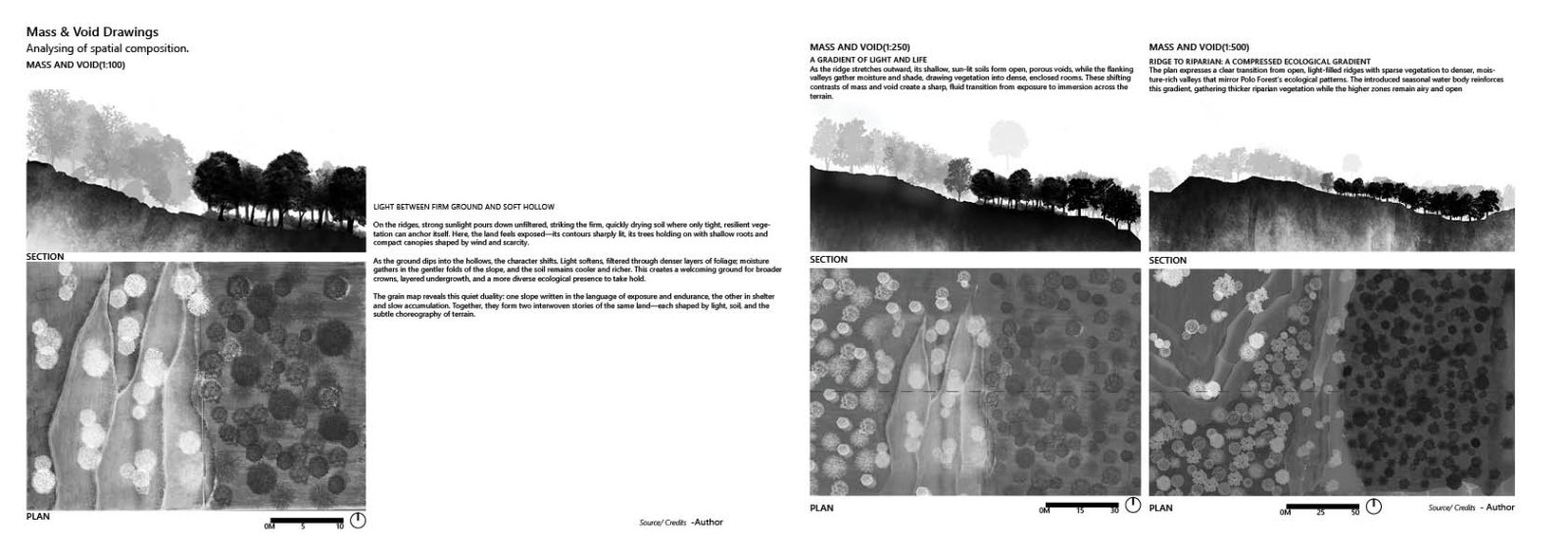
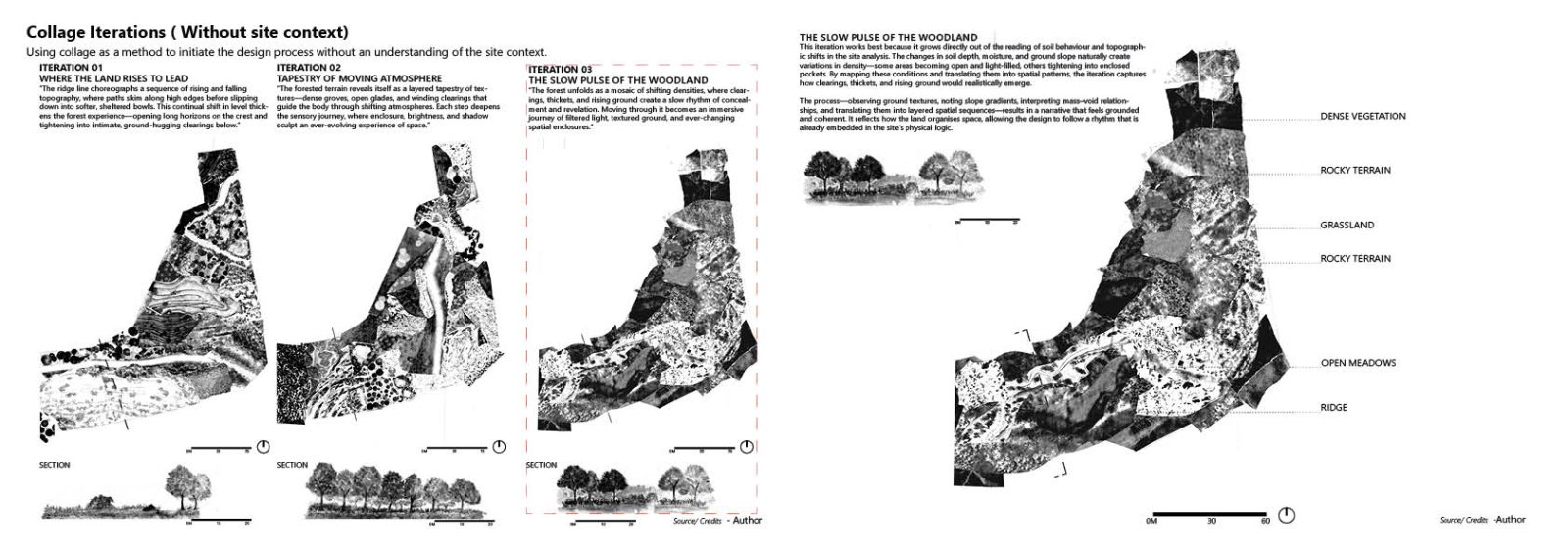
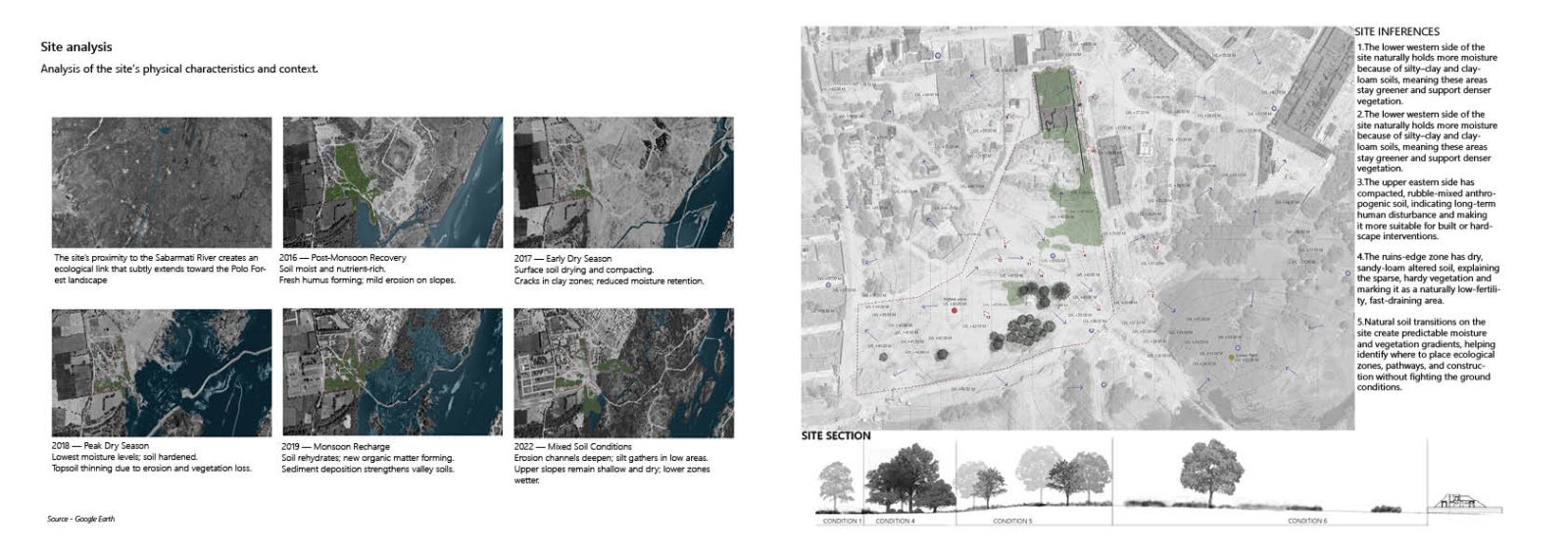
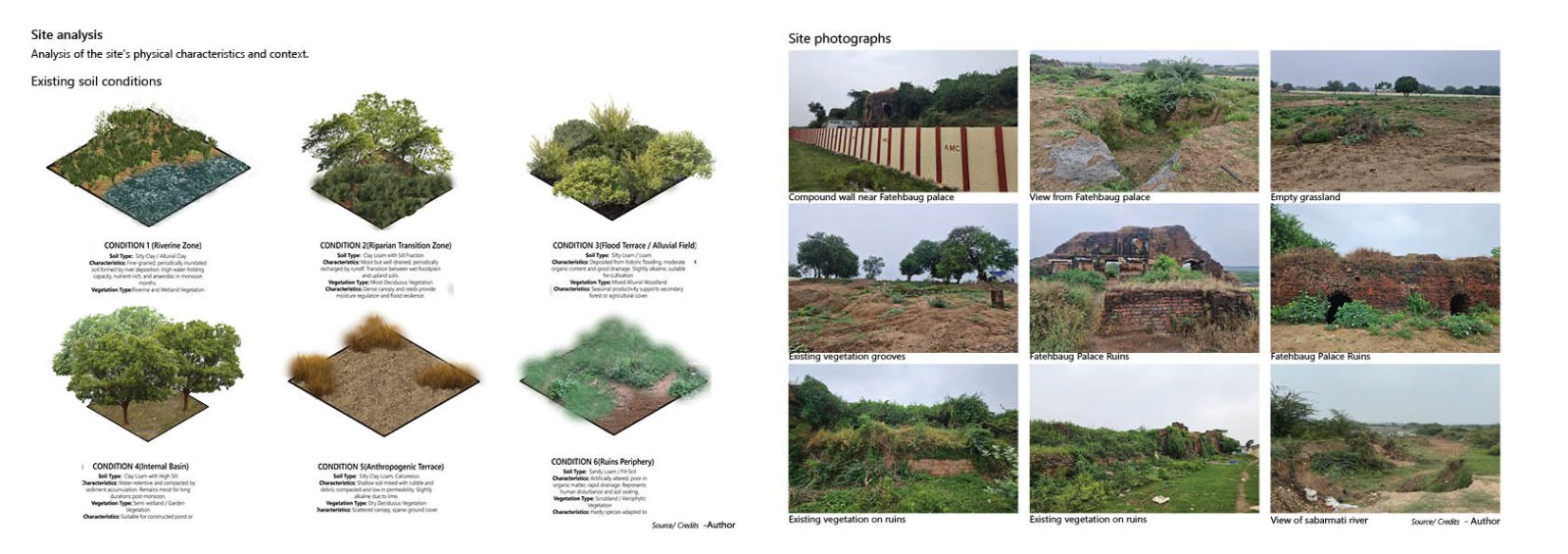
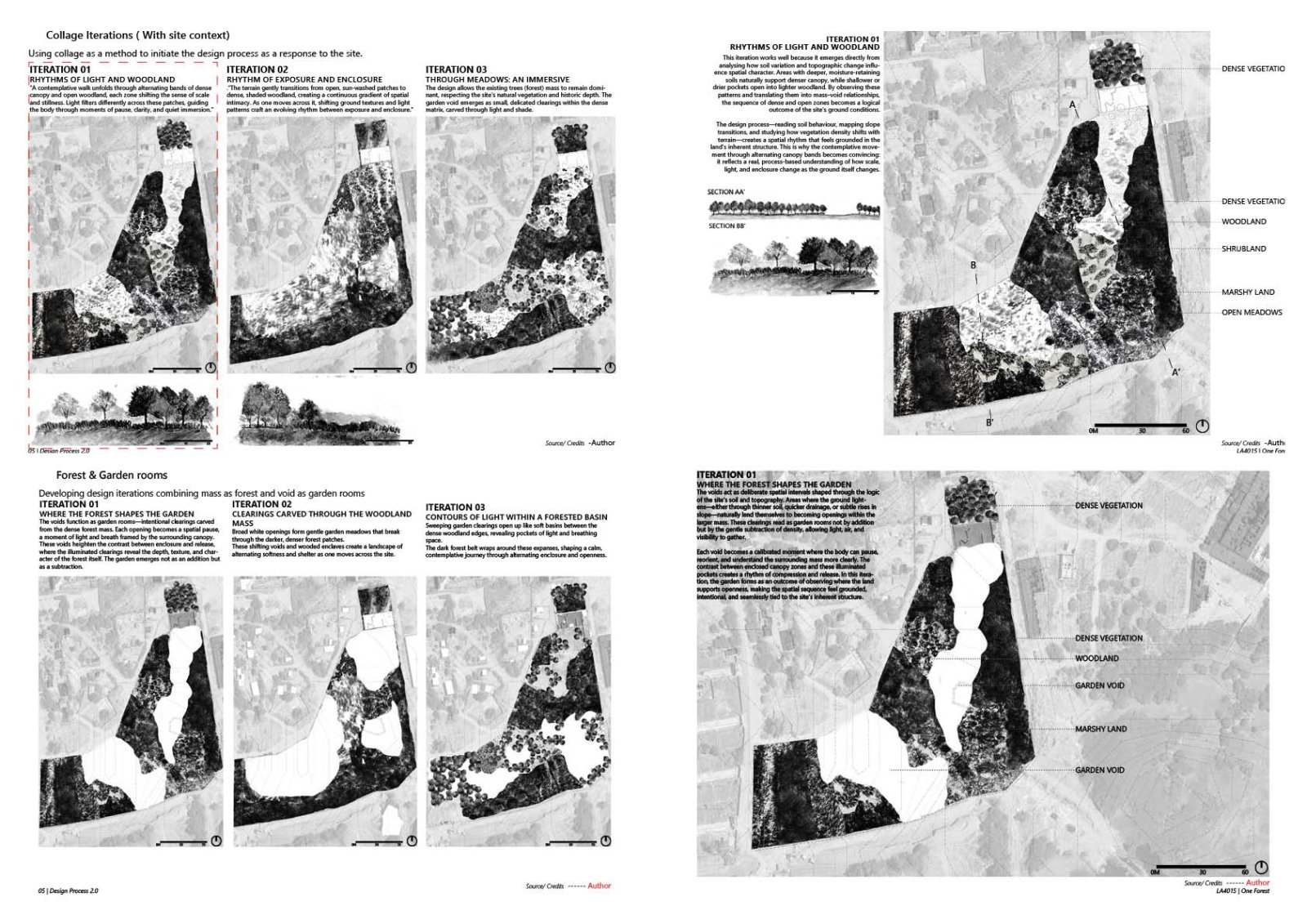
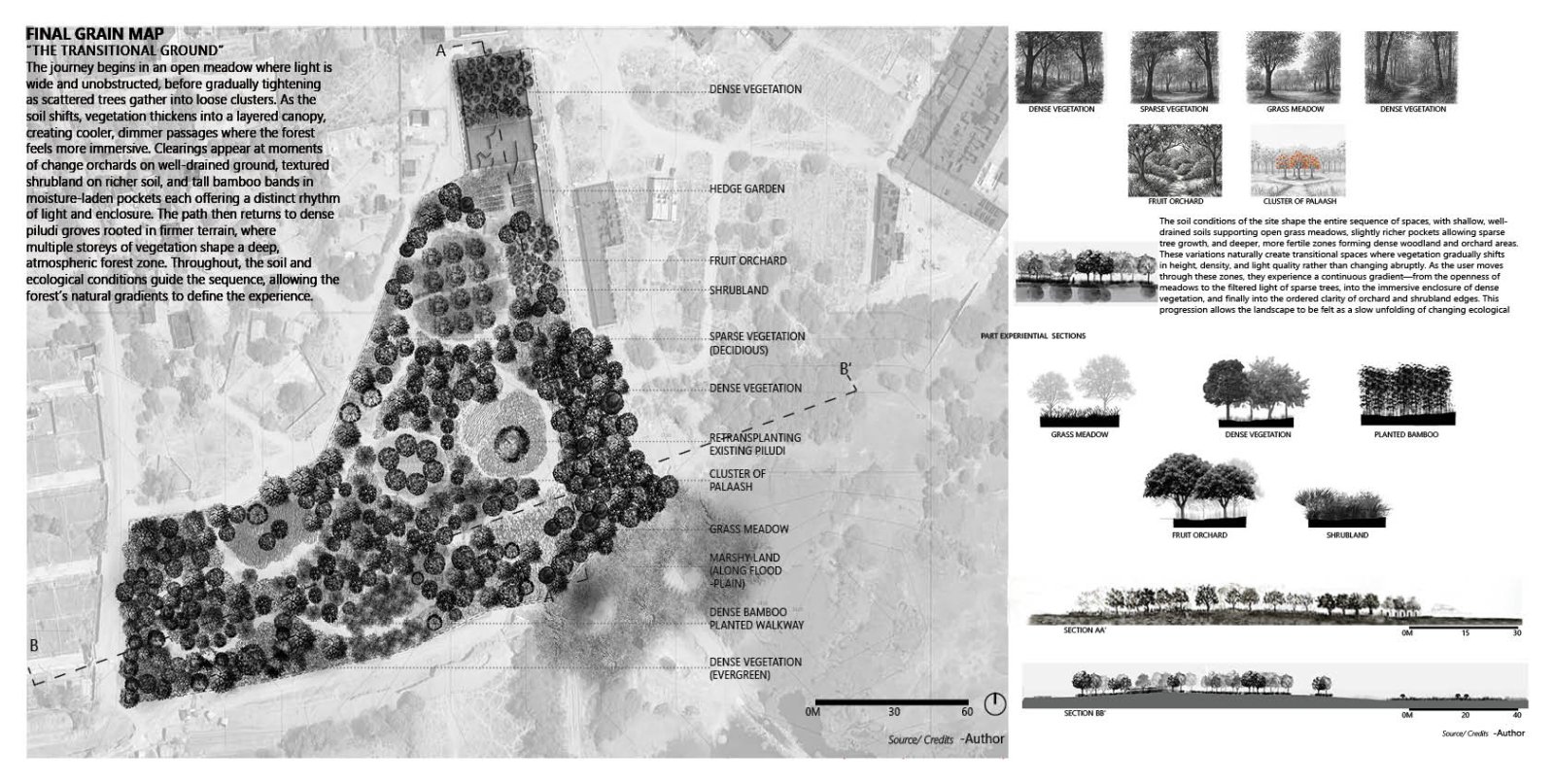
The process started by exploring the character of forests through hand-drawn sketches of the ones we knew. From these impressions, we created a point system to describe forest qualities and their location-based features. With this foundation, we examined Polo Forest first by reviewing maps of its geology, terrain, and ecology. Next, we made on-site sketches to capture its density, texture, and atmosphere. Back in the studio, we created memory sketches and conducted plan and section studies of a chosen grain. Mass and void exercises helped us understand the spatial rhythm of openness and enclosure within the forest. We also looked into the connection between the forest and the city to see why it matters. After our visit, we wrote personal narrative notes to express what the forest meant to us, which informed our abstract drawings. We started by making collages without context, then added site context, gradually introducing white pockets as intentional spaces for pause. These elements influenced our design changes, blending collage logic, understanding of mass and void, and spatial transitions. The process ended with a final design featuring defined pathways and garden pockets that reflect the experiential essence of Polo Forest.
View Additional Work