Your browser is out-of-date!
For a richer surfing experience on our website, please update your browser. Update my browser now!
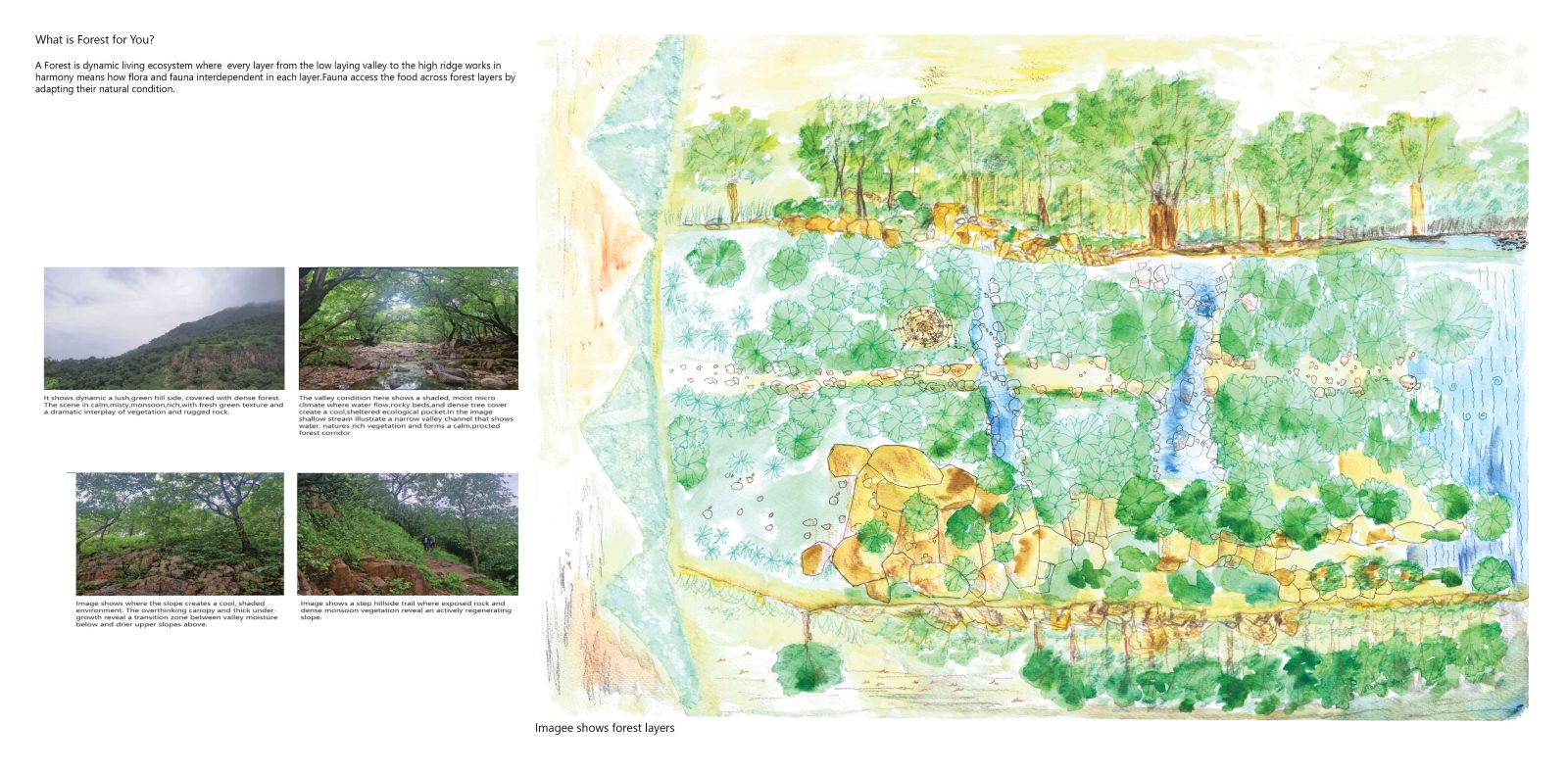
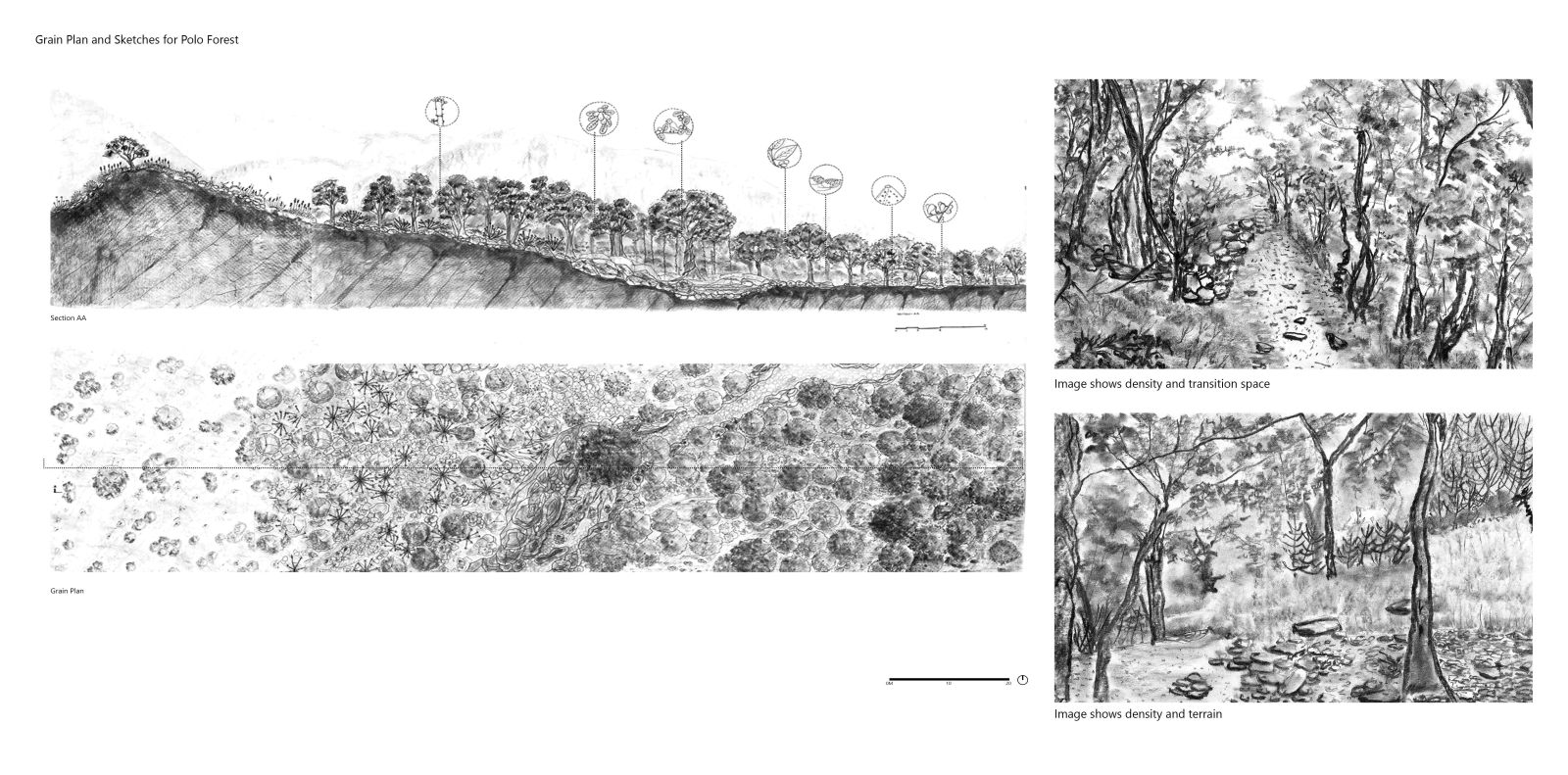
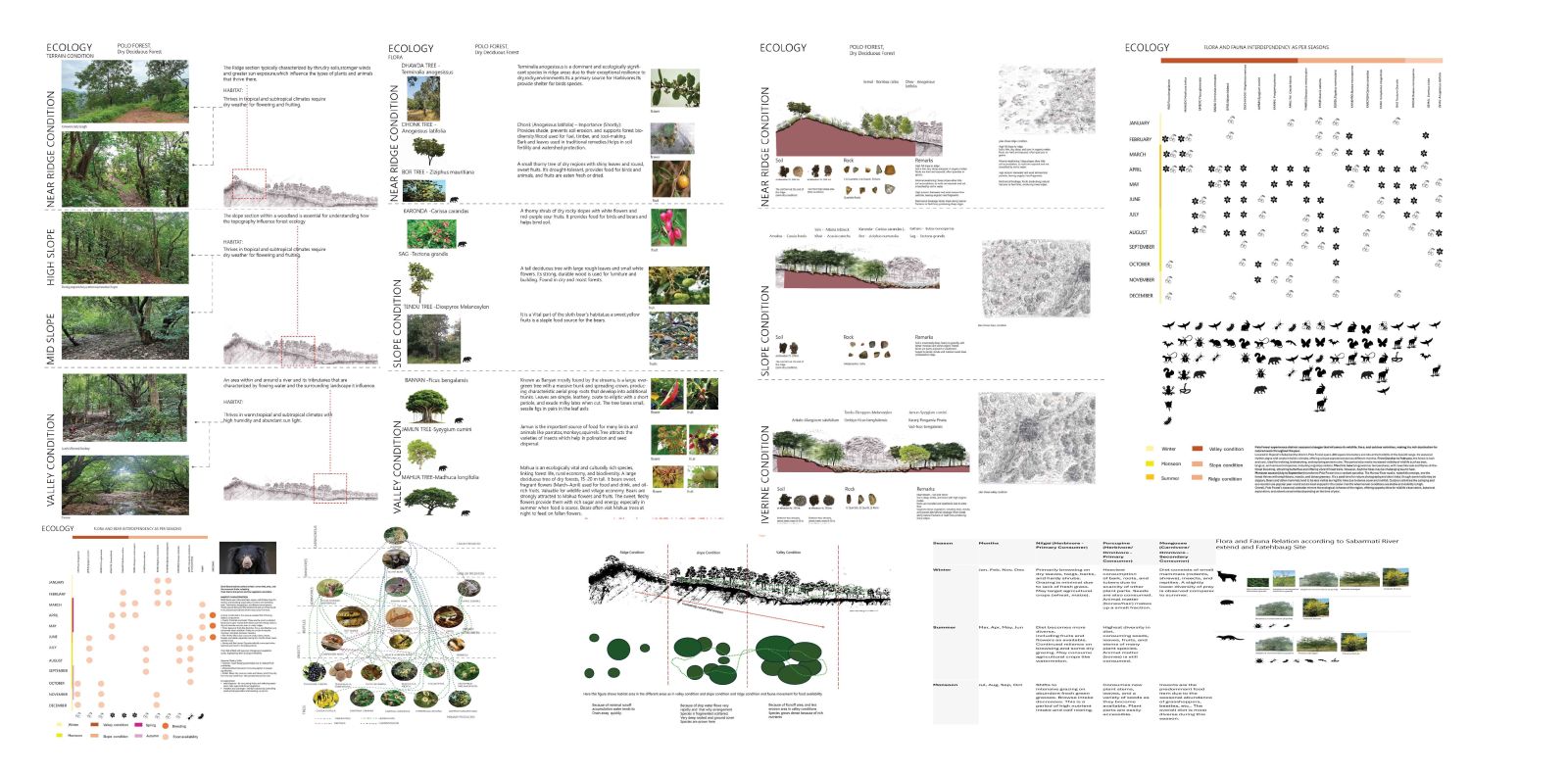
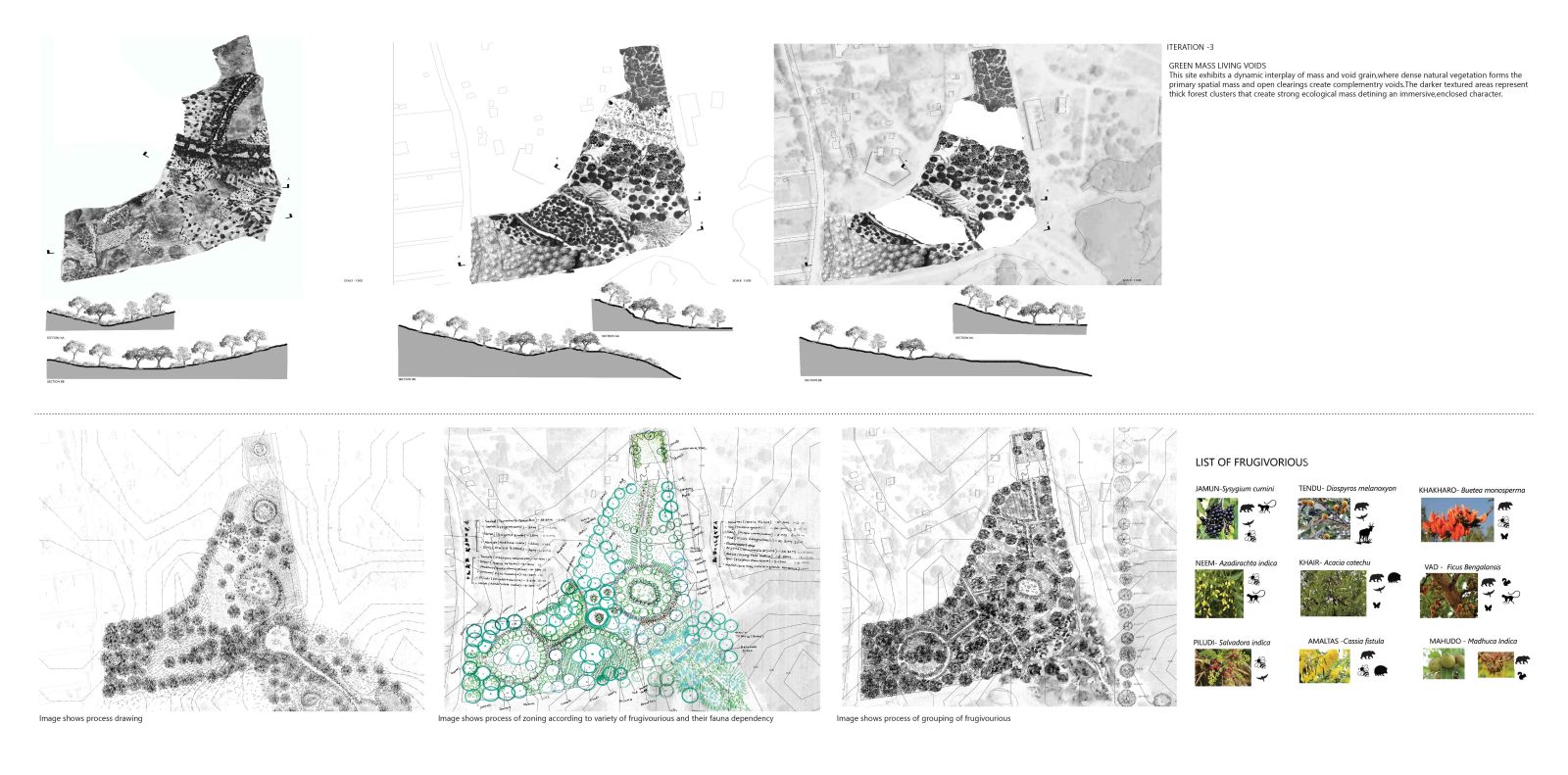
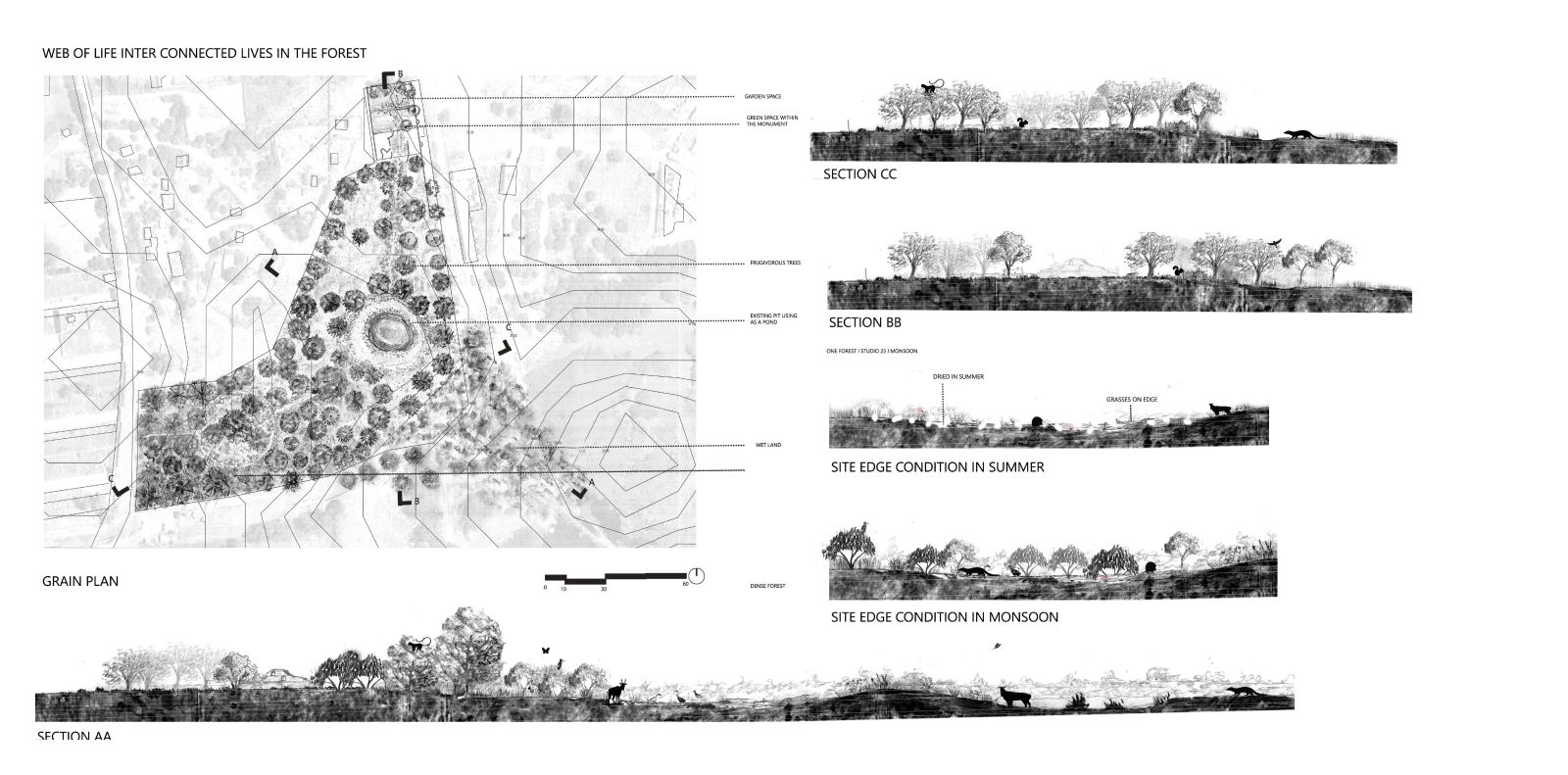
Fatehbaug site along the Sabarmati River, the garden room is conceived as a living web of life, structured around frugivorous trees that link flora and fauna into a self-sustaining system. Selected fruiting species provide seasonal food for birds, bats, insects, and small mammals, while these animals in turn enable pollination, seed dispersal, and regeneration, keeping the landscape alive and resilient. Each garden room functions as a micro-habitat rather than an ornamental space, where food availability, shade, moisture, and movement are interconnected. Together, these fruit-based rooms form an ecological network that mirrors natural forests—where life is sustained not by isolation, but by continuous exchange and dependency.In this way, the Fatehvadi garden rooms translate the forest’s web of life into a designed landscape, where frugivorous trees sustain wildlife, wildlife sustains the vegetation, and the system remains resilient, productive, and alive over time.
View Additional Work