Your browser is out-of-date!
For a richer surfing experience on our website, please update your browser. Update my browser now!
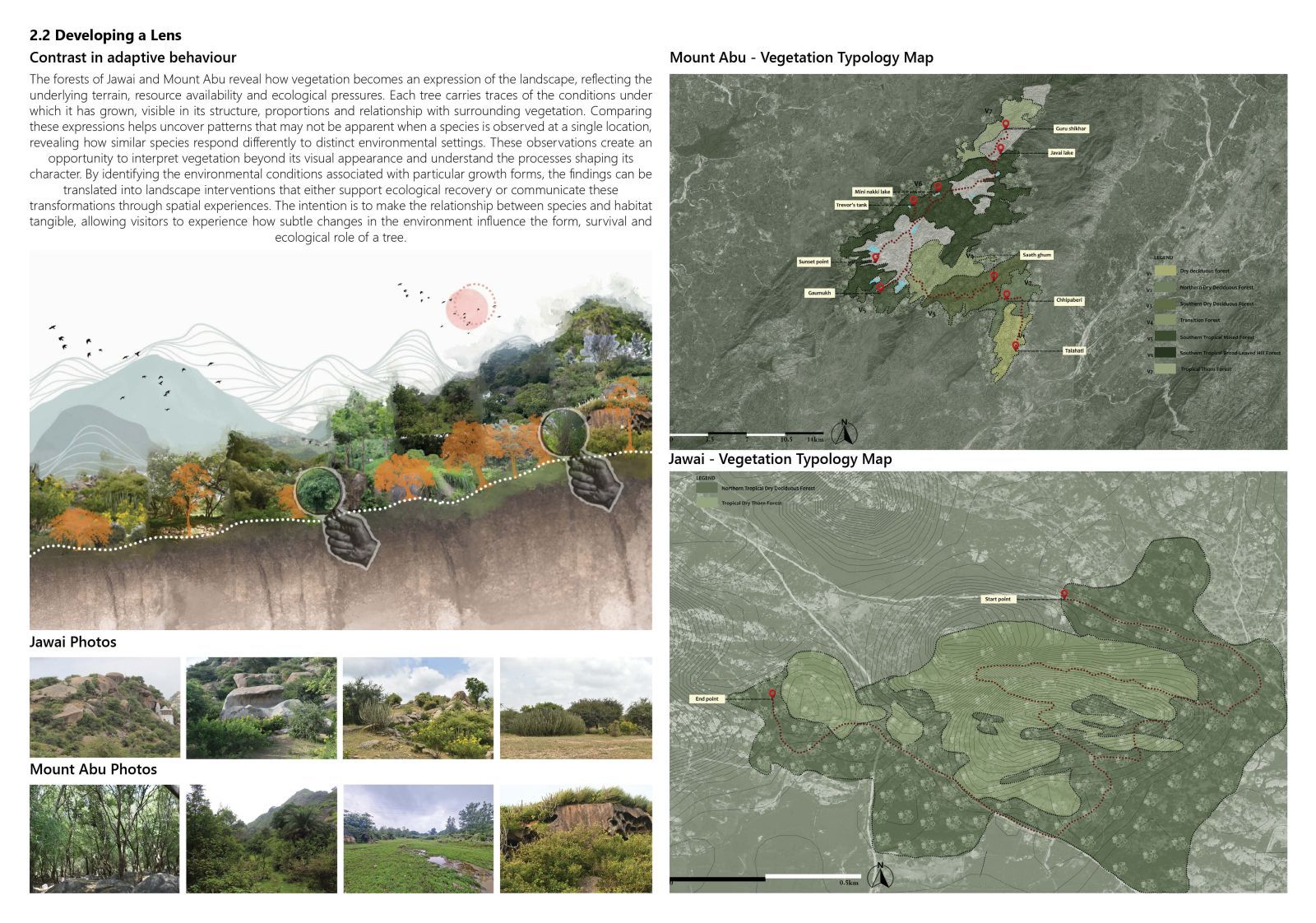
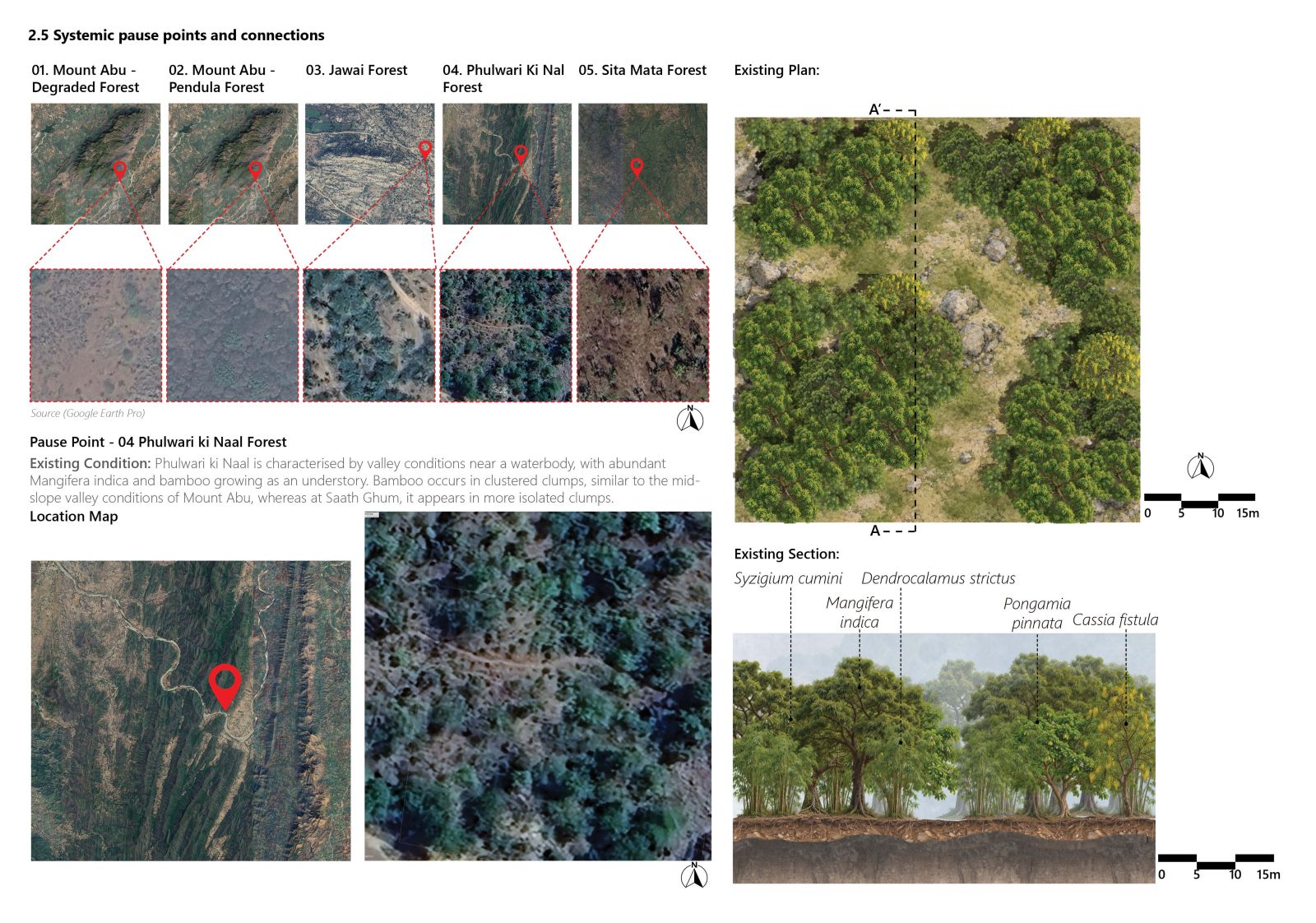
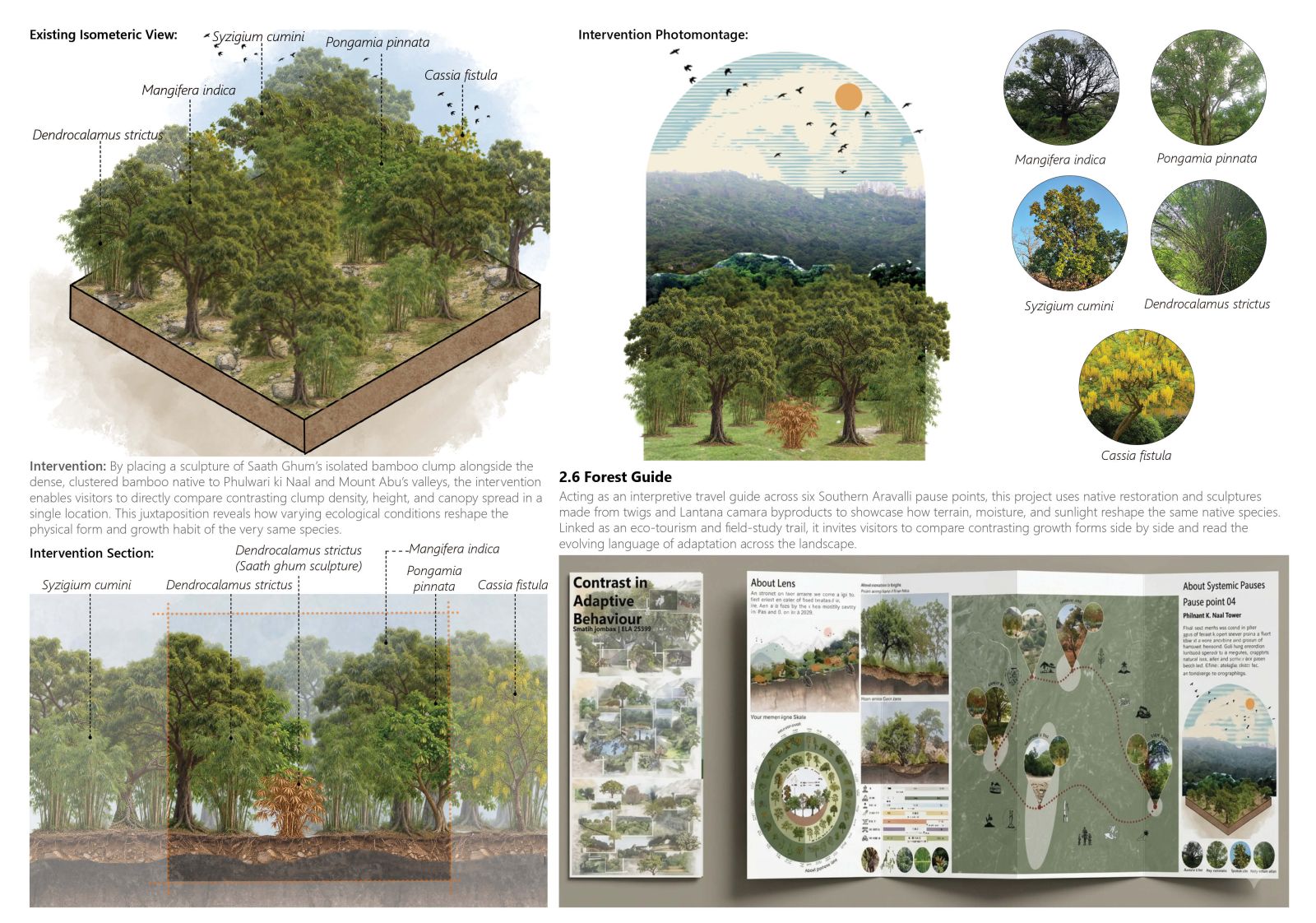
The forests of Jawai and Mount Abu reveal how vegetation becomes an expression of the landscape, reflecting the underlying terrain, resource availability and ecological pressures. Each tree carries traces of the conditions under which it has grown, visible in its structure, proportions and relationship with surrounding vegetation. Comparing these expressions helps uncover patterns that may not be apparent when a species is observed at a single location, revealing how similar species respond differently to distinct environmental settings. These observations create an opportunity to interpret vegetation beyond its visual appearance and understand the processes shaping its character. By identifying the environmental conditions associated with particular growth forms, the findings can be translated into landscape interventions that either support ecological recovery or communicate these transformations through spatial experiences. The intention is to make the relationship between species and habitat tangible, allowing visitors to experience how subtle changes in the environment influence the form, survival and ecological role of a tree.
View Additional Work