Your browser is out-of-date!
For a richer surfing experience on our website, please update your browser. Update my browser now!
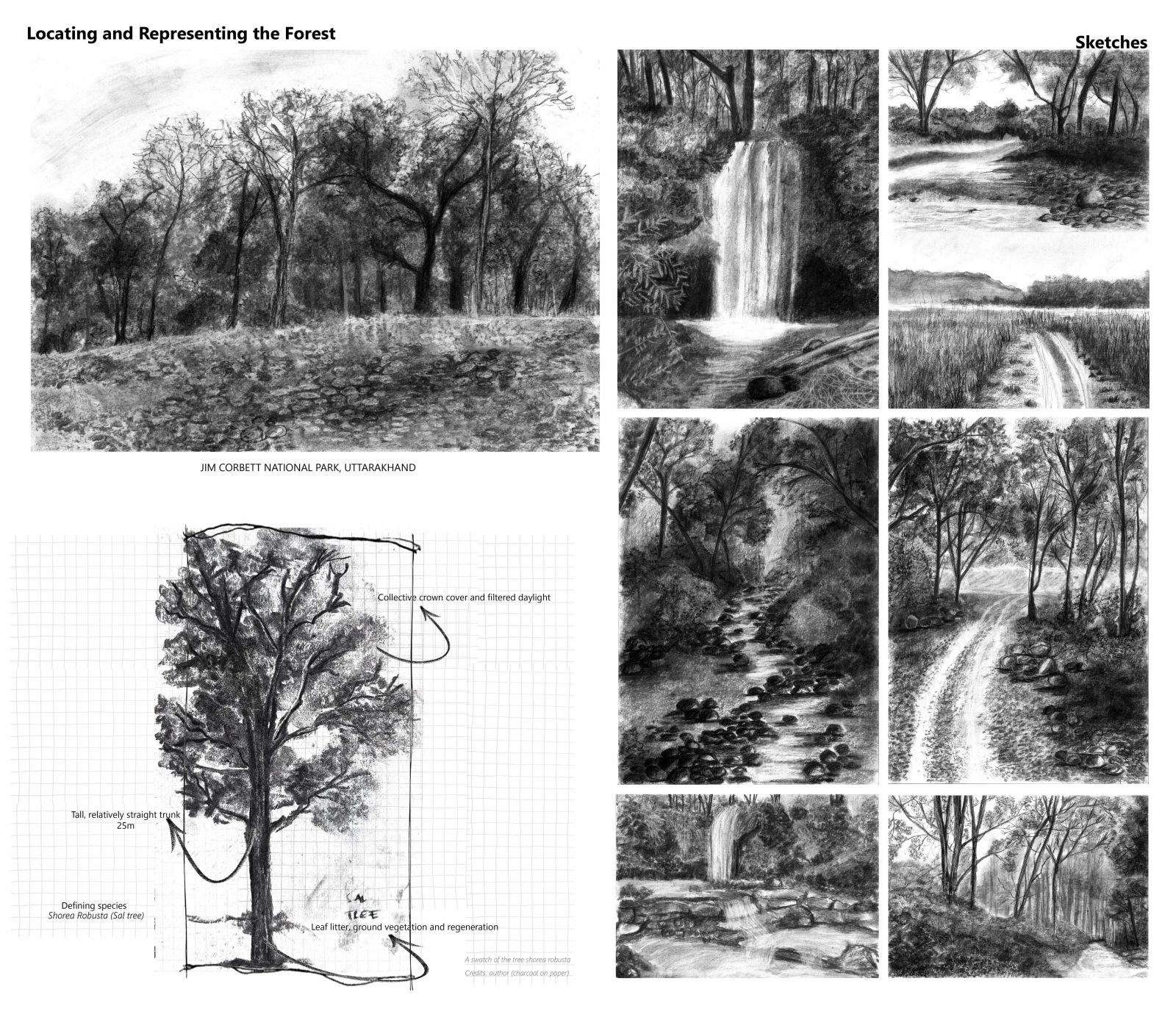
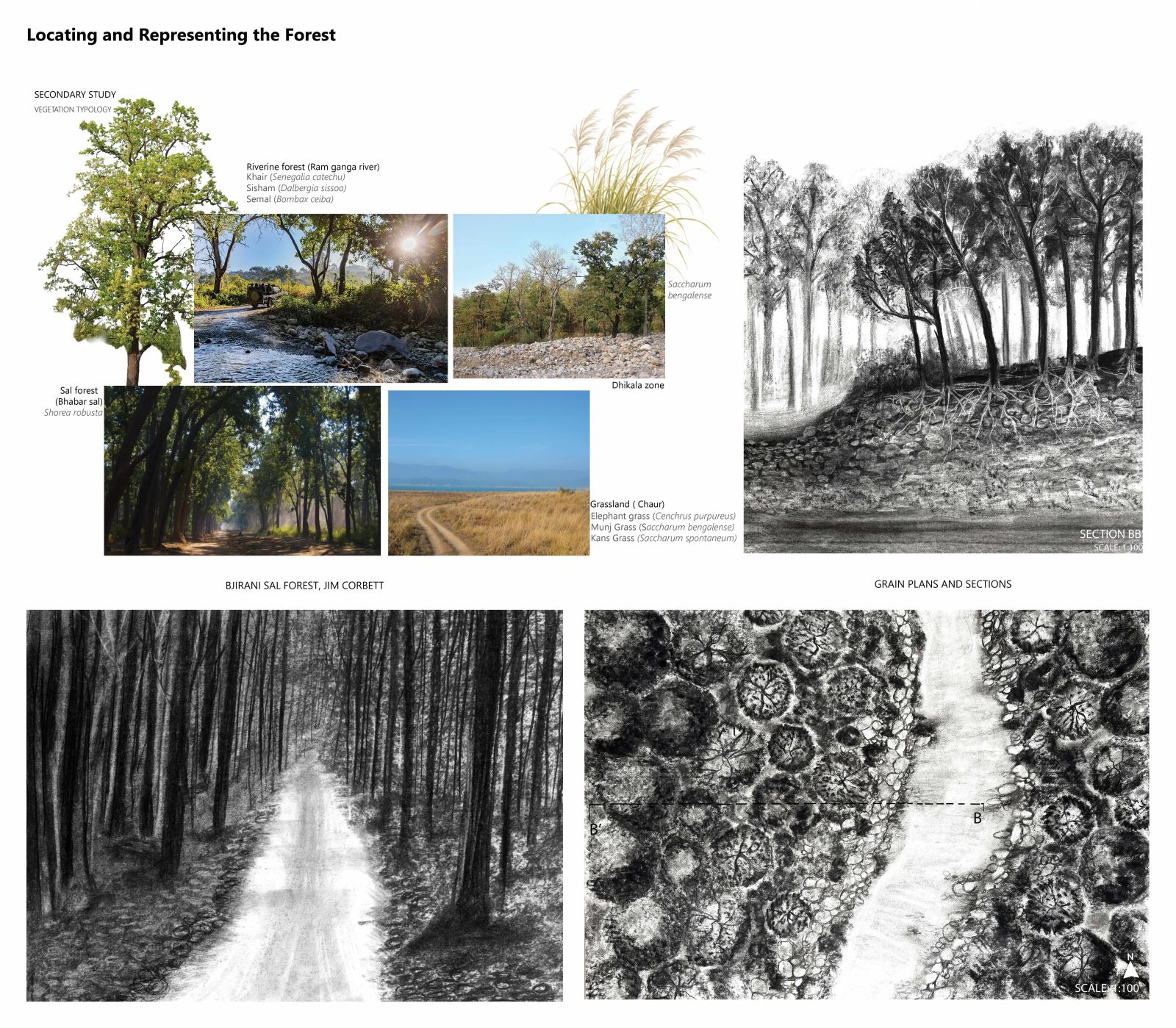
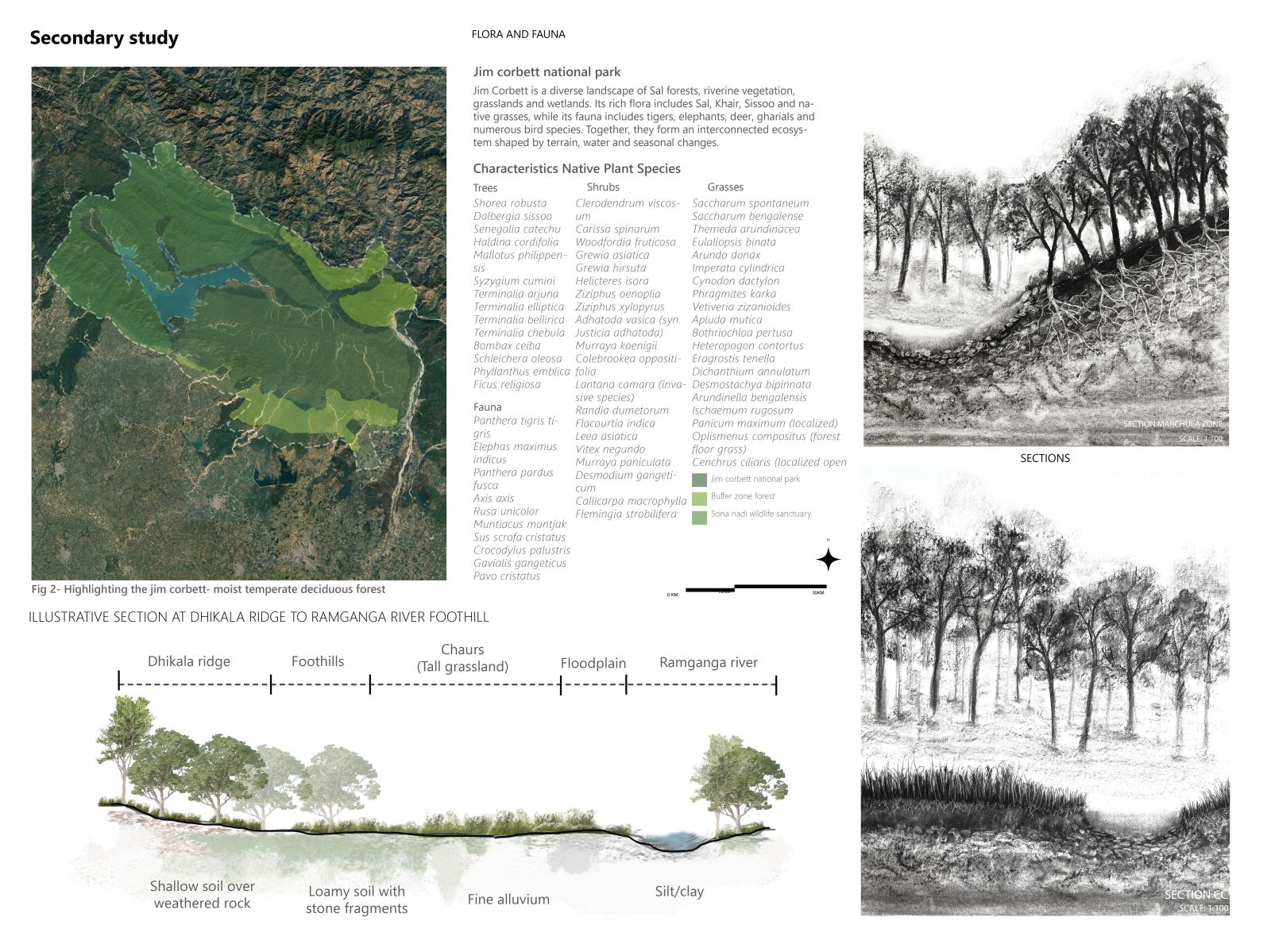
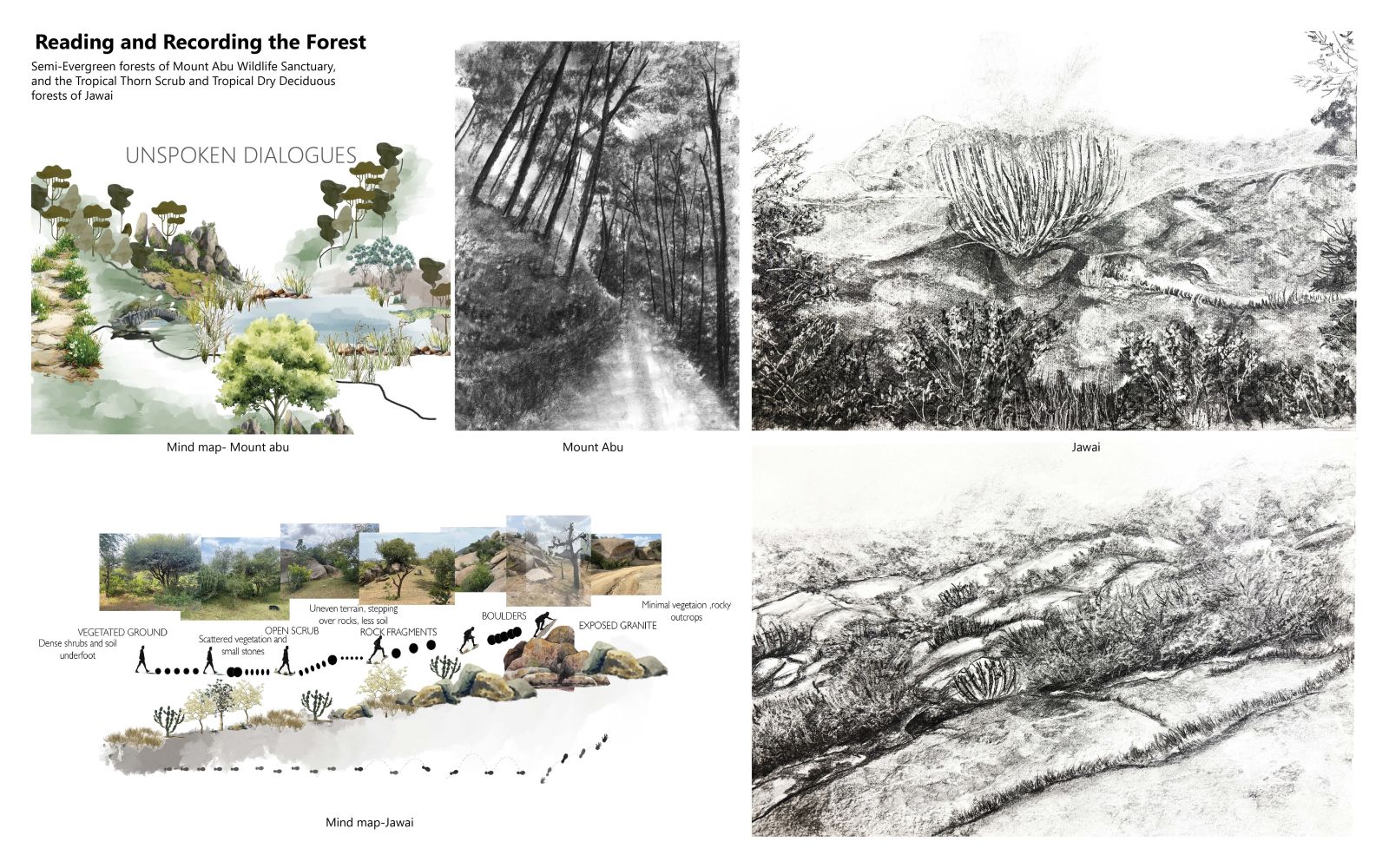
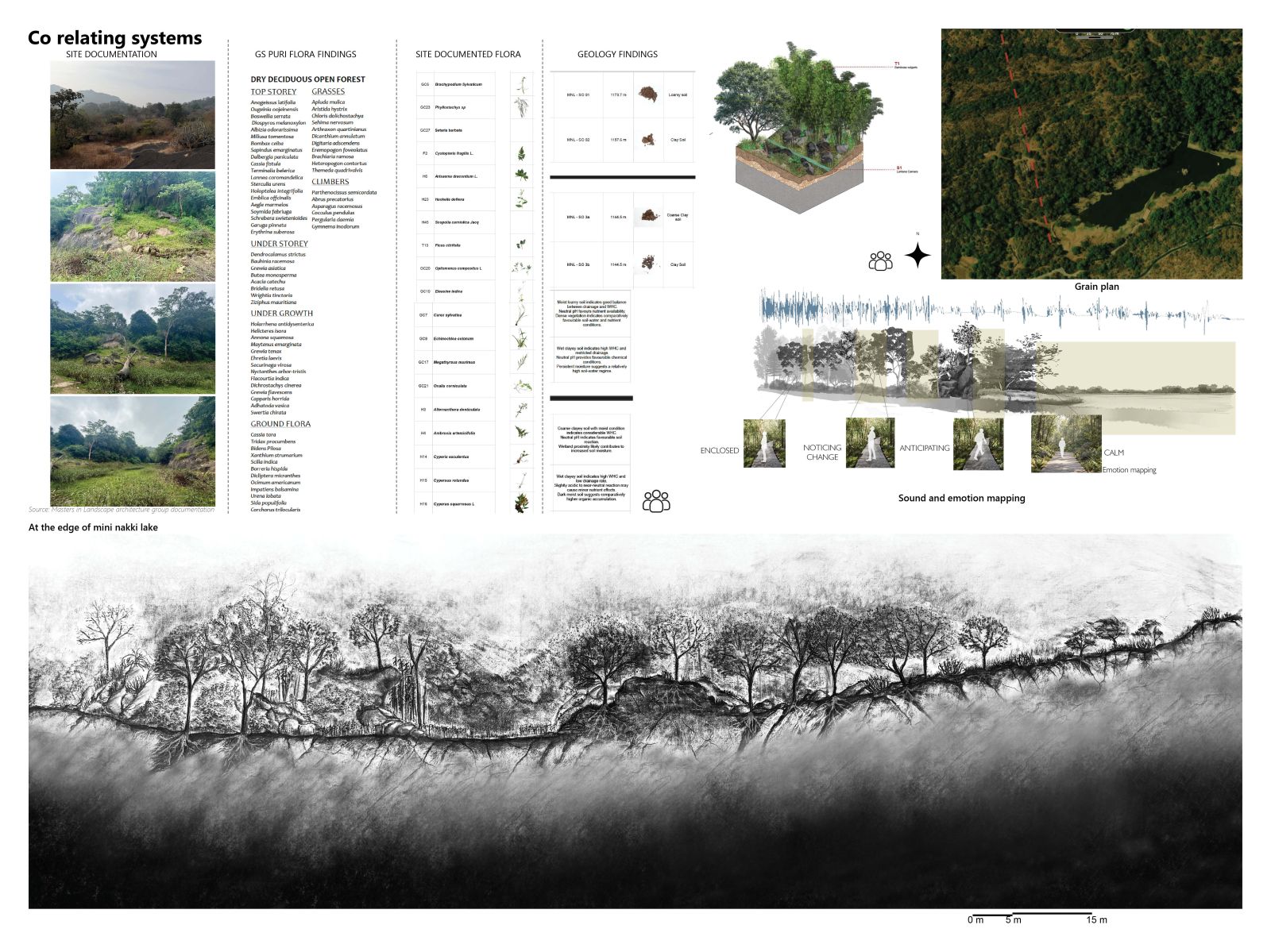
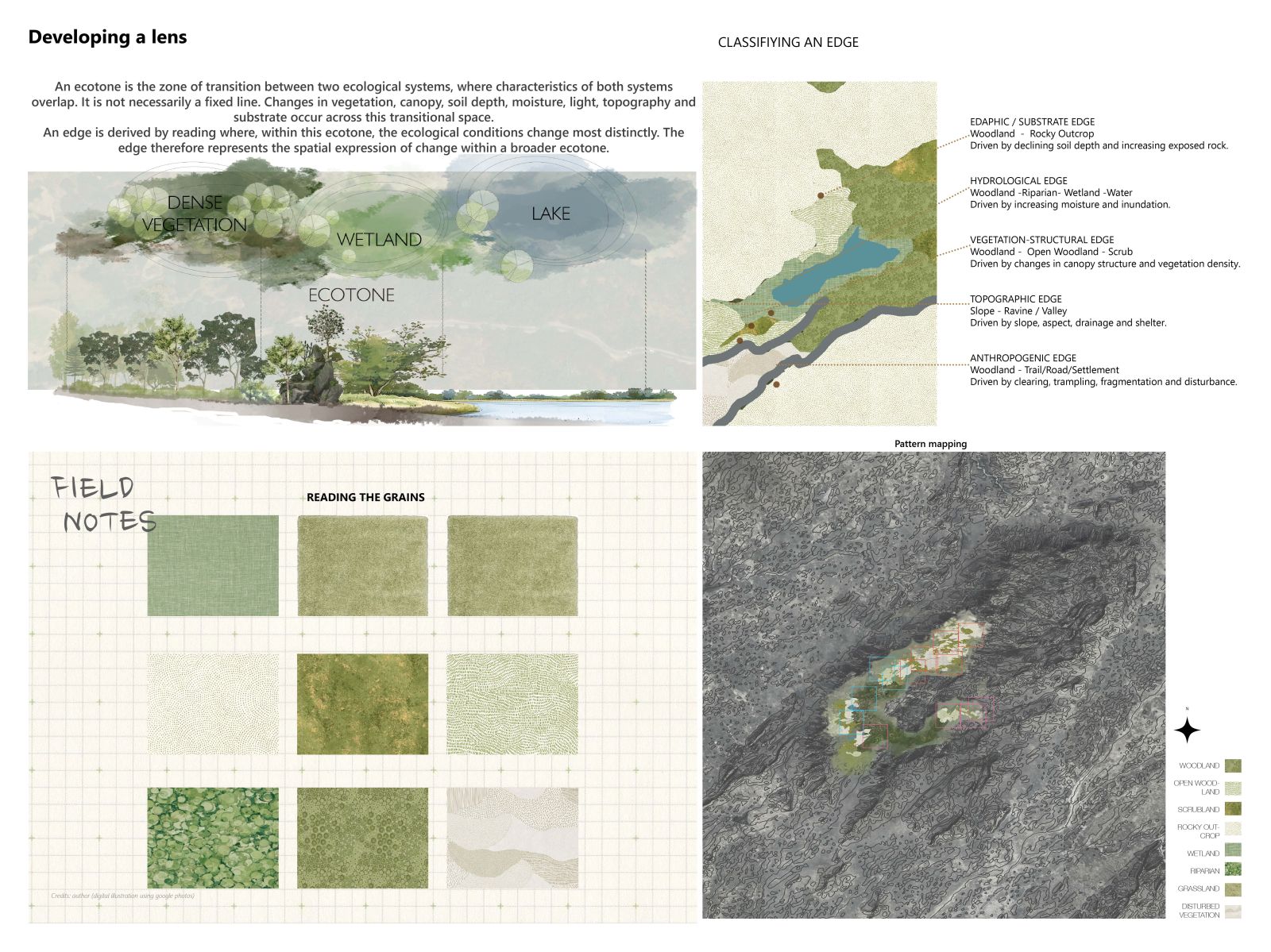
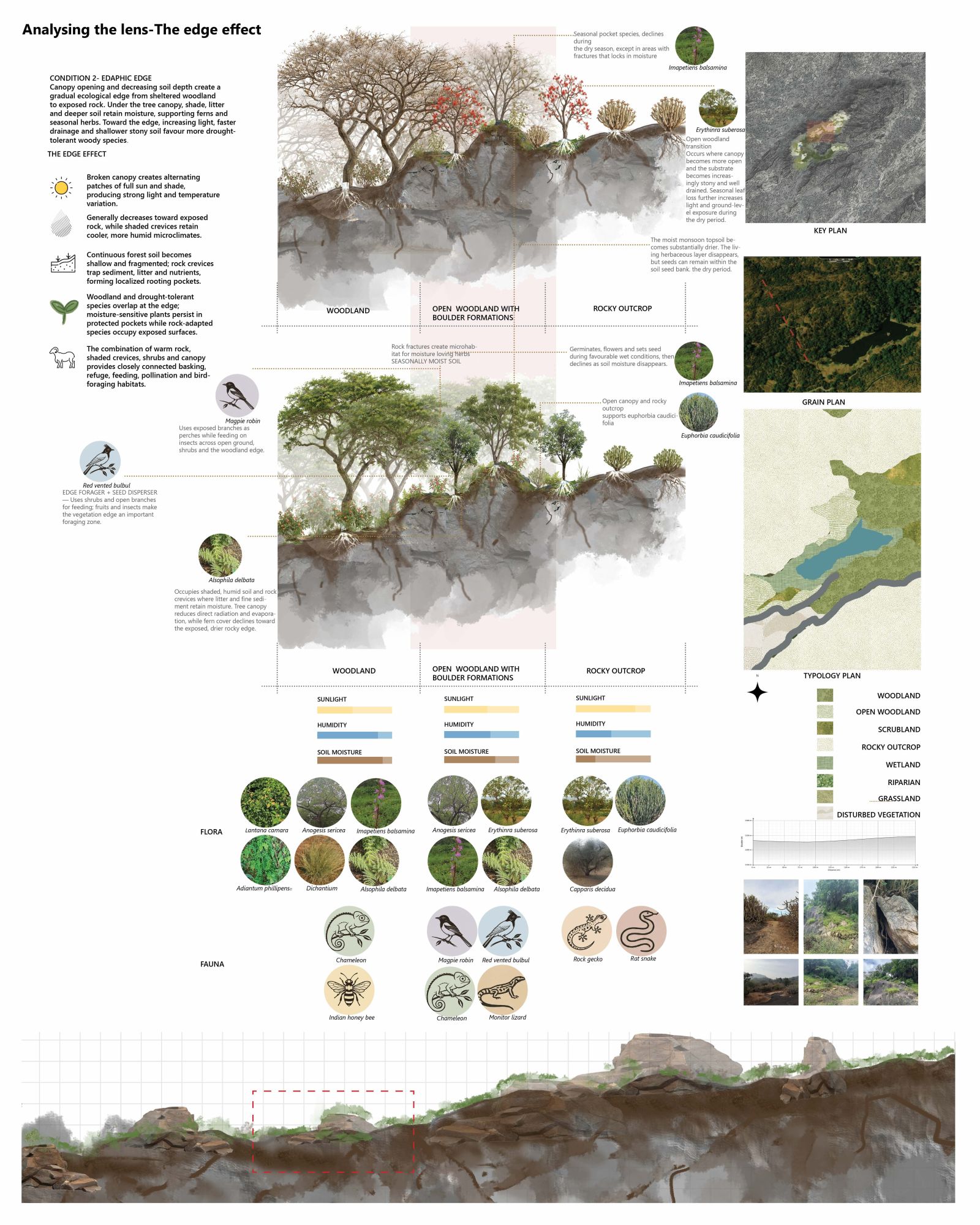
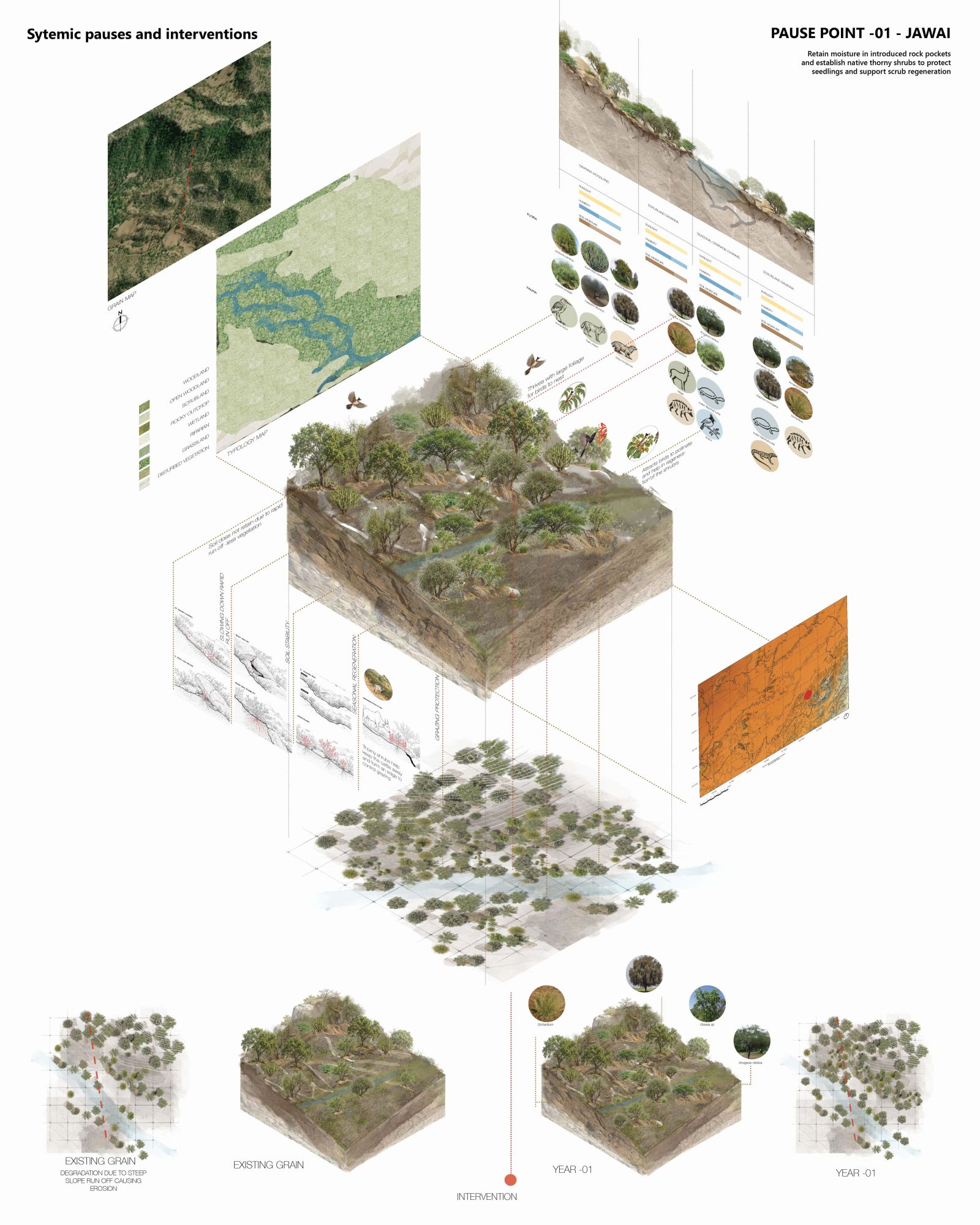
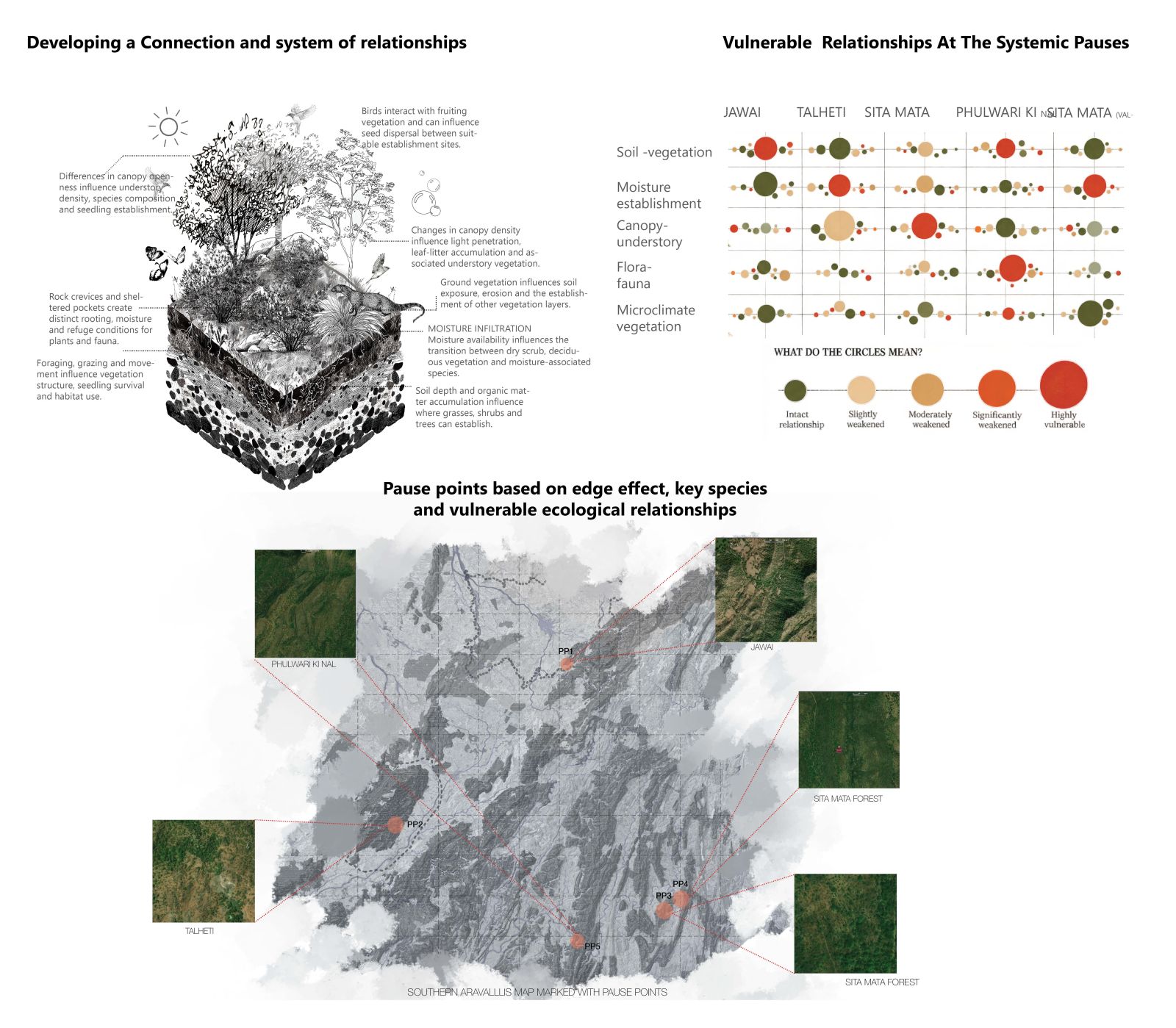
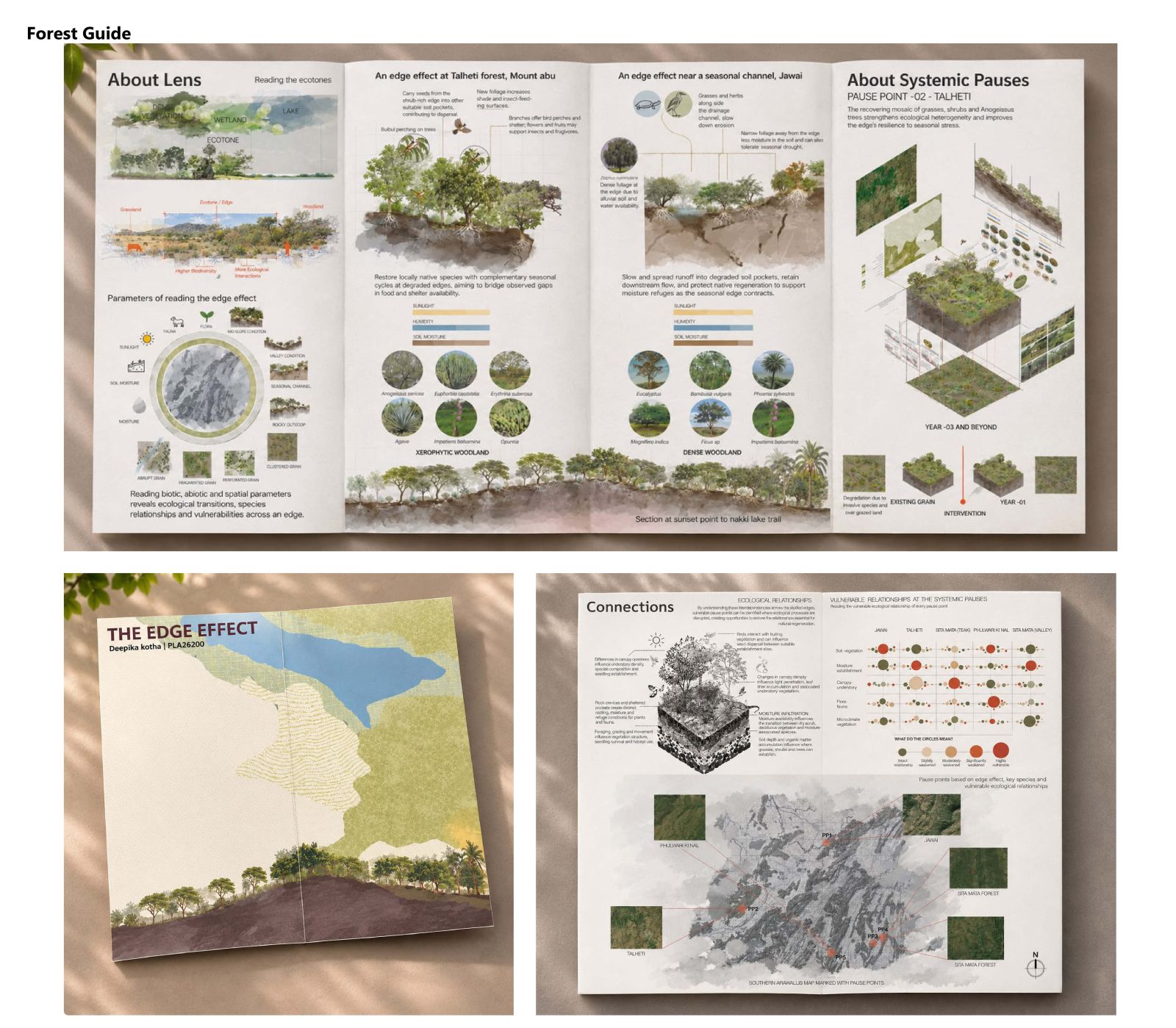
This portfolio explores the intricate relationships between forests, landscapes and biodiversity through the lens of Ecotones and Edge Effect, developed as part of the One Forest Studio. Beginning with individual forest studies and ecological documentation, the exploration extends into the Southern Aravallis, focusing on the diverse landscapes of Mount Abu and Jawai. Ecotones are dynamic transitional zones where ecological systems overlap, creating distinct edges shaped by variations in vegetation, soil, moisture, light and topography. These changing conditions form diverse microhabitats that influence species richness, distribution and ecological interactions. Through field observations, sketches, sections and ecological mapping, the portfolio investigates the interdependencies between biotic and abiotic systems and their role in sustaining biodiversity. The study identifies vulnerable edge conditions where ecological relationships are disrupted and explores site-specific interventions to restore processes such as pollination, seed dispersal and natural regeneration. Ultimately, the portfolio presents a journey from observing and understanding forests to reimagining edges as active spaces of ecological exchange, coexistence and landscape resilience.
View Additional Work